
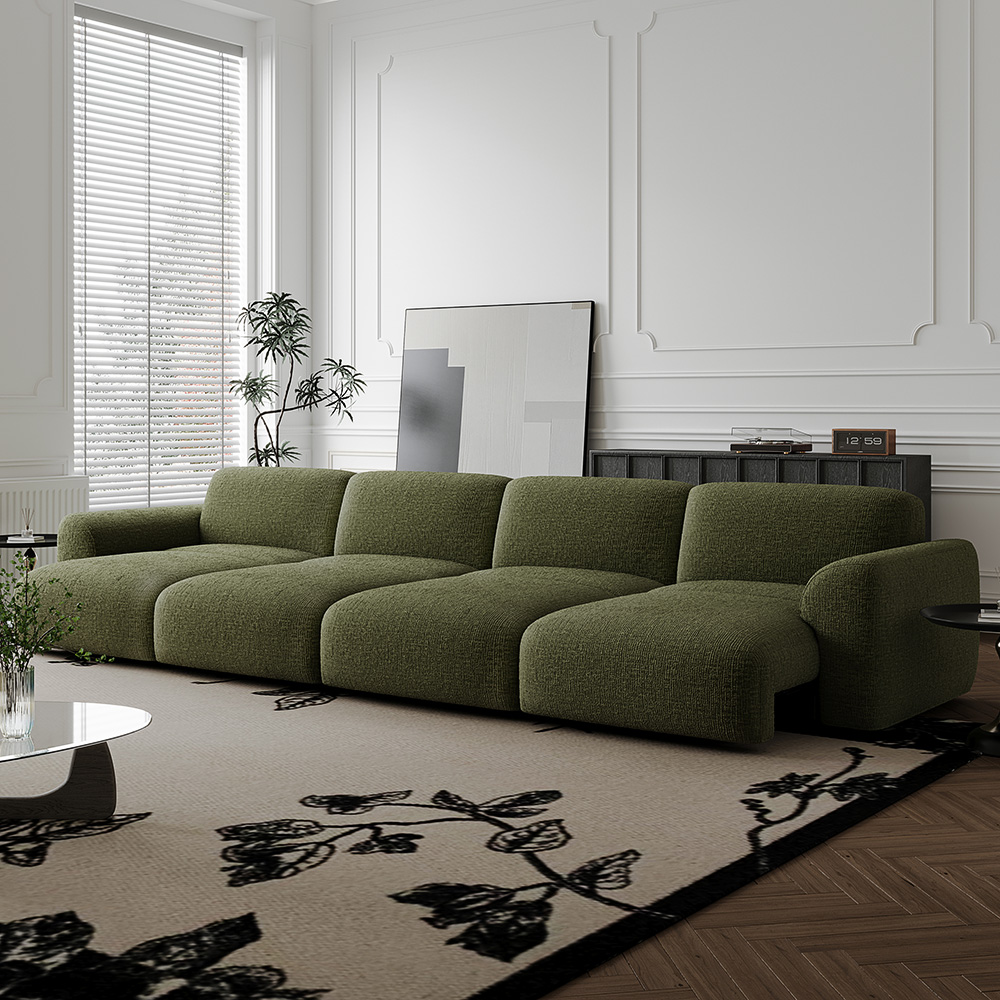
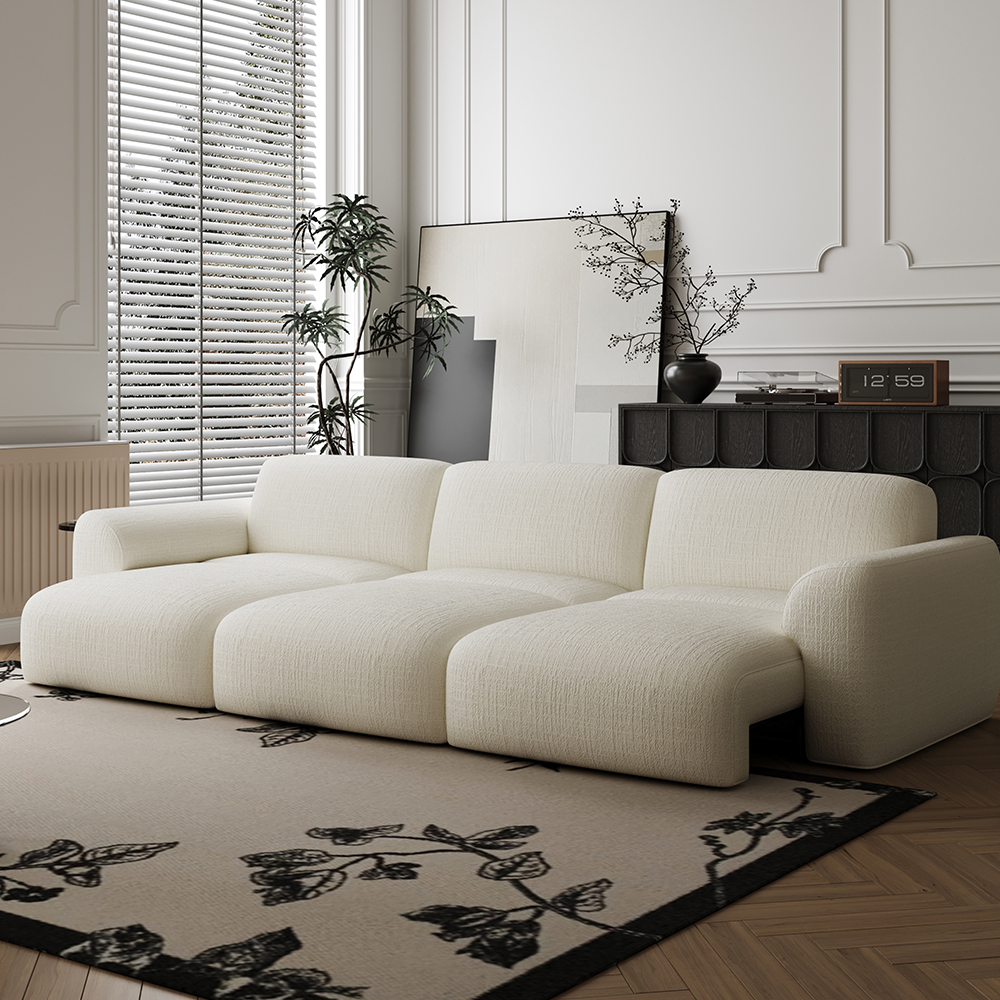
The Complete Guide to Choosing the Right Couch
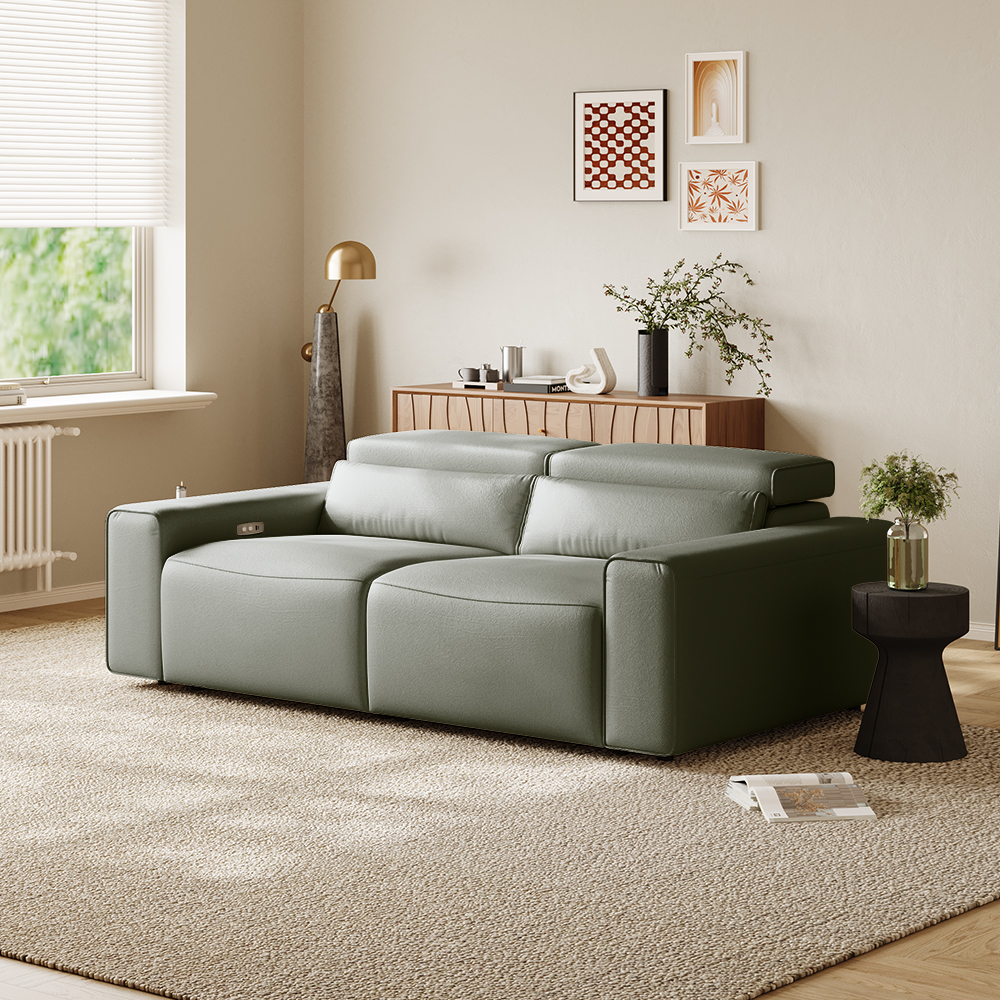
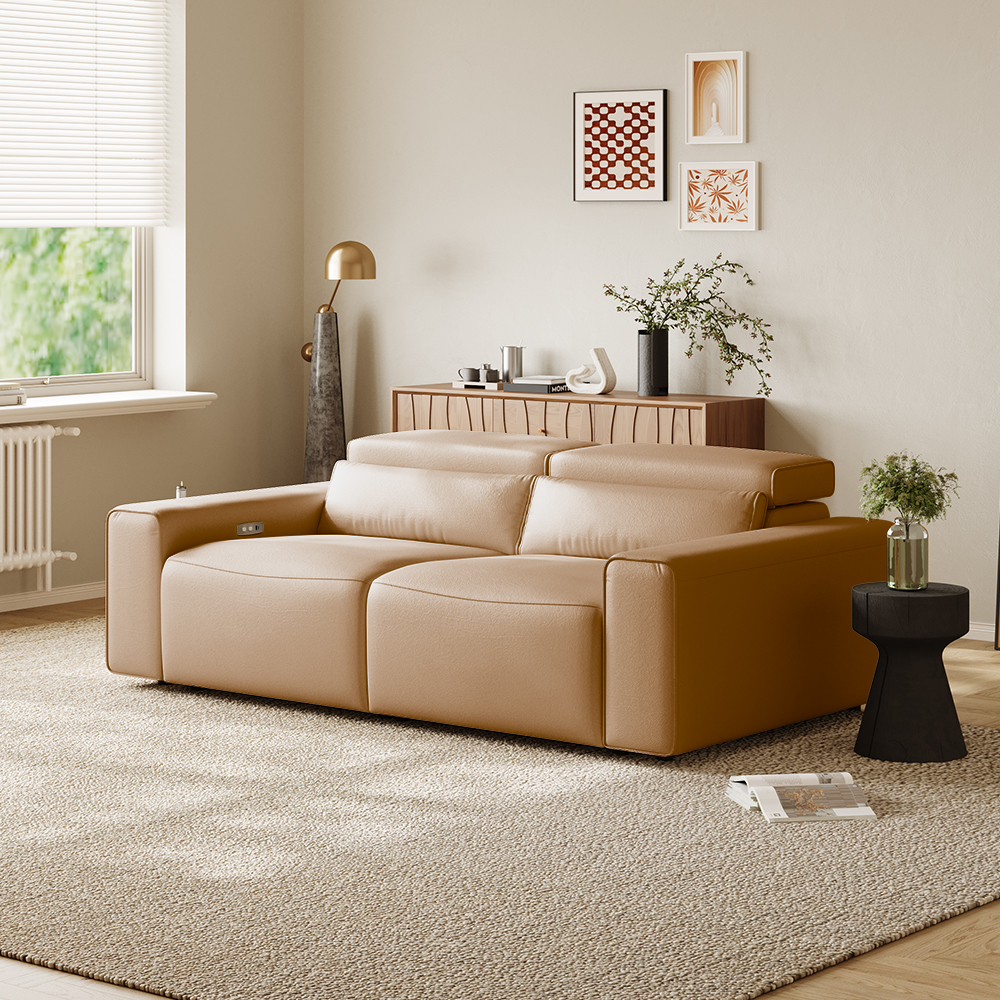
Selecting the right couch starts with understanding your daily habits. If you lounge frequently, choose a seat depth of 23-27 inches. For upright seating, 20-22 inches works best. Test couch cushions in person when possible, as high-resilience foam (density 1.8+ lbs/cu ft) maintains shape far longer than standard polyfoam. For frames, insist on kiln-dried hardwood with corner-blocked construction. Fabric choice depends on lifestyle: performance fabrics rated at 30,000+ double rubs suit families with kids and pets, while linen and velvet work in adult-only spaces. Consider your room dimensions carefully. A couch should occupy roughly two-thirds of the wall it faces. Povison delivers fully assembled couches with premium frames and cushions, letting you skip assembly frustration and start enjoying your new seating immediately.
Best Couch 2026
The 2026 couch market is defined by a single word: comfort. According to Homes and Gardens, oversized, deep-seated sofas are the dominant silhouette this year, as homeowners prioritize relaxation over formality. Modular designs lead sales, with customizable layouts that shift between L-shaped, linear, and individual seat configurations. Color palettes have moved beyond cream-on-cream—charcoal, navy, and black are re-emerging as foundational couch colors. The U.S. sofa and couch market exceeds $28 billion annually, and 2026 buyers are spending 15-20% more per piece as they trade quantity for quality and longevity.
What's Trending in 2026
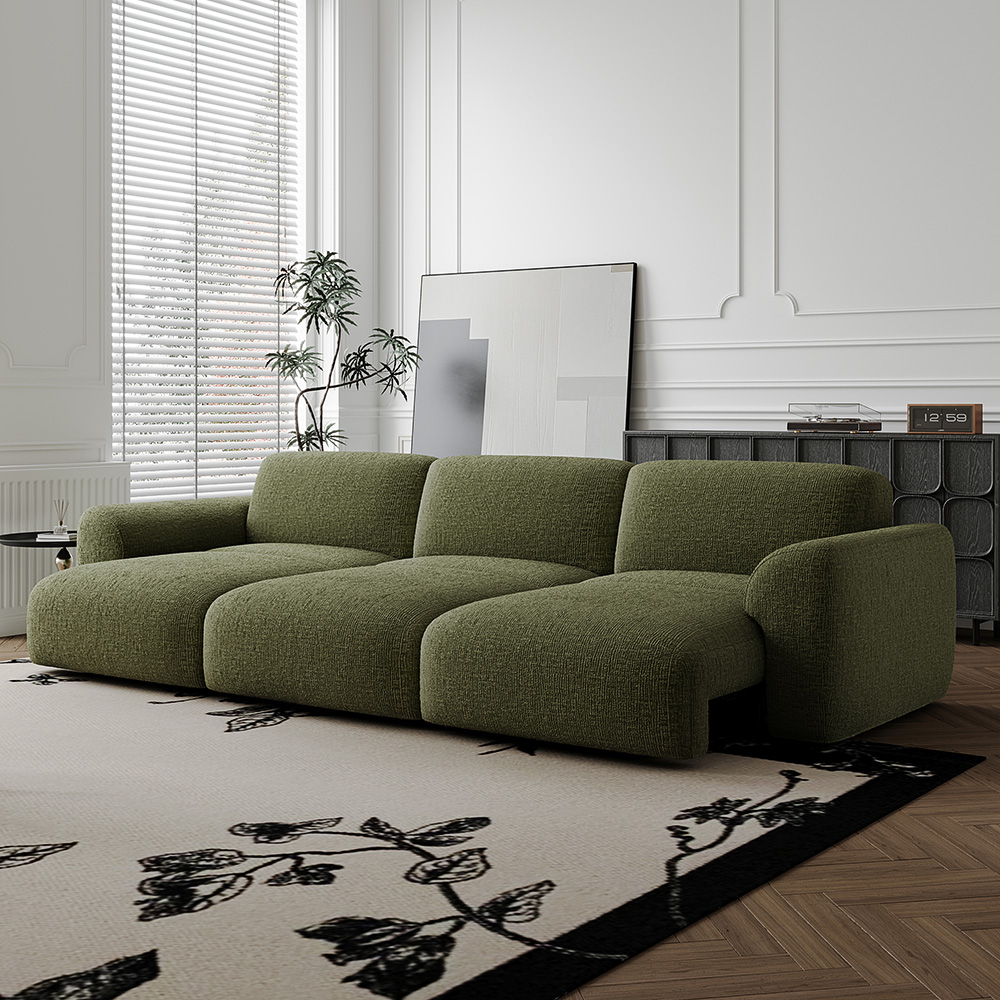
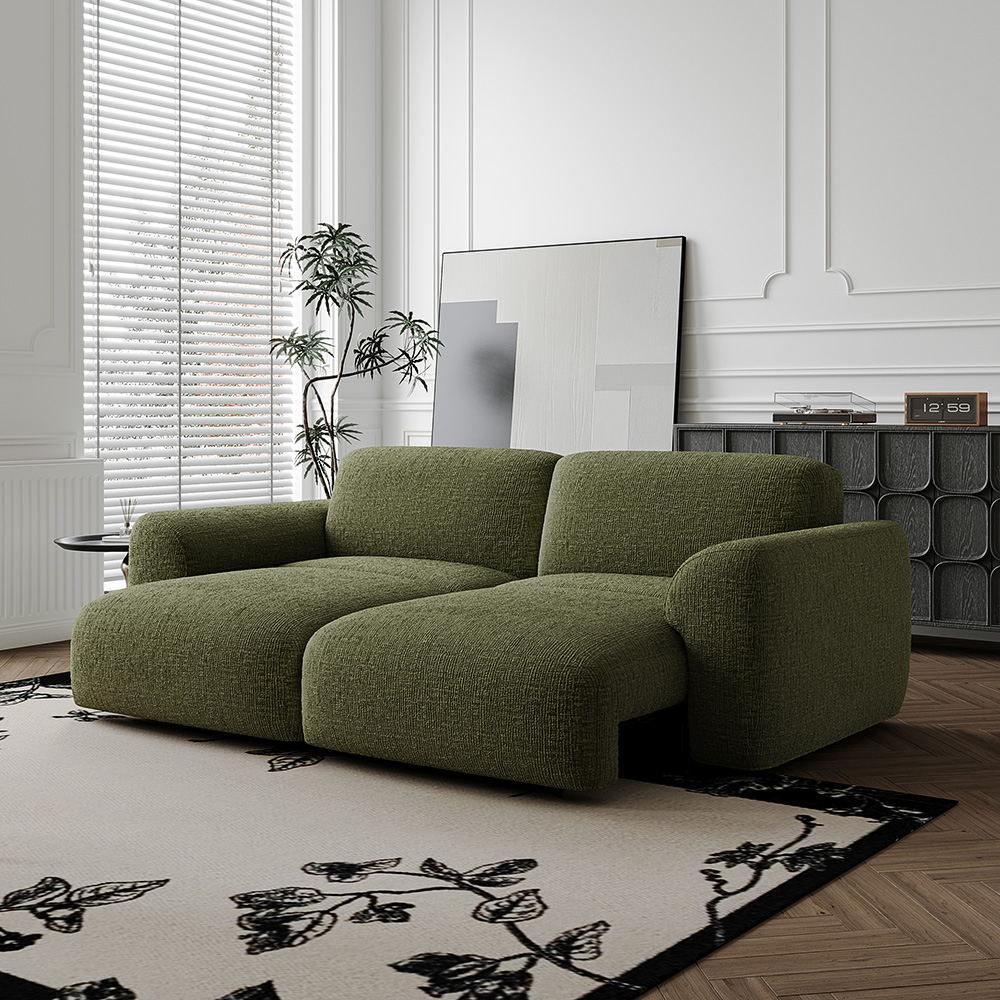
Patterned sofas are making a tailored comeback in 2026, with tighter silhouettes and modern palettes replacing the bold prints of the 1980s. Curved and biomorphic shapes dominate new releases—asymmetrical forms inspired by river stones and organic geometry. Low-profile designs sit closer to the floor, with many positioned as freestanding 360-degree objects rather than wall-huggers. Bouclé, linen, and performance velvet lead fabric trends, offering tactile warmth with stain resistance. Soft neutrals, mocha browns, and sage greens anchor color choices, while sculptural wooden legs and matte metal bases replace chrome and brass accents.
What the Best Options Have in Common
The best couches of 2026 share generous seat depths (25-31 inches), high-resilience foam cores with feather or fiber wraps, and kiln-dried hardwood frames built for 10+ year lifespans. Top-rated options include modular sectionals that ship in compact boxes for easy apartment delivery, and deep-seat cloud couches that accommodate napping and movie nights equally well. Povison's couch lineup arrives fully assembled with performance fabric upholstery, saving buyers the hours of assembly that flat-pack competitors require. Look for USB charging ports, machine-washable covers, and pet-friendly textures as standard features across the best 2026 models.
Research draws from HGTV's expert sofa reviews, Apartment Therapy's hands-on testing, Homes and Gardens' 2026 trend report, and Living Spaces' designer-picked style guide.
Frequently Asked Questions
Everything you need to know about couch
A standard couch measures 78-90 inches wide, 30-40 inches deep, and 30-36 inches tall. The most common length is 84 inches, providing comfortable seating for three adults. Seat height typically ranges from 17-18 inches off the floor, which suits most adults between 5'4" and 6'0" tall.
Kiln-dried hardwood frames made from oak, maple, or beech last 15-20+ years and provide the sturdiest foundation. Engineered wood or softwood frames typically last only 5-7 years. When shopping for a couch, check that corner joints are doweled and glued rather than stapled. Avoid frames made entirely from particleboard or plywood.
A durable, well-constructed couch typically costs $1,200-$3,500. Budget models under $800 often use softwood frames and low-density foam that degrades within 3-5 years. Povison offers fully assembled couches with hardwood frames and high-resilience cushions in the $1,500-$3,000 range, delivering strong value for the construction quality.
Performance fabrics like Crypton, Sunbrella, and tight-weave microfiber resist stains, scratches, and pet hair. These materials clean easily with soap and water. In 2026, 78% of designers named stain-resistant performance fabrics as the top upholstery trend. Look for fabrics rated at 30,000+ double rubs for high-traffic durability.
Measure your room length and width, then subtract 36 inches on each side for walkways. A standard couch needs at least 10 feet of wall space including end tables. Tape the couch footprint on your floor before purchasing. Also measure doorways, hallways, and stairwells to ensure delivery access, with most needing at least 30 inches clear width.
High-density foam at 2.5 lb or above lasts 8-15 years and resists sagging best. Pocket-coil cushions wrapped in foam offer bounce plus support and can last even longer. Avoid low-density foam (under 1.8 lb), which flattens within 2-3 years. For premium comfort, look for a layered construction: high-density foam core wrapped with down or polyester fiber. Budget around $1,200-$2,500 for sofas with quality cushion fills.
A standard 3-seater sofa weighs 150-300 lbs depending on frame material and upholstery. Leather and hardwood-frame models sit at the heavier end. Most residential floors support 40 lbs per square foot, and a sofa distributes weight across 12-18 sq ft of footprint, so structural concerns are rare. For upper-floor apartments, check with management if your sofa exceeds 250 lbs. Povison sofas ship with detailed weight specs for easy planning.
Rubber-tipped or felt-padded legs protect hardwood floors best. Solid wood legs (walnut, oak) with felt pads combine aesthetics and floor protection. Avoid bare metal legs, which can scratch and dent flooring. Leg height also matters: 4-6 inch legs allow robot vacuums underneath and make rooms feel more open. For heavy sofas over 200 lbs, use wide-base legs or glides that distribute weight across a larger contact area.
Online sofas are typically 20-40% cheaper due to lower overhead costs. Brands now offer free fabric swatches, AR room visualization, and 30-day trial periods to reduce risk. In-store lets you test firmness and sit comfort firsthand. A smart hybrid approach: research and compare online, request swatches, then visit a showroom if available. Check return policies carefully; quality online retailers offer free returns within 14-30 days.
Plan to replace a mid-range sofa every 7-10 years and a high-quality sofa every 12-15 years. Signs it is time include visible sagging (more than 1 inch), creaking frames, foam that does not bounce back, or worn-through fabric. Rotating and flipping cushions every 3-6 months extends lifespan by 20-30%. Reupholstering costs $800-$2,500 and can add another 5-8 years, making it worthwhile for well-built frames.
Complete Your Living Room
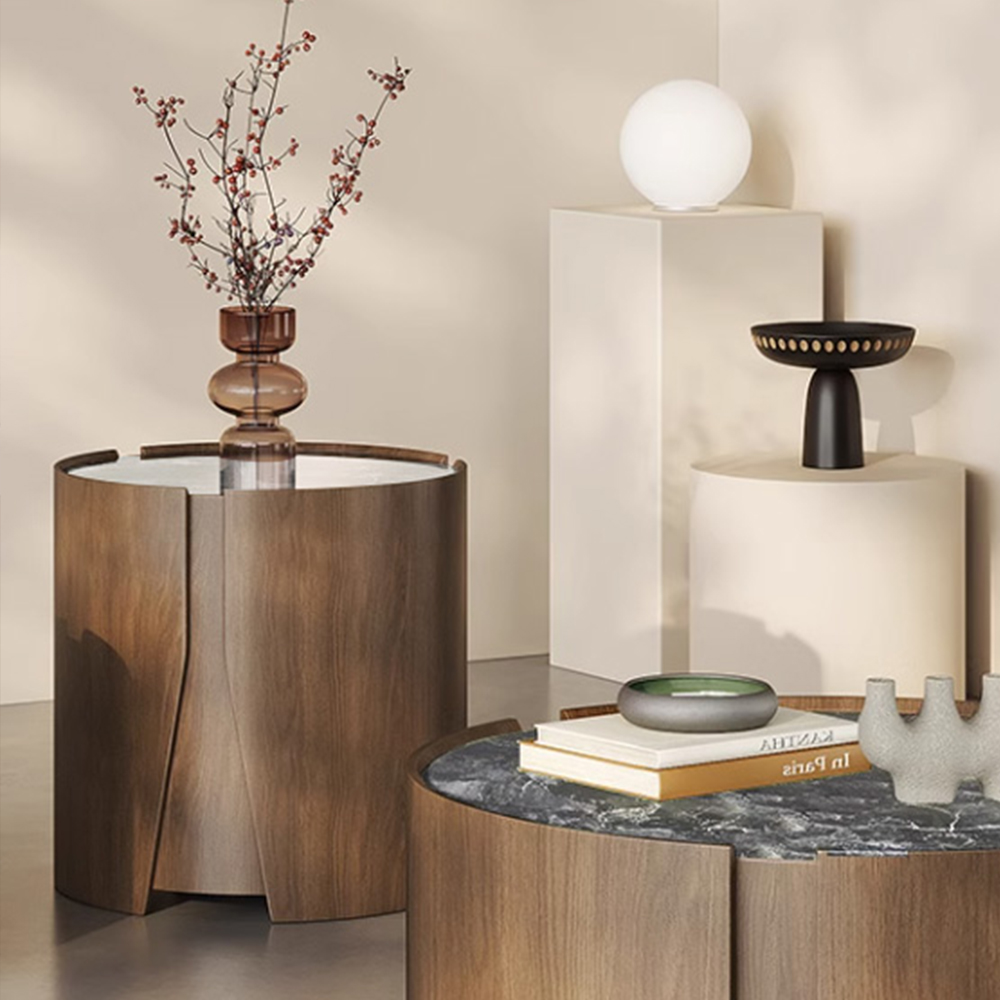
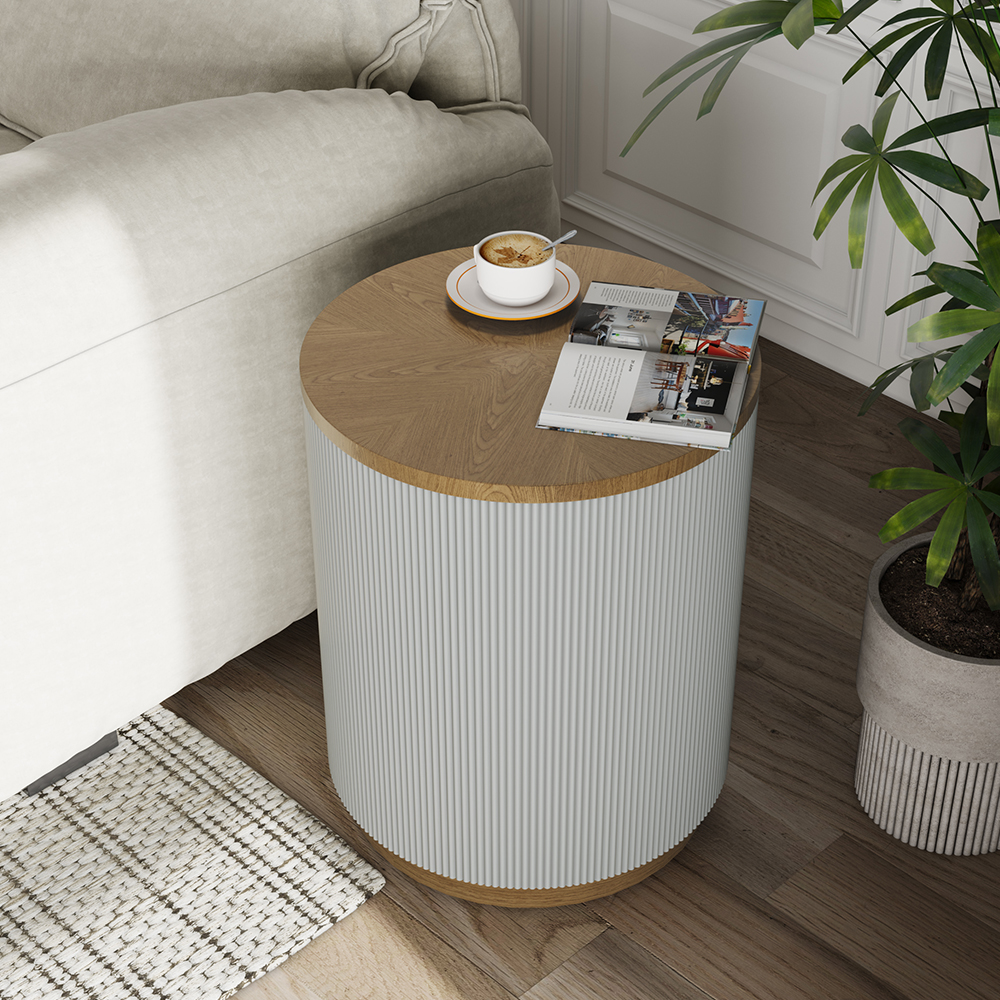
Pair your couch with these popular picks
Couch — Comfort Meets Modern Design
Buying a couch is one of the most important furniture decisions for any home. The right couch anchors your living room, provides daily comfort, and should last 10-15 years with quality construction. Standard couch dimensions measure 78-90 inches wide and 30-40 inches deep, though compact models starting at 72 inches suit smaller apartments. When evaluating a couch, prioritize kiln-dried hardwood frames and high-resilience foam cushions over surface aesthetics.
Modern couch design in 2026 emphasizes performance fabrics, sustainable materials, and deeper seats for lounging comfort. Popular couch styles include classic three-seaters, L-shaped sectionals for families, and modular configurations that adapt to changing room layouts. The best couch fabrics resist stains and pet damage while maintaining a soft hand feel, with Crypton and Sunbrella leading the performance upholstery category.
Povison offers a curated couch collection featuring fully assembled pieces delivered directly to your living room. Every Povison couch uses hardwood frames, high-density foam cores, and premium upholstery fabrics. Their fully assembled delivery model means your new couch arrives ready for immediate use without tools, instructions, or frustration.