 By Kate
Introduction
Finding fresh claw marks on your leather couch is frustrating, especially when the damage looks small but risky to treat. The wrong cleaner, too much rubbing, or a mismatched color balm can make the spot more obvious. This guide explains how to repair cat scratches on leather sofa surfaces by damage type, from light scuffs to rough claw marks and tiny punctures. Before using any product, test it on a hidden area first and let it dry fully.
Table of Contents
What Types of Cat Scratches Are on Your Leather Sofa?
Before you start fixing anything, slow down and inspect the surface. Cat scratches on leather sofa areas can look similar at first, but they behave very differently under touch, light, and cleaning. Use your fingertips, not your fingernails, to feel whether the surface is smooth, grooved, rough, or broken.
| Damage type | 30-second finger test | Common on | DIY level | Best next step |
|---|---|---|---|---|
| Light surface lines | Looks pale but feels mostly smooth | Protected leather, performance leather | Easy DIY | Clean, balm, buff, condition |
| Fine grooves | You can feel a shallow line | Genuine leather, faux leather | Careful DIY | Clean, light color touch-up |
| Rough fibers | Feels fuzzy or lifted | Genuine leather | Careful DIY | Trim fibers, bind, sand lightly |
| Tiny claw holes | Small punctures or dots | Softer leather | Advanced DIY | Binder, filler, color, seal |
| Cracking, peeling, large damage | Flakes, splits, or exposed backing | Bonded leather, old faux leather | Professional | Repair quote or replacement |
Genuine leather often accepts filler and dye better because it has a natural fiber structure. Faux leather may accept surface color repair, but it can peel if sanded too hard. Bonded leather is the least forgiving; once it starts flaking, many repairs only hide the damage for a short time.

What Tools Do You Need Before Repairing Cat Scratches?
The right tools help you control the repair instead of guessing. You do not need every product for every scratch. Light marks may only need cleaner, balm, and conditioner. Deeper claw damage may need binder, filler, colorant, and sealant. Keep each step thin, clean, and patient.
| Tool | What it helps fix | Use it when |
|---|---|---|
| Microfiber cloth | Dust, loose residue, gentle buffing | Every repair |
| Leather cleaner | Oils, dirt, conditioner buildup | Before applying balm, glue, or dye |
| Small scissors | Raised fibers | Fibers are sticking up from claw marks |
| Cotton swab | Precise color or glue application | Small scratches and punctures |
| Fine sandpaper | Uneven repaired texture | Only after binder or filler dries |
| Leather conditioner | Dryness and dull finish | After light repairs or final curing |
| Leather binder or glue | Lifted fibers and rough claw marks | Damage feels fuzzy or raised |
| Leather filler | Small gaps, tiny holes, shallow gouges | Damage has depth |
| Color-matched balm or dye | Pale scratches and color loss | Scratch is lighter than the sofa |
| Sealant or finish | Protects color repair | After dye or filler work |
Avoid quick fixes that are hard to reverse. Olive oil can darken leather. Shoe polish can transfer to clothing. Harsh cleaners can strip the finish. A soaking wet cloth can swell the damaged area and make rough fibers worse.
How to Repair Light Cat Scratches on a Leather Sofa?
Light scratches are the best DIY candidates. They usually affect the top finish, not the leather structure underneath. This is the practical path for how to fix cat scratches on leather when the surface still feels smooth and the color loss is mild. Work slowly and check the repair in daylight before adding more product.
Step 1:Clean the Scratched Area
Start with a dry microfiber cloth to remove dust and loose particles. Then apply a small amount of leather cleaner to the cloth, not directly onto the sofa. Wipe a little beyond the scratched area so the finish blends evenly. Do not scrub back and forth. In a sunny family room, pale claw lines near an armrest often look worse because dirt collects inside the mark, so cleaning alone may already soften the contrast.
Step 2:Let the Leather Dry Completely
Drying time matters more than most people think. A damp surface can block balm, dye, or conditioner from absorbing evenly. Let the area air-dry for at least 20 to 30 minutes, longer if the leather feels cool or tacky. Keep heat guns, hair dryers, and direct sunlight away from the spot. Heat can stiffen leather and make small scratches look sharper.
Step 3:Massage with Leather Cream or Balm
Apply a tiny amount of leather cream or colorless balm with a clean cloth. Use soft circular motions and stop if the scratch darkens too quickly. The goal is to relax the finish and reduce the white or pale line, not flood the leather. This works best on protected leather and performance leather. On aniline or very absorbent leather, even mild cream can leave a darker halo.
Step 4:Add Color in Thin Layers
If the scratch still looks pale after conditioning, use a color-matched leather balm or dye. Apply it with a cotton swab or small sponge. Use thin layers, let each layer dry, and check the color from several angles. Light beige, cream, and gray leather are harder to match than brown or black. A near match usually looks better than a heavy layer that sits on top.
Step 5:Buff the Repaired Area
Once the color looks close, buff the area gently with a clean microfiber cloth. This removes extra product and helps the repaired spot blend with the surrounding finish. Do not press hard. If the cloth picks up color, wait longer before buffing again. A repaired corner that feels smooth by touch can still flash under a floor lamp at night, so check it under different lighting.
Step 6:Condition the Surrounding Leather
Finish with a small amount of leather conditioner over a wider area, not only the scratch. This prevents one glossy spot from standing out. Conditioning also helps keep the leather flexible after cleaning and color touch-up. This repair-first approach stays separate from training topics such as how to stop cats from scratching sofas, which should come after the surface is stable.
How to Fix Deeper Claw Marks, Rough Fibers, or Tiny Holes?
Deeper claw marks need a different mindset. You are no longer just hiding a pale line; you are rebuilding a smoother surface. If you are learning how to repair cat scratches on leather sofa surfaces with rough fibers or tiny holes, use thin applications and drying time. One thick patch often looks more obvious than the original damage.
Step 1:Clean Around the Damage
Use leather cleaner and a microfiber cloth to remove skin oils, dust, pet hair, and old conditioner. Products like binder and filler need a clean surface to grip. Avoid soaking the scratch, especially if fibers are exposed. If the area feels sticky, greasy, or waxy, clean again and let it dry. Never start filler work on a surface that still feels damp.
Step 2:Trim Loose Fibers Carefully
If small fibers are standing up, trim only the loose ends with sharp scissors. Keep the scissors flat and avoid cutting into the leather surface. Do not pull the fibers, because pulling can widen the scratch. This step is especially useful when the cat has dug into the sofa while stretching. The cleaner the surface, the less filler you will need later.
Step 3:Apply a Small Amount of Leather Binder
Use a cotton swab or small sponge to apply leather binder or flexible leather glue over the rough area. Keep the layer thin. The binder helps lay lifted fibers down and gives the surface more strength before sanding or filling. Let it dry fully according to the product directions. Repeat only if the fibers still feel loose after the first coat.
Step 4:Let Each Layer Dry
Rushing the drying stage is one of the easiest ways to ruin the repair. Binder, glue, filler, dye, and sealant all need time to settle. If you layer products too quickly, the surface can wrinkle, gum up, or peel later. A safe rule is simple: if the spot feels cool, sticky, or soft, it is not ready for the next step.
Step 5:Sand Lightly for a Smoother Base
Once the binder is dry, use fine sandpaper with a very light touch. The goal is to level rough fibers, not remove the leather grain. Sand only the damaged area and stop often to check the texture. Wipe away dust with a dry cloth. If the scratch has become a true split or exposed backing, the process for how to repair a leather tear on sofa becomes more structural.
Step 6:Fill Tiny Holes in Thin Layers
Apply leather filler only where there is visible depth, such as a small puncture, shallow gouge, or claw hole. Use a palette knife, toothpick, or repair kit tool. Keep the filler slightly below or level with the surface. Thin layers look more natural than one thick layer. Let each layer dry, then add more only if the groove is still visible.
Step 7:Sand Again After Filler Dries
After the filler cures, sand lightly to blend the repaired area into the surrounding leather. Use small movements and avoid spreading the repair zone wider than needed. Wipe the surface clean before color work. If the filler crumbles, peels, or feels rubbery, it may not be dry enough or the surface was not clean before application.
Step 8:Restore Color and Seal the Repair
Use a color-matched dye or balm in thin layers. Blend outward slightly so the repaired patch does not look like a dot. Once the color looks even and dry, apply a leather sealant or finish if your repair kit includes one. Sealant helps protect the color from rubbing off. After curing, condition the surrounding leather lightly to even out the sheen.
When Should You Call a Professional or Replace the Sofa?
DIY repair works well for small surface marks, but it has limits. Professional repair is safer when the leather is valuable, delicate, heavily damaged, or already weakened. Replacement also becomes reasonable when the sofa has structural problems, old peeling upholstery, or repeated damage in the same high-use area.
Call a professional when:
- The leather is scratched through to the backing.
- The damage covers a large section of the seat, arm, or back.
- The sofa is aniline leather, luxury leather, or very light-colored leather.
- Bonded leather is peeling or flaking around the scratch.
- Your DIY repair created uneven color, shine, or texture.
- The cushion is torn, sagging, or losing shape beneath the scratch.
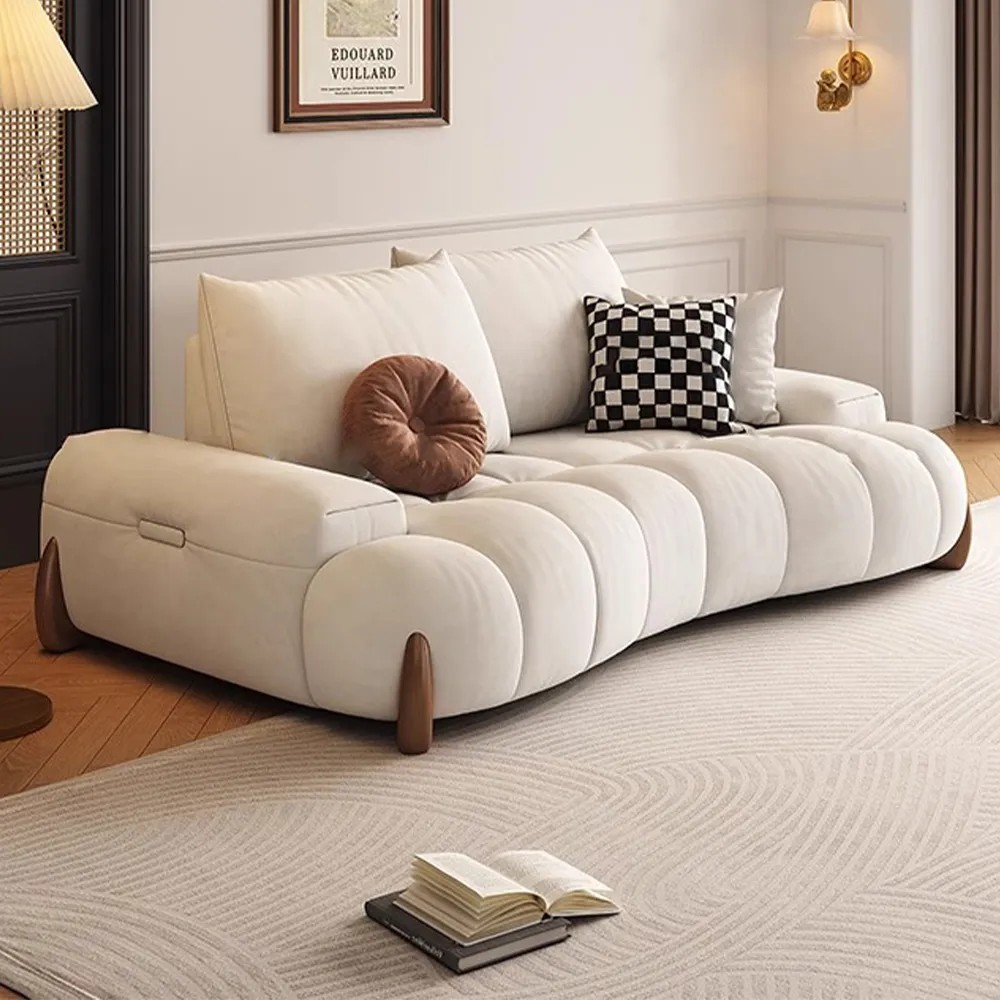
Replacing the sofa may make more sense when repair costs keep rising. If the frame is unstable, the cushions are flat, and the surface is peeling, a new sofa can be the better long-term choice. Homes with cats may also benefit from pet-friendly sofa materials that reduce visible claw damage while staying comfortable for daily use.
If your cat keeps returning to the same repaired corner, it may be worth rethinking the upholstery rather than repeating the same touch-up. A pet-friendly fabric sofa can offer a softer, more relaxed surface for everyday pet-friendly living, especially in homes where comfort and easy upkeep matter as much as appearance.
Conclusion
The safest way to decide how to repair cat scratches on leather sofa surfaces is to judge the damage first, then match the method to the scratch. Smooth pale marks can often be cleaned, blended, buffed, and conditioned at home. Rough fibers, grooves, and tiny holes need binder, filler, color, and sealant. Large tears, peeling bonded leather, and high-value leather are better handled by a professional. After repair, protect the same spot so your cat does not return to it.
FAQ
Can cat scratches be completely removed from leather?
Light scratches can often be made much less visible, especially on protected leather. Deep claw marks are usually repaired and blended rather than fully erased. The final result depends on leather type, color match, damage depth, and how well the finish accepts dye or balm.
Can I use olive oil on cat scratches?
Olive oil is not a safe default fix. It can darken leather, create oily patches, and attract dust. If you still want to test it, try it only on a hidden area first. Leather cleaner, conditioner, and color-matched repair products are usually safer.
Do leather repair kits work for cat scratches?
Yes, leather repair kits can work on shallow grooves, tiny holes, and light color loss. The key is color matching, thin layers, and proper drying time. They are less reliable on peeling bonded leather, large torn areas, or absorbent aniline leather.
Can faux leather cat scratches be repaired the same way?
Not exactly. Faux leather does not behave like genuine leather. It can accept surface color repair, but sanding, heat, and heavy filler may cause peeling. If the surface coating is lifting, a patch or professional repair may look better than repeated DIY touch-ups.
How do I stop my cat from scratching the repaired spot again?
Place a sturdy scratching post near the sofa, trim claws regularly, and use sofa-safe deterrent tape or a washable cover on the repaired area. Reward your cat when it uses the correct scratching surface. Keep prevention simple so the repair has time to cure.


