 By Kelvin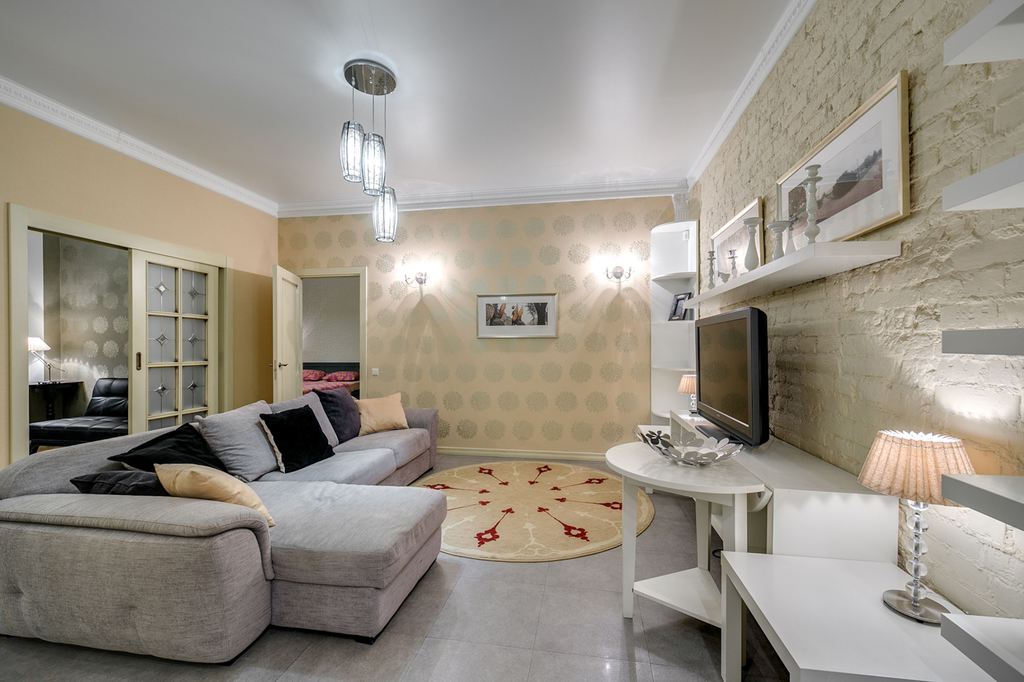
Introduction
A coffee table is useful, but it is not required for a comfortable, finished living room. If you are deciding how to decorate a living room without a coffee table, focus on replacing the functions you actually use: a reachable surface, shared serving space, storage, and a visual anchor. This guide shows you how to keep the center open without making the room feel empty or inconvenient. You will also learn when side tables, nesting tables, an ottoman, or a multifunctional sofa surface make more sense.
Table of Contents
Do You Need a Coffee Table in Your Living Room?
It depends on how you use the room. A coffee table is optional when other furniture can provide the surfaces, storage, and visual structure you need. It is still useful when the household regularly relies on one shared area for meals, games, work, or entertaining.
Consider skipping the coffee table when:
- It narrows the main walkway or makes the seating area difficult to enter.
- Children or pets need a clear central area for daily activity.
- A recliner, footrest, or modular sofa needs more operating space.
- Side tables, a C-table, or a multifunctional sofa surface already serve the regular seats.
- The room is mainly used for watching TV, reading, or casual conversation.
Keep a coffee table when:
- Several people regularly share drinks, snacks, or serving dishes.
- You use the living room for board games, crafts, laptop work, or casual meals.
- The table provides storage that cannot be reassigned conveniently.
- Smaller tables would create more clutter than one central surface.
- Some regular seats would otherwise have nowhere stable to place everyday items.
Before deciding, check:
- Does the table improve or interrupt circulation?
- Can every frequently used seat reach another stable surface?
- Do you need one shared surface rather than several individual ones?
- Would removing it make storage or entertaining less convenient?
A coffee table should stay when it supports real routines. It can be removed when its functions are covered elsewhere and the open center makes the room easier to use.
What Functions Must You Replace?
Learning how to decorate a living room without a coffee table starts with a function audit. Do not replace one large table with three small pieces unless each new item solves a specific need.
Coffee tables usually perform four jobs: they provide a reachable surface, create shared serving space, store everyday items, and visually connect the sofa with the rug and chairs. Your room may need all four, only one, or none.
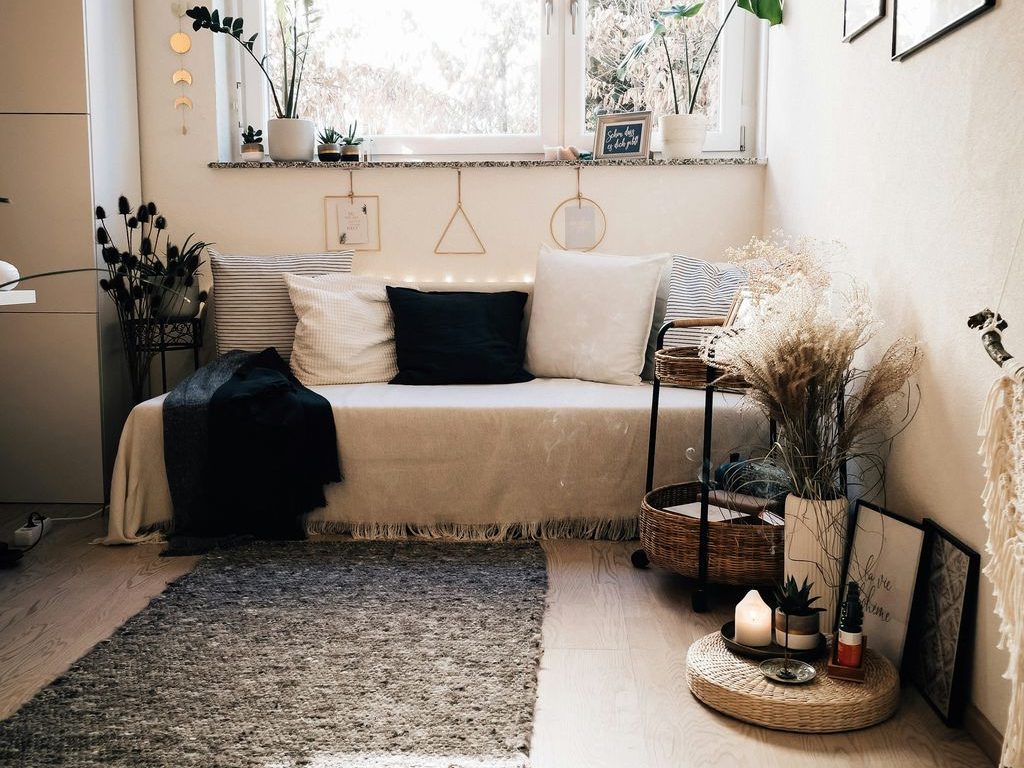
Use a seat-by-seat reach test. Sit in every position used at least several times a week. Without leaning far forward, twisting behind you, or standing up, check whether you can place and retrieve a cup, phone, or remote. Pay special attention to the middle seat of a long sofa, the chaise end of a sectional, and any accent chair facing the sofa.
Test storage separately. Remotes may fit in a side-table drawer or media console, while blankets and toys may need a basket, sideboard, or storage ottoman. Perimeter storage works only when daily cleanup remains convenient.
Finally, identify whether you need a shared surface. Two viewers may use separate side tables; six guests sharing snacks need nesting tables or another stable temporary surface.
How Do You Keep the Room Balanced Without One?
Without a table in the middle, the sofa, rug, lighting, and focal wall have to create a clear seating zone together. The goal is not to fill every open area. It is to make the empty center look deliberate while ensuring the surrounding furniture relates in scale, direction, and visual weight.
Anchor the Seating With the Rug
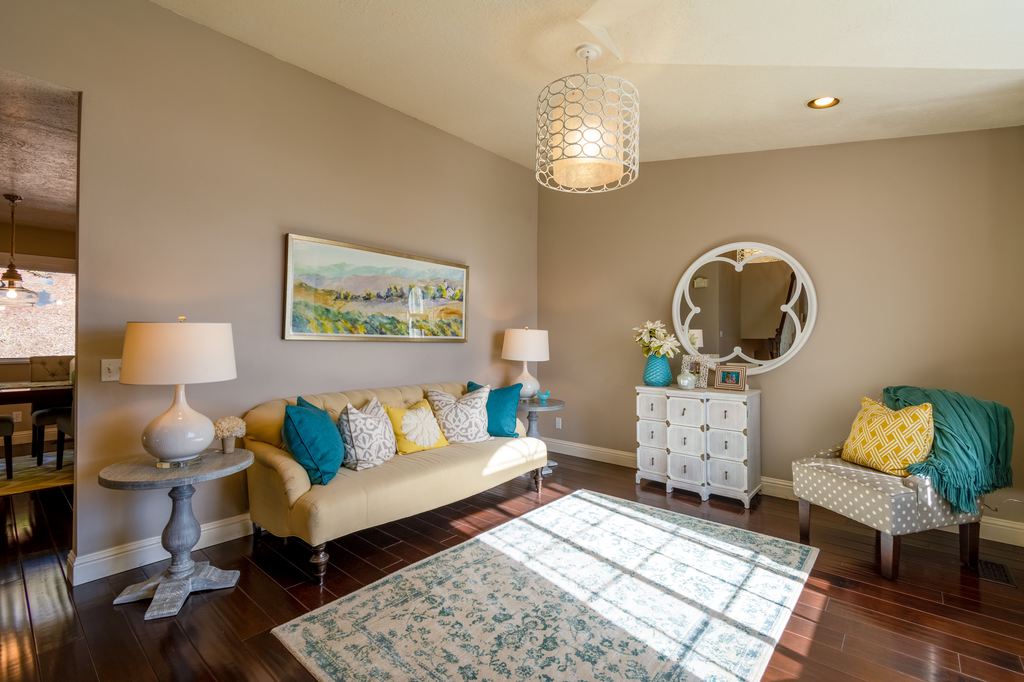
Use one rug to connect the main seats. In most layouts, placing at least the front legs of the sofa and chairs on the rug creates a stronger group than leaving a small rug floating in the center. The rug should extend far enough to remain visible after the seats are occupied.
A neutral textured rug can ground colorful seating, while a patterned rug can give a plain arrangement more structure.
Bring the Seats Into One Clear Group
Removing the coffee table does not mean pushing the furniture against the walls. Keep conversational seats oriented toward one another or toward the same TV, fireplace, or window view. When chairs sit too far from the sofa, the open center reads as unused space rather than useful negative space.
One chair and a floor lamp can balance a sofa without a matching pair. Using asymmetrical balance in interior design helps the room feel complete without identical furniture on both sides.
Move Decor to the Perimeter
Shift books, decorative objects, charging equipment, and concealed storage toward furniture that already sits against or near a wall. A media console can hold remotes and controllers. A slim console behind a floating sofa can support a lamp and charging station. Wall art can provide a focal point without occupying floor area.
Keep perimeter surfaces edited; shifting coffee-table clutter to every side table makes the room busier, not more open.
Treat the Open Center as Useful Space
An open center should support a real activity. It may provide a safer play route, room for a dog to settle near the family, space to unfold a floor cushion, or a wider path during gatherings.
On a weekday evening, a family can leave the rug clear for play and use two side surfaces for drinks. When friends visit, lightweight nesting tables can move into the center for snacks, then return to the side afterward. The room changes without requiring a permanent obstacle.
Which Coffee Table Alternatives Fit Your Routine?
Choose coffee table alternatives according to who needs the surface, what it holds, and whether it must move. The table separates everyday benefits from limitations.
| Option | Works Well For | Check Before Choosing |
| Side tables | Drinks, phones, lamps, and remotes beside one or two seats | Confirm the middle sofa seat and separate chairs are not left without access |
| Nesting tables | Occasional guests and temporary shared serving | Plan where every table will sit when separated and stored |
| C-table | Laptop use, reading, or meals for one person | Check whether the base slides under the sofa and clears reclining parts |
| Ottoman with a tray | Footrest, casual seat, and flexible family-room use | Use a rigid, nonslip tray for drinks and confirm the fabric can be cleaned |
| Multifunctional sofa arm | Compact rooms that need a nearby surface without central furniture | Verify that the surface is designed for use and serves the intended seat |
| Console behind the sofa | Lamps, charging, display, and some storage | It may be too high or far away for seated drink access |
| Nothing in the center | Children, pets, exercise, and frequently changing layouts | Provide essential surfaces around the seating perimeter |
An ottoman does not automatically solve the same problem as a hard table. The decision between an ottoman coffee table vs coffee table depends on whether soft seating and a footrest matter more than a rigid, wipeable surface.
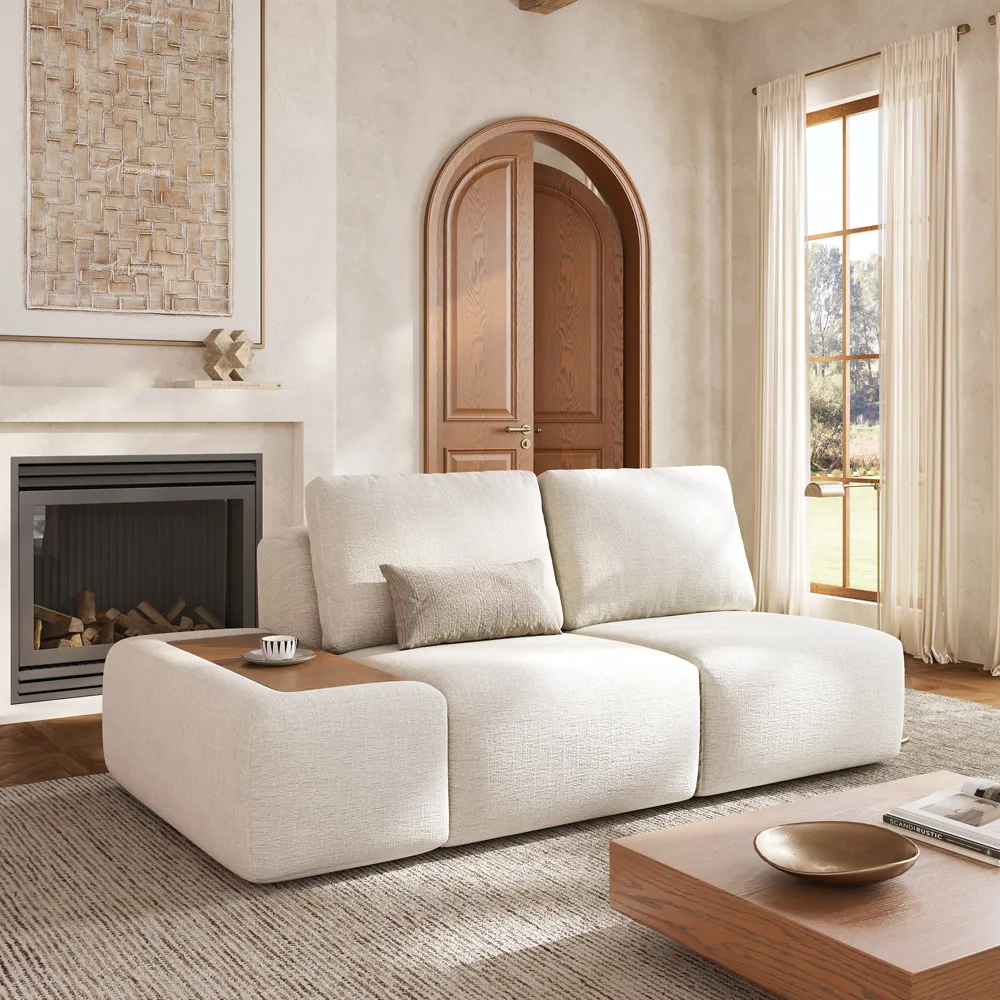
For compact rooms with adaptable seating, the Moku Modular Block Sofa Side Armrest Unit uses a flip armrest as a side table, footrest, wider seat, or pet resting spot. The beige module uses soft 100% polyester chenille, and the water-repellent surface helps with light spills. It serves nearby seating without replacing a shared table for games or larger gatherings.
What Makes a Coffee-Table-Free Room Feel Unfinished?
A room usually feels unfinished because the remaining furniture has no clear relationship, not simply because the coffee table is missing. Check these problems:
- All surfaces sit at one end of the sofa. The middle and opposite-end seats become inconvenient.
- Too many small substitutes enter the room. Several stools, poufs, and accent tables may occupy more visual and physical space than one table.
- The rug is too small or disconnected. It looks like an object placed in the gap instead of an anchor for the seating.
- There is no defined focal direction. Seats point toward unrelated walls, doors, and windows.
- Open space has no purpose. A clear center works when it protects movement or supports an activity, not when furniture simply looks missing.
- Soft surfaces are treated like rigid tables. Drinks placed directly on padded ottomans or ordinary upholstered arms are easier to tip and harder to clean.
Use the room for several days before buying replacements. Notice where cups end up, which seat lacks a surface, and whether people keep dragging furniture into the center.
Conclusion
Knowing how to decorate a living room without a coffee table means replacing necessary functions, not automatically replacing the furniture itself. Start by checking movement, seat-by-seat reach, storage, and the activities that need a shared surface. Then use the rug, seating arrangement, lighting, and focal wall to make the open center feel intentional. Side tables, nesting tables, an ottoman, or a multifunctional sofa surface can fill specific gaps. Keep a traditional table when regular meals, games, work, or frequent entertaining still require one stable shared area.
FAQ
Where Should a Side Table Go Beside a Reclining Sofa?
Place it outside the footrest’s full movement path but close enough to reach in both upright and reclined positions. Open the recliner completely before marking the location. Route power cords behind or beside the sofa rather than between the table and moving footrest, where they could be pulled, pinched, or disconnected.
How High Should a Side Table Be Next to a Sofa?
Choose a tabletop close to the sofa arm height. A surface slightly below the arm is generally easier to use than one several inches above it. Measure from the floor to the top of the sofa arm, then compare that measurement with the listed table height before buying.
Should an Ottoman Tray Stay in Place All Day?
Not when the ottoman regularly serves as a footrest or extra seat. Choose a lightweight tray with handles so it can be removed quickly, and store it on a nearby console or shelf. Leaving a loaded tray in place can limit the ottoman’s function and increase spill risk when someone sits down unexpectedly.
Do Side Tables Have to Match Each Other?
No. Side tables can differ in shape, height, or size when they repeat one visible feature, such as wood tone, metal finish, color, or visual weight. Choose each table for the seat it serves. Avoid pairing one bulky closed cabinet with a delicate table unless another furnishing balances the difference.
Can an Open-Plan Living Room Skip a Coffee Table?
Yes, but the seating zone still needs a clear boundary. Use a sufficiently large rug, the back of a floating sofa, or coordinated lighting to separate it from the dining area. Keep the route between zones open, and place side surfaces where they will not interfere with dining chairs or kitchen circulation.


[…] always. If your living room is ultra-narrow, you can skip a central table and use nesting side tables, a compact small space coffee table that slides under the sofa, or an […]
[…] tables, or no center table at all. If other surfaces already handle drinks, remotes, and lamps, decorating a living room without a coffee table can free valuable floor space without reducing […]