 By Stephanie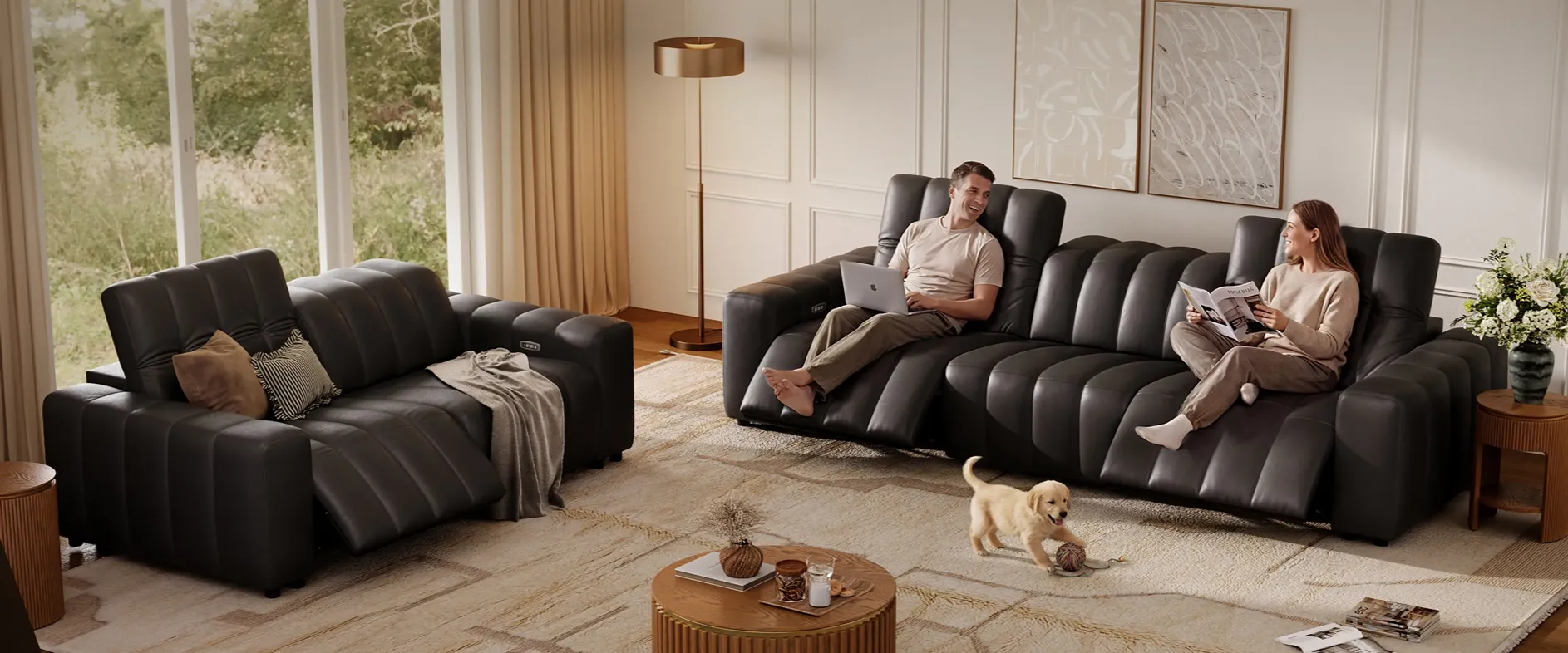
Recliner dimensions determine more than whether a chair fits beside a wall. They affect how easily someone can sit down, support their legs, reach a side table, open the footrest, and move through the room while another person is reclining. This guide explains the measurements that affect body support, reclining movement, room layout, and delivery access. It also distinguishes between single recliners, reclining loveseats, and larger sofas, helping you choose seating that works for both the room and the people who use it every day without wasting space.
Table of Contents
Recliner Dimensions at a Glance
Reclining furniture has no universal size standard. Arm thickness, cushion shape, mechanism type, and seating capacity change the footprint. Use these ranges to screen options, then confirm every figure on the exact product page before deciding whether a model fits.
| Reclining furniture type | Typical width | Typical closed depth | Best suited to | Frequently missed measurement |
| Compact single recliner | 30–36 in. | 34–40 in. | Apartment corner or bedroom | Fully open length |
| Standard single recliner | 36–44 in. | 36–42 in. | Living room or media room | Usable seat width |
| Oversized single recliner | 44–55 in. | 38–45 in. | Deep lounging | Delivery and turning space |
| Reclining loveseat | 55–75 in. | 36–43 in. | Two regular users | Both seats open together |
| Three-seat reclining sofa | 78–100 in. | 36–43 in. | Family seating | Which seats move |
| Reclining sectional | Configuration-specific | Configuration-specific | Corner or large layouts | Combined motion zones |
Recliner Dimensions for Body Fit
A recliner can fit the room and still feel wrong for the person using it. Instead of judging comfort from one seated position, check how the chair supports the body while sitting upright, moving into a recline, and resting fully back. Each position reveals a different sizing problem.
Seat Height and Ease of Standing
Start in the upright position with the hips against the back cushion. Both feet should rest firmly on the floor without the user sliding forward, pointing the toes downward, or feeling strong pressure behind the knees. OSHA’s general chair guidance also notes that the feet should be fully supported and that seat depth should allow the user to sit with the back fully supported (Occupational Safety and Health Administration).
Seat height also affects how easily someone can stand. If the knees rise noticeably above the hips or the user must push forward from the edge before getting up, the seat may be too low or too deep. A slightly higher seat can provide better leverage for taller adults and people who find low seating difficult.
Do not rely only on the listed seat height. A soft cushion may compress several inches under body weight, so the chair should be tested after the user has settled into it rather than immediately after sitting down.
Seat Depth and Upright Back Support
The back should remain in contact with the cushion while most of the thighs are supported. Ideally, the seat edge should stop before it presses firmly into the backs of the knees.
A seat is probably too deep when the user must choose between keeping the back supported and placing both feet on the floor. During one fit check, a 5-foot-3 sitter found a deep lounge chair comfortable at first but needed a thick pillow behind the back to keep both feet grounded. The pillow solved the reach problem, but it also showed that the original seat depth did not match the user.
A seat may be too shallow when a taller user feels most of the body weight concentrated near the hips or receives little support beneath the thighs.
Reject a recliner if normal upright use requires a permanent back pillow, causes repeated forward sliding, or leaves the thighs unsupported. Those are sizing problems rather than minor comfort preferences.
Seat Width, Back Height, and Footrest Support
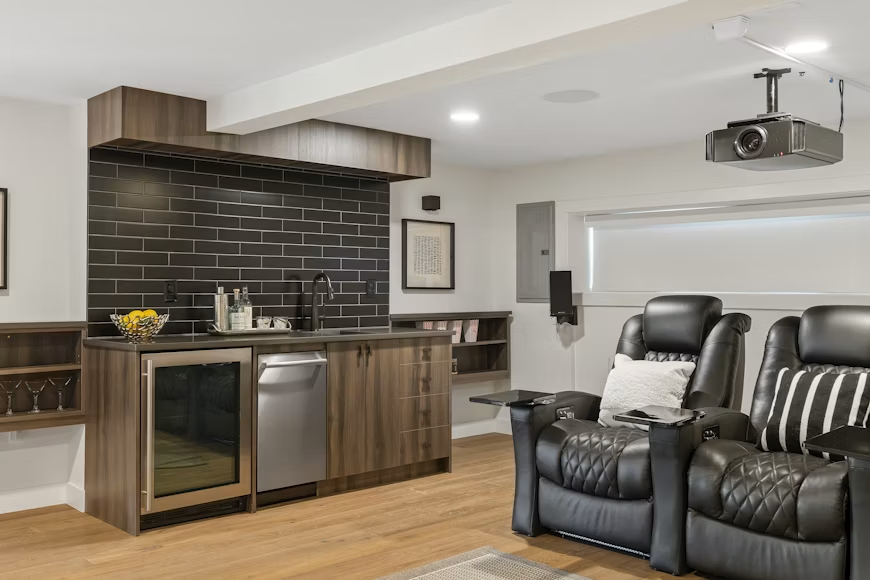
Overall chair width includes the arms and does not reveal how much sitting space is available. Compare the usable seat width between the arms, especially on recliners with thick padding or curved sides. The user should be able to shift position, rest the elbows naturally, and wear heavier clothing without feeling compressed.
Back height should support the shoulders and head in the reclined position. A back that ends below the shoulders may feel acceptable while sitting upright but provide too little support during longer TV sessions or naps. At the same time, an overly prominent headrest can push the head forward even when the listed back height appears suitable.
The footrest should support the lower legs without concentrating pressure in the middle of the calves. In a fully reclined position, the heels should not hang far beyond the edge, and the legs should not feel as though they are being held up by one narrow contact point.
Test the chair in three positions before buying:
- Upright: Feet reach the floor and the back remains supported.
- Partly reclined: The body does not slide forward as the mechanism moves.
- Fully reclined: The head, shoulders, thighs, lower legs, and ankles feel continuously supported.
A recliner that works in only one of these positions is not a strong long-term fit, even if its overall dimensions suit the room.
Match the Room to the Reclining Motion
The listed width and depth describe reclining furniture in only one position. Before choosing a layout, identify which parts move, which direction they travel, and how much space the complete motion requires. Different mechanisms can place very different clearance demands on the same room.
Standard and Wall-Hugging Motion
A traditional recliner may move the backrest behind the frame as the footrest opens. A wall-hugging or zero-clearance model reduces that rear demand by shifting the seat forward, but it does not eliminate the forward space required when the chair is fully open.
Check both rear clearance and total open depth rather than assuming that a wall-saving mechanism automatically suits a small room. Compare the manufacturer’s specifications with the room’s power recliner sofa wall clearance requirements.
Swivel, Rocking, and Forward-Extending Motion
Swivel and rocking recliners need clearance beyond their closed footprint. A swivel base sweeps through side space, while rocking motion adds front-to-back travel around the base. Measure the complete operating area rather than drawing only the chair’s upright outline.
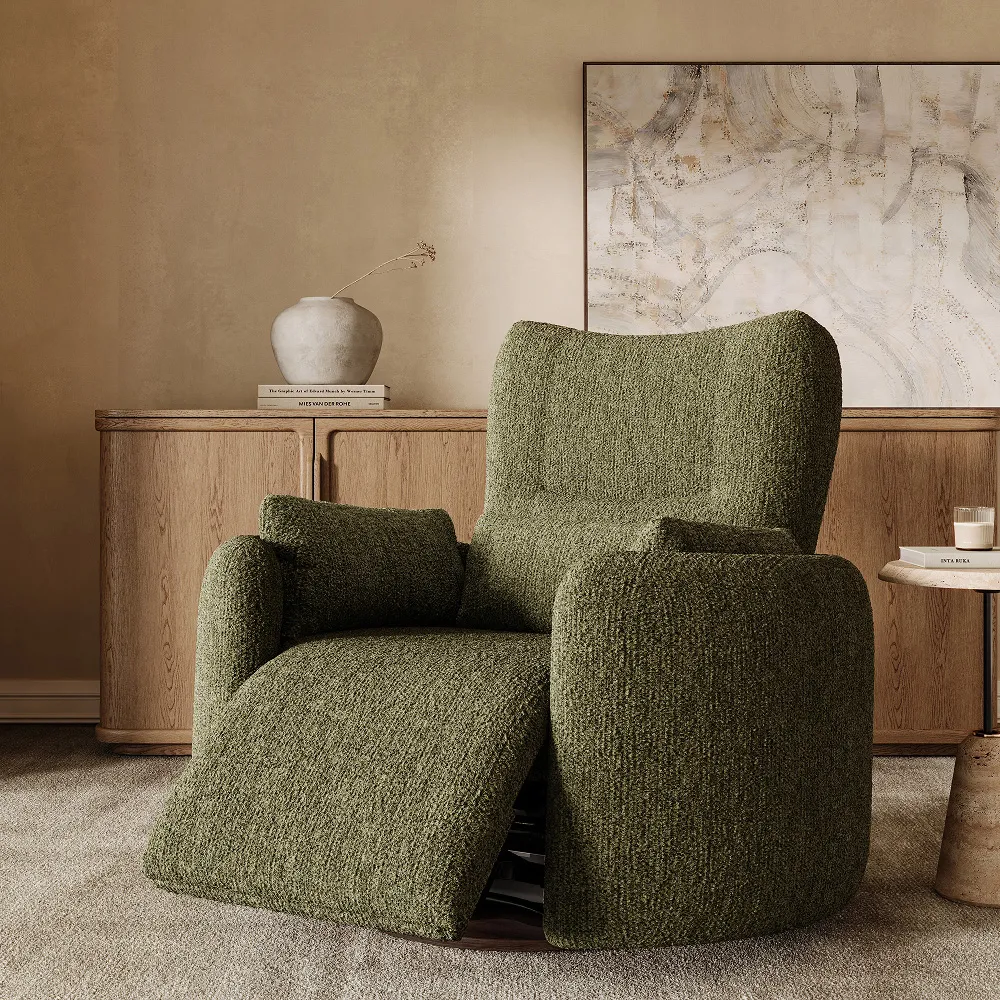
The Oliver Power Reclining Chair suits a reading or conversation corner that turns between a window, sofa, and TV. Its 270-degree swivel, rocking motion, and 90- to 145-degree power recline mean the surrounding movement zone matters more than the chair’s closed dimensions alone.
Forward-extending seats create a different planning issue. They may leave the wall area unchanged while increasing the furniture’s depth toward the center of the room. Plan around the deepest setting and confirm that the furniture remains practical at intermediate positions.
Choosing a Chair, Loveseat, or Sofa
Seating capacity alone should not determine the format. Consider how many people recline regularly, whether each person needs an individually fitted position, and how much of the room must remain available for other activities. Choose the smallest configuration that supports the household’s normal routine rather than the largest piece that fits one wall.
Single Recliner or Reclining Loveseat
Choose a single recliner when one person needs a dedicated seat, the room already has a primary sofa, or household members have significantly different body-fit requirements. Separate chairs also offer greater placement flexibility because they can be repositioned without committing an entire wall to one piece.
A reclining loveseat makes more sense when two people recline regularly and prefer a shared footprint. Confirm that both seats operate independently, especially when one person may remain upright while the other reclines. A center console can add storage and charging access, but it also increases the overall width without adding another seat.
Reclining Sofa or Sectional
Choose a reclining sofa when the household needs several upright seats but only one or two people recline regularly. Confirm which positions actually move; three visible cushions do not always mean three active reclining seats. Independent controls are especially useful when the sofa supports conversation, TV viewing, and deeper lounging at different times.
A sectional is worthwhile when its corner, chaise, or extra seats serve a regular purpose. It should not be selected simply because it fills an empty wall. Larger configurations also require more coordination between footrests, walkways, side tables, and the seats most likely to open together.
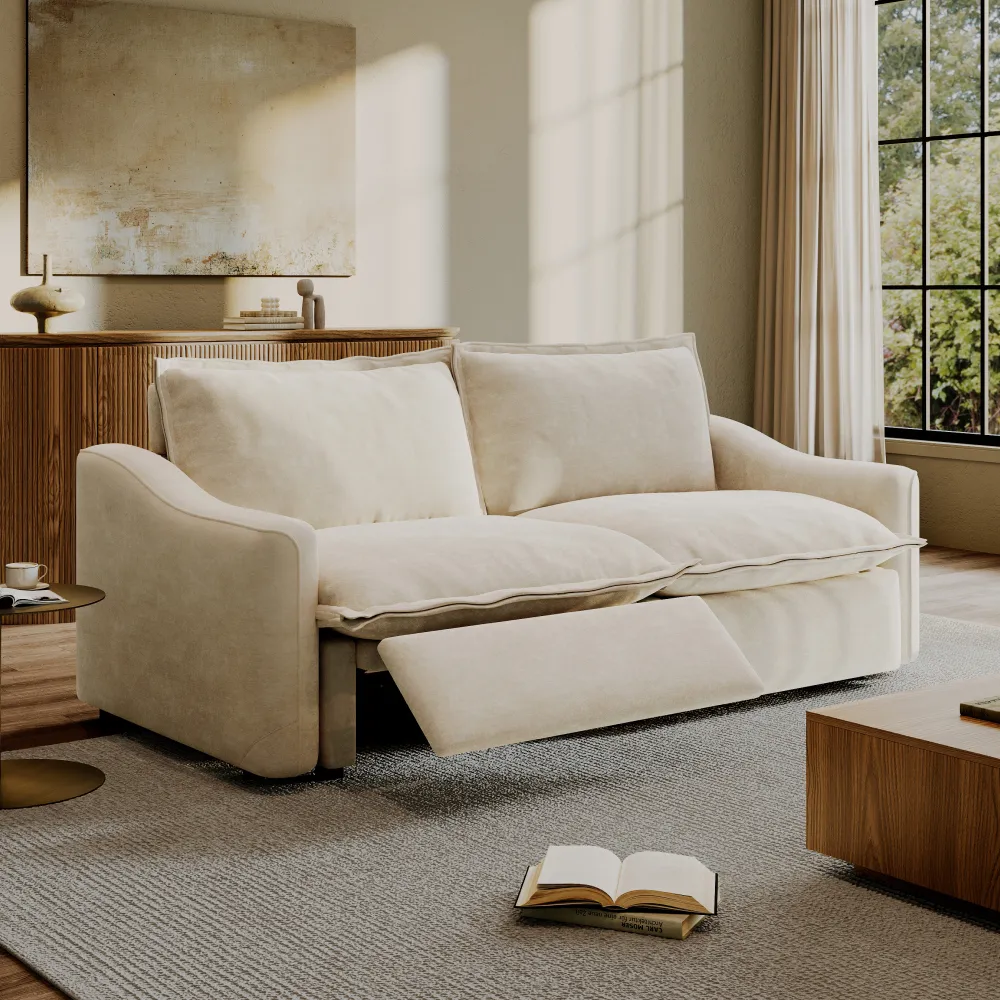
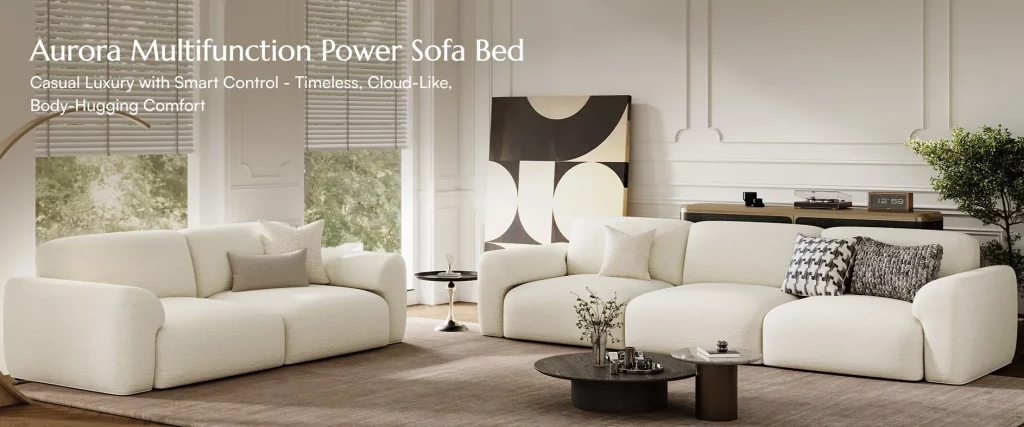
In a shared living room, fixed seat depth can force everyone into the same posture. The Aurora Power Sofa Bed uses motorized, stepless seat extension from 27 to 45.5 inches, allowing the seating to shift from an upright position to a deeper lounge setting. This gives the household more flexibility than a sofa with one fixed seat depth.
For complex configurations, reclining sectional sofa open-footprint planning should be handled separately from body-fit measurements. Map the seats that will open together rather than planning around every mechanism being extended at once.
Plan Recliner Placement Around Daily Room Use
Position side tables and controls where they remain reachable in both upright and reclined settings, and keep lamps, cords, curtains, and storage outside the footrest, swivel, or rocking path. Test routes to the kitchen, hallway, patio, and media storage with the seats fully open. In one evening layout test, both footrests cleared the coffee table, but anyone carrying a laundry basket had to turn sideways—the furniture fit, but the room no longer worked comfortably.
Route power cords along protected edges rather than beneath the mechanism or across walkways. Keep blankets, toys, and pet accessories away from moving joints, and prevent children from playing beneath reclining furniture because moving mechanisms can create entrapment hazards (U.S. Consumer Product Safety Commission).
Verify Delivery Access and the Final Order
Room measurements matter only if the furniture can reach its destination and the ordered configuration matches the plan. Recliners contain rigid bases, motors, and mechanisms that do not compress like loose cushions. Complete these checks before payment rather than solving them at the door.
Measure doors, stairs, elevator openings, and hallway turns at their tightest points. Account for handles, railings, and sharp corners, then ask whether backs, arms, or modules detach.
Confirm the size, upholstery, active seats, deepest position, rear clearance, package count, power requirements, and assembly notes. Before completing the purchase, make sure the ordered variant matches the dimensions and mechanism used in the room plan.
Conclusion
Recliner dimensions are more than a single width and depth; they explain how the furniture supports the user, moves through the room, and reaches its final location. Compare seat height, depth, and usable width before evaluating features, then plan for the deepest, widest, and most frequently used position. Finally, verify shared routes, power access, and delivery components. A well-sized recliner should feel supportive when upright, comfortable when open, and unobtrusive as the rest of the household moves around it.
FAQs
Can a recliner sit partly on an area rug?
It can, but the base should remain level through the full motion. Avoid placing only one side on a thick rug, which may tilt the mechanism or affect swivel movement. Keep rug edges away from footrest hardware and test every position on the finished flooring arrangement.
Do slipcovers change reclining clearance?
A fitted cover should not alter the room footprint, but loose fabric can interfere with controls, footrests, or moving gaps. Choose a cover designed for reclining furniture, keep separate sections free, and operate every position slowly after installation before returning to normal use.
Is a battery pack useful for a power recliner?
A compatible battery pack can reduce exposed cords when seating floats away from a wall. Confirm compatibility, expected operating cycles, recharge access, and installation location. It should solve cord placement without blocking the mechanism, trapping heat, or becoming difficult to inspect.
Can a recliner be placed over a floor vent?
Avoid placing the recliner’s base directly over a floor vent. Blocking the grille can reduce airflow and make the room harder to heat or cool evenly. Mark the vent before mapping the upright and fully open footprints, and keep the power cord and moving mechanism clear of the opening.


[…] you are still comparing chair sizes, understanding recliner dimensions for body and room fit can help separate furniture measurements from the placement test […]