 By Stephanie
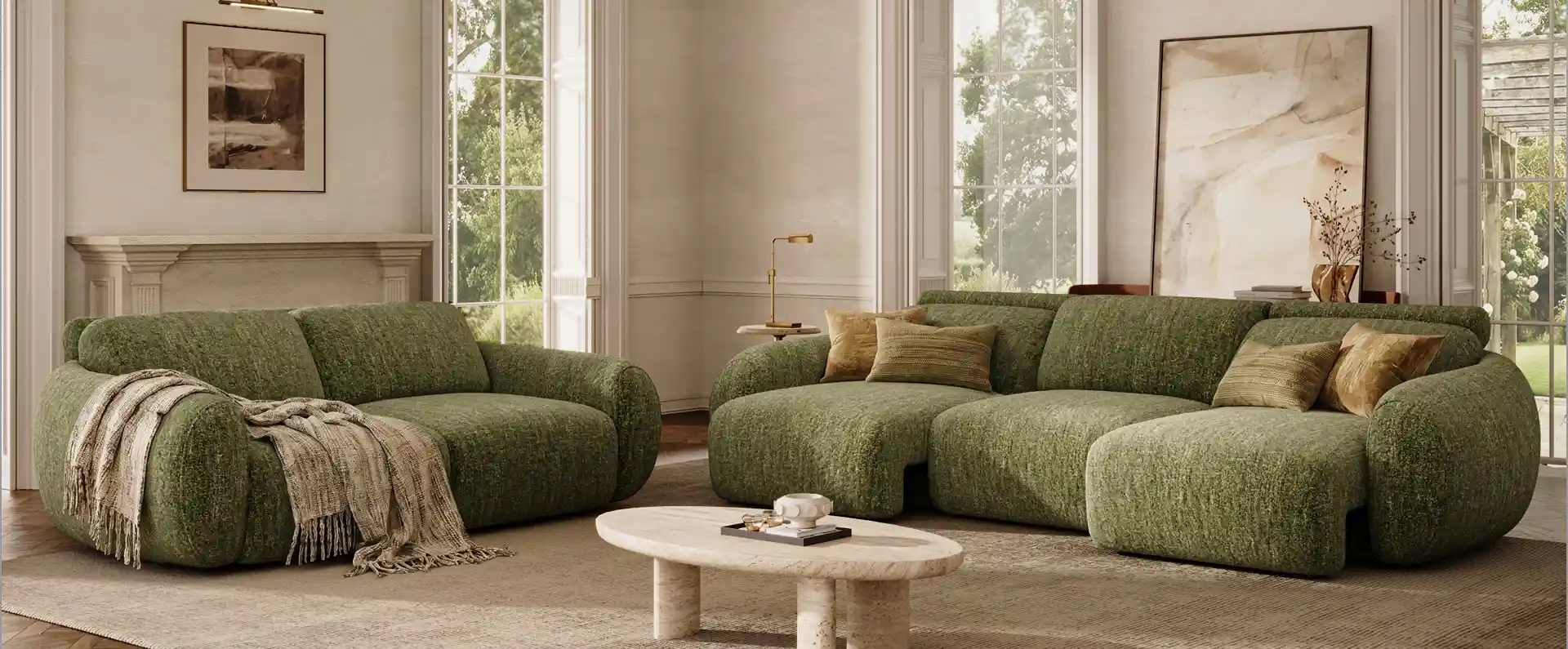
Gaps between couch cushions can make a sofa uncomfortable, leave the seating surface uneven, and create spaces where remotes or phones disappear. If you’re wondering how to fix gaps between couch cushions, the first step is identifying whether the cushions are sliding, losing their shape, or sitting on uneven support. Some gaps can be closed with simple adjustments, while others require new filling or structural repairs. This guide explains five practical fixes, how to choose a suitable gap filler, and what to do when the gaps keep coming back.
Table of Contents
Why Do Gaps Form Between Couch Cushions?
Why do couch cushions separate when they once fit together? The answer depends on what changes under weight: the cushions slide sideways, their edges lose fullness, or one side sinks lower than the other. Use the table below to identify the problem before choosing a repair.
| What You Notice | Likely Cause | What to Check First |
| Cushions separate when someone sits down | Slippery cushion bases or movement | Cushion position and underside grip |
| Gaps remain even when the sofa is empty | Compressed or undersized cushion inserts | Foam shape and cushion fit |
| One cushion sits lower than another | Uneven foam or weakened support | Cushion height and seat base |
| A gap opens between the seat and back cushions | Shifting back cushions or incorrect positioning | Back cushion placement |
| Entire sectional pieces move apart | Loose connectors or sliding modules | Sectional connections and floor contact |
If the entire sectional moves rather than the individual cushions, keeping modular sofa sections together requires checking the connectors and floor grip instead of adding material between the seats.
How to Fix Gaps Between Couch Cushions in 5 Fixes
The right repair depends on what is causing the gap. Start with simple adjustments, then move to filling or support repairs if the problem persists. Try one fix at a time so you can identify what works.
1. Reset and Realign the Cushions
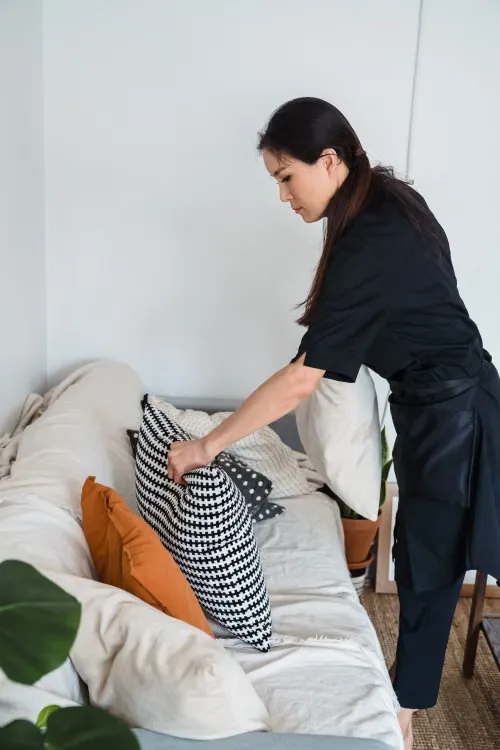
Remove the affected cushions and check the seat deck underneath. Vacuum away crumbs, pet hair, and debris, and smooth out any folded fabric or cushion covers that could prevent the cushions from sitting flat.
Then put each cushion back in its original position, gently push the cushions toward the center without forcing their edges together, and check that their front edges align evenly. If the inserts are symmetrical and the manufacturer permits it, rotating them may help distribute wear. Avoid flipping cushions designed for one-sided use.
2. Stop Cushions From Sliding Apart
First, check whether the gap comes from sideways movement. Align the cushions, then sit down and stand up a few times. If they shift outward but remain at the same height, slipping is the likely cause.
Place a thin, upholstery-safe non-slip pad beneath each removable cushion, trimming it so the edges stay hidden. If the gap persists, check whether the cushion is too small for its designated space before adding stronger fasteners. For more targeted solutions, preventing sofa cushions from sliding can help address the movement itself.
3. Fill Small Gaps With Flexible Inserts
If the cushions stay aligned but leave a narrow opening, a removable filler can help keep small items from falling through. Use a soft foam wedge or fabric-covered insert, positioning it just below the seating surface where items tend to slip through. A rolled washcloth can serve as a temporary test before you buy a filler.
After inserting it, sit down to check that it stays in place without creating a noticeable ridge. Keep the filler removable so you can clean between the cushions.
4. Restore Worn Cushion Fullness
If the cushions have gradually become thinner or misshapen, inspect the inserts to see whether the filling has lost its shape. Unzip removable covers and look for flattened batting, compressed corners, permanent indentations, or foam that no longer springs back.
If the foam still provides adequate support but the outer wrapping has flattened, adding a thin layer of upholstery batting may help restore fullness. If the foam has collapsed or become brittle, replacing the insert is usually more effective. Measure the existing insert and cushion cover before choosing replacement material, and avoid adding foam that stretches the cover or raises the seat height.
5. Check the Support Beneath the Cushions
If one cushion sits noticeably lower despite being in good condition, inspect the seat support underneath. Remove the cushions and look for stretched webbing, damaged springs, loose connections, or an uneven seating platform. These problems can cause one side to sink farther than the other, leaving an uneven seam.
Avoid automatically sliding a wooden board beneath the cushions. A rigid board may change pressure distribution without fixing the underlying damage. If the springs, webbing, or frame are broken, consult a furniture repair professional.
What Size Gap Filler Should You Use?
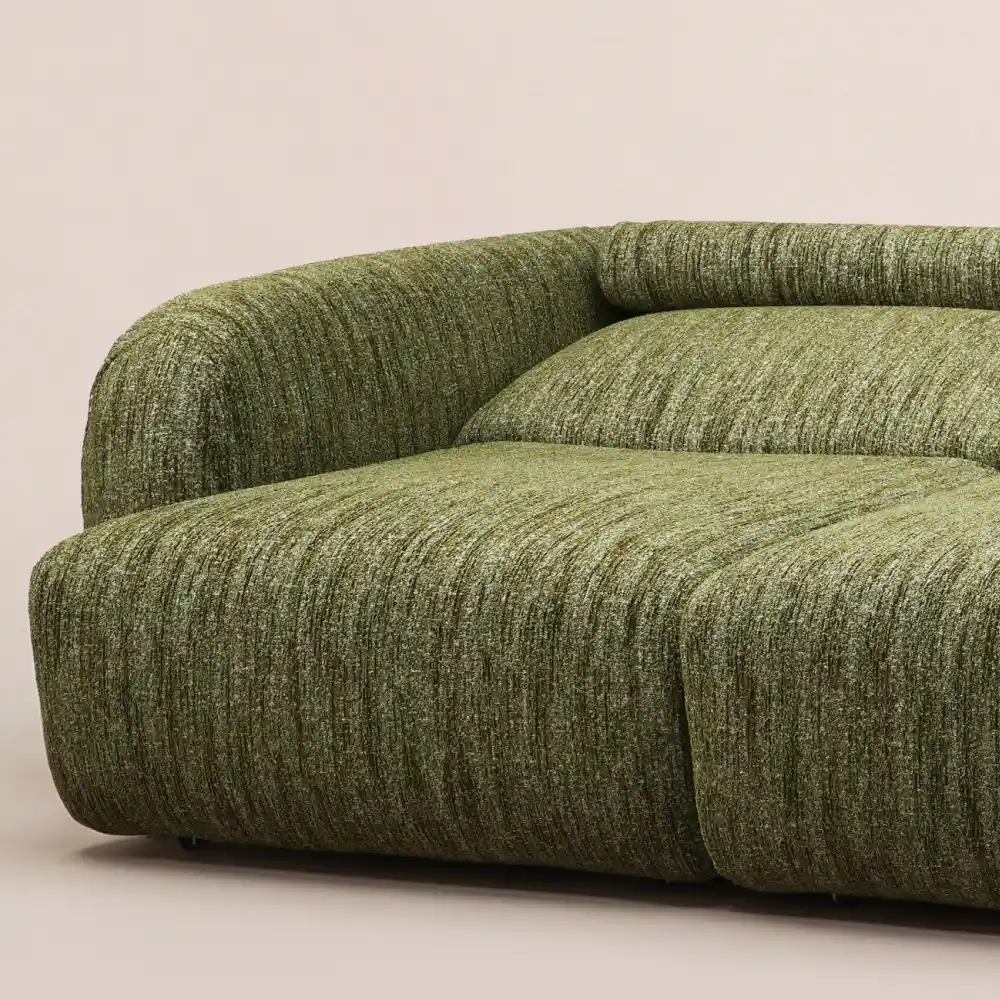
Once you’ve confirmed that the gap stays open with the cushions properly aligned, measure the space before ordering an insert.
Take three measurements:
- Width: Measure the opening at the front, middle, and back. Use the widest stable opening as your reference, but choose a compressible filler rather than an exact rigid fit.
- Length: Measure only the section of the seam that needs filling. You may not need an insert along the entire cushion edge.
- Depth: Measure the unobstructed space below the cushion surface, stopping above the seat deck or any hardware.
If the opening becomes much wider only when someone sits down, don’t size the filler to that maximum width. An oversized insert could push the cushions apart when the sofa is empty. Address the movement or uneven support before choosing a filler.
How Can You Tell If the Gap Is Really Fixed?
A cushion gap is fixed only when the repair holds during normal use, not just when the sofa is empty.
After making one adjustment, photograph the affected seam from the front. Then check three things:
- Gap width: Sit near the seam and see whether the opening becomes noticeably wider.
- Cushion alignment: Stand up and check whether either cushion has shifted forward, outward, or lower than its neighbor.
- Support across the seam: Stretch out in your usual lounging position. Your hips or shoulders should not drop into an unsupported space.
Repeat the check after a few days of ordinary use.
If the seam starts opening again after a few days, note which test failed. Remove any filler or fastening that creates a raised edge or leaves part of the seat unsupported before trying another adjustment.
This distinction helps you avoid buying another filler for a problem that requires a different repair.
When Is a Power Sofa Bed a Better Alternative to Rearranging Cushions?
If your cushions are in good condition but you keep moving them to create more room to stretch out, the problem may not be the cushions themselves. A sofa with a fixed seat depth can feel comfortable for upright sitting but leave you wanting more room when you recline or lounge. In this case, repeatedly rearranging cushions may be a workaround for a seating surface that doesn’t adapt to your needs.
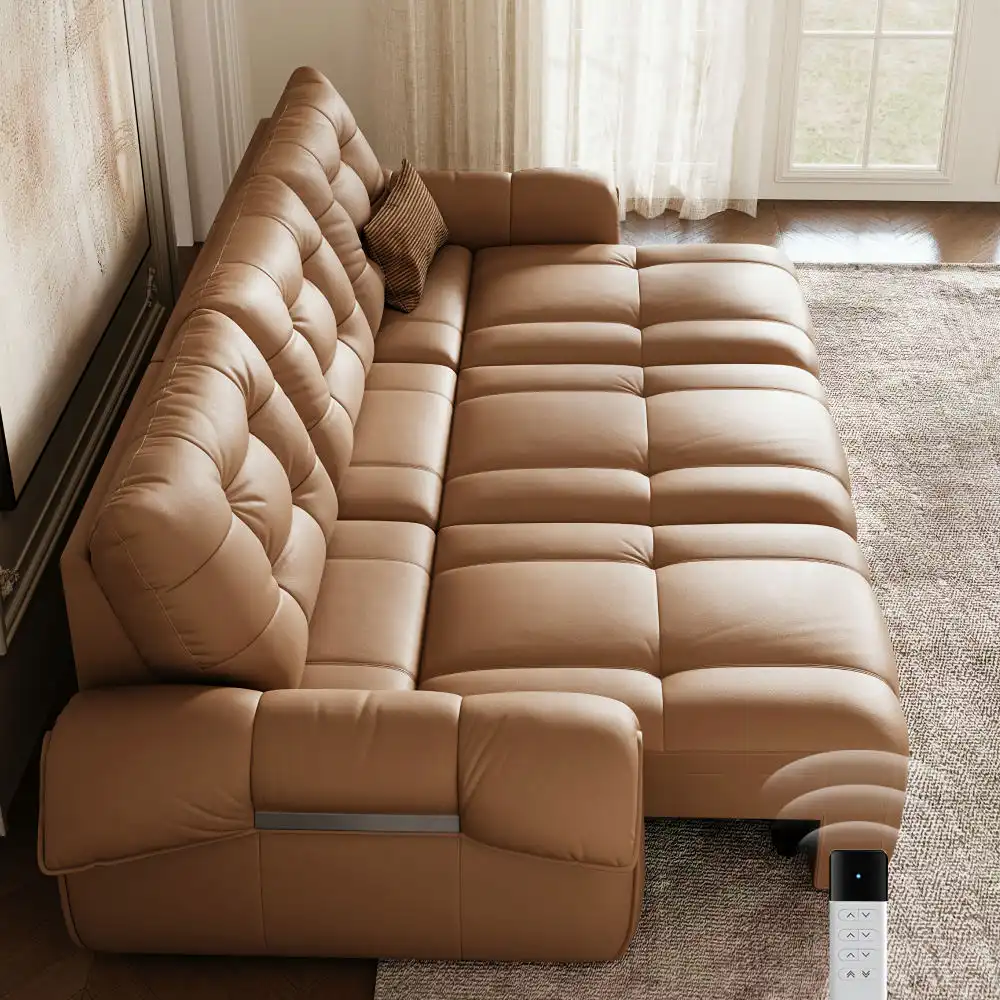
A power sofa bed offers a different solution by letting you adjust the seating depth instead of manually rearranging cushions. The Aurora Electric Sofa Bed has a motorized seat that adjusts from 27 to 45.5 inches deep, giving you multiple positions between a more compact sitting depth and a deeper lounging surface. This flexibility makes it easier to find a comfortable position for reading, watching TV, or stretching out without repeatedly moving loose cushions to make room.
A power sofa bed won’t fix worn foam or eliminate every cushion gap. But if your cushions keep getting rearranged because you need more room to relax, adjustable seat depth may address the underlying limitation more effectively than another filler or fastening method.
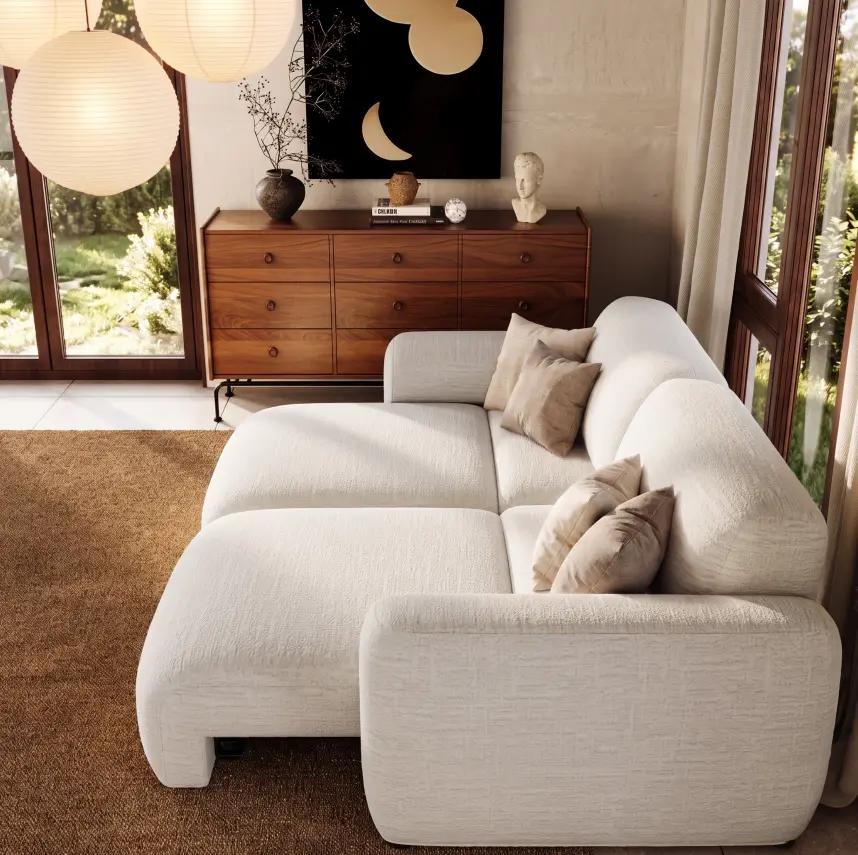
Aurora Power Sofa Bed | $2,699
A smart option for anyone tired of constantly rearranging cushions just to get comfortable enough to stretch out.
Conclusion
Ultimately, how to fix gaps between couch cushions depends on what happens during everyday use, not just how neatly the cushions fit when the sofa is empty. A successful repair should keep them aligned and supported without constant readjustment. If the gap returns, use your seating tests to determine whether you need better grip, restored cushioning, or a support repair. And if you routinely rearrange cushions to create lounging space, a sofa with adjustable seat depth may be a more practical long-term solution.

More Room to Relax, Less Cushion Rearranging
Stop rearranging cushions to get comfortable—explore power sofa beds with adjustable depth for everyday sitting and lounging.
FAQ
What If the Gap Is Between the Seat and Back Cushions?
First, lift and reposition removable back cushions so their lower edges rest properly against the seat. If the gap remains, check whether the back cushion filling has flattened near the bottom. A slim, removable bolster may help prevent small items from falling through, but it shouldn’t push you uncomfortably toward the front of the seat.
Will Velcro damage leather couch cushions?
Adhesive-backed Velcro can leave residue, affect leather finishes, or damage the surface when removed. Avoid applying it directly to leather unless the furniture manufacturer approves that method. If the cushion is removable, consider a non-adhesive grip layer beneath it or a compatible attachment point on the underlying frame.
Can Gap Fillers Be Used on Power Recliners?
Only if the manufacturer permits them and they stay completely outside the moving mechanism. A filler that looks clear when the seat is upright may get caught when the footrest or seat extends. Never bridge a moving joint with foam or fabric. If the available clearance is unclear, contact the manufacturer before adding anything.
Should a new couch have gaps between cushions?
Small, even seams are normal on many sofas with separate cushions. However, unusually wide gaps, mismatched cushion heights, or seams that open significantly during ordinary sitting may indicate a fit or construction issue. Photograph the problem while the sofa is empty and occupied, then contact the retailer before attempting modifications that could affect the warranty.
Can cushion gaps be unsafe for small pets?
Large, unsupported openings may trap a small pet’s paw or leg, particularly if the cushions shift under its weight. Check whether the gap leads to exposed hardware or an open frame cavity. Avoid loose filler pieces that pets could chew or swallow, and repair any damaged support rather than simply covering the opening.


[…] Loose cushions create additional fur and toy gaps […]