 By Kelvin
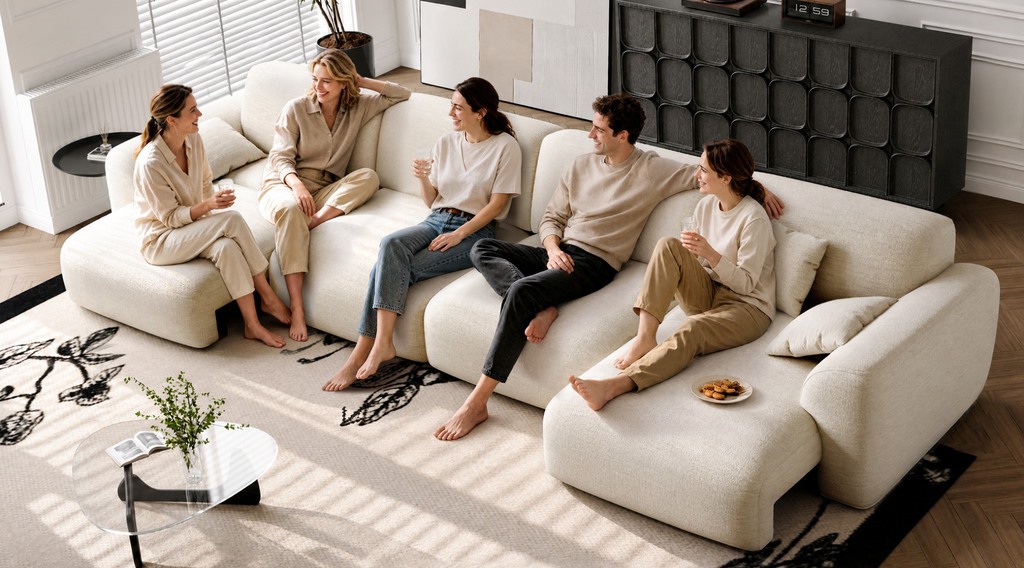
A living room may need to seat six people on Saturday, provide a comfortable place to stretch out on Sunday, and leave room for kids to play on Monday. But a fixed furniture arrangement rarely handles every situation well. Flexible living room seating solves this problem with movable chairs, modular sofas, and adjustable seats that adapt to changing needs. The goal isn’t to rearrange heavy furniture every day. It’s to choose seating that makes adding guests, changing positions, and freeing up floor space easier without compromising everyday comfort.
Table of Contents
What Makes Living Room Seating Flexible?
Flexible living room seating allows you to change how many people can sit, where they face, or how they relax without replacing your main furniture. Different designs achieve this in three ways:
- Movable seating: Ottomans, poufs, and lightweight chairs can be repositioned when extra seats are needed.
- Reconfigurable seating: Modular sofas use separate sections that can be rearranged into different layouts.
- Adjustable seating: Power sofas and recliners change seat depth or reclining positions without moving the entire piece.
Not every home needs all three. A household that frequently hosts friends may benefit more from movable seating, while someone who changes sitting positions throughout the day may prefer an adjustable sofa.
The most useful flexible living room furniture addresses an actual daily need rather than simply offering more configurations.
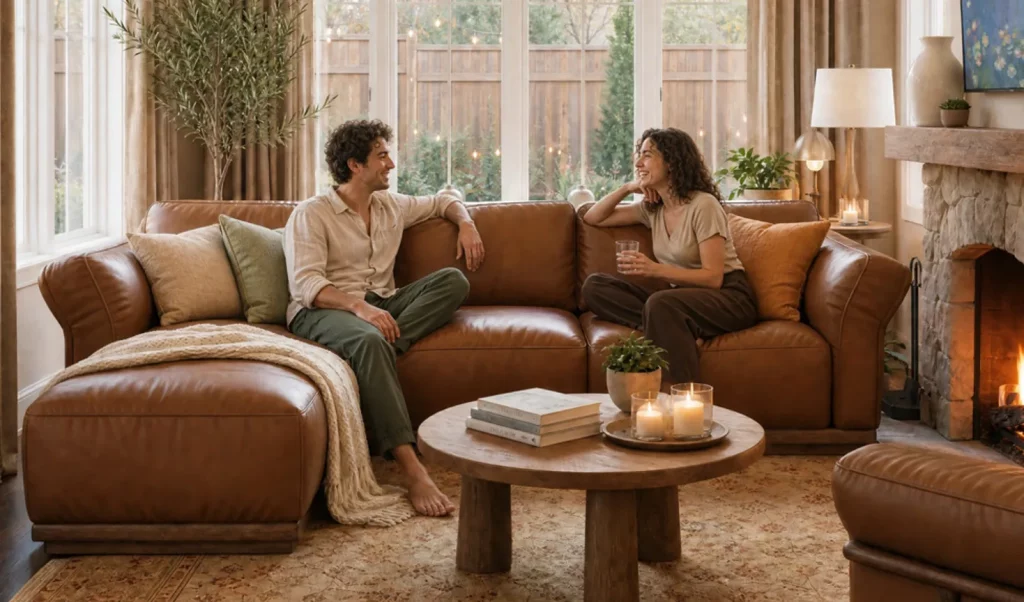
How Do You Choose Seating for Changing Needs?
The first step in learning how to create a flexible living room is identifying what changes most often. Is it the number of people, their seating direction, or how they prefer to relax?
Match the furniture’s flexibility to the activity instead of choosing the most adjustable design available.
| Everyday Need | Seating Solution | Why It Works |
| Occasional extra guests | Movable ottoman or pouf | Adds temporary seating |
| TV viewing and conversation | Swivel chair | Changes direction without moving |
| Sitting upright and lounging | Adjustable sofa | Changes seat depth as needed |
| Changing family size | Modular sofa | Allows compatible seating sections to be rearranged |
| Temporary floor activities | Retractable seating | Restores floor space when closed |
Frequency matters, too. Moving a lightweight chair once a week is manageable, but repositioning heavy sofa modules every evening can become inconvenient.
If your household regularly switches between upright sitting and stretching out, power sofa beds designed for different ways to sit and lounge offer another approach: adjusting the seating surface rather than rearranging the room.
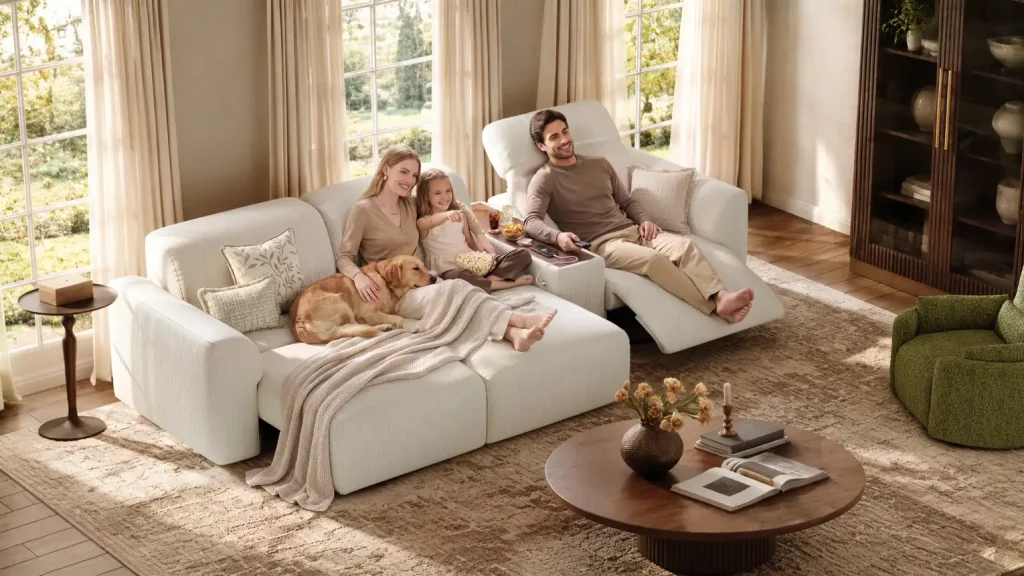
5 Flexible Living Room Seating Ideas for Everyday Life
The right flexible living room seating setup depends on what needs to change. Extra guests require a different solution from daily lounging, while opening up floor space may call for fewer movable pieces rather than additional furniture. These five approaches address common situations without requiring a complete living room redesign.
1. Add Temporary Seating for Extra Guests
Best for: Living rooms that occasionally host larger groups.
A three-seat sofa may handle everyday family use but leave nowhere for visitors during weekend gatherings. Rather than adding another full-size loveseat, consider a sturdy upholstered ottoman, a compact accent chair, or a pair of nesting stools.
Place these pieces along an unused wall or beside an existing chair during normal use. When guests arrive, bring them closer to the sofa to create a conversation area.
For example, a family that usually seats three people can add two movable seats around the coffee table when friends visit.
Avoid positioning temporary seating in front of doorways or between frequently used rooms. Also, confirm that an ottoman is designed to support seated weight before using it as an extra chair.

2. Use Swivel Chairs for Different Activities
Best for: Living rooms with multiple activity areas.
A fixed accent chair works well when everyone faces the television, but it becomes less useful when conversations happen in another direction.
Swivel chairs solve this by allowing users to turn toward the TV, fireplace, window, or nearby seating without shifting the chair’s base.
In an open-plan living room, position one swivel chair near the edge of the sofa rather than directly beside it. Someone can face the TV while relaxing, then turn toward guests during a conversation.
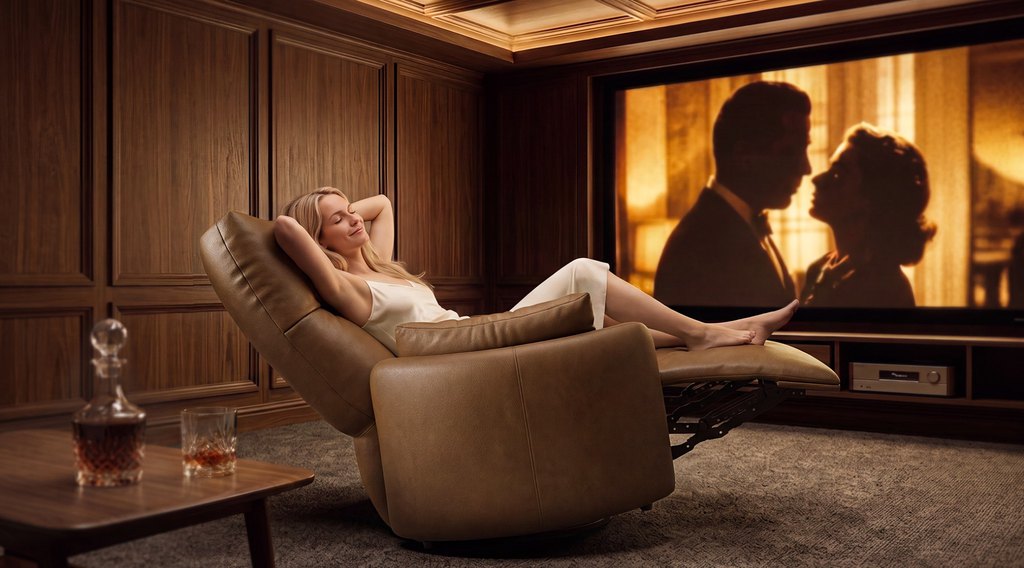
For a living room that serves both TV watching and conversation, the Oliver Swivel Power Barrel Recliner provides a dedicated seat that can turn toward either activity. Its 270° swivel and powered 90°–145° recline make it easy to shift from upright sitting to a more relaxed position without relocating the chair.
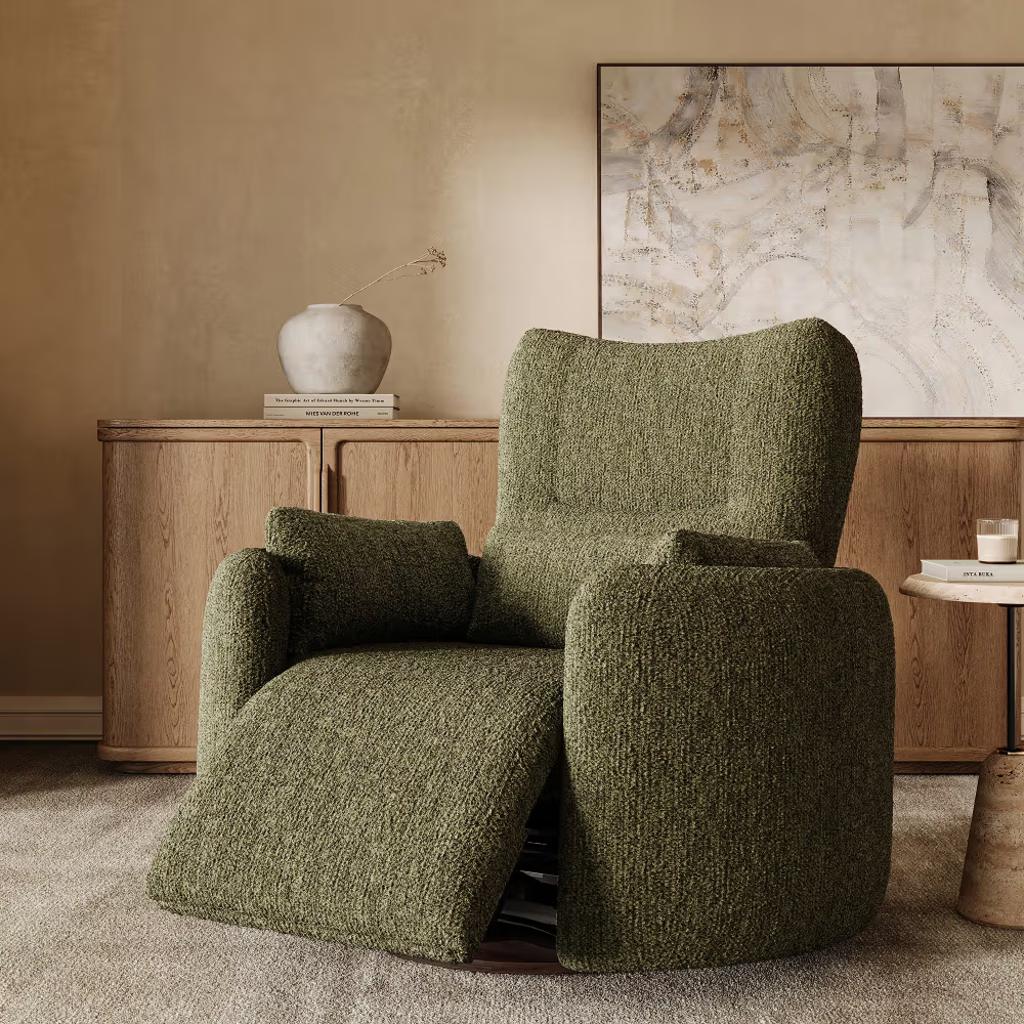
Oliver Swivel Power Barrel Recliner
A rotating, powered recliner keeps TV viewing and conversation comfortable.
👍 Best for: Living rooms with multiple activity zones
✨ Gentle back-and-forth rocking
✨ Fully assembled; no setup required
✨ 330-lb weight capacity per seat
Before purchasing, check the chair’s full rotation clearance. Its back and arms should not strike nearby tables or walls.
A swivel recliner can also support different reclining positions, although its footrest requires additional clearance.
3. Adjust Seat Depth for Sitting and Lounging
Best for: Households that change sitting positions throughout the day.
A fixed-depth sofa can feel comfortable for upright sitting but restrictive when someone wants to stretch out. Adding an ottoman helps, although it requires another piece of furniture in front of the sofa.
An adjustable sofa offers another solution by extending the seating surface when more depth is needed.
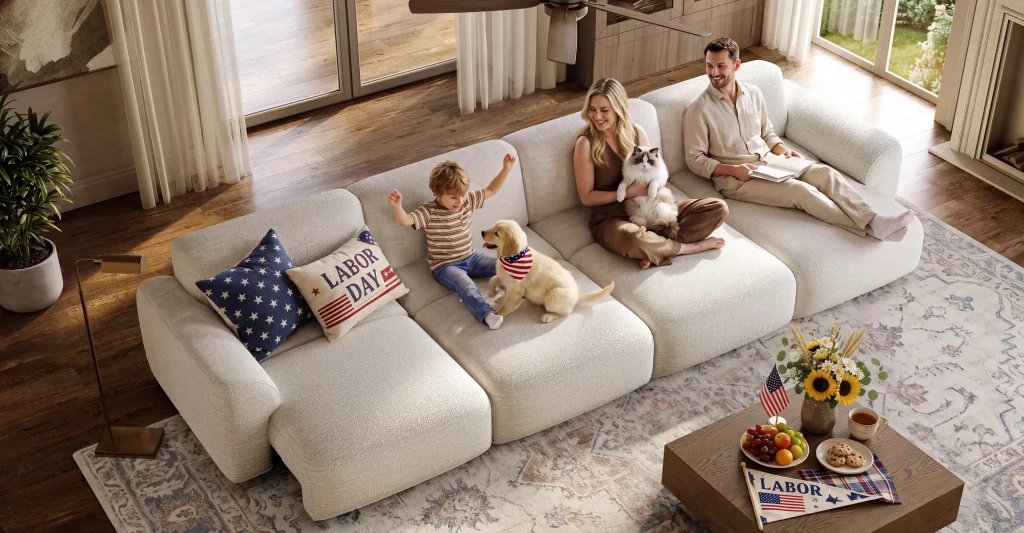
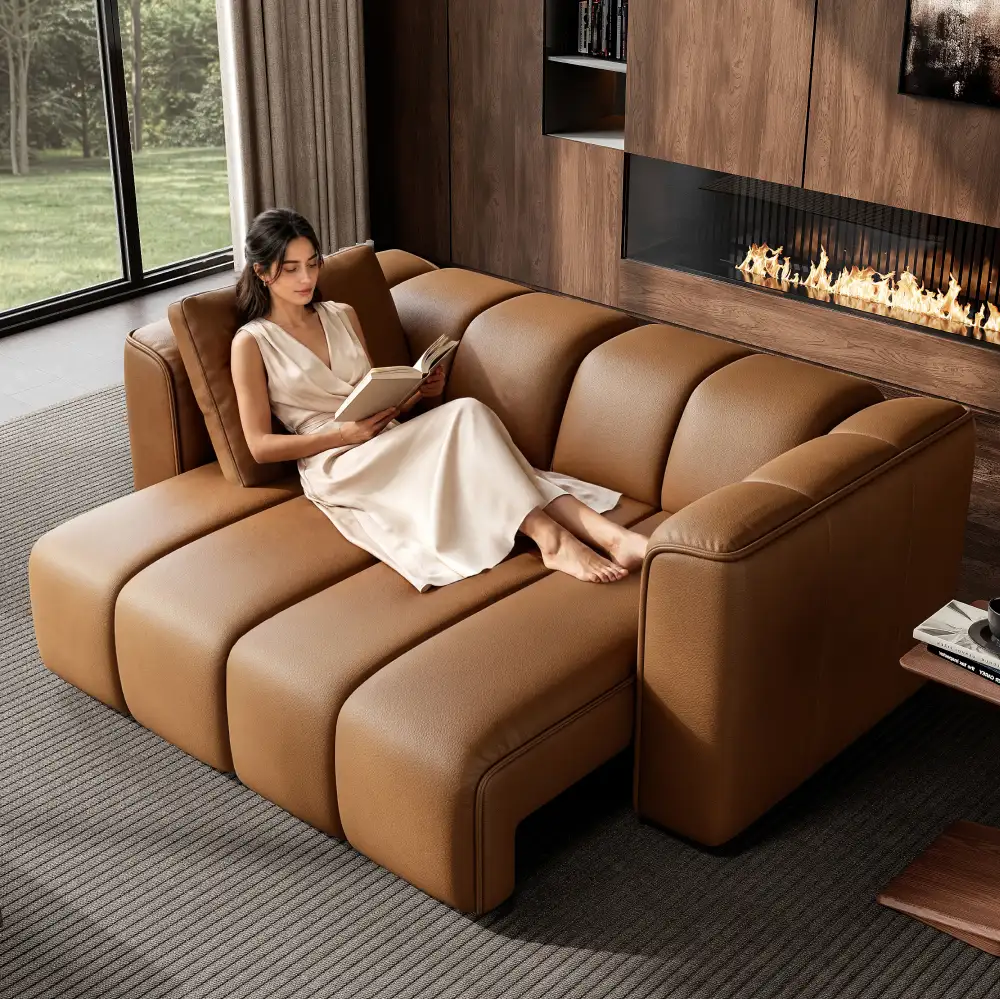
For a household that switches from upright conversation to stretching out after dinner, the Aurora Power Sofa Bed reduces the need to move a separate footstool. The seating surface extends forward under power while the sofa can remain against the wall. This supports frequent position changes without disturbing the main layout, provided there is sufficient space in front.
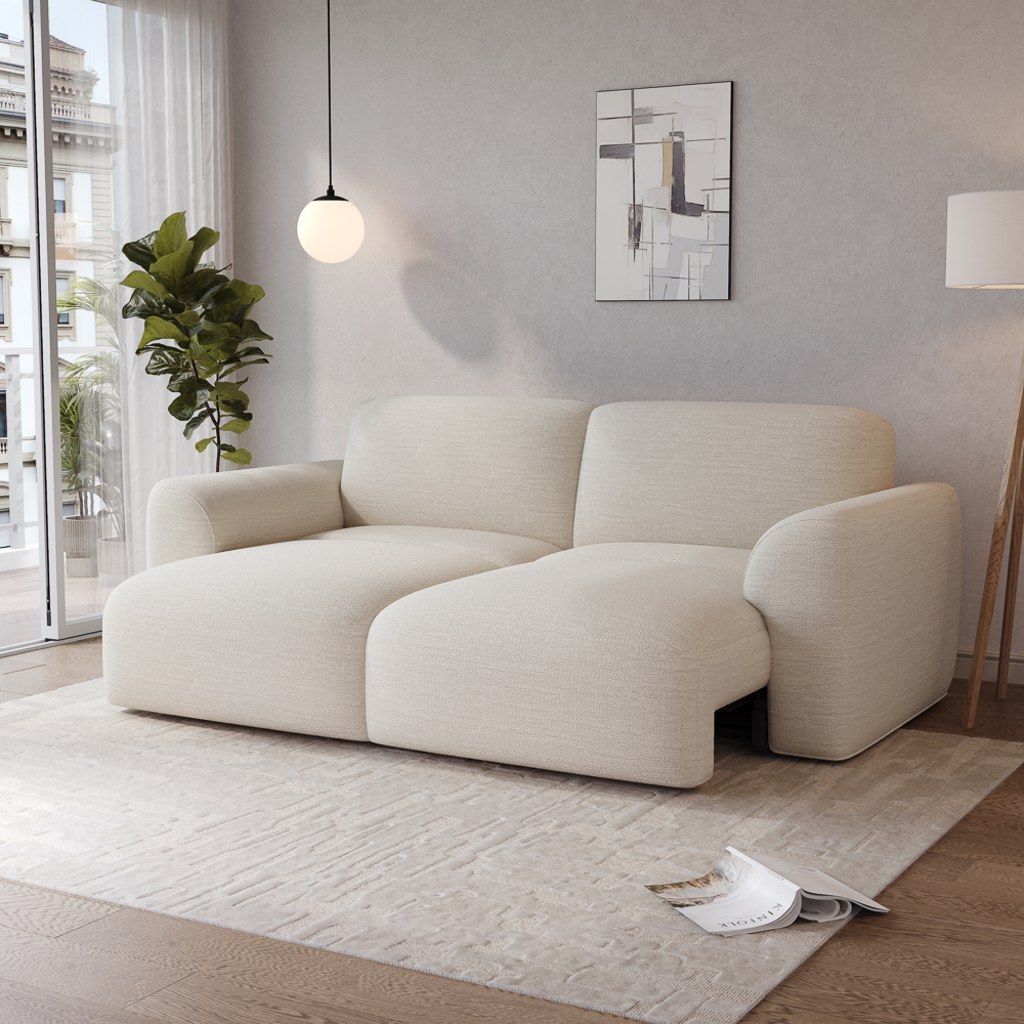
Aurora Power Sofa Bed
Expandable everyday seating keeps a shared room useful from morning through evening.
👍 Best for: Daily sitting and lounging transitions
✨ Stepless 27–45.5-inch seat adjustment
✨ Remote-controlled power extension
✨ Scratch-resistant chenille upholstery
4. Reconfigure Modular Seating for Different Group Sizes
Best for: Families whose seating arrangements change over time.
Modular sofas make sense when the number of people or the layout itself changes. Compatible sections can form a straight sofa, an L-shaped arrangement, or other configurations supported by the design.
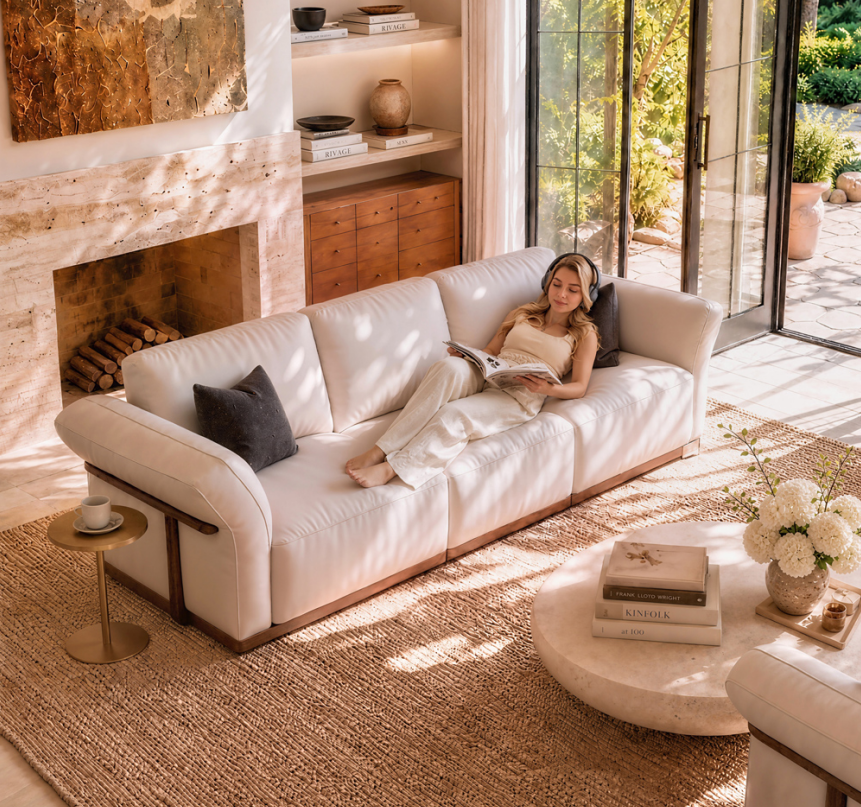
The Cronus Genuine Leather Modular Sofa suits a family living room that alternates between smaller gatherings and larger visits. Its separate seating sections allow compatible arrangements to evolve, while the generous 26-inch seat supports relaxed sitting. Because the modules are substantial, this approach works better for planned configuration changes than frequent daily lifting.
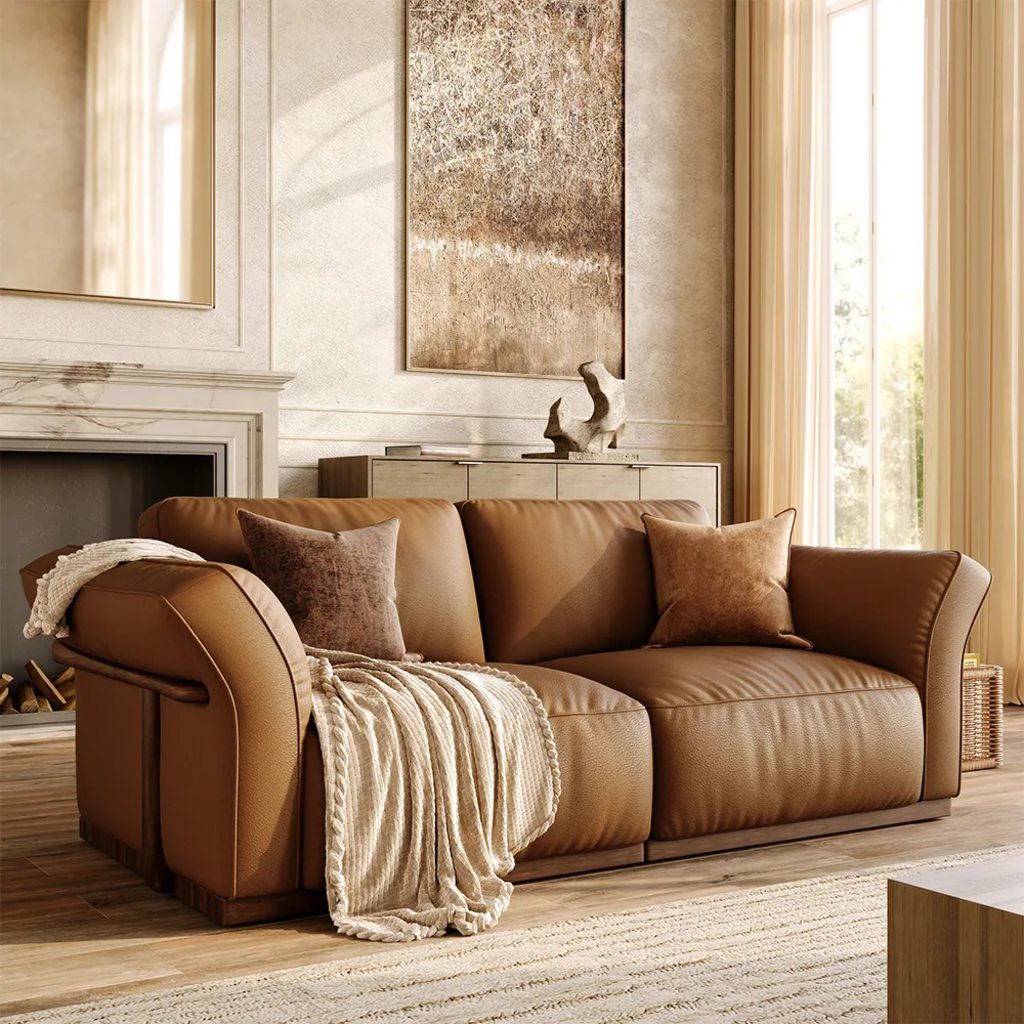
Cronus Genuine Leather Modular Sofa
Adaptable modular seating accommodates changing gatherings without committing to oversized sectionals.
👍 Best for: Changing family seating arrangements
✨ Top-grain genuine leather upholstery
✨ Solid wood frame
✨ Soft down-filled cushioning
When comparing modular sofas with flexible seating configurations, check how the sections connect and whether each intended arrangement provides usable back and arm support. A sofa with removable modules is not necessarily practical in every configuration.
5. Reclaim Floor Space When Seating Needs Change
Best for: Living rooms shared with children’s activities or other temporary uses.
Flexible seating should also make it easier to clear space when sitting isn’t the room’s main activity.
Start with pieces that can return to a smaller position. Move an ottoman against the wall, tuck away occasional stools, or retract extended seating. Avoid keeping a permanent chaise across an area regularly used for floor activities.
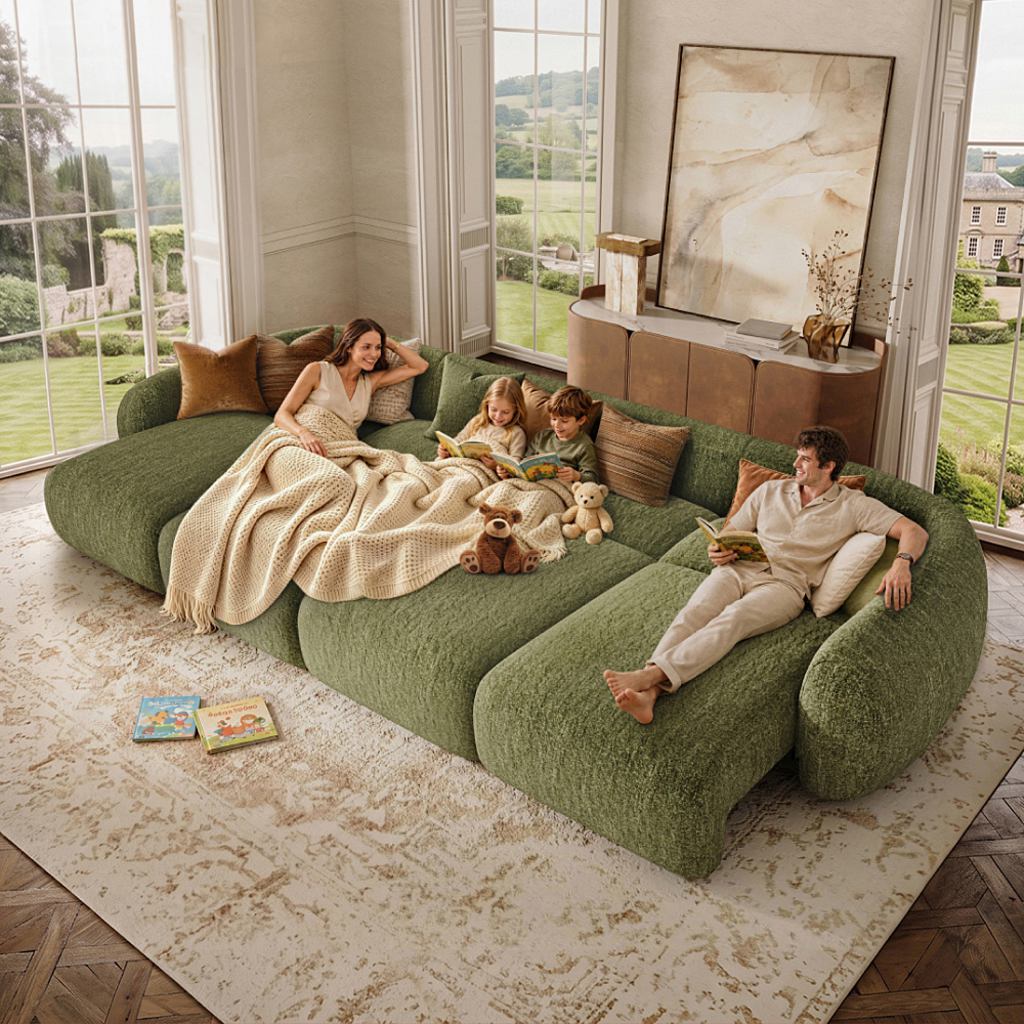
The Mila Power Sofa Bed suits households that need more open floor after lounging. Its powered seats retract from a deeper resting setup without moving the entire sofa. Independently operated sections also let family members use different seating depths, so one person can stretch out while another sits more upright. The room still needs space for full extension when that function is used.
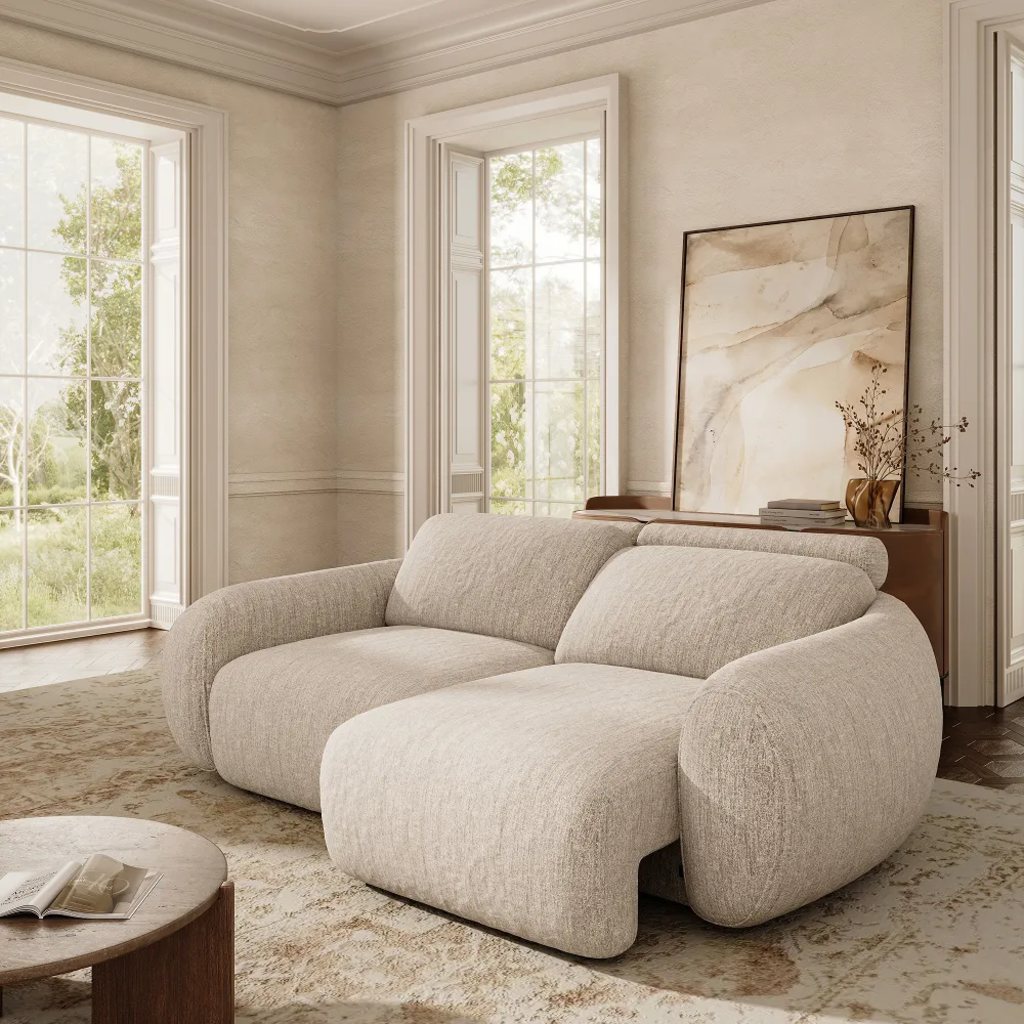
Mila Power Sofa Bed
Independent seat adjustments accommodate different comfort preferences in shared living spaces.
👍 Best for: Shared seating with changing preferences
✨ 32–59-inch adjustable seat depth
✨ 105°–180° reclining angle range
✨ Water-resistant tweed chenille fabric
The important distinction is that retractable seating frees space when closed, not when fully extended. Plan around both conditions rather than assuming a convertible design always occupies less room.
How Do You Test Flexible Seating Before Buying?
Flexible furniture needs to work in more than its smallest configuration. A sofa may fit comfortably against a wall but block the coffee table when extended. Similarly, an extra chair may provide another seat while interrupting the main walkway.
Before buying, test two arrangements: your everyday setup and the configuration requiring the most space.
- Measure the everyday footprint. Record the sofa’s width and closed depth, along with the surrounding furniture.
- Check the maximum configuration. Measure fully extended seats, reclining footrests, or the planned modular arrangement.
- Preserve walking space. Aim for approximately 30–36 inches along main circulation routes and 16–18 inches between a sofa and coffee table when practical.
- Assign storage positions. Decide where an ottoman, stool, or movable chair will go when it isn’t being used.
For an adjustable sofa, measure the distance from the wall behind it to the nearest obstruction in front, not just the extra extension length.
A living room furniture layout with clear walking paths should also keep doors, drawers, and access to frequently used furniture unobstructed.
Finally, test the arrangement with people actually using the seats. Someone should be able to stand up, walk past the furniture, and reach the doorway without squeezing between pieces.
These measurements are planning guidelines, not universal requirements. Accessibility needs and actual furniture dimensions may require additional clearance.
Conclusion
The most useful flexible living room seating arrangement is one that matches how your household actually uses the room. Movable ottomans help accommodate occasional guests, swivel chairs support different activities, and modular sofas allow seating arrangements to change over time. For daily sitting and lounging, adjustable seat depth provides flexibility without repeatedly relocating large furniture. Before choosing a solution, consider how often your needs change and how much space each configuration requires. A well-planned setup should make everyday activities easier while keeping the room comfortable and accessible.
Find Seating That Adapts to Your Day
Explore adjustable designs that shift between everyday sitting, deeper lounging, and shared relaxation.
FAQ About Flexible Living Room Seating
Can an Ottoman Replace a Chair for Everyday Seating?
An ottoman can provide occasional seating if the manufacturer specifies that it supports seated weight. However, most ottomans lack back support, making them less suitable for prolonged sitting. For daily use, choose a stable upholstered chair with appropriate seat height and back support. Avoid using lightweight decorative footstools as permanent seating.
Can Two People Adjust Their Seats Independently on One Sofa?
Yes, if the sofa has independently controlled seating sections. Some power sofas allow one person to extend their seat while another keeps theirs retracted. Check whether each section has separate controls and how the mechanisms operate. A sofa with a single shared motor may not support different seating positions simultaneously.
Will Moving Seating Frequently Damage Hardwood Floors?
Repeatedly sliding heavy furniture can scratch hardwood floors, particularly when grit becomes trapped beneath the feet. Use floor-compatible felt pads or suitable casters, and keep contact surfaces clean. Lift heavy modules instead of dragging them. Replace worn pads promptly, especially on chairs and ottomans that move regularly.
Does a Power-Adjustable Sofa Need an Electrical Outlet?
Most power-adjustable sofas require a nearby electrical outlet unless the model supports a compatible battery system. Before purchasing, check the power cord length and outlet location. Keep cables away from walking paths and moving mechanisms. If the sofa sits away from a wall, plan a safe cable route before arranging the furniture.
Can Modular Sofa Sections Fit Through Narrow Doorways?
Modular sections are often easier to deliver than a single oversized sofa, but each module still has to fit through doorways, hallways, and stairwell turns. Compare packaged dimensions with the narrowest entry point. Measure elevator openings where applicable, and confirm whether legs or arms can be removed according to the manufacturer’s instructions.


[…] you host often, a sofa plus two movable accent chairs can work better than one oversized sectional. If your household loves lounging, a sectional may be […]