 By Charles
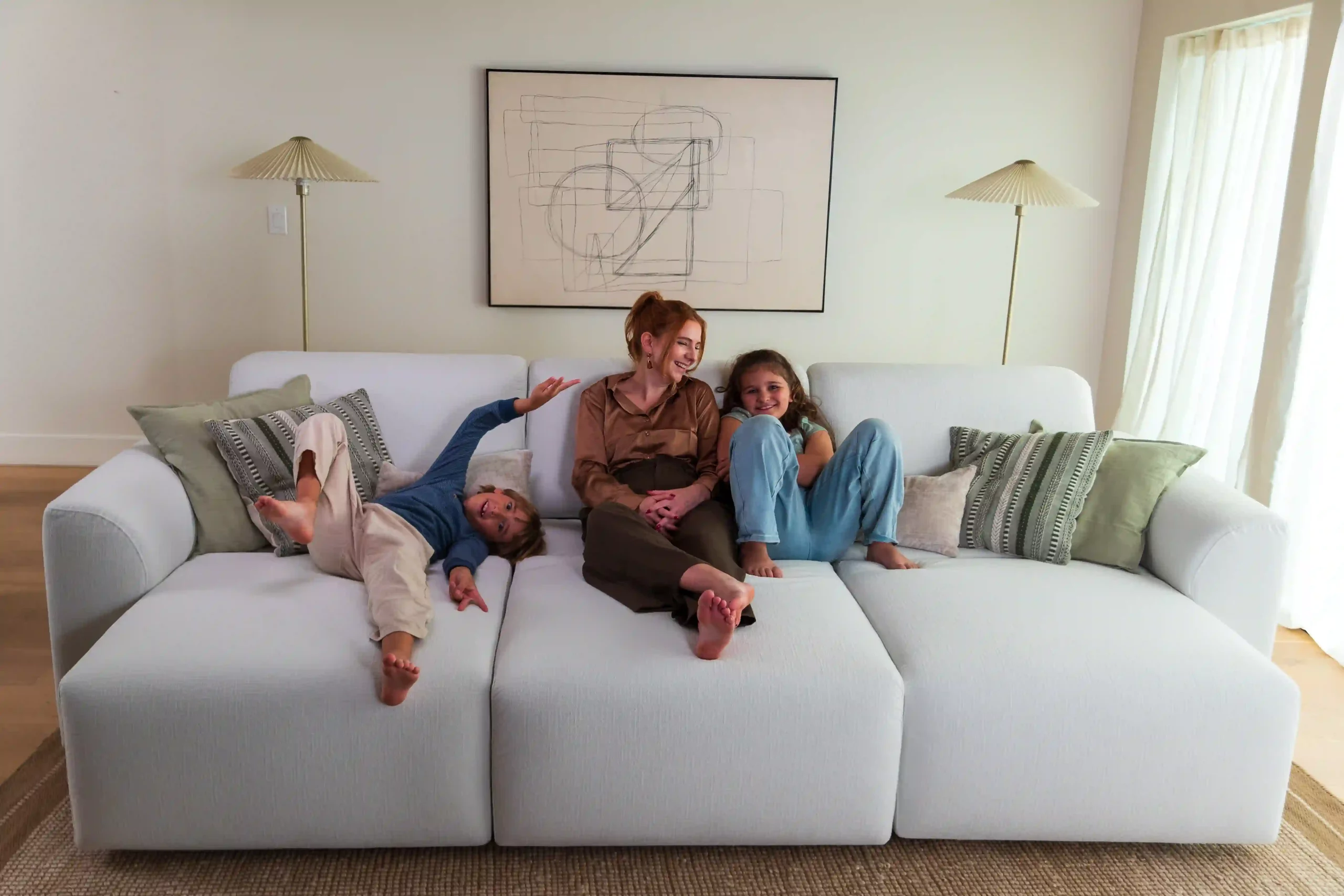
If your couch cushions keep sliding forward or shifting every time you sit down, start with a non-slip grip pad beneath each removable cushion. It’s often the simplest fix, but it won’t help much if the cushions are worn out or the seat support is uneven. Here’s how to stop couch cushions from sliding by identifying the cause and choosing a repair that lasts.
Table of Contents
Why Do Couch Cushions Keep Sliding? A Quick Diagnosis
Couch cushions can slide because of smooth upholstery, a loose fit, or uneven seat support. The easiest way to identify the cause is to notice when and how the cushion moves. Use the table below to find the most likely problem and where to start.
| When the Cushion Moves | What to Check | Best Starting Point |
| Slides forward as soon as you sit | Smooth contact between the cushion and seat base | Non-slip grip pad |
| Shifts sideways when you change positions | Loose fit or uneven grip | Reposition the cushion and check its fit |
| Starts sliding after the cover is washed | Misaligned insert or altered cover fit | Refit the cover and check the seams |
| Continues moving with a grip pad underneath | Pad slipping or bunching under the cushion | Check pad placement and material compatibility |
| Only one cushion repeatedly slides | Cushion deformation or uneven seat support | Compare it with the neighboring cushion |
If the cushions stay in position but the entire couch shifts, the problem is different. Start with keeping the sofa from sliding on the floor rather than adding more material beneath the cushions.
How to Stop Couch Cushions From Sliding
Choose the fix based on what’s causing your cushions to slide. Start with cleaning and repositioning, then try a non-slip pad if needed. For cushions that still move, consider a compatible fastening method or check whether the cushion fit and seat support need attention.
Clean and Reset the Cushions
Before buying anything, remove the cushions and vacuum the seat base. Dust, crumbs, and loose fabric can interfere with how evenly the cushions rest against the sofa.
Check that the cushion covers are properly fitted, with their seams aligned along the edges. Smooth out any folded fabric underneath, then push each cushion firmly toward the back of the seat.
Best for: Cushions that have recently started shifting or were repositioned after cleaning.
Limitation: Cleaning and repositioning won’t prevent recurring movement caused by slippery upholstery or worn cushion filling.
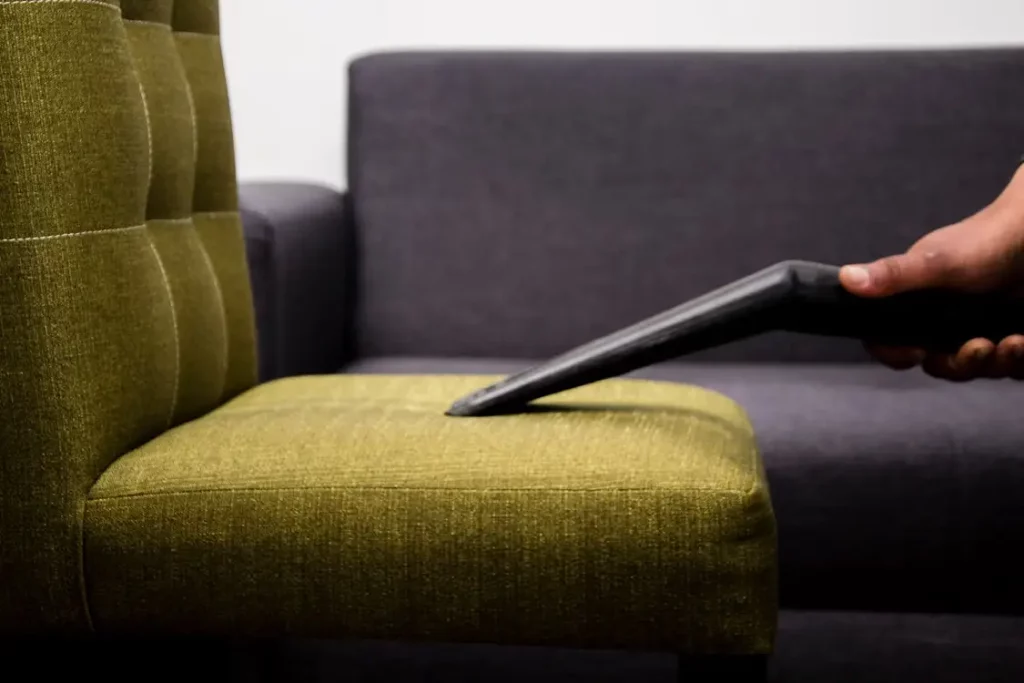
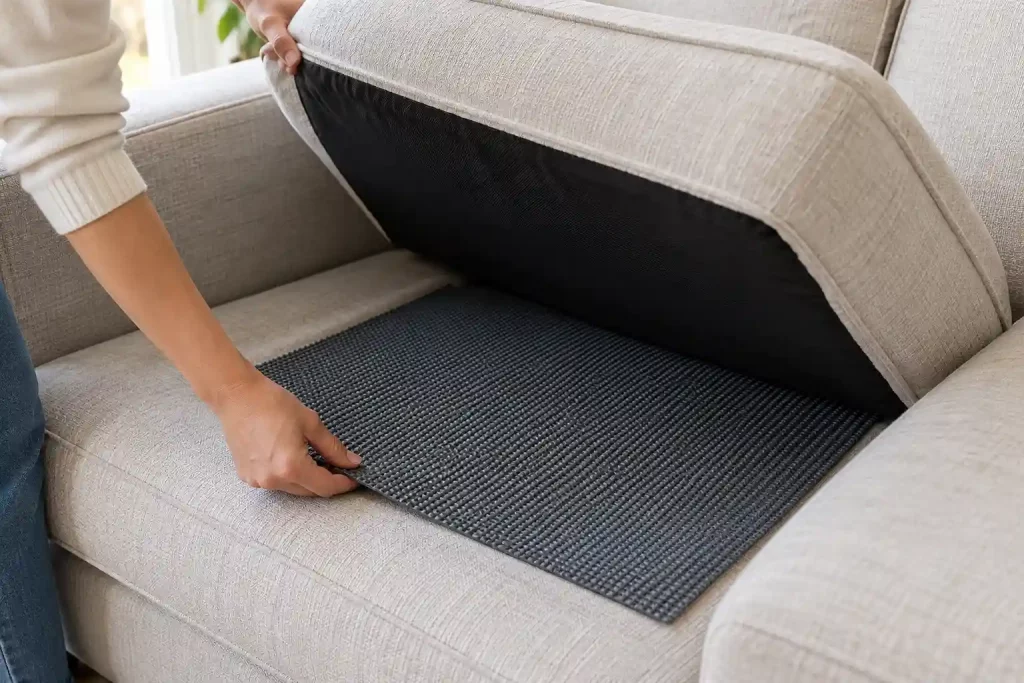
Place Non-Slip Grip Pads Under the Cushions
A non-slip pad adds friction between the cushion and seat base, helping prevent movement without changing the sofa’s appearance.
Here’s how to install one:
- Lift the cushion and measure the area that rests against the seat base.
- Choose a thin furniture grip pad compatible with both contact surfaces.
- Cut the pad slightly smaller than the cushion so its edges stay hidden.
- Lay it flat on the seat base, replace the cushion, and push it back into position.
Make sure the pad covers most of the cushion’s contact area without extending beyond its edges. A pad that’s too small may shift or bunch up instead of keeping the cushion in place.
Compatible non-slip rug pads or shelf liners may also work, but some rubber or PVC materials can leave marks or discolor upholstery. Check the manufacturer’s guidance and test a hidden area first.
Best for: Removable cushions on smooth fabric or leather sofas.
Limitation: Grip pads may not work well with undersized cushions or uneven seat support.
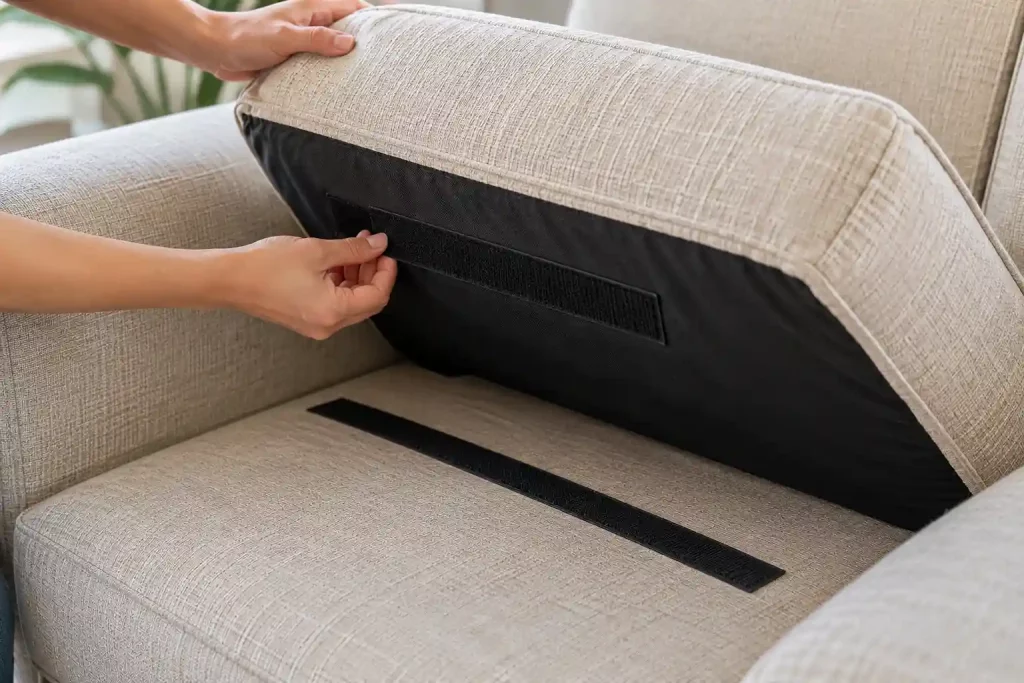
Secure Cushions With Hook-and-Loop Strips
If grip pads aren’t enough, hook-and-loop fasteners, commonly called Velcro, can anchor removable cushions to the seat base.
For fabric upholstery, attach one side of the sew-on fastener to a suitable panel beneath the cushion and the matching side to the seat base. Make sure the strips line up when the cushion is pushed fully back, and check that they hold without pulling on the fabric. If using adhesive-backed strips, confirm they’re safe for both surfaces and test a hidden area first.
Avoid strong adhesives on leather or delicate upholstery, as removal may damage the material.
Best for: Removable cushions that continue sliding despite using grip pads.
Limitation: Fasteners can make cushions harder to flip or remove for cleaning and may damage upholstery if installed incorrectly.
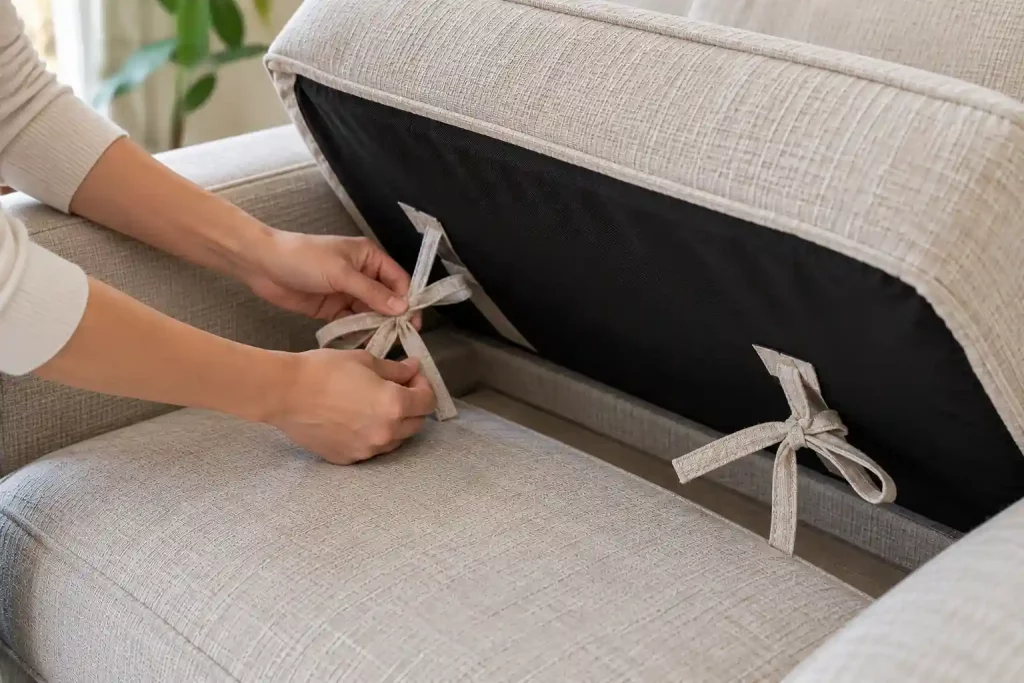
Use Fabric Ties for Cushions With Anchor Points
Fabric ties offer a way to secure removable cushions without adhesive, provided the sofa has suitable attachment points.
Check the cushion’s underside and seat base for built-in loops. If present, secure the ties as directed by the manufacturer, keeping them snug without pulling the cushion out of shape.
If your sofa has no attachment points, consult an upholsterer rather than sewing ties into unsupported seams.
Best for: Removable fabric cushions with built-in anchor points.
Limitation: Fabric ties aren’t suitable for every sofa and may require professional installation.
Check for Poor Cushion Fit or Seat Support
Compare the sliding cushion with one that stays in place. Look for uneven thickness, loose covers, or gaps between the cushion and backrest. Then check whether the seat base feels level and firm.
A misshapen cushion may need a properly fitted replacement insert. For flattened foam or filling, see this guide to repairing sagging couch cushions.
If the seat base sinks unevenly or has damaged springs or webbing, consult a furniture repair professional.
Best for: Cushions that keep sliding after simpler fixes.
Limitation: Worn foam or structural damage can’t be corrected with grip pads alone.
How to Tell if Your Couch Cushions Will Stay in Place
A cushion that looks secure when the sofa is empty may still slide when someone sits down. After installing a grip pad or fastener, test the repair during normal use.
- Push the cushion fully back and note where its front edge sits relative to the sofa frame.
- Sit down, shift your weight, and stand up without pushing the cushion back.
- Check whether the front edge has moved forward or the cushion has shifted sideways.
- Repeat the test after several days of regular use.
If the cushion stays aligned without bunching, pulling against the upholstery, or making removal difficult, the fix is working as intended.
Power Sofa Beds: When Cushion Fixes Aren’t Enough
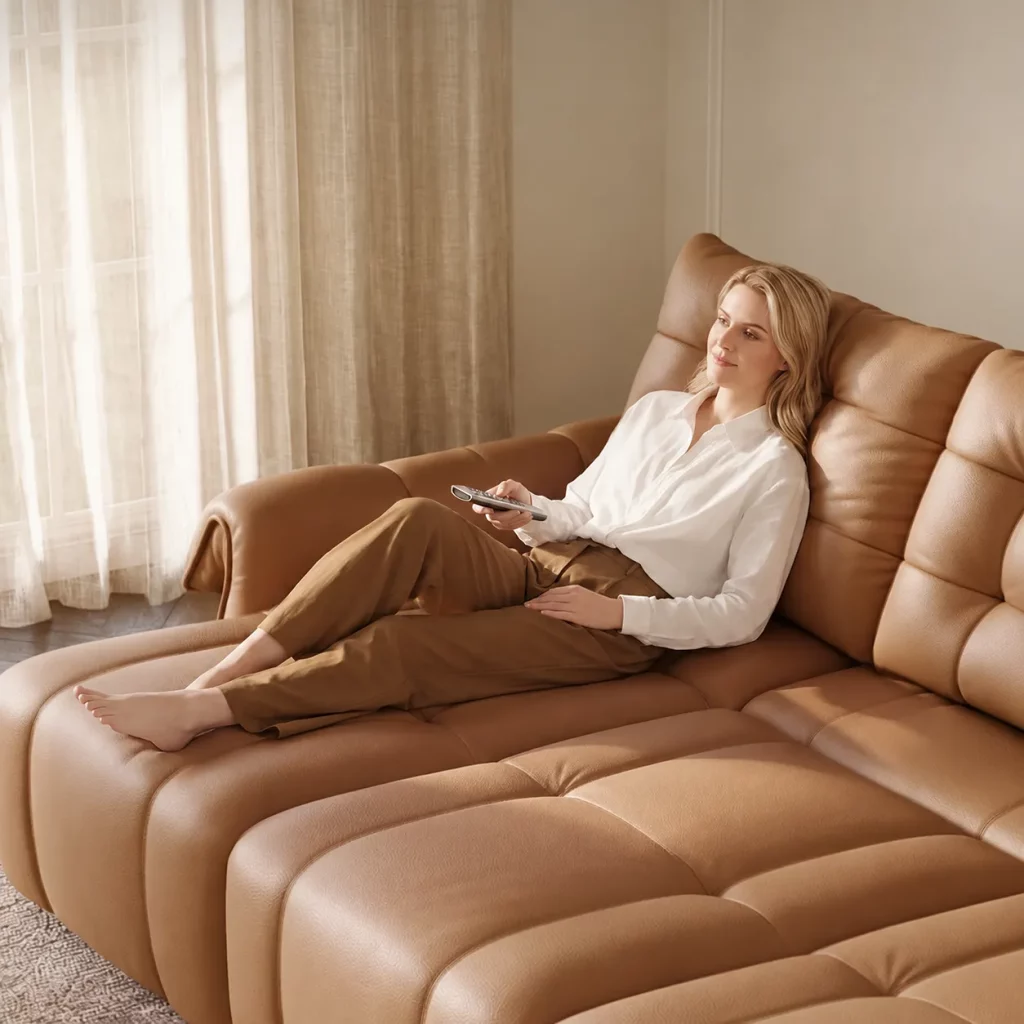
Grip pads and fasteners can keep cushions in place, but they won’t make a fixed-depth sofa more flexible for lounging. If you regularly rearrange cushions just to stretch out, a power sofa bed offers a different approach. Its adjustable seating surface lets you switch between sitting and reclining without manually changing the cushion arrangement.
The Aurora Power Sofa Bed extends its seat depth from 27 to 45.5 inches with one-touch control, giving you more room to relax while keeping the seating surface in its intended configuration. High-resilience foam provides cushioning across different positions, while soft chenille adds everyday comfort. This makes it easier to move between upright sitting and deeper lounging without having to create extra space yourself.

POVISON Aurora Power Sofa Bed
Worth considering when the real frustration is a fixed seating position, not simply a slippery cushion.
Conclusion
The right fix should keep your cushions in place without damaging the upholstery or making cleaning harder. If a simple solution works, there’s little reason to invest in more complicated repairs. But when cushions need constant attention or replacement parts become costly, consider the sofa’s overall condition and how well it meets your everyday seating needs before spending more on repairs.
FAQ
Will Non-Slip Pads Damage Leather Couch Cushions?
They can if the backing transfers dye or reacts with the leather finish. Use a pad approved for leather, then lift it after the first day to check for residue, discoloration, or tackiness. Remove it if problems appear.
How Do I Keep Back Cushions From Sliding Down?
If back cushions slip downward, check whether the inserts have flattened or the backrest fabric is unusually smooth. Fluff or replace loose filling first. For removable cushions, try a non-slip backing approved for the upholstery.
How Can I Prevent Sliding After Washing Cushion Covers?
Photograph each cushion before removing its cover so you can restore the original orientation. Follow the care label, dry the cover as instructed, and refit the insert without twisting it. Check the fit before closing the zipper.
Can I Use Velcro on a Reclining Sofa?
Only use fasteners where the manufacturer permits them. A recliner’s seat and back can move relative to the frame, so keep added materials clear of tracks, hinges, and wiring throughout the full motion.
What if My Sofa Is Still Under Warranty?
Contact the retailer before sewing, gluing, or replacing cushion components. Take photos showing the cushions before and after sitting, and keep your order details. Unauthorized modifications could complicate a warranty claim.


[…] too small for its designated space before adding stronger fasteners. For more targeted solutions, preventing sofa cushions from sliding can help address the movement […]