 By Kelvin
The best ways to decorate your bay window start with choosing furniture that fits its shape, depth, and role in the room. The right bay window furniture ideas can turn an awkward corner into a comfortable seating area without blocking natural light or disrupting the rest of your living space. From a single accent chair and side table to a compact loveseat or a built-in window seat, the best arrangement depends on how much usable floor space you have and how you want to use it.
Table of Contents
What Furniture Works Best in a Bay Window?
The most suitable furniture depends on whether your bay window has a usable floor-level area or simply extends outward above the existing floor. Some setups can accommodate independent seating, while others work better with a built-in bench or minimal accessories. Consider the available depth, window height, and surrounding furniture before choosing a piece.
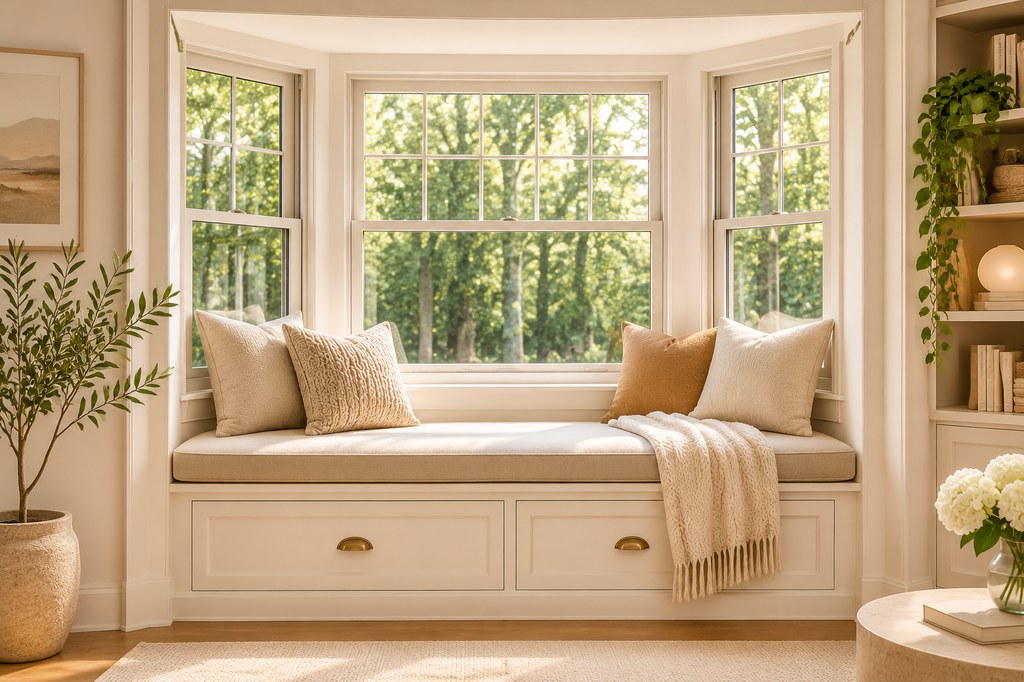
Built-In Window Seats and Freestanding Benches
A built-in window seat makes use of the recessed shape of a bay window, creating a dedicated place to sit without introducing a separate chair. It can also incorporate drawers or lift-up storage beneath the cushion, making it useful for storing blankets, books, and other living room essentials.
However, a built-in seat requires accurate measurements and usually involves custom work. It is worth considering when you want permanent seating that follows the shape of the window.
A freestanding bench offers more flexibility. You can move it when rearranging the room, replace it without remodeling, or use it elsewhere if your needs change. Choose a low-profile design when preserving the view is important, and check that the bench does not interfere with window handles or curtains.
Accent Chairs for Flexible Seating
Accent chairs are among the most adaptable bay window seating ideas because they provide a comfortable individual seat without requiring a permanent installation. A single upholstered chair works well in a medium-sized bay, while two smaller chairs can create a conversation area in a wider one.
Look beyond the chair’s overall width when choosing a design. Armrests, back height, leg placement, and seat depth all affect how much room it occupies. A low-back chair can preserve more of the view, while a deeper lounge chair offers more room to relax.
A chair paired with a small table can also create a practical window reading nook. This arrangement is especially useful when you want a separate place to read or enjoy morning coffee without dedicating an entire room to that activity.
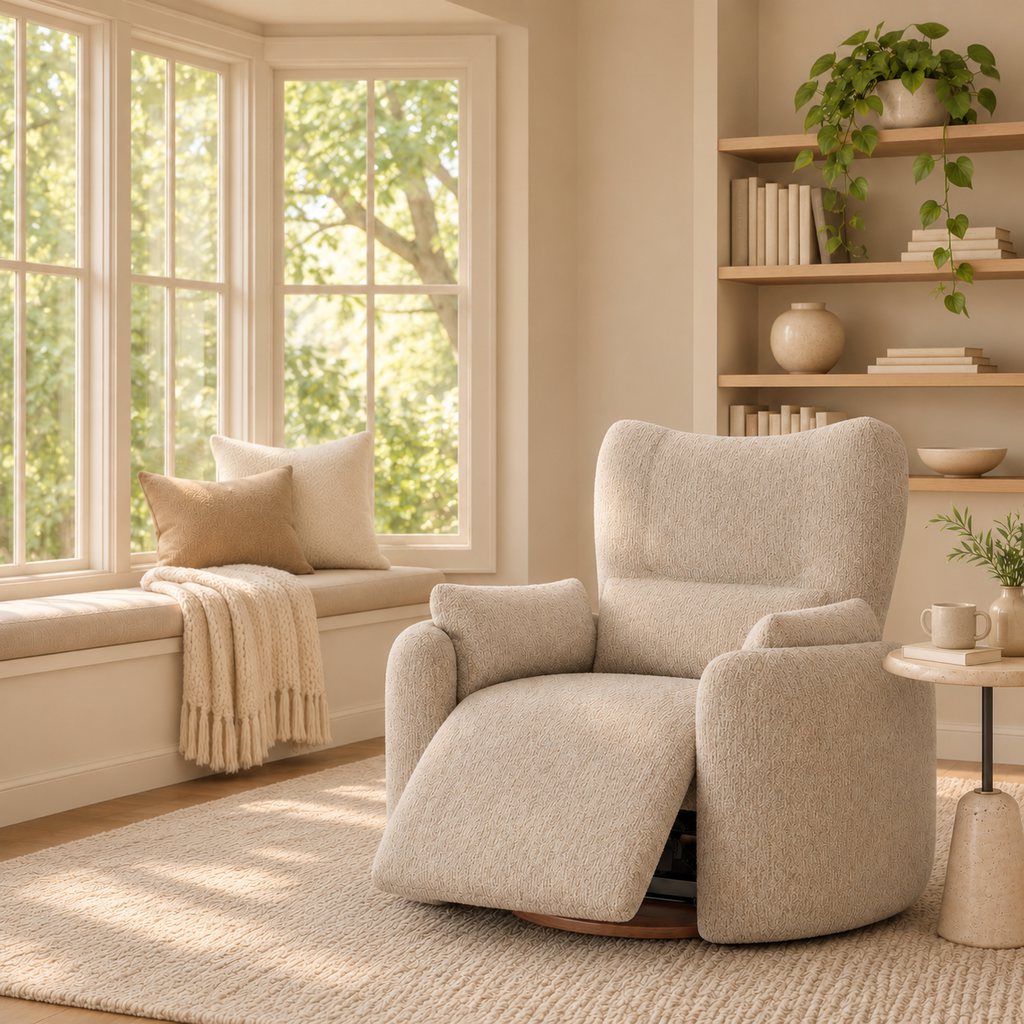
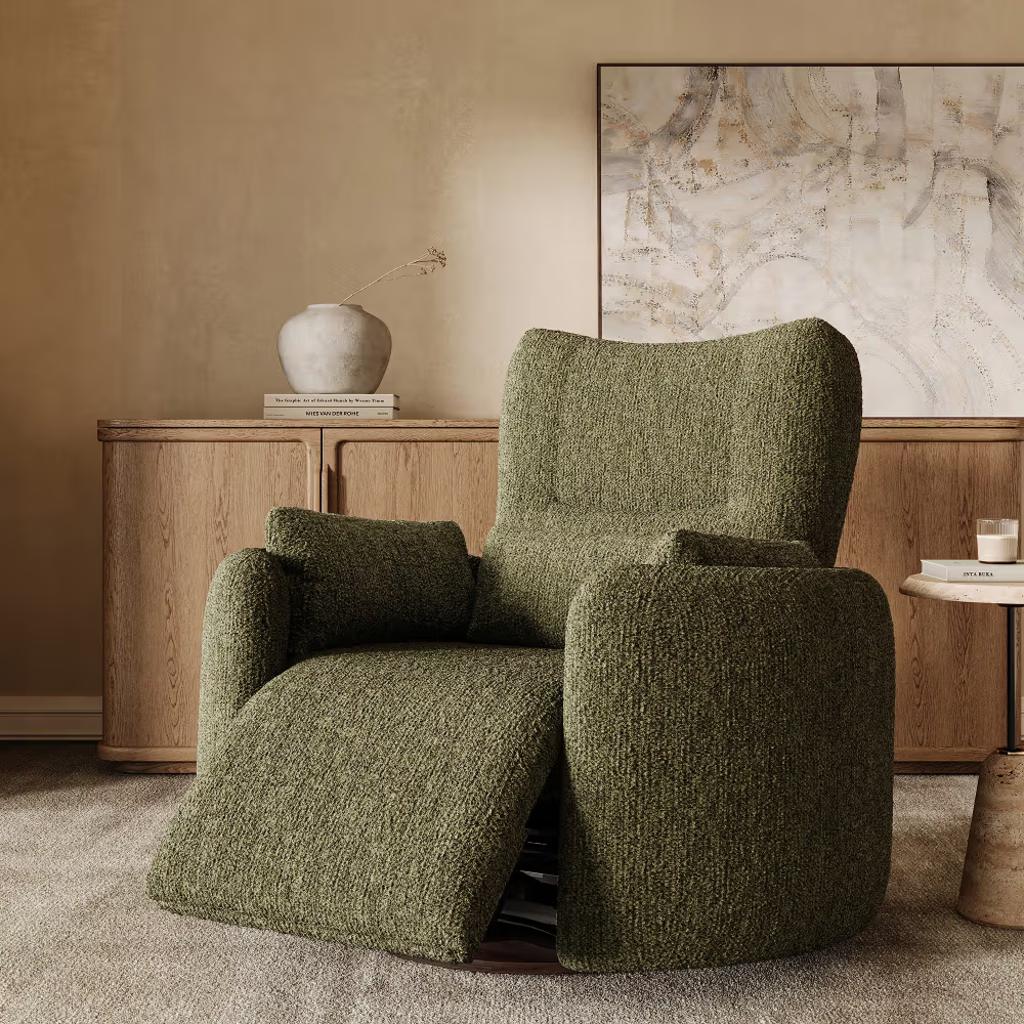
For a larger floor-level bay, a swivel recliner can provide more flexibility than a fixed accent chair. The Oliver Swivel Power Barrel Recliner combines a 270-degree swivel with electric reclining from 90 to 145 degrees and a gentle rocking motion. Its substantial footprint needs room to turn, so check the window sill height and available clearance before placing it directly in front of the glass.
Oliver Swivel Power Barrel Recliner
A swivel recliner adds adjustable comfort without a separate chair-and-ottoman setup.
👍 Best for: Spacious bay-side reading corners
✨ 270° swivel for changing views
✨ 90°–145° electric recline
✨ Gentle back-and-forth rocking
Compact Sofas and Loveseats
A loveseat can provide more seating than an individual chair while keeping the arrangement smaller than a full-size sectional. It works particularly well in a wide, floor-level bay window or along an adjacent wall where there is enough room for its full depth.
When comparing bay window sofa ideas, pay attention to the relationship between the sofa’s back and the window sill. A high back may cover part of the glass, while deep armrests can make an already narrow space feel crowded.
A compact, low-profile loveseat is worth considering when two people regularly use the area. If the bay window is too shallow for a sofa, placing one just outside the recess can still create a connected seating arrangement.
Side Tables and Ottomans
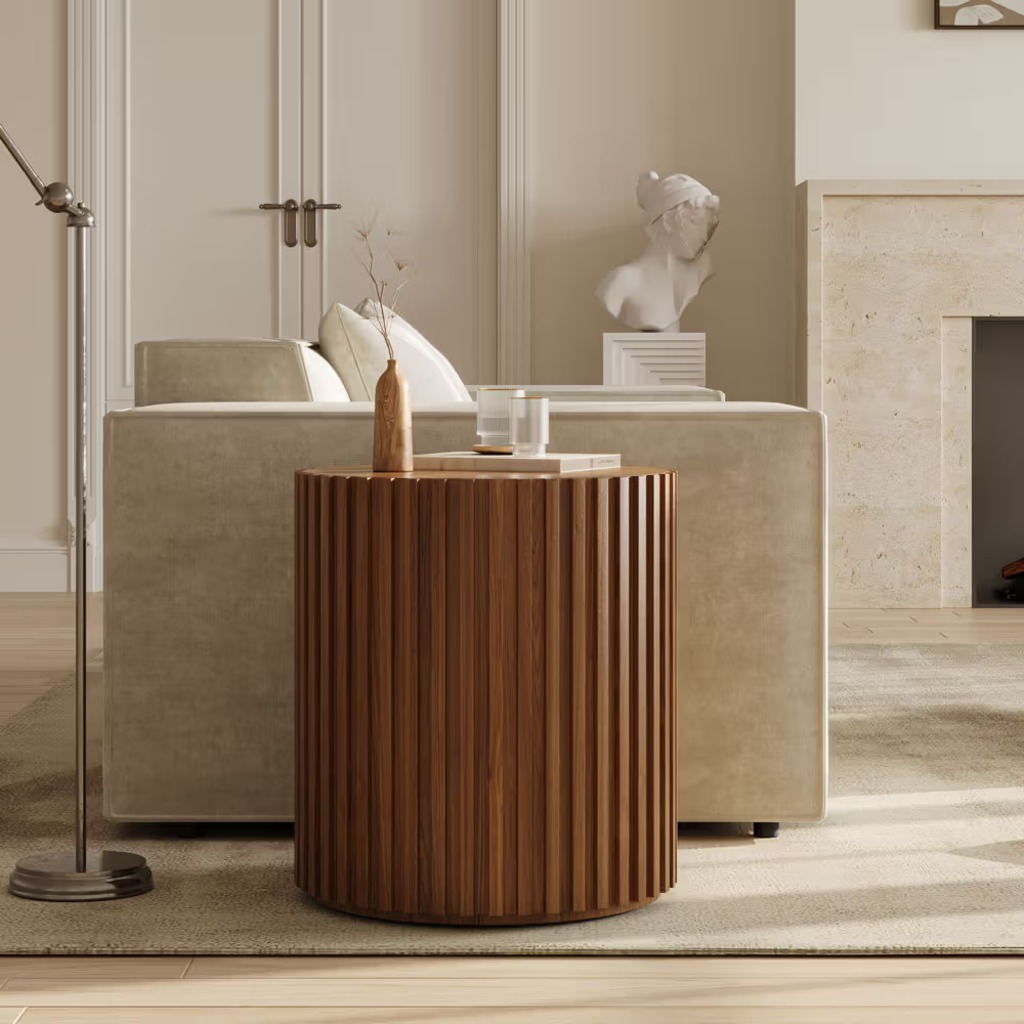
A side table makes a bay window seating area more useful by providing a convenient surface for drinks, books, glasses, or a reading lamp. A round table often works well around angled walls because it has no corners extending into nearby walking space.
An ottoman adds another layer of flexibility. It can support your feet while relaxing, provide temporary seating when guests visit, or serve as a soft alternative to a traditional coffee table.
Avoid adding both pieces automatically. If the chair already has a wide armrest or the available floor area is limited, one compact side table may be all the supporting furniture you need.
Which Bay Window Furniture Arrangement Works Best?
The best arrangement depends on how the bay window relates to the rest of the room. A chair placed inside the recess, a bench beneath the glass, and a sofa positioned opposite the window serve different purposes. These combinations offer practical starting points for different room sizes and seating needs.
One Accent Chair with a Side Table
This arrangement works well when the bay window has enough floor space for one chair but not two. Position the chair slightly toward one side of the recess, leaving room for the table and keeping the window accessible.
In a smaller living room, this can create an additional seating zone without making the main sofa area feel overcrowded. A slim floor lamp behind the chair can provide reading light without taking up table space.
Two Accent Chairs with a Small Table
A wider bay window can accommodate two chairs facing slightly toward each other, with a small round table between them. This arrangement creates a natural conversation area for morning coffee, casual conversations, or reading together.
The chairs do not need to match exactly. Coordinating upholstery colors, similar seat heights, or complementary materials can make the arrangement feel connected without looking overly formal.
Leave enough space between the chairs for comfortable movement and access to the table. If the bay has angled side panels, position the chairs slightly inward rather than forcing them against the walls.
A Window Seat with the Main Sofa
If your bay window already has a built-in bench, it can work as secondary seating for the main living room. The sofa can face the room’s primary focal point, while the window seat provides another place for family members or guests to sit.
This arrangement is useful when the room needs more seating but cannot accommodate another full-size sofa. Coordinate the window seat cushions with the sofa upholstery or repeat a similar accent color to connect the two areas.
A Sofa Facing or Sitting Near the Bay Window
A sofa does not always need to sit inside the bay. In many living rooms, positioning the main sofa opposite the window or slightly forward of it creates a more balanced arrangement. This keeps the window area open while making the bay a natural focal point.
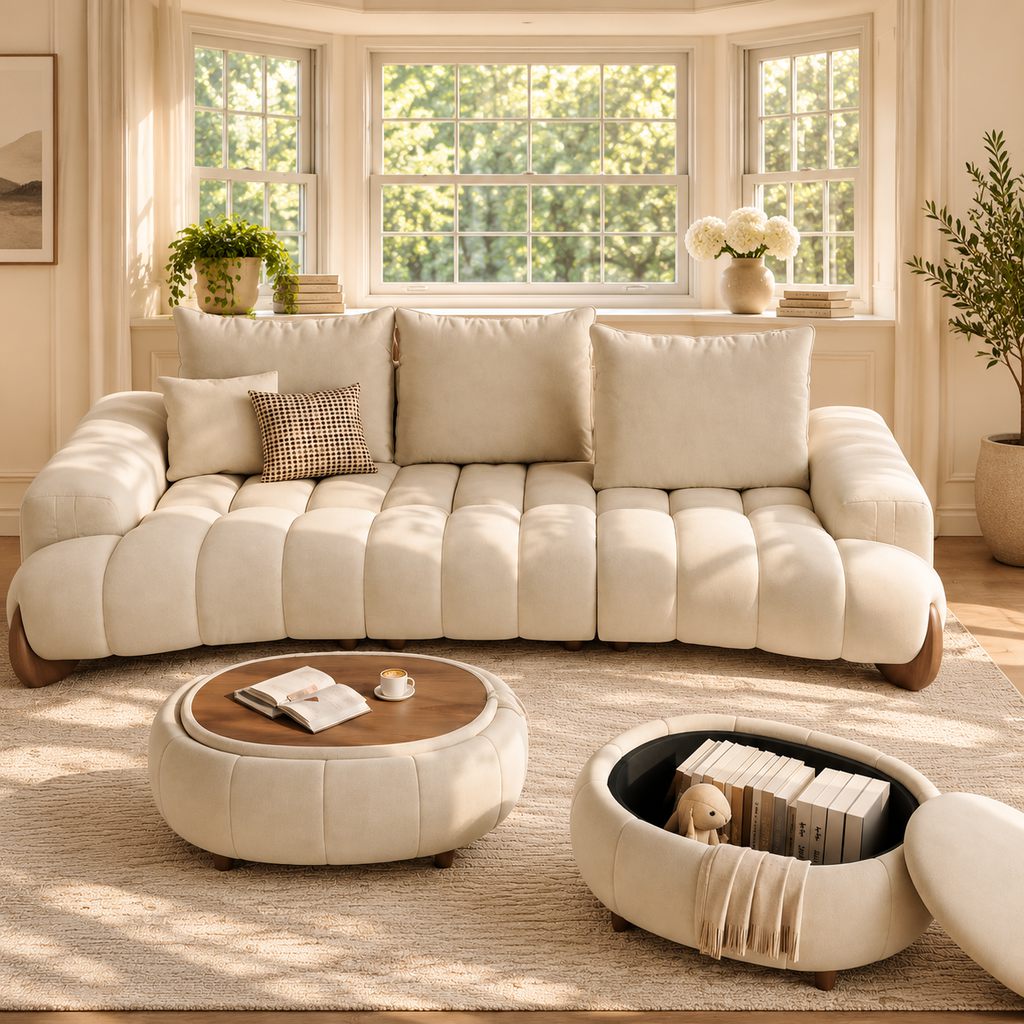
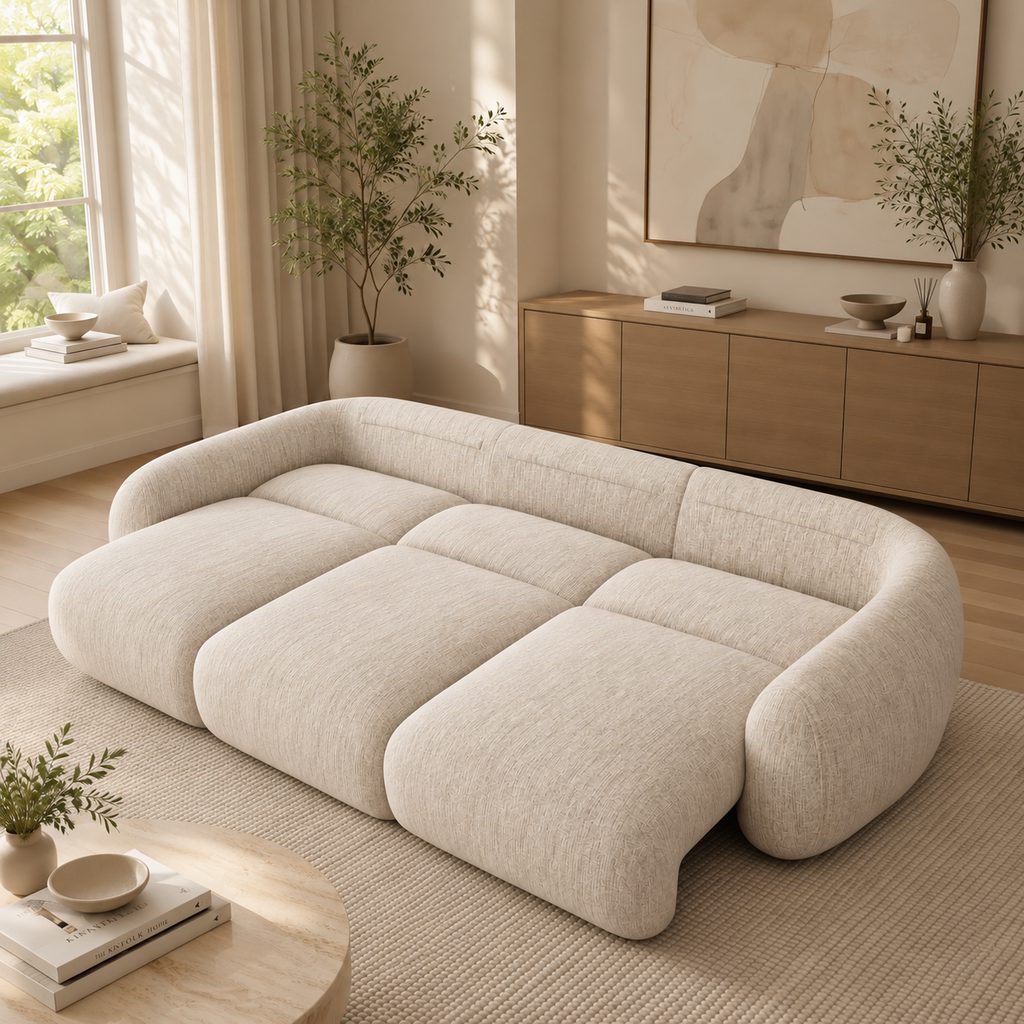
For a larger seating area, the Aurora Power Sofa Bed can anchor the room without requiring a permanently extended chaise. Its seat depth adjusts from 27 to 45.5 inches, allowing you to switch between everyday seating and a deeper lounging position. Its water- and scratch-resistant chenille and responsive foam support everyday use. Measure the extended footprint before choosing its position.
Aurora Power Sofa Bed
Adjustable seat depth supports everyday seating, lounging, and occasional guest sleep.
👍 Best for: Flexible living room seating
✨ Stepless 27–45.5-inch seat extension
✨ One-touch lounge and sleep modes
✨ Water- and scratch-resistant chenille

If you are comparing different configurations for a multifunctional living room, power sofa bed layouts for lounging and sleeping can help you understand how adjustable seating works alongside everyday furniture.
For the wider room, consider how the bay window seating connects with the sofa, coffee table, and other activity zones. A practical living room furniture layout should allow people to move between seats without cutting through the main conversation area.
How Do You Measure a Bay Window Before Choosing Furniture?
Furniture that looks appropriately sized in a product photo may take up more room than expected once placed inside a bay window. The angled walls, window trim, and available floor depth can all reduce the usable area. Measure the actual placement zone first, then compare it with the complete furniture footprint rather than relying on the window’s overall width.
Check the Usable Floor Space
Start by determining whether the bay window has enough floor space for independent furniture. A raised window seat or deep sill may look like a seating area, but it does not necessarily provide room for a separate chair or sofa.
Measure these areas:
- Usable width: Measure the available space between the interior side walls, accounting for angled sections.
- Usable depth: Measure from the window area to the edge of the available floor space.
- Sill height: Check whether a chair or sofa back would cover too much of the glass.
- Side clearance: Account for window frames, handles, curtains, and other obstructions.
Compare the Full Furniture Footprint
Furniture dimensions should be checked in the configuration you actually plan to use. A recliner needs space to extend, a swivel chair needs room to turn, and an ottoman needs additional clearance when pulled forward.
| Bay Window Condition | Furniture to Consider | Main Measurement |
| Shallow bay | Low bench or slim chair | Available depth |
| Medium-depth bay | Accent chair and side table | Combined footprint |
| Wide bay | Two accent chairs | Chair spacing |
| Deep, floor-level bay | Loveseat or recliner | Extended footprint |
| Raised window seat | Furniture placed nearby | Sill height and sightline |
For regular walkways, aim for approximately 30–36 inches of clear space when the room allows. This is a practical planning target rather than a universal requirement; occasional-use paths may work with less clearance if people can still move through comfortably.
For example, a deep recliner may fit beside a wide bay window but become inconvenient if its footrest extends into the main path between the living room and hallway. Measure both its closed and fully extended positions before deciding where it belongs.
How Do You Keep Bay Window Furniture Practical?
A comfortable seating arrangement needs to work throughout the day, not just look attractive when everything is in place. Once you have chosen the furniture, check how it interacts with sunlight, window access, heating, and everyday movement. These details often determine whether a bay window arrangement remains convenient over time.
Use this checklist before finalizing the layout:
- Preserve natural light: Avoid tall furniture that covers a large portion of the glass, especially in rooms that depend on the bay window for daylight.
- Keep windows accessible: Make sure handles, opening panels, blinds, and curtains remain easy to reach.
- Protect walkways: Keep chairs, ottomans, and side tables outside the main traffic path.
- Check heating and ventilation: If a radiator or air vent sits beneath the window, do not block its airflow with a solid bench or storage unit.
- Consider direct sunlight: Strong afternoon sun can affect upholstery over time. Use suitable window coverings and follow the furniture manufacturer’s care instructions.
- Leave room to move: Avoid filling every corner. Some open floor space can make the furniture arrangement feel more balanced.
These considerations are especially important when deciding on furniture placement in front of windows. A lower-back chair may preserve more of the view than a tall recliner, while a freestanding bench can be moved when you need full access to the window.
Conclusion
The best bay window furniture ideas are those that make the space more useful without sacrificing natural light, window access, or comfortable movement. A built-in bench, accent chair, loveseat, or small side table can each serve a different purpose, depending on the available dimensions and how you use the room. Start with measurements, choose furniture that fits your everyday routine, and connect the bay window to the rest of the living room rather than treating it as an isolated corner. A balanced arrangement should feel comfortable and practical, not simply full.
Find the Right Living Room Seating
Explore seating designs for different room sizes, window layouts, and everyday comfort needs.
Q&A
Can a Bay Window Be Used as a Dining Nook?
Yes, if the window area has sufficient floor space and the sill height works with the chosen seating. A built-in bench paired with a small round dining table can create a breakfast nook. Leave enough room to pull out chairs and walk around the table comfortably.
What Kind of Rug Works Best Under Bay Window Seating?
A round rug can complement two chairs arranged around a small table, while a rectangular rug works well when the bay window seating connects to a larger sofa arrangement. Choose a size that anchors the furniture rather than leaving each piece looking disconnected.
Should Bay Window Curtains Reach the Floor?
They can, provided the panels do not become trapped behind furniture or interfere with window operation. If a bench or chair sits close to the glass, consider how the curtains will move when opened and closed. Shorter treatments may be more practical around built-in seating.
How Can You Add Lighting Without Crowding a Bay Window?
A slim floor lamp beside a chair or a small table lamp can provide focused light without adding much visual clutter. If the window receives strong daylight, position the reading seat to avoid glare and use an adjustable lamp for evening use.
What Upholstery Works Best Near a Sunny Bay Window?
Choose upholstery with documented fade-resistance properties if the furniture receives regular sunlight. However, no fabric should be assumed to withstand prolonged direct exposure. Window coverings can reduce UV exposure, and product-specific care instructions should guide placement and maintenance.


[…] Compact chairs, shallow chaise, or fitted bench […]