 By Stephanie

If your recliner leaves your lower back unsupported, puts pressure behind your knees, or feels uncomfortable when fully extended, adding another pillow may not solve the problem. Learning how to make a recliner more comfortable starts with three practical areas: adjusting your sitting position, improving cushioning, and checking the chair’s reclining mechanism. Whether you use your recliner for watching TV, reading, or relaxing after work, these steps can help you identify what’s causing discomfort and decide what to do next.
Table of Contents
How to Adjust a Recliner for Comfort in 3 Steps
Before buying accessories or attempting repairs, start with the adjustments your recliner already provides. The goal is to find a position where your back, legs, and head receive comfortable support together. Make one adjustment at a time so you can tell whether it improves your sitting experience or creates pressure somewhere else.
Step 1: Adjust the Backrest, Footrest, and Body Support
Sit all the way back so your lower back rests against the backrest. Your feet should have stable support, and the seat edge should not press against the backs of your knees.
Adjust the backrest gradually until your head and lower back feel supported. If your recliner has independent backrest and footrest controls, adjust them separately. A slightly reclined position with the footrest raised may work well for watching TV, while reading may feel better with the backrest more upright.
Check three areas:
- Headrest: Support your head without pushing your chin toward your chest.
- Armrests: Keep your shoulders relaxed rather than raised or dropped.
- Footrest: Support your calves without creating pressure behind your knees. When fully reclined, your heels should rest comfortably on the footrest rather than hang beyond its edge.
If your recliner includes a seat-pitch adjustment, follow the owner’s manual to fine-tune the angle. Never loosen frame bolts or modify the base unless the manufacturer specifically instructs you to.
After making these adjustments, test the chair during your usual activities, such as watching TV or reading. If discomfort persists, change one setting at a time to identify what still needs improvement.
If you remain uncomfortable even when sitting upright, the problem may be the chair’s fit rather than its reclining settings. The seat height and depth of a recliner should suit your body proportions; adding cushions will not correct a chair that is too high or too deep.

Step 2: Improve Cushioning and Add Targeted Support
If the built-in headrest, footrest, or backrest cannot provide enough support for your body, an external cushion may help fill the gap. Choose accessories that fit the chair without interfering with its reclining movement.
| Accessory | Best For | Selection Tips |
| Lumbar pillow | Lower back gaps | Fill the gap without pushing your torso forward |
| Neck pillow | Insufficient head support | Choose a compact shape that keeps your head aligned |
| Seat cushion | A firm or uneven seat | Use a thin, stable pad that does not raise your hips too much |
| Armrest pad | Hard armrests | Avoid adding so much height that your shoulders rise |
| Leg support cushion | Unsupported calves | Support your lower legs without pressing behind your knees |
Avoid adding too much padding. A thick seat cushion can change your sitting position, while bulky pillows may create new pressure points.
Try one accessory at a time. Sit for 15–20 minutes, then recline to check whether it stays in place. For power recliners, keep loose cushions away from moving joints and follow the manufacturer’s safety instructions.
Step 3: Check the Seat Support and Reclining Mechanism
If adjustments and accessories do not improve comfort, check whether the seat or reclining mechanism needs attention.
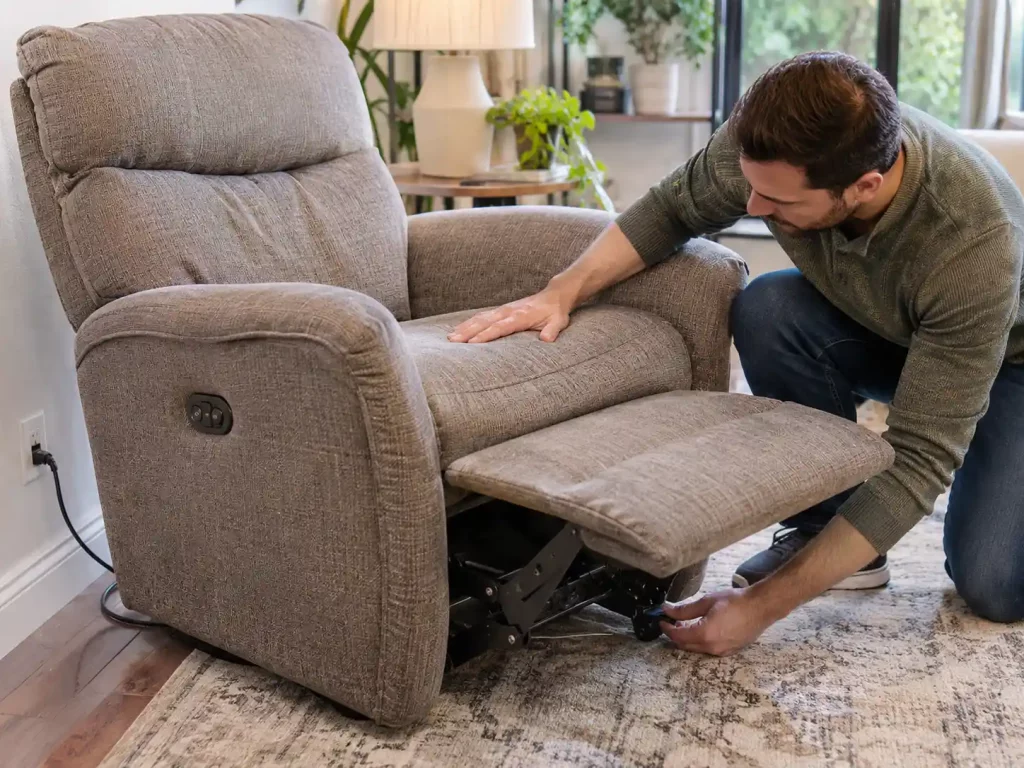
Check for seat sagging. Test the seat in both upright and reclined positions. If it stays low or uneven in every position, the cushion or seat support may be worn. If one side drops only as the footrest opens, the problem may involve the internal support structure or reclining linkage. Have an unstable frame professionally inspected.
Check for unexpected rocking. Some recliners are designed to rock or swivel. If yours moves unexpectedly, check that the floor is level and the visible base is stable. Stop using the chair if it shifts or tilts unexpectedly.
Check for a stiff or noisy mechanism. Look for visible obstructions around the footrest and check the power connection on electric models. Never force a stuck mechanism or apply unapproved lubricant. If the chair continues to grind, click, or move unevenly, contact the manufacturer or a qualified repair professional.
When Should You Repair or Replace a Recliner?
Once you’ve tried the available adjustments and checked for obvious problems, decide whether the chair needs repair or whether its design no longer suits your needs. The distinction depends on whether the problem is fixable or built into the chair’s fit and adjustment range.
Use these guidelines before spending more on accessories:
- Keep and adjust it: Your discomfort improves when you change the backrest or footrest settings, or use a properly fitted accessory.
- Repair it: A professional identifies a replaceable component, and the rest of the chair remains structurally sound.
- Consider a different recliner: The mechanism works normally, but none of its available positions supports the way you like to sit, read, or relax.
If you decide to replace your chair, compare models based on the adjustments you actually need. For example, independently controlled headrests and footrests may offer more flexibility than a chair with a single reclining control. This guide to ergonomic recliners for all-day comfort can help you evaluate those features.
Your household’s seating needs also matter. A recliner may work well for one person’s relaxation, but it cannot provide the same shared seating or guest accommodation as a larger sofa.
An Alternative When a Recliner Still Feels Restrictive
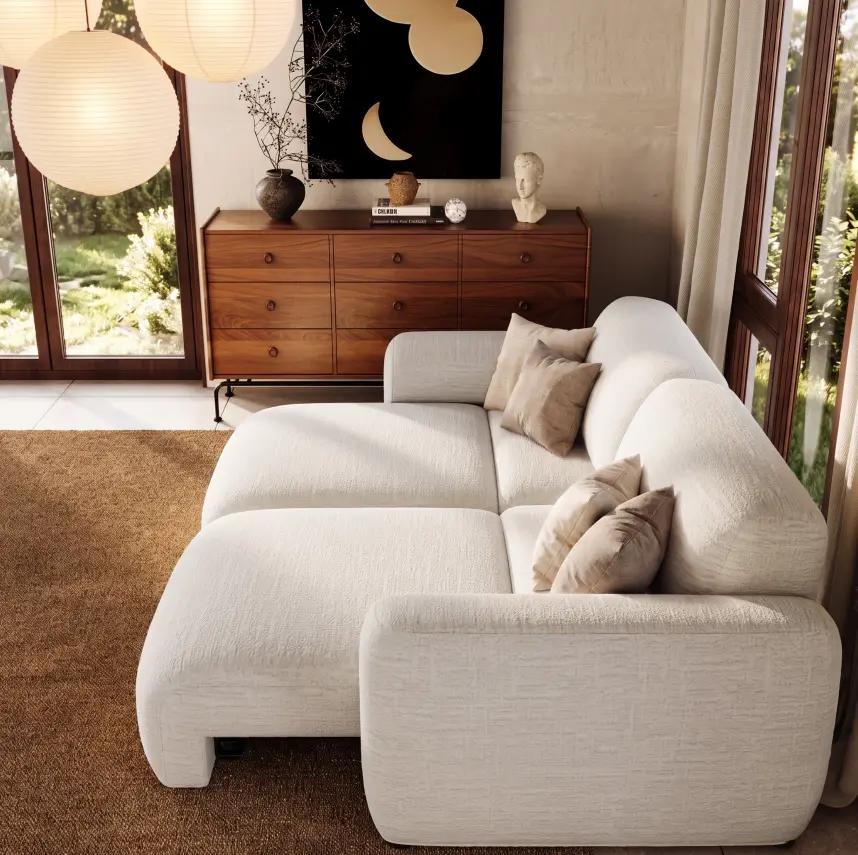
If your recliner’s fixed seat depth leaves too little room to stretch out, a power sofa bed offers another way to relax. Its motorized extension lets you increase the seating depth at the touch of a button, giving you more room to lounge without being limited to a fixed sitting position.
The Povison Aurora Power Sofa Bed features an 83-inch, two-seat layout with high-resilience foam for everyday seating support. Its seat depth adjusts from 27 to 45.5 inches, allowing you to move from upright sitting to a more extended lounging position. One-touch lounge, recline, and sleep modes also accommodate relaxing, watching movies, and hosting overnight guests.
Aurora Comfortable Power Sofa Bed
A practical alternative when your recliner leaves you short on room to stretch out.
Conclusion
The most effective way to make a recliner more comfortable is to address the cause rather than keep adding cushions. Start by adjusting the backrest, footrest, and body support. Then improve cushioning where needed and check the seat or mechanism if discomfort persists. If the chair works properly but none of its available positions feels comfortable, consider whether a different seating design would better support your everyday routine.

More Room to Stretch Out
Explore power sofa beds that offer a more flexible way to relax when your recliner feels restrictive.
FAQ
Can a Recliner Work on a Thick Area Rug?
Check the manufacturer’s instructions before placing a recliner on a thick rug. A plush surface may affect the chair’s stability or interfere with its base and moving parts. Make sure the chair sits level and the footrest can extend and close without obstruction.
Can You Use an Extension Cord With a Power Recliner?
Use an extension cord only if the manufacturer permits it and specifies the required electrical rating. Keep the cord away from moving parts, doorways, and walkways. If the product instructions require a direct wall connection, follow that requirement instead.
Can You Add a Footrest Extension to a Recliner?
Only use a footrest extension designed for your recliner or approved by its manufacturer. An incompatible attachment can change leg support, create pressure behind your knees, or interfere with the closing mechanism. Check compatibility before purchasing or installing one.
What Should You Do if a Power Recliner Stops While Fully Extended?
Stop pressing the controls and check the power connection and visible cables. Consult the owner’s manual for an approved reset, battery backup, or manual-release procedure. Never force the footrest closed. If the chair remains stuck, contact the manufacturer or a qualified repair professional.
Is It Okay to Sleep in a Recliner Every Night?
A recliner can be useful for occasional naps, but it is not automatically a suitable replacement for a bed. Long-term comfort depends on the chair’s fit and your individual needs. If you sleep upright because of surgery or a medical condition, follow your healthcare provider’s recommendations.


