 By Stephanie
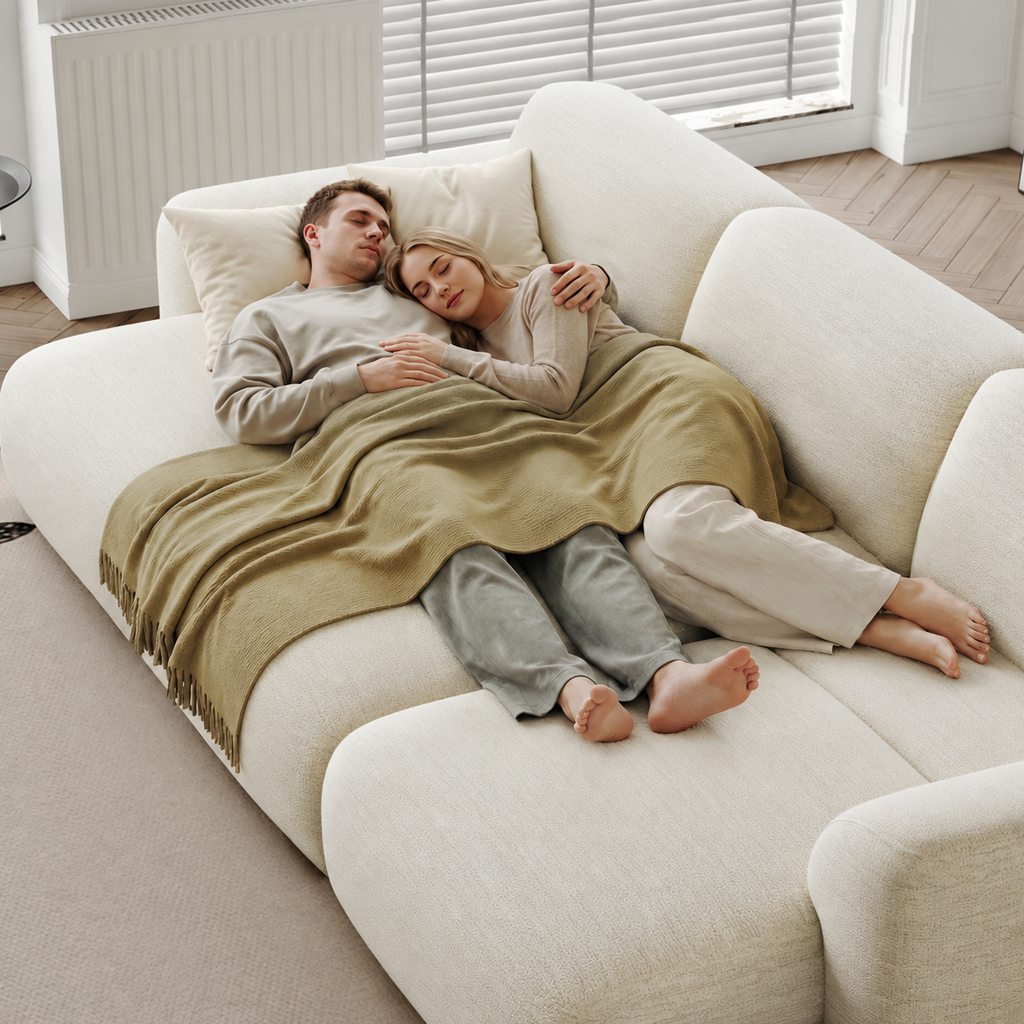
If you are asking, “is sleeping in a recliner bad for you,” the answer depends on why you use one: an occasional nap, a medically recommended position, or your main sleep setup. A recliner may make short-term rest easier, but comfort in the moment does not automatically make it suitable for nightly sleep.
This guide explains when reclining sleep may help, which side effects of sleeping in a recliner deserve attention, which symptoms warrant medical attention, and when a more flexible living-room setup may better fit your routine.
Table of Contents
Is Sleeping in a Recliner Bad for You?
Not necessarily. An occasional nap may be fine for many adults who can reposition and get up safely. Regular overnight use deserves more attention if it is driven by pain, reflux, breathing symptoms, or repeated discomfort after waking. In those cases, the reason you need the recliner matters as much as the chair itself.
| Use Pattern | What to Consider |
| An occasional nap | Usually a matter of comfort, provided your head, back, and legs are supported. |
| One temporary overnight stay | Check the chair’s fit and whether you can change position without strain. |
| Sleeping in it most nights | Look at why a bed is uncomfortable and whether the chair restricts movement or creates pressure. |
| A position recommended after surgery or for a medical condition | Follow the specific instructions from your healthcare professional. |
When Can Sleeping in a Recliner Help?
An inclined position may help in a few specific situations, but it does not treat the underlying condition. The relevant question is whether the position is appropriate for your situation and whether the symptoms still need medical assessment.
Nighttime Acid Reflux and GERD
Lying flat can make it easier for stomach contents to move back toward the esophagus. Keeping the upper body elevated may reduce nighttime reflux for some people.
However, sleeping in a recliner is not the only way to create an incline. Raising the head of the bed by 6 to 9 inches or using a wedge that elevates the body from the waist up may be more practical for a bed-based setup (Mayo Clinic). Stacking ordinary pillows under the head alone may not provide the same support.

Snoring and Position-Related Sleep Apnea
Sleep position can affect breathing for some people with obstructive sleep apnea, particularly when symptoms are worse while lying flat on the back.
An elevated or side-sleeping position may help some people with positional sleep apnea, but it does not work for everyone and should not replace diagnosis or prescribed treatment (Sleep Foundation). Loud snoring, waking up gasping, or persistent daytime tiredness are reasons to seek an evaluation for sleep apnea (NHS).
Temporary Recovery and Mobility Needs
After some procedures or injuries, a clinician may recommend sleeping with the upper body raised or avoiding a particular flat position for a limited period. A recliner may make that position easier to maintain or make transfers simpler for someone with restricted mobility.
The correct angle and duration depend on the procedure and the person’s condition, so use the discharge instructions or ask the care team before making a recliner your overnight setup.
What Are the Risks of Sleeping in a Recliner Every Night?
The side effects of sleeping in a recliner are not identical for everyone. They are more likely to matter when the chair does not fit the sleeper, the body stays in one position for long periods, or the person has limited ability to move independently. Focus on the specific pressure points and movement limits rather than assuming every recliner causes the same health problem.
Joint Stiffness and Limited Movement
A recliner keeps the hips and knees bent to some degree. If you remain in that position for hours and rarely shift, you may wake with stiff hips, knees, or ankles.
This does not mean a recliner automatically damages your joints. It means a chair that feels comfortable for a short TV break may not give your body enough freedom to change position through a full night.
Head, Neck, and Lower-Back Discomfort
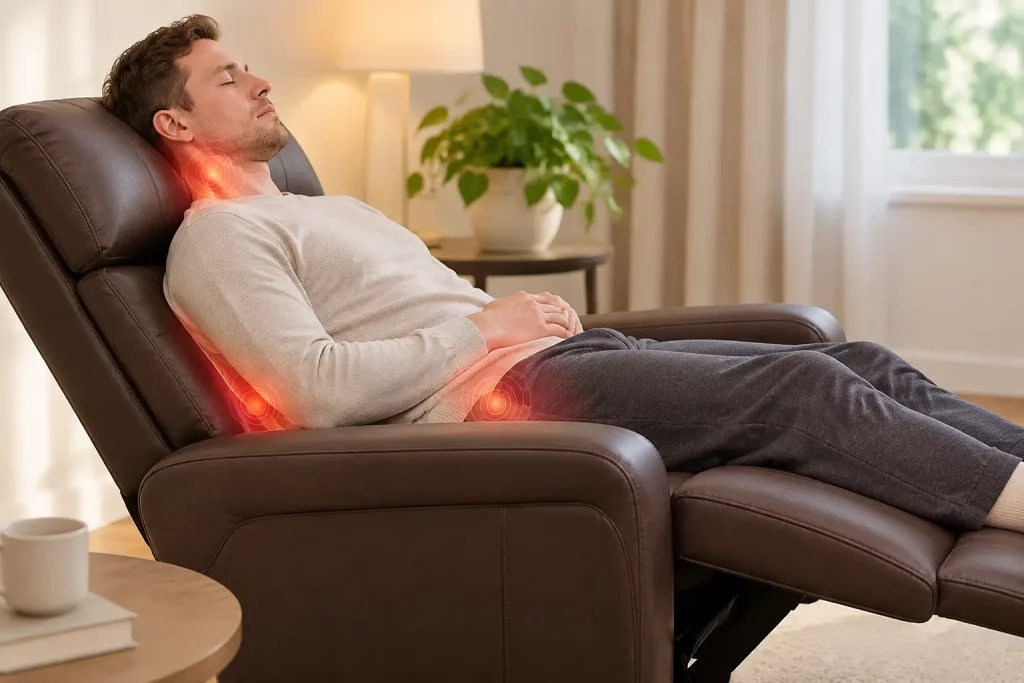
A recliner may feel comfortable during a TV session because you are awake and can adjust your posture. During sleep, however, you may remain in one position for much longer. If the headrest pushes your chin forward or your pelvis slides as the backrest reclines, you may wake with neck or lower-back discomfort.
Pay attention to where the discomfort occurs:
- Neck soreness: Your head may be resting at an uncomfortable angle.
- Lower-back discomfort: Your pelvis may slide forward as the chair reclines.
- Recurring morning discomfort: The position may not provide enough comfort for extended rest.
These patterns do not establish a medical diagnosis, but recurring discomfort is a reason to reassess your sleeping position rather than assuming that a deeper recline will solve the problem.
Circulation Concerns and Prolonged Inactivity
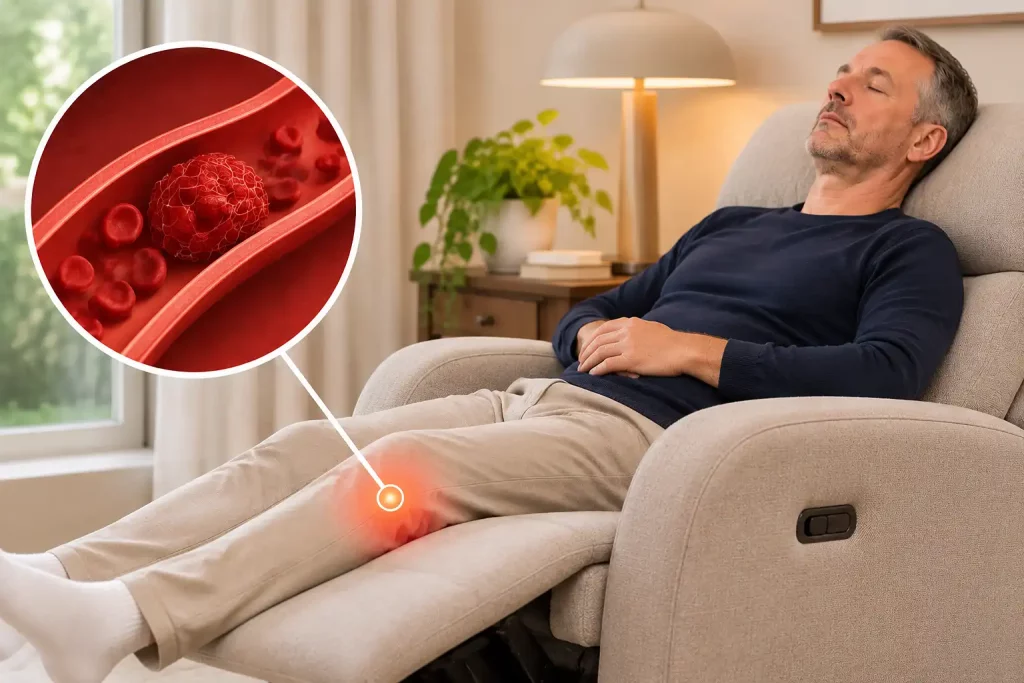
The concern is prolonged immobility, not the recliner as a product category. Staying still for long periods can increase the risk of blood clots, particularly for people with other risk factors such as recent surgery, a previous clot, or limited mobility.
Breaking up long periods of sitting with regular movement, when medically appropriate, can help reduce prolonged inactivity (NHS). If you have a history of clots or have been told you are at higher risk, ask your clinician what movement and prevention plan is appropriate.
Pressure Points and Interrupted Sleep
A recliner has fixed contact areas, including the seat, backrest, armrests, and footrest. Staying in one position for too long may cause soreness or skin irritation.
The concern is greater for people who cannot reposition independently. Prolonged pressure on areas such as the hips and heels can increase the risk of pressure sores, particularly when mobility is limited (MedlinePlus). These individuals may need caregiver assistance and an appropriate repositioning plan.
A More Flexible Option for Everyday Lounging
If you doze in a recliner simply because you want more room to relax while watching TV, a power sofa bed offers a more flexible seating arrangement. Unlike a recliner designed around one person’s reclining position, it provides shared seating and an extendable surface, giving you more freedom to lounge without giving up everyday sofa functionality.
For movie nights or an occasional afternoon nap, the POVISON Aurora Power Sofa Bed offers one-touch motorized seat-depth adjustment from 27 to 45.5 inches. You can keep the seat compact for everyday sitting and extend it when you want a deeper, more relaxed position. Its high-resilience foam cushions provide a soft feel with responsive support, making it comfortable for both sitting and stretching out.
Before choosing an extendable model, measure the sofa’s available width and the clearance in front of it when fully extended. Make sure the expanded seating area does not block the main walkway or interfere with your coffee table.

Aurora Comfortable Power Sofa Bed
A practical fit when you want room to stretch out without giving up shared seating.
When Should You Talk to a Healthcare Professional?
If you repeatedly need to sleep upright because lying flat causes persistent pain, reflux, or breathing difficulty, arrange a medical evaluation. Repeated gasping during sleep or ongoing daytime sleepiness also warrants an evaluation.
New one-sided leg swelling or pain, especially with warmth or skin discoloration, needs prompt medical assessment. Sudden shortness of breath or chest pain requires emergency care. Do not assume these symptoms are simply caused by the chair.
Conclusion
Ultimately, is sleeping in a recliner bad for you? Not automatically. What matters is whether the position leaves you uncomfortable, limits your ability to move, or has become necessary because lying flat causes symptoms. Address recurring health concerns with a healthcare professional first. For everyday living-room use, choose seating that accommodates how you actually relax rather than expecting furniture to solve an underlying medical problem.

More Room to Relax Beyond a Recliner
Explore power sofa beds that offer more room to stretch out while keeping everyday seating flexible.
Q&A
Is a Recliner or an Adjustable Bed Better for Sleeping Upright?
An adjustable bed keeps your body on a full-length mattress while raising the head or legs. A recliner may be easier for short-term recovery or transfers. Choose based on your medical needs, mobility, and ability to change positions comfortably.
Can Sleeping in a Recliner Cause Swollen Ankles?
Not necessarily. Prolonged stillness or a position that leaves your legs dependent may contribute, but ankle swelling has many possible causes. New one-sided swelling, especially with pain, warmth, or redness, needs prompt medical assessment.
Is Sleeping in a Recliner Safe for Older Adults?
Age alone does not make it unsafe. The key questions are whether the person can shift position, get out safely, and avoid prolonged pressure. If mobility or skin fragility is an issue, ask a clinician to assess the setup.
Does Raising the Footrest Prevent Blood Clots?
No. Raising the footrest should not be treated as a way to prevent deep vein thrombosis. Prolonged inactivity and individual risk factors still matter. If you have a history of blood clots, recent surgery, or limited mobility, follow your clinician’s prevention plan.
Why Do I Wake Up With Numbness or Tingling After Sleeping in a Recliner?
The position may place pressure on a nerve or keep one area compressed, but numbness has other possible causes. Change position and monitor the symptoms. If they persist, recur, or come with weakness or significant pain, seek medical advice.


