 By Stephanie
If you searched for “air mattress pump not working,” you probably need to get the bed inflated before your guests arrive. A loose power connection or incorrect control setting may be the cause, but a blocked intake, overheated motor, or damaged pump can produce similar symptoms. Start by identifying what happens when you switch the pump on. Does it remain silent, run without producing air, or stop before inflation is complete? The four steps below will help you narrow down the problem and determine whether it is safe to troubleshoot yourself.
Table of Contents
What Does Your Air Mattress Pump Do When You Turn It On?
A silent pump, a motor that runs without producing air, and a mattress that loses air after inflation point to different faults. Use the symptoms below to identify where the problem is most likely occurring before choosing your first check.
| What You Notice | Possible Cause | What to Check First |
| Pump won’t turn on, with no sound or response | Power supply, battery, or internal electrical fault | Outlet, plug, battery, and switch |
| Motor hums but produces no air | Blocked intake or internal pump problem | Air intake and pump condition |
| Air comes out, but the mattress stays flat | Incorrect setting, loose nozzle, or valve issue | Inflate mode and nozzle connection |
| Pump stops during inflation | Thermal protection or operating limit | Continuous running time |
| Mattress inflates but loses air afterward | Mattress leak, valve seal, or initial material stretching | Mattress and valve condition |
One distinction matters: if the pump produces normal airflow and the mattress inflates successfully but becomes soft later, the problem may not be the pump. It could be a separate air-retention issue. Check the valve and mattress surface using the steps for an air mattress that keeps deflating rather than repeating the same pump tests.
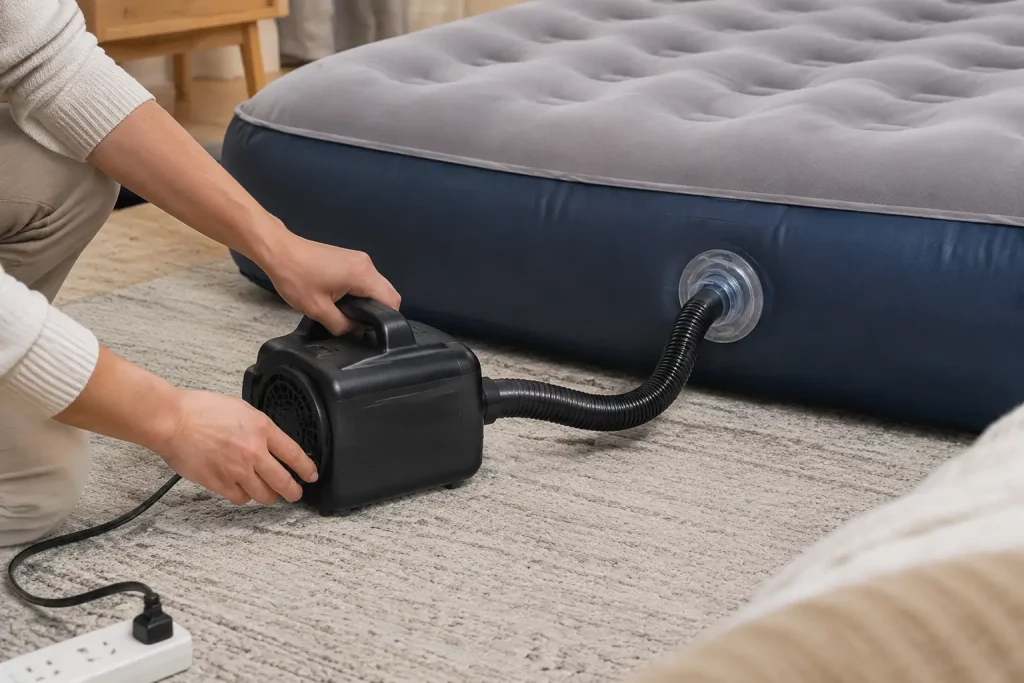
How to Troubleshoot an Air Mattress Pump in 4 Steps
Start with the power supply, then move through the pump’s controls and airflow path. This order helps rule out simple connection problems before you consider an internal fault. Disconnect the power before inspecting any electrical components.
| Pump Type | What to Check First |
| Built-in AC Pump | Check the wall outlet, power cord, and built-in controls. |
| External AC/DC Pump | Check the correct power source, hose connection, and nozzle compatibility. |
| Battery-Powered Pump | Check the battery charge, battery polarity, and contact points. |
Step 1: Check the Power Source and Battery
If your air mattress pump won’t turn on, start with its power supply rather than assuming the motor has failed.
For a plug-in electric pump:
- Make sure the power cord is fully connected to the pump and wall outlet.
- Test the outlet with another household device.
- Check the cord and plug for visible damage, loose connections, or unusual heat.
- Confirm that the outlet matches the voltage specified in the pump’s manual.
For a battery-powered pump:
- Replace depleted batteries with the correct type.
- Check that the positive and negative ends are positioned correctly.
- Make sure the battery compartment cover is fully closed.
- If the pump uses a rechargeable battery, charge it according to the manufacturer’s instructions.
If the power source checks out but the pump remains unresponsive, continue with the control settings and consult the manufacturer’s troubleshooting instructions if it still won’t start.
Step 2: Check the Inflate/Deflate Setting and Valve Position
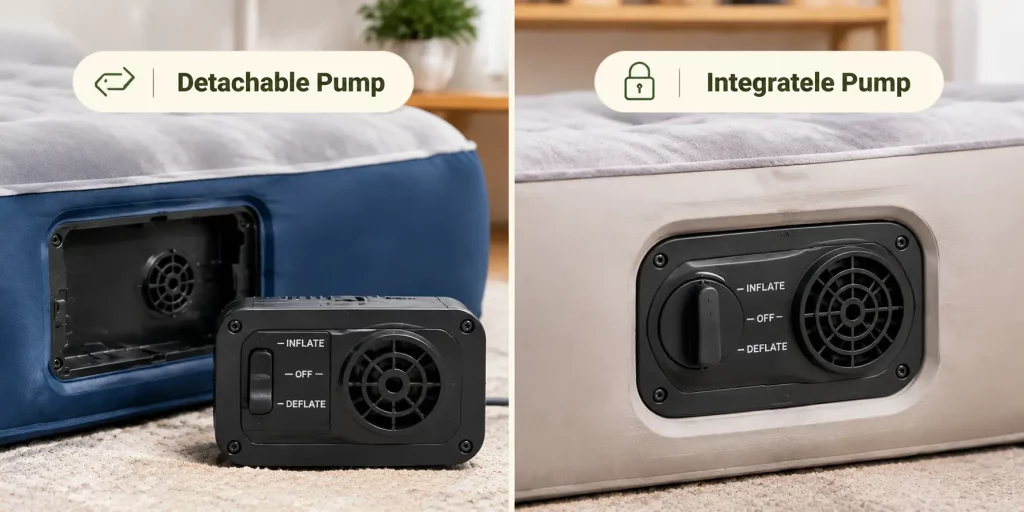
Built-in pumps may use different control layouts, including rotating dials, separate switches, and multiple inflation ports. Identify the controls on your specific model before changing any settings.
Check the following:
- Make sure the pump is set to the marked Inflate position.
- Confirm that you are using the correct inflation port for your pump.
- If the mattress has a separate manual inflation valve, make sure it is positioned correctly for inflation.
- Keep any unused inflation port closed and its cap securely fitted.
Control layouts vary by model. Some Intex QuickFill Plus pumps use a separate power switch and a rotating dial to select Inflate or Deflate, while other models may use different controls and inflation ports. Follow the markings on your specific unit rather than assuming all pumps work the same way.
Step 3: Inspect the Hose, Nozzle, and Air Intake
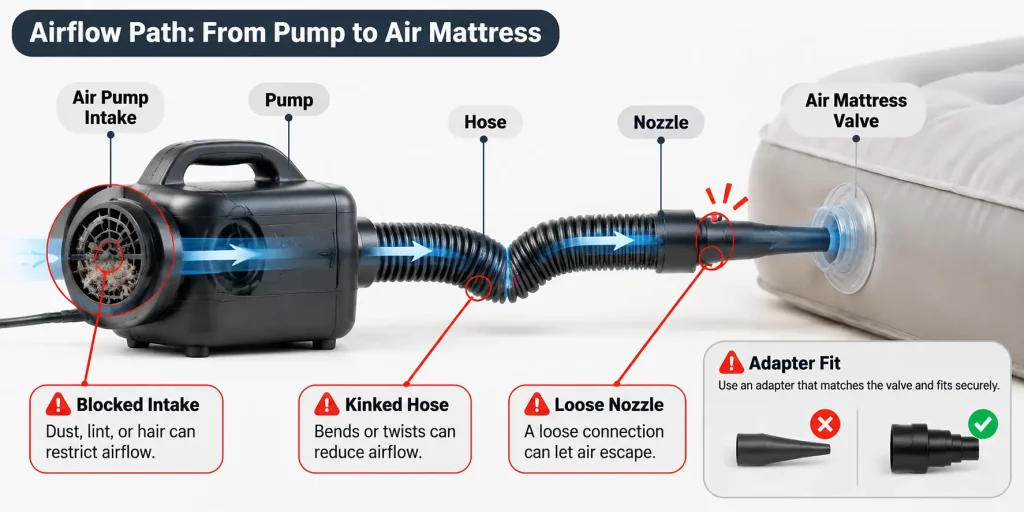
If the pump runs but the mattress does not inflate, inspect the entire airflow path, from the pump intake to the mattress valve. A mismatched nozzle, damaged hose, or blocked intake can prevent air from moving through the system.
Check these areas:
- Nozzle fit: Use an adapter that matches the mattress valve. The connection should be secure without forcing the nozzle into the opening.
- Hose condition: Look for disconnected fittings, cracks, or sharp bends that restrict airflow.
- Air intake: Check for visible dust, lint, hair, or debris around the intake.
- Ventilation openings: Make sure nearby objects or fabric are not blocking the pump’s ventilation openings.
If the pump has a removable filter or other user-serviceable component, clean it only as directed in the manual. Never insert tools or fingers into a running pump.
Do not rely on household tape to compensate for an incompatible nozzle. A proper adapter provides a more dependable connection and avoids putting unnecessary pressure on the valve.
Step 4: Test the Pump’s Airflow Without Opening the Housing
If the power source, settings, and connections appear correct, the next step is to determine whether the pump is actually producing air.
For an external pump, disconnect the hose or nozzle from the mattress only if the manual allows the pump to run without a connected mattress. Switch it on briefly and check for airflow from a safe distance. Keep your fingers, hair, clothing, and loose materials away from the outlet, and never block the opening.
For a built-in pump, follow the manual’s instructions for checking airflow through the designated outlet or inflation port. Do not remove a sealed pump assembly just to test its internal components.
Compare the airflow results with the symptom table above. If the pump still produces no air after the accessible connections and intake have been checked, an internal fault may be responsible. Contact the manufacturer rather than opening a sealed pump assembly.
Why Does an Air Mattress Pump Keep Shutting Off?
If the pump stops before the mattress is fully inflated, check its operating limit before restarting it. Some models are designed for short inflation cycles and may shut off when they overheat. Others have specified rest periods between uses.
Thermal Protection Can Stop the Motor
Electric motors generate heat during operation. If the temperature rises beyond the pump’s operating range, a thermal protection mechanism may interrupt power to prevent damage.
If the pump stops unexpectedly:
- Switch it off.
- Disconnect it from the power supply.
- Let it cool for the period specified in the manufacturer’s instructions before restarting.
If the pump repeatedly overheats during normal use, stop using it and contact the manufacturer.
Continuous Running Limits Vary by Model
There is no universal operating time for every air mattress pump. Different manufacturers and models specify different limits.
| Manufacturer or Model | Operating Guidance |
| Bestway air mattress pumps | Some models should not run for more than 5 minutes at a time. |
| Intex AP619D Quickfill Plus | The manual specifies a maximum of 5 minutes of operation, followed by at least 15 minutes of cooling. |
| Coleman 120V QuickPump | The manual specifies a maximum of 10 minutes of continuous operation, followed by 30 minutes off. |
The limits in the table reflect the manufacturers’ own instructions: Bestway’s air mattress pump guidance, the Intex AP619D owner’s manual, and the Coleman 120V QuickPump manual. Since operating and cooling requirements vary by model, always follow the instructions supplied with your specific pump.
When Should You Stop Troubleshooting and Contact the Manufacturer?
Stop DIY troubleshooting if you find damaged wiring, sparks, or a burning smell, or if resolving the fault would require opening a sealed pump. If the pump still fails after the accessible checks, contact the manufacturer to ask about authorized service and approved replacement parts.
Before ordering a replacement, check whether the manufacturer offers a compatible pump for your exact mattress model. If the pump cannot be replaced independently and the mattress is no longer worth repairing, you may need to consider whether buying another air mattress is the right long-term solution.
A Power Sofa Bed Option When an Air Mattress Needs Replacing
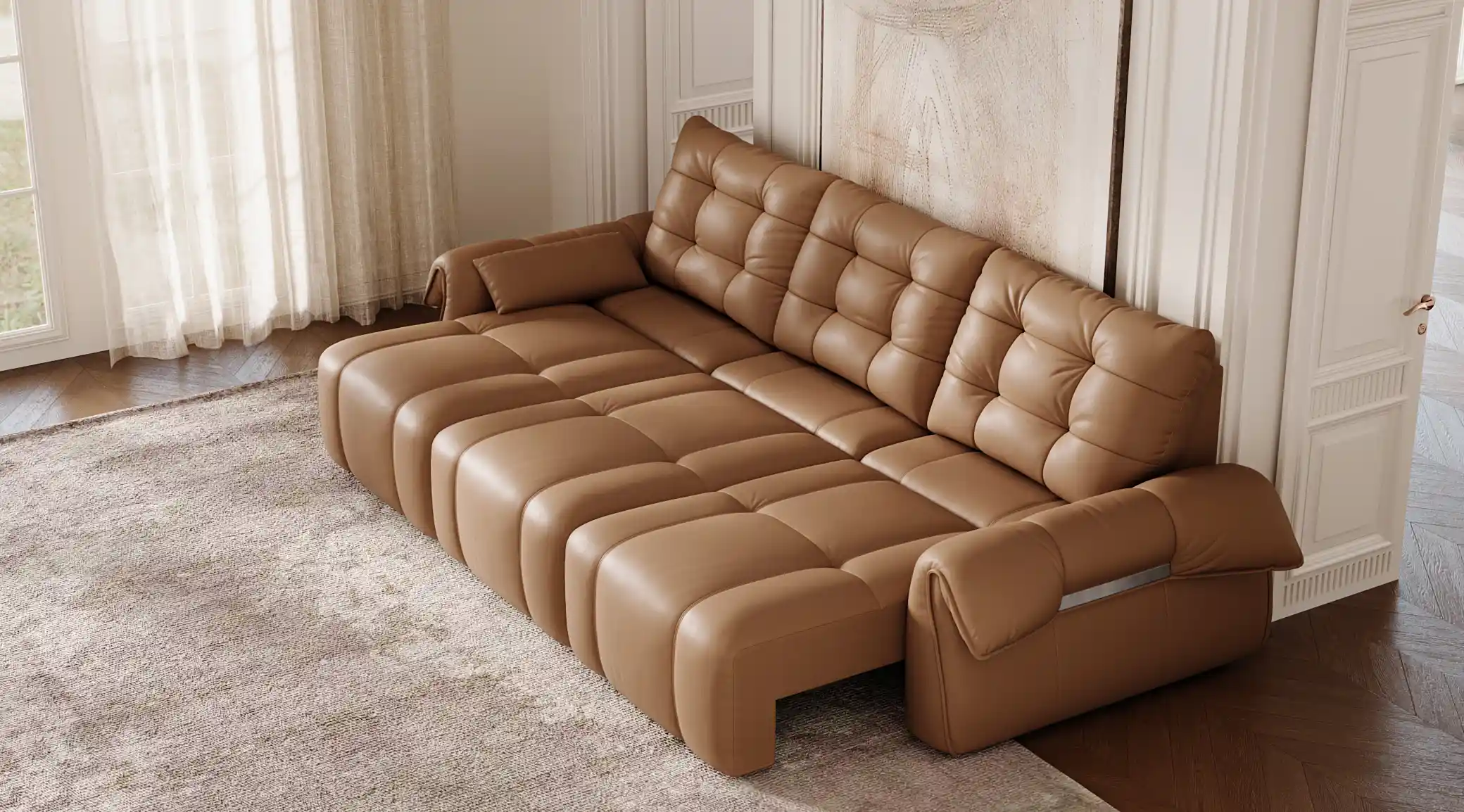
If the mattress is no longer worth repairing, replacing it with another inflatable bed is one option. But if your living room also needs everyday seating, a power sofa bed offers a more integrated solution. Its motorized adjustment lets you change the seating configuration with a remote, without manually inflating or unfolding a separate bed. It remains a functional sofa between uses while providing additional space when you need to rest.
The POVISON Aurora Power Sofa Bed offers one-touch lounge, recline, and sleep modes. Its seat depth adjusts from 27 to 45.5 inches, giving you a more compact seating position for everyday use and a deeper surface for stretching out or sleeping. The water- and scratch-resistant white chenille upholstery also supports regular living-room use, so the sofa serves a purpose well beyond occasional overnight stays.
Before choosing one, measure the room with the seat fully extended and make sure walkways remain clear. Because its adjustment mechanism is powered, it is not an emergency sleeping solution during a power outage.
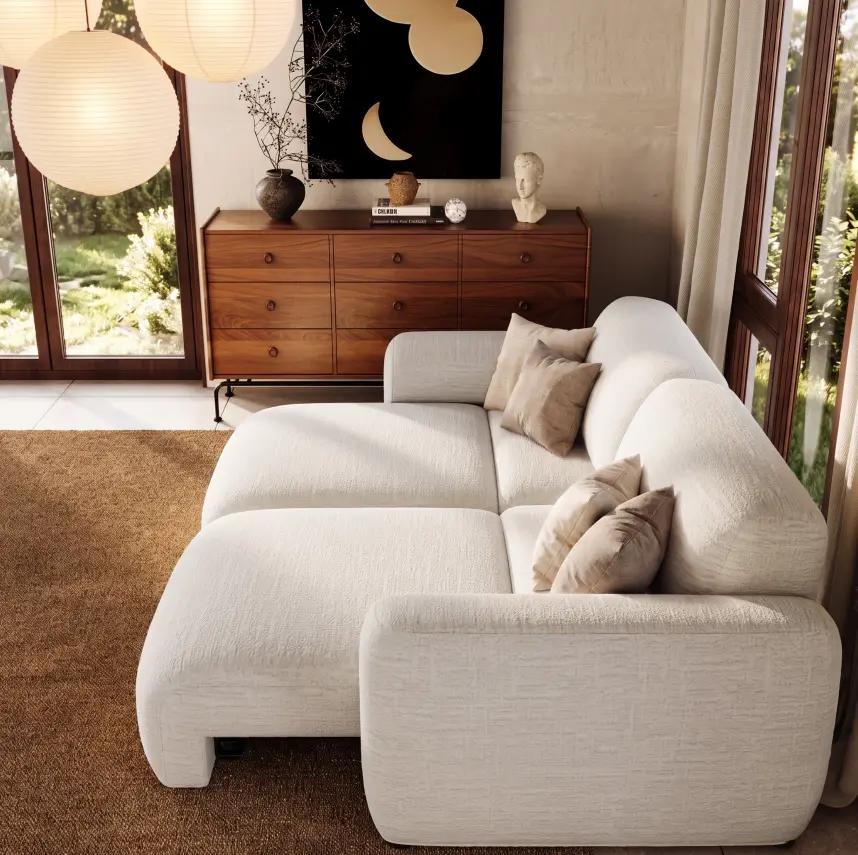
Aurora Electric Sofa Bed
A sensible option when repeated pump problems make another inflatable bed feel like a short-term fix.
Conclusion
When an air mattress pump stops working, identify the source of the problem before replacing the unit or attempting a repair. Follow the operating limits for your specific model, and stop using any pump with damaged wiring, a burning smell, or repeated overheating. If an approved repair or replacement is unavailable, consider whether your current guest sleeping arrangement still fits how often you host and how you use your living room.

More Than Another Air Mattress
Compare power sofa beds that combine everyday living-room seating with a place for overnight guests.
FAQ
Can You Use an External Pump on an Air Mattress With a Built-In Pump?
Sometimes. Use an external pump only if the mattress has a separate manual inflation valve or a manufacturer-approved external-pump port. Check the model instructions for the correct nozzle. The built-in pump housing itself is not automatically compatible with universal adapters.
Can You Use a Car Tire Inflator on an Air Mattress?
Generally, no. A tire inflator is designed for higher pressure and a different airflow pattern than an air mattress pump. Use a low-pressure, high-volume pump with a compatible nozzle, and never exceed the mattress manufacturer’s pressure guidance.
How Can You Inflate an Air Mattress During a Power Outage?
Use a battery-powered pump or manual foot pump only if its nozzle fits the mattress valve. Check compatibility before guests arrive. If neither is available, use another sleeping surface rather than improvising with a compressor or household appliance.
Can a Third-Party Pump Affect an Air Mattress Warranty?
Possibly. A third-party pump that causes damage through excessive pressure or an incompatible connection may affect warranty coverage. Check the mattress manufacturer’s approved accessories and warranty terms before using a replacement pump.
Can an Air Mattress Pump Overheat if the Mattress Is Already Full?
Yes. Running a pump longer than necessary can generate excess heat and may overinflate the mattress. Turn it off once the mattress reaches the firmness recommended by the manufacturer. Do not use a standard inflation pump to maintain pressure overnight unless it is specifically designed for that purpose.


