 By Kelvin
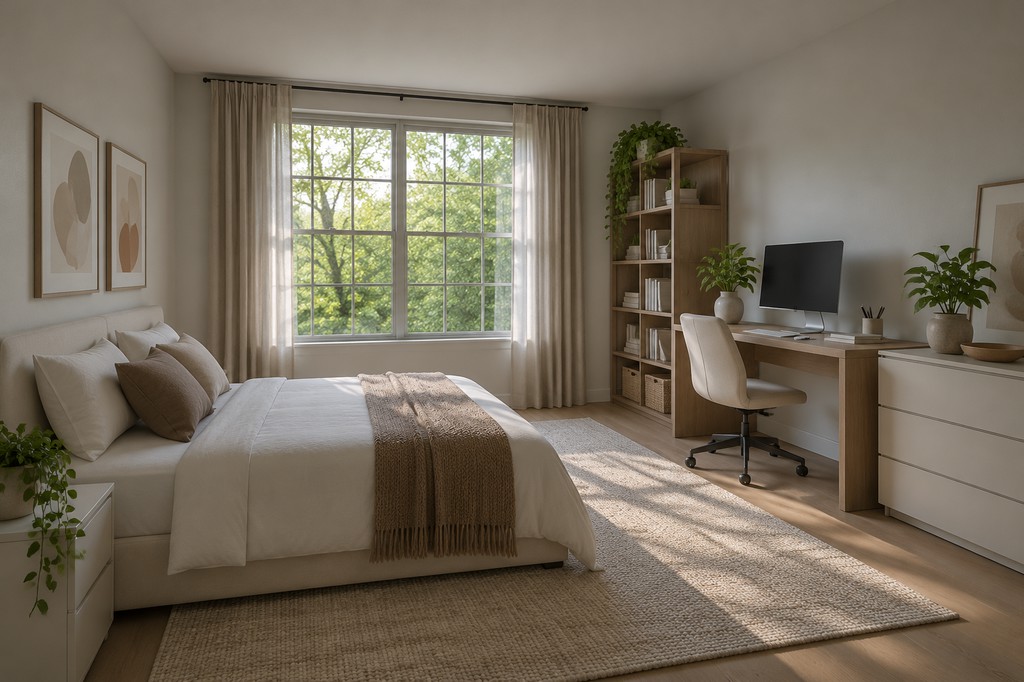
Small bedroom office combo ideas can help you create a functional workspace without giving up the bed, storage, or everyday walking space. The key is to plan around the furniture you already need, then choose a desk location that fits your room’s shape and work habits. Whether you have a narrow bedroom, an unused corner, or a closet that could accommodate a compact workstation, the right arrangement can make both work and rest feel more comfortable without overcrowding the room.
Table of Contents
How Do You Plan a Small Bedroom Office Combo?
The most practical small bedroom office combo ideas start with the furniture that cannot easily move. A bed, wardrobe, and bedroom door usually determine where the remaining workspace can go. Before choosing a desk, measure the room and mark the bed, closet doors, windows, outlets, and main walking route.
If you’re deciding how to arrange a small bedroom with a desk, follow this order:
- Position the bed: Keep it accessible without blocking the bedroom door or closet.
- Identify usable wall space: Look at the window wall, foot of the bed, and unused corners.
- Define your work needs: A laptop setup requires less surface area than a monitor, keyboard, and paperwork.
- Check everyday movement: Account for the chair when pulled out, not just the desk footprint.
Good bedroom furniture arrangement for better sleep also depends on keeping the bed accessible and avoiding unnecessary obstacles around it. The goal is to fit a workspace into the room’s existing layout, not make every other activity harder.
Which Small Bedroom Office Layout Works Best for Your Room?
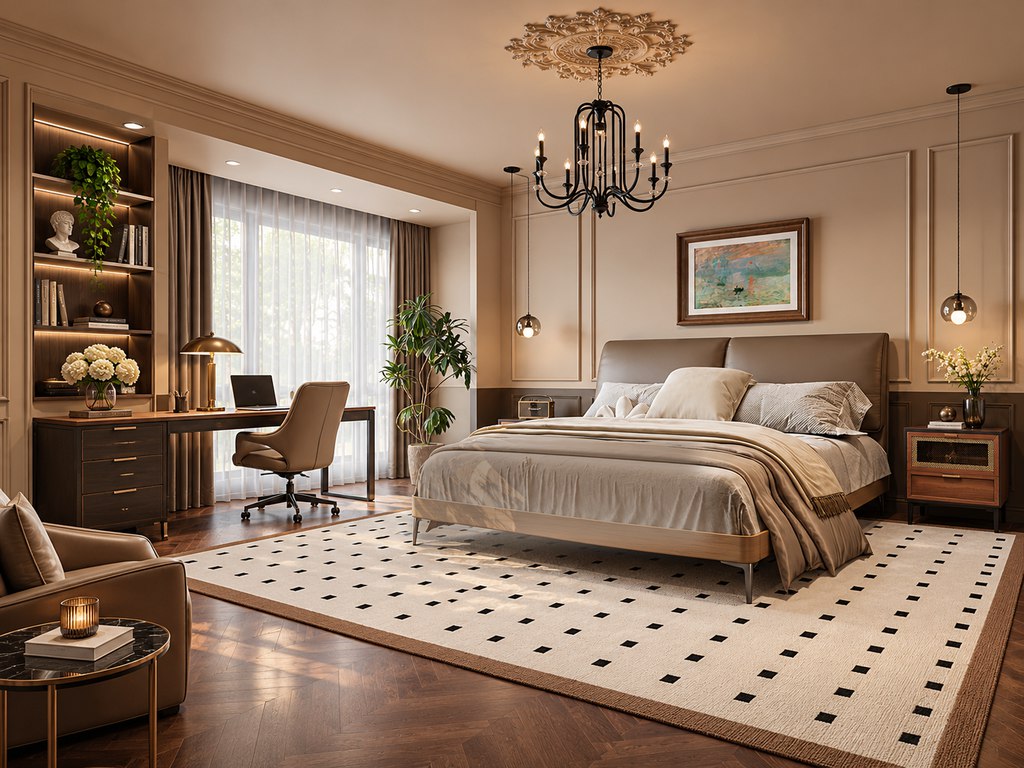
Different layouts solve different space problems. A window wall can provide natural light, a corner can make use of an awkward area, and a desk at the foot of the bed can work in a narrow room. The right bedroom office layout ideas depend on your room shape, existing furniture, and how much desk space your work actually requires.
Place a Desk Along the Window or Side Wall
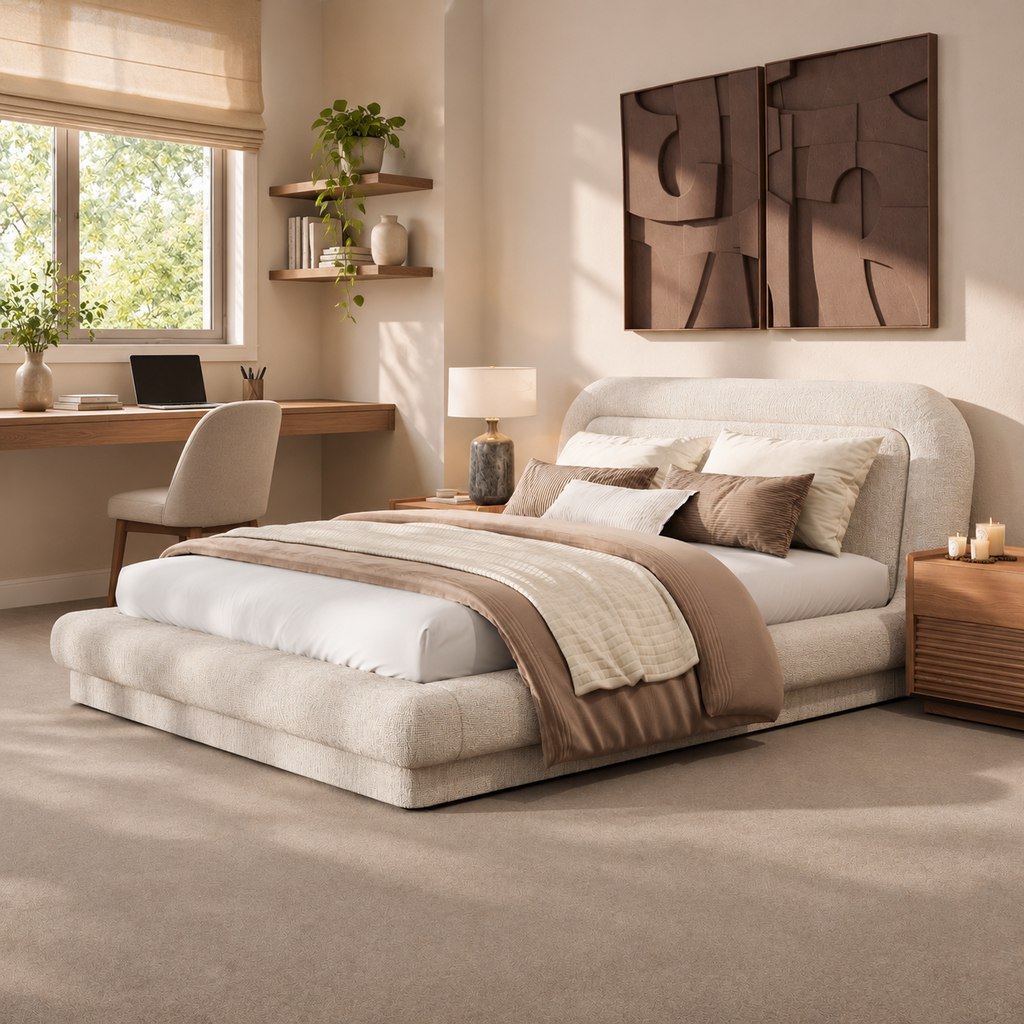
A desk along a window wall works well when you have unused space beside or beneath the window. Natural light can make daytime work more comfortable, while positioning the desk against a side wall may keep the center of the room open.
Check the window height before choosing a desk. A low window sill may limit desk placement, while a nearby window can create glare on a monitor. Leave enough room for curtains, blinds, and window access.
For a room with limited wall space, a narrow writing desk may be sufficient for a laptop and a few everyday essentials. If you work with an external monitor, choose a deeper surface rather than sacrificing comfortable screen placement.
Create a Work Zone at the Foot of the Bed
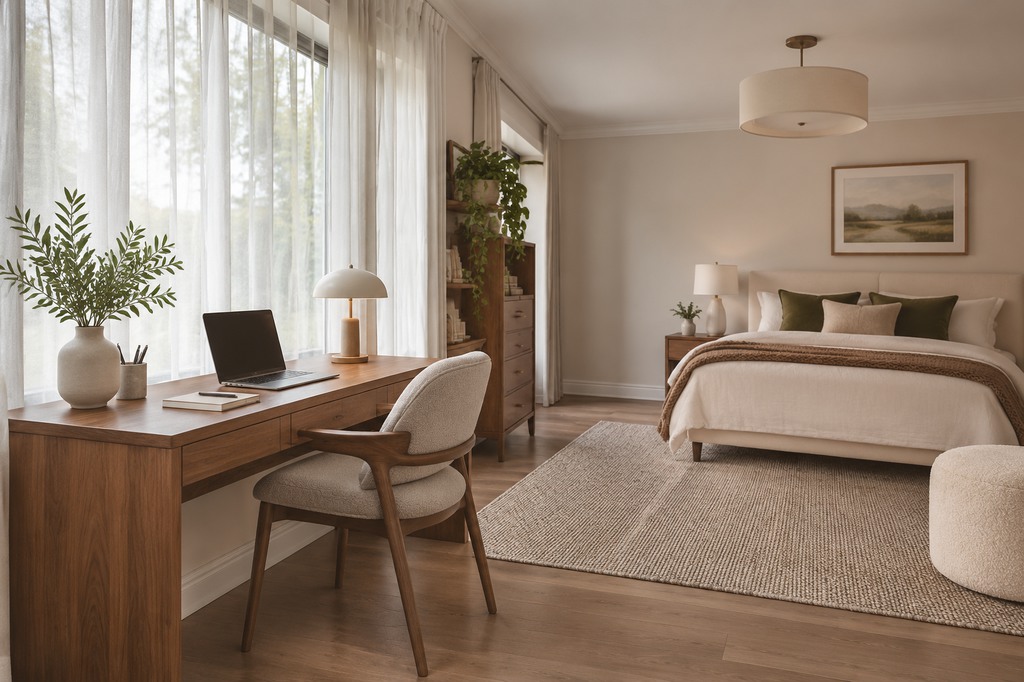
In a narrow bedroom, placing a desk at the foot of the bed can create two distinct zones without requiring a separate partition. A slim desk positioned against the far wall keeps the workspace in one area and the sleeping area in another.
This arrangement works best when the room has enough length for the desk and a chair to pull out without blocking the entrance. If the bed already sits close to the opposite wall, a foot-of-bed desk may make the walkway too tight.
A practical alternative is to position the desk along the longer side wall and keep the bed against the opposite wall. This can provide a more usable route between the bedroom door, bed, and closet.
Use an Empty Corner or Closet for a Compact Office
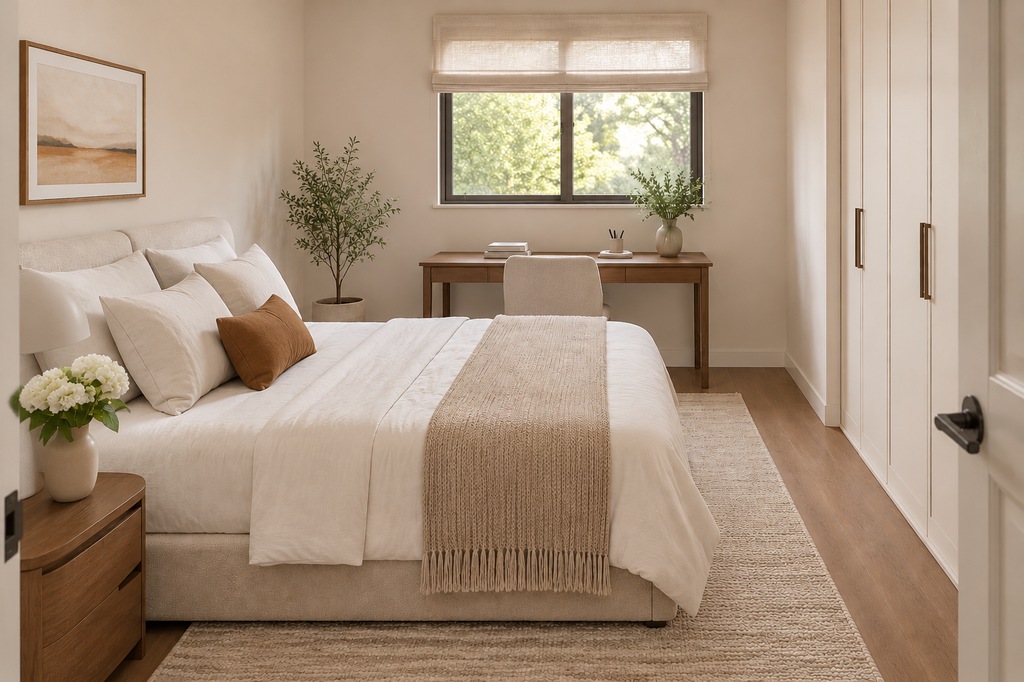
An unused corner can accommodate a compact desk without taking up an entire wall. A straight desk often works better than a large L-shaped model in a particularly tight room, especially when the chair needs room to move.
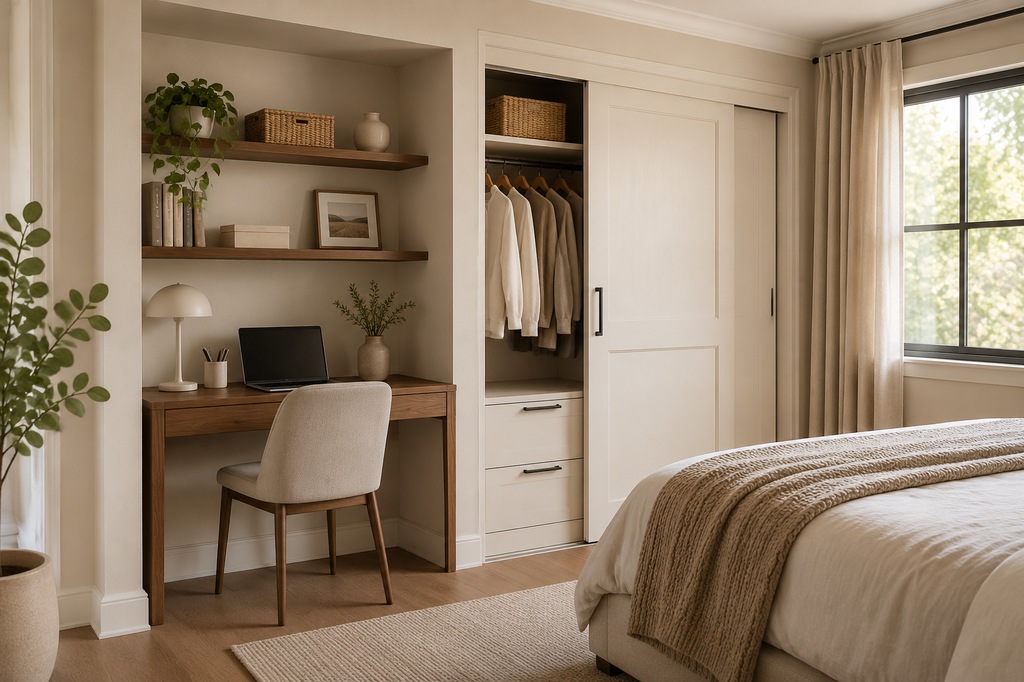
If your bedroom has an unused closet or a deep storage niche, it may also work as a small office nook. A compact desk, task light, and a few shelves can create a workspace that stays visually contained.
However, avoid converting your only practical clothing storage area unless you have somewhere else to keep clothes. A closet office is useful only when the storage trade-off makes sense.
Choose a Floating or Fold-Down Desk
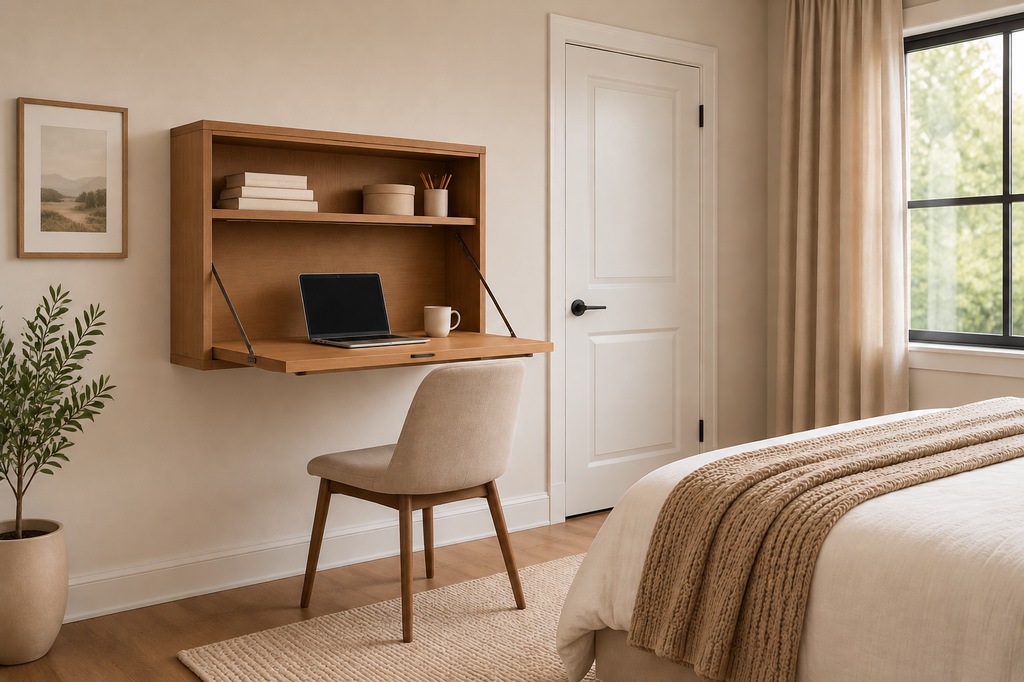
A floating or fold-down desk is useful when floor space is more limited than wall space. It can provide a work surface without adding bulky desk legs or a full-size cabinet underneath.
This option works particularly well for occasional laptop use, short work sessions, or a bedroom where a permanent desk would feel intrusive. Pair it with a lightweight chair that can be stored elsewhere when the desk is not in use.
If you rent or cannot drill into the wall, choose a freestanding narrow desk instead. A wall-mounted desk must be secured appropriately for its construction and expected load; an unstable installation is not a worthwhile space-saving trade-off.
How Can You Separate Work and Sleep Without Losing Floor Space?
A bedroom office does not always need a physical divider. In a small office and bedroom combination, visual separation can be enough to make each area feel distinct without introducing another piece of furniture. The best approach is to use elements that already serve a purpose, such as lighting, rugs, shelving, and furniture orientation.
Use Visual Boundaries Instead of Bulky Dividers
A few simple changes can distinguish the workspace from the sleeping area:
- Use a small rug: Place it under the desk and chair to define the work zone.
- Change the lighting: Use a focused desk lamp for work instead of relying entirely on bedside lighting.
- Position the desk thoughtfully: Facing a wall or window rather than directly toward the bed can help reduce visual distractions.
- Add open shelving: A narrow bookshelf can provide storage and a partial visual boundary without completely closing off the room.
Avoid adding a full-height divider if it blocks natural light or makes the main walkway narrower. In a very small bedroom, a clear visual boundary is often more useful than a permanent physical separation.
Make the Workspace Easy to Close at Night
A workspace should not take over the bedroom after working hours. Choose a desk with drawers or use a small storage box for cables, notebooks, and accessories. Put the chair back under the desk, turn off task lighting, and clear the main work surface.
If you use the room for video calls, a compact screen or a neat background can also help keep the work area organized. These small habits make it easier to switch between work and rest without needing to rearrange the entire room.
What Desk Size and Clearances Should You Check?
The desk needs to fit both your equipment and your working posture. A small surface may save floor space but become uncomfortable if the monitor, keyboard, and mouse are crowded together. Before buying, check the usable desktop area, legroom, and the space needed when the chair is occupied.
Keep the monitor at least 20 inches from your eyes, and allow enough under-desk clearance for your legs and feet to move comfortably while seated.
| Measurement | Planning Reference | Why It Matters |
| Monitor viewing distance | At least 20 inches | Allows appropriate screen placement |
| Under-desk width | At least 20 inches | Provides room for seated legs |
| Knee clearance depth | About 17 inches minimum | Prevents the desk structure from crowding the knees |
| Foot clearance depth | About 24 inches minimum | Allows room for feet under the desk |
| Under-desk height | Around 20–28 inches, depending on posture | Supports comfortable seated positioning |
These are workstation clearance references, not universal desk-size or bedroom-layout standards. Actual comfort depends on the user’s body, chair, and equipment. See OSHA’s computer workstation desk recommendations when evaluating a desk for regular use.
Also check the room around the furniture:
- Pull the chair out and test whether you can sit down and stand up comfortably.
- Open closet doors and drawers fully.
- Check that the bedroom door does not hit the desk or chair.
- Keep the route between the bed and bedroom entrance unobstructed.
For a more detailed look at matching a work surface to your setup, consider the factors involved in choosing a desk for a bedroom office setup. The right desk is not necessarily the smallest one; it is the one that supports your work without making the rest of the room difficult to use.
Which Furniture Choices Save Space Without Sacrificing Storage?
Once the layout is established, furniture choices can help reduce the number of separate pieces in the room. Prioritize items that provide useful storage or serve more than one purpose. However, multifunctional furniture only saves space when its dimensions and daily use fit the room.
Prioritize Furniture That Serves More Than One Purpose
A vanity can double as a light-duty desk if its surface has enough room for a laptop, the seating position is comfortable, and drawers do not interfere with your legs. It can be a reasonable option for occasional email or administrative tasks.
For everyday remote work, a dedicated desk is generally more practical. It provides a more predictable working height and enough room for a keyboard, monitor, and other equipment.
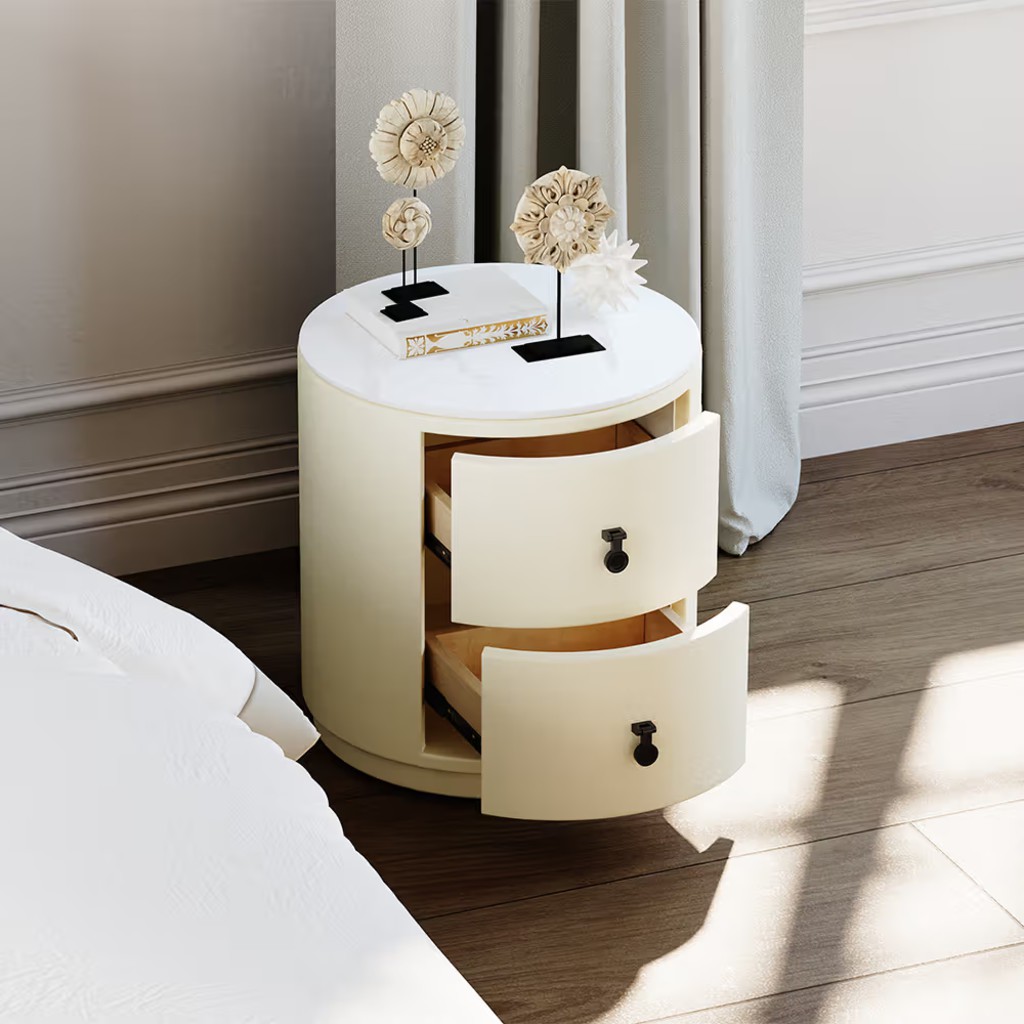
Similarly, a nightstand with drawers can replace a separate bedside storage unit, while a desk with built-in drawers may reduce the need for another small cabinet. The objective is to avoid adding furniture that duplicates a function already covered by something in the room.
Use Vertical Storage to Keep the Floor Clear
When floor space is limited, use the wall area above and beside the desk for items that do not need to remain on the desktop. A few shelves can hold books, notebooks, and small accessories without requiring another floor-standing cabinet.
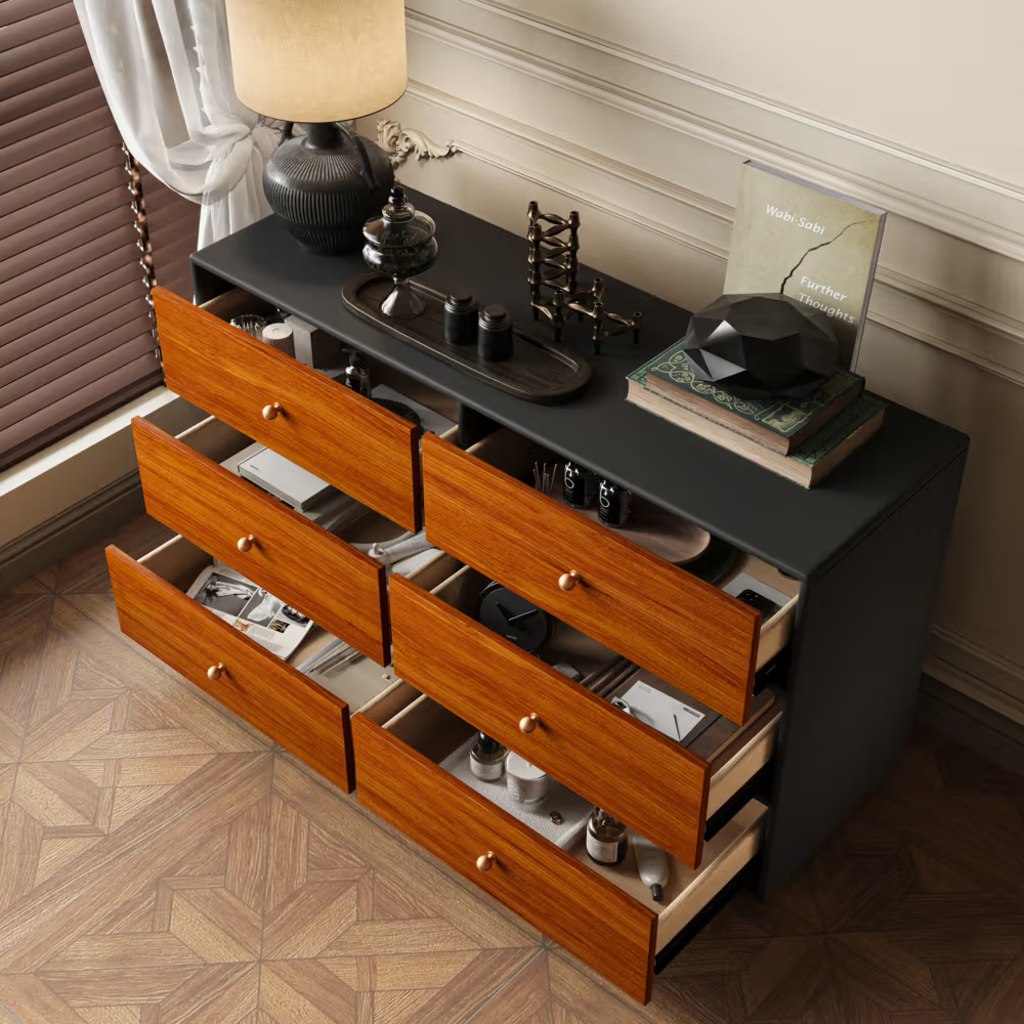
A dresser can also help organize clothing and office supplies, but avoid placing it where open drawers interfere with the chair or bed. If you need more clothing storage, a storage bed may help reduce the need for additional furniture, provided its drawers or access panels can open in the available space.
Keep frequently used work items within easy reach and move less frequently used belongings to higher shelves or closed storage. This keeps the desk usable without turning the bedroom into a collection of storage units.
A Power Sofa Bed as an Alternative to a Fixed Bed
A power sofa bed combines everyday seating with a motorized, extendable seat that creates a deeper surface for lounging or occasional sleep. Unlike a traditional fixed bed, it allows a multipurpose room to function as a sitting area when the expanded surface is not needed.
This option makes sense when you’re willing to replace a fixed bed rather than add another piece of furniture. Before choosing one, compare its regular footprint with the extended dimensions and make sure it accommodates your sleeping needs.
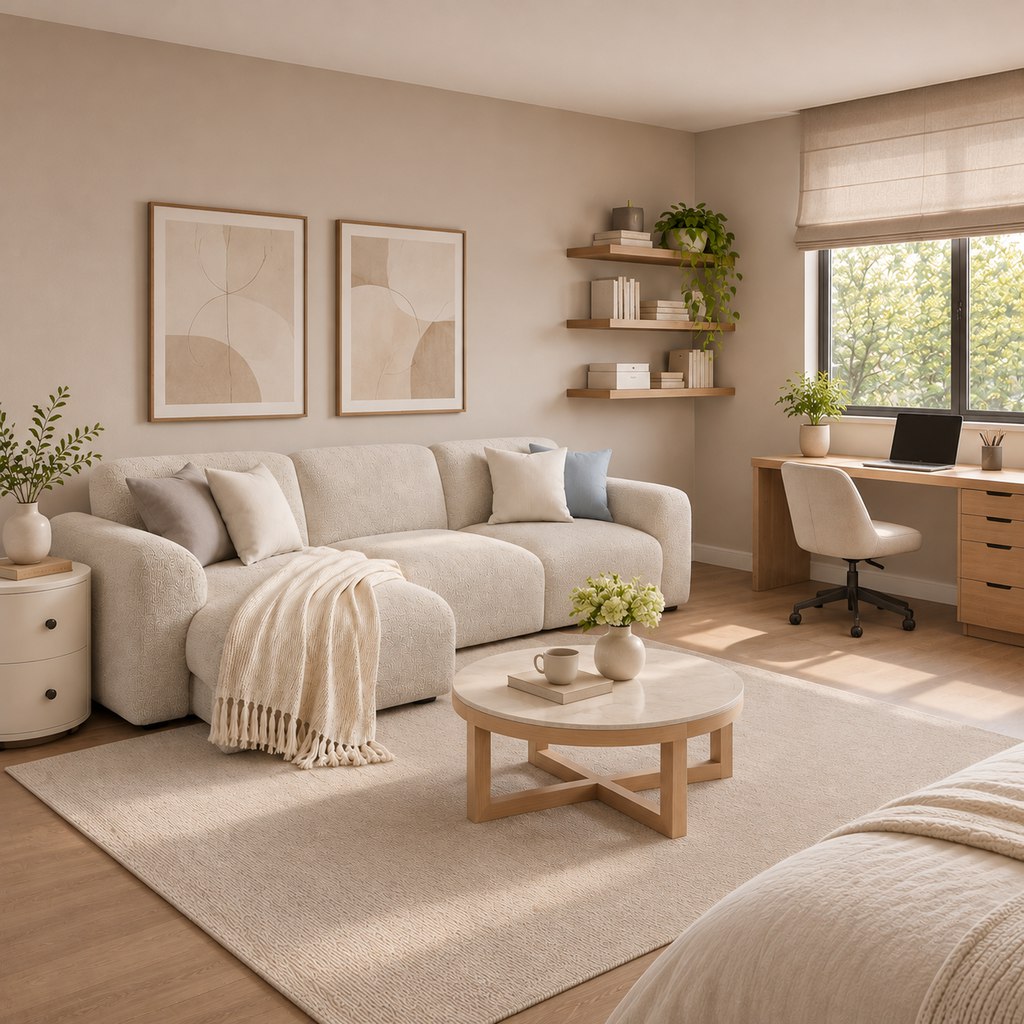
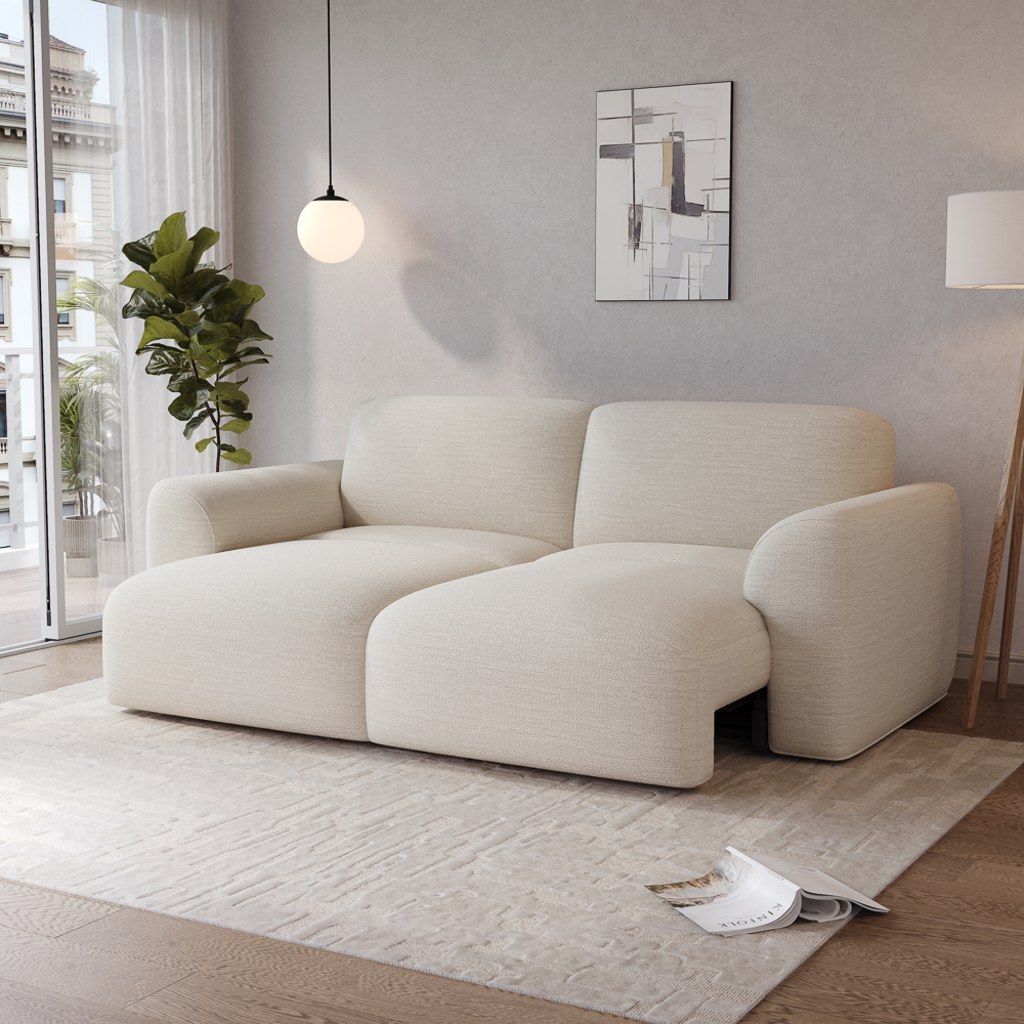
For a bedroom that needs everyday seating and an occasional place to stretch out, the POVISON Aurora Power Sofa Bed features motorized seat-depth adjustment from 27 to 45.5 inches. Its soft-touch chenille upholstery and extended lounging surface provide flexibility for sitting, relaxing, and occasional overnight use. It’s worth considering when you want more than a conventional fixed seating or sleeping arrangement.
Aurora Power Sofa Bed
A convertible seating option for rooms that need occasional guest sleeping flexibility.
👍 Best for: Flexible guest sleeping in multipurpose rooms
✨ 27–45.5-inch adjustable seat depth
✨ Water-resistant chenille upholstery
✨ 500-lb capacity per seat
Conclusion
The most useful small bedroom office combo ideas make room for work without compromising the bedroom’s everyday functions. Start with the bed and storage, choose a desk location that suits your room shape, and check the chair, doors, and walking paths before buying anything. A compact desk may be enough for occasional laptop work, while a dedicated workstation is more practical for daily use. If your needs also include flexible sleeping and lounging, consider convertible furniture only when its full footprint fits the room.
Find Furniture That Makes More of Your Space
Explore versatile furniture for bedrooms, home offices, and multifunctional living spaces, designed to fit your everyday needs.
Q&A
Can a bedroom vanity double as a desk for everyday work?
A vanity can work for occasional laptop tasks if it provides enough desktop depth, knee room, and a comfortable seating position. For daily work involving a monitor and separate keyboard, check whether the surface supports proper screen placement and whether the chair fits without hitting drawers.
Is it a good idea to turn your only bedroom closet into an office?
Usually not if the closet is your primary clothing storage. Before converting it, decide where hanging clothes, shoes, and seasonal items will go. A closet office makes more sense when you have another functional storage area or are repurposing an unused closet.
How can you create a bedroom office without drilling holes?
Choose a freestanding narrow desk, floor-standing shelves, a rolling storage cart, and a portable task lamp. These options work well for renters or rooms where wall mounting is not practical. Avoid relying on adhesive supports for heavy equipment or shelving that requires secure anchoring.
Where should you store office supplies in a small bedroom?
Keep daily essentials in desk drawers or a small desktop organizer. Store paper, cables, and backup supplies in a nearby dresser or labeled storage boxes. Printers need a stable surface with adequate ventilation, so avoid squeezing one into a closed drawer or an overcrowded shelf.
What should you do if your desk blocks the closet or bedroom door?
Mark the desk and pulled-out chair positions on the floor with painter’s tape, then trace the door’s opening path. If either area overlaps, try shifting the desk to a side wall, choosing a narrower model, or changing its orientation before purchasing new furniture.


[…] a productive workspace in a small bedroom by choosing compact furniture, controlling clutter, improving lighting, and separating work […]