 By Stephanie

If you’re wondering why are air mattresses loud when filling them, the first step is to identify when the sound happens: while the pump runs, as air passes through the valve, or as the mattress unfolds. These sounds do not all point to the same problem. This guide explains how to distinguish normal inflation noise from signs of a loose connection or failing pump, then shows what you can safely adjust before contacting the manufacturer.
Table of Contents
Why Are Air Mattresses Loud When Filling Them?
Air mattress inflation noise can come from the pump, the airflow path, the mattress structure, or vibration transferred to nearby surfaces. Each source produces a different sound pattern. Identifying which part is making the noise helps you understand whether it is a normal part of inflation or something that needs attention.
1. The Electric Pump Motor and Fan Create a Steady Hum
An electric air mattress pump uses a motor and internal airflow components to move air into the mattress. As the motor runs, it produces a continuous humming, whirring, or buzzing sound.
This is generally normal while the pump is operating. Built-in pumps can transmit some vibration through the mattress housing, while external pumps produce sound directly from the unit.
The volume depends on the pump’s design, airflow capacity, operating condition, and placement. A consistent motor sound alone does not mean the pump is defective.
2. Air Moving Through the Valve Creates Hissing or Whistling Sounds
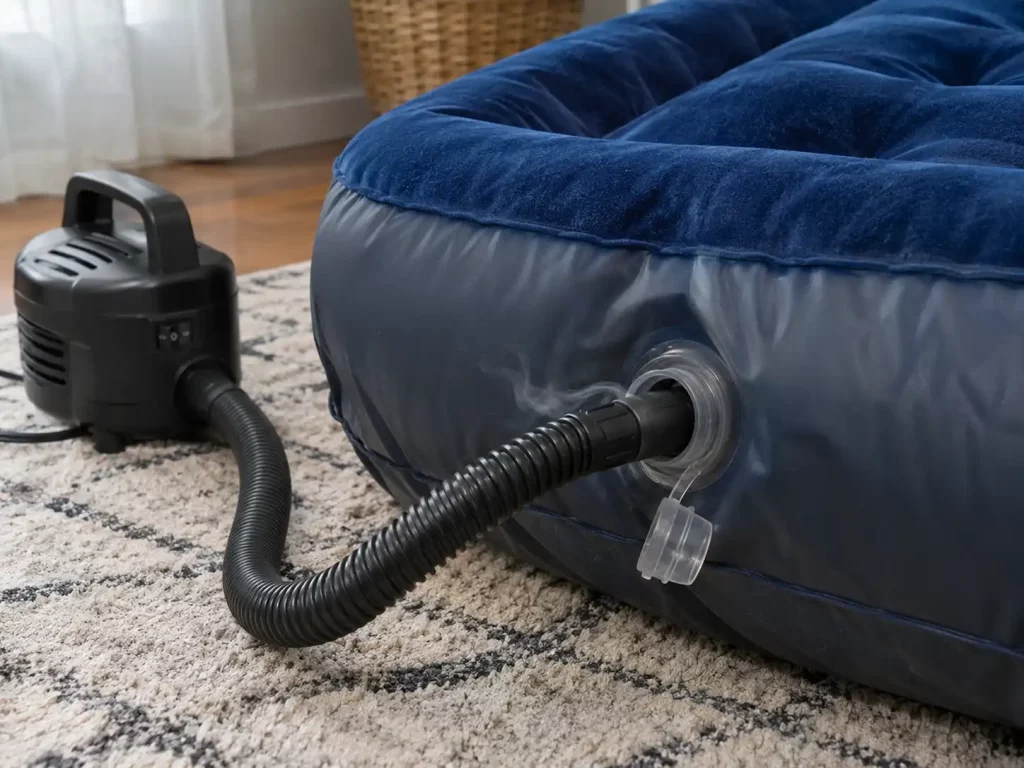
Air must pass through a relatively small opening before entering the mattress. As it moves through the nozzle, hose, and valve, it can create a rushing or whistling sound.
A poorly fitted connection can make this sound more noticeable. If the pump nozzle does not fit securely, air may escape around the opening instead of entering the mattress efficiently.
Common connection issues include:
- A loose pump nozzle or poorly fitted adapter.
- A valve that is not positioned correctly.
- A damaged seal around the inflation opening.
- A hose that is kinked or partially obstructed.
3. Vinyl Material and Internal Supports Make Noise as They Expand
Air mattresses commonly use PVC or vinyl surfaces that are folded for storage. When inflation begins, these layers unfold and tighten as pressure builds, sometimes producing crinkling, rubbing, or light creaking sounds.
Internal support beams may also shift as the air chambers expand, although the sounds vary by mattress design.
New vinyl does stretch during initial use, but that does not make every popping sound harmless. Repeated sharp snaps, visible bulging, seam distortion, or sudden changes in shape should prompt you to stop inflation and contact the manufacturer. (Intex Air Mattress Safety Information)
4. Pump Vibration Can Amplify Noise
Sometimes the pump itself is not unusually loud. Instead, the surface beneath it makes the sound more noticeable.
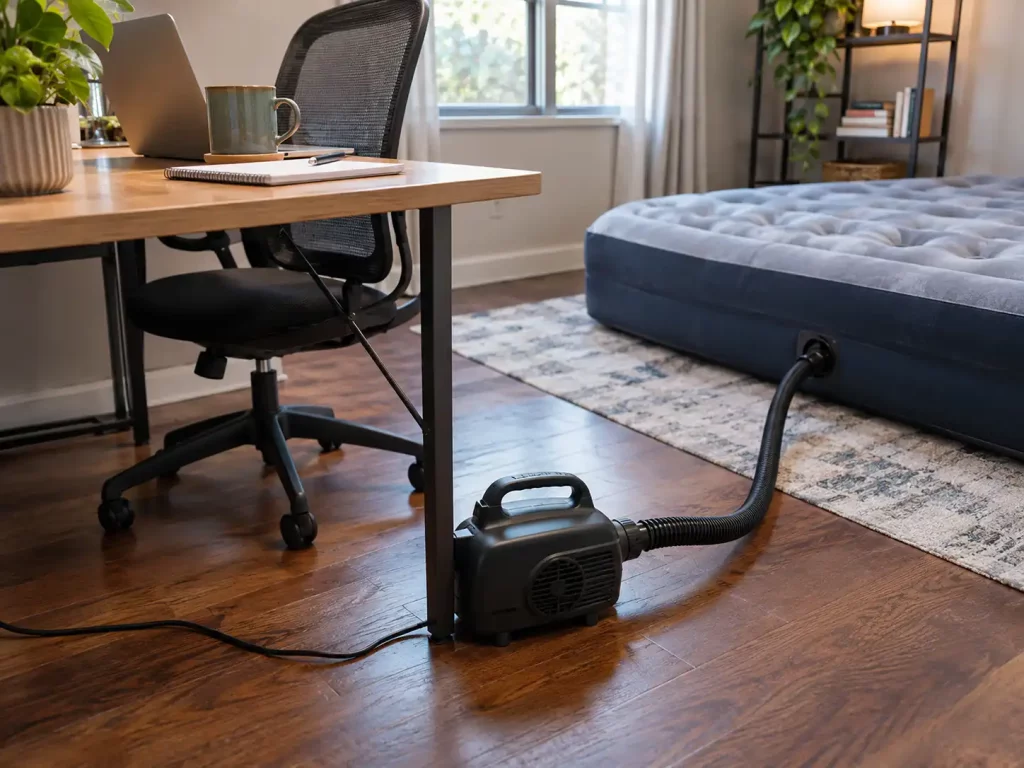
An external pump placed directly on a hollow floor, unstable furniture, or a hard surface can transfer vibration into the surrounding structure. This can create additional rattling or a low-frequency humming sound.
For example, when setting up an air mattress in a home office, placing its external pump against a desk leg may cause the furniture to vibrate while the motor runs.
If the sound changes when you reposition the pump, vibration transfer may be contributing to the problem.
How Can You Tell Normal Inflation Noise From a Problem?
The timing of a sound can be just as useful as its description. A noise that occurs only while the motor runs is different from one that continues after inflation or appears when someone moves on the mattress. Use this table to narrow down the likely source and choose an appropriate response.
| When You Hear It | Sound | Likely Source | What to Do |
| Only while the pump is running | Steady humming or whirring | Motor and fan | Usually normal if inflation is consistent. |
| Around the nozzle during inflation | Rushing or whistling | Air moving through the valve | Check whether the adapter fits securely. |
| As the mattress unfolds | Crinkling or light creaking | Vinyl and internal supports | Watch for even expansion and visible deformation. |
| When an external pump is placed on a hard surface | Rattling or low humming | Vibration transfer | Reposition the pump on a stable surface. |
| After the pump stops and the valve is closed | Persistent localized hissing | Possible air leak | Follow a separate leak inspection process. |
| With grinding, overheating, or a burning smell | Abnormal mechanical noise | Possible pump failure | Stop using the pump and contact the manufacturer. |
If the mattress only squeaks when someone shifts position after inflation, the issue is more likely related to movement and surface friction than pump noise. These are separate problems, and air mattress squeaking when someone shifts position requires a different approach.
Similarly, persistent hissing after the pump stops should not automatically be treated as normal airflow. If the mattress continues losing pressure, follow the appropriate process for an air mattress that keeps losing air.
How to Make an Air Mattress Pump Quieter in 5 Steps
Once you have identified the likely noise source and ruled out obvious signs of pump failure, focus on reducing avoidable vibration and airflow resistance. These steps cannot make every electric pump silent, but they can help prevent incorrect setup from making normal operation noisier.
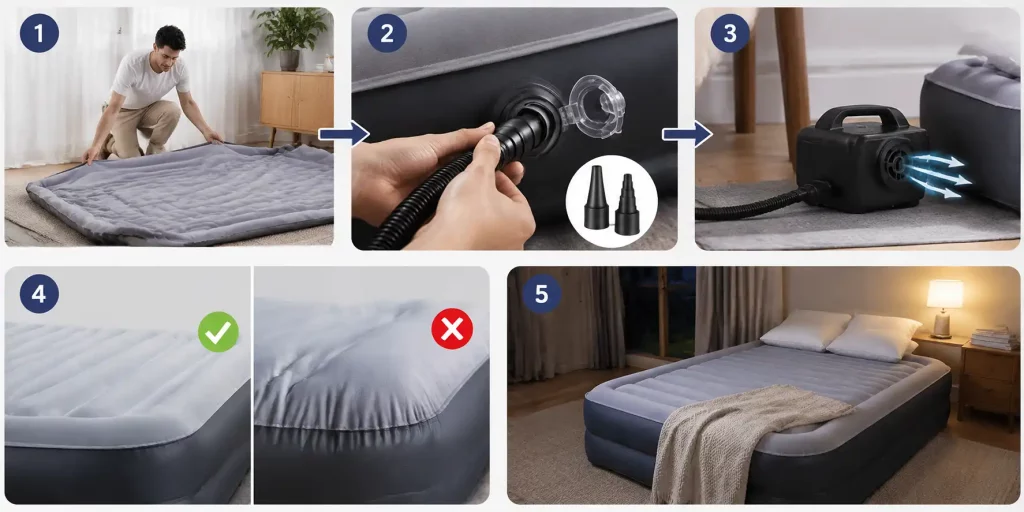
Step 1: Fully Unfold the Mattress Before Inflation
Lay the mattress flat and unfold every section before switching on the pump. Check that no folded panel is trapped underneath, the inflation valve is accessible, and the pump hose is not kinked.
This allows the mattress to expand evenly and prevents avoidable resistance around the inflation connection.
Step 2: Check the Pump Nozzle and Valve Connection
A poorly fitted connection can make inflation noisier and less efficient.
Use the nozzle or adapter specified for your mattress. It should fit securely into the valve without requiring excessive force.
If the connection feels loose, check whether you are using the correct adapter rather than trying to seal the opening with tape or improvised materials.
Bestway’s inflation instructions also recommend checking the pump connection and using the correct power source before starting inflation. (Bestway Inflation Instructions)
Step 3: Keep the Pump Stable and Its Vents Clear
If you use an external pump, place it on a stable, level surface rather than on loose bedding or unstable furniture.
A thin rubber anti-vibration pad may help reduce contact noise if the pump manufacturer permits it. However, the pad should not obstruct the pump’s intake or exhaust.
For built-in pumps, keep the surrounding area clear. Never cover the pump housing with blankets, pillows, or towels to muffle the sound.
Step 4: Avoid Overinflating the Mattress
More air does not automatically make an air mattress better. Overinflation can place unnecessary tension on the vinyl, seams, and internal support structure.
Follow the manufacturer’s recommended inflation level rather than relying on a universal pressure percentage. Use a compatible low-pressure inflator, and keep weight off the mattress while the pump is running.
Step 5: Set Up the Bed Before Quiet Hours
For households that regularly host overnight guests, timing can matter as much as the pump itself.
Inflate the mattress before guests settle down for the evening. This avoids running a motor near a sleeping area or disturbing someone in an adjoining room.
Once the mattress reaches its recommended firmness, switch off the pump according to the instructions. Do not leave a standard inflation pump running simply because you want to maintain pressure.
When Should You Stop Using a Noisy Air Mattress Pump?
Not every loud pump needs replacement, but certain warning signs mean you should stop using it rather than continue troubleshooting.
Stop the pump and unplug it if it produces grinding or scraping sounds, emits a burning smell, becomes unusually hot, sparks, or stops moving air. Do not keep running it to see whether the noise clears, and never open the motor housing to investigate electrical components.
Before contacting the manufacturer, note the mattress and pump model, when the noise starts, whether inflation is still working, and any visible damage. Check the warranty and ask whether the pump can be serviced or replaced.
If a replacement is approved, confirm the required voltage, airflow, pressure range, and valve compatibility. A nozzle that physically fits is not enough to establish compatibility.
A Power Sofa Bed for Quieter Guest Setup
If inflating an air mattress while someone is already resting in the living room would be disruptive, a power sofa bed offers a different setup. It works as everyday seating and adjusts into a deeper lounging or sleep surface at the touch of a button, eliminating the need for a separate air pump.
The POVISON Aurora Power Sofa Bed features an ultra-quiet motor, so seat adjustments are less likely to disturb someone nearby, even in a shared living room. Its one-touch controls extend the seat from 27 to 45.5 inches, giving users more room to stretch out. That depth is useful when switching from TV watching to a relaxed position or preparing the sofa for an overnight guest.
For households comparing different guest sleeping arrangements, air mattress alternatives for guests can help clarify which setup better fits the available room and hosting frequency.

Aurora Power Sleeper Sofa | $2,699
A quieter, easier way to host overnight guests without a noisy, last-minute air mattress setup.
Conclusion
Knowing why are air mattresses loud when filling them starts with paying attention to when the noise occurs and whether the mattress inflates normally. A steady motor hum or brief airflow sound is different from persistent hissing, grinding, or signs of overheating. Use compatible equipment, keep the pump vents clear, and follow the manufacturer’s instructions. If the pump shows signs of mechanical or electrical failure, stop using it rather than attempting an improvised repair. For shared living spaces, plan guest-bed setup around the household’s routine.

More Ways to Make Guest Setup Easier
Explore power sleeper sofas that make overnight hosting easier without a noisy air mattress setup.
FAQ
Can I Use a Tire Inflator or Air Compressor on an Air Mattress?
A standard tire inflator or air compressor should not be used unless the mattress manufacturer explicitly approves it. These devices may deliver pressure beyond what an inflatable bed is designed to handle. Use a compatible low-pressure pump and follow the mattress’s inflation instructions.
Does a Louder Air Mattress Pump Inflate the Bed Faster?
No. A louder pump does not necessarily move more air or inflate a mattress faster. Pump noise depends on motor design, airflow, and vibration. Compare published inflation times for the same mattress size and model rather than using sound as a performance measure.
Can I Put an External Air Mattress Pump on Carpet?
It depends on the carpet. A short, firm pile may provide a stable base, but deep or loose carpet can make a pump unstable or block its vents. Keep the pump upright, dry, and on a surface that leaves every intake and exhaust opening clear.
Can I Use an External Pump if My Air Mattress Has a Built-In Pump?
Only if the mattress has a separate valve designed for an external pump and the manufacturer approves the setup. Some built-in-pump models have a separate inflation port; others do not. Check the exact model’s instructions and never force an adapter into the pump housing.
Should I Inflate an Air Mattress Straight From a Cold Garage?
Check the model’s storage and operating temperature instructions. Some manufacturers advise letting a cold mattress warm indoors before unfolding it because cold vinyl can be less flexible. Let it adjust naturally; do not use a hair dryer or place it near a heater.


