 By Kelvin
Introduction
A leather sectional sofa should fit more than the wall where it will sit. It must support the people who use it, preserve clear walking routes, handle daily wear, and arrive through the delivery path without surprises. This guide shows you how to compare shape, orientation, usable seating, leather or leather-like upholstery, comfort, modularity, and order details before committing to a large piece for a busy home.
Table of Contents
How Do You Choose the Right Leather Sectional Sofa?
Start with four decisions: the room, the household, comfort, and future use. A sectional may look appropriately sized in a product photo yet feel awkward when its chaise blocks the kitchen route or its deepest seats leave shorter family members without back support.
| Decision | What to Confirm Before Shopping |
| Room | Full footprint, walking paths, doors, vents, and focal point |
| Household | Daily users, guests, children, pets, and shared activities |
| Comfort | Seat depth, seat height, back support, and arm support |
| Future use | Possible moves, layout changes, added seats, or replacement pieces |
Choose the configuration only after answering those questions. A family-friendly leather sectional is not defined by one material or feature. It is a sectional whose dimensions, surface, support, and operating parts match the home’s actual routines.
What Size and Shape Fit Your Room?
Measure the sectional as an operating zone, not just a rectangle. Record its overall width and deepest projection, then mark the outline with painter’s tape. Walk the route from the entry to the kitchen, hallway, patio, and storage. Open nearby doors and drawers. For reclining models, mark the extended footrest area separately.
L-Shaped or U-Shaped?
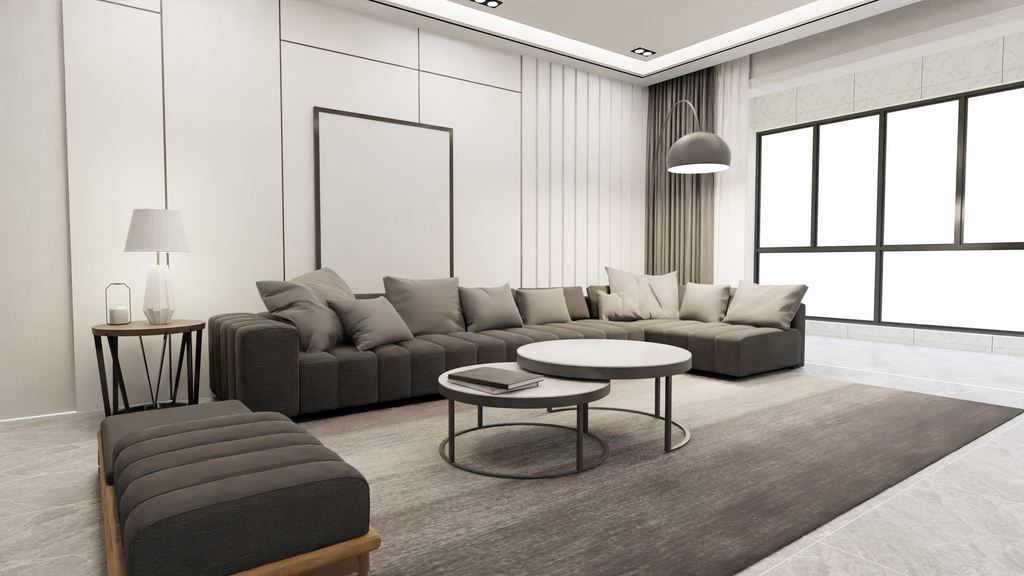
An L-shaped leather sectional works well when the room has one main focal point and needs an open side for circulation. The chaise or return can define the seating area without enclosing it. A U-shaped configuration supports larger groups and more face-to-face conversation, but it also takes up more central floor space and can make a narrow room feel closed.
Do not select by advertised seating capacity alone. A five-piece U shape may provide fewer comfortable adult positions than a well-proportioned L shape if several places are tight corners or narrow armless units.
Left-Facing or Right-Facing?
Orientation should follow traffic, not personal handedness. Most retailers describe the chaise side as you stand facing the sectional, but terminology can vary. Confirm the product diagram before ordering.
The open side should normally face the busiest route. If the chaise sits beside the main doorway, family members may have to squeeze around it every time they enter. A detailed right- vs. left-facing sectional orientation guide can help verify the TV wall, doors, windows, and chaise position before you commit.
Which Leather and Construction Handle Family Use?
Material labels should answer two separate questions: what covers the sectional, and how that surface will behave in your home. Full-grain and less-protected leathers can develop visible patina and character. More protected or pigmented finishes usually offer a more uniform appearance and easier spill cleanup. Performance microfiber leather is a synthetic upholstery option and should not be confused with genuine hide.
For a leather sectional for kids and pets, prioritize a clearly identified finish, tight seams, an easy-to-reach cleaning path between seats, and a color that will not highlight every scratch or strand of fur. Ask for a swatch when possible and test how the surface looks in both daylight and evening lighting.
Construction matters just as much as upholstery. Check:
- Frame material and how the corner units are reinforced
- Cushion fill and whether seats recover after pressure
- Suspension system beneath the cushions
- Stitching around high-contact edges
- Connector hardware between separate sections
- Upholstery coverage on the back and sides
A sofa labeled “leather” may use a different material on non-contact surfaces. This matters when the sectional floats in an open-plan room because its back remains visible. A leather sofa durability and easy-care guide can support a deeper material comparison without turning this purchase into a leather-grade lesson.
How Many Usable Seats and What Comfort Do You Need?
Usable seating is the number of people who can sit comfortably at the same time, not the number printed in the product title. Corner positions may work for a child but feel cramped for an adult. A chaise usually serves one lounging person rather than two upright sitters. Wide arms also reduce the seat width available within the overall footprint.
Measure or confirm the width of each seating position. Then compare comfort needs across the household:
- Shorter adults often need a moderate seat depth so their backs reach the cushion while their feet stay supported.
- Taller users may prefer deeper seats, a longer chaise, and adjustable head support.
- Older adults may benefit from a firmer cushion, supportive arms, and a seat height that makes standing easier.
- Children need stable sections, controlled gaps, and clear space away from moving footrests.
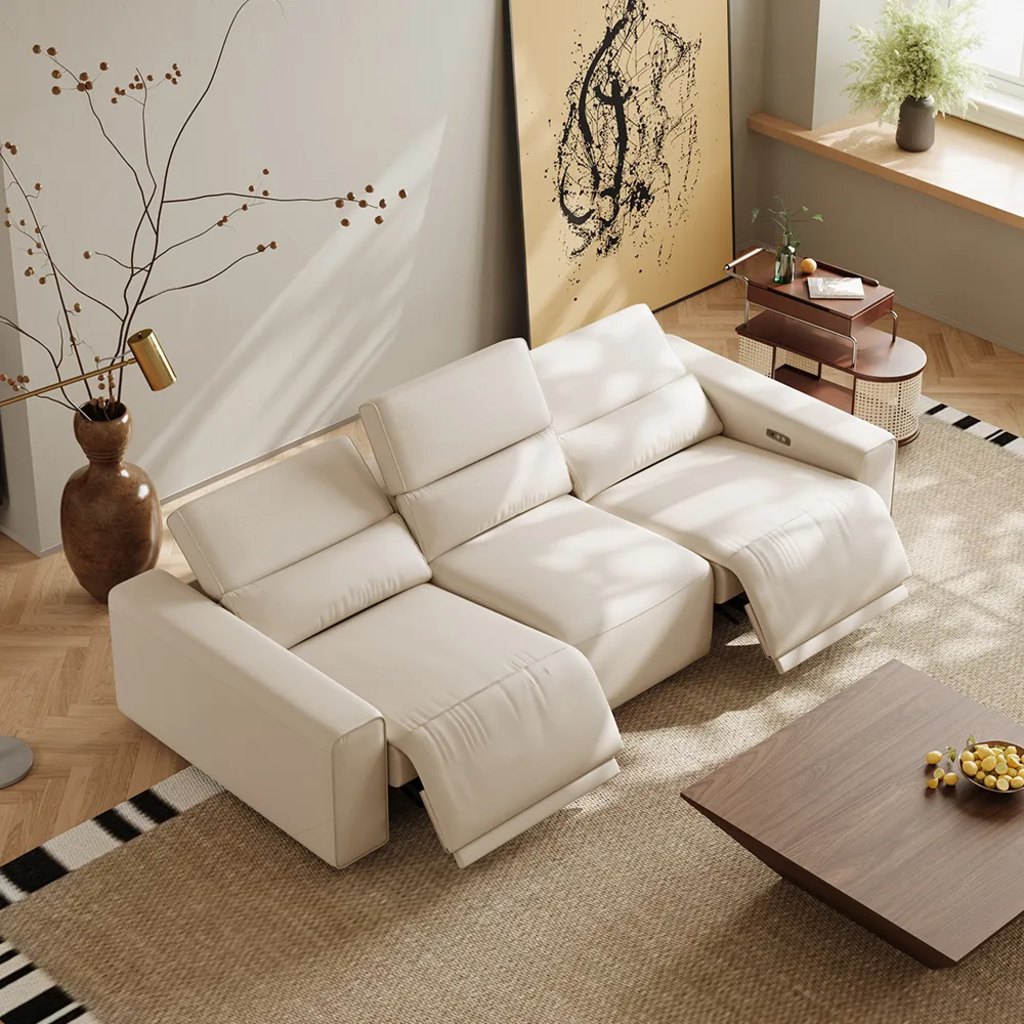
In a media-focused family room where two people want different support, the Benjamin Power Reclining Sofa addresses comfort without requiring separate recliners. Its modular design supports layout changes, while the backrest and footrest adjust to 135 degrees. A manual headrest and USB/Type-C charging add practical control; the upholstery is performance microfiber leather, not genuine hide.
During a typical Friday movie night, one person may stretch across the chaise while two others use upright seats and a child settles into the corner. Test the plan against that real routine. If someone would regularly be pushed onto a dining chair, the sectional does not provide enough usable seating.
Should You Choose a Fixed or Modular Leather Sectional?
The fixed vs modular leather sectional decision is mainly about stability versus adaptability. A fixed configuration suits a settled room where the focal point and walking routes are unlikely to change. It usually has fewer visible divisions and requires less rearranging.
A modular sectional is more useful when you may move, expand the household, or change the room from everyday lounging to group seating. However, flexibility only works when the connectors hold the sections securely and compatible modules remain available. Check whether individual pieces have separate SKUs, whether corner and armless units can be reordered, and whether the manufacturer expects the collection to remain supported.
Before choosing modularity only for flexibility, review modular leather sofa picks for flexible rooms with special attention to connectors, available modules, upholstery type, and whether the listed configuration can actually be rebuilt in the shapes you need.
What Should You Check Before Ordering?
Complete a two-part fit check: one for daily use and one for delivery. Room measurements prove the sectional can operate comfortably. Package measurements prove it can reach the room.
Confirm these details on the exact configuration and color you plan to buy:
- Overall width, depth, chaise projection, and any reclined depth
- Individual section and carton dimensions
- Left- or right-facing orientation
- Doorway, hall, stair, elevator, and turning clearances
- Upholstery type and where each material is used
- Removable or fixed cushions
- Connector style and assembly requirements
- Power outlet location and cord route, when applicable
- Availability of replacement or add-on modules
- Warranty, return conditions, delivery service, and restocking costs
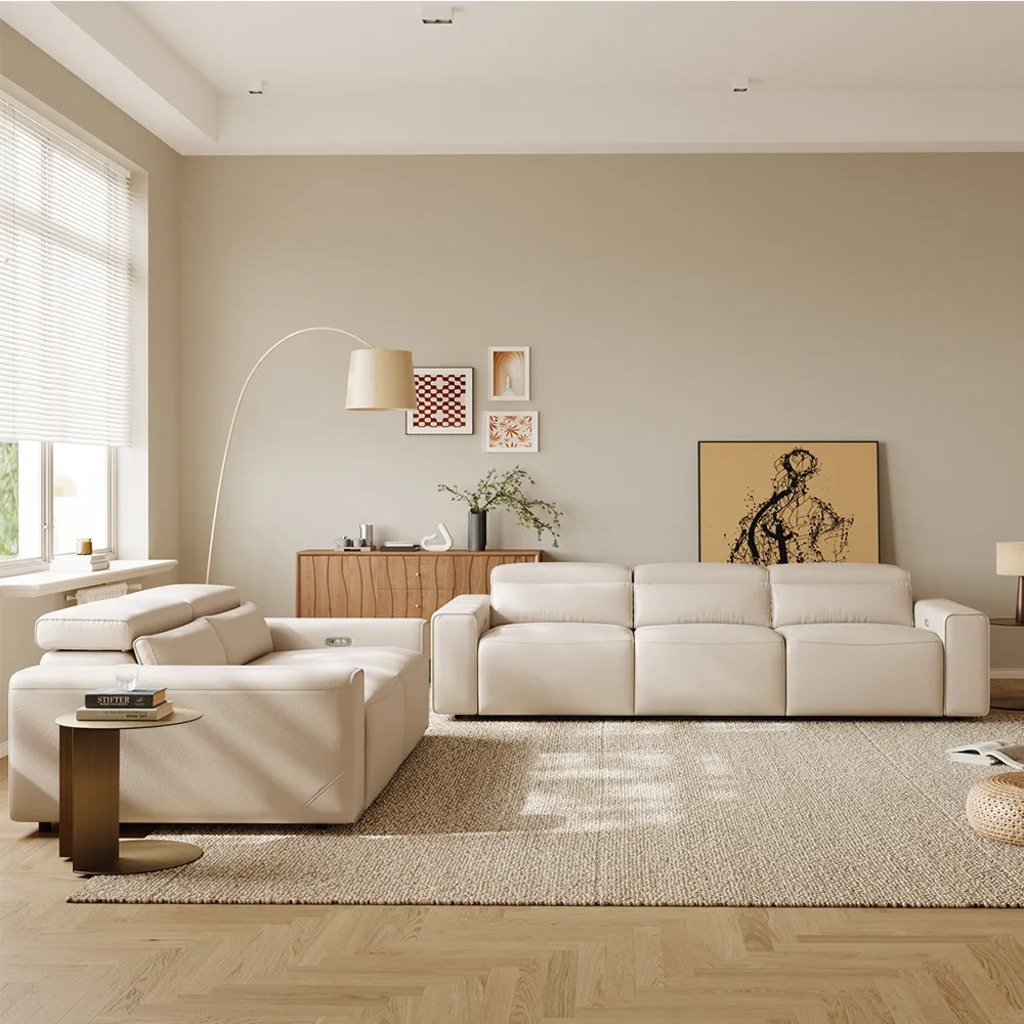
Do not rely on a lifestyle image to judge scale. Product photos often use large rooms and wide-angle views. Compare the dimension diagram with a taped floor outline, then place temporary chairs inside it. This reveals whether the seats feel useful and whether the remaining routes still work when people are actually sitting down.
Conclusion
The right leather sectional sofa fits the room, the delivery path, and the people who will use it every day. Select shape and orientation first, then verify usable seats, upholstery coverage, cushion support, connectors, and operating clearance. A taped floor plan and an exact product-specification check reveal more than a styled photo. When those practical details align, the sectional can support family routines without creating a permanent traffic, comfort, or maintenance problem.
Q&A
Can leather panels age at different rates?
Yes. Seat fronts and armrests usually receive more friction, body oils, cleaning, and sunlight than the back or side panels. Natural leather may therefore develop uneven patina. Confirm whether all visible surfaces use the same material, and rotate accessories or control direct sunlight to reduce obvious differences.
Can one modular leather section be replaced later?
Replacement is possible only when the manufacturer still offers a compatible module with the same dimensions and connectors. A discontinued collection may leave no exact replacement, and new leather can differ from aged sections. Save the model number, module SKU, finish name, connector details, and original order records.
Can a leather sectional sit near a sunny window?
Yes, but avoid prolonged direct sunlight and nearby heat sources. Strong afternoon sun can fade color or dry certain leather finishes unevenly. When deciding how to place furniture in front of a window, keep access to shades and airflow, leave space from radiators or fireplaces, and follow the upholstery maker’s care instructions.
Do leather sectional cushions need to be removable?
No. Removable cushions make vacuuming, rotation, and some repairs easier, but they may shift or create wider gaps during daily use. Fixed cushions maintain a cleaner profile and reduce places where toys collect. Choose according to cleaning access, cushion stability, and whether individual cushions can be repaired or replaced.
Must other leather furniture match the sectional?
No. Matching every leather piece exactly can make a room feel overly coordinated, and different finishes rarely age identically. Instead, coordinate warm or cool undertones, sheen, and visual weight. A cognac sectional can pair with a darker brown chair when a rug, wood table, or textile creates intentional separation.


