 By Jenny Smith
Choosing a Right vs Left Facing Sectional isn’t just a technical detail – it decides how you walk through your living room, where conversations happen, and whether the space feels welcoming or awkward. As sectionals continue to dominate sofa searches and become the modern “it couch,” getting the orientation wrong can turn an investment piece into a daily annoyance (data on sectional search interest from Accio Business, 2025).This guide is a practical sectional orientation guide with clear measuring steps, room flow checks, and fast decision tools so you can choose once and love it for years.
What Does “Right Facing” vs “Left Facing” Actually Mean?
Stand in front of the sectional, looking at it as if you’re about to sit down. If the chaise or longer extension is on your right, it’s a right-facing sectional; if it’s on your left, it’s left-facing. Many product pages shorten this to RAF (right arm facing) and LAF (left arm facing). Once you grasp this, scrolling listings becomes much easier. If you’re still deciding shape and size as well as orientation, pair this article with Povison’s in-depth Best Sectional Sofa Guide for a full big-picture view.
Some brands label from a bird’s-eye, floor-plan view instead of the “standing in front” view, so the same sectional can appear flipped between diagrams and photos. Others label individual pieces: a “RAF chaise with LAF sofa” simply means the chaise sits on the right when you face the set. When I’m planning a room, I often screenshot the product diagram, then quickly sketch in “door,” “TV,” and “window” on my phone – it takes one minute and can save you from choosing the wrong side.
Start With Your Space: Room Flow, Entrances, and Focal Points
Map Your Room Flow and Entrances First
“Room flow” is just how people naturally move from doorways, hallways, and stairs through your living room. Your sectional should guide that traffic, not force guests to squeeze past a chaise. For example, if your main entry is on the left, a left-facing chaise right by that door might feel like a barrier, while a right-facing version opens the path. Imagine coming home with groceries: can you walk straight to the kitchen, or are you dodging sofa corners every time? That tiny difference is what you’re solving here.
Align With Your TV Wall, Windows, and Conversation Area
Once flow feels right, look at what you actually do in the room. A simple framework is “See–Sit–Socialize”: what you look at most (TV, fireplace, view), where you sit most (chaise vs main seats), and how people face each other when talking. A right-facing sectional might frame the TV and keep your sightline to a garden window clear, while a left-facing one can help pull a conversation cluster closer to a fireplace. If you love slow evenings with the lights dimmed and a show on, prioritize sightlines over everything else.
How to Measure Your Chaise and Sectional (So You Don’t Block Anything)
Step-by-Step: How to Measure the Chaise
Grab a tape measure and note three key numbers before choosing Right vs Left Facing Sectional: overall width (outer arm to outer arm), chaise length (from back cushion to chaise tip), and depth (back to front of seat). Most designers recommend keeping 30–36 inches (75–90 cm) of clear walkway between large pieces so the room doesn’t feel like a crowded theater aisle (see Style by Emily Henderson, 2025).That clearance, plus your chaise length, usually decides which side can handle the extension without blocking circulation.
Double-Check Door Swings, Drawers, and Radiators
Now look beyond the sectional itself. Open every nearby door fully, including balcony and closet doors; make sure the arc doesn’t slam into the chaise corner. Check access to outlets, radiators, vents, and low windows – you don’t want to climb over cushions to open blinds. Many people outline both a right- and left-facing footprint on the floor with painter’s tape and live with it for 24 hours. If you find yourself stepping over tape lines, that orientation would feel cramped in real life too.
Furniture Layout Tips for Different Room Shapes
Long Narrow Living Rooms
Long, narrow rooms can easily become bowling alleys with furniture hugging the walls. A well-placed Right vs Left Facing Sectional can anchor one end, creating a cozy TV or reading zone while leaving a clear side path from door to door. One couple in a 10′ x 18′ living room used a left-facing sectional against the shorter wall, which shortened the visual length of the space and kept a 3-foot path open along the opposite side for kids to zoom through without cutting across the screen.
Open Concept Living/Dining/Kitchen Areas
In open concept layouts, the sectional is a soft wall. In an open concept layout, the sectional acts like a soft boundary. Position the chaise to mark the living area without blocking the walkway between the kitchen and dining table. If your island is on the right and dining on the left, a right-facing chaise can subtly guide guests to perch and chat while food is plated, instead of standing in the cooking zone. During parties, that same chaise becomes overflow seating for trays, drinks, or the friend who always kicks off their shoes and curls up in the corner.
Reversible vs Fixed Sectionals: Which One Is Better for You?
What Makes a Sectional “Reversible”?
A reversible sectional is built so the chaise can switch from left to right by moving the base and cushions. There’s usually no permanent “L” shape in the frame, which makes it very forgiving if you move home or change your layout. This flexibility is why reversible designs are popular with renters, first-time buyers, and anyone still testing their ideal Right vs Left Facing Sectional. The trade-off is that they may be slightly smaller, simpler in structure, and offer fewer extras like hidden storage or power features.
Why Commit to a Fixed Right or Left Facing Sectional?
A fixed sectional has a built-in, non-swappable chaise: it’s engineered from day one as either right facing or left facing. Because the frame doesn’t need to work both ways, brands can push the design further—deeper seats, sleeker legs, integrated storage, or built-in recline. Visually, fixed models often look more tailored and “designed on purpose” instead of modular. If you own your home, know exactly where your TV, windows, and entrances are, and have tested the layout with tape, choosing a fixed Right vs Left Facing Sectional gives you a more polished, long-term solution than playing it safe with reversible vs fixed forever.
A fixed chaise is not the only option when you want a more finished sectional layout. A modular setup can reduce the risk of committing to one permanent left- or right-facing arrangement, especially when the lounging section is created with movable pieces rather than a built-in chaise.
Barrett Modular Sectional works well for buyers who want an L-shaped setup without committing to a fixed left- or right-facing chaise. The movable ottoman lets the lounging side shift as the room changes, while the modular layout keeps the seating arrangement more flexible. Measure the finished footprint before ordering to make sure the reconfigured setup still fits the room.
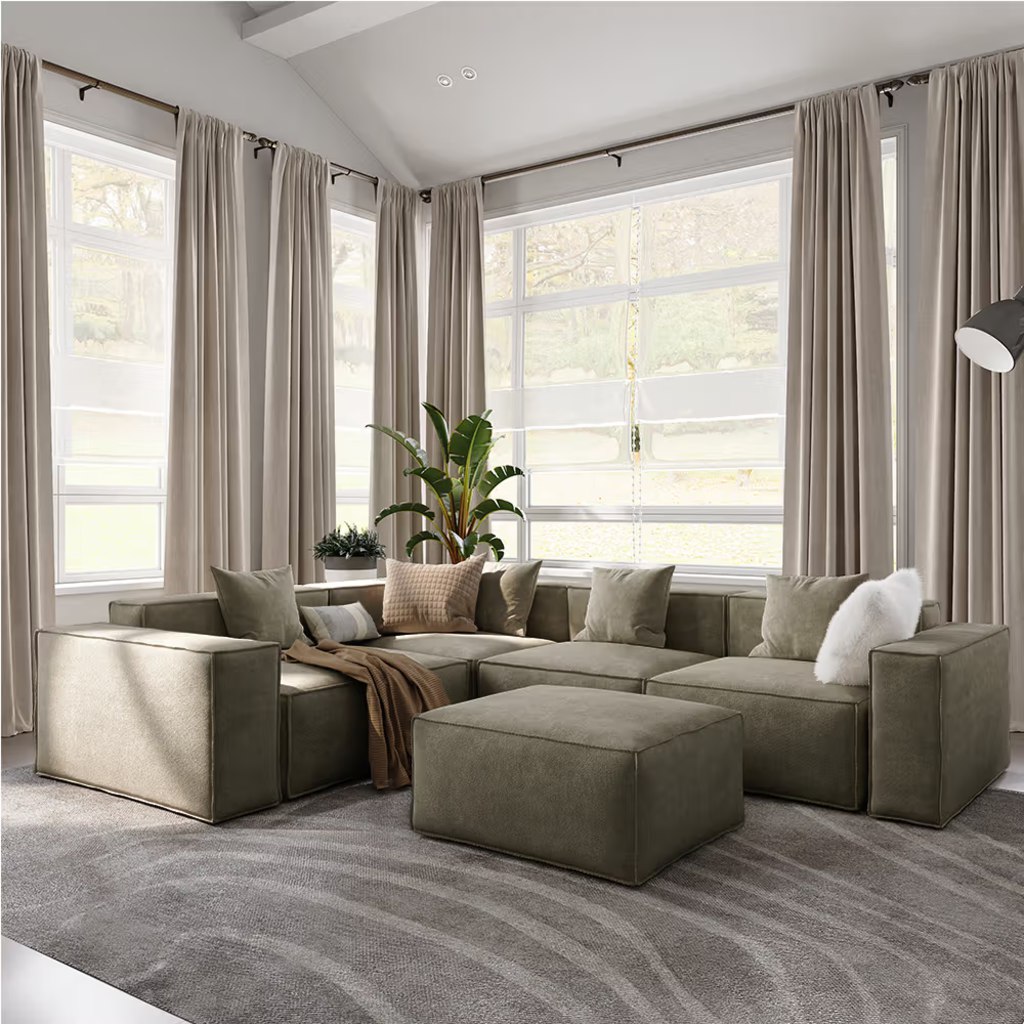
Barrett Modular Sectional Sofa
Modular seating and a movable ottoman keep sectional orientation flexible.
👍 Best for: Flexible sectional orientation
✨ Movable ottoman changes lounge position
✨ Modular sections support rearrangement
✨ Avoids a permanently fixed chaise
Quick Decision Checklist — Choose Right vs Left Facing in 5 Minutes
5 Yes/No Questions to Lock in Your Orientation
Use this mini sectional orientation guide when you’re stuck between two carts:
- Is your main entrance to the left or right of where the sectional will sit?
- Which side do people walk through most often?
- Which side do you want the chaise to “block off” to create a cozy corner?
- Do you need easy access to a balcony, window, or outlet on one side?
- Are you likely to move or reconfigure the room within 2–3 years?
If several answers point to future change, consider a reversible or modular sectional instead of locking into one permanent orientation. If the room is unlikely to change, choose the fixed orientation that best protects your walkway and sightlines.
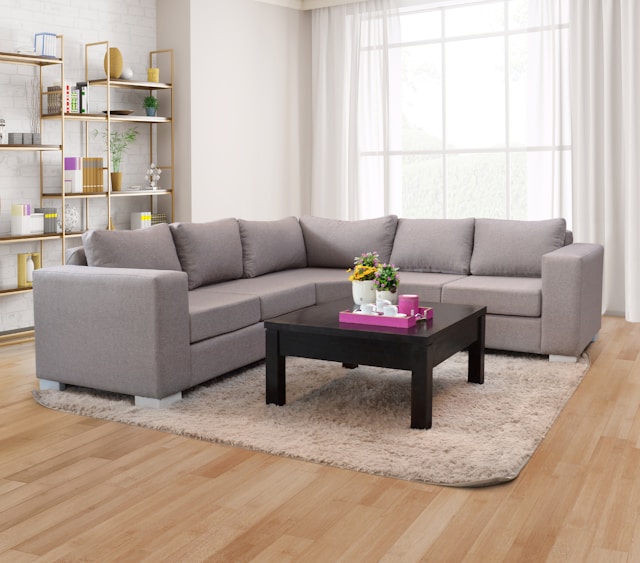
When in Doubt: Choose a Sectional You Can Reconfigure
If your room layout is stable and you already know which side should hold the chaise, a fixed LAF or RAF sectional can be the simplest choice. There is little reason to pay for extra flexibility you do not expect to use.
If you may move, rotate the room, or change how the living area connects to adjacent spaces, look at reversible or modular seating instead. A reconfigurable sectional can reduce orientation risk from the beginning, so you do not need to buy a temporary sofa now and replace it once the room changes.
Before ordering, confirm which modules are included and map the finished configuration on the floor. Modular does not mean every possible arrangement will fit the same room.
Moku Modular Block Sofa makes more sense when the uncertainty goes beyond left versus right. Detachable seat modules are easier to reposition as the room changes, while the multifunctional arm component can work as a side surface, footrest, wider seat, or separate perch. That gives buyers more ways to reuse the same pieces after a move or layout change instead of preserving one permanent sectional shape.
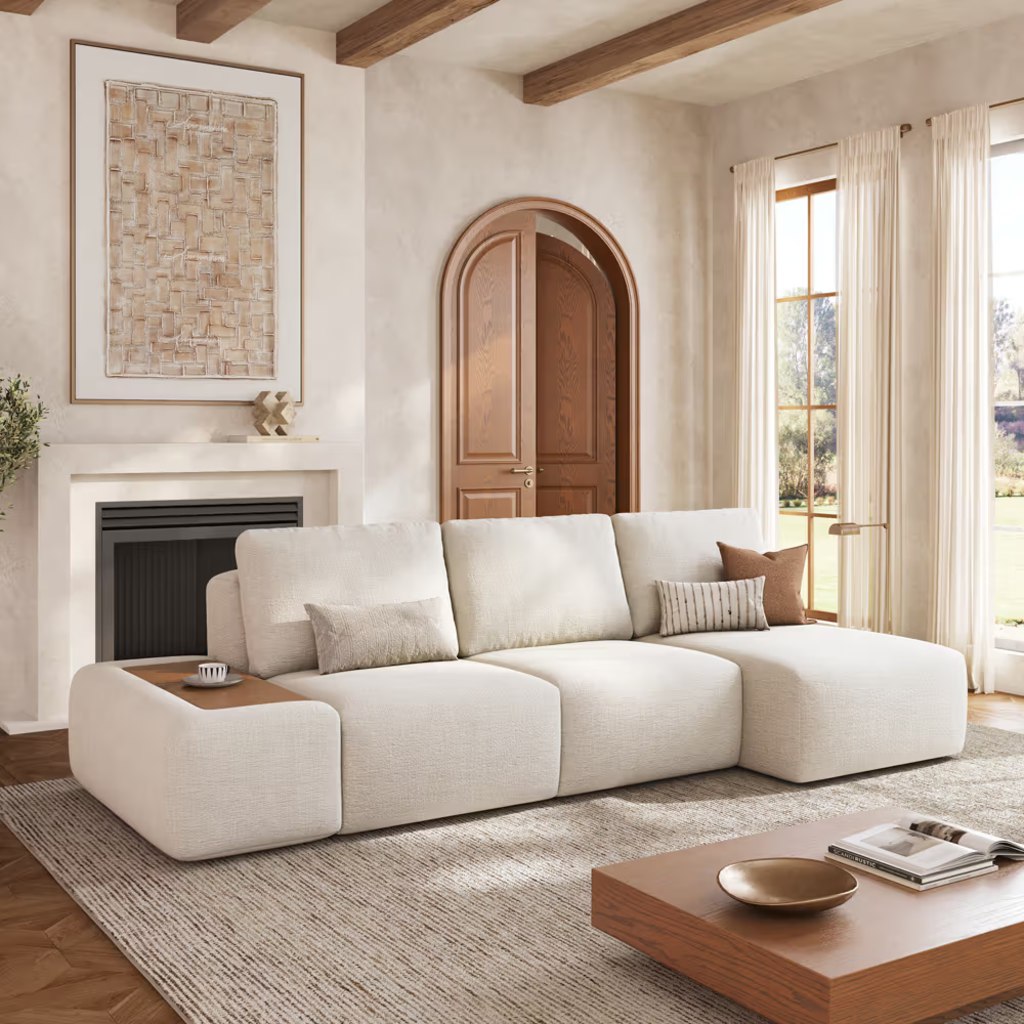
Moku Modular Block Sofa
Detachable seating blocks make future room changes easier when buyers expect to move, rearrange, or reuse individual modules.
👍 Best for: Future room reconfiguration
✨ Detachable individual seating modules
✨ Multifunctional movable arm component
✨ Easier reuse after layout changes
Conclusion
Choosing between right- and left-facing sectionals comes down to room flow, sightlines, and how certain you are that the layout will stay the same. Map both orientations before ordering, protect the main walkway, and check doors, windows, outlets, and the TV wall. If the room is settled, a fixed LAF or RAF sectional can work well. If the layout may change, a reversible or modular design gives you more flexibility without forcing another sofa purchase later.
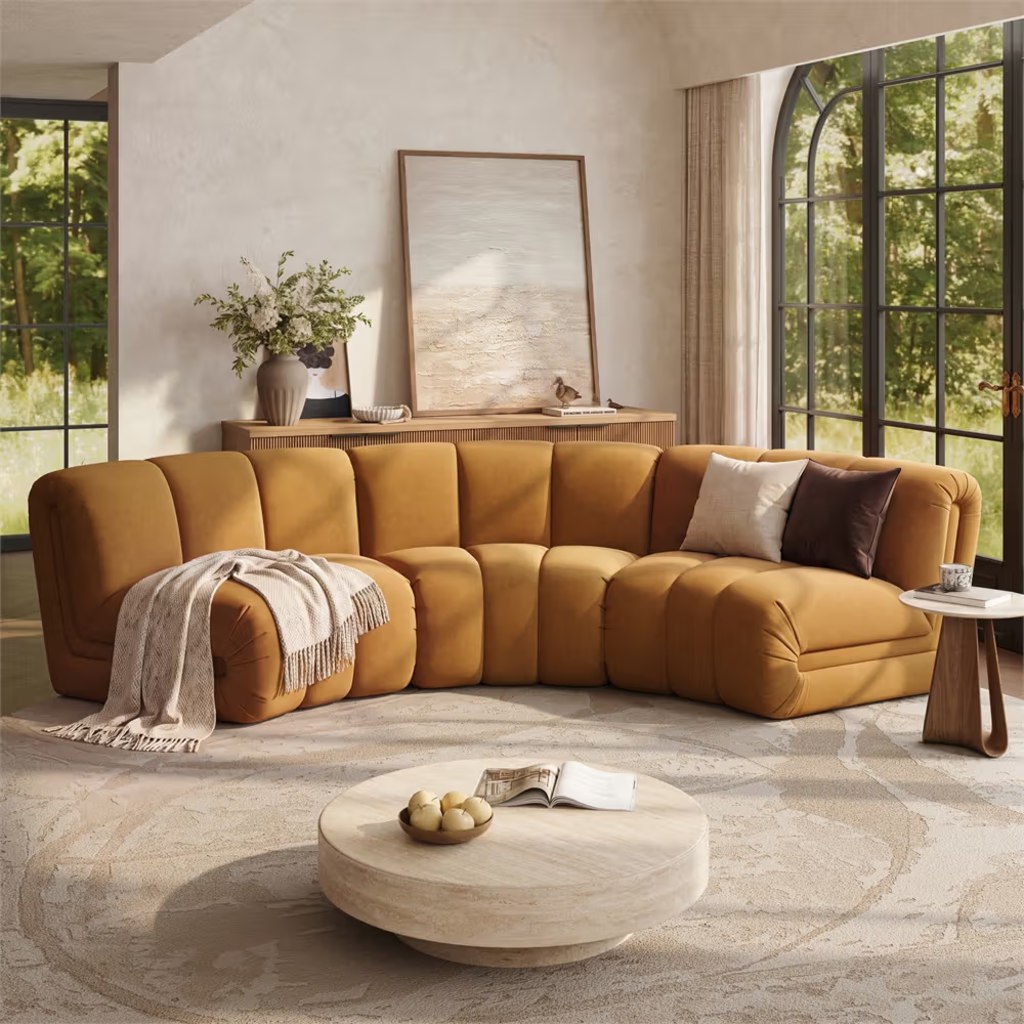
Find an L-Shaped Sectional That Fits Your Layout
Compare flexible and fixed layouts after checking your room flow.
FAQs About Right vs Left Facing Sectionals
What if I Pick the Wrong Orientation?
You still have options. Try rotating the sectional to a different wall, shifting the TV, or adding an accent chair where the chaise feels too dominant. If the room still doesn’t flow, check whether you’re within the retailer’s return or exchange window and consider swapping for the opposite orientation or a reversible design instead.
Does Orientation Matter if My Sectional Floats in the Middle of the Room?
Yes. Even when the sectional floats, the chaise still influences room flow and entrance paths, plus who faces the TV or window. A poorly placed chaise can create a bottleneck through the center of the room; a well-placed one guides people behind the seating instead, keeping sightlines clear and conversations more relaxed.
Is a Right Facing Sectional Better for Right-Handed People?
No. Orientation has nothing to do with your dominant hand and everything to do with architecture and circulation. Focus on doors, windows, and walkways first, then think about where you like to lounge. A left-handed person can be perfectly happy on a right-facing chaise – what matters is that the room feels natural to move through and easy to use every day.


