 By Charles
Hey fellow sofa scrollers,
Let’s be real —if you’re hunting for the best sectional, you’re probably juggling a lot right now: work calls, assignments, pets claiming half the couch, and that one sagging seat you secretly hate. Am I right?
Here’s the thing: you want something that looks pulled-together, survives real life, and doesn’t turn movie night into “everyone grab a dining chair.” Trust me, I know the struggle. This guide walks you through shapes, configurations, and fabrics so you can choose a sectional that actually fits your room, your family, and your sanity. Here’s to making your house feel like home!
We know seeing is believing, so we’ve curated a versatile collection of sectionals designed to fit both your floor plan and your lifestyle—feel free to explore your options.
Sectional Sofa Shapes Explained: Choosing the Best Sectional Sofa for Your Space
Before you lock in a specific model, you need to pick the general shape. The best sectional sofa for you depends on how you use your living room: TV cave, kid playground, or occasional entertaining zone.
L-Shaped Sectional Sofa: The Most Popular Choice for Small to Medium Living Rooms
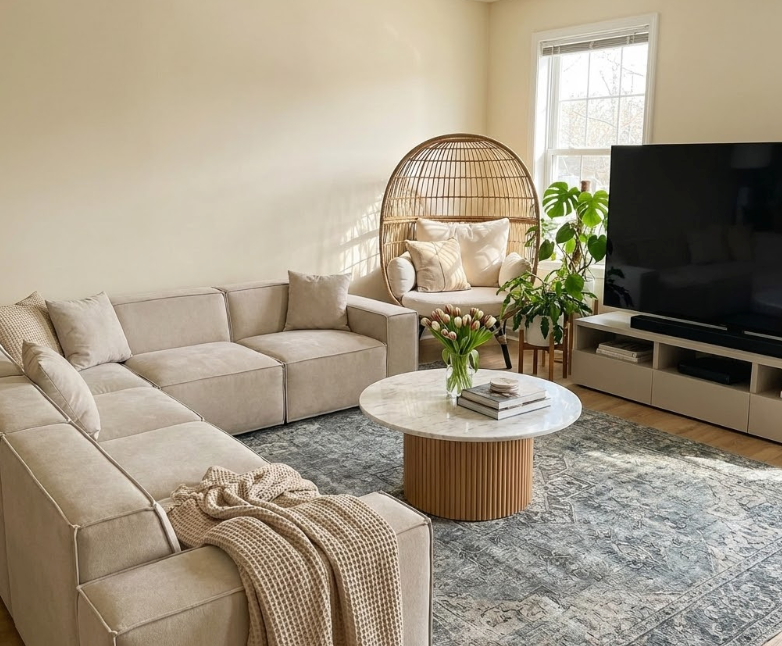
L-shaped sectionals give you the most seating for the footprint, which is why they’re the go-to for apartments and typical suburban living rooms. Picture a standard 3-seat sofa (about 84″ wide) with a chaise that extends another 60–70″ on one side.
You’ll like an L-shaped sectional if:
A short summary helps you see if this shape fits your lifestyle before you jump into details. L-shapes work best in rooms where one wall naturally becomes the “TV wall,” and you need enough seating for 3–5 people without shrinking your walking paths.
- You want clear traffic flow along one side of the room
- You usually seat 3–5 people at a time
- Your room is between 10′ x 12′ and 14′ x 18′
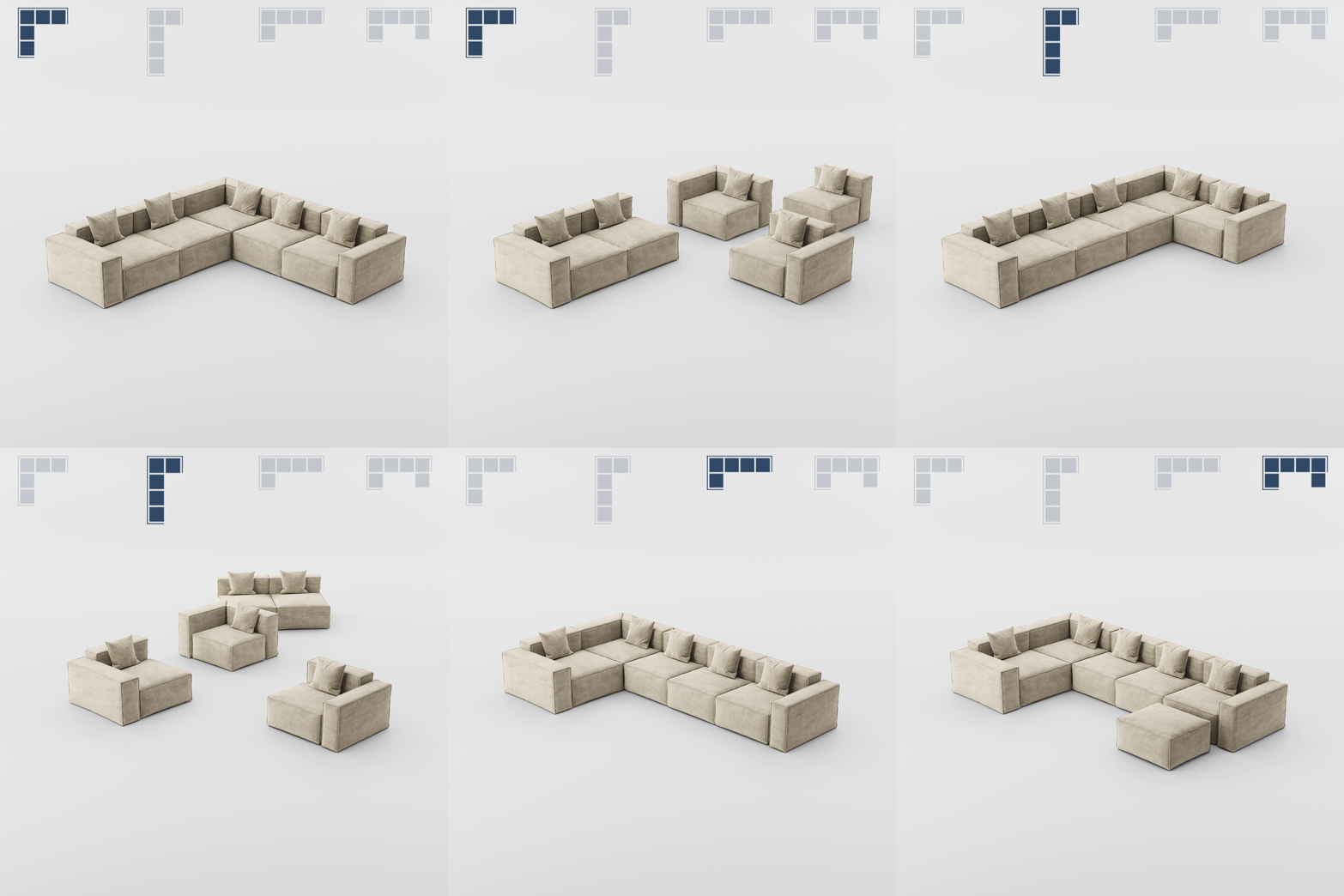
If you often rearrange furniture or live in a rental, look at modular L-shaped sectionals like many options in our Povison sectional collection so you can flip the chaise or add pieces later.
U-Shaped Sectional Sofa: Maximum Seating and Comfort for Large Families
If your living room is where everyone piles in for game night, a U-shaped sectional is your friend. Think of it as two sofas facing each other, connected by a middle piece, wrapping your crew in a semi-circle.
U-shaped sectionals usually need more space, but they shine in bigger rooms. They’re perfect if you regularly seat 6–8 people, or if your teens always bring three extra friends home.
- Ideal for rooms around 14′ x 18′ or larger
- Great for conversation and board games (no one’s yelling across the room)
- Works well under a large area rug (8′ x 10′ or 9′ x 12′)
If your room is long and narrow, a full U might feel cramped. In that case, an extended L-shaped sectional with an extra armless seat can give similar seating without closing off the room.
Curved Sectional Couches: Design-Forward Sectionals for Open Layouts
Curved sectionals are more about flow and style than squeezing every inch of seating into a tight space. The curve softens all the straight lines you already have (walls, TV stand, windows) and works beautifully in open-concept rooms.
Use a curved sectional when:
Curved sectionals fit best when your seating “floats” in the middle of the room rather than pushes against a wall. This makes them great for open layouts where the couch helps define the living area without feeling boxy.
- Your sofa sits off the wall, floating in the room
- You host often and want a more conversation-friendly layout
- You care more about style and flow than maximum headcount
Pairing a curved sectional with a round or oval coffee table reduces shin-bruising and keeps the soft, easy movement through the space.
Modular vs Fixed Sectional Sofas: Which Type of Sectional Couch Is Right for You?
The next big decision is whether you want a fixed configuration or a modular sectional that you can reconfigure. This choice affects how well your sofa adapts when life changes, new house, new dog, new baby, or all three.
A fixed sectional has pieces that connect in one specific layout. According to modular furniture market research, modular sectionals are built from separate units (corner, armless, chaise, ottoman) that you can re-arrange.
Before you compare, it helps to know what each type does best. Fixed sectionals usually win on simplicity and cost: modular sectionals win on flexibility and future-proofing, especially if you expect to move or grow your family.
Fixed sectionals are best if:
- You know your room layout won’t change much
- You want slightly lower cost for the same size
- You like a cleaner look with fewer visible seams
Modular sectionals suit you if:
- You might move in the next 2–5 years
- You want to add seats or flip the chaise later
- You have kids or pets and may replace a single damaged module
Many modular designs, including several from Povison, now use hidden clips and uniform seat dimensions, so they don’t look like a pile of blocks.
How to Measure for a Sectional Sofa (So It Actually Fits Your Room)
You don’t want to fall in love with a sectional online and then realize it blocks your hallway. A quick measuring routine saves you from that “so…this doesn’t fit” moment.
Start by taping out the maximum rectangle your sectional can occupy. Use painter’s tape and aim to leave at least 30–36″ for walkways.
Here’s a simple order that keeps you organized and avoids surprises on delivery day. You’ll check total size, chaise length, and pathways, so your sectional works with your space instead of fighting it.
- Measure the room: Length and width, plus any tight spots like doorways or stairs.
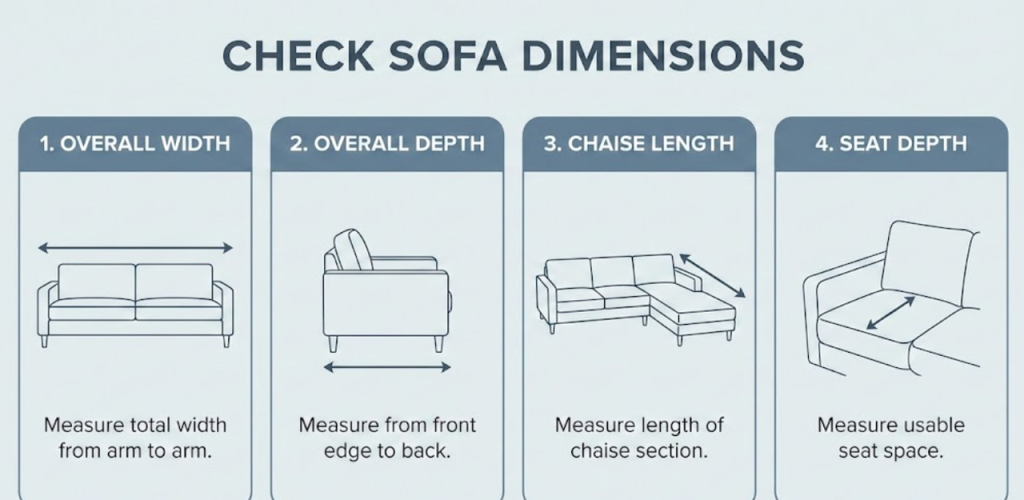
- Check sofa dimensions: Overall width, depth, and chaise length: many sectionals are 32–36″ deep.
- Mark it on the floor: Tape where the back and chaise will sit.
- Walk the paths: Make sure you can comfortably walk around with laundry baskets and snack trays.
If you’re furnishing a small space, look at compact designs on sites like Povison that list full dimensions and sometimes recommend room sizes. For a complete step-by-step process, check out this detailed guide on how to measure for a sofa. When in doubt, size down and add an accent chair, two medium seats beat one oversized mistake.
Best Materials and Fabrics for a Long-Lasting Sectional Sofa
The best sectional sofa for a busy home isn’t just the right shape, it’s the one that survives chocolate milk, pet hair, and movie-night crumbs without constant panic.
Think about three things: cleaning, durability, and feel. You want a fabric that’s easy-wipe or machine-washable, tight enough to resist claws, and comfortable for long stretches of sitting.
For families and pet owners, some fabrics simply handle chaos better than others. Prioritizing stain resistance and weave type now will save you hours of scrubbing and a lot of “don’t touch that with your hands” later.
- Performance polyester / microfiber: Stain-resistant, usually passes 30,000+ double rubs (a durability test), easy to spot-clean.
- Tightly woven linen-blend: Breathable, less snag-prone than pure linen, better for warmer climates.
- Leather (or high-quality faux): Wipes clean, develops character, but can show pet scratches: choose protected leather if you have kids.
If you have pets, skip loose weaves and heavy texture that catch claws and fur. Look for labels like “performance fabric” or check specs against Contract Textiles performance guidelines to see how the fabric is expected to hold up.
For even more peace of mind, some brands (including Povison on select models) offer removable, washable covers. If you’re the “white couch with kids” dreamer, washable covers are your safety net.
Left vs Right Chaise Sectionals: How to Choose the Correct Configuration
Choosing the wrong chaise side is one of the easiest mistakes to make, and one of the most annoying to live with. For the best sectional sofa setup, you want the chaise to extend where it helps flow, not blocks it.
Most brands define “left” or “right” while you’re facing the sofa, not sitting on it. So a “right chaise” means the chaise is on your right-hand side as you look at the sofa.
The chaise decision gets much easier when you follow a simple, consistent rule. Always start from the main entrance to the room and imagine how you naturally walk in, sit down, and move toward the TV or window.
Use this quick checklist:
- Stand at your main entry to the room and face the TV wall.
- Ask: which side should stay more open for traffic?
- Place the chaise on the opposite side of your main walkway.
If your room opens on the left and a hallway continues on that side, a right chaise usually keeps paths clear. For open-concept rooms, look at product photos and floor plans from the brand’s site (Povison’s product pages are helpful here) and mirror them against your own layout.
When you’re unsure, consider a modular sectional with a reversible chaise: you can live with it for a week, then flip it if your first guess wasn’t right.
Frequently Asked Questions About the Best Sectional Sofa
How do I choose the best sectional sofa shape for my living room?
Start with how you use the room and its size. L-shaped sectionals suit 10′ x 12′ to 14′ x 18′ spaces and seat 3–5. U-shaped sectionals fit larger rooms and bigger groups, while curved sectionals work best floating in open layouts where style and conversation matter more than maximum seating. According to global sofa market data, understanding your space requirements is key to making the right choice.
What is the best sectional sofa size for a small living room or apartment?
For small living rooms, look for compact L-shaped sectionals with overall depths around 32–36″ and a chaise no longer than 60–70″. Tape out the footprint on the floor and leave 30–36″ walkways. If the room feels tight, size down the sectional and add an accent chair for flexibility. Learn more about optimizing small spaces with our living room makeover ideas.
How do I measure to make sure a sectional sofa will fit my space?
Measure the room’s length and width, plus doorways and stairs. Check the sectional’s overall width, depth, and chaise length. Use painter’s tape to mark where the back and chaise will sit, then walk the paths to confirm you still have 30–36″ of clearance for comfortable everyday movement.
What is the best sectional sofa material for families with kids and pets?
Performance polyester or microfiber is often the best bet: it’s stain-resistant, durable, and easy to spot-clean. Tightly woven linen-blends work in warmer climates, while protected leather or high-quality faux leather wipes clean easily. Avoid loose, textured weaves that snag claws or trap fur, and consider removable, washable covers.
How do I pick between a modular and a fixed sectional for long-term use?
Choose a fixed sectional if your layout is stable and you want a slightly lower price with a clean, seamless look. A modular sectional is better if you might move, want to flip the chaise, add seats later, or replace single damaged pieces—ideal for growing families, renters, and pet owners. For deeper insights on seating comfort, explore our deep seat sofa depth guide.


