 By Jenny Smith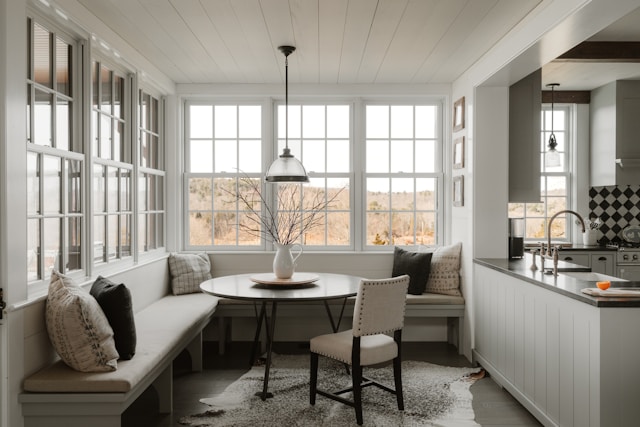
In a studio, compact condo, or slim open-plan room, the dining area often has to share space with the sofa, laptop, and kids’ toys. No wonder many people feel forced to “give up” a real table. Yet with the right small dining table, layout and materials, you can keep the room feeling open instead of cramped. As more households ditch formal dining rooms for multi-use spaces (2026 NKBA kitchen trends report), a smart, small table becomes the new hub. This guide walks you through sizing, visual tricks, material choices, plus POVISON picks.
Quick Answer: In a tight room, the best small dining table is not always the smallest one. It is the one that leaves enough chair pull-out space and a clear walking path. Round tables work well in square rooms, slim rectangular or oval tables fit narrow rooms, and pedestal bases help save legroom.
Table of Contents
How to Choose the Right Small Dining Table for Your Layout
Start with Flow, Then Choose the Table
Before falling for a design, check circulation. Aim for about 30–36″ (76–90 cm) from table edge to wall or furniture so people can pull out chairs and walk behind them comfortably. If your apartment is under 700 sq ft (14% of U.S. renters live in homes this small), that space matters even more.(Zillow) Use masking tape to mark a “table” on the floor, then walk from kitchen to sofa and balcony door as if holding a tray. Prioritise everyday comfort for two to four people, and use stackable or folding chairs for occasional guests. Don’t forget to measure doorways, elevators and stairwells so the table actually reaches your dining nook.
Match Table Shape to Room Shape
Once flow works, match shape to room. Round or oval tables suit square or slightly awkward rooms because they soften corners and keep circulation easy around their curved edge. Rectangular or slim oval tables fit long, narrow rooms or banquette walls, where one long side can sit close to the wall while the other stays open as a walkway. Pedestal bases free up legroom and make it easier to squeeze in an extra armless chair. A simple rule: if your room is almost square, start with round; if it’s clearly longer than it is wide, start with rectangular or oval.
Best Sizes for Small Rooms (Without Making Them Feel Cramped)
Size Rules of Thumb for 1–4 People
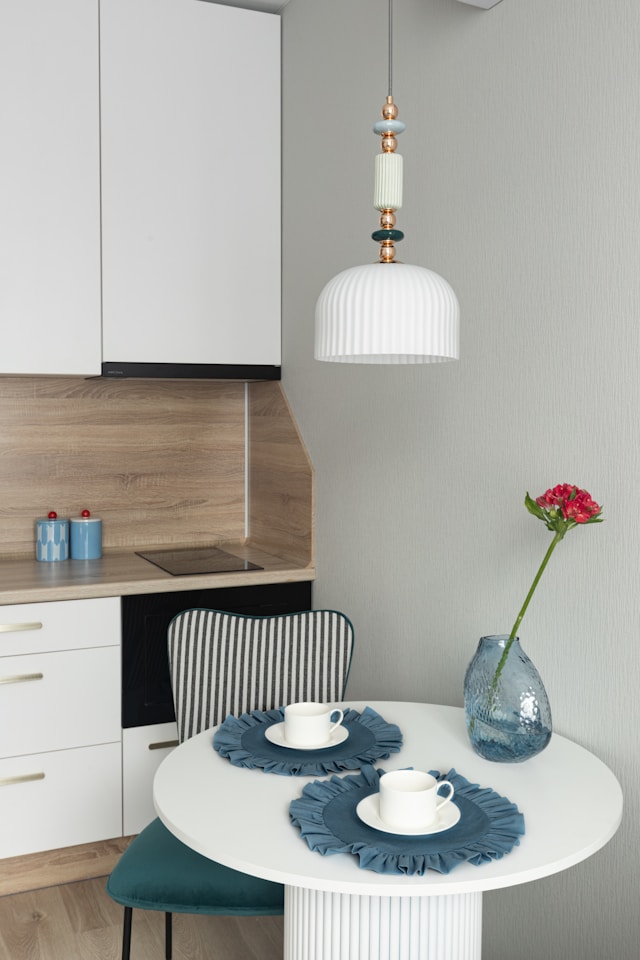
For studios and couples, a 24–30″ (61–76 cm) round table works for one or two; bump up to 30–36″ (76–91 cm) round or square for two or three. Compact family dining starts around 36–40″ (91–102 cm) round for three to four, or 47–51″ (120–130 cm) round or oval for four to six in rooms at least about 2 m × 2 m. You can “cheat” on clearance by running a bench along a wall, choosing armless chairs, or keeping one side closer to a window while the opposite side stays roomy.
Room Size vs. Table Size vs. Comfortable Seating
| Room footprint (approx.) | Recommended table size | Comfortable seats | Max “squeeze” seats |
| 1.8 × 1.8 m / 6 × 6 ft | 28–32″ round | 2 | 3 |
| 2 × 2 m / 6.5 × 6.5 ft | 36–40″ round | 3–4 | 4–5 |
| 2.5 × 2.5 m / 8 × 8 ft | 43–47″ round or 47″ oval | 4 | 6 (slim chairs) |
| 2 × 3 m / 6.5 × 10 ft | 55–63″ rectangular, narrow depth | 4 | 6 along the long side |
Planning for Guests, Kids and Multi-Use
Think about how the table has to transform. Extendable designs let you live small most days, then stretch to host friends. Leave extra clearance where highchairs, toy baskets or a pet bed might live. In an open-plan space, you might keep the table tucked against a wall on weekdays, then rotate it ninety degrees into the room and pull out hidden leaves when guests arrive. In my own small living-dining area, this “weekday vs. weekend” layout is what keeps the room from feeling like permanent party prep.
Visual Tricks to Make a Tiny Dining Area Feel Bigger
Light, Legs & Lines
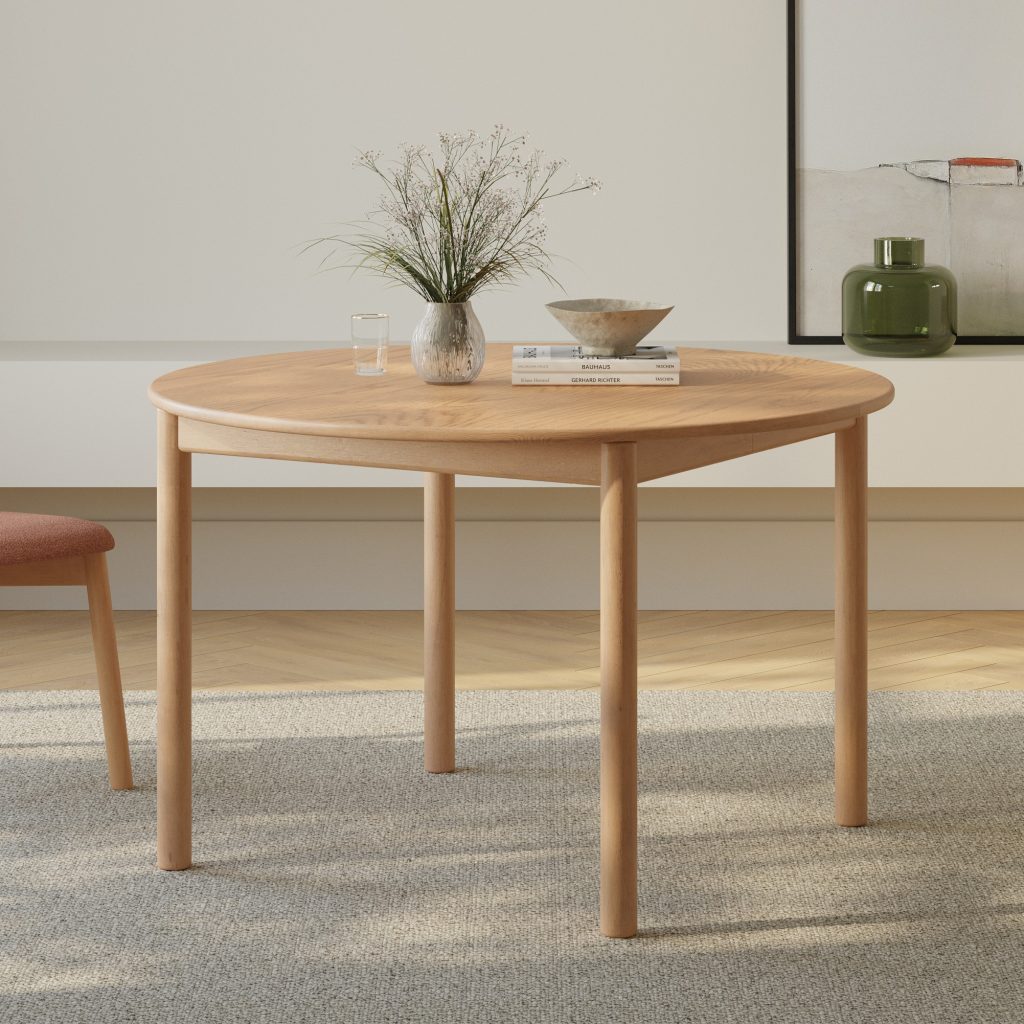
Light colours bounce light and visually expand tiny dining zones, so a white or pale stone tabletop can make the corner feel brighter than a dark wood slab. Choosing slim or tapered legs, or a pedestal base, reveals more floor and helps the whole setting feel lighter. Low-contrast palettes also help: when the table is similar in tone to your floor or rug, it reads as a soft zone rather than a heavy block. Pair with armless, open-backed chairs to keep sightlines clear across the room and into adjacent areas.
Styling That Keeps the Room Airy
Styling is where many small spaces tip into cluttered. Keep benches along the wall or under a window so they slide fully under the table when not in use. A rug that extends about 24″ (60 cm) beyond the tabletop on all sides keeps chairs stable while defining the zone. Use vertical tricks like a slim pendant and a narrow art piece above the table to pull the eye up. For quick visual “decluttering,” limit daily chair count to what you truly use, keep one simple centerpiece on the table, and stash placemats, napkins and chargers in a lidded basket on a nearby shelf.
Material Choices That Help Small Spaces Work Harder
Why Material Matters More in Small Homes
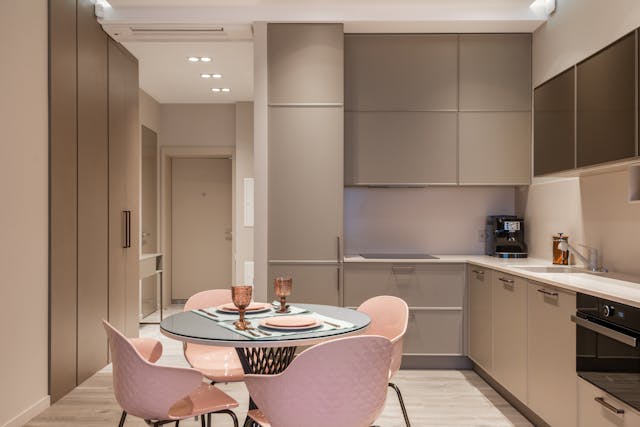
In small homes, the dining table doubles as laptop desk, craft station and homework zone. Surfaces need to shrug off heat, spills and scratches. Sintered stone is a star here: it resists stains, scratches and high temperatures, so coffee mugs, hot dishes and kids’ paint pots don’t demand coasters every time. Tempered glass tops feel visually light and are great when you want your small dining table to almost disappear, though they reveal fingerprints more easily. Solid or engineered wood brings warmth; in tight rooms, lighter tones and matte finishes keep it from feeling bulky.
Materials in Big vs. Small Spaces
| Material | Look & feel | In small spaces – big advantages | In small spaces – watch-outs |
| Sintered stone | Sleek, stone-like, modern | Ultra durable, heat and stain resistant; easy daily care | Very dark colours can feel heavy in tiny rooms |
| Tempered glass | Airy, almost invisible | Makes rooms feel larger; great with sculptural bases | Shows fingerprints and water rings quickly |
| Wood | Warm, natural, timeless | Cozy, forgiving, especially in light oak or walnut tones | Very thick, dark tops can visually dominate the room |
For more detail, you can dive deeper into Povison’s blog on why sintered stone is good for dining tables.
Maintenance, Health & Sustainability in Compact Rooms
Because air volume is smaller, finishes matter more in tight spaces. Look for low-VOC coatings and glues so off-gassing doesn’t linger when windows are closed. Day to day, most stone and glass tops just need a soft cloth and mild soap; wood benefits from a gentle wipe followed by drying, plus occasional oiling or sealing. A simple “maintenance calendar” helps: monthly, check bolts so wobble doesn’t develop; quarterly, deep-clean the base and underside where dust gathers around chair legs; annually, reassess whether the table still fits your family’s size and habits.
POVISON Small-Space Dining Tables Worth Considering
POVISON 47″ Mid-Century Round Sintered Stone Dining Table — Best Compact Family Table for 4
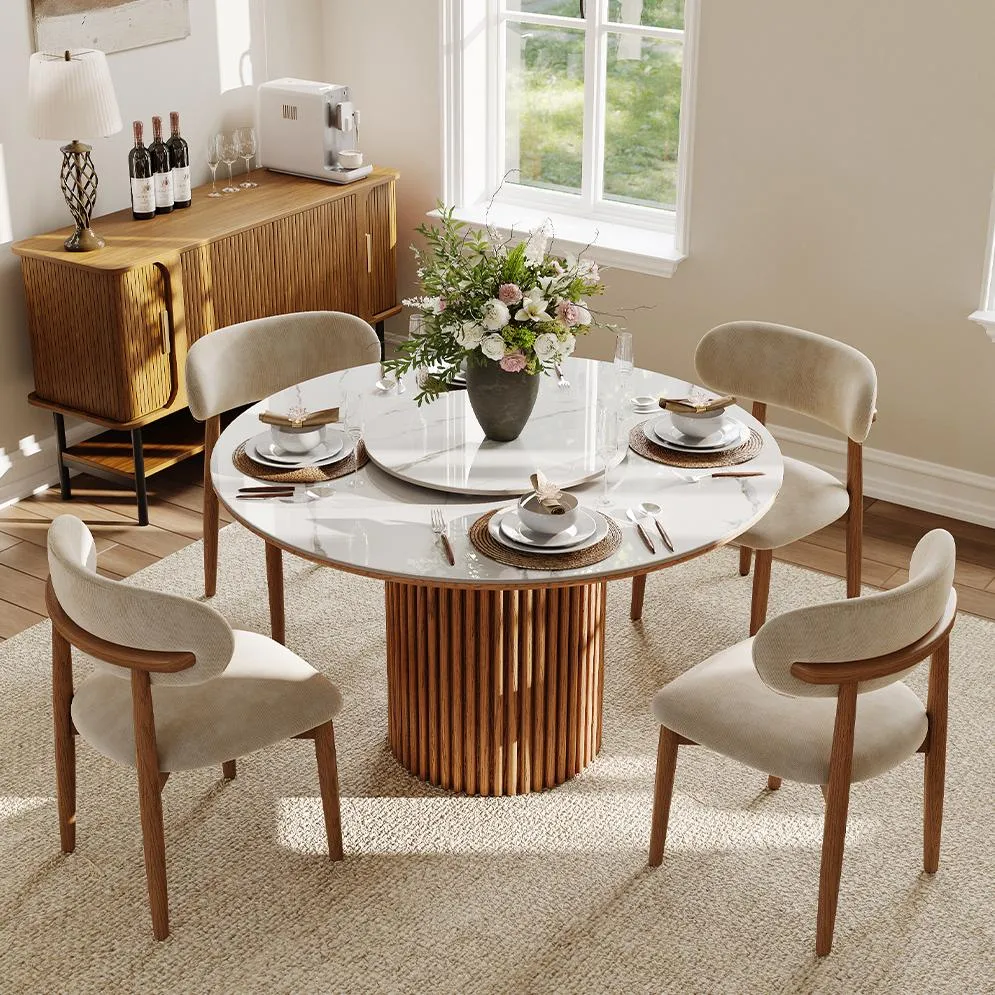
Price: see product page for latest offer; similar sintered-stone round models often sit in the mid-1,000s before coupons. Best for small dining rooms or open-plan corners that need a “real” family table for two to four, especially where you want a sculptural centrepiece that still feels light. The 47.24″ round, glossy white sintered stone top is scratch-, heat- and stain-resistant, while the walnut-finish fluted pedestal keeps legroom open. One reviewer highlights that the product arrived as described and well-protected, making setup stress-free (Amy, 08/25/2025). I love the feeling of four people around this table, Lazy Susan spinning so nobody has to stand up to pass dishes, and chairs sliding in neatly without hitting corner legs. When dinner’s done, a quick wipe leaves no trace of hotpot broth or tomato sauce, which is exactly what you want in a compact dining corner.
POVISON 59″ Modern Extendable Round Dining Table with Storage — Best for Hosts in Small Open-Plan Spaces
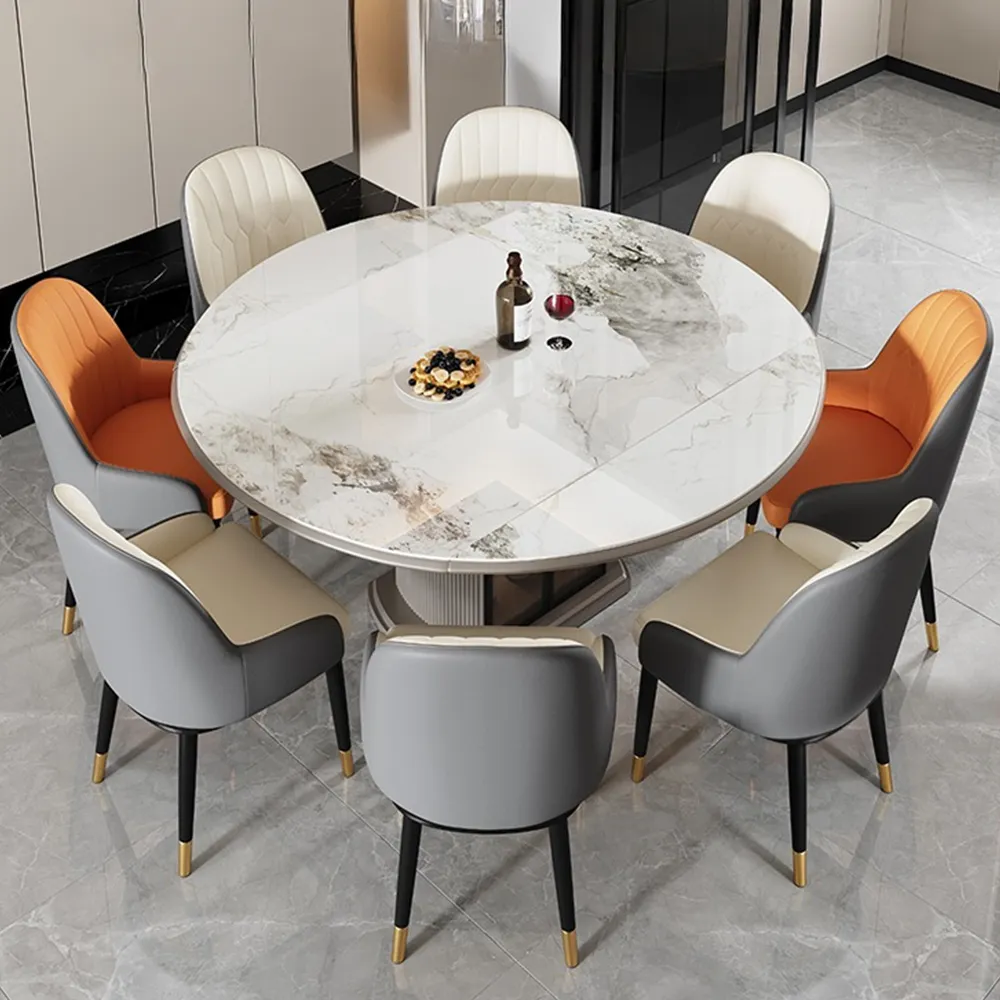
This table is ideal for compact open-plan living/dining rooms where one piece must switch from laptop station to dinner party. The 59.06″ round top extends to seat up to six, while the double-layer storage base with glass door and optional LED light hides linens, candles and board games. High-quality sintered stone keeps the surface highly scratch-, stain- and heat-resistant. One buyer notes the fast logistics and excellent customer service, summing it up as “absolutely in love with this dining table” (Michael, 10/15/2024).
Most evenings, I’m still working here ten minutes before friends arrive: laptop open, charger plugged in. Packing up takes thirty seconds—close the lid, drop it into the base cabinet, pull the extension open—and suddenly the same spot becomes a cosy table for six. Compared with similarly sized extendable rounds from other brands, you get that hidden storage plus a tough sintered-stone top, so you’re not paying extra for a separate sideboard or babying a delicate surface.
POVISON 47″ Round Dining Table with Lazy Susan — Best Small Table for Social, Family-Style Meals
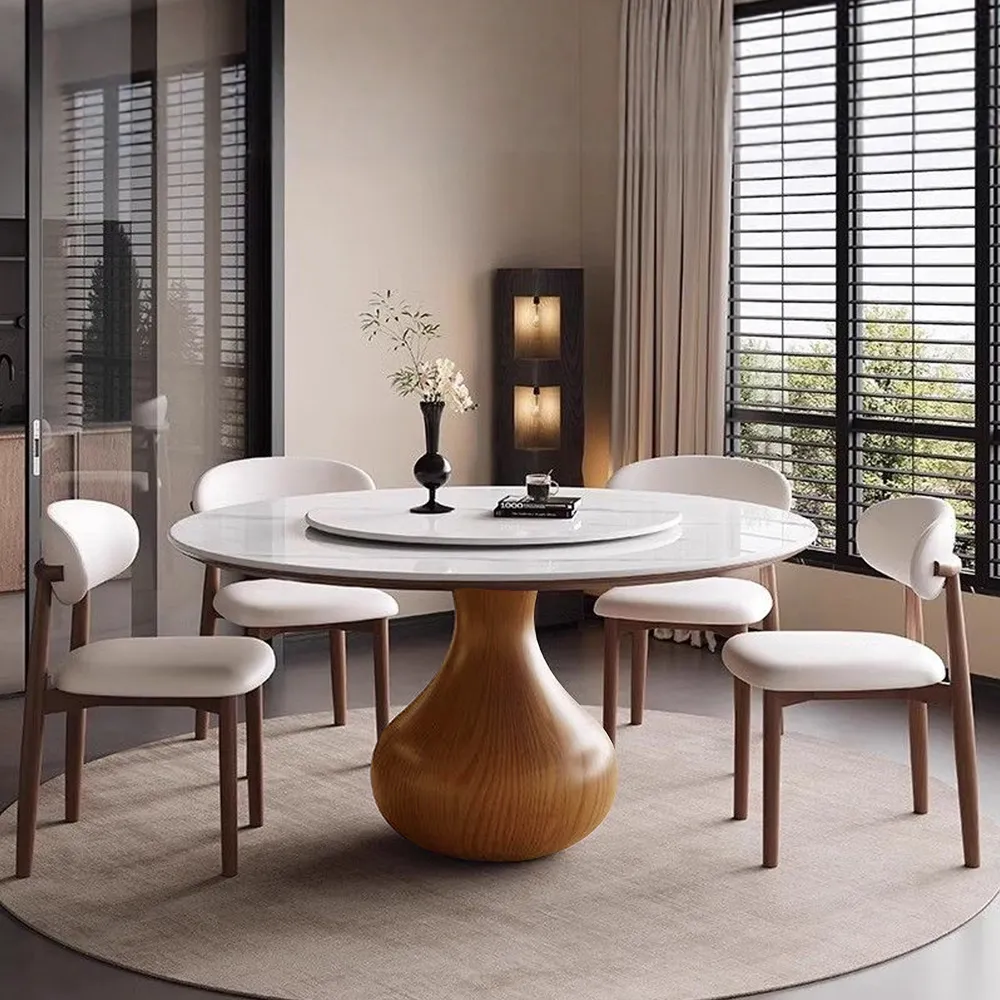
Designed for compact rooms that regularly serve family-style dishes, hot pot or tapas, this 47.24″ round table features an integrated Lazy Susan (23.62″ diameter) in glossy white sintered stone plus a sturdy wood pedestal base. The pedestal allows up to six seats in a modest room, particularly with slim chairs, and the easy-clean, stain-resistant top is ideal for saucy dishes and kids’ spills.
Reviewers consistently mention the smooth installation and neat fit of all parts, with one highlighting how quick the setup was and how well the packaging protected the top (Ann, 07/08/2025). Instead of people leaning and bumping chairs to reach shared dishes, the rotating centre keeps everyone comfortably seated, reducing traffic jams even in tight layouts.
Other Smart Tables Worth a Look
For comparison, consider a compact extendable table from a well-known modern brand such as the Article Heidi 48″–67.75″ Extendable Round Dining Table, which converts from a cosy four-seater to a six-seater and features a warm wood veneer top at a mid-range price point. A friend uses a similar extendable round in a narrow rental; on weeknights it stays small against the wall, but for Saturday dinners the leaf slides out smoothly and two extra chairs appear from the bedroom. If you love pure wood and don’t need stone or built-in storage, this style can work well—though for durability, stain resistance and integrated storage, POVISON’s sintered-stone options usually deliver stronger long-term value.
Conclusion – Small Tables, Big Experiences
A well-chosen small dining table doesn’t feel like a compromise; it makes your compact home feel intentional and calm. Measure your footprint, use the room-size and material tips above to shortlist options, and be honest about whether you’re more “everyday cosy” or “frequent host.” If you want stone-tough, small-space-aware designs, POVISON’s sintered-stone tables and storage partners are worth a close look. Even if your dining “room” is just a sunny corner by the window, the right table can still host birthday cakes, laptop marathons and late-night takeout—without ever feeling cramped.
FAQs About Small Dining Tables for Small Spaces
How Much Clearance Do I Really Need Around a Small Dining Table?
Aim for about 30–36″ (76–90 cm) between the table edge and walls or large furniture. At around 24″, people can sit but others will need to sidestep carefully behind them; at 30″, most adults can pass with a slight turn; at 36″, it feels airy and comfortable even when chairs are pulled out. Use tape on the floor to feel these differences before you buy.
Is a Round or Rectangular Table Better for My Small Room?
Round tables are usually safer in square rooms, tight walkways and homes with kids, because there are no sharp corners and circulation around the curve feels easy. Rectangular tables shine in long, narrow rooms or when pushed against a wall or built-in bench. A simple memory rule: if your room is close to square, start round; if it’s clearly longer, start rectangular or slim oval.
What’s the Smallest Table Size That Can Still Host Guests Comfortably?
For real comfort, a 30–32″ round suits two and can squeeze a third; 36–40″ round works well for four, and a 47″ round or 47–51″ oval seats four daily with room to squeeze six using slim, armless chairs and preferably a pedestal base. Use stackable, folding or nesting chairs for guests so spare seating doesn’t steal floor space the rest of the week.


[…] your main problem is simply finding furniture that fits, these small dining table ideas for limited spaces provide additional size and shape […]