 By Jenny Smith
Most of us now answer emails, doom-scroll, and binge entire seasons from the sofa, not just from a desk. Yet we still underestimate how much our seating shapes our spine. Not every recliner is a friend to your back; a saggy seat can be as bad as a bad office chair. A well-designed reclining leather sofa can actually support a healthier spine—if you know what to look for. In this guide, we’ll unpack ergonomic principles, how recliners help, key features to shop for, who benefits most, a few carefully chosen sofa picks, and simple habits to keep both your couch time and your spine happy.
Quick Check: A reclining leather sofa supports your back only when the seat is firm enough, the lumbar area makes contact, the headrest fits your height, and the recline angle lets you change positions without sinking. A sofa that is too soft can make slouching worse.
Table of Contents
What Makes a Sofa “Ergonomic” in 2026?
Neutral Spine & the Natural S-Curve
An ergonomic sofa starts with one simple goal: help you keep a neutral spine. Your back has a natural S-curve that spreads load across discs and joints; losing that curve for hours can irritate tissues and nerves. Low back pain is already the leading cause of disability worldwide, affecting about 619 million people in 2020 and projected to reach 843 million by 2050 (World Health Organization). That’s why ergonomics experts stress “neutral” sitting, where your head, ribcage, and pelvis stay roughly stacked instead of collapsing into a C-shape. Guidance from occupational bodies like OSHA frames neutral posture as the best way to reduce stress on muscles and joints, not just at desks but in any seated environment. An ergonomic sofa mimics that logic with a backrest that supports your lumbar curve, a seat that doesn’t pitch you forward or let you sink, and enough firmness that your spine rests, rather than constantly correcting itself.
Dynamic Support vs. One Rigid Position
The other hallmark of an ergonomic design is dynamic support. Static, one-angle sofas force your body to adapt to the furniture, often leading to rounded shoulders, sliding hips, and isolated pressure points. Research on seating shows that changing backrest inclination and seat height can significantly improve pressure distribution and comfort, especially for older adults. Studies of reclined sitting also suggest that gentle reclining reduces load on the lumbar spine and paraspinal muscles compared with upright postures, helping discs handle compression better (Herman Miller summary of Andersson et al.). An ergonomic reclining sofa uses adjustable backs, footrests, and sometimes headrests so you can shift positions while keeping your pelvis, lumbar curve, and neck supported. Instead of one “correct” posture, you get a healthy range of supported postures that follow you through reading, scrolling, napping, or chatting.
How a Reclining Leather Sofa Helps Your Back
Pressure Relief for Lower Back & Hips
A good reclining leather sofa can offload the areas that complain first: your lower back and hips. Biomechanical research has shown that reclining compared with upright sitting reduces compressive forces on the lumbar spine and surrounding muscles, helping intervertebral discs handle load more safely. When you lean back to roughly 110°–120° and raise your legs, your weight spreads across the seat and backrest instead of concentrating at the base of your spine. A well-designed lumbar support recliner also fills the natural curve of your lower back so muscles don’t have to brace constantly just to keep you upright. That combination—gentle recline plus consistent lumbar contact—is exactly what many clinical guidelines aim for when they encourage supported movement rather than stiff, upright stillness in people living with chronic low back pain.
Support for Neck, Shoulders & Long Binge-Watch Sessions
Reclining can also be kinder to your upper back and neck. When you sit bolt upright and crane toward a screen, the weight of your head shifts forward, increasing strain on the cervical spine and upper-back muscles. Ergonomic workstation advice consistently recommends keeping the head roughly over the torso in a relaxed, neutral position to minimize that load. (Occupational Safety and Health Administration) A quality ergonomic reclining sofa helps you achieve this away from the desk: you lean back slightly, adjust the headrest so your gaze meets the TV or tablet, and let the backrest support your shoulder blades instead of hovering in mid-air. In practice, that might look like watching two episodes in a row and realizing your neck still feels aligned rather than tight—a small but meaningful sign that the sofa is working with your spine instead of against it.
Key Ergonomic Features to Look For in a Reclining Leather Sofa
The comfort and health value of a reclining leather sofa depends on a few key ergonomic details.
Must-Have Features Checklist
First, look at recline range. A useful range runs from about 95° for upright chatting to 135° for relaxed reading, with the ability to go a bit farther—around 145°—for true lounging. Fine, smooth steps matter more than an extreme angle. Next, check for dedicated lumbar support: either a built-in lumbar pad or a sculpted back that stays in contact with your lower spine at every angle. Seat depth should let you sit back without your feet dangling—most people do well when they can keep knees at roughly 90° with their back fully touching the backrest. Height should let average users rest both feet flat on the floor. Add an adjustable headrest for shared spaces, denser cushions that resist sagging, and leather that fits your climate and habits—top-grain for long-term patina, or eco/performance leather if you prioritize scratch resistance and easy cleaning.
Comfort Details That Matter in Daily Use
Once the basics are right, small details decide whether you feel good at the two-hour mark. Arms should sit high and wide enough that your forearms can relax without forcing your shoulders to shrug or slump. Seams and welts shouldn’t land exactly under your thighs or shoulder blades, where they can create pressure points over time. On power models, smooth, quiet motors are essential if you share a space or often change position at night.
Real-Life Scenarios – Who Benefits Most from Ergonomic Reclining Sofas?
Desk by Day, Recliner by Night – Office Workers & WFH Creatives
If you spend your day hunched over a laptop or jumping between video calls, your spine is already tired before you even reach the living room. Adding 15–20 minutes of light recline in an ergonomic reclining sofa can help your back “reset.” Think slight backward tilt, calves supported on the footrest, and a cushion or built-in lumbar pad resting into the small of your back. Many people pair this with a few gentle hip flexor stretches or slow breathing—basically a mini decompression ritual after work. Used this way, your recliner becomes a recovery tool, not just another place to slouch with your phone.
Older Adults, Chronic Back Discomfort & Recovery
For older adults or anyone living with chronic back discomfort, the way a chair supports sit-to-stand transitions is just as important as how it feels while you’re seated. Research on aged-care seating shows that slightly higher seats with supportive armrests make it easier and safer for seniors to get up independently, while low, sloping, or overly soft chairs increase the effort and difficulty of rising. (Applied Ergonomics) Studies on chair design also find that lower seat heights and greater recline angle significantly increase the time and body motion needed for older adults to stand, reinforcing the value of firm front edges and stable arms for leverage. (Chair Design Affects How Older Adults Rise from a Chair) Smooth power mechanisms on recliners can further reduce strain during painful periods or after surgery, but even then, a sofa is only a comfort aid. For chronic or significant spinal problems, the World Health Organization’s guidelines on chronic low back pain stress that evidence-based clinical care—not furniture—should guide treatment decisions. (World Health Organization, 2023 guideline)
POVISON Picks – Reclining Sofas That Love Your Back
Melody Dual Power Reclining Loveseat — Top-Grain Leather for Compact Living Rooms
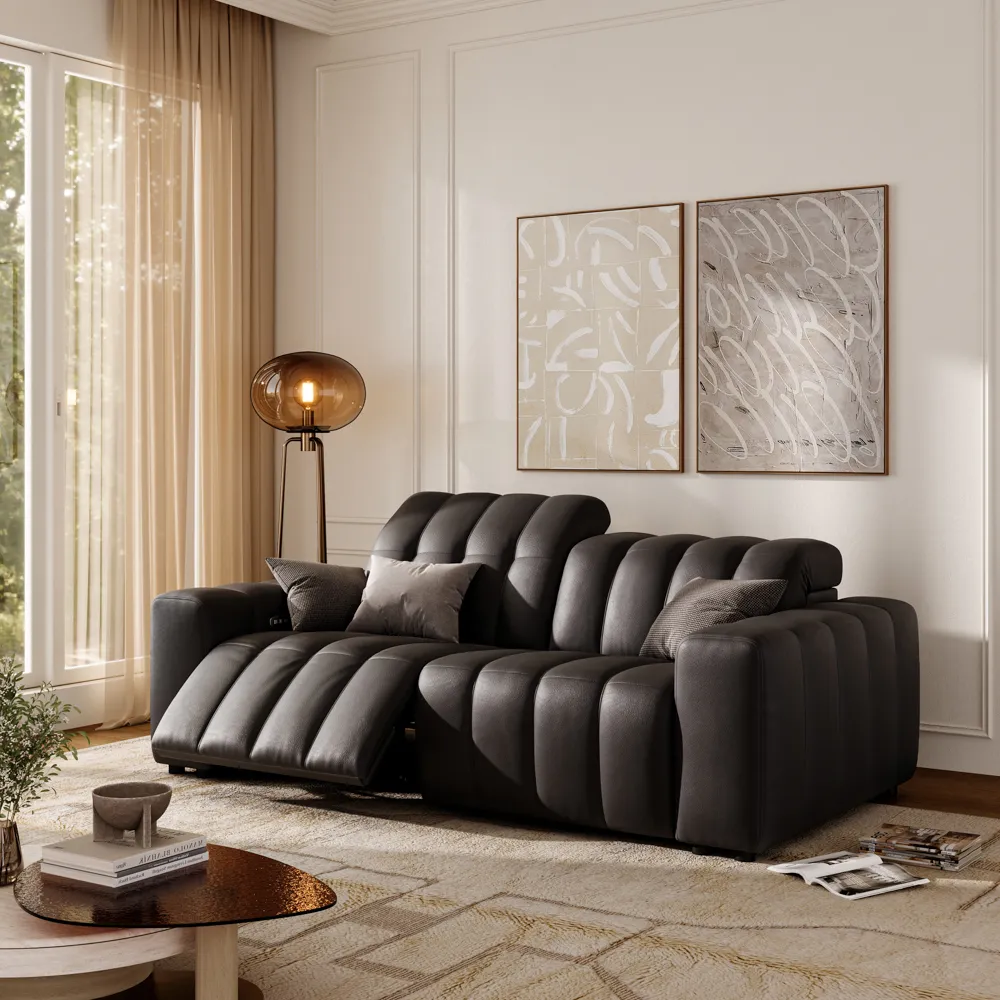
Price: about 3,599
Best For: Smaller living rooms or apartments where you want true top-grain leather, dual-motor comfort, and a neat, wall-hugging footprint.
The Melody uses genuine top-grain leather, which tends to age gracefully, absorbing small scuffs into a richer patina instead of peeling or cracking the way some cheaper leathers do. Dual power allows the headrest and footrest to move independently, so you can dial in a “zero-pressure” neck angle for TV or tablet use while keeping your hips mildly reclined. The wall-hugger design lets you place it close to the wall and still recline fully, which is a big win for compact spaces.
Compared with many mid-market leather recliners from big-box brands, Melody leans harder into long-term structure: dense foam, a sturdy frame, and a focus on keeping the seat from sagging over time rather than chasing ultra-plush first impressions. That means you get a sofa that feels supportive on day one and still holds your spine well years later, not just a pretty piece that flattens after the first holiday season. A recent buyer mentioned how “solid and supportive” it felt while still looking refined enough for guests. (Jordan, 2024 review)
POVISON Nestra Dual Power Reclining Loveseat with Charging Ports — Best Waterproof Velvet Wall-Hugger Recliner for Busy Living Rooms
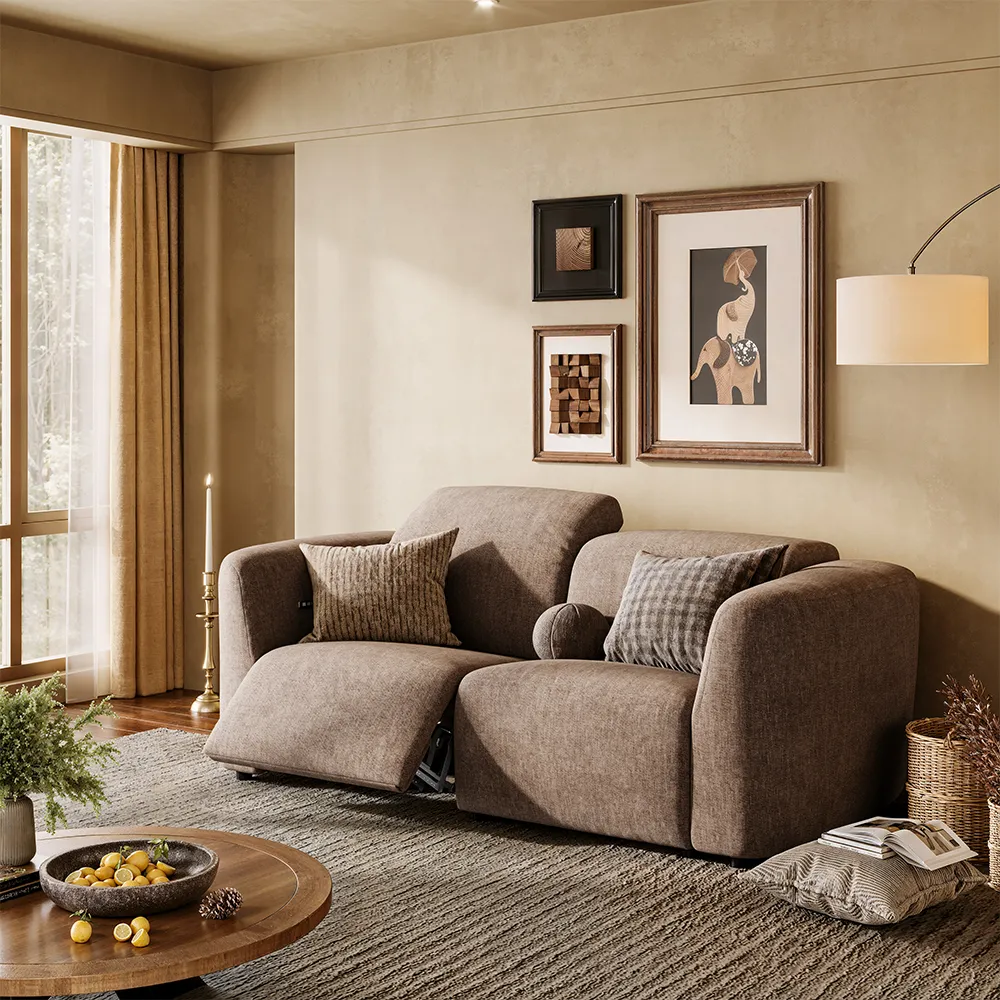
Price Range:
From about 2,784–2,999 (with periodic coupon pricing at the lower end as of early 2026).
Best For:
Households that want a deep, cozy dual-power recliner that can handle pets, snacks, and all-day lounging, without eating up floor space behind the sofa.
The Nestra loveseat is built for “sink-in” comfort that still respects your spine. High-resilience foam and a 90°–145° dual-power recline range let you move from upright chatting to a gently reclined, legs-up position that keeps your lower back in contact with the backrest instead of sliding forward. Performance waterproof velvet and removable cushion covers mean you can actually use it daily—kids, pets, snacks and all—without worrying that stains or odors will shorten its life. The French wall-hugger mechanism is especially useful for smaller rooms, giving you full-body support and foot-up relief without needing a huge gap behind the sofa, while dual USB ports on each side make it easy to unwind and recharge at the same time.
Buyer review :
One reviewer shares that the loveseat made their work-from-home corner feel both sturdy and comfortable, with breathable fabric and careful packaging that arrived damage-free, calling it “a real mood booster” in daily use (Atlasry, 01/15/2026).
POVISON Elara Dual Power Reclining Loveseat — Best High-Leg Dual Power Recliner for Easy Cleaning & Zero-Gravity Lounge
Price Range:
Around 2,639–2,799 for the loveseat configuration, depending on current coupon promotions.
Best For:
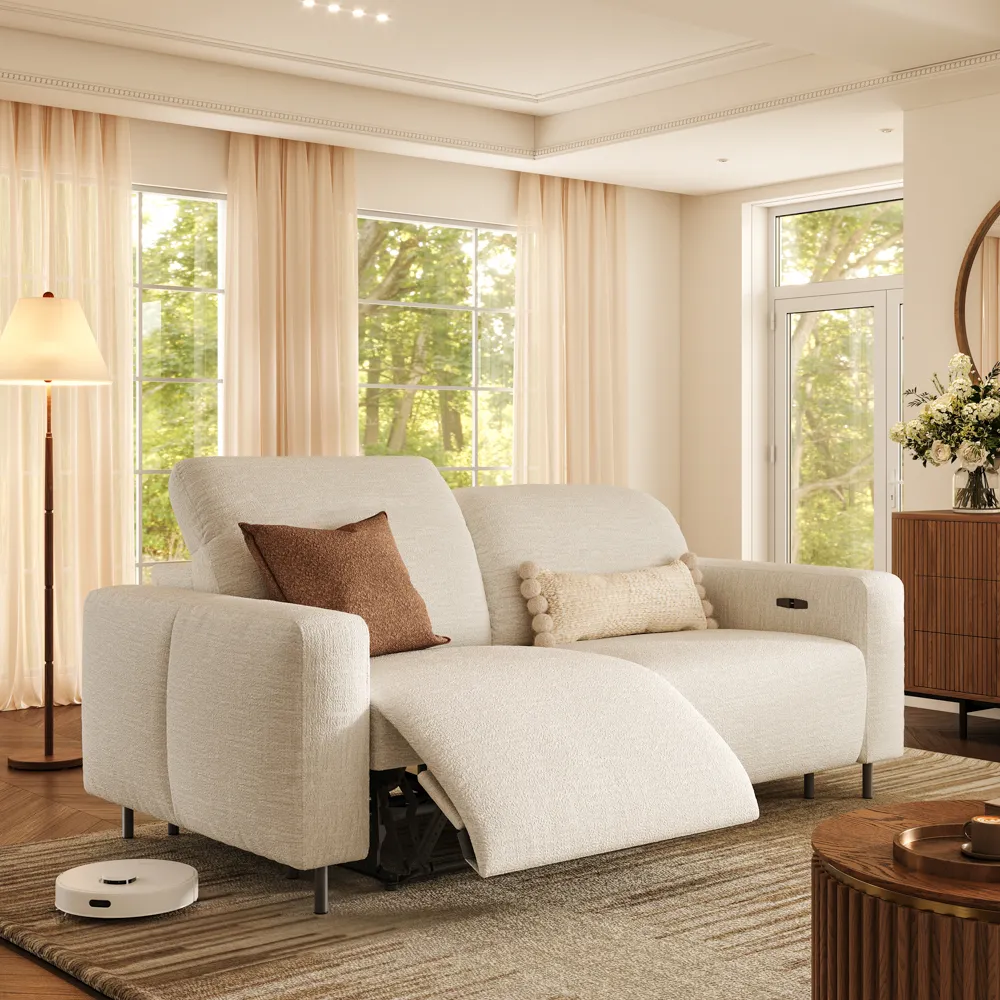
Style-driven homeowners who want a light, modern look, easy floor access for cleaning, and zero-gravity comfort without a bulky, “traditional recliner” silhouette.
Elara is for people who want a living room that looks light but still feels kind to their back. The high-leg frame and compact footprint keep the space visually open, while the dual-motor system lets you fine-tune headrest and footrest separately so your neck, shoulders, and lumbar curve all stay supported in different recline angles. Performance chenille offers the soft, matte look of velvet with better stain and odor resistance, which helps cushions maintain their shape and support longer. The wall-hugger design and 26″–42″ adjustable seat depth make it easier to find a position where your feet rest comfortably, your hips don’t slide forward, and your spine can relax into a neutral, low-stress posture even in a compact apartment.
Buyer review :
A customer notes that the sofa “scores high in the style department,” arrives well-padded and protected, and is ready to use without issues, calling it a smart buy that upgrades the room’s look (Megan, 10/17/2025).
Wade Logan® Cabrero 87” Zero Gravity Leather Power Reclining Sofa — Best Top-Grain Zero-Gravity Recliner for Tech-Lovers
Price:
About 2,559.99 at a 55% discount from the original 5,699.99 (Wayfair pricing, February 2026).
Best For:
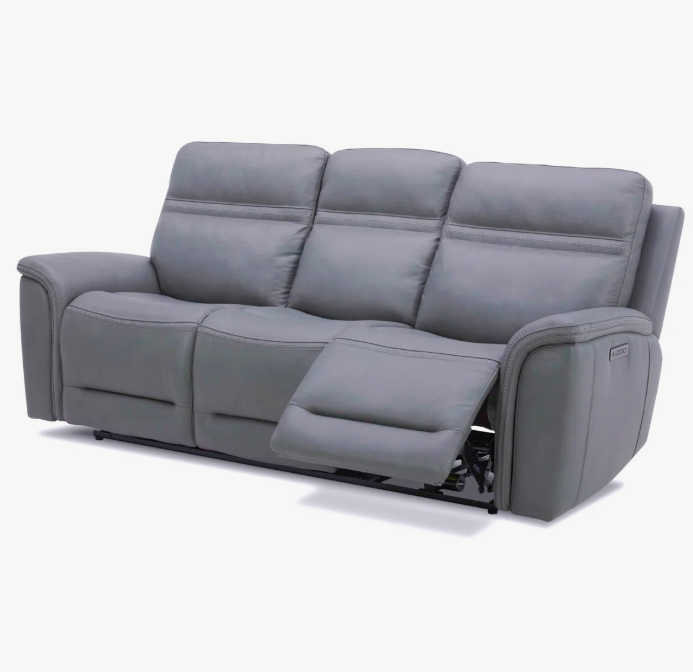
Shoppers who specifically want semi-aniline top-grain leather, triple-power zero-gravity recline, and built-in lumbar adjustment in a sleeker, more “theater-style” reclining leather sofa.
Highlights:
- Semi-aniline top-grain leather in high-impact seating zones
- Triple-power mechanism: recline, headrest, and powered lumbar support
- Zero-gravity position designed to support a neutral spine and improve circulation
- USB-A & USB-C charging ports at each end of the sofa
- 5.0 rating from 7 customer reviews and Wayfair Verified quality check
The Cabrero is built like a compact home-theater seat you can drop into a living room. Semi-aniline top-grain leather gives it a smooth, broken-in feel, while the triple-power system lets you dial in recline, headrest angle, and lumbar support independently. In the full zero-gravity position, your hips and knees float closer to heart level, which the product description notes can help decompress the spine and take pressure off the neck and shoulders. A full pad-over chaise provides continuous leg support, and USB-A/USB-C ports make it easy to park with your phone or game controller plugged in.
Henry Zero Gravity Power Headrest Reclining Sofa with Power Lumbar — A Zero-Gravity Alternative
Price: about 3,299.99 at Bernie & Phyl’s Furniture.
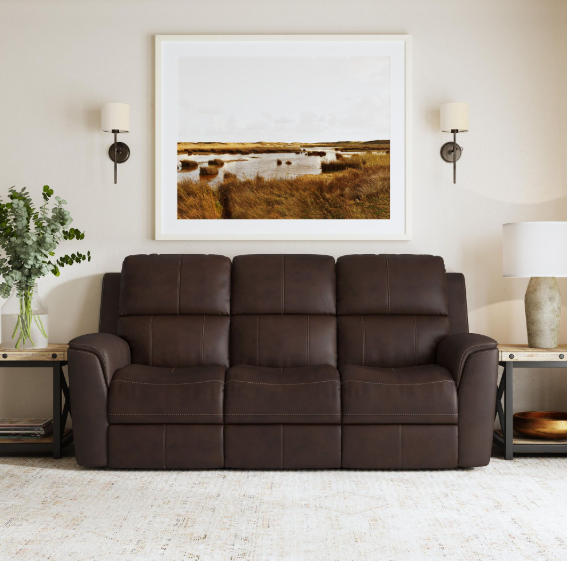
Best For: Shoppers who love classic zero-gravity recliners and prefer a traditional American-style leather look.
The Henry sofa combines top-grain leather with power headrest, power lumbar, and a zero-gravity position that aims to reduce body pressure by elevating your legs and slightly opening your hip angle. Underneath, Flexsteel’s dual-flex spring system focuses on long-term seat resilience, and USB ports in the controls keep phones and tablets charged. In a real-world scenario, you could picture someone recovering from a long workday, dialing in the lumbar pad until their lower back “unloads,” then gliding into zero-gravity for a 20-minute recharge nap.
If you’re deeply attached to this specific aesthetic or want to buy from a regional showroom, Henry is a solid option. But if you care more about modular layouts, performance fabrics that shrug off kids and pets, or maximizing features for the price, Povison’s power recliners and sofa beds often deliver equal or better everyday value in those areas.
How to Use Your Reclining Sofa Without Hurting Your Back
Healthy Reclining Habits for Everyday Use
Even the most ergonomic recliner can cause trouble if you use it like a hammock. Aim for a light recline—around 110°–120°—for reading, chatting, or watching TV, rather than spending hours fully flat. Let your feet rest on the built-in footrest or an ottoman instead of leaving them dangling, which can strain your knees and lower back. Try not to camp out in the same twisted, one-sided position with your legs thrown over an arm for an entire movie. And every 30–45 minutes, stand up, walk around, or do a quick stretch, especially if you already spend the workday sitting.
Caring for Leather & Cushions to Maintain Support
Support fades fast once cushions collapse. For leather and eco-leather sofas, dust regularly with a soft cloth, wipe spills as soon as they happen, and keep the sofa out of harsh, direct sunlight to avoid drying and cracking. Skip harsh chemicals; a mild cleaner designed for leather is usually enough. Performance leathers and fabrics often only need a damp cloth for most marks. If your sofa has loose or flip-able cushions, rotate and swap them from time to time so the same spot doesn’t take all the abuse. For more detailed care routines, Povison’s reclining sofa comfort guide and their fabric sofa bed cleaning guide walk through specific stain and maintenance scenarios.
Conclusion
With the right design and habits, an ergonomic reclining leather sofa can be a genuine ally for your spine instead of a secret saboteur. Look for thoughtful ergonomics—lumbar support, sensible seat depth and height, adjustable headrests and footrests—rather than chasing maximum squish. Choose materials and layouts that match how you really live, then use your recliner as a place to reset, not just another spot to slouch for hours. When you pair those choices with Povison’s focus on “ready to live in” furniture, you end up with a living room that looks beautiful, feels relaxing, and quietly cares for your back every single day.
FAQs – Reclining Leather Sofas & Back Health
Are reclining sofas bad for your back long-term?
Not if they’re well designed and used in moderation. A supportive recliner that maintains your lumbar curve and lets you adjust angles can actually reduce disc and joint pressure. Problems arise when cushions sag, the seat is too deep, or you spend hours fully slumped without breaks. If you have existing spinal conditions, always check with a medical professional before relying on any recliner for long daily use.
Is a reclining leather sofa or a fabric sofa better for back pain?
Neither leather nor fabric automatically wins for back pain. What matters most is structure: lumbar support, seat depth and height, and cushion density. Leather can feel cooler or firmer, while some fabrics feel softer and warmer, so comfort preferences also play a role. Focus on ergonomics first, then choose the cover material that suits your climate, cleaning habits, and style, and discuss specifics with a medical professional if you have diagnosed back issues.
Do I still need an ergonomic office chair if I have an ergonomic reclining sofa?
Yes. Reclining sofas are great for recovery and casual work sessions, but they’re not designed for full-day typing and focused desk tasks. An ergonomic office chair supports upright posture at a work surface, while an ergonomic reclining sofa supports more relaxed, semi-reclined positions. Use the sofa for breaks, reading, and light laptop use; rely on a proper chair for long work blocks. For chronic back pain or other conditions, talk with a medical professional about your total daily sitting setup.
What’s the best recline angle for my lower back?
Many people find 110°–120° (slightly tilted back with feet supported) ideal for reducing load on the lumbar discs while staying alert. Deeper angles up to around 135° can feel great for napping or long movies, as long as your lower back remains in contact with the backrest. Extremely flat or slumped positions are best kept short. Because body types and conditions differ, treat these angles as starting points and ask a medical professional if you’re dealing with chronic or severe pain.


