 By Charles
Sofa vs loveseat vs couch: when your living room is doing double-duty as a playroom, dog park, and occasional home office, the difference actually matters. You’re not just picking a seat, you’re choosing how your family flops, snacks, and recovers from long days.
You want something that fits your space, survives sticky fingers and pet hair, and doesn’t make the room feel cramped. Let’s break down what each piece really does best, so you can stop scrolling and finally choose the right setup for your home and your sanity.
Sofa vs. Loveseat vs. Couch: Which One Fits Your Busy Home?
When you’re weighing sofa vs loveseat vs couch, think less about fancy design terms and more about durability, footprint, and daily use. The right piece is the one that fits your room, your people, and your pets without constant worrying about stains or wobble.
How Do Sofas Differ in Durability for Parents with Kids?
If you’ve got two or more kids, a full-size sofa is usually your workhorse. Most standard sofas run 80–90 inches long, with deeper seats that handle climbing, jumping, and movie marathons.
Look for:
- Solid-wood frames instead of particle board
- Performance fabric that resists stains and claws
- Seat cushions at least 5–6 inches thick
Brands like Povison focus on durable fabrics and solid, fully assembled frames. This means you skip the confusing instructions today and the sagging cushions two years from now—a win for both your sanity and your wallet. For more guidance on choosing the right option, explore the best kid and pet-friendly sofas that balance durability with family needs.
How Do Loveseats Save Space for Pet Owners?
Loveseats shine when you have pets but not much square footage. They typically measure 52–65 inches wide, which means you still get real lounging space without blocking walkways.
If your dog claims half the seating, a loveseat near a window or by the TV gives you one “clean” spot to sit while your pet sprawls. A compact, solid-wood loveseat is also easier to shift for vacuuming all that fur.
How Do Couches Offer Versatility in Daily Use?
You’ll hear “sofa” and “couch” used interchangeably, but in real life people often use couch to mean something more relaxed and multipurpose. Think napping, gaming, and kids piling on with snacks.
A medium-sized couch around 70–78 inches acts as an anchor. For maximum flexibility, Povison’s modular sofas allow you to add sections as your family grows, turning a potential layout headache into a simple adjustment.
What Sizes Fit Best in Small Living Rooms?
In small living rooms, every inch of length, depth, and walkway clearance matters. You want enough seating without turning the room into an obstacle course of knees, toys, and dog bones.
How Does a 84-Inch Sofa Compare to a 60-Inch Loveseat?
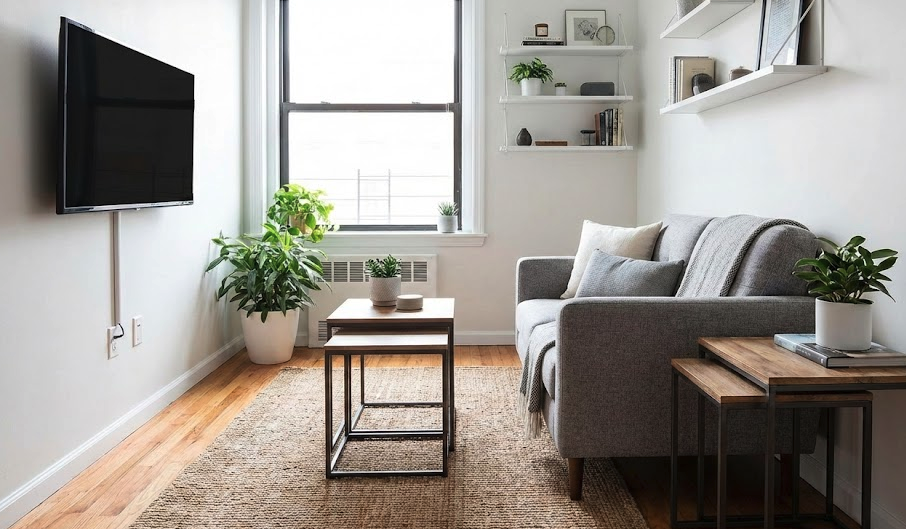
An 84-inch sofa gives you legit three-person seating, but in a room under 180 square feet, it can dominate the wall and shrink your walking paths.
A 60-inch loveseat:
- Leaves 12–18 inches more space on each side for side tables or baskets
- Keeps at least 30–36 inches of walkway between coffee table and TV
- Still seats two adults or one adult plus one kid comfortably
If your living room is also a kids’ play zone, that extra floor space wins.
How Does a 72-Inch Couch Stack Up Against Both?
A 72-inch couch is the middle ground. It usually seats 2 adults and a child, but doesn’t overwhelm smaller rooms.
Compared to an 84-inch sofa:
- Saves roughly 1 foot of wall space
Compared to a 60-inch loveseat:
- Adds one more comfortable perch for guests
In tight layouts, pairing a 72-inch couch with a compact accent chair often works better than forcing in a giant sofa.
Is a 50-Inch Loveseat Worth $200 More for Compact Spaces?
If you’re eyeing a 50-inch loveseat that costs $200 more than a basic option, the answer depends on what you gain. Pay attention to:
- Depth (under 35 inches keeps it from jutting into the room)
- Frame (solid wood lasts longer than metal tubes)
- Fabric (stain-resistant = fewer replacements)
Spending $200 more now can easily save you $400–$600 over 5–7 years if it means you’re not replacing a saggy, stained seat every couple of moves.
When Should Busy Homeowners Choose a Sofa?
Choose a full sofa when your living room is the main gathering spot and you want one solid piece that anchors the room and handles daily chaos.

How Does a Sofa Handle Daily Wear from 3 Kids?
A good sofa spreads the impact of three kids over a longer frame and thicker cushions. With 80–90 inches of length, no one is hanging off the edge.
To survive the rough stuff, look for:
- High-density foam cushions (hold shape longer)
- Removable cushion covers (washable = lifesaver)
- Tight-back designs if your kids treat pillows like projectiles
A quality sofa in a performance fabric can easily last 8–10 years of family use.
Dog Owners Regret Not Buying This Fabric: Sofa vs. Loveseat Durability
If you have dogs (especially big ones), fabric choice matters more than size. Whether you go sofa or loveseat, prioritize:
- Tightly woven fabric (less snagging from claws)
- Performance upholstery that resists stains and odors
- Medium-tone colors that hide fur better
On a sofa, a dog tends to pick one end as “their” spot, so only part of the seat ages faster. On a loveseat, the wear is more concentrated. For heavy pet use, a full sofa with performance fabric usually wins.
If your dog thinks everything is a bed, look for durable sectionals in leather or performance fabric that wipe clean and resist claws.
Warning: Why You Should Avoid These Sofas for High-Traffic Areas
If your family room is a highway of kids, pets, and bags, skip:
- Sofas with delicate linen-only fabric (stains fast)
- Low-back designs that don’t support long sitting
- Super slim legs that wobble on thick rugs
You want a sofa with sturdy legs, a stable frame, and fabric that forgives spills. Think “daily uniform,” not “dry-clean-only outfit.” If you’re curious about upcoming couch trends for 2025, consider how new designs balance style with family-friendly durability.
When Is a Loveseat Ideal for Quick Family Seating?
A loveseat is your secret weapon when you want real seating in a smaller room without giving up breathing room, toy storage, or a dog bed in the corner.
How Does a Loveseat Fit in Rooms Under 150 Square Feet?
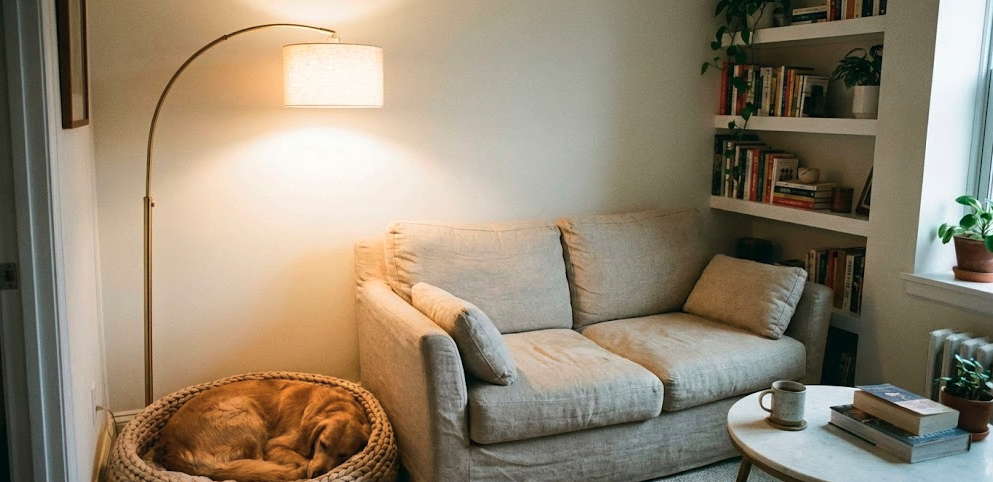
In rooms under 150 square feet, a loveseat often works better than a full sofa. A 55–60 inch loveseat along one wall leaves:
- Room for a 24-inch side table
- At least 30 inches of walking space in front
- Enough area for a small rug and toy basket
You get a real seating zone without turning the room into a maze.
Why Choose a Loveseat for Couples with 2 Pets?
If it’s mostly you, your partner, and two pets, a loveseat plus a comfy chair can be more practical than a giant sofa.
A loveseat gives you:
- Cozy seating for two humans
- Space for a pet bed or crate nearby
- Easier cleaning around and under the frame
Is a Loveseat Worth $300 Less Than a Full Sofa?
If a loveseat is $300 less than a comparable sofa, ask how many regular sitters you truly have. For a family of three or fewer in a small space, that $300 can go toward:
- Performance fabric upgrades
- A better-quality frame
- A storage ottoman for toys or blankets
If you rarely host big groups, the loveseat’s savings usually beat the extra seating you might need twice a year.
How Can You Mix Sofas and Loveseats in Busy Households?
Mixing a sofa and loveseat gives you flexible seating: kids on one, adults on the other, pets wherever they sneak in. The goal is flow, not a furniture showroom.
How Do I Arrange 1 Sofa and 2 Loveseats for Flow?
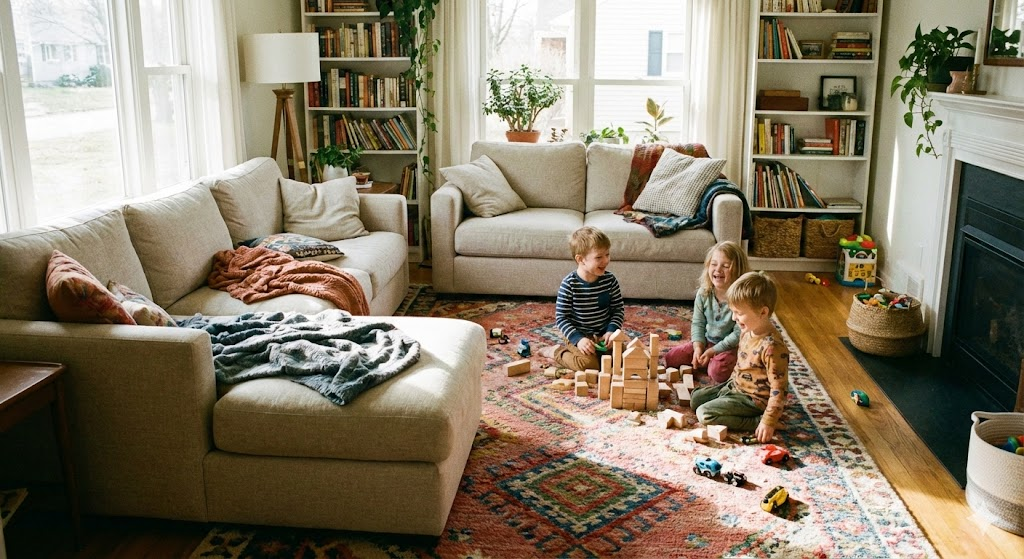
For a larger family room, you can arrange 1 sofa + 2 loveseats like this:
- Place the sofa facing the TV
- Put one loveseat perpendicular to create an L-shape
- Put the second loveseat opposite the sofa to form a U-shape
Leave 30–36 inches for walkways. This layout gives you seating for 6–7 people without anyone dragging in extra chairs.
5 Best Furniture Layouts for Parents & Pets (Tested & Approved)
These layouts tend to work best in real, messy homes:
- Sofa + loveseat L-shape for corner rooms
- Sofa facing TV, loveseat under window for narrow rooms
- Loveseat + 2 chairs for very small spaces
- Sectional + loveseat in open plans
- Two loveseats facing each other for conversation-focused rooms
If you need more layout help, check guides on small living room furniture arrangement for additional strategies and tips.
Durability vs. Cost: How to Get the Best Value for Your Family Room
To balance durability and cost, focus on the piece that gets the most use. For most families, that’s the main sofa.
Spend more on:
- Solid-wood frame
- Performance or pet-friendly fabric
- Comfortable seat depth (around 22–24 inches)
Save on the secondary loveseat by choosing a simpler style. Over 8–10 years, investing in one high-quality sofa usually costs less than replacing two cheap couches that give up after a couple of rough winters.
Sofa vs Loveseat vs Couch: Frequently Asked Questions
What is the main difference between a sofa, loveseat, and couch for a busy family room?
Functionally, all three are upholstered seating, but size and use differ. Sofas are longest (around 80–90 inches) and best for main family seating. Loveseats are shorter (about 52–65 inches) and great for small rooms. “Couch” is often used more casually for medium-sized, relaxed, multipurpose seating.
How do I choose between a sofa vs loveseat vs couch for a small living room?
In small living rooms, protect walkways first. A 55–60 inch loveseat often works best under 150 square feet, leaving 30–36 inches of clearance. A 72-inch couch is a strong middle-ground option if you regularly seat three people but don’t want an 84-inch sofa dominating the wall.
Is it better to buy one large sofa or a loveseat plus chairs for compact spaces?
For compact spaces, a loveseat plus one or two accent chairs is often more flexible than a giant sofa. You maintain clear traffic paths, can rearrange pieces as needs change, and still seat 3–4 people. This setup also leaves room for toy storage, a dog bed, or a small ottoman.
Which is more durable for homes with kids and pets: a sofa or loveseat?
Durability depends more on construction and fabric than size. A full sofa spreads wear across a longer frame, so pet and kid impact is less concentrated. Choose solid-wood frames, high-density foam, and performance or pet-friendly fabric. On smaller loveseats, the same traffic is focused on fewer cushions, so they may age faster.
How can I mix a sofa and loveseat for the best layout in a family room?
Combine a sofa and loveseat in an L- or U-shape. Place the sofa facing the TV, put the loveseat perpendicular or opposite to define a seating zone, and leave 30–36 inches for walkways. This mix gives seating for 5–7 people while keeping the room open for play and pets.
Past Review:


