 By Charles
You want the most comfortable sleeper sofa you can find, but you don’t have time for buyer’s remorse or 2 a.m. apologies to a guest with a sore back. Between work, kids, pets, and the mystery stain that just appeared on the rug, you need a sofa bed that actually sleeps like a real bed, and survives real life.
The problem? Almost every product page claims “hotel-level comfort” and “easy setup.” In reality, half of them feel like camping on a metal grate.
That’s where a simple comfort checklist (and a bit of translation from marketing-speak to real-world use) can save you a ton of time, money, and back pain.
Why Most “Comfortable” Claims Are Misleading
Marketing vs Real-World Comfort
When you’re scrolling at 11 p.m., everything looks comfortable. Wide cushions. Fluffy pillows. Phrases like “luxury foam” and “ergonomic support.” But comfort on a screen and comfort at 2 a.m. are two very different things.
Here’s what marketing usually doesn’t tell you:
- Mattress thickness is often 3–4″, fine for a kid, not great for a full-grown adult.
- Many sleeper mechanisms still have a metal bar under the hip area. If the mattress is thin, you feel that bar. All. Night.
- Some “memory foam” is really just cheap polyurethane foam with a fancy label, which compresses fast and doesn’t bounce back.
Real comfort is about how the sleeper feels after a whole night, not five minutes of sitting in the showroom. If you’ve ever woken up with your spine shaped like a question mark on a sofa bed, you already know the difference.
A better way to shop is to ignore the dreamy adjectives and run every contender through a clear checklist. Once you do that, the truly comfortable options jump out, and the pretenders fall away fast.
The 10-Point Comfort Checklist
Use this as your quick test to separate the most comfortable sleeper sofa options from the “never again” ones.
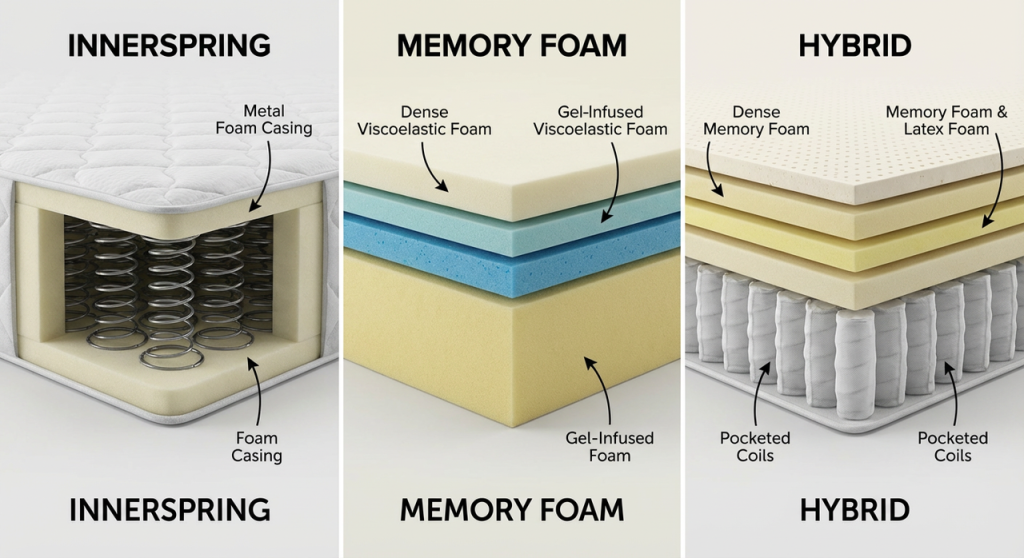
1. Mattress Type (Innerspring vs Memory Foam vs Hybrid)
- Innerspring: Bouncier feel, better airflow, but can feel lumpy if coils are cheap.
- Memory foam: Great pressure relief, less motion transfer, but can trap heat.
- Hybrid: A mix of coils and foam. Usually your best bet for adults if the quality is decent.
Look for real specs: density (for foam) or coil count (for innerspring). If the listing is vague, that’s a red flag.
2. Mattress Thickness (5″ Minimum Rule)
Anything under 5 inches is for light or occasional guests only. For regular use or heavier adults, aim for 5–7″. More thickness means less chance you’ll feel the frame or bar underneath.
If you want other sturdy pieces that can handle real family life, you might also like to check out other kid-proof tables on your favorite furniture site.
3. Seat-to-Sleep Tradeoff
The softer and deeper the seat, the more likely the mattress underneath is thinner or more compact. You’re always trading between:
- Ultra-plush sofa vs
- Fully supportive bed
Decide what matters more: nightly Netflix comfort or a truly good night’s sleep for guests.
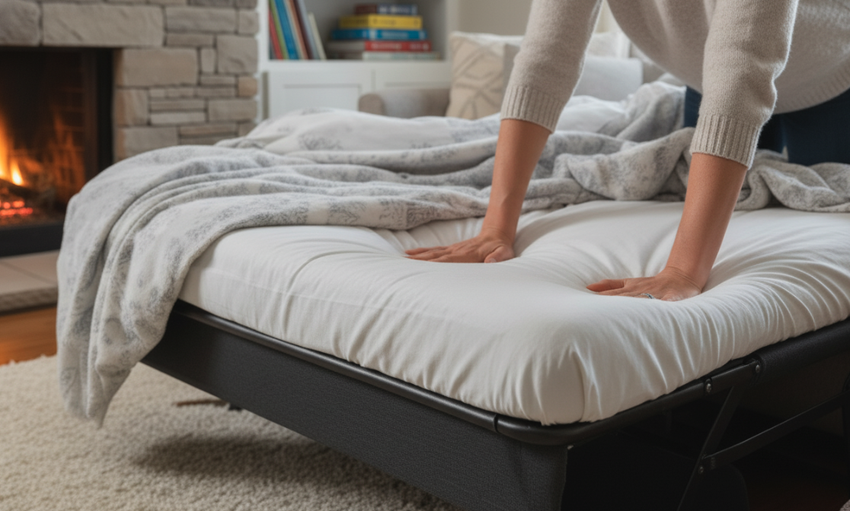
4. Frame Bar Feel Test
If you can visit a showroom, sit on the sofa, then lean back and press your hand into the seat where your hips would land when it’s a bed.
Shopping online? Read reviews that mention “bar”, “frame”, or “hip discomfort.” Those keywords tell you a lot.
5. Mechanism Noise Level
A sleeper that squeaks or clanks every time you fold it out isn’t just annoying, it wakes up whoever’s already lying down. Look for mentions of smooth opening and quiet mechanism in reviews.
6. Edge Support for Sitting
You and your guests will sit on the edge to put on socks or grab a charger. If the edge collapses, that’s a comfort and durability problem.
You want:
- Minimal sag when sitting on the edge
- A frame that feels solid, not bendy
7. Cushion Recovery Speed
After a movie night, do the sofa cushions bounce back or stay crushed?
Firmer, higher-density cushions:
- Hold their shape longer
- Make it easier to sit and stand (huge if your parents use the sleeper)
8. Weight Capacity & Sag Prevention
Check the stated weight limit. For a full or queen sleeper, you want at least 500–600 lbs total capacity. Anything less, and you risk early sagging.
9. Heat Retention (Foam Types)
If you or your guests sleep warm, look for:
- Gel-infused foam or
- Open-cell foam
Both breathe better than basic memory foam.
If heat is a big issue for your family, the same thinking applies when you’re choosing pet-friendly solid wood furniture that doesn’t trap odors and feels good year-round.
10. Setup Effort (One-Person Test)
You should be able to convert the sofa to a bed one-handed while half-asleep. If reviews say, “It’s heavy” or “takes two people,” believe them.
The dream: pull a handle, unfold once, toss on sheets, done. Your Saturday, and your back, will thank you.
Best Mattress Types Compared (Table)
Here’s a quick side‑by‑side so you can match the mattress type to how your family actually lives.
| Mattress Type | Best For | Pros | Cons |
| Innerspring | Cooler sleepers, occasional guests | Good airflow, familiar feel, usually cheaper | Can feel bouncy or uneven over time, cheaper coils can poke |
| Memory Foam | Guests with joint/back pain, nightly use | Great pressure relief, low motion transfer | Can sleep hot, cheaper foam sags faster |
| Hybrid | Families who want a true bed feel | Balanced support and comfort, better longevity | Higher price, heavier to move |
If you’re trying to build a whole space that survives kids, pets, and guests, pair your sleeper sofa with functional storage consoles to hide your linens and pillows during the day or other solid storage so the room works hard during the day and still feels calm at night.
Who Should Buy a Sleeper Sofa?
Daily Use vs Guest-Only
If someone will sleep on it most nights (you, a teenager, or a long-term guest):
- Treat it like buying a real mattress.
- Aim for hybrid or high-quality memory foam, at least 5″ thick.
- Prioritize strong frame, higher weight capacity, and solid reviews.
If it’s guest-only a few times a year:
- You can be a bit more flexible on thickness.
- Focus on easy setup, quiet mechanism, and stain-resistant fabric.
In both cases, think about where you’ll stash bedding. A nearby storage bench or cabinet for linens keeps the whole routine painless.
Small Apartments & Studios
If your living room is your bedroom, the sleeper has to pull double (or triple) duty:
- You need a comfortable seat for daily useand a supportive bed.
- Look for designs with built-in storage for pillows and sheets.
- Prioritize compact footprints and pet-friendly fabrics, like this water-proof model: pets and snacks will happen.
In tiny spaces, the most comfortable sleeper sofa might actually replace a traditional bed. That’s when it really pays to do your assignments instead of grabbing whatever’s on sale.
Common Mistakes to Avoid
To actually land on the most comfortable sleeper sofa for your home, avoid these easy traps:
- Buying only by looks. That dreamy boucle fabric doesn’t matter if your guests dread sleeping on it. Always check mattress thickness, type, and reviews.
- Ignoring dimensions. Measure your room, doorway, and path from the front door. Sleeper sofas are heavy: you don’t want a return saga.
- Forgetting about sheets. Some mattresses are slightly shorter or narrower than standard sizes, which makes fitting sheets annoying.
- Underestimating weight. Many quality sleepers are legitimately heavy, you may need a buddy or delivery upgrade. Plan for it instead of being surprised.
- Skipping fabric practicality. If you have kids or pets, look for stain-resistant, tightly woven fabric. Darker, textured fabrics hide hair and smudges better than smooth, light ones.
- Not thinking about noise. A squeaky mechanism or loud metal frame will drive you (and your guests) nuts over time.
When you focus on how the sofa will actually live in your home, movie nights, sleepovers, holiday visits, you’ll naturally filter out the fragile, high-maintenance options.
If you’re patient and check the details, you can get that sweet spot: a sleeper that looks like a regular sofa, feels like a real bed, and respects your time and sanity.
And when you finally find the most comfortable sleeper sofa for your space, your guests will notice. Not because you brag about it, but because they wake up, stretch, and say, “Wow… I actually slept great.” That’s when you know you nailed it.
Frequently Asked Questions
What makes the most comfortable sleeper sofa for overnight guests?
The most comfortable sleeper sofa combines a quality mattress (ideally hybrid or high‑density memory foam), at least 5″–7″ thickness, solid edge support, a quiet, easy mechanism, and a sturdy frame with a 500–600 lb weight capacity. Ignore fluffy marketing terms and focus on these concrete specs and real customer reviews.
How thick should a sleeper sofa mattress be to feel like a real bed?
Aim for a minimum of 5 inches of mattress thickness. Under 5″ is usually fine only for kids or very occasional guests. For adults, regular use, or heavier sleepers, 5–7″ helps prevent feeling the frame or metal bar underneath and delivers much better, bed-like comfort.
How do I choose the most comfortable sleeper sofa for a small apartment or studio?
In a small apartment, treat the sleeper as both your main sofa and bed. Prioritize a supportive hybrid or memory-foam mattress, compact dimensions, and easy one-person setup. Look for built-in storage for bedding, stain-resistant, easy-clean fabric, and reviews confirming both daily seating comfort and long-term sleep support.
What is the best mattress type for a sleeper sofa: innerspring, memory foam, or hybrid?
Innerspring works for cooler sleepers and occasional guests, offering airflow but sometimes uneven support. Memory foam gives excellent pressure relief and low motion transfer but can sleep hot if it’s low quality. Hybrid mattresses usually provide the best mix of support, comfort, and durability for regular adult use.
How much should I expect to spend on a comfortable sleeper sofa that lasts?
For a genuinely comfortable, durable sleeper sofa, expect to spend more than an entry-level couch. Midrange to higher-end models typically run from around $1,000 to $2,500+, depending on size, mattress type, and fabric. Investing in quality foam, sturdy mechanisms, and solid frames usually saves money versus replacing a cheap, uncomfortable model.
Past Review:


