 By Charles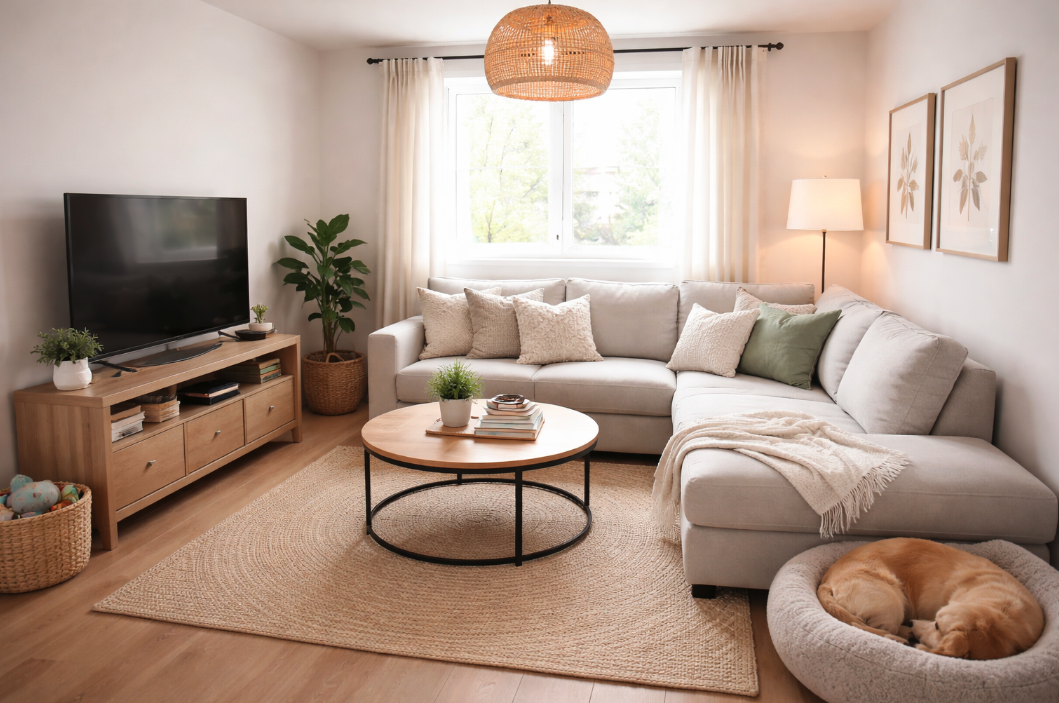
If you’re hunting for the best tv stand for small living room setups, you’re probably juggling more than just measurements. You’ve got kids’ toys, pet beds, a 55-inch TV, and exactly zero interest in spending your Saturday with an Allen key. The right stand won’t just fit the wall, it will calm the visual chaos, hide the cords, and survive real life.
This guide walks you through space, safety, and style so you can pick once and enjoy it for years, not months.
Why Choosing the Right TV Stand for Small Living Room Matters
What Challenges Do Busy Homeowners Face in Compact Spaces?
In a compact living room, every inch has a job. If your TV stand is too deep or too wide, you lose walking space, toy space, or even room for your coffee table. When you’re already squeezing in a sofa, side chair, and maybe a playmat, a bulky console can make the whole room feel like a storage unit.
A smart stand keeps the footprint tight but the storage generous, so you’re not balancing game consoles on window sills. Look for depths around 14–16 inches in tight rooms and aim for low, long silhouettes that visually open up the wall instead of chopping it in half.
How Does Clutter Impact Parents and Pet Owners Daily?
For parents and pet owners, clutter isn’t just ugly, it’s stressful and sometimes dangerous. Open shelves become magnet zones for controllers, crayons, and dog toys. Loose cables turn into tug toys or tripping hazards.
The right tv stand for small living room setups helps you:
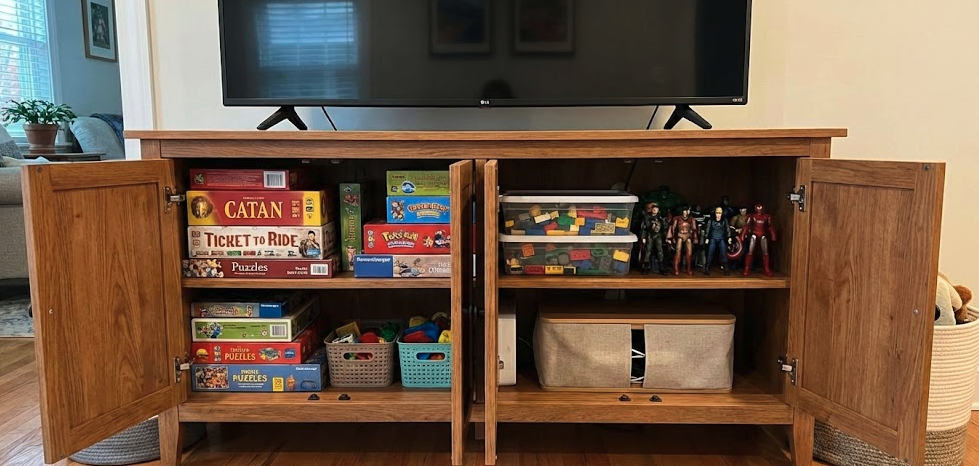
A storage-focused stand with doors, drawers, and cable cutouts lets you do a 60-second clean-up before guests arrive: toss it in, slide it shut, done. Closed storage also keeps remotes and chargers away from teething toddlers and overly helpful retrievers.
Sizing & Layout: Fitting a TV Stand in a Small Living Room
What Size Guidelines Apply to Compact Rooms? (100 Sq Ft Rule)
A simple rule: in a 100 sq ft living room (think 10′ x 10′), your TV wall can usually spare about 60–70 inches of total width for a stand without crowding. Aim to keep the stand at roughly 50–60% of that wall’s width so you still have breathing room for side tables or a floor lamp.
If you’re unsure, painters’ tape is your best friend. Tape out a 50–60 inch rectangle on the floor and walk around it. If you’re bumping into it, size down.
Which TV Stand Width Works Best for 55-Inch TVs?
For a 55-inch TV, you want a stand that’s at least 48–60 inches wide. The TV should never hang over the edges: ideally, the stand is 2–6 inches wider than the screen on each side. That visual margin makes the setup feel intentional instead of improvised.
In small rooms, 60 inches is usually the sweet spot: wide enough for stability and decor, narrow enough not to swallow the wall. When evaluating options, consider insights from furniture design experts who emphasize proportional balance in compact spaces.
Wall-Mounted vs. Floor Stand: Which Option Saves 20% More Space?
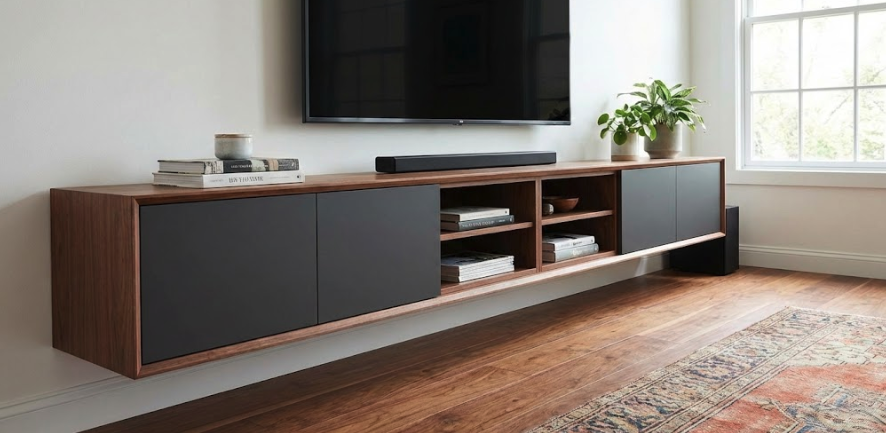
Wall-mounted stands typically save about 20% more floor space because you keep the footprint off the ground and can slide baskets, robot vacuums, or pet beds underneath.
A piece like this minimalist floating console keeps depth tight, hiding clutter behind doors. If you can’t drill, pick a slim floor stand with legs set close to the corners for stability without visual bulk.
My 3-Month Trial: Testing Durability and Safety
Who Should Avoid Cheap Veneer Stands After My Experience?
If you have kids, large pets, or both, you’ll want to skip ultra-thin veneer over particle board stands. After about 3 months of real use, corners chip, edges swell from minor spills, and surfaces scratch from simple dusting.
You get better value from solid wood or high-quality MDF with thick veneer, like Povison’s premium solid wood stand. Think of it as a long-term investment (check their installment plans) that saves you from the cycle of replacing cheap $120 units every few years.
Stability Test: Why Compare 4 Brands on Assembly Time?
Here’s the pattern you’ll notice: the faster the setup, the more stable the result, when the stand arrives mostly assembled. Fully flat-pack units often take 2–3 hours to build and can still flex if a kid leans on the edge.
Pre-assembled or minimal-assembly stands usually go from box to TV-ready in 20–30 minutes and feel more solid because joints are machine-tightened, not “good enough” hand-screwed during bedtime.
How Do Pet-Resistant Materials Compare in Durability Tests?
For pet homes, prioritize surfaces with:
- Solid wood tops: better at disguising light claw marks
- Walnut veneer over sturdy core: resists small dents and wipes clean
- Water-based finishes: low odor, easy to maintain
These materials shrug off daily abuse better than glossy laminates, which show every scratch. A simple “key test” on a hidden area tells you a lot, if you see white lines immediately, skip it.
How High Should Stands Be for Safe Viewing with Kids?
In family rooms, aim for the TV center to sit at eye level when you’re seated, usually 42–48 inches from floor to screen center. That often means a stand height of 18–22 inches for a typical sofa.
Lower stands keep the setup stable and reduce tip-over risks. Always use the included wall strap or an anti-tip kit if kids might climb.
Top Design Recommendations for High-Traffic Areas
How Do Corner Units Maximize Room Flow for Families?
If your living room doubles as a hallway, corner TV stands can reclaim 10–15% of usable floor space. By tucking into a corner, you free up wall length for seating and keep walkways open for kids and pets doing laps.
Choose a corner unit with a front width of around 40–50 inches so it fits snugly without blocking windows or doors. This approach aligns with 2025 living room design trends that prioritize flexible, multi-purpose layouts for modern families.
Which Multifunctional TV Stands Suit Busy Lifestyles?
Multifunctional stands earn their keep in small rooms. Look for:
- A top strong enough for a 55-inch TV plus decor
- Shelves deep enough (at least 12 inches) for consoles and baskets
- Doors to hide toys, crafts, and dog leashes
Pieces that double as a media console and sideboard give you extra serving space for parties and a landing zone for mail the rest of the week.
Is a Storage-Integrated Stand Worth the Extra $50 for Parents?
Yes, especially if you’re tired of stepping on plastic dinosaurs. Spending about $50 more for a stand with drawers or cabinets often replaces the need for an extra storage unit.
A stand like Povison’s ambient-light media console solves this. You get both closed storage and built-in soft lighting, instantly setting the mood for movie night without needing extra floor lamps.
Final Verdict: The Best TV Stand for Small Living Room (2026)
Which Top Pick Excels for Small-Space Living?
If you want the best tv stand for small living room layouts, focus on three things: width that matches your TV, closed storage, and space-saving design (slim or wall-mounted). A compact, solid-wood stand around 50–60 inches wide with doors and cable cutouts will feel calm, not cramped.
For most busy families, a piece from Povison’s fully-assembled lineup hits the sweet spot: no tools required and backed by secure delivery—less time building, more time actually watching TV.
If your weekends already feel too short, choose the piece that arrives mostly built, hides the mess, and fits your wall on the first try. Your future self, stepping into a clutter-free living room at 9 pm, will be glad you did.
Frequently Asked Questions
What size TV stand for a small living room works best with a 55-inch TV?
For a 55-inch TV in a small living room, choose a stand about 48–60 inches wide. Ideally, the tv stand for small living room setups should be 2–6 inches wider than the TV on each side so the screen doesn’t overhang and the layout looks intentional.
How deep should a TV stand be in a compact living room?
In tight spaces, look for a TV stand depth around 14–16 inches. This keeps walkways clear while still giving enough surface area for your TV and devices. Slim profiles visually open the room, preventing your tv stand for small living room layouts from feeling bulky or intrusive.
Is a wall-mounted TV stand better than a floor stand for small living rooms?
A wall-mounted TV stand can save roughly 20% more floor space because it keeps furniture off the ground, leaving room for baskets, robot vacuums, or pet beds underneath. If you can’t drill, pick a slim floor stand with legs near the corners to reduce visual bulk while staying stable.
Is a storage-integrated TV stand worth the extra cost for parents?
Yes. Spending about $50 more on a stand with drawers or cabinets often replaces an additional storage unit. Closed storage hides toys, games, and cords, making quick cleanups easier and safer. Over time, a storage TV stand for small living room spaces saves both floor space and money.
How can I style a TV stand in a small living room without adding clutter?
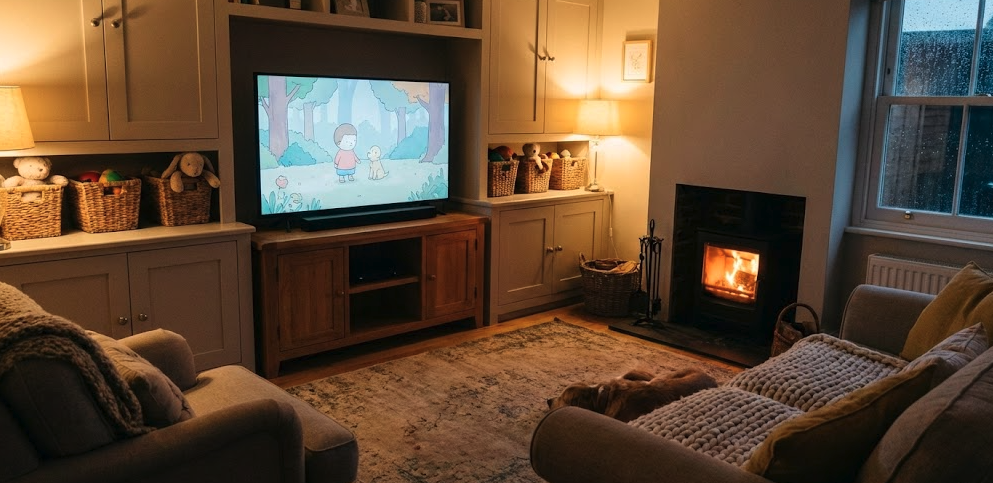
Use a less-is-more approach: anchor the TV with a couple of low-profile decor pieces like a small plant, a tray for remotes, or a framed photo. Keep most items inside cabinets or baskets. Avoid tall, busy decor that competes with the screen or crowds the wall visually.
Past Review:


