 By Jenny Smith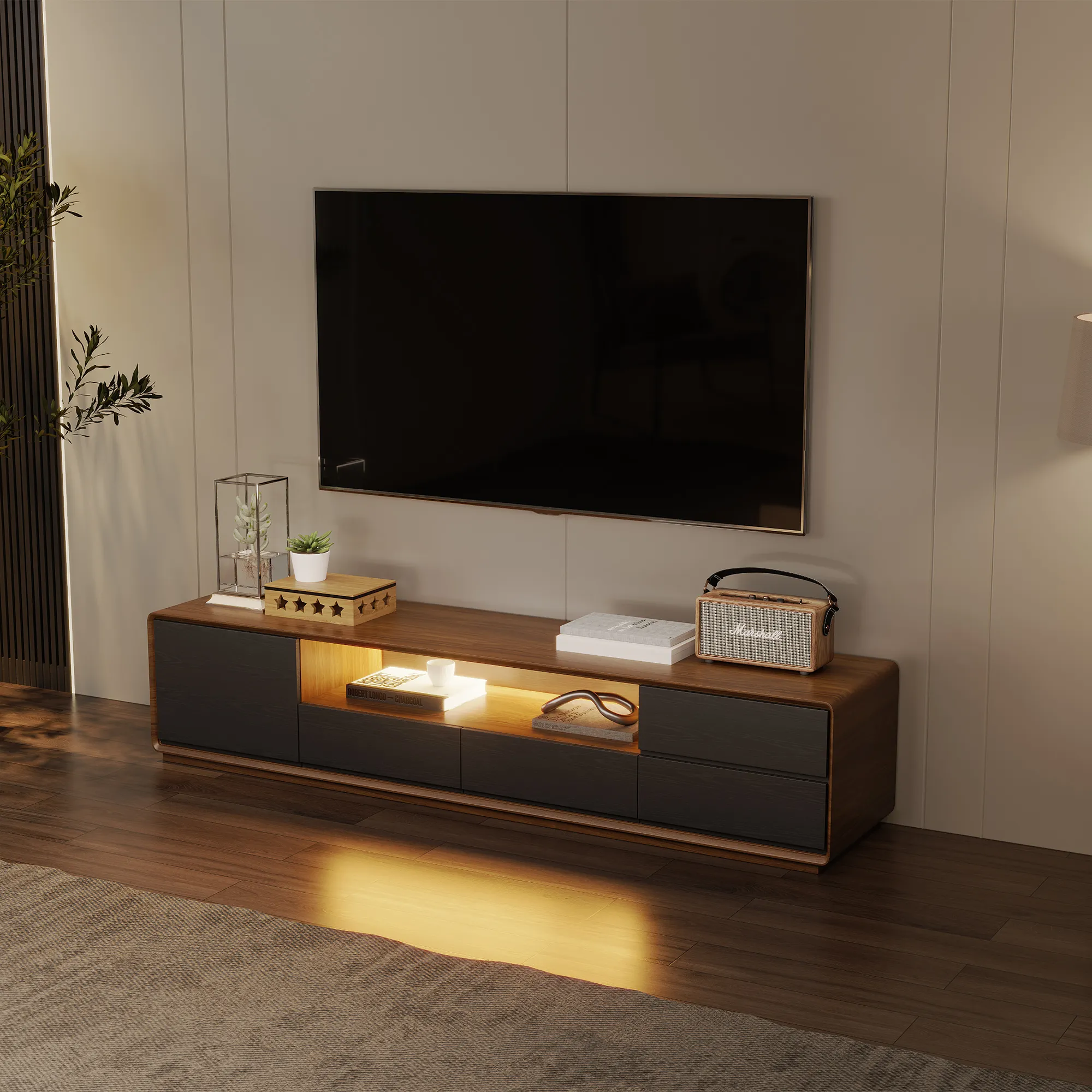
Introduction – Why Buying a TV Stand Online Feels Tricky
When you buy tv stand online, you’re not just picking a pretty box under your screen. You’re betting on size, weight capacity, materials, color, delivery, and assembly—all from a few photos. No wonder it feels risky. The global online furniture market was already worth about $242.67 billion in 2024 and is forecast to hit $1.27 trillion by 2033 (Straits Research). At the same time, the average online home furniture order is around $422, with e-commerce furniture revenue expected to top $40 billion by 2030 (Statista, via Cylindo). With so much money flowing through screens, a simple checklist keeps your living room—and your budget—safe.
Your 60-Second Checklist Before You Buy a TV Stand Online
The Essentials to Confirm at a Glance
Before you add to cart, scan the product page and confirm:
- TV size compatibility (screen size and max weight).
- Stand width vs your wall and room width.
- Material and finish (solid wood, veneer, or engineered board).
- Assembly level (flat-pack, partial, or fully assembled).
- Storage mix (open shelves, cabinets, drawers).
- Cable management details.
- Shipping method, delivery timeframe, and return policy terms.
Red Flags in Online Listings
Be cautious when the listing hides important information. Missing or vague weight capacity is a major warning sign. Only stylized studio shots and no close-ups, lifestyle photos, or user photos can hide finish issues. Phrases like “wood-like material” without telling you if it’s MDF, particleboard, or veneer are also suspicious. And if the assembly section just says “assembly required” with zero time or difficulty estimate, assume it’s a multi-hour puzzle.
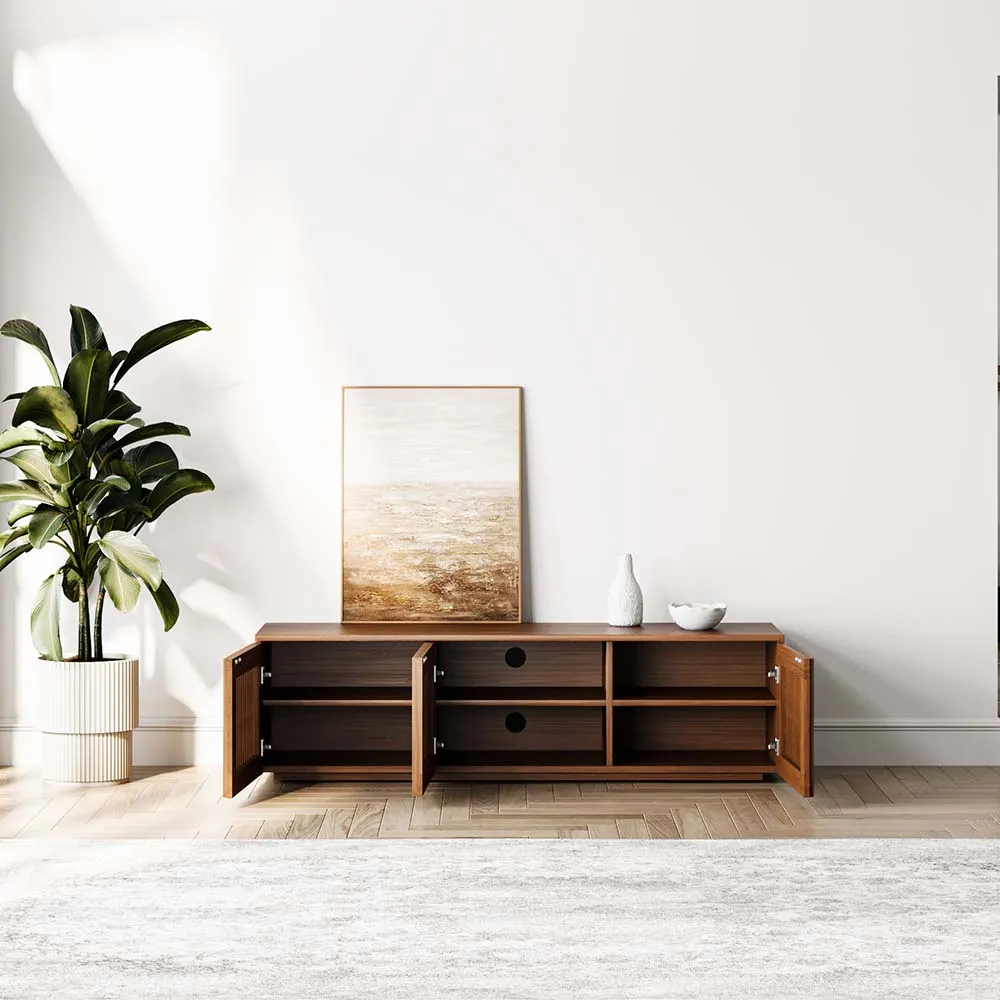
Get the Right Size & Weight Capacity
How to Measure Your TV, Wall, and Room Properly
TV size is measured diagonally, but your stand needs horizontal width. For stability and a balanced look, aim for a stand that’s at least 2–6 inches wider than the TV on each side—so a 55″ TV usually wants a 60–70″ stand. For tight spaces, check out small-space sizing tips like this TV stand for a small living room guide. Measure wall width, room depth, and viewing distance from your sofa, and don’t forget space for a soundbar, game consoles, or center speakers on top.
Imagine this: you finally unbox a 65″ TV for movie night and realize the stand is narrower than the screen and almost touching the doorway. Two quick measurements beforehand would have saved a last-minute furniture shuffle. A tape measure and a quick sketch of your wall are worth more than any product glam shot.
Understanding Weight Ratings and Stability
Always look for maximum weight capacity for both the top surface and each shelf. If a listing hides that, message the seller or skip it. Heavier 65″–85″+ TVs usually need stands rated 90–120+ lbs on top, plus solid internal support, not just a thin panel. Homes with kids and pets should favor wide bases, deeper tops, and anti-tip features or wall anchors. You can think in tiers: light setups (up to 55″) can use slimmer stands; anything bigger benefits from sturdier, heavier designs that won’t wobble when someone runs past or a cat jumps up.
Material Quality Signals – How to Spot a Well-Made TV Stand Online
Decoding Material Names in Product Descriptions
Material names tell you a lot about longevity. Solid wood tends to be heavier, repairable, and more expensive. Wood veneer over engineered wood balances stability and price—great if the veneer is thick and well-sealed. MDF or particleboard can be perfectly fine for budget-friendly TV stands if edges are sealed and weight limits are honest. Watch for fluffy language like “premium wood board” or “engineered material” with no specifics; quality listings spell out what’s inside, not just how it feels.
Construction Details That Reveal Real Quality
Even online, you can spot smart construction. Look for photos of the back panel—a full, screwed back adds stability, while a flimsy, tacked-on sheet flexes. Check how legs connect: are there metal brackets and crossbars, or tiny screws into thin panels? Hardware shots matter too: metal handles, soft-close hinges, and proper drawer slides last longer than lightweight plastic. A good listing will show smooth edges, rounded corners, and close-ups of joints instead of hiding everything behind filters.
Health & Sustainability Clues in the Listing
If you care about indoor air quality, scan for mentions of low-VOC or non-toxic finishes and wood certifications like FSC. Those reduce strong odors and off-gassing in smaller apartments or kids’ rooms. Reviews are gold here—look for repeated mentions of smell (“no odor out of the box” vs “smelled for weeks”) and comments about veneer chipping or peeling. With more consumers prioritizing sustainability and responsible delivery in furniture e-commerce, brands that call out certifications clearly usually take the rest of the build seriously too. (NIQ)

Assembly Level Matters – Choose the Effort, Not Just the Look
When you buy tv stand online, you’re also choosing how you’ll spend your Saturday. Fully flat-pack stands usually arrive in several boxes with many parts and can take a couple of hours or more for non-experts, especially larger media units. Partially assembled options ship with the main body built; you just attach legs, shelves, or doors—much faster and less stressful. Fully assembled TV stands let you unbox, position, and start streaming. Remember, even basic entertainment centers often require 1–3 hours of DIY assembly, while pros or pre-assembled models can compress that into a fraction of the time. (Furniture Assembly Houston)
Storage, Cable Management & Style – Making Your TV Stand Work for Real Life
Plan Storage Around Your Actual Devices Before You Buy
When you buy tv stand online, don’t just look at the styled decor in the photos—read the storage dimensions carefully. Check the width and height of each compartment against your actual devices: game consoles, streaming boxes, router, receiver, and even baskets or board games. If the listing shares interior measurements, compare them with your devices at home; if it doesn’t, zoom into photos or check reviews to see whether people mention “tight fit” or “plenty of room” for electronics.
Cable Management Features in the Product Listing
Before ordering, scan the product page for clear cable-friendly features. Good listings show pre-drilled cable holes on the back panel, wide openings behind shelves, or channels where power strips and adapters can sit off the floor. If photos never show the back or inside, read Q&A and reviews for clues about how easy it is to route HDMI and power cords. A stand that looks beautiful from the front but has no openings can quickly turn into a cable nest once everything is plugged in.
Judging Style and Color Through Online Photos
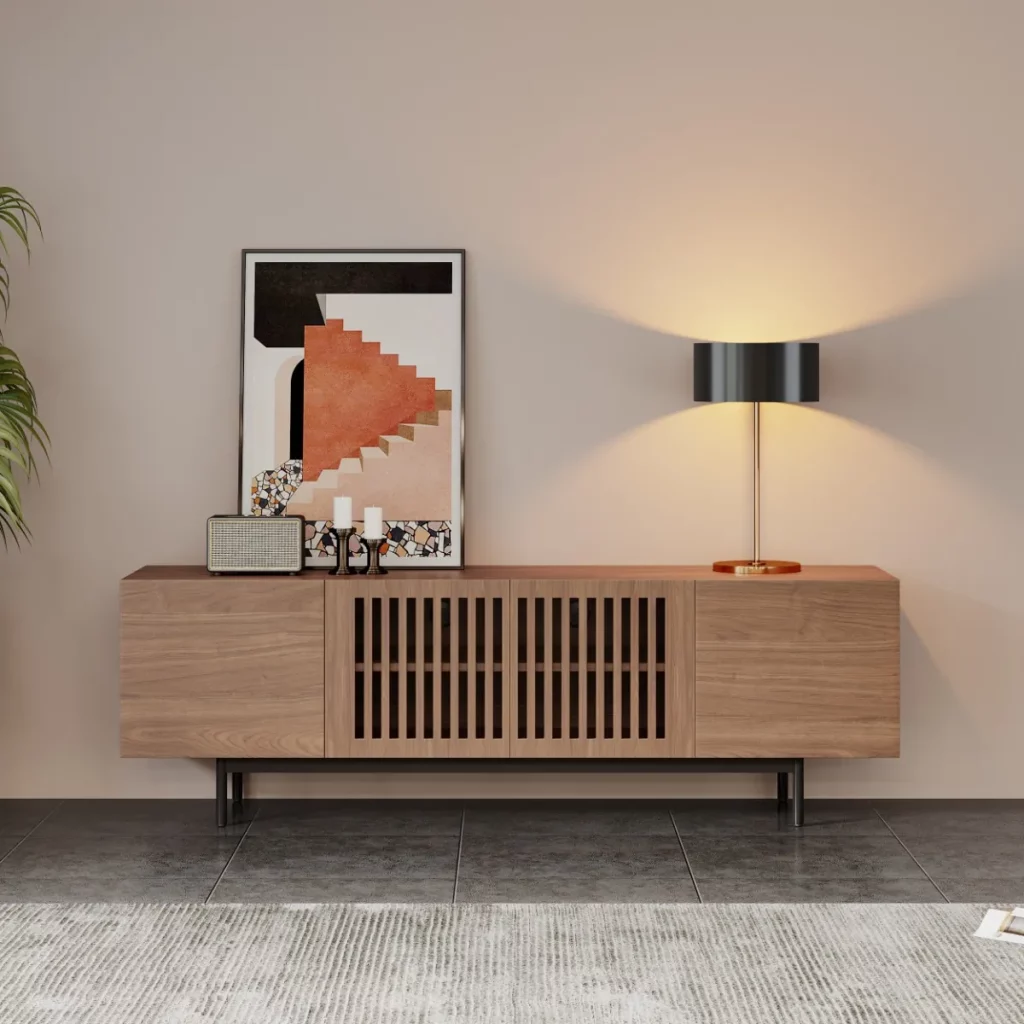
Online, it’s easy to fall for a TV stand that looks perfect in the studio photos but clashes at home. Before you add to cart, compare the product shots with a quick phone photo of your living room—look at undertones of the wood, metal, and doors against your sofa, rug, and wall color. Check if listings include both daylight and warm-light photos, because colors can shift a lot. If reviews show real-home images, treat them as the most honest reference for how the finish and style actually look in normal lighting.
Delivery, Returns & After-Sales – The Fine Print That Protects You
Online furniture is booming: one survey found 67% of consumers bought furniture in the past year, with city dwellers and families even more likely to shop for it. (Furniture Today) That means shipping networks are busy, and policies matter. Before you buy tv stand online, check whether delivery is curbside, threshold, or white-glove and whether the boxes can realistically fit through your hallway and elevator.
Read the return policy like a contract: who pays return shipping, how long you have, and whether packaging must be kept. Look for clear steps if the stand arrives damaged or wobbly—ideally with photo documentation, replacement parts, or pickup included. Good after-sales support turns a potential headache (like a scratched door) into a small delay instead of a long-term annoyance you stare at every movie night.
Conclusion – Turn Your Living Room Into a Ready-to-Live-In Space
Buying a TV stand online doesn’t have to be a gamble. If you focus on a few pillars—size and weight capacity, material quality, assembly level, storage and cable management, plus delivery and returns—you turn a risky click into a confident choice. Think of the stand as the anchor of your living room, not just a shelf for your screen: it frames every movie night, game session, and lazy Sunday. With a simple checklist and a few minutes of measuring, your next “buy tv stand online” search can end in a setup that feels stylish, safe, and genuinely ready to live in.
Quick Q&A When You Buy a TV Stand Online
Q1: What size TV stand do I need for a 55″/65″/75″ TV?
Aim for a stand that’s at least 2–6 inches wider than the TV on each side. For a 55″ TV, look around 60–70″ wide; for 65″, 70–80″; for 75″, 80–90″+, depending on your wall. Wider stands look more intentional and help prevent the TV from feeling top-heavy.
Q2: How much weight should my TV stand support compared to my TV’s listed weight?
Check your TV’s weight without the stand, then look for a TV stand with a top capacity at least 20–30% higher. That extra buffer covers soundbars, decor, and small variations in measurements. Don’t forget shelf capacities if you’re storing heavy receivers or game consoles below.
Q3: Is a wall-mounted (floating) TV stand safe for large TVs?
Yes, if the wall and mounting hardware are up to the job. Make sure the floating stand screws into studs or proper anchors, and check both the stand’s weight rating and the TV’s wall mount rating. In older walls or rentals, a sturdy floor console may be safer and easier than opening up drywall. For more height tips, see this TV stand height guide. (Povison)
Q4: How do I know if a low-priced TV stand is still good quality?
Price alone isn’t the whole story. Look for clear material descriptions (solid wood vs veneer vs MDF), high-resolution close-ups, and honest weight capacities. Read multiple reviews that mention sturdiness after several months. A simple design with decent materials often beats a flashy stand with vague specs and no real user photos.
Q5: Is fully assembled furniture worth the extra cost?
If your free time, tools, or patience are limited, often yes. A basic TV stand can take 1–3 hours to assemble for DIYers, especially larger entertainment centers. Pre-assembled or “minimal assembly” pieces shift that time back to your weekend plans, reduce the risk of mistakes, and are ideal if you’re setting up before a move-in or party. (家具组装休斯敦)
Q6: What should I do if my TV stand arrives damaged or wobbly?
Document everything before you assemble: take photos of the box, damaged parts, and any cracks or dents. Then contact customer service with your order number and pictures. Many retailers will send replacement panels or hardware; for serious damage, ask for a refund or pickup. Don’t keep using a visibly unstable stand under a heavy TV.
Q7: How can I hide all my cables without rewiring the room?
Combine a stand with good cable openings and a few cheap accessories. Route power and signal cables through built-in holes, then bundle them with sleeves or zip ties. Use adhesive clips along the back of the stand and floor cord covers along baseboards. Small, inexpensive cable tools can make the whole setup look intentionally clean from any angle.


