 By Jenny Smith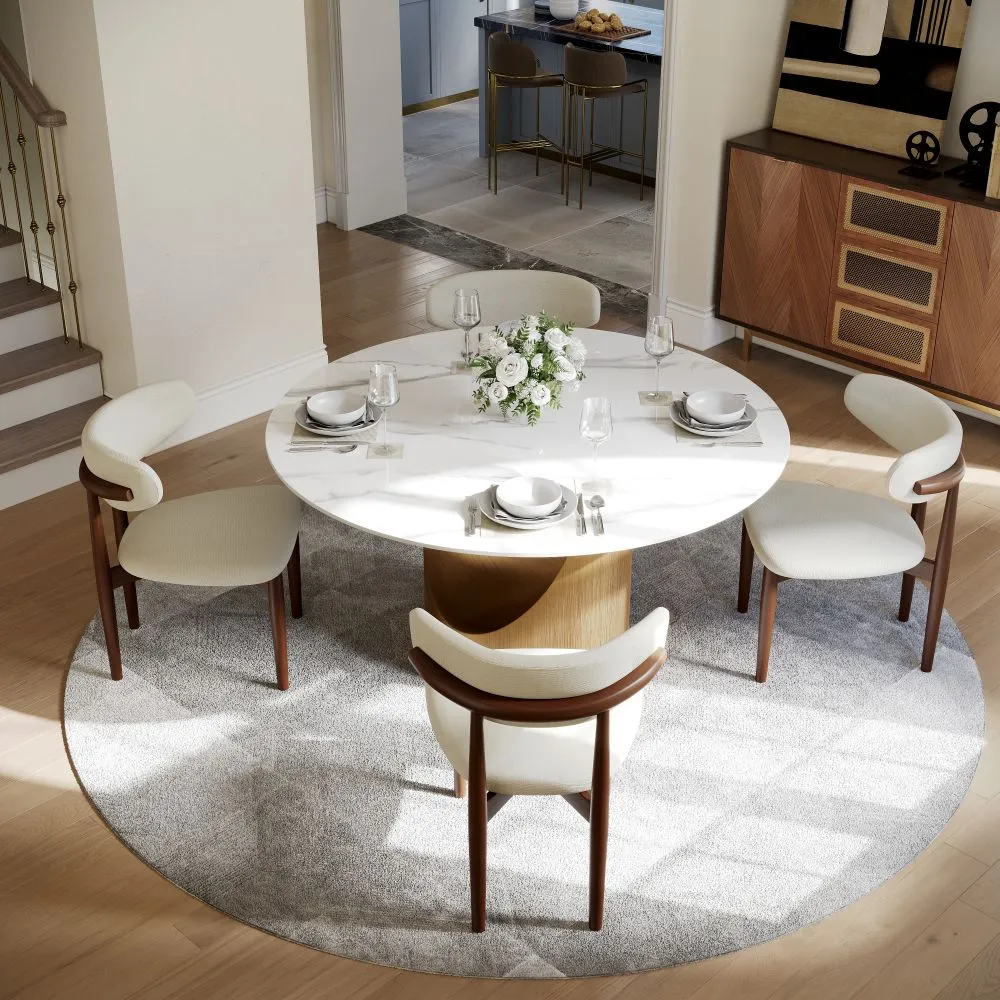
If your days already feel too short, the last thing you want is to spend a weekend wrestling with screws and cryptic diagrams. A fully assembled dining table skips that chaos: it arrives ready to use, so your focus stays on meals, homework, and catching up—not on hardware. In this guide, we’ll unpack what “fully assembled” really means, who it suits, how to choose the right piece, and how to style it so your dining area works hard every single day.
What “Fully Assembled” Really Means for Dining Tables
Fully Assembled vs Flat-Pack vs “Some Assembly Required”
The easiest way to think about it is to imagine what you must do when the box arrives. A fully assembled dining table comes out of the carton as one solid piece: the top and legs are already attached, joints are glued and tightened, and you simply position it, level the feet, and start using it. A flat-pack table arrives as separate parts—top, legs, beams, screws, tools—and you build the entire structure yourself step by step.
“Some assembly required” sits in the middle. The table is mostly built, but you still need to do one or two key tasks, such as bolting on the legs, attaching an extension leaf, or installing support hardware. In the factory, technicians have already checked the joints, stability, and finish; you’re just doing the final, simple connections at home. A quick rule of thumb: if the product page says “no assembly required,” it’s fully assembled; if it mentions attaching legs or using included hardware, it’s not.
What to Expect on Delivery Day (From Packaging to First Meal)
On delivery day, a fully assembled table typically arrives in one protected carton or crate. Expect foam or corner guards, padding around the edges, and often a protective film on the top. “Fully assembled” refers to the product itself, not necessarily the delivery service included. Depending on the delivery option selected, your order may arrive at the front door, be placed in your chosen room, or include additional services such as unpacking and packaging removal. Once the wrapping is off, you might need to adjust floor protectors or leveling glides and give the surface a quick clean. After that, you’re done.
Why Busy Families & Professionals Love Fully Assembled Dining Tables
Time, Energy, and Stress Saved on Day One
For flat-pack furniture, a “simple” dining table can realistically cost you one to three hours of assembly, especially if you’re juggling kids, pets, or a small space. That’s before you factor in reading instructions, hunting for the right bit, or undoing mistakes. Research on self-assembly products shows that perceived ease of assembly is a major driver of satisfaction, and complex tasks are a common source of consumer concern and discontent (Journal of Business Research, 2022).
For parents, that time is the difference between a calm movie night and another “sorry, we’ll build it next weekend” promise. For professionals who work late or travel often, choosing a fully assembled dining table is essentially buying back an entire evening. Instead of building furniture, you’re catching up with friends over takeout at a table that’s already rock solid.
Everyday Benefits: Stability, Safety, and Long-Term Durability
Because fully assembled tables are put together by trained teams with the right jigs and torque tools, joints are usually more consistent than DIY builds. That means fewer wobbly legs, straighter tops, and less creeping looseness over time—especially important in homes where kids lean on edges or grandparents need a stable surface to stand up from.
From a safety point of view, fewer poorly tightened screws means fewer surprise collapses and less need to re-tighten hardware every few months. Over years of use, that translates into lower maintenance and fewer repair calls. A simple comparison: DIY tables often need annual tightening and occasionally new bolts; a quality factory-assembled table may only need its glides checked and its finish re-oiled or cleaned.
| Feature | Fully Assembled Dining Table | Flat-Pack / DIY Table |
| Initial stability | High, factory-tested | Depends on assembly |
| Typical lifespan | Longer with proper care | Can shorten if misbuilt |
| Ongoing maintenance | Minimal checks | Regular tightening |
| Safety risk | Lower when factory-built | Higher if assembled poorly |
For more context on how assembly impacts daily life, you can also explore Povison’s piece on fully assembled furniture for busy families.
When Pre-Assembled Furniture Is Absolutely Worth It
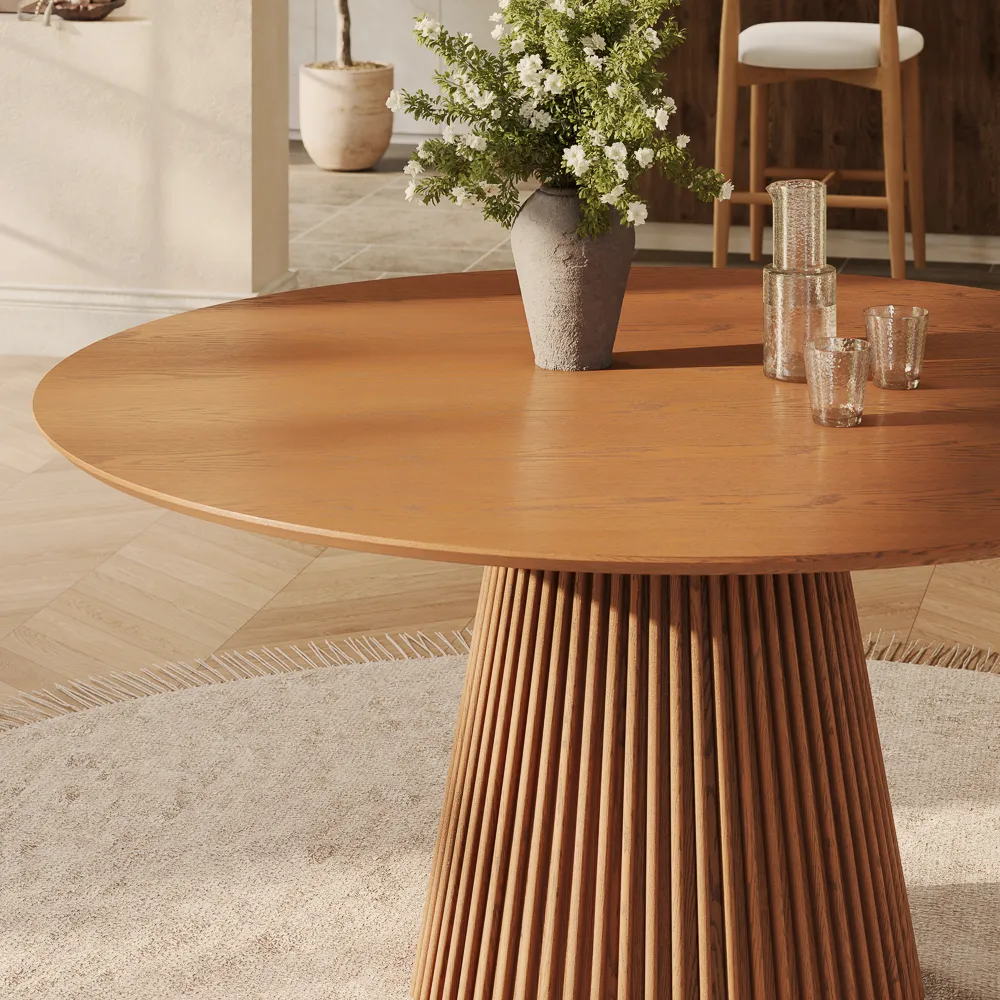
Some moments in life make a fully assembled dining table feel less like a luxury and more like a survival tool. Moving into a new home on a tight schedule, welcoming a newborn, or prepping for a major holiday all compress your time and energy. Knowing the table will arrive ready means “set the table” is literally just plates and cutlery—not an all-day project.
Imagine this scene: guests land tomorrow, there are half-unpacked boxes everywhere, and dinner is supposed to be at your place. With a flat-pack table, you’re praying nothing is missing. With a fully assembled one, you’re sliding it into place, throwing a runner down, and focusing on food and music.
When you consider total cost of ownership, the calculus shifts even more. The global ready-to-assemble furniture market is forecast to grow from about $16.0 billion in 2023 to $25.8 billion by 2030 as flat-pack products dominate logistics (Grand View Research, 2023). That mass-market model often assumes customers will donate hours of unpaid labor. Paying a bit more for a fully assembled alternative can save you: time you could spend earning or resting, money on tools or handyman services, and the risk of damaging the table during assembly.
A simple “cost of ownership” infographic for this would show four slices—purchase price, time, extra services, and risk. The fully assembled slice is slightly larger on price, but dramatically smaller on everything else over the first three years.
How to Choose the Right Fully Assembled Dining Table for Your Home
Size, Seating, and Room Layout (So It Actually Fits Your Life)
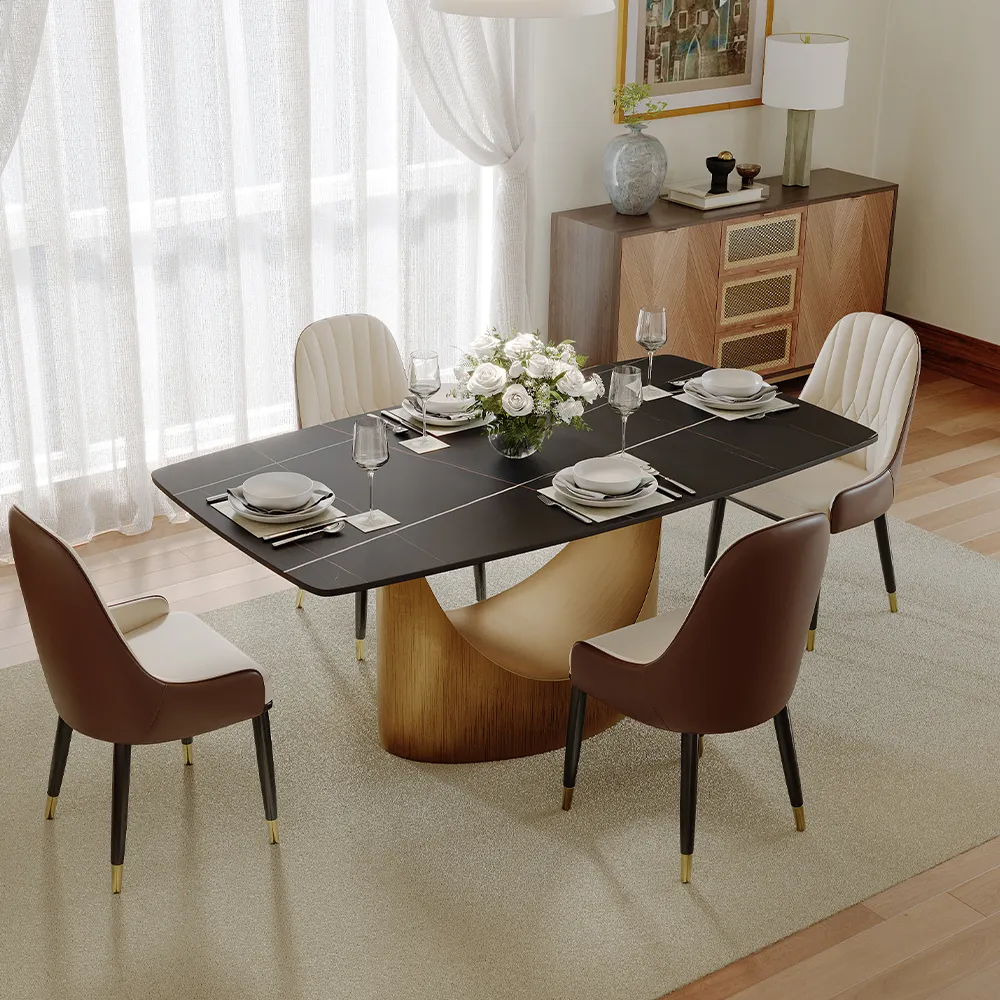
Before you fall in love with a table online, grab a tape measure. Measure the length and width of your dining area and subtract at least 90 cm / 36 in on all sides for comfortable walkways and pulling chairs out. Rectangular tables suit long, narrow rooms; round or oval tables are kinder to small spaces and awkward corners, and they’re great for conversation.
Think about everyday seating versus “big event” capacity. A couple with two kids might choose a compact 4-seater that can still squeeze in six on holidays. If you’re in an apartment or open-plan space, Povison’s guide to modern dining table sets for small minimalist spaces has helpful layout sketches and examples.
Here are three measurements you need before you buy a fully assembled dining table:
- Room size (length × width), excluding built-ins.
- Maximum table footprint that still leaves at least 36 in of clearance.
- Ideal table length for your usual guest count, allowing 24 in width per person.
Materials, Sustainability, and Easy-Care Finishes
Fully assembled doesn’t just describe how the table ships—it often signals a higher construction standard. Solid wood and high-quality veneers are common; stone tops like sintered stone, marble, or engineered stone add drama and durability. If you care about sustainability and indoor air quality, look for certified wood and low-VOC or non-toxic finishes.
Trends also point toward more natural, sculptural surfaces in the dining room: one survey of design professionals found that over three-quarters named travertine and other natural stones as leading dining-table materials for 2026 (House Beautiful, 2025). That doesn’t mean you must choose stone, but it shows how “hero” tables are being treated like long-term investments. Match the finish to your lifestyle: scratch-resistant tops and forgiving matte sheens are better for kids and crafts; glossy stone feels luxurious but may show smudges faster.
Meet Povison: A Brand Focused on Fully Assembled Dining Tables
Povison is built around one core promise: Ready To Live In. Instead of shipping your future dining table as a puzzle, the brand specializes in fully assembled, design-forward pieces that arrive ready for real life—weeknight pasta, Sunday homework, and big holiday spreads included. You’ll see solid wood bases, FSC-certified materials, and family-friendly finishes across the collection.
For homes where both adults work and spare time is precious, Povison’s approach removes an entire category of “homework.” The table shows up done so you can get back to curating memories instead of tightening bolts.
Styling & Pairing a Fully Assembled Dining Table for Everyday and Hosting
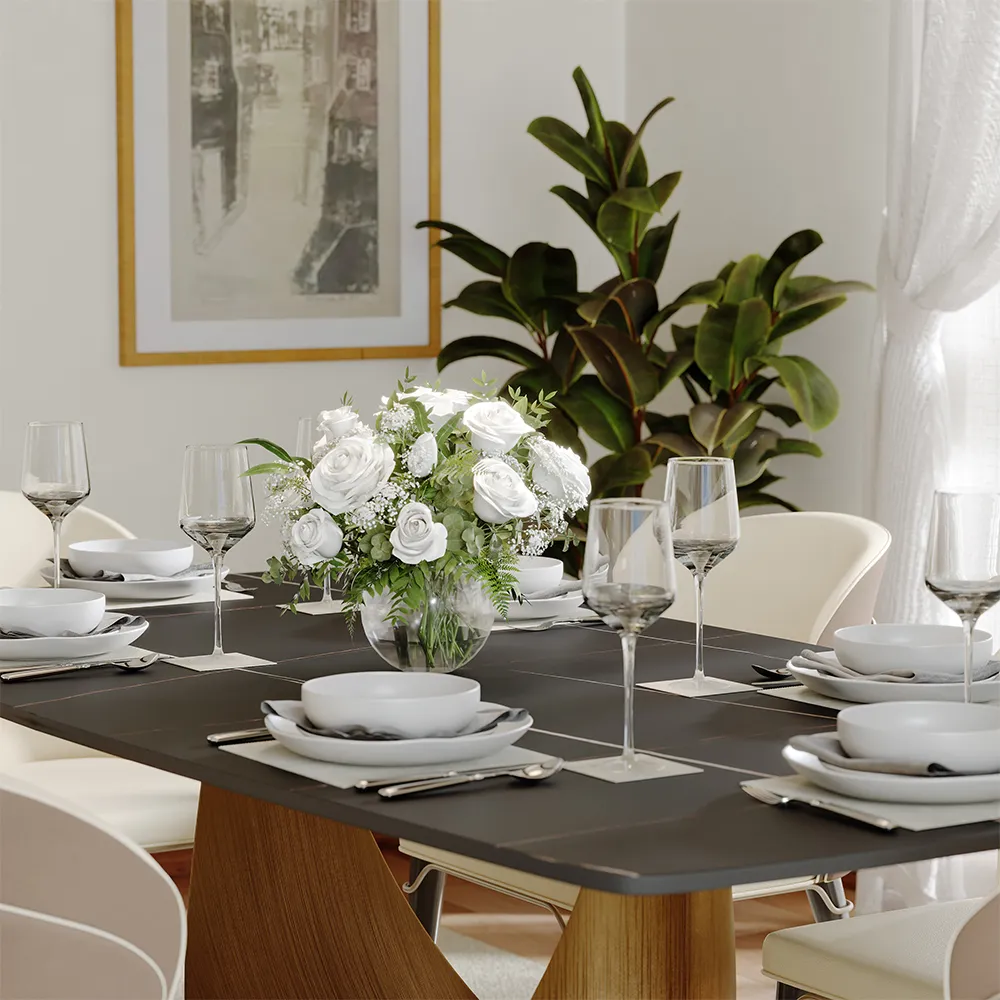
On a typical Tuesday, your dining table might hold breakfast bowls, a laptop, and art supplies—all before dinner. Keep the center clear enough for work by using a low, movable centerpiece such as a tray with a small vase and candle that can slide to the side. Store placemats, chargers, and napkins in a sideboard or drawer within arm’s reach, so resetting the table takes seconds.
If your dining area also doubles as a workstation, consider a soft-underfoot rug and a chair that supports good posture as well as long dinners. Povison’s article on Minimalist Dining Room Ideas 2026: Less Is More Luxury is a great reference for layouts that feel calm even when the table has multiple jobs in a day. In one home, the fully assembled round table became the “house command center”—breakfast at 7, Zoom calls at 10, and kids’ craft projects by 4, all without any wobble or screw-tightening in between.
A simple “everyday essentials” kit kept nearby—coasters, a neutral runner, a lidded box for chargers, and a microfiber cloth—helps the table reset from laptop mode to dinner mode in under five minutes.
Conclusion
A fully assembled dining table is more than a convenience; it’s a quiet upgrade to how your home runs. You skip the stress of DIY assembly, gain stability and safety for the people you love, and invest in a piece that’s designed to handle real life from day one. Whether you’re moving, growing your family, or simply tired of spending weekends with an Allen key, choosing pre-assembled lets you focus on what the dining room is really for: gathering, connecting, and enjoying time around the table—not under it.
FAQ
Is a fully assembled dining table harder to move if I relocate?
Not necessarily. Most fully assembled dining tables can still be tilted and carried by two people, especially with felt pads or moving blankets protecting the legs and floor. Some designs have removable tops or bases for tight stairwells. If you move often, look for pieces with detachable legs and ask the seller about recommended moving methods.
What if my doorway or staircase is narrow—can a fully assembled table still fit?
Yes, but you’ll want to plan. Measure your doorways, hall turns, stair clearances, and elevator dimensions, then compare them with the table’s packaged dimensions. If the numbers are close, check whether your selected delivery option covers front-door delivery, room-of-choice placement, or additional in-home service, and confirm access details in advance.
Are fully assembled dining tables always more expensive than flat-pack ones?
They’re often priced higher up front because labor and quality control are built in, but the long-term picture is different. You’re saving the cost of your own time, any assembly services, and the risk of damaging the table during DIY setup. Over several years of stable use with fewer repairs, many households find the total cost compares very favorably to cheaper flat-pack options.
Can I still customize a fully assembled dining table—chairs, colors, styling?
Absolutely. Think of the table as your anchor piece. You can layer personality through chairs or benches in different fabrics, colorful seat cushions, table linens, dinnerware, and lighting. Even if the table itself is a neutral wood or stone, the pieces around it—art on the walls, a statement pendant, or seasonal runners—keep your dining area feeling uniquely yours.
How long should a good fully assembled dining table last?
With quality materials and basic care, a well-built fully assembled dining table can last a decade or more. Solid wood and stone tops often outlive multiple moves, while engineered materials with durable finishes easily handle daily family use. Look for robust joinery, substantial weight, and reputable warranties as signs that the table is meant to be a long-term part of your home.


