 By Stephanie
A sofa bed may look like a regular couch, but the mechanism inside determines how it transforms, how much space it needs, and how easy it is to use every day. Understanding a sofa bed mechanism helps you compare designs beyond appearance and choose a model that fits your room and routine. This guide explains how does a sofa bed mechanism work, the main mechanism types, and what each design means for real-life use.
Table of Contents
What Is a Sofa Bed Mechanism?
A sofa bed mechanism is the internal system of frames, hinges, rails, supports, or motors that allows a sofa to change from a seating position into a sleeping surface.
A mechanism controls how a sofa changes from seating to sleeping mode. It affects the movement process, but the final experience also depends on the sleeping surface, dimensions, and overall construction.
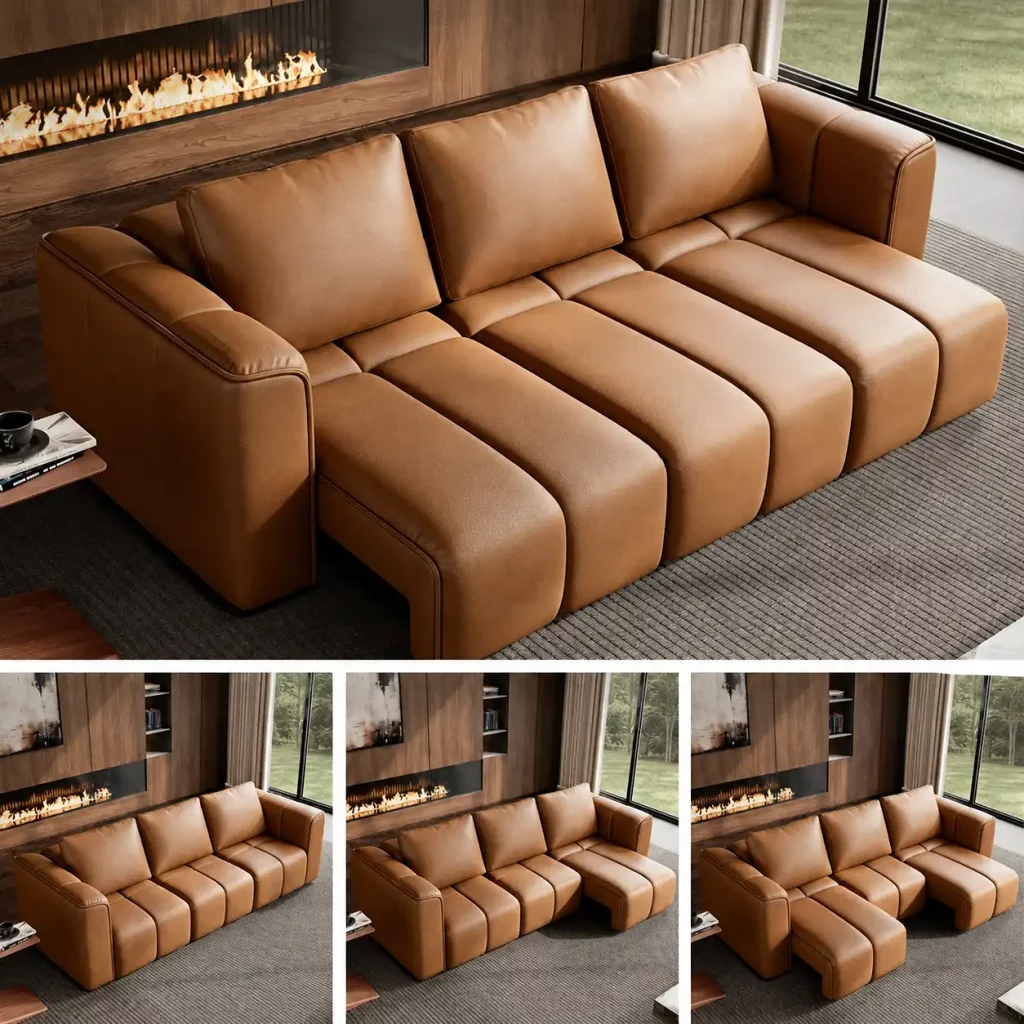
For example, a pull-out design uses a hidden frame that slides forward, while a click-clack design converts by lowering the backrest. A powered design uses a motorized system to extend or adjust the sofa with less manual movement.
However, the mechanism alone does not determine comfort. Sleeping comfort also depends on the sleeping surface, support, dimensions, and overall construction.
What Are the Main Types of Sofa Bed Mechanisms?
Sofa beds use different movement systems, but the easiest way to compare them is not by name alone. Look at what moves, where the sleeping surface comes from, and how much effort the conversion requires.
Pull-Out and Fold-Out Mechanisms: Traditional Conversion Designs
Pull-out and fold-out mechanisms are among the most common sofa bed designs. Both transform a sofa into a sleeping surface by extending or unfolding connected sections, but they create that movement in different ways.
A pull-out mechanism stores a frame and mattress beneath the seat cushions. When opened, the frame slides forward and unfolds into a bed. This design is often chosen when a separate mattress is preferred for overnight sleeping.
Fold-out designs usually rely on connected sofa sections or an integrated sleeping surface that unfolds into position. Compared with traditional pull-out models, they may require fewer steps but still need enough open floor space during conversion.
When comparing these designs, check:
- How far the mechanism extends into the room
- Whether cushions need to be removed
- Whether the final sleeping surface stays level
Click-Clack Mechanisms: Simple Folding for Flexible Spaces
Click-clack mechanisms use a hinged backrest that moves forward and then folds flat. Instead of pulling out a hidden mattress frame, the sofa’s seat and back usually become the sleeping surface.
Their biggest advantage is simplicity. With fewer moving parts, they can be easier to convert and work well in spaces that need occasional sleeping without a complicated setup.
They are often suitable for:
- Small apartments
- Home offices that double as guest rooms
- Rooms where quick conversion matters
The trade-off is that comfort depends more heavily on cushion design and how evenly the surface supports the body when opened.
Trundle and Platform Mechanisms: Creating More Sleeping Space
Trundle and platform mechanisms focus on expanding sleeping space without keeping a permanent bed footprint in the room.
A trundle design usually pulls a lower section out from beneath the sofa, while some platform systems extend or lift sections into a larger sleeping area.
These designs can work well for:
- Multi-purpose rooms
- Children’s rooms
- Occasional guests who need extra sleeping space
The main consideration is the open footprint. A sofa that looks compact when closed may require significant floor space once the mechanism is fully extended.
Power Sofa Bed Mechanisms: Motorized Movement With Less Manual Effort
Power sofa bed mechanisms use motors to control movement instead of requiring users to manually pull, lift, or unfold sections. This changes the conversion experience by reducing physical effort and allowing more controlled adjustments.
For living rooms that switch between seating, lounging, and sleeping modes, a powered mechanism can make frequent changes easier.
The Aurora Power Sofa Bed demonstrates this approach. Its motorized extension adjusts continuously from 27 to 45.5 inches, allowing users to move between upright seating, relaxed lounging, and sleeping positions without manually pulling out a traditional hidden frame.
How Do Sofa Bed Mechanisms Compare in Daily Use?
The best mechanism depends less on the mechanism name and more on how you plan to use the sofa. A guest sofa used a few times per year has different requirements from a sofa that changes between sitting and sleeping every week.
| Mechanism Type | What Moves | Sleeping Surface | Conversion Effort | Main Space Consideration |
| Pull-Out | Hidden frame slides forward | Separate mattress | Medium to high | Front clearance |
| Fold-Out | Sections unfold or extend | Integrated or folded surface | Low to medium | Opening path |
| Click-Clack | Backrest folds flat | Seat and back cushions | Low | Rear clearance may vary |
| Trundle | Lower section slides out | Extended sleeping area | Medium | Floor space in front |
| Power | Motorized sections extend or adjust | Integrated sleeping surface | Very low | Full extension area |
A sofa bed that looks convenient in photos may still be frustrating if the mechanism requires moving a coffee table, lifting cushions, or clearing a large area every time it opens.
How Can You Identify a Sofa Bed Mechanism Before Buying?
Product names can be misleading because different brands may use terms like “convertible,” “sleeper,” or “easy-open” for different movement systems. Instead of focusing only on the label, identify the mechanism by checking three things: what moves, what becomes the sleeping surface, and where the sofa needs space to move.
1. Look at What Moves First
The first moving part usually reveals the mechanism type.
A hidden frame sliding out from beneath the seat usually indicates a pull-out design. A backrest folding flat points to a click-clack or fold-down mechanism. A seat platform extending forward may indicate a fold-out, trundle, or powered design.
Understanding the movement pattern helps you predict the effort required before you buy.
2. Check What You Actually Sleep On
The mechanism determines how the sofa transforms, but the sleeping surface determines much of the overnight experience.
A pull-out sofa may use a separate mattress stored inside the frame, while click-clack and many modern convertible designs rely on the sofa cushions or an integrated platform.
When comparing options, look beyond the mechanism name and check:
- Whether the sleeping surface is separate or integrated
- Whether there are noticeable gaps between sections
- Whether the surface stays level when fully opened
3. Measure Where the Sofa Needs to Move
A sofa bed needs space not only when it becomes a bed, but also while it is opening.
Before buying, check whether the mechanism moves:
- Forward into the room
- Backward toward the wall
- Upward from a lower platform
This simple check can prevent a sofa bed from interfering with coffee tables, walkways, or other furniture.
What Should You Measure Before Choosing a Sofa Bed Mechanism?
Many buyers measure only the sofa’s closed dimensions, but convertible furniture has two footprints: the space it occupies every day and the space it needs while transforming.
Closed Footprint
This is your everyday living space.
Check:
- Sofa depth
- Walking paths
- Distance from coffee tables or other furniture
Active Conversion Space
This is the clearance the mechanism needs while moving.
Check:
- How far the sofa extends forward
- Whether the backrest needs rear clearance
- Whether doors, chairs, or walkways remain accessible
A simple way to test this is to mark the fully opened footprint on the floor with painter’s tape. This shows whether the sofa bed will still work comfortably in your room before delivery.
What Else Matters Beyond the Mechanism?
A mechanism explains how a sofa transforms, but it does not tell the entire story of sleeping comfort. Once you understand the movement type, evaluate the finished sleeping surface itself.
Check:
- Usable sleeping dimensions
- Surface gaps between sections
- Support across the sleeping area
- Weight capacity
- Everyday sitting comfort
Two sofa beds can use similar mechanisms but feel very different because the sleeping surface and overall construction are designed differently.
Conclusion
Choosing a sofa bed is not only about how it looks as a sofa. The sofa bed mechanism determines how the furniture changes, how much effort conversion requires, and how well it fits your daily routine. Pull-out, click-clack, fold-out, trundle, and power designs each solve different problems. By comparing movement, sleeping surface, required space, and usage frequency, you can choose a sofa bed mechanism that works naturally in your home instead of adapting your lifestyle around the furniture.
FAQ
Can a sofa bed mechanism be replaced?
Sometimes, but compatibility depends on the original frame design, mounting points, and mechanism type. A replacement part that looks similar may not fit correctly. Check the sofa model and manufacturer information before ordering new hardware.
Why is my sofa bed mechanism difficult to open?
Common causes include blocked movement paths, trapped bedding, misaligned cushions, or worn components. Avoid forcing the mechanism if one side moves differently from the other, as extra pressure may cause further damage.
How does a sofa bed mechanism affect comfort?
The mechanism affects how the sofa converts, but comfort depends on the sleeping surface, support, and dimensions. A pull-out sofa with a separate mattress may feel different from a click-clack design using seat cushions as the bed surface.
What happens to a power sofa bed during a power outage?
Most powered sofa beds require electricity to move unless the model includes a manual release or backup feature. Check the product instructions before buying if power interruptions are a concern.


