 By Kelvin
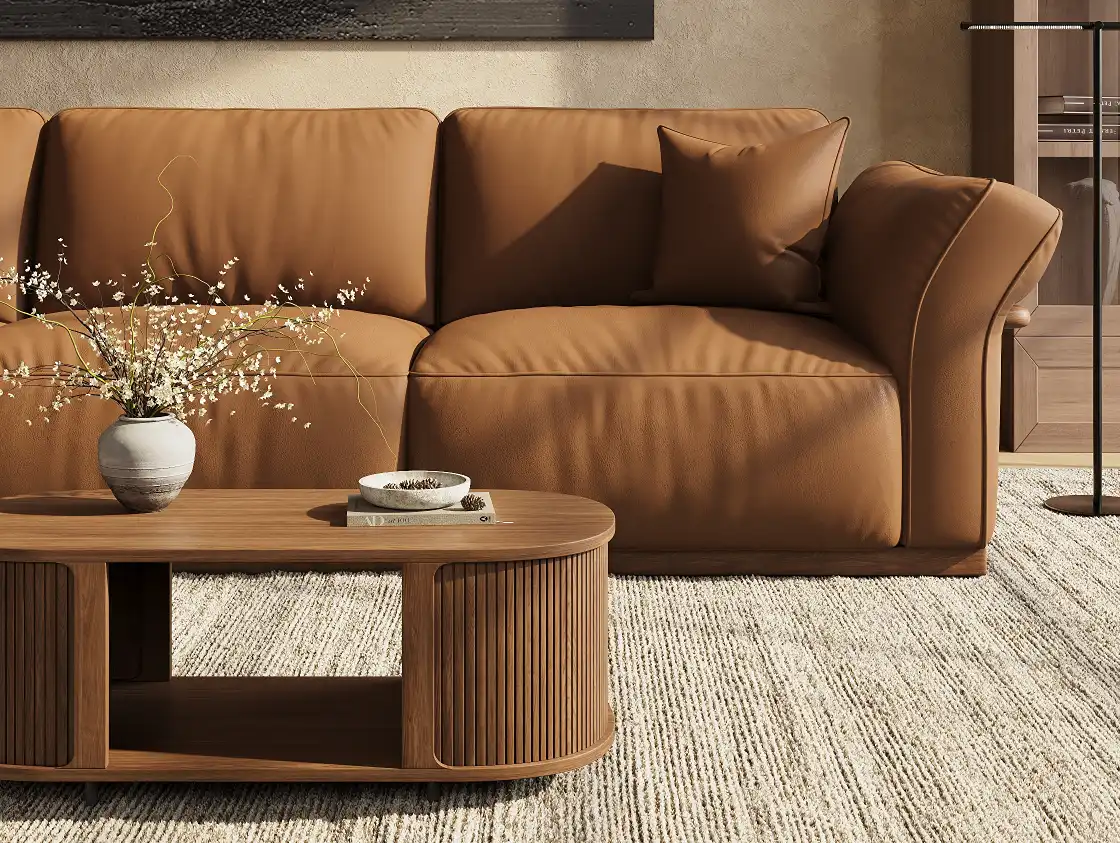
Choosing between microfiber leather and real leather comes down to more than appearance. The right option depends on how you use your sofa, what kind of surface you prefer, and how much care you want to give it over time. This guide compares microfiber leather vs real leather across feel, durability, cleaning, price, and everyday use. It also explains what to verify on a product page so you can make an informed decision instead of relying on broad claims like “scratch-resistant,” “premium,” or “easy-care.” Neither material is automatically better for every household.
Table of Contents
What Is the Difference Between Microfiber Leather and Real Leather?
Microfiber leather is an engineered synthetic upholstery material made with ultrafine fibers and polymer-based layers. Real leather is made from processed animal hide. Although both can have a leather-like appearance, their material structures and aging characteristics differ.
When comparing microfiber leather and genuine leather, remember that microfiber leather is not the same as ordinary microfiber fabric. Microfiber fabric is a textile, while microfiber leather has a leather-like surface. It is also important not to treat every type of PU leather as identical to microfiber leather, since their backing structures and construction can differ.
Real leather varies according to its grade and finish. Top-grain leather, for example, is real leather with a refined surface, while full-grain leather retains more of the hide’s natural grain. If a product label is vague, knowing how to tell if a couch is real leather can help you evaluate the available evidence before paying for a particular material.

How Do Microfiber Leather and Real Leather Compare in Everyday Use?
The most useful comparison looks at how each material performs over time, not just how it feels in a showroom. Microfiber leather often appeals to buyers who prefer a consistent appearance and straightforward surface cleaning. Real leather appeals to those who value natural grain and variations that can become more noticeable with use. However, quality, finish, and care instructions affect the results for both.
| Comparison | Microfiber Leather | Real Leather |
| Appearance | Can offer consistent grain and color | Shows natural variations in grain and shade |
| Feel | Depends on fiber structure and surface finish | Varies by leather grade, finish, and thickness |
| Durability | Depends on construction, coating, and quality | Depends on hide quality, finish, and maintenance |
| Cleaning | Often designed for straightforward surface cleaning | Requires care suited to the specific leather finish |
| Aging | May retain a relatively consistent appearance until the surface wears | May soften and develop a natural luster or patina |
| Price | Often costs less than comparable genuine leather | Often costs more, depending on grade and finish |
| Material source | Synthetic, without animal hide | Made from animal hide |
Feel and Appearance
Microfiber leather can reproduce the grain and smoothness associated with natural leather, but its surface may look more uniform. Real leather has natural variations, so two areas of the same sofa may not have identical grain or color.
Comfort is less straightforward. A leather surface may feel smooth and gradually become more supple, while microfiber leather can also feel soft, depending on its construction. Seat depth, cushion filling, and back support matter just as much when deciding whether a sofa is comfortable for daily lounging.
Durability and Cleaning
Neither material guarantees a longer service life. Microfiber leather can experience coating damage, cracking, or peeling if its surface deteriorates. Real leather can develop scratches, fading, dryness, or finish damage. These outcomes depend on material quality, exposure to sunlight and heat, friction, and care.
Cleaning also depends on the specific finish. Microfiber leather often allows simple surface cleaning, while real leather generally needs prompt spill removal and products suitable for its finish. A routine for caring for leather furniture over time should account for the leather type rather than applying the same treatment to every surface.
For example, after a family movie night, a microfiber leather sofa may be convenient when crumbs and small spills need quick attention. A real leather sofa can also work well in a busy living room, but owners should follow its care instructions and avoid letting spills sit on the surface.

Which Material Is Better for Your Household and Budget?
The better material depends on which qualities matter most in your daily routine. Real leather may justify a higher purchase price when natural grain, a distinctive feel, and gradual changes in appearance are priorities. Microfiber leather may suit buyers who want a leather-like look, a more controlled budget, and a surface designed for easier everyday care. Consider the trade-offs before choosing a sofa.
Choose Real Leather If You Value Natural Texture and Character
Real leather is worth considering if you prefer natural grain, subtle color variations, and a surface that can become softer or develop a richer luster with use. The specific finish matters: some leathers show visible aging, while more protected finishes maintain a more consistent appearance.
For buyers who prefer natural grain and a finish that develops character with use, the Cronus Genuine Leather Modular Sofa with Solid Wood Frame uses top-grain leather with a fine pebble-grain texture and a matte surface. Its modular layout offers arrangement flexibility, while the 26-inch seat depth supports curling up or sitting cross-legged. This sofa may suit buyers who value natural leather character and relaxed lounging more than a perfectly uniform surface.
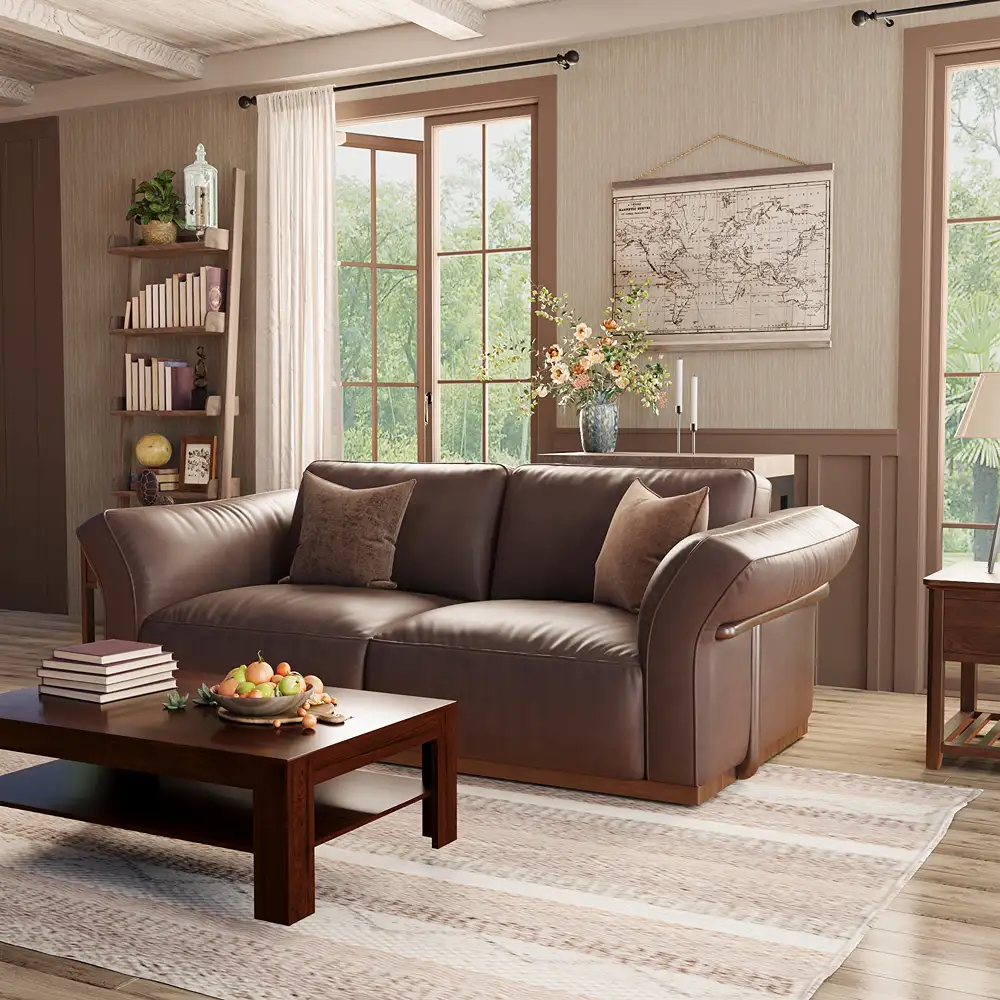
Cronus Genuine Leather Modular Sofa
Flexible seating supports relaxed rooms that change with everyday routines.
👍 Best for: Buyers who value natural leather
✨ Matte pebble-grain top-grain leather
✨ Solid wood frame
✨ 26-inch seat depth
Choose Microfiber Leather If You Prefer Practical Everyday Care
Microfiber leather may suit households that prefer a consistent leather-like appearance without the upkeep associated with some natural leather finishes. It can be a practical option for everyday lounging, especially when the specific upholstery is designed to resist water and simplify surface cleaning. Still, check the manufacturer’s claims and care instructions rather than assuming every microfiber leather product performs the same way.
For households that want a leather-like surface with simpler everyday cleanup, the Benjamin Power Reclining Sofa uses Povison’s eco-friendly microfiber leather, listed as 100% polyester and described as water-resistant and easy to clean. Two power recliners, an adjustable headrest, and USB/Type-C charging suit long TV sessions or daily lounging. This sofa may suit households that prioritize adjustable comfort and practical upkeep over the natural variations of genuine hide.
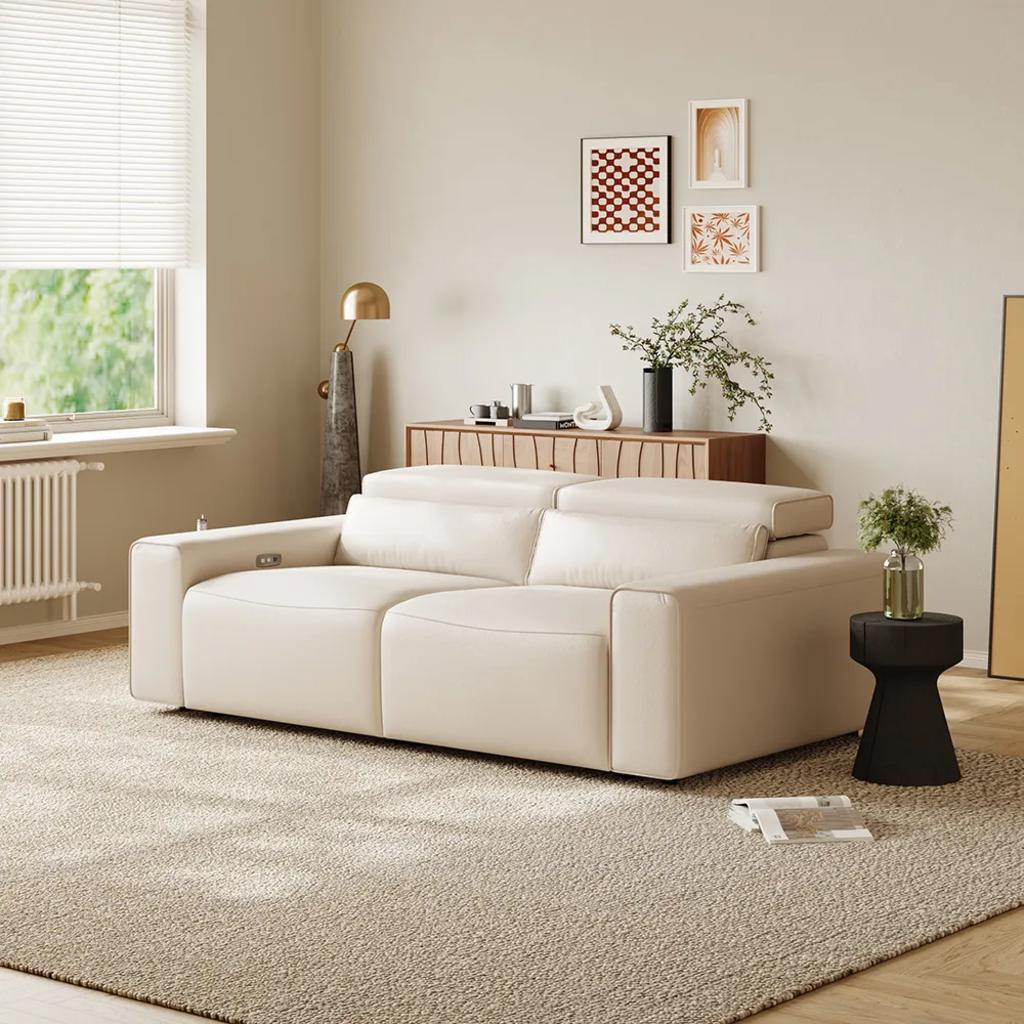
Benjamin Power Reclining Sofa
Leather-like upholstery suits households balancing easy care with everyday comfort.
👍 Best for: Families who want powered lounging
✨ Water-resistant microfiber leather
✨ USB and Type-C charging
✨ Adjustable headrest and recline
What Should You Check Before Buying a Sofa in Either Material?
A material label is only the starting point. Before ordering, check what the upholstery actually is, which surfaces it covers, and how the sofa is built. These details help you compare products fairly, avoid paying for a material you are not receiving, and assess whether the sofa suits your household beyond its appearance.
- Confirm the exact material. Look for a specific description of the leather grade or synthetic upholstery. If the listing only says “leather,” ask for clarification.
- Check upholstery coverage. Confirm whether the seat, back, arms, and sides use the same material. Some sofas combine leather with synthetic upholstery on selected surfaces.
- Review the finish and care instructions. Check which cleaners are allowed and whether the manufacturer recommends any special maintenance.
- Look for relevant performance information. If scratch resistance or abrasion results are advertised, check the test method and conditions before comparing claims between products.
- Evaluate the entire sofa. Frame construction, cushion support, seat depth, dimensions, delivery access, and warranty terms all influence the value of a purchase.
Beyond upholstery, consider the sofa’s frame construction, cushion support, and seat depth. If you spend long evenings lounging or sitting cross-legged, check whether the seating dimensions and cushion firmness support those positions comfortably. These details can affect everyday comfort just as much as the material covering the sofa.

How Can You Compare Durability Claims Fairly?
A durability claim is useful only when you understand what was tested. Abrasion resistance, scratch resistance, coating adhesion, and resistance to cracking measure different aspects of performance. A strong result in one area does not automatically mean the material will resist every type of wear.
When comparing microfiber leather and real leather, look for product-specific material information and clearly described test results. If two sellers provide abrasion figures, check whether they used the same method and comparable conditions. If test information is unavailable, review the care instructions, upholstery specifications, warranty coverage, and any stated limitations.
Long-term value also depends on how you use the sofa. A lower purchase price may matter most when staying within a strict budget, while natural texture and the way leather changes with age may matter more to someone choosing a long-term centerpiece for the living room.
Conclusion
The best decision in the microfiber leather vs real leather comparison depends on your budget, preferred appearance, care routine, and expectations for long-term use. Microfiber leather can offer a consistent leather-like look and practical surface care, while real leather appeals to buyers who value natural grain and the character it may develop over time. Neither material is automatically more durable or comfortable in every situation. Check the exact upholstery specifications, finish, and construction before buying, then choose the sofa that fits how you actually live.
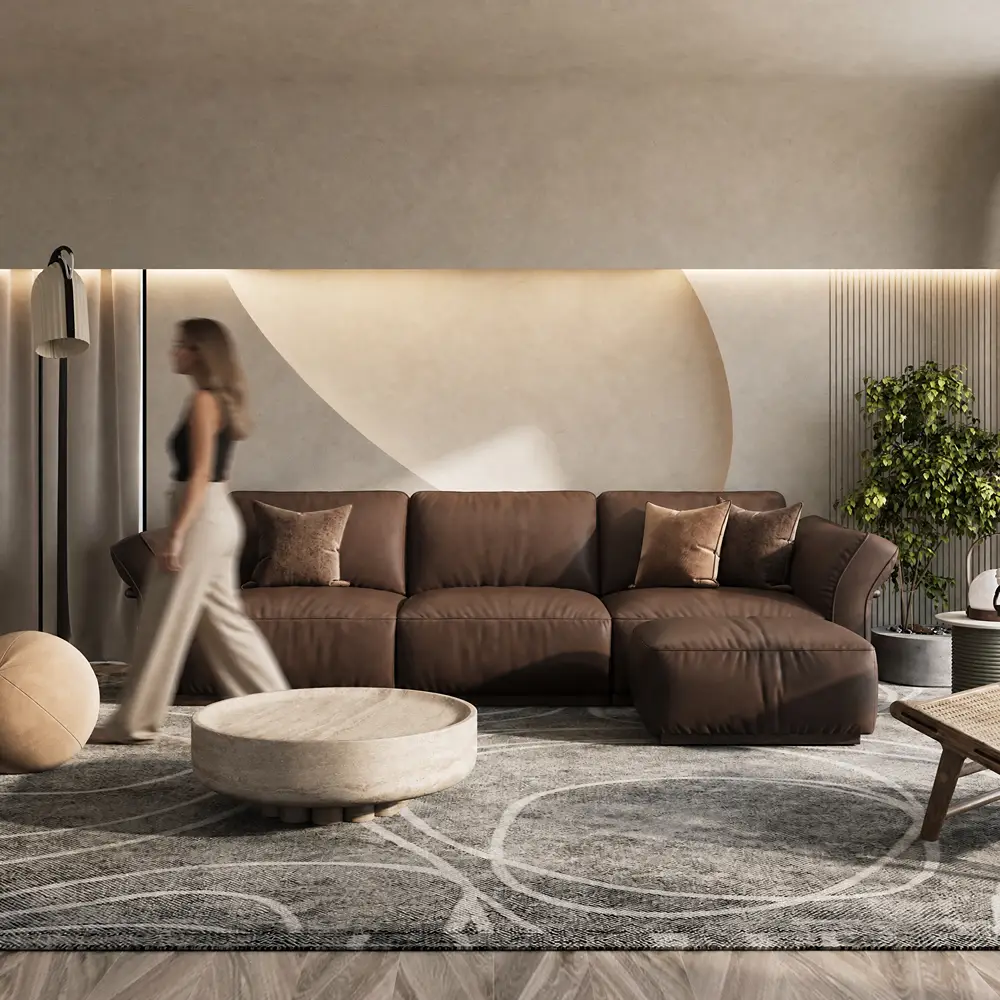
Find the Right Leather Sofa
Explore designs for different room sizes, layouts, and everyday needs.
Frequently Asked Questions
Is Microfiber Leather Waterproof?
Not automatically. Some microfiber leather upholstery is designed to resist water, but performance depends on the surface finish, seams, and construction. Treat “water-resistant” as different from waterproof, wipe spills promptly, and check the product’s care instructions before using cleaners or leaving liquid on the surface.
Can Microfiber Leather Be Repaired If It Starts Peeling?
Small scuffs may be improved with a repair product designed for the specific synthetic upholstery, but peeling caused by a failing surface layer is harder to reverse invisibly. Check the warranty and contact the manufacturer before applying dyes, adhesives, or household repair kits.
Can You Use Leather Conditioner on Microfiber Leather?
Usually, no. Traditional leather conditioners are formulated for natural hide and may leave residue or affect a synthetic coating. Dust with a soft cloth and use only a cleaner approved for the exact upholstery. If the material label is unclear, ask the seller before applying any product.
Is Microfiber Leather a Good Choice for Homes With Pets?
It can suit homes where easy surface cleanup matters, but no upholstery is immune to claws, chewing, or repeated friction. Check the specific sofa’s scratch-resistance claims and care instructions, keep pets’ nails trimmed, and use a throw on favorite lounging spots if needed.
Does Genuine Leather Automatically Mean Top-Grain Leather?
No. “Genuine leather” is a broad description of real leather, not a guarantee of top-grain quality. Before buying, check the stated grade, finish, and which sofa surfaces are covered. Clear product specifications are more useful than a label that says only “leather” or “genuine leather.”


[…] is not a complete material description. Product pages may refer to top-grain leather, microfiber or performance leather, polyurethane upholstery, or combinations that use different materials on contact and non-contact areas. Each can offer a […]