 By Kelvin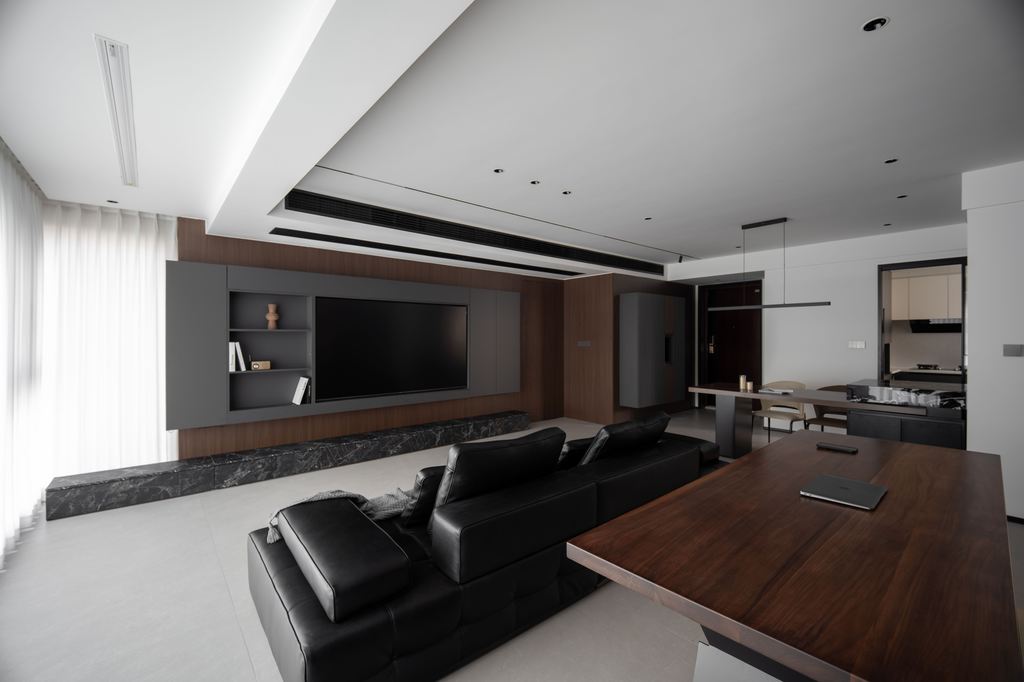
Introduction
A black leather sofa can look sharp, modern, and easy to live with, but it can also feel too heavy or formal in the wrong room. This guide helps you decide whether the color, material, finish, and shape suit your light levels, flooring, household, and daily habits. You will learn which benefits matter in real use, which drawbacks deserve attention, and what to check before ordering so the sofa works beyond the staged product photo.
Table of Contents
What Are Its Main Pros and Cons?
The main advantage of a black leather sofa is its ability to create a clear visual anchor without requiring a complicated color scheme. It can work with warm wood, stone, glass, metal, cream textiles, and muted colors. Many leather surfaces also allow fresh spills to be blotted quickly before they settle into the upholstery.
The trade-offs are more specific than “dark furniture makes a room smaller.” Black upholstery can show pale pet hair, lint, dust, and certain scratches clearly. Smooth or glossy finishes may look colder than expected, while a deep sofa with thick arms and a low base may appear larger in person than it did online.
Before buying, weigh these points:
- Strong visual presence: Useful in an open room, but potentially overpowering in a dim, crowded one.
- Flexible color pairing: Black connects easily with many finishes, but repeating it across the rug, curtains, and storage can make the room feel flat.
- Wipeable surface: Helpful for everyday spills, but care requirements depend on the exact upholstery.
- Long-term style: Clean profiles can remain current, while bulky shapes and shiny finishes may date faster.
- Visible surface debris: Dark upholstery can hide some stains yet highlight light-colored hair and dust.
The right decision depends on the complete combination of room light, sofa profile, material, and household use—not color alone.
Will a Black Leather Sofa Look Too Dark or Dated?
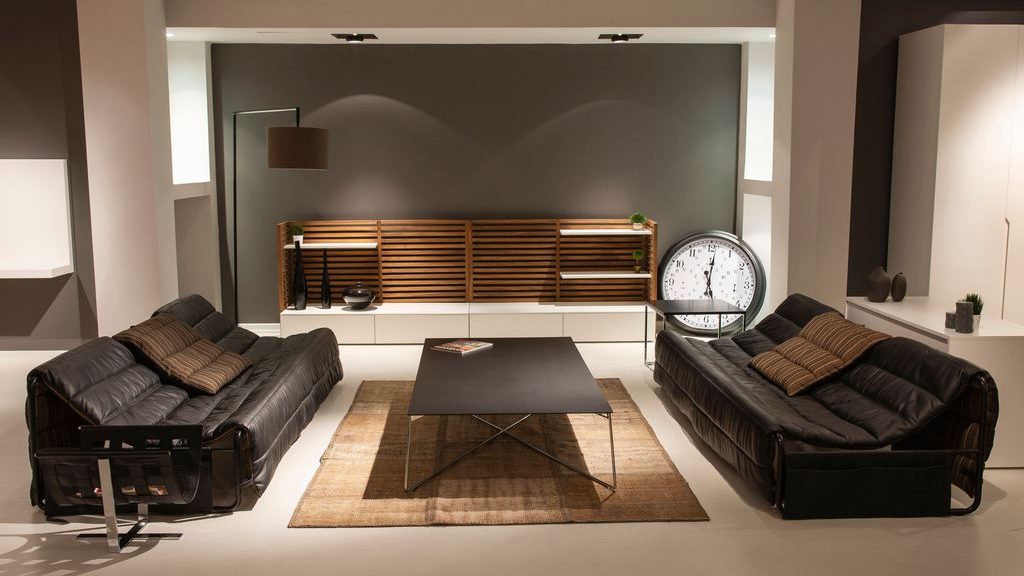
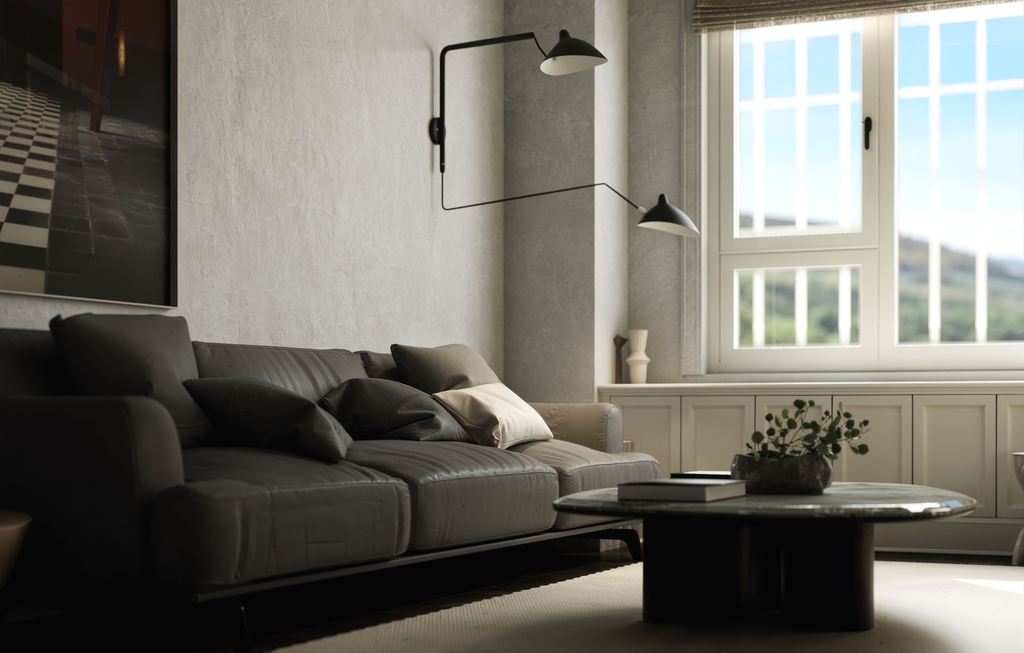
A dark sofa becomes visually heavy when several conditions stack together. Low daylight, dark floors, a tall back, thick arms, and little visible floor can turn the sofa into one large block. A simpler silhouette in the same color may look much lighter because the eye can see space around and beneath it.
Use this room-fit check before judging black leather sofas from a product photo:
| Room condition | Lower-risk sofa features | Main concern |
| Bright room with light floors | Most clean-lined profiles | Strong contrast may feel sharp without warm texture |
| Bright room with dark floors | Visible legs, a defined base, restrained arms | Sofa and floor blending together |
| Low-light room with light floors | Lower back, matte finish, limited bulk | Too many other dark furnishings |
| Low-light room with dark floors | Open base, slimmer arms, lighter rug nearby | A large, uninterrupted dark mass |
| Small living room | Compact arms and clear walking space | Overall footprint and visual width |
| Open-plan room | Modular or deeper seating can work | Connecting the sofa to the wider room |
A modern look usually comes from proportion rather than trend labels. Low or moderately scaled backs, clean seams, restrained tufting, and some visible structure tend to feel lighter. Overstuffed cushions, oversized rolled arms, heavy contrast stitching, and a high-gloss surface can push the same color toward a more dated or formal appearance.
Once the sofa itself passes the fit test, living room colors that work with a black sofa can help you choose walls, rugs, and accents without repeating black across every major surface.
Which Leather Type and Finish Should You Choose?
“Leather” is not a complete material description. Product pages may refer to top-grain leather, microfiber or performance leather, polyurethane upholstery, or combinations that use different materials on contact and non-contact areas. Each can offer a different feel, aging pattern, price, and care routine.
Use these checks when comparing options:
- Top-grain leather: Look for the stated coverage, surface treatment, and care instructions. Natural grain and subtle variation may remain visible.
- Microfiber or performance leather: Confirm the fiber and coating composition rather than assuming it is natural hide.
- PU or faux leather: Check the surface layer and backing, and set durability expectations according to the manufacturer’s information.
- Matte or pebbled finish: Usually reduces glare and adds visual texture.
- Smooth or glossy finish: Creates a sharper look but may make reflections and surface marks more noticeable.
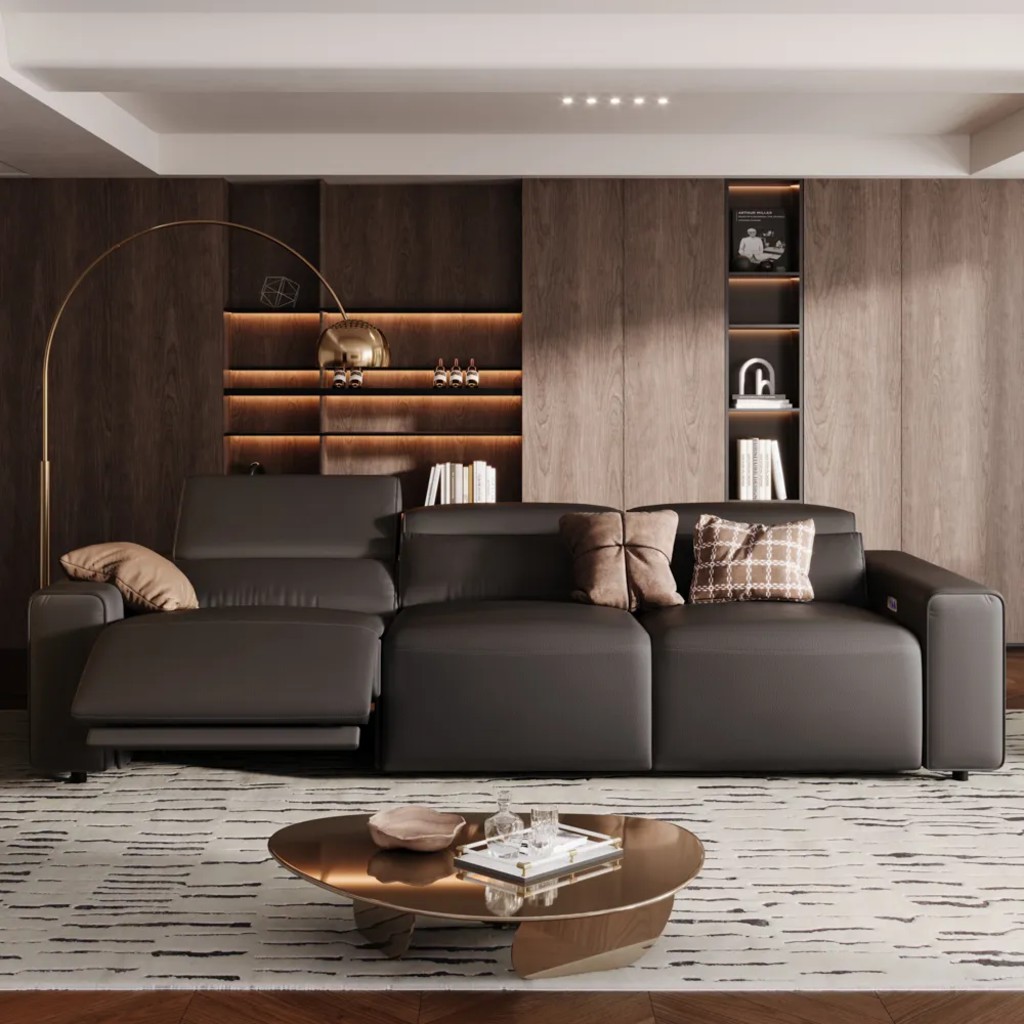
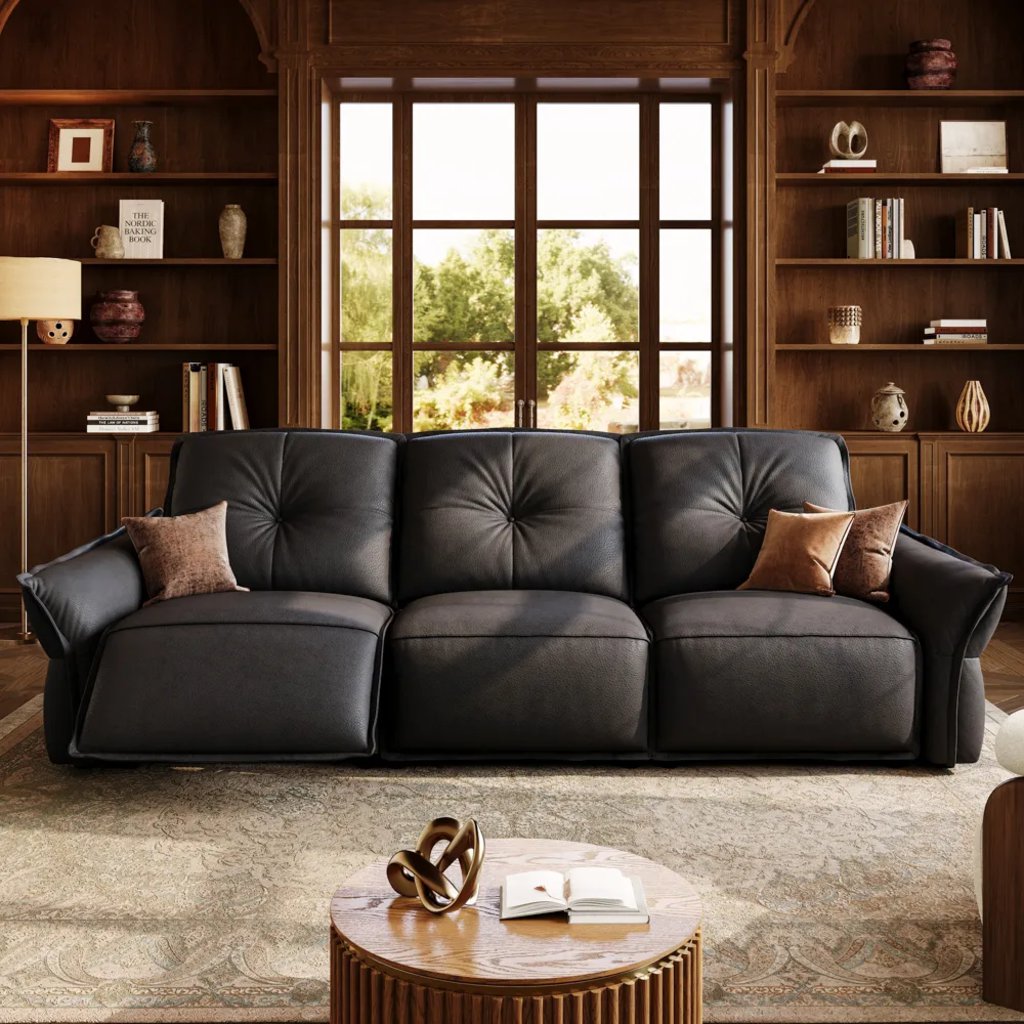
For a room that needs substantial seating without the shiny, overfilled look buyers often worry about, the Cronus-Black Genuine Leather Modular Sofa uses top-grain leather with a finely textured pebble grain and matte finish. Its modular format also suits households that may adjust the seating arrangement as routines change, helping the dark upholstery feel intentional rather than fixed and bulky.
Is a Black Leather Sofa Right for Your Lifestyle?
Material performance should be judged against what actually happens in the room. A formal sitting room and a family TV area may need completely different surfaces even when the desired color is the same.
For a home with children, the ability to wipe a fresh spill can be useful, but toy edges, pens, and clothing hardware may create marks. Pet owners should consider claw contact and fur color as well as cleaning. A black leather couch may show cream or white fur more clearly than a mid-tone surface, even when the hair is easy to remove.
Strong direct sun is another practical factor. Check the manufacturer’s placement and care instructions before putting leather close to a large, unshaded window or heat source. In a room used for long movie nights, seat support, back angle, and surface feel matter more than how polished the sofa looks when nobody is sitting on it.
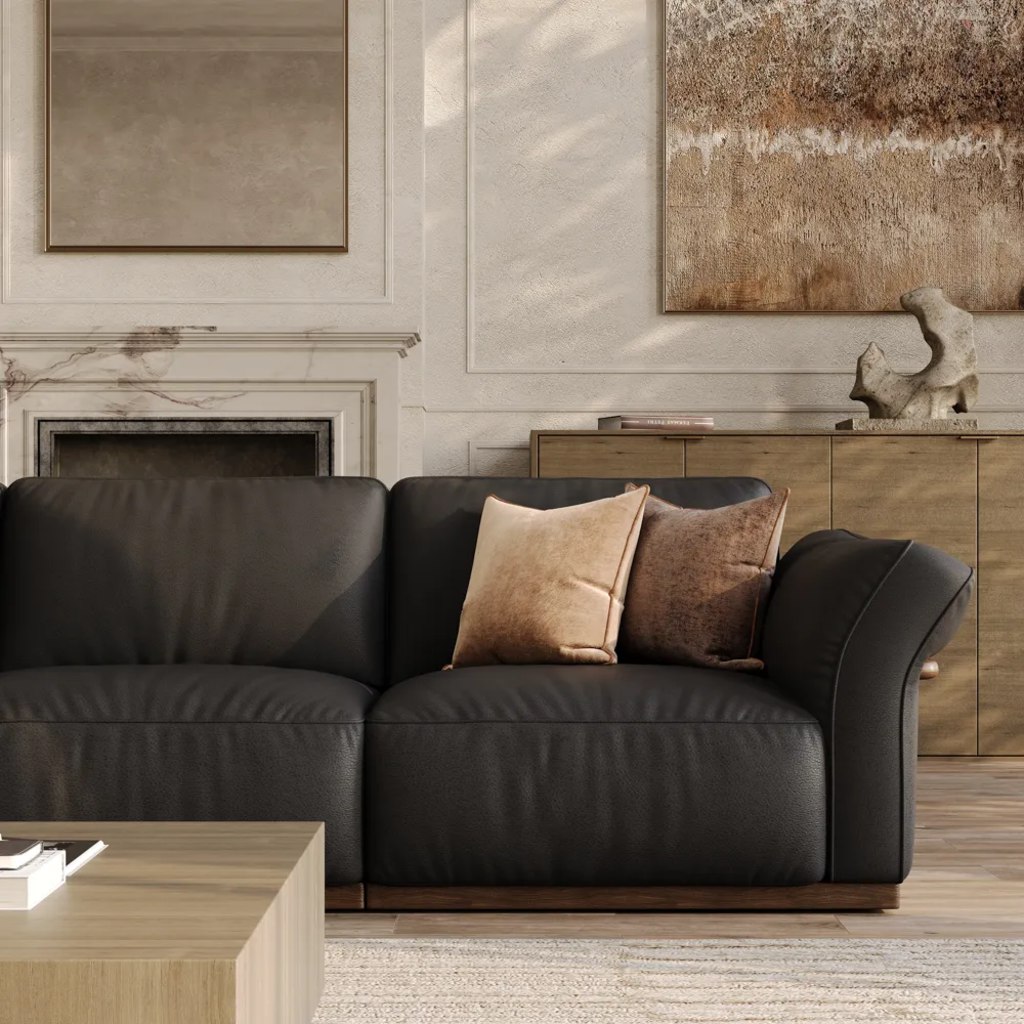
Function should also match the routine. A standard sofa suits straightforward seating. Modular pieces help when the room changes between conversation and TV use. Reclining models need operating clearance and power planning, while sleeper functions make more sense in a multipurpose room than in a formal space. A detailed black recliner couch room-fit guide can help when moving footrests and wall clearance are part of the decision.

How Does It Compare With Other Sofa Options?
A comparison is useful when you like the look but remain unsure about the material or color.
Choose black leather when you want a defined modern anchor, prefer a smoother surface, and have enough contrast around the sofa.
Choose black fabric when a softer, more casual feel matters more than quick surface wiping. Fabric weave and texture will affect how much lint and pet hair it shows.
Choose brown leather when warm wood, earthy colors, and a softer aged appearance already dominate the room. Brown usually creates less visual contrast than solid black.
Choose beige or khaki leather when the space has limited daylight or you want leather without a strong dark mass. The trade-off is that marks and color transfer may be more noticeable.
Choose performance upholstery when family use is the highest priority, but verify the exact composition and care instructions rather than relying on a broad “easy-care” label.
Once you know which material, color, and function suit your home, comparing the best black sofas for modern living rooms can help you narrow the options by seating type and everyday use.
What Should You Check Before Buying?
A product can look suitable online and still feel wrong once its color, scale, and finish meet the real room. When labels are unclear, comparing leather sofa types, durability, and care can help you identify which questions to ask before ordering.
Use this final check:
- Read the full upholstery composition. Find out which areas use the listed material and whether different surfaces are combined.
- Check finish words. Matte, pebbled, smooth, semi-gloss, and glossy describe different visual effects.
- Study customer photos. Compare daylight, evening light, and rooms with flooring similar to yours.
- Assess visual weight. Look at arm thickness, back height, base design, cushion volume, and visible floor.
- Map the daily routine. Account for pets, children, snacks, direct sun, reclining, naps, and overnight guests.
- Confirm access and operation. Check delivery paths, doorways, power access, moving parts, and return conditions.
- Compare alternatives honestly. A black sofa is not automatically the safest neutral if another material or tone better fits the room.
A useful test is to place a dark blanket or taped floor outline where the sofa will sit, then view the area in morning and evening light. It will not reproduce the exact finish, but it can reveal whether the room already carries too much dark visual weight.
Conclusion
A black leather sofa is a strong choice when its profile, finish, and material fit both the room and the household. Start by checking daylight, flooring, arm and back proportions, and the amount of visible space around the sofa. Then confirm the upholstery composition and care needs instead of treating every leather surface as identical. When those decisions are made first, black can feel grounded and current without requiring layers of decor to correct a sofa that was too heavy, shiny, or impractical from the start.
Q&A
Is a modular black leather sofa easier to move into an apartment?
Often, but not always. Separate modules may fit through elevators, stairwells, and narrow doorways more easily than a one-piece sofa. Check the dimensions and weight of each module, not only the completed configuration. Also confirm how the pieces connect, since some systems require additional space for brackets or locking hardware.
Should accent chairs match a black leather sofa?
No. Cream fabric, camel leather, muted upholstery, or wood-framed chairs can make the room feel more layered. Keep the arrangement connected through similar proportions, leg finishes, or a few repeated black details. Avoid another oversized dark chair when the room has limited floor space or natural light.
Can every black leather sofa use leather conditioner?
No. Natural leather, coated leather, microfiber leather, and PU upholstery require different care. Confirm the complete material composition and follow the manufacturer’s instructions before applying conditioner. A product designed for natural hide may leave residue, change the sheen, or damage an engineered surface that cannot absorb it properly.
Does black leather feel hotter in summer or colder in winter?
Leather can respond quickly to the surrounding temperature. It may initially feel cool in an air-conditioned room and become hot when exposed to direct sunlight. Window placement, room climate, surface coating, and clothing affect comfort more than color alone, so consider where the sofa will sit throughout the year.
Should you choose attached or loose sofa cushions?
Attached cushions maintain a cleaner silhouette and are less likely to shift during daily use. Loose cushions are easier to rotate, lift, and clean underneath, but they may need regular repositioning. Choose loose cushions for flexible lounging and easier access, or attached cushions when a consistently tidy appearance matters more.


