 By Stephanie
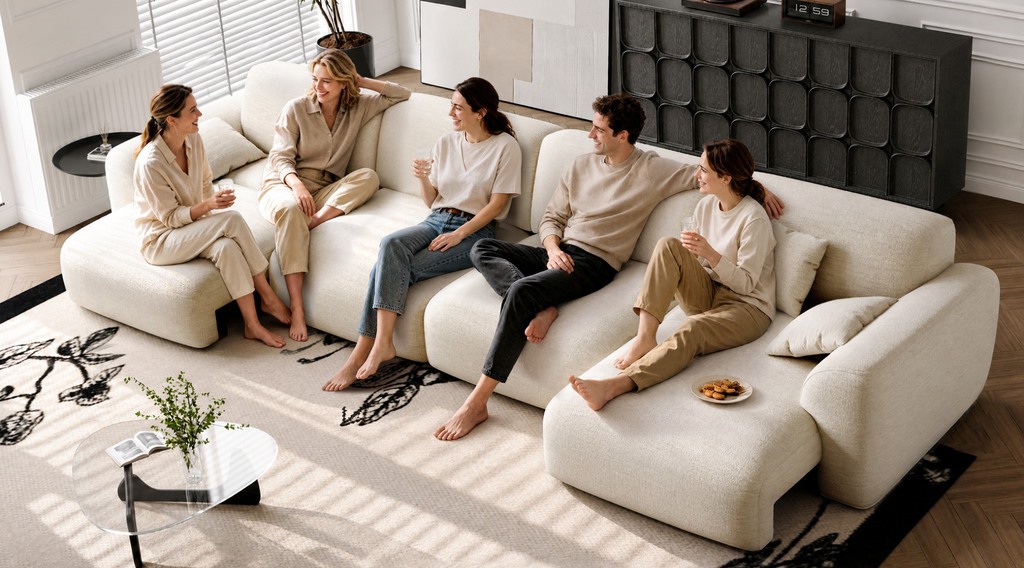
A loveseat can be shorter than a three-seater yet take up more of a narrow room if its frame is deeper. That is why choosing a sofa for long narrow living room layouts means checking two dimensions separately: available wall length and front-to-back clearance.
This guide compares straight sofas, loveseats, sectionals, and adjustable seating, then applies their dimensions to a 10-foot-wide room. You’ll learn when a shorter sofa helps, when extra features become a problem, and how to rule out a model before it arrives.
Table of Contents
What Sofa Types Work Best for a Long Narrow Living Room?
The best sofa for a narrow living room depends on which dimension is limited: usable wall length, front-to-back room width, or the route between doors. A loveseat can solve a short-wall problem, while a shallower straight sofa helps when furniture crowds the room. Sectionals and reclining sofas are also worth considering when their additional functions justify the space they occupy.
| Room Condition | Sofa to Consider | When to Reconsider |
| Narrow room with a long, uninterrupted wall | Slim straight sofa | Its depth crowds the coffee table or walking route |
| Short seating wall or doorway nearby | Loveseat | Three adults need regular seating |
| Unused corner away from doorways | Compact sectional | The chaise interrupts access |
| Space for occasional reclining | Adjustable or reclining sofa | The extended position blocks daily activities |
A narrow-arm three-seater may provide more usable seating width than a bulky loveseat, even when their overall lengths are similar. The same distinction matters when comparing small sofas for apartments: compare the complete frame dimensions rather than relying on labels such as compact or apartment-sized.
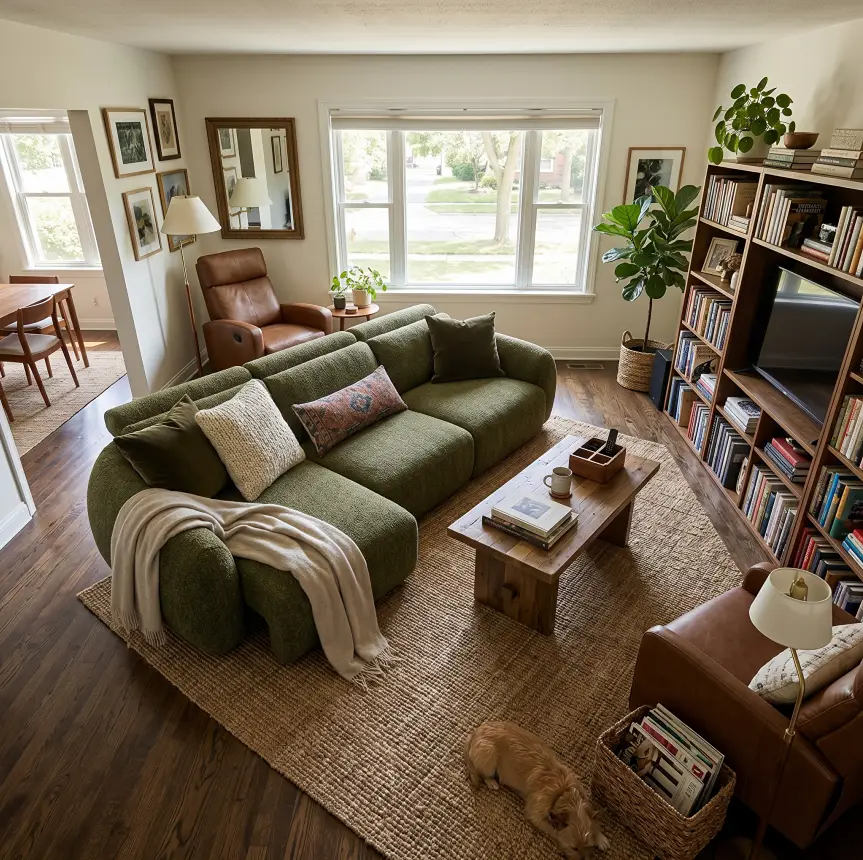
How Deep Can Your Sofa Be Without Blocking Walkways?
Two rooms with identical dimensions can accommodate very different furniture if one has a fireplace hearth, inward-swinging door, or deep media cabinet. Before choosing a sofa for long narrow living room layouts, focus on the usable space around the seating area rather than the room’s overall square footage. The following measurements will help determine what actually fits.
Measure the Usable Room Width
Measure across the narrowest part of the seating area, accounting for permanent projections such as cabinets or fireplace hearths. Separately, record the uninterrupted seating-wall length between doorways or built-ins.
A pass-through living room layout may have generous square footage but limited usable depth along the daily route. Identify where people normally walk between rooms, then mark the proposed sofa footprint with painter’s tape.
This helps you check whether the sofa leaves space for the furniture you plan to keep.
Compare Overall Depth, Not Just Seat Depth
Sofa depth and seat depth measure different things.
Overall depth runs from the frontmost part of the sofa to the back of its frame. It determines how much floor space the furniture occupies when closed.
Seat depth describes the usable sitting area from the front of the cushion toward the back support. It affects sitting posture and lounging comfort but doesn’t tell you the sofa’s full footprint.
When comparing product specifications, use overall depth to check the available floor space and seat depth to evaluate comfort. Neither measurement should substitute for the other.
Test a 10-Foot-Wide Living Room
Consider a living room measuring 10 feet wide, or 120 inches.
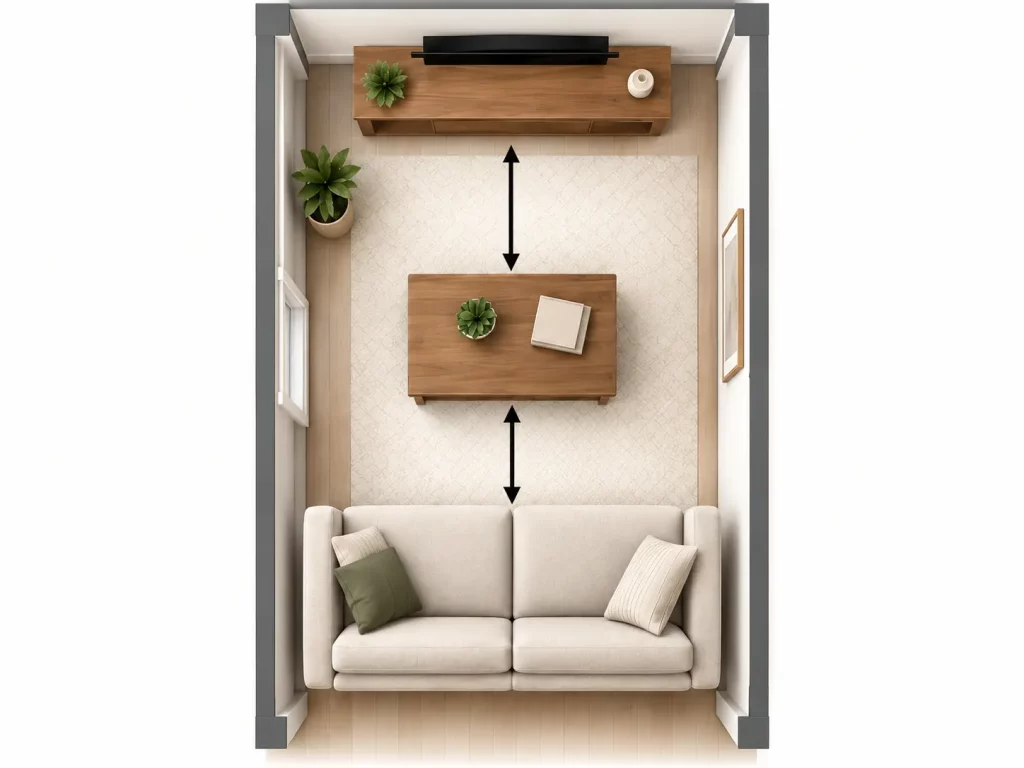
Suppose the sofa faces a 15-inch-deep TV console, with a 20-inch-deep coffee table between them. You also reserve 18 inches between the sofa and coffee table.
The remaining distance between the coffee table and TV console changes with sofa depth:
- 34-inch-deep sofa: 33 inches remain.
- 40-inch-deep sofa: 27 inches remain.
- 46-inch-deep sofa: 21 inches remain.
These figures describe the space between the coffee table and TV console, not automatically the room’s main walkway. If people normally pass along the side of the sofa, measure that route separately.
In this arrangement, a 34-inch-deep sofa leaves 12 inches more open space than a 46-inch model, which may determine whether a full-size coffee table is practical.
If the deeper sofa offers better comfort, consider replacing the coffee table with a compact side table rather than automatically rejecting it.
When Do Sectionals and Extendable Sofas Make Sense?
A chaise occupies its extended footprint throughout the day, while a reclining seat needs additional room only when someone uses it. The useful comparison is whether your household benefits more from permanent extra seating or occasional lounging space. Both can work in a long, narrow room, but they create different demands on the available floor area.
Choose a Sectional Only When the Chaise Fits
A sectional sofa for narrow living room layouts works best when its chaise occupies a corner that isn’t needed for circulation.
For example, a long living room with a window at one end may accommodate a compact L-shaped sectional if the chaise extends toward the window rather than across the entrance-to-kitchen route.
If the room has several entrances or a walkway along both sides, a straight sofa with a movable ottoman may be easier to use.
In a long narrow living room layout, a chaise near the entrance may block access even when the sectional itself fits along the wall. Before ordering, check its position relative to doors, storage, and the primary walking route.
Consider a Sofa Bed When One Room Serves Multiple Purposes
A sofa bed can be useful when a long, narrow living room needs to handle more than everyday seating. For example, a couple may use the room for conversation during the day, stretch out while watching TV at night, and occasionally accommodate overnight guests.
A power sofa bed can support these activities by adjusting from a seated position to a deeper lounging or sleep-ready surface, without requiring a separate guest bed in the room.
However, it needs enough floor space when fully extended. If the sleeping position blocks an essential walkway, a shallower fixed sofa may be more practical.

Two Sofa Beds for Different Room Needs
Once you’ve confirmed that a sofa bed can fit in both its closed and extended positions, compare models based on how you plan to use the room. These two POVISON sofa beds address different needs: Aurora offers more flexibility for changing sitting and lounging positions, while Sontra provides a shorter two-seater for walls with limited usable length.
Aurora Power Sofa Bed: For Flexible Everyday Seating
When a narrow living room needs to accommodate different activities, the Aurora Power Sofa Bed offers stepless powered seat-depth adjustment from 27 to 45.5 inches. Instead of switching between only fixed positions, users can adjust the seating for upright conversations, relaxed lounging, or extended rest. Its 83-inch-wide frame provides this flexibility without a permanent chaise, although its 41-inch closed depth requires sufficient room width.
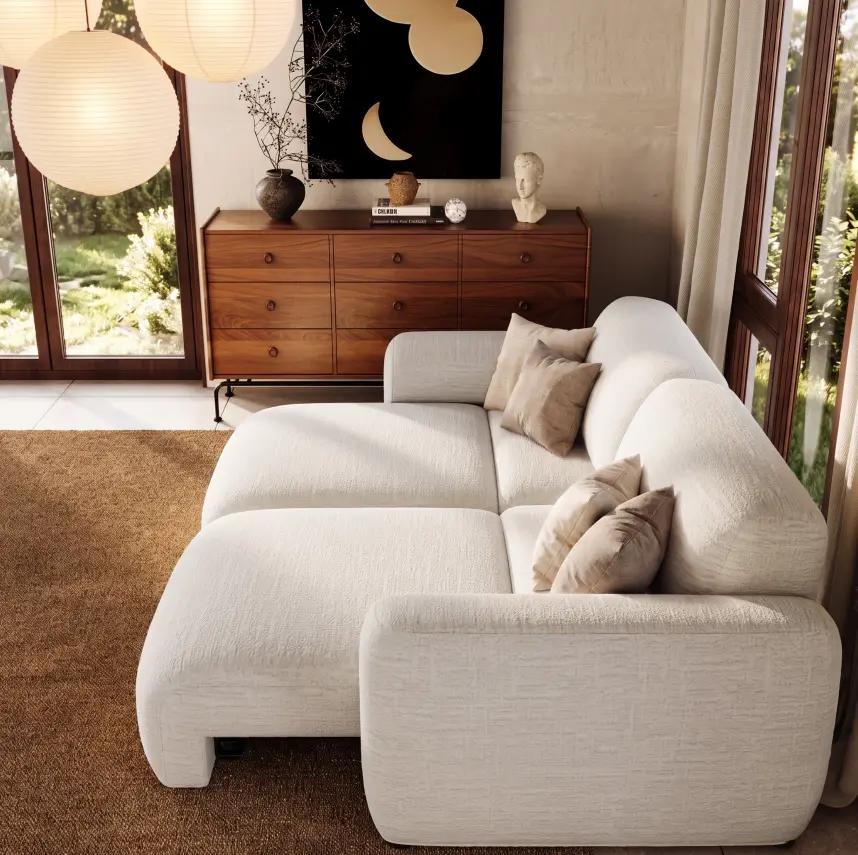
Aurora Electric Sofa Bed
Aurora brings flexibility to a long, narrow living room, adapting easily from everyday seating to relaxed lounging and occasional overnight stays.
Sontra Leather Power Sofa Bed: For a Shorter Seating Wall
When doorways or built-ins limit the available wall length, the Sontra Power Sofa Bed offers a shorter, 76.4-inch-wide two-seater with powered seat extension. Its water- and stain-resistant faux leather is practical for households managing everyday spills. However, its 41.9-inch closed depth makes it better suited to shorter seating walls than rooms with very limited front-to-back space.
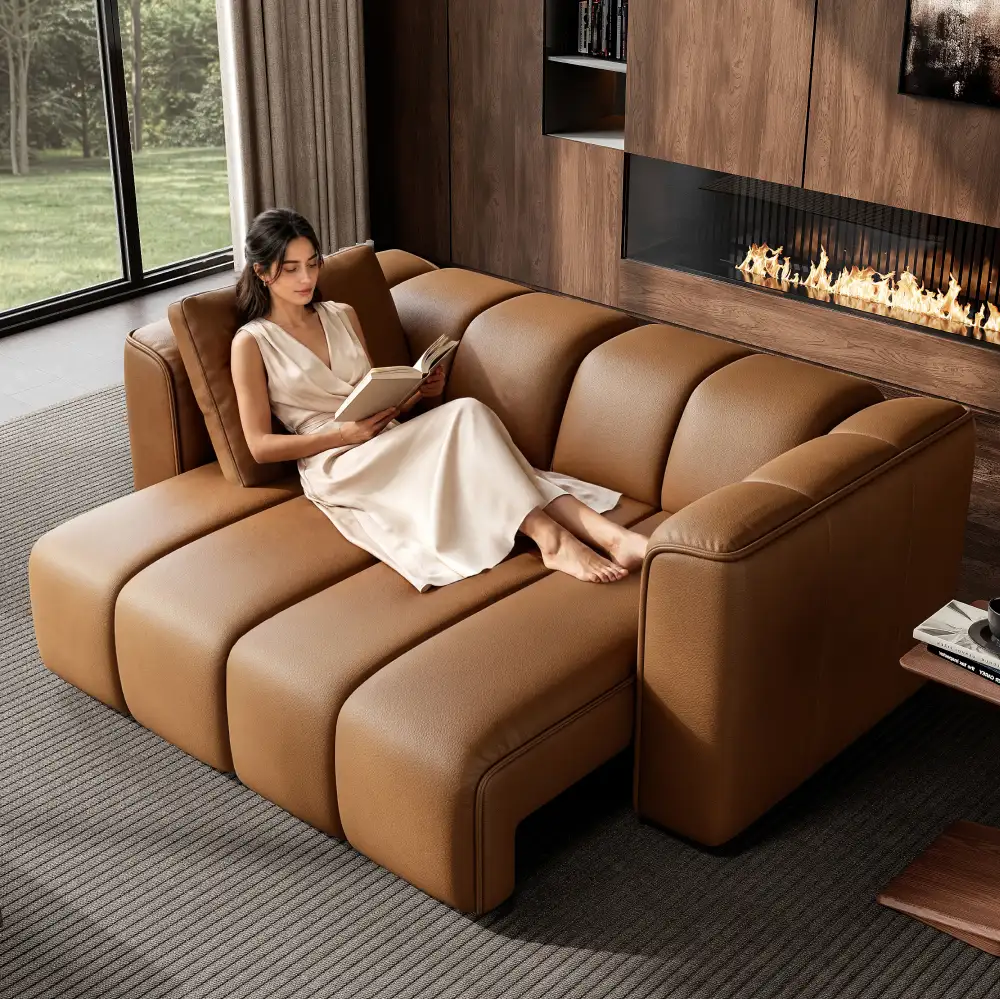
Sontra Leather Power Sofa Bed
Sontra makes the most of a shorter seating wall, combining comfortable everyday seating and guest-ready functionality in one compact two-seater.
Both models can accommodate occasional sleeping needs, but neither is suitable for every narrow room. If sofa depth is the main limitation, a shallower fixed sofa may be more practical.
What Should You Check Before Ordering a Sofa?
A sofa can fit the planned seating area and still create problems during delivery or everyday use. Before ordering, check the practical details that product dimensions alone may not reveal.
- Delivery route: Measure door openings, hallway turns, stairs, and elevators. Compare these with the packaged dimensions rather than relying only on the assembled sofa’s measurements.
- Door and storage access: Confirm that nearby doors open fully and storage drawers remain accessible without moving the sofa.
- Power access: For electric seating, locate a suitable outlet and ensure the cord won’t cross a walking route.
- Everyday operation: Test the fully extended footprint with tape. Check whether one person can pass through the room while another reclines, rather than evaluating the sofa only when nobody is using it.
Finally, consider how often you’ll need to adjust the furniture around the sofa. Moving a table once a month may be manageable; doing so several times a day is much less convenient.
Conclusion
Choosing a sofa for long narrow living room spaces involves more than finding a model that fits against the wall. The right sofa should match your household’s seating needs while leaving usable space for everyday activities. Start by identifying whether wall length or room width is the greater limitation, then compare sofa types and their actual footprints. Consider adjustable seating only when its functions suit your routine and available space. Before ordering, verify delivery access and how the furniture works alongside other people and furnishings in the room.
Find a Sofa That Fits Your Space
Explore sofas that balance everyday comfort, seating needs, and room dimensions.
FAQ
Can Two Small Sofas Fit in a Narrow Living Room?
Two small sofas can face each other if their combined depths leave enough space for movement. In a 10-foot-wide room, two 35-inch-deep sofas leave 50 inches between them. Adding a 20-inch coffee table reduces that to just 30 inches of total clearance on both sides, making a table-free arrangement more practical.
Can a Curved Sofa Work in a Long Narrow Living Room?
A curved sofa can work if the room has enough width to accommodate its deepest point. Unlike a straight sofa, it may leave unused space behind its curved back when placed against a wall. Check its full footprint, including the curved edges, before choosing one for a narrow room.
Does a Sofa Need to Face the TV in a Long Narrow Living Room?
Not necessarily, but the viewing angle matters. If the TV is on a short wall and the sofa runs along a long wall, viewers may need to turn their heads for extended periods. A swiveling TV mount or a different seating orientation can make everyday viewing more comfortable.
How Do I Choose a Left- or Right-Facing Chaise?
Before ordering, stand facing the front of the sofa and identify which side of the room has space for the chaise. Retailers often label left- or right-facing configurations from this viewpoint, but conventions vary. Check the manufacturer’s configuration diagram rather than relying on photos alone. A reversible chaise provides flexibility if you later rearrange the room.


