 By Kelvin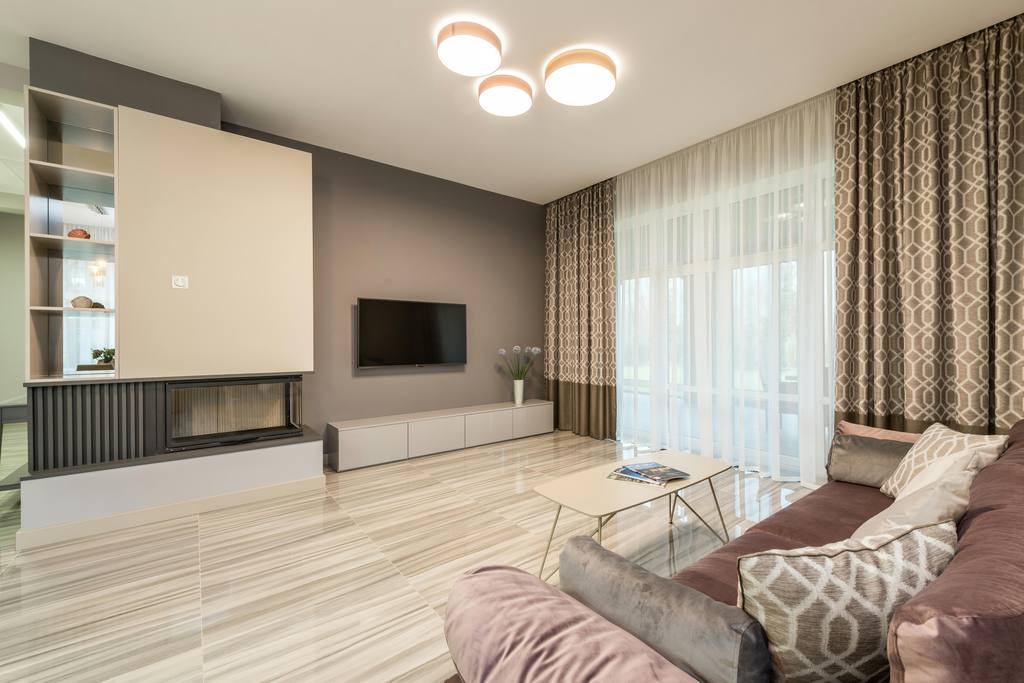
Introduction
If your living room feels dim, flat, too harsh at night, or awkward around the TV, the problem may not be your furniture or wall color. It may be the way the room is lit. The best living room lighting ideas help you create different levels of light for relaxing, reading, watching TV, hosting guests, and making the space feel finished. This guide breaks lighting down by real living room zones, decoration style, room problems, and buying checks, so you can choose lights that actually work in daily life.
Table of Contents
What Makes Living Room Lighting Feel Balanced?
Balanced living room lighting is not about making the room as bright as possible. A room can have a strong ceiling light and still feel uncomfortable if the corners are dark, the TV reflects glare, or every light hits from the same height. Good lighting spreads brightness across the room, gives each activity enough support, and keeps the overall mood soft enough for relaxing.
A living room usually needs three types of light. General lighting helps you move around the room safely. Task lighting supports reading, working, or playing games. Mood or accent lighting adds warmth around walls, shelves, artwork, or the TV area. When these layers work together, the room feels more flexible instead of switching between “too bright” and “too dark.”
How Do You Layer Lights Around Real Living Room Zones?
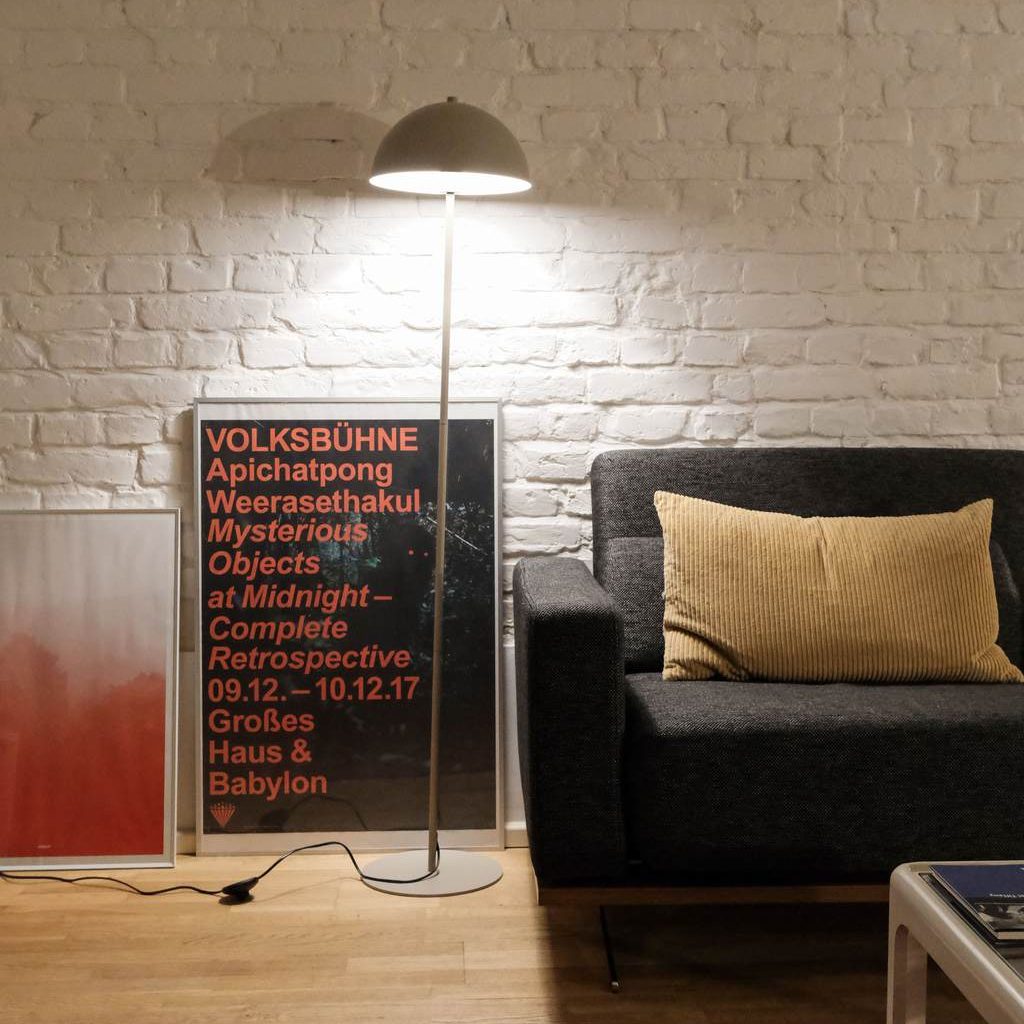
The easiest way to plan lighting is to stop thinking only in fixture types and start thinking in zones. A sofa, TV wall, side table, reading chair, and coffee table all need different light. This is why one ceiling fixture rarely solves the whole room, even if it looks beautiful.
| Living Room Zone | Lighting Idea | Why It Works |
| Sofa area | Place a floor lamp beside or slightly behind the sofa | Adds soft light for conversation, relaxing, or scrolling at night |
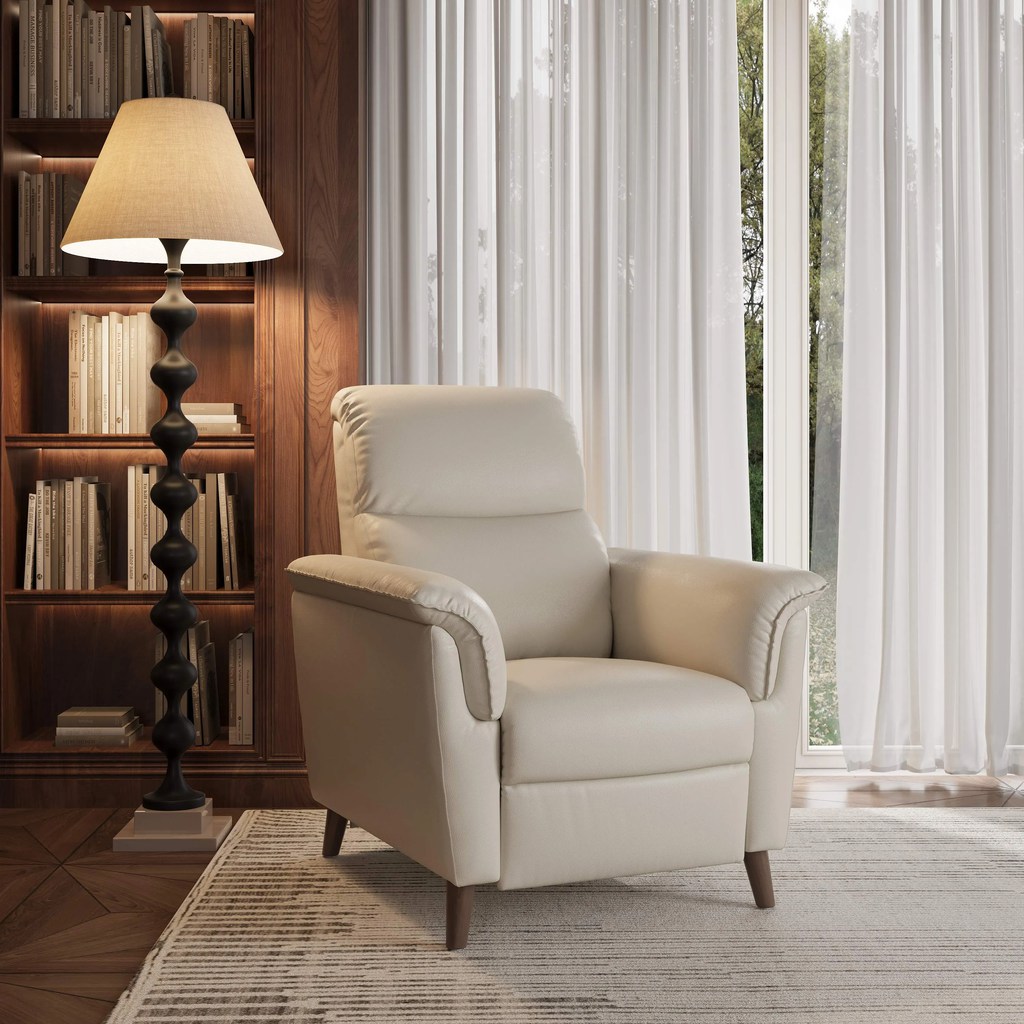
| Side table | Use a table lamp with a fabric, linen, or frosted shade | Creates warm mid-level light close to where people sit |
| TV wall | Add low ambient light, a dim wall sconce, or soft backlighting | Reduces screen contrast without shining directly on the TV |
| Reading corner | Use an adjustable floor lamp or plug-in sconce | Gives focused light without turning on the whole room |
| Coffee table area | Use a ceiling light, pendant, or chandelier nearby | Anchors the center of the seating area |
| Storage or display cabinet | Add hidden or integrated lighting | Highlights decor without adding clutter to the room |
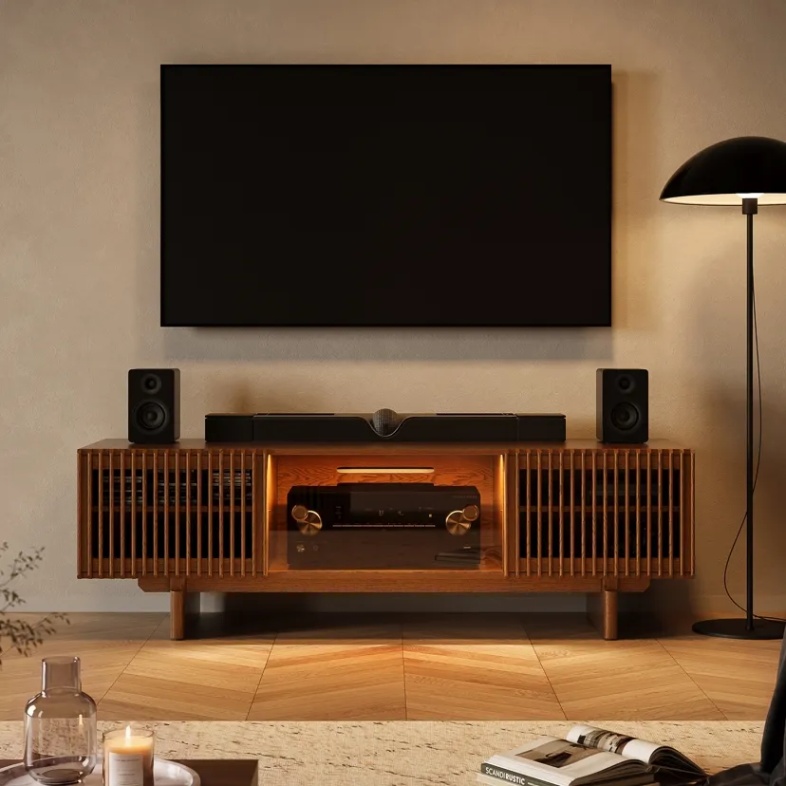
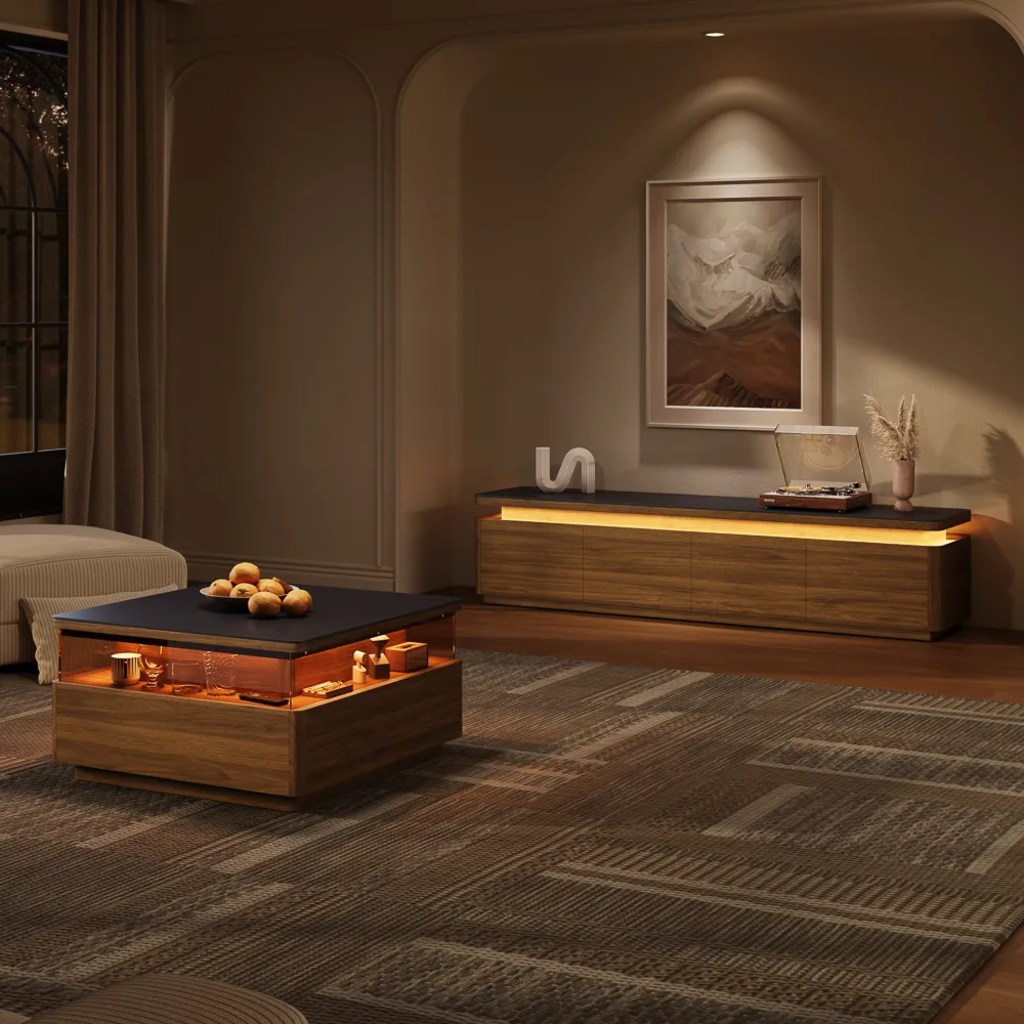
For a TV-heavy living room, avoid placing a bright lamp directly across from the screen. A softer glow near the media wall can make movie nights easier on the eyes. If your TV area feels too dark or too sharp at night, a TV stand with LED lights can help you understand when built-in ambient lighting is useful and when it may feel too decorative.
A family room used for homework, snacks, and streaming may need a table lamp near the sofa, dimmable ceiling light near the coffee table, and soft TV-wall lighting for evening. A quieter lounge-style living room may need fewer bright fixtures, but it still benefits from one low light near the seating area and one accent light near a wall or shelf.
How Should Lighting Match Your Decoration Style?
Lighting should support the style of the room, not compete with it. The fixture shape, shade material, metal finish, and light color can make a modern room feel cleaner, a Japandi room feel softer, or a mid-century space feel warmer. This section is not about copying a style exactly. It is about choosing lighting that fits the furniture language already in the room.
| Decoration Style | Best Lighting Choice | Color Direction | What It Adds |
| Modern | Slim floor lamps, clean pendants, simple sconces | Matte black, brushed nickel, soft white, warm gray | Keeps the room structured and uncluttered |
| Japandi | Paper shades, linen lamps, wood accents, warm diffused light | Warm white, beige, light wood, soft taupe | Adds calm, softness, and natural warmth |
| Mid-century modern | Globe lamps, brass details, walnut-friendly warm light | Brass, amber glass, walnut brown, cream | Brings retro warmth and visual shape |
| Modern farmhouse | Black metal, warm glass, simple lantern-style fixtures | Black, aged bronze, milk glass, warm white | Adds contrast without making the room feel heavy |
| Minimalist | Hidden lighting, tonal lamps, simple flush mounts | White, ivory, matte black, light gray | Adds light without visual clutter |
| Organic modern | Ceramic lamps, stone bases, linen shades, indirect lighting | Sand, clay, cream, warm beige, natural stone tones | Adds texture and softness without feeling busy |
If your room already has a strong material direction, let the lighting follow it. A walnut TV stand usually pairs well with brass, amber glass, or cream shades. A light wood room often works better with linen shades and diffused bulbs. A calm Japandi interior design scheme, for example, usually feels more natural with warm, softened light than with exposed cool bulbs.
This is where many living room light fixture ideas go wrong. A fixture may be attractive on its own, but if it fights the sofa shape, wood tone, rug texture, or metal accents, the room can feel less intentional.
Which Lighting Ideas Solve Common Living Room Problems?
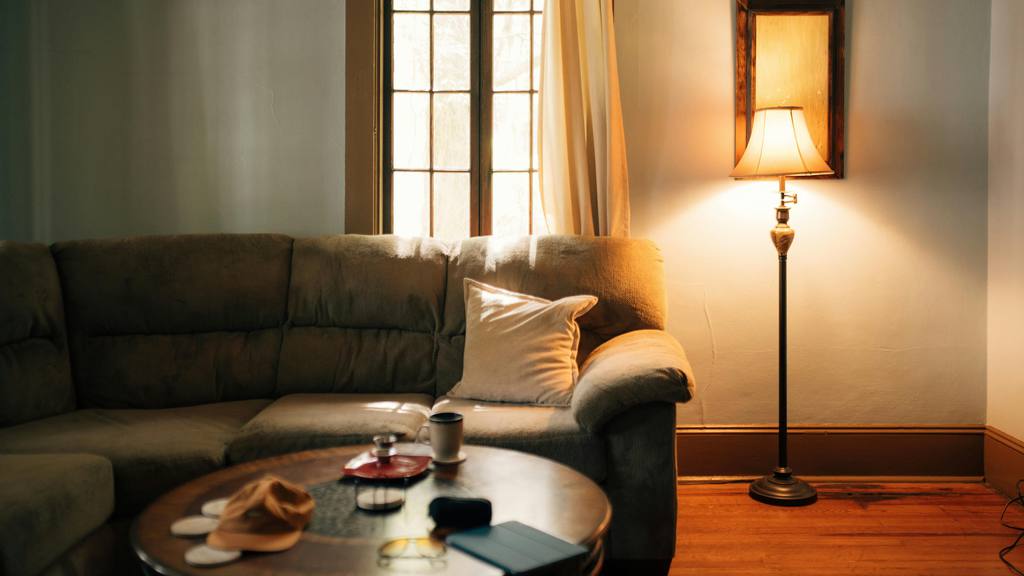
Some lighting decisions depend less on style and more on the room itself. A small apartment, a dark north-facing room, a rental with no ceiling fixture, and an open living-dining space all need different solutions. Use these problem-based checks before choosing new lamps or ceiling lights.
- Small living room: Choose wall sconces, slim floor lamps, and compact table lamps so lighting does not take over the floor.
- Dark living room: Add several low-to-mid-height lights around corners, walls, and furniture edges instead of relying on one stronger overhead bulb.
- No overhead lighting: Use arc floor lamps, plug-in sconces, cordless lamps, and table lamps to build layers without hardwiring.
- Low ceiling: Use flush mount lights, semi-flush lights, wall lights, and lower-profile lamps instead of large chandeliers.
- Open living-dining room: Keep bulbs in a similar warm color temperature, but vary brightness to separate the sofa zone from the dining zone. A living room combined with dining layout often needs softer lighting near the sofa and more focused lighting over the dining table.
- TV-heavy living room: Keep bright lamps away from the screen and use soft side lighting or low backlighting for movie nights.
- Lounge-style living room: For lighting ideas for lounge living room spaces, use warmer lamps, lower light levels, and dimmable fixtures instead of bright task lighting everywhere.
For living room ceiling lighting ideas, start with room height. A high ceiling can handle a larger pendant, chandelier, or layered ceiling feature. A low ceiling usually needs flush or semi-flush lighting so the room does not feel compressed. If you search for ceiling lighting ideas living room, focus less on the fixture alone and more on whether it supports the sofa area, coffee table, and walking paths.
What Should You Check Before Buying Living Room Lights?
Before buying new lights, look at how your living room is actually used. A beautiful fixture can still feel wrong if it is too bright for movie nights, too small for the sofa area, too cool for a cozy room, or placed where it reflects on the TV. Use this section as a quick final check before choosing lamps, bulbs, or ceiling fixtures.
Buying checklist:
- Check ceiling height before choosing a pendant or chandelier.
- Check outlet locations before buying floor lamps or table lamps.
- Check whether the lamp shade softens light or exposes the bulb.
- Check if the fixture reflects on the TV screen.
- Choose dimmable lighting if the room is used for both daytime and evening.
- Keep bulb color temperature close across the same open space.
- Match fixture scale to the sofa, coffee table, or TV wall.
- Match metal, wood, glass, or fabric finishes with existing furniture.
Common mistakes to avoid:
- Relying on one bright overhead light.
- Using cool white bulbs in a relaxing living room.
- Putting all lights at the same height.
- Choosing lamps too small for a large sofa or TV wall.
- Ignoring dark corners.
- Placing bright lamps directly opposite the TV.
- Choosing decorative lamps that are too dim for real use.
- Mixing too many fixture styles without one shared material or finish.
The best living room lighting ideas are not about adding more lights everywhere. They are about choosing the right brightness, height, color temperature, and fixture scale for the way you actually use the room. If the sofa, TV wall, side table, and dark corners all feel comfortable at night, the lighting plan is usually working.
Conclusion
Good lighting should make your living room easier to use, not just prettier in photos. Start with the areas that affect daily comfort: the sofa, TV wall, reading corner, side table, and any dark corners. Then match fixture shape, color, and material to your decoration style. The most useful living room lighting ideas are layered, flexible, and connected to the way your room actually works. Once the main zones feel comfortable at night, the whole space will feel warmer and more finished.
FAQ
Should I choose a floor lamp or a table lamp for the sofa area?
Choose a floor lamp if you need light without adding another piece of furniture. Choose a table lamp if you already have a side table and want softer, closer light for relaxing. For deep sofas or sectionals, a taller floor lamp often spreads light better across the seating area.
How do I avoid glare on the TV?
Place bright lamps away from the direct reflection path of the screen. Side lighting, dimmable wall sconces, low TV-wall backlighting, or a shaded table lamp usually works better than a bare bulb opposite the TV. The goal is to soften the contrast around the screen, not shine light onto it.
Can LED lighting look elegant in a living room?
Yes, LED lighting can look elegant when the light source is hidden and the brightness is controlled. Use warm white or soft neutral LED strips behind a media console, under shelving, or inside storage. Avoid exposed dots, flashing effects, and overly saturated colors unless the room is designed for gaming or entertainment.
What lamp height works best beside a sofa?
A sofa-side lamp usually works best when the shade sits near seated eye level or slightly above it. If the bulb is visible from the sofa, the light may feel harsh. For reading, choose an adjustable arm or a taller shade that directs light downward without shining into your eyes.
Are ceiling lights enough for a living room?
Ceiling lights are useful, but they are rarely enough on their own. They light the room from above but often leave corners, side tables, and sofa areas feeling flat. A ceiling fixture works better when paired with lamps or wall lights that bring light closer to daily-use zones.
What type of lampshade is best for a cozy living room?
Fabric, linen, paper, and frosted glass shades usually create softer light than clear glass or exposed bulbs. A white or cream shade spreads light more evenly, while a darker shade creates a moodier effect. For a cozy living room, avoid shades that expose the bulb directly from seated angles.


[…] rooms that need a more detailed lighting plan, living room lighting ideas for dark corners, seating areas, and the TV wall can help determine where ambient, task, and accent […]