 By Kelvin
Introduction
If you like japandi interior design, you may be looking for a home that feels calm without feeling empty. This style helps you decide what should stay visible, what should be stored away, and how color, furniture, texture, and open space work together. Instead of treating Japandi as a beige decorating trend, this guide focuses on the design logic behind it: lower visual noise, warmer materials, quieter storage, and rooms that are easier to reset after daily use.
Table of Contents
What Makes Japandi Interior Design Different?
Japandi is not simply Japanese decor plus Scandinavian furniture. It is a design approach that values restraint, comfort, natural materials, and everyday function at the same time. A Japandi room should feel edited, but not bare. It should feel warm, but not visually crowded.
The easiest way to understand japandi style interior design is to look at what it avoids. It avoids unnecessary decoration, sharp visual contrast, cluttered surfaces, loud patterns, glossy finishes, and furniture that looks simple but does not support real life.
A Japandi home usually depends on:
- Warm neutral colors
- Natural wood, stone, linen, cotton, ceramic, or rattan
- Low or grounded furniture forms
- Matte or low-sheen finishes
- Hidden storage for daily items
- Open space around key furniture
- A few useful or meaningful objects instead of many small decorations
The style is not about making a room look untouched. It is about making the room feel visually settled. A home can still have a TV, books, chargers, toys, pet items, blankets, and daily routines. Japandi simply asks those things to have a place, so they do not control the whole room.
How Does Japandi Reduce Visual Noise?
Visual noise is anything that makes a room feel busier than it needs to be. It can come from exposed cables, too many open shelves, small objects scattered across surfaces, competing wood tones, bold patterns, or furniture with too many visible lines. Japandi reduces that noise by simplifying what the eye has to process.
Keep Large Surfaces Quiet
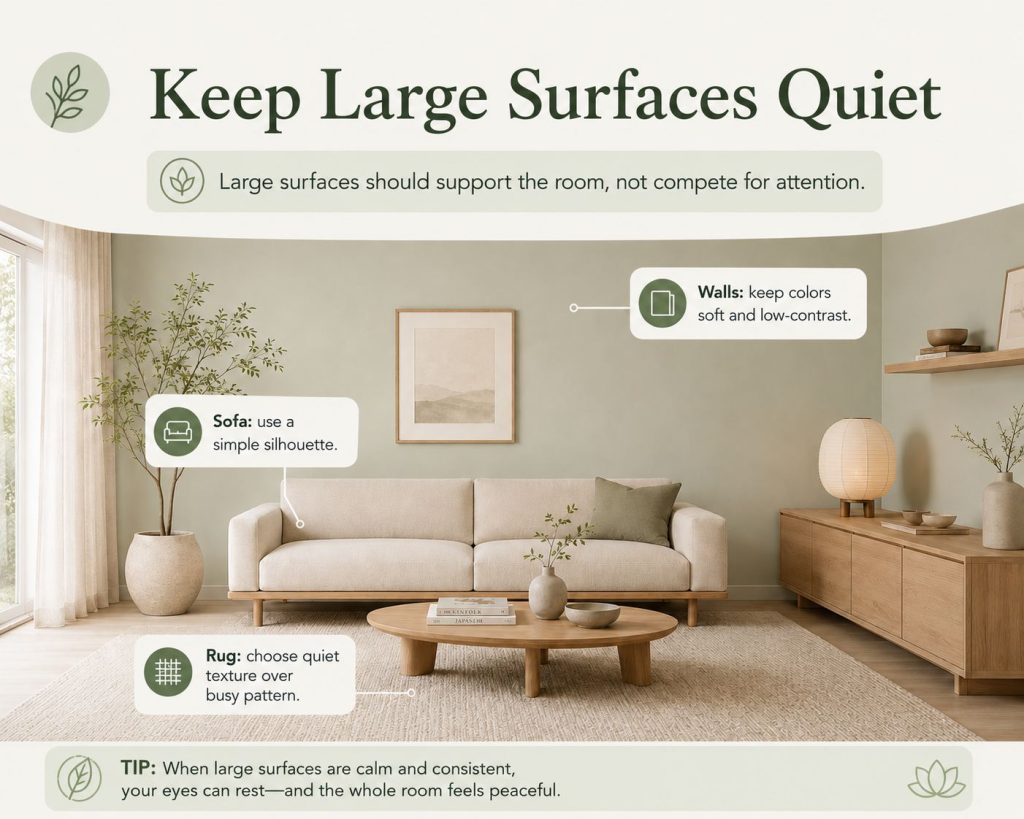
Start with the largest surfaces because they set the visual mood before any decor does. Walls, floors, rugs, curtains, sofas, storage cabinets, and media furniture should not all compete for attention.
A calm Japandi palette might include cream walls, a warm gray rug, walnut furniture, linen upholstery, and one darker accent. The room still has contrast, but the contrast is controlled. Matte and low-sheen finishes also help because they reflect less light and feel softer than glossy surfaces.
This is where modern japandi interior design becomes practical. You can still use updated furniture, media storage, and functional pieces, but the overall surface language should stay quiet.
Hide Small Daily Items
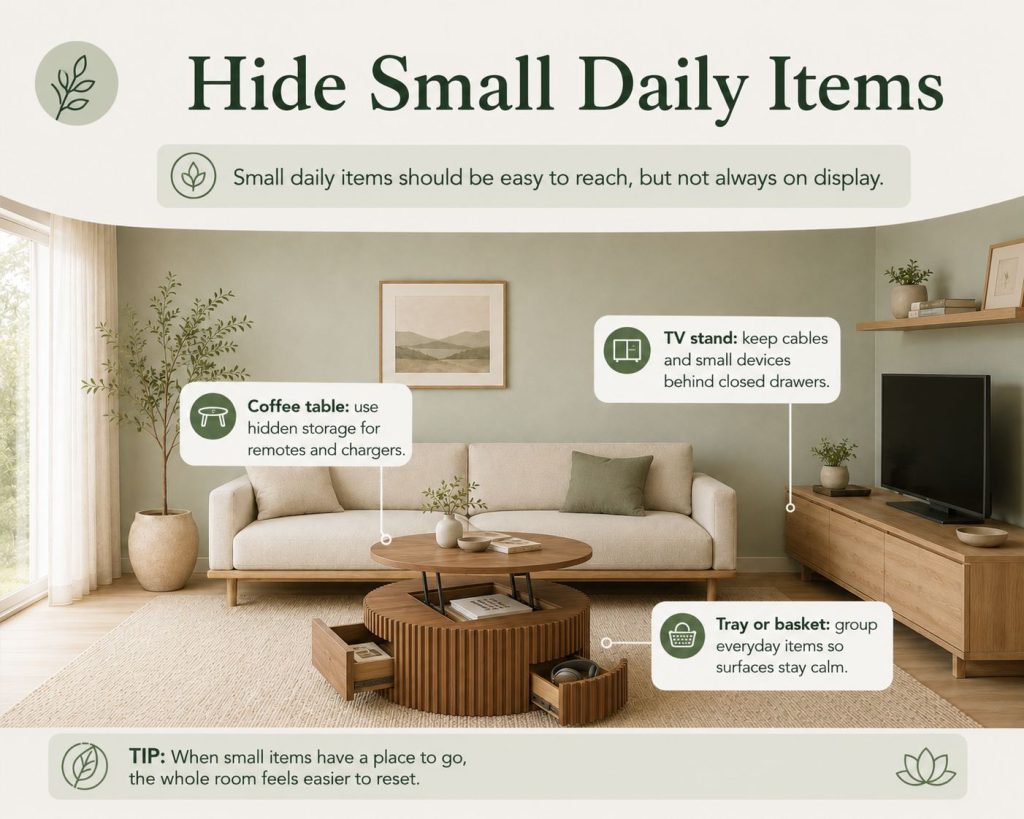
Small objects are often the reason a room stops feeling calm. Remotes, chargers, coasters, tissues, pens, toys, and game controllers spread quickly. Japandi does not require you to remove these items from your life. It asks you to stop displaying all of them at once.
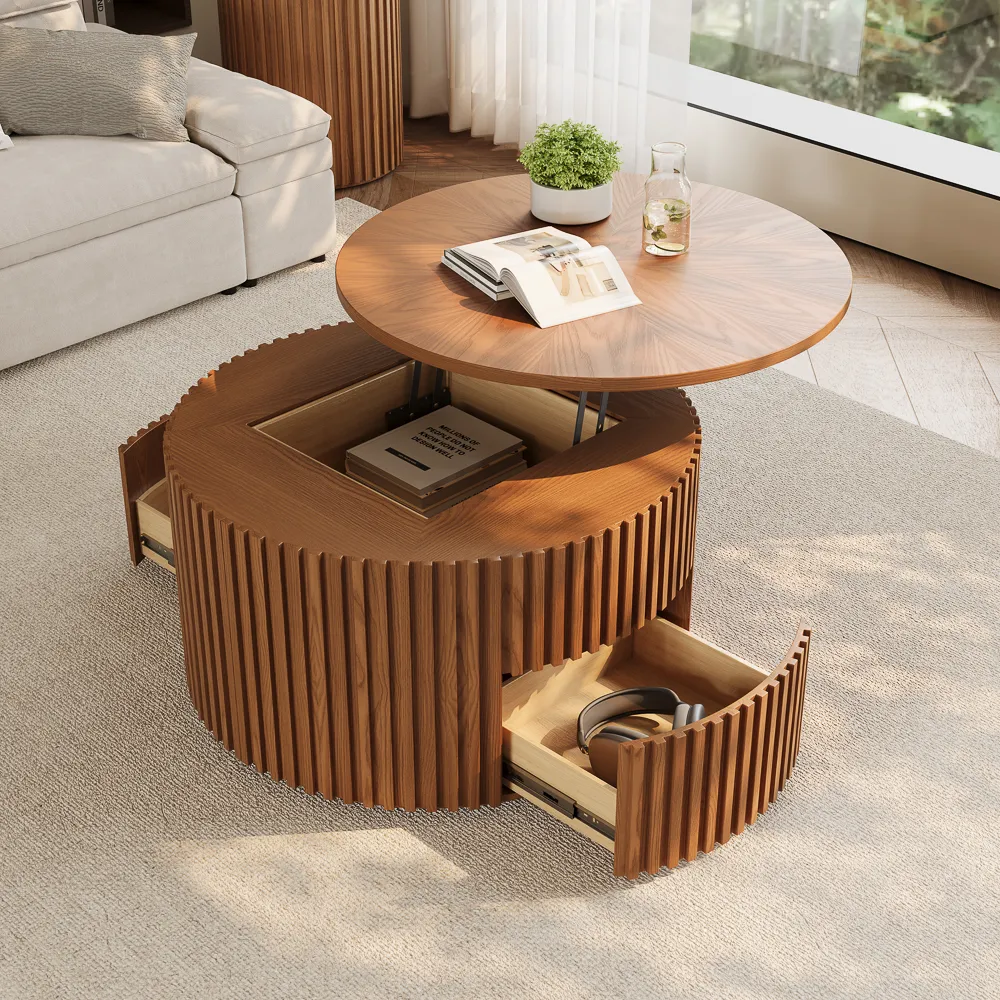
A coffee table with hidden storage can make the center of the seating area easier to reset. The Silva-31.5” Lifting Top Round Coffee Table fits this need because its round walnut-color form softens movement around the sofa, while the lift top, two drawers, and storage space give small daily items a place to disappear after use.
For readers comparing shapes, finishes, and daily-use surfaces, a wood coffee table with natural warmth can support Japandi better when it balances texture, proportion, and practical storage.
Use Fewer Competing Lines
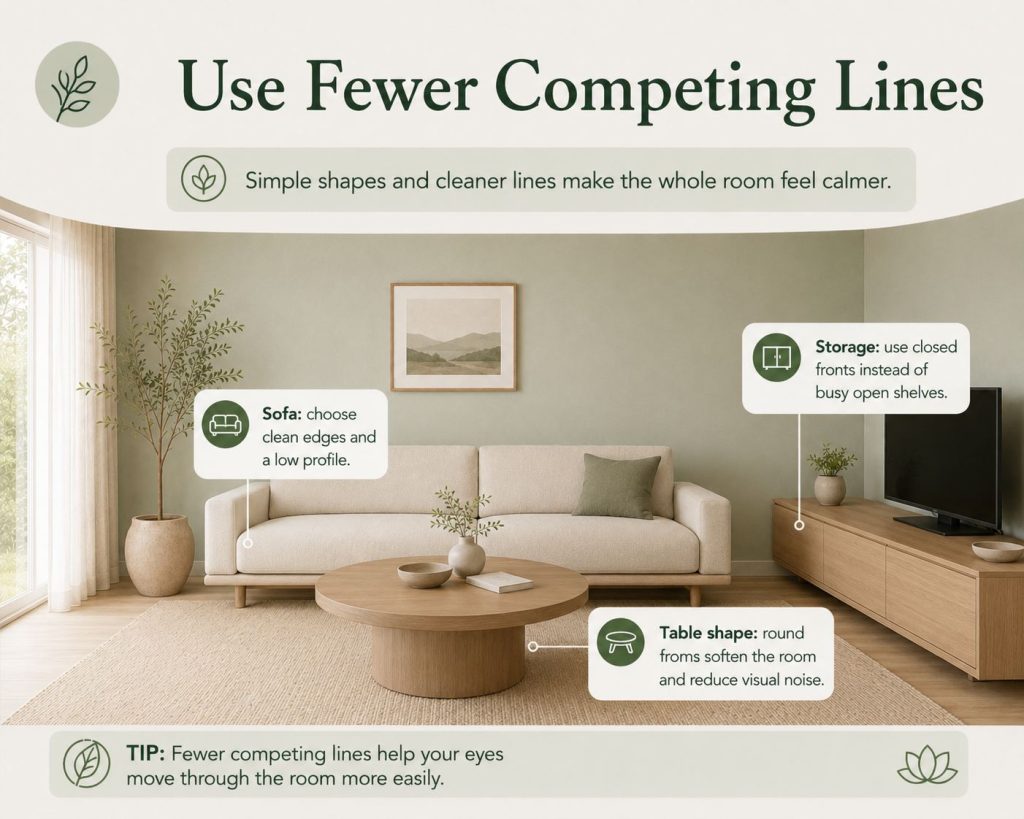
A room can contain enough furniture and still look quiet when the lines are controlled. Long horizontal forms, simple cabinet fronts, rounded coffee tables, plain curtains, low beds, and closed storage all help the eye move smoothly.
The goal is not always fewer things. It is often fewer visible interruptions. A single storage cabinet with clean fronts may feel calmer than several small shelves. One round table with hidden storage may feel quieter than a table, tray, basket, and extra side table trying to solve the same problem.
What Colors and Materials Define Japandi?
Japandi color is soft, but it should not be flat. If every piece is beige, cream, or pale gray, the room can feel unfinished. The stronger approach is to create a quiet palette with one warm base, one main wood tone, one or two textured materials, and a small amount of deeper contrast.
| Design Element | Japandi Direction | Why It Works |
| Base color | Warm white, sand, taupe, soft gray | Reduces contrast and keeps the room calm |
| Main wood tone | Walnut, oak, ash, light elm | Adds warmth and visual structure |
| Accent color | Charcoal, clay, muted green, brown | Gives depth without loud color |
| Texture | Linen, cotton, ceramic, stone, rattan | Adds softness without busy pattern |
| Finish | Matte, brushed, low-sheen | Avoids glare and visual sharpness |
| Storage surface | Closed doors, drawers, tambour fronts | Keeps daily clutter out of view |
Wood tone needs special attention. Japandi rooms often fail when too many woods appear together without a system. Choose one dominant wood family, then repeat it in more than one place. If your main piece is walnut, let walnut appear again in a table leg, frame, cabinet, or chair detail. The pieces do not need to match exactly, but they should feel related.
Materials should add quiet contrast. A ceramic bowl on a walnut surface, a linen pillow on a cream sofa, or a stone tray on a low cabinet gives the room depth without making it busy. Texture does the work that strong pattern might do in another style.
How Should Furniture Support Japandi Style?
Furniture in a Japandi home should do more than look simple. It should reduce friction in daily life. That means it should support comfort, organize common items, keep proportions calm, and avoid visual clutter. The best pieces usually feel quiet because their function is built into the design.
Choose Low-Profile Pieces
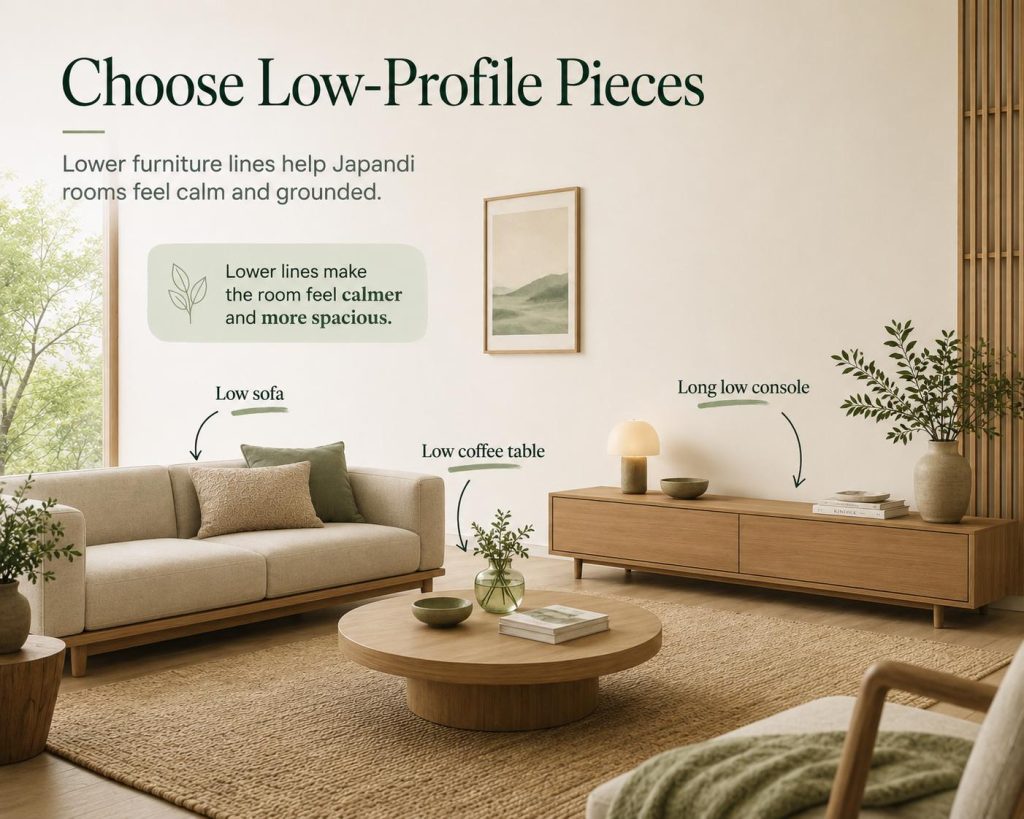
Lower furniture often makes a room feel more grounded. This does not mean every piece must sit close to the floor, but the main visual anchors should avoid feeling tall, bulky, or top-heavy.
Low sofas, platform-style beds, simple coffee tables, and horizontal storage pieces help create a calmer sightline. They also leave more open wall space and make the room feel less crowded.
For a living room japandi interior design setup, this matters most around the seating area and media wall. If the sofa, coffee table, and TV stand all have calm proportions, the room can feel more spacious even without removing furniture.
Prioritize Closed Storage
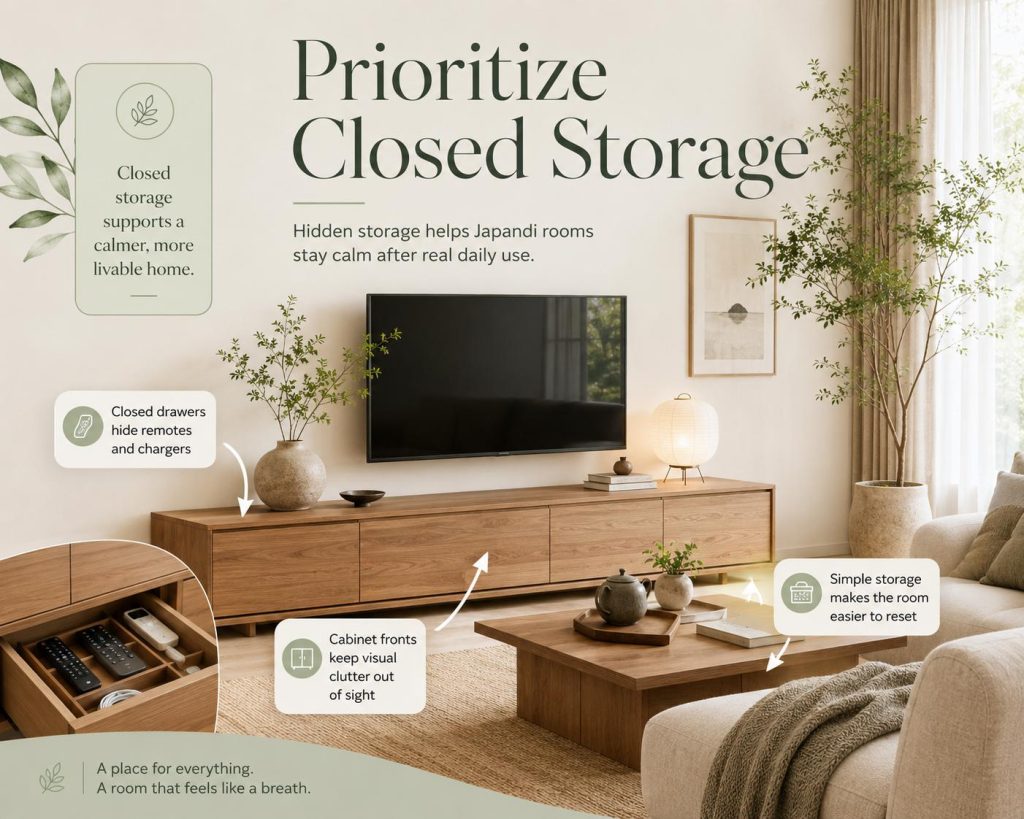
Japandi does not depend on perfect behavior. It depends on good storage. If the furniture cannot hold the things you use every day, clutter will stay visible no matter how careful the styling is.
Closed drawers, sliding doors, lift tops, and cabinet fronts are especially useful. They let the room look calm after real use, not only after deep cleaning.
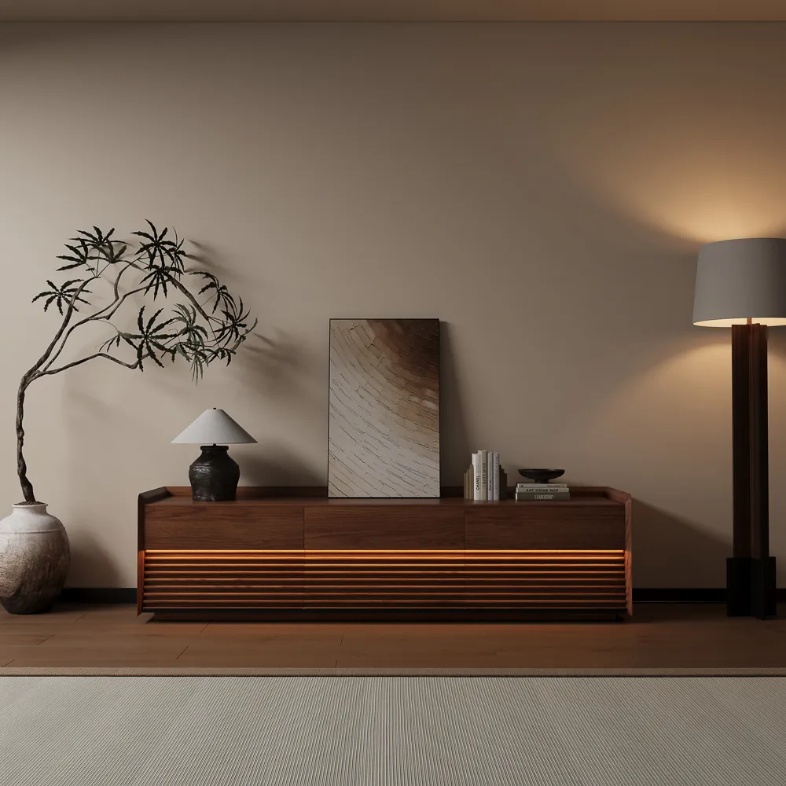
In rooms where the TV, cables, and media devices create visual clutter, the Ansel-70.87” Mid-Century TV Stand supports the Japandi idea of quiet storage. Its warm walnut tone, long low profile, fluted drawer fronts, and six drawers help keep remotes, media items, and small accessories hidden while softening the screen area.
A TV does not have to break the style. The issue is usually the objects around it. A wood TV stand with natural warmth can make the media area feel calmer when the storage, cable control, and finish are chosen before decoration.
Let One Material Lead
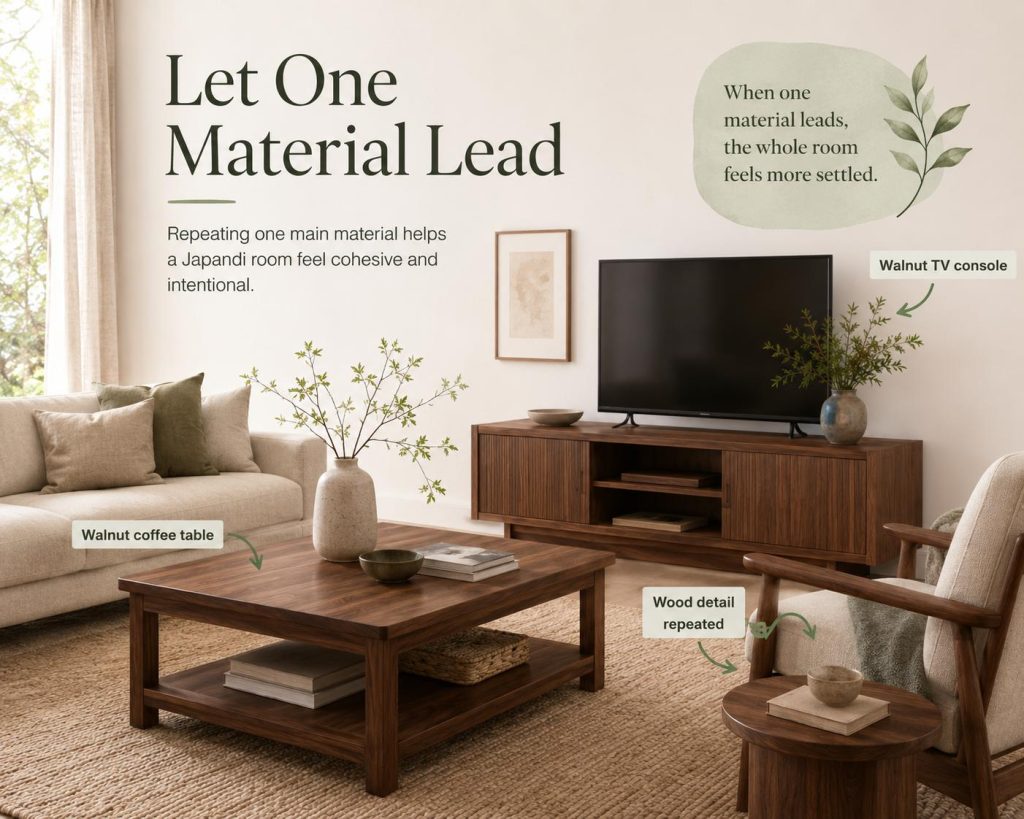
A Japandi room should not feel like a collection of separate furniture decisions. One material should lead the space. It may be walnut, oak, linen, stone, or woven texture, but it should appear more than once.
This creates visual rhythm. A walnut coffee table feels more intentional when another warm wood tone appears nearby. A linen sofa feels more complete when the curtains or pillows echo a similar softness. Repetition is what makes simple rooms feel designed rather than empty.
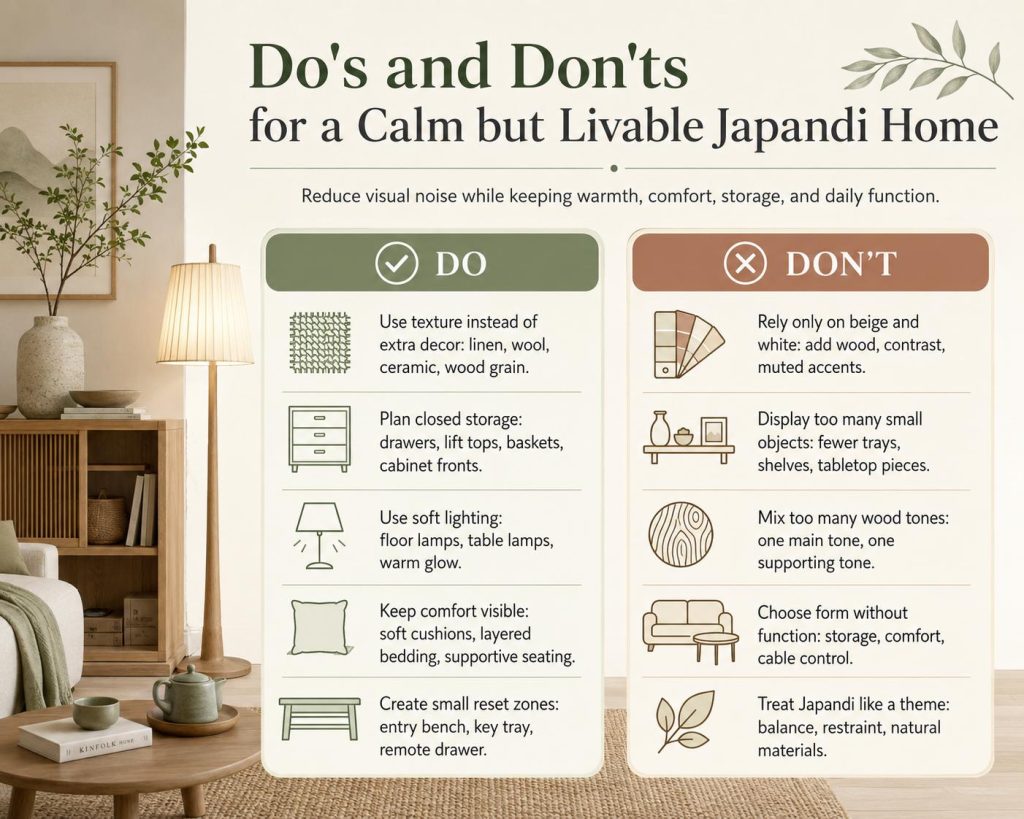
Do’s and Don’ts for a Calm but Livable Japandi Home
Japandi can look simple, but it should never feel cold, empty, or hard to maintain. The best way to keep the style balanced is to think in pairs: remove visual noise, but add texture; simplify surfaces, but keep storage; choose minimal furniture, but make sure it supports real life.
Do’s
- Use texture instead of extra decor: linen, wool, ceramic, wood grain.
- Plan closed storage for daily life: drawers, lift tops, baskets, cabinet fronts.
- Use soft lighting to add warmth: floor lamps, table lamps, warm glow.
- Keep comfort visible: soft cushions, layered bedding, supportive seating.
- Create small reset zones: entry bench, key tray, remote drawer.
Don’ts
- Rely only on beige and white: add wood, contrast, muted accents.
- Display too many small objects: fewer trays, shelves, tabletop pieces.
- Mix too many wood tones: one main tone, one supporting tone.
- Choose form without function: storage, comfort, cable control.
- Treat Japandi like a theme: balance, restraint, natural materials.
Conclusion
Japandi interior design works when a home feels calm because it is easier to understand and easier to use. Warm materials, quiet surfaces, hidden storage, simple lines, and open space all help reduce visual noise. The style should not feel empty or difficult to maintain. When daily objects have a place, furniture supports real habits, and materials bring softness without clutter, Japandi becomes a practical way to create a quieter home.
FAQ
What should I check before buying Japandi furniture online?
Check the material, finish, dimensions, storage design, and delivery details before buying Japandi furniture online. Look for natural wood tones, matte or low-sheen surfaces, clean silhouettes, and practical storage. Also compare product height and depth with your room layout, since oversized or glossy pieces can make a calm Japandi space feel heavy.
Is black too harsh for Japandi interiors?
Black is not too harsh when it is used in small, matte accents. A black lamp, picture frame, chair detail, or slim hardware can add depth. Avoid large glossy black surfaces if the room lacks wood, fabric, or warm lighting to soften the contrast.
How many wood tones can a Japandi room use?
A Japandi room usually works best with two to three wood tones. Use one main tone for large furniture, one supporting tone for contrast, and one small accent if needed. The tones do not need to match exactly, but their warmth should feel consistent.
What materials are easiest to maintain in Japandi interiors?
Wood veneer, sintered stone, performance fabric, washable cotton, and low-sheen finishes are easier to maintain in Japandi interiors. They support the natural look while handling daily use better than fragile decorative surfaces. For high-touch furniture, avoid materials that stain easily, scratch quickly, or require special cleaning after every use.
Should Japandi furniture be low to the ground?
Japandi furniture does not all need to be low, but lower visual lines often help. Low sofas, coffee tables, beds, and TV stands make the room feel grounded and quiet. Taller storage can still work if the front is simple, closed, and visually calm.
How do I know if a furniture piece is too visually heavy?
A furniture piece is too visually heavy if it blocks walkways, dominates the wall, or makes nearby pieces feel crowded. Check its height, depth, leg style, color, and finish. In Japandi interiors, lower profiles, raised legs, rounded edges, and warm wood tones usually feel lighter than bulky shapes or glossy dark surfaces.


[…] is often confused with Japandi because both favor natural materials and quiet interiors. However, Japandi interior design that feels warm and livable generally relies on cleaner lines, greater visual order, and more controlled finishes, while Wabi […]