 By Kelvin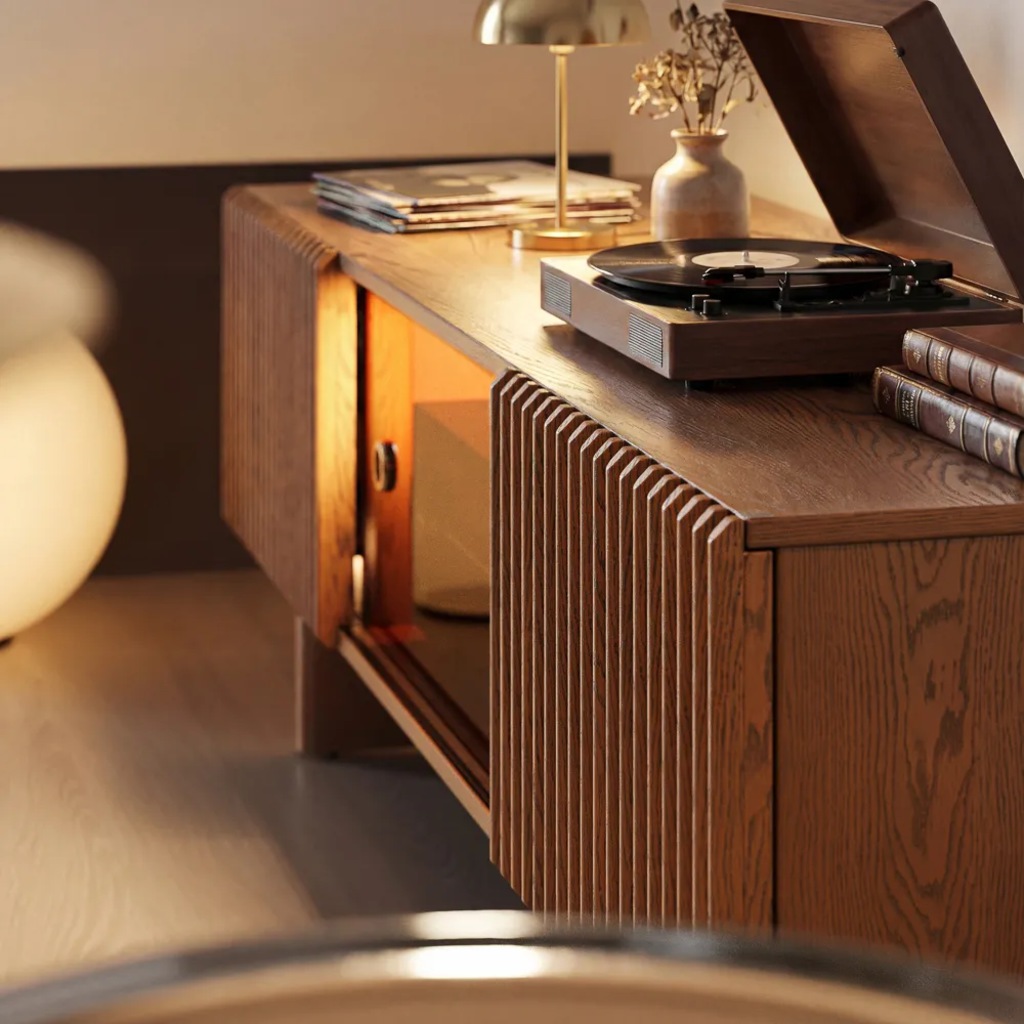
Introduction
A mid century modern TV stand can make a TV wall feel intentional instead of heavy, empty, or cluttered. The goal is not to make the room look like a vintage set. It is to use clean lines, warm wood, practical storage, and simple styling so the media area feels connected to the rest of the living room. This guide shows how to choose the right visual role for a media console, style a walnut finish, avoid surface clutter, and keep everyday electronics from breaking the look.
Table of Contents
What Makes a Mid Century Modern TV Stand Work?
A mid century modern TV stand works when it balances warmth, proportion, and function. It should make the TV wall feel grounded without turning the media area into the only thing you notice in the room.
Look for these features first:
- Low horizontal profile: A long, lower shape helps the TV wall feel wider and calmer.
- Warm wood tone: Walnut, oak, and teak-inspired finishes bring the warmth associated with mid-century design.
- Clean lines: Flat fronts, simple edges, and minimal hardware keep the look modern.
- Light visual base: Raised legs or a slim base prevent the cabinet from looking too heavy.
- Closed storage: Doors or drawers hide remotes, routers, game controllers, and extra cords.
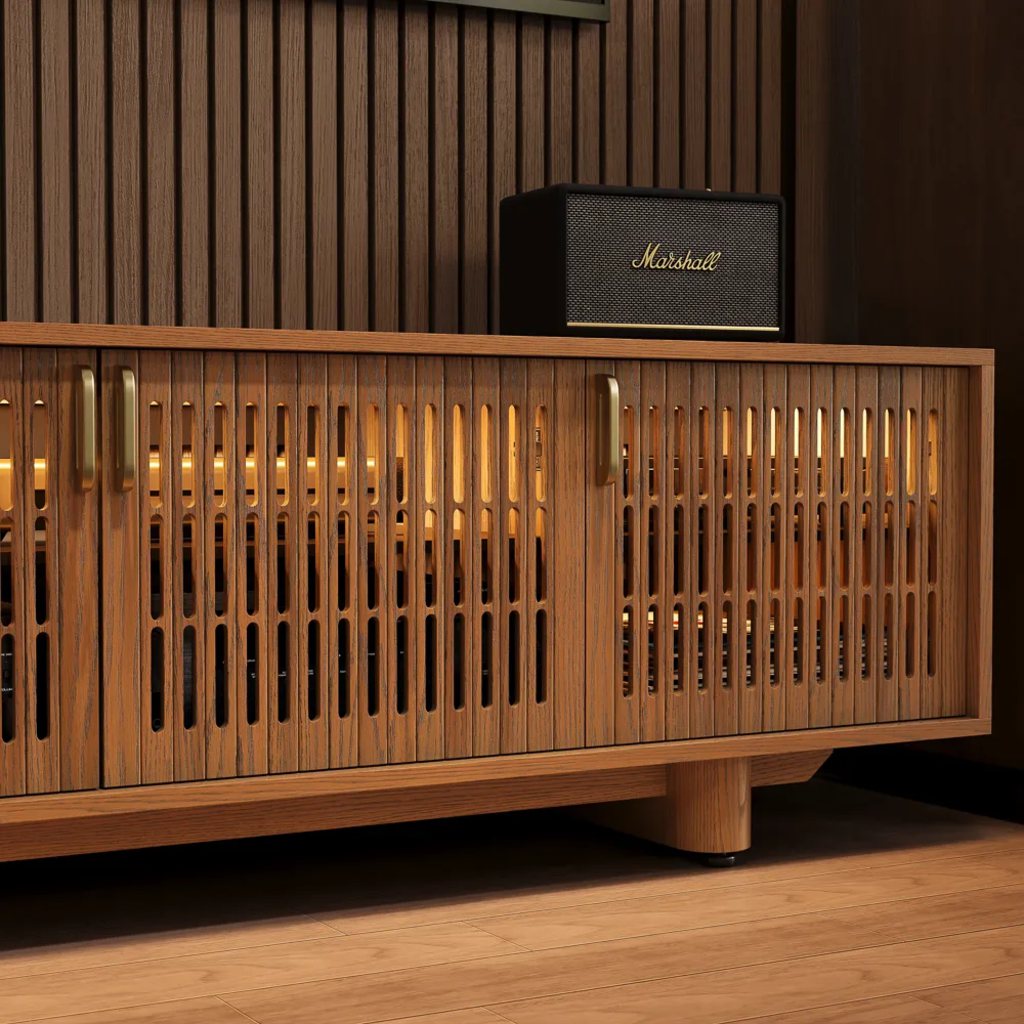
- Texture with restraint: Slatted, fluted, or ribbed doors add detail without needing extra decor.
The strongest rooms do not depend on small retro accessories first. They start with the main furniture pieces that shape the room. A broader mid century modern decor plan can help the TV wall, sofa, coffee table, and storage pieces feel like one design decision instead of separate purchases.
How Can a Media Console Anchor the TV Wall?
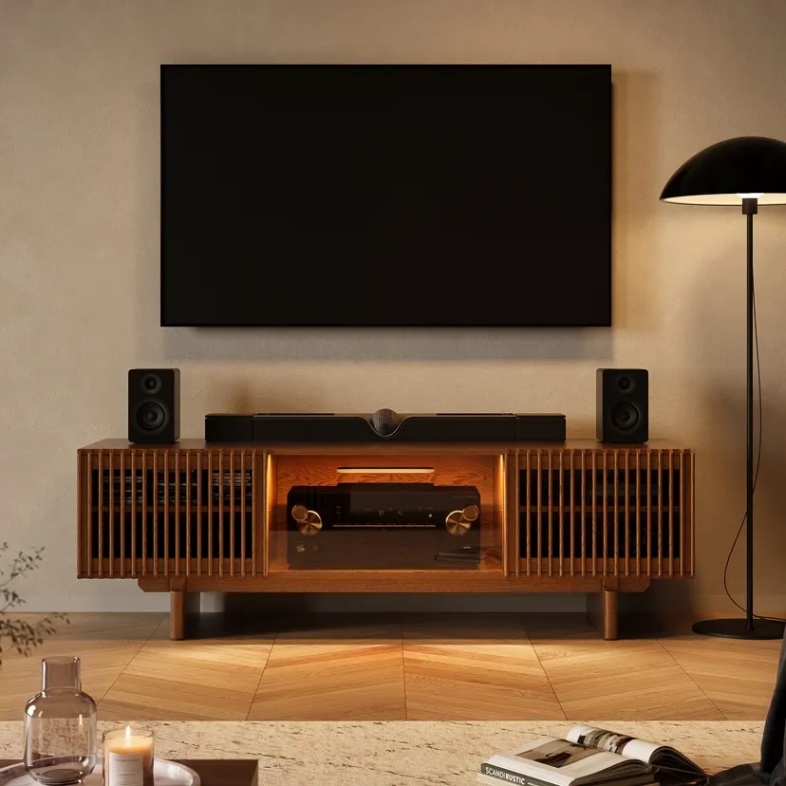
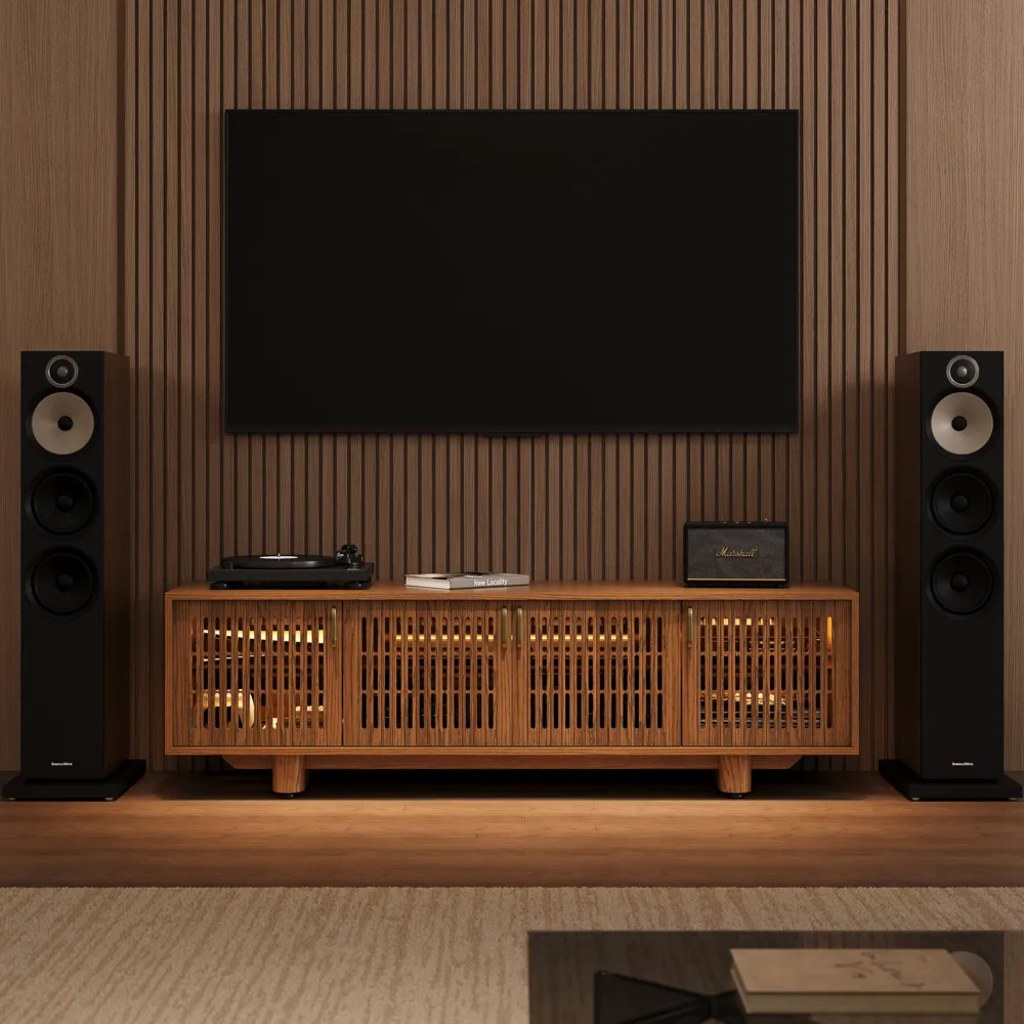
A media console anchors the TV wall by giving the screen a visual base. Without it, a wall-mounted TV can feel like a black rectangle floating on an empty wall. With the right console below it, the screen feels framed, the room gains warmth, and the media area looks more like part of the living room.
This is especially important in a mid-century modern living room because the style depends on proportion. A long walnut media console creates a horizontal line that balances the vertical shape of the wall and the dark surface of the TV. It also gives the eye something warmer to land on before the screen takes over.
Use these checks before styling:
- The console should feel wider than the TV, not smaller than it.
- The wood tone should connect to at least one other element, such as a coffee table, chair legs, frame, or floor.
- The area around the TV should include breathing room, not wall-to-wall objects.
- The console should hide daily clutter before decorative pieces are added.
In a real living room, this matters on ordinary nights. After dinner, remotes, controllers, and charging cables often land near the TV. If the console has no closed storage, the wall can look messy even when the furniture itself is beautiful.
Everyday clutter quickly weakens the clean horizontal line that helps anchor the TV wall. When remotes, cables, and game controllers stay on top of the console, the eye focuses on the mess instead of the balanced composition. Closed storage keeps these items out of sight so the TV wall maintains a calm, organized appearance.
How Do You Style a Walnut Media Console Without Clutter?
Living room media console styling works best when the surface has a job. It should soften the TV wall, repeat the room’s materials, and leave room for daily use. Instead of filling the whole top with decor, divide the console into a few simple zones.
Keep the Center Area Low and Clear
The center of the console should support the TV setup, not compete with it. If the TV sits on the console, keep decor away from the base. If the TV is wall-mounted, leave the middle open or use only low objects, such as a shallow tray, a short stack of books, or a small ceramic bowl.
A soundbar should also stay visually clean. Do not place vases, candles, or frames in front of it. The media wall will look more polished when the functional items are allowed to look functional.
Add Height Near One Side
A TV is a large rectangle, so a little height near one side can soften the wall. Use one tall item, not several. A slim table lamp, a branch arrangement, a medium plant, or framed art leaning against the wall can work well.
The key is placement. Tall decor usually looks better outside the TV width rather than directly under the screen. This keeps the viewing area clear while giving the wall more shape.
Hide Everyday Items Before Adding Decor
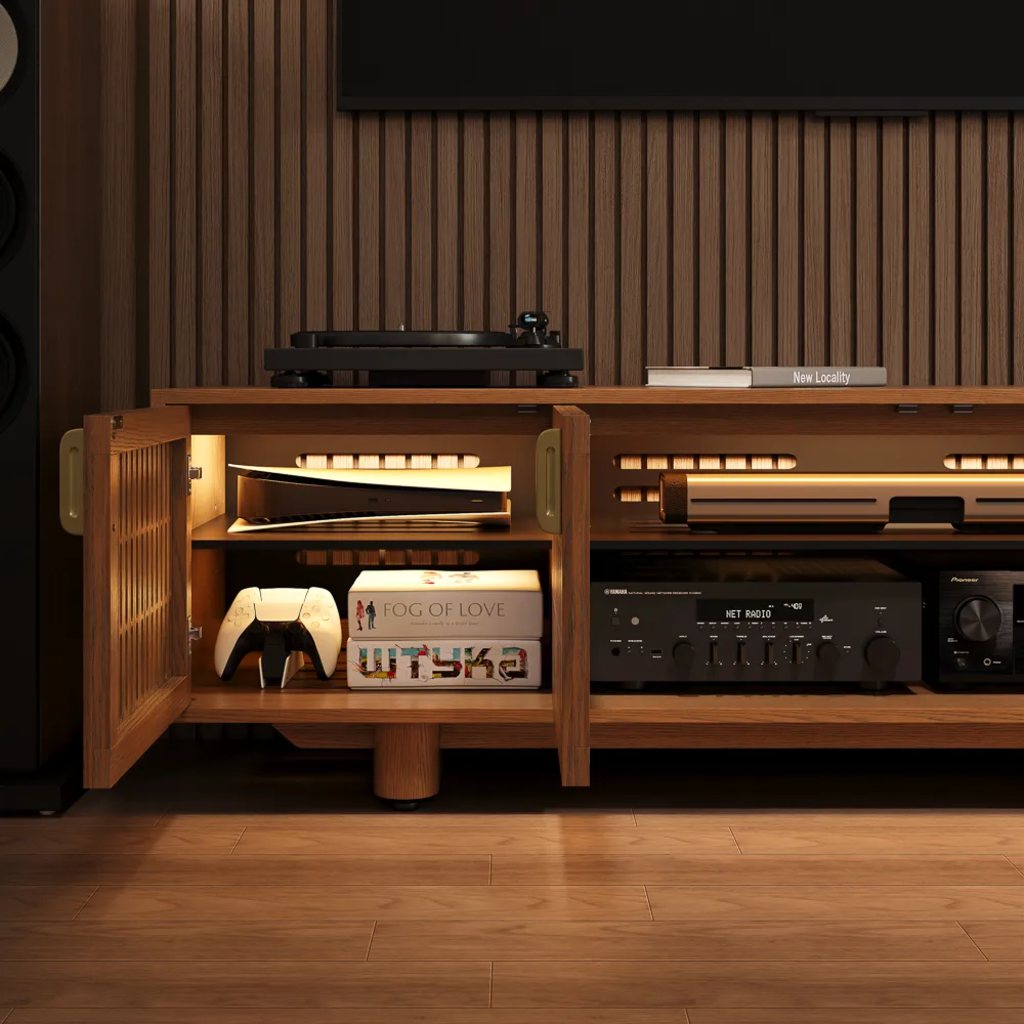
Styling cannot fix visible clutter. Before placing decor, decide where the everyday items go: remotes, streaming devices, headphones, controllers, manuals, and chargers. Closed cabinets are useful because they let the console surface stay simple.
A helpful rule is to style in groups, not rows. On a long console, two or three small groups are usually enough. On a shorter console, one tray and one side accent may be all you need. More detailed TV stand decor ideas without clutter work best after storage and cable control are already handled.
What Colors and Materials Pair Best With Walnut?
Walnut can look vintage, modern, warm, or heavy depending on what surrounds it. The safest approach is to treat the console as the warm anchor and let the rest of the room balance it with lighter color, soft texture, or clean contrast.
| Living Room Direction | Best Pairings | Why It Works |
| Mid-century modern | Cream sofa, cognac leather, brass lamp, geometric rug | Keeps the look warm and styled without feeling like a theme room |
| Modern warm minimal | Warm white walls, stone coffee table, black accents | Makes walnut feel current and clean |
| Japandi-inspired | Linen, boucle, light oak, paper lamp | Softens the darker wood tone and keeps the room quiet |
| Transitional | Neutral rug, framed art, slim metal lighting | Lets walnut add warmth without changing the whole room style |
| Small apartment | Light rug, pale walls, simple wall art, slim side table | Prevents the TV wall from feeling too dark or crowded |
Avoid using the same dark wood everywhere. A walnut media console, walnut coffee table, walnut side table, and dark floor can make the room feel flat and heavy. Contrast is usually better than matching. Use one dominant wood tone, then add stone, fabric, glass, black metal, or soft upholstery for balance.
When Should Function Matter as Much as Style?
Style matters because the media console sits in a highly visible part of the living room. Function matters because this same piece has to handle devices, wires, remotes, speakers, and everyday resets. If the console cannot manage those details, the room will not stay styled for long.
Before choosing a media console, check:
- Does it have closed storage for visual clutter?
- Are there rear cable holes or open backs for cords?
- Is there enough depth for your actual devices and cable bends?
- Can heat escape from gaming consoles, receivers, or streaming devices?
- Will the remote signal still work with the doors closed?
- Is there a clear place for a soundbar?
- Can shelves adjust if your setup changes later?
For a living room that holds more than a streaming box, storage depth and airflow become part of the design. The Arboren 17″ Deep Vented Rolling Media Console suits setups with a receiver, game console, router, or speakers. Its walnut finish keeps the room warm, while the deeper interior, removable shelves, cable holes, ventilation, and hidden wheels make equipment easier to organize.
The best functional choice is the one that makes the room easier to reset. A modern TV stand that hides cords helps keep the TV wall calm because the mess is handled behind the furniture, not disguised with more accessories.
Conclusion
A strong media wall starts with the right foundation. The mid century modern TV stand should ground the screen, bring warmth through wood tone, hide daily media clutter, and leave enough surface space for simple styling. Walnut works especially well because it softens the black TV screen while still feeling modern. Start with proportion and storage, then add only the decor that helps the wall feel connected to the room. When the console supports both the look and the routine, the living room stays easier to style every day.
Q&A
What should I check in product photos before buying online?
Look for side-view, close-up, and lifestyle photos, not only the front image. Side views help you judge proportion from more than one angle. Close-ups reveal door alignment, surface texture, edge finish, and hardware details. Lifestyle photos show whether the piece feels refined in a real living room.
What if I may move or rearrange the living room later?
Choose a media console that will not depend on one exact wall layout. A simple rectangular shape, neutral walnut tone, removable or simple legs, and flexible interior shelves make the piece easier to reuse in another room. Avoid overly built-in designs if your layout may change.
What if my TV wall has a window, fireplace, or built-in shelving?
Do not force the console to center the whole wall if the architecture is already uneven. Center it with the TV or seating area first. Then use art, lighting, or a plant on the lighter side to balance the wall without adding another large storage piece.
What finish details make a walnut media console look higher quality?
Look for a walnut tone that feels consistent across doors, top, and side panels. Clean seams, even door gaps, subtle grain movement, and a low-sheen finish usually look more furniture-like. Be cautious with finishes that appear very orange, overly glossy, or flat like printed pattern.
What should I confirm before placing the order?
Confirm the full product dimensions, delivery method, assembly requirements, return policy, and whether the finish shown online may vary by lighting. For a large media console, also check elevator, doorway, and hallway clearance so the piece can actually reach the living room.


