 By Kelvin
Introduction
A black and white living room looks clean, sharp, and timeless, but it can also feel cold if the contrast is too harsh. This guide helps you build a black and white room theme that feels balanced, comfortable, and realistic for daily use. Instead of listing random inspiration images, we will focus on proportion, texture, furniture choices, TV wall planning, rugs, lighting, and the small details that keep a high-contrast room from feeling flat or unfinished.
Table of Contents
What Makes a Black and White Living Room Work?
A black and white living room works best when each color has a clear job. White usually opens the room, reflects light, and gives the eye breathing space. Black creates weight, contrast, and structure. The room starts to feel right when black appears as an anchor, not as random dark pieces scattered everywhere.
The easiest formula is: use white or warm off-white for the largest surfaces, black for focal points, and one soft transition tone to reduce the sharpness. That transition tone can be gray, cream, walnut, oak, camel leather, brass, or even muted green.
| Element | Best Use | What to Avoid |
| White | Walls, curtains, large rugs, light upholstery | Pure white everywhere with no texture |
| Black | Sofa, frames, lamps, TV wall, accent chair | Too many heavy blocks at eye level |
| Gray | Bridge between black and white | An all-gray room with no warmth |
| Wood | Coffee table, console, shelving, flooring | Too many clashing wood tones |
| Cream / Beige | Pillows, rug, curtains, throw blanket | Yellow undertones that fight cool white walls |
If your room already has a black TV, black window frames, or dark floors, count those as part of the black layer. Many decorating mistakes happen because people keep adding black decor without noticing the black elements already in the room.
How Do You Keep Black and White from Feeling Cold?
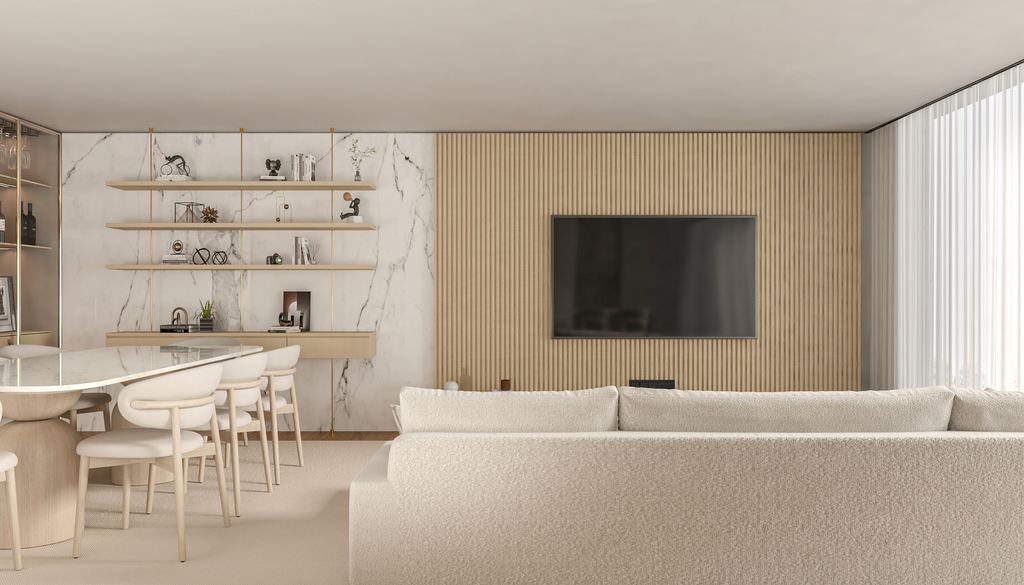
The fastest way to warm up black and white is not to add a bright color. It is to soften the surfaces. A room with a white sofa, black table, glossy floor, and cool lighting may look stylish in photos but feel uncomfortable at night. A livable black-and-white space needs touchable materials and warmer undertones.
Use these elements first:
- Warm white or cream instead of icy white.
- Wood furniture in oak, walnut, or natural brown.
- Textured upholstery such as bouclé, linen, velvet, or leather.
- A rug with pile, weave, or subtle pattern.
- Warm lighting from table lamps, floor lamps, and sconces.
- Plants, branches, or dried stems to break up straight lines.
For example, a small apartment with white walls, a black sofa, and a black TV can quickly feel heavy. A cream rug, walnut coffee table, linen curtains, and one brass floor lamp can soften the contrast without changing the whole color scheme. This is where black and white living room decor becomes less about matching colors and more about balancing texture.
If you are working around dark seating, ideas for choosing a living room color with black sofa can help you decide whether your space needs warmer walls, lighter rugs, or stronger contrast.
Which Black-and-White Style Fits Your Home?
Not every black-and-white room should look minimalist. The same palette can feel modern, cozy, dramatic, classic, or soft depending on furniture shape, material, and lighting. Before buying decor, decide what mood you want the room to have. A black and white room theme is easier to adjust when the largest furniture pieces stay simple and the style details come from lighting, rugs, wall art, and small decor.
Modern Minimalist
A modern black and white living room design works well with low-profile sofas, simple TV stands, slim lamps, and fewer decorative objects. Keep the lines clean but avoid making every piece rectangular. Add one curved chair, round coffee table, or arched floor lamp to soften the structure.
Scandinavian or Japandi-Inspired
This style is best when you want a calmer living room white and black scheme. Use warm white walls, light wood furniture, black frames, and soft textiles. Keep black in smaller accents: table legs, lamp bases, picture frames, or a single chair. The room should feel quiet, not graphic.
Glam or Luxury-Inspired
A more dramatic black and white living room interior design can use marble, stone, polished metal, velvet, and larger black surfaces. The key is restraint. If you use a black accent wall or dark sofa, balance it with reflective surfaces, sculptural lighting, and enough open space.
Traditional or Farmhouse
Black and white can also work in warmer homes with brick, beams, paneling, or wood floors. White walls, black trim, brown leather, woven baskets, and vintage-style art keep the palette from feeling too modern. This direction works especially well if your home already has architectural detail.
How Should You Choose Furniture, Rugs, and Wall Decor?
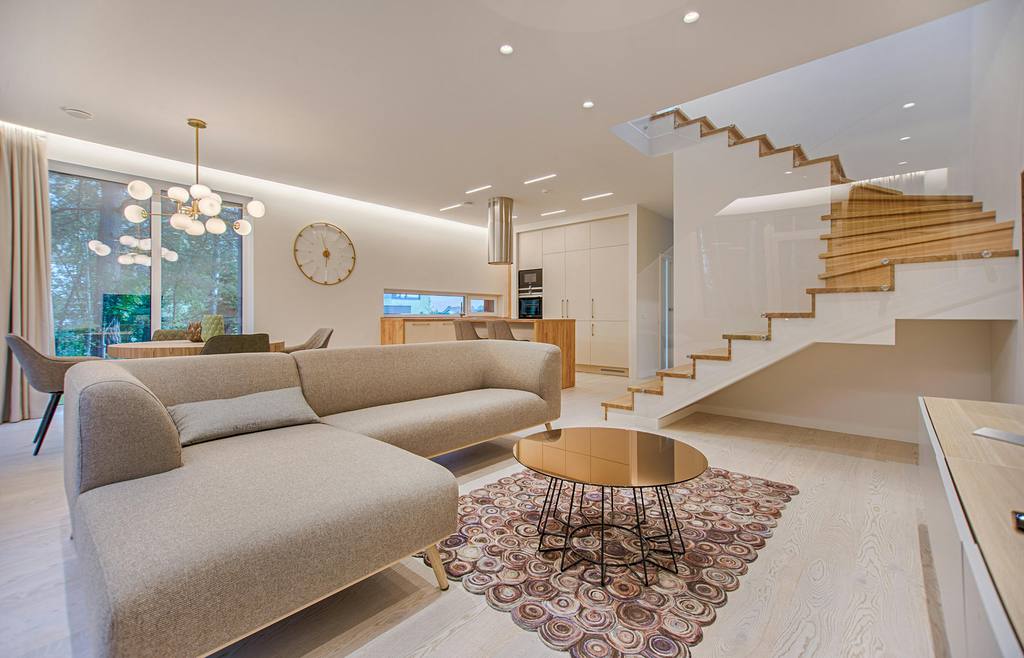
Furniture matters more than small accessories because large pieces control the visual weight of the room. A black pillow can be moved. A black sectional, large black media wall, or oversized patterned rug will define the whole space. To keep a black and white room theme flexible, choose the largest pieces first, then use decor to adjust the mood.
Sofa
A black sofa creates a strong anchor and hides daily wear better than white upholstery, but it can feel heavy in a low-light room. Balance it with white walls, a pale rug, warm wood, and softer pillows. A white or cream sofa feels lighter, but it needs more attention to cleaning and fabric choice. A gray sofa is often the safest bridge if you want contrast without going fully black.

TV Stand and Media Wall
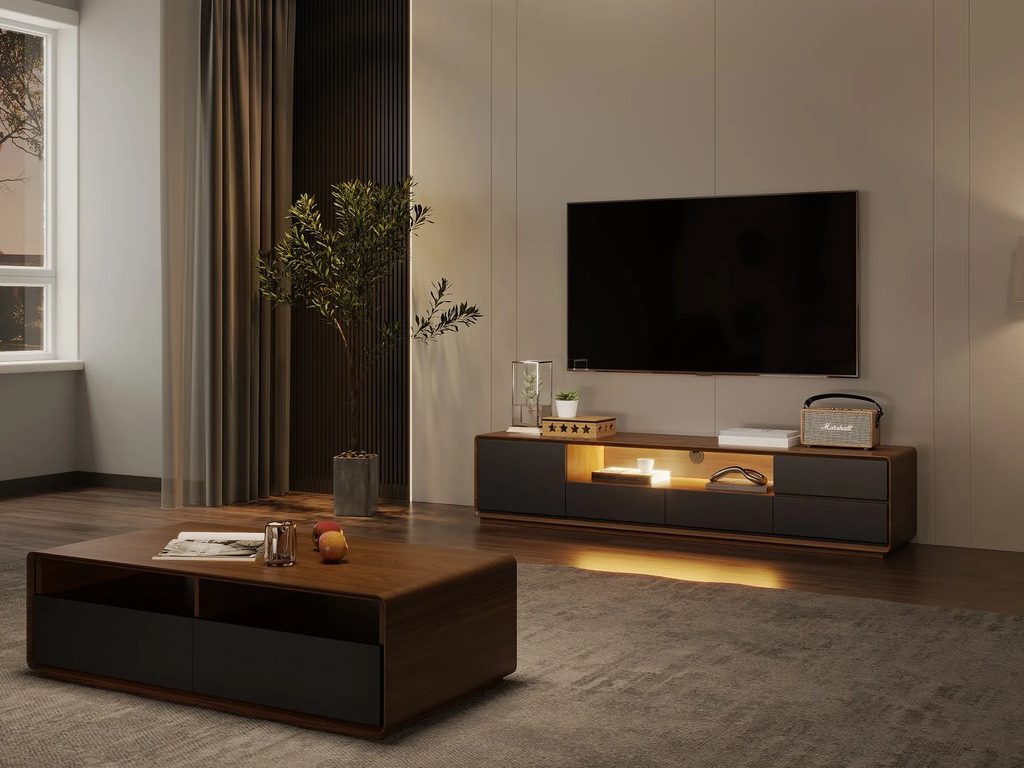
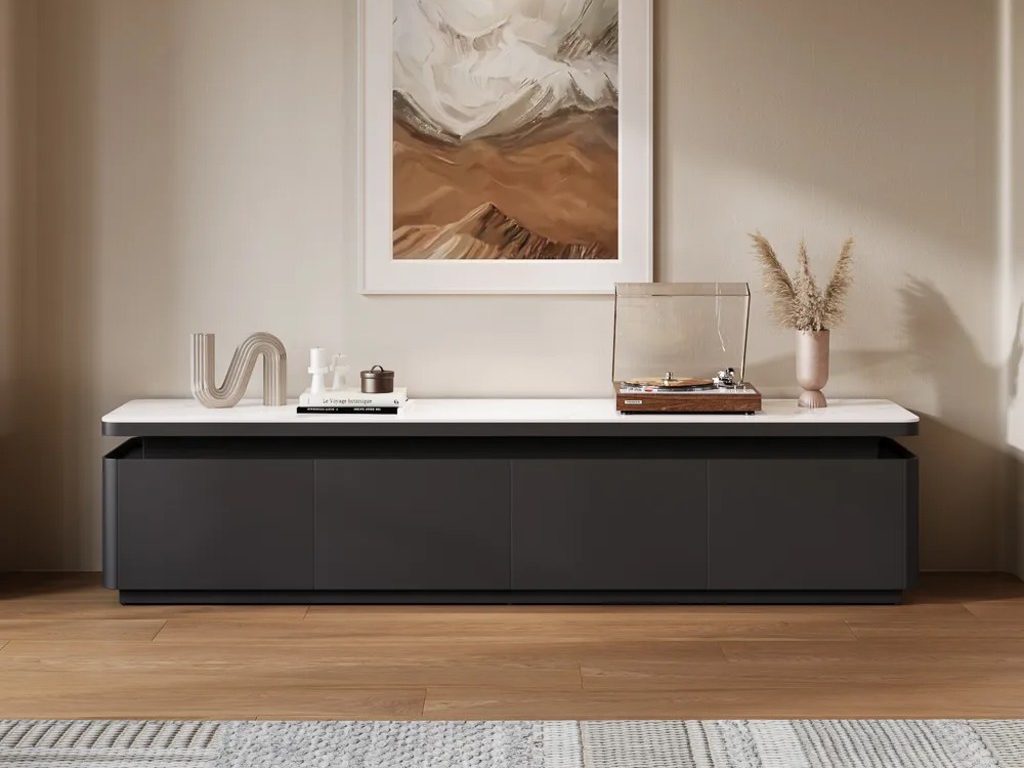
The TV is often the largest black object in the room. That means the TV wall needs planning, not leftover styling. A white or light wood TV stand can make the black screen feel less dominant. A black media console works better when the wall is bright, the floor is light, or the room has strong natural light.
For compact rooms, proportion matters as much as color. A guide on choosing a TV stand for a small living room can help prevent the console from looking heavier than the screen.
Coffee Table
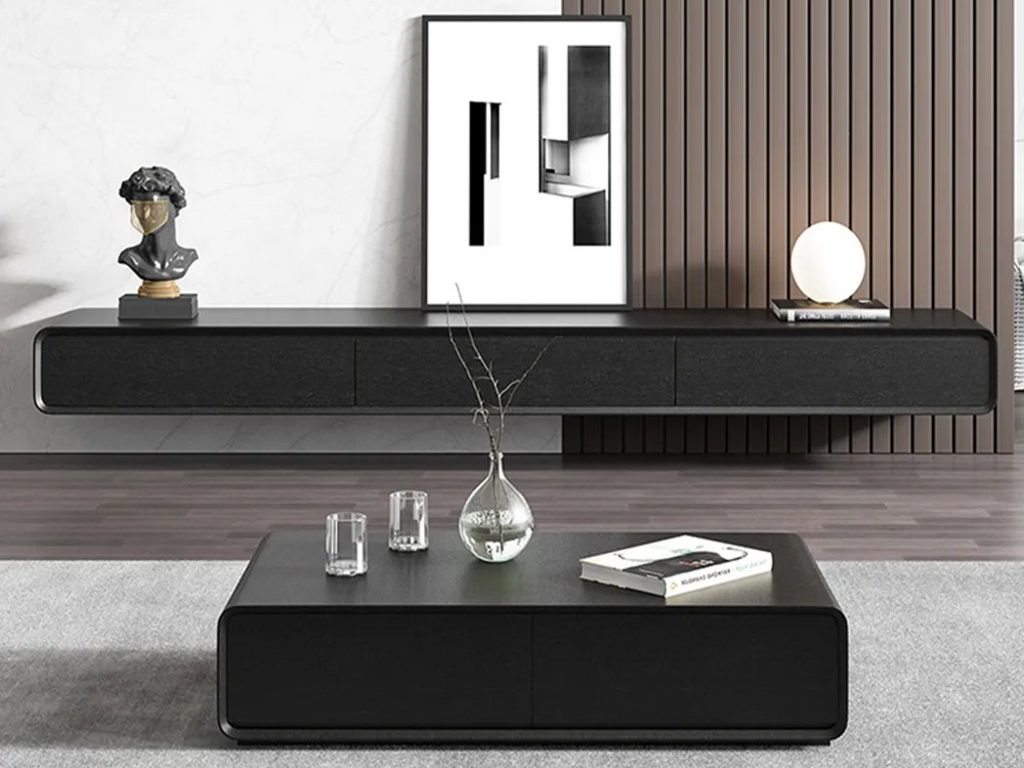
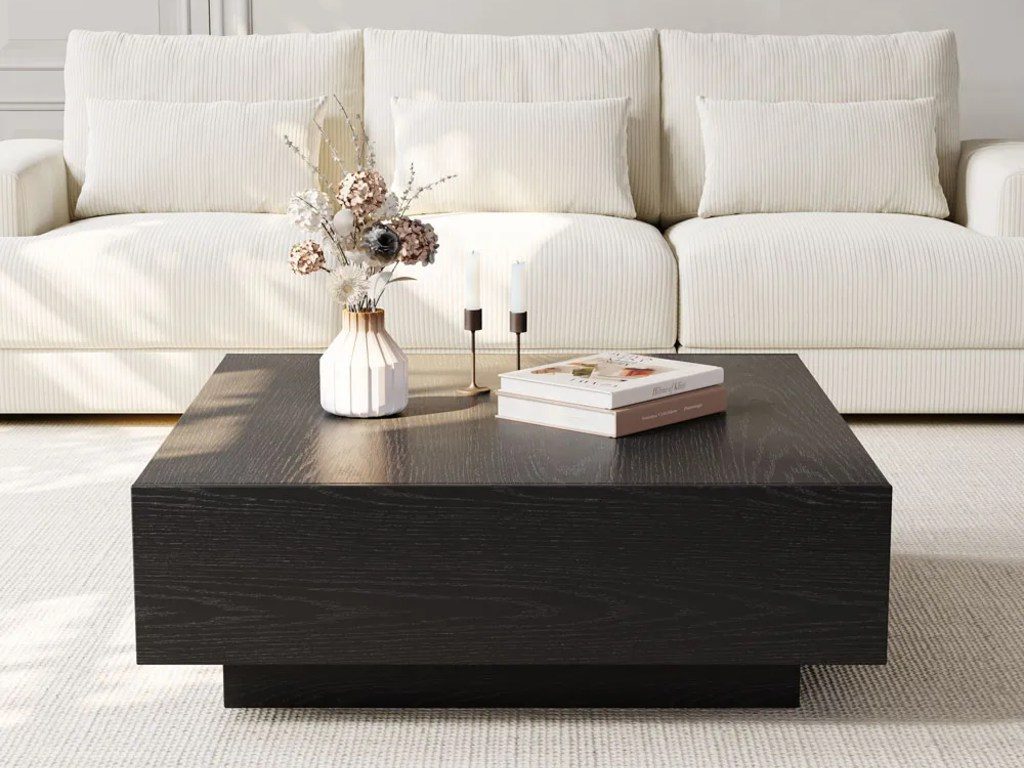
A black coffee table gives structure, especially with a white or cream sofa. A wood coffee table warms the palette. A stone or glass table works well in a more polished room, but it needs texture nearby so the space does not feel too hard. If your rug is already high contrast, choose a quieter table.
Rug
A black-and-white rug can be beautiful, but it should not fight every other element. If the wall art, pillows, and rug all use strong graphic patterns, the room can feel busy fast. In everyday homes, a cream rug with black lines, a subtle geometric pattern, or a soft gray rug is usually easier to live with.
Wall Decor
Black and white wall decor for living room spaces works best when it has scale. One large artwork often looks calmer than six small frames. If you prefer a gallery wall, keep the frames consistent and leave enough white space between pieces. The goal is rhythm, not visual noise.
What Mistakes Make This Look Too Harsh?
Most black-and-white rooms fail for practical reasons, not because the palette is wrong. The room may have too many glossy surfaces, too much pure white, too much black at eye level, or not enough softness. Use this section as a final edit before buying more decor.
Common mistakes to avoid:
- Using only pure black and pure white with no transition tone.
- Choosing cool white lighting that makes the room feel flat.
- Letting the black TV screen become the only focal point.
- Mixing stripes, checks, abstract art, and patterned rugs all at once.
- Buying a white sofa or rug without thinking about pets, kids, food, or daily traffic.
- Using all straight-lined furniture with no curves.
- Leaving open shelves full of small mixed-color items.
The fix is usually simple. Repeat black in two or three places, add one warm material, choose one main pattern, and keep storage closed where possible. If gray is your bridge color, practical grey sofa living room ideas can help you use contrast without making the room feel stark.
What Should You Check Before Buying?
Before you buy furniture for this look, check the room itself. Black and white living room ideas can look very different depending on light, flooring, ceiling height, and daily habits. A black and white room theme works better when the main furniture suits the room first, instead of forcing every detail to match a strict color palette.
Check these points first:
- Natural light: Low-light rooms need more white, cream, mirrors, and warm lamps.
- Floor color: Dark floors make black furniture feel heavier; light wood floors make the palette easier.
- TV size: A large black TV already adds visual weight.
- Storage needs: Closed cabinets keep remotes, cables, toys, and blankets from breaking the clean palette.
- Cleaning habits: White rugs, white sofas, and glossy black tables show different kinds of mess.
- Lifestyle: Pets, children, food, and movie nights should influence fabric and rug choices.
- Focal point: Choose one hero element, such as a black sofa, patterned rug, fireplace, or art wall.
A family room used every night should not be styled like a photo studio. If the couch is where people snack, nap, watch games, and fold laundry, choose forgiving fabrics, hidden storage, and warmer lighting before adding more decorative contrast.
Conclusion
A black and white living room should feel clear, not cold. The strongest rooms use white for openness, black for structure, and softer materials to make the contrast livable. Before choosing decor, look at your light, floor color, TV wall, storage needs, and daily habits. Then decide whether your room needs more warmth, more contrast, or more simplicity. Start with one strong anchor piece and let the rest of the room support it.
FAQ
Can I use patterned furniture in a black and white living room?
Yes, but keep patterned furniture limited to one main piece. A striped chair, graphic ottoman, or patterned rug can work well, but using all three together may make the room feel busy. If the sofa is patterned, keep the rug, pillows, and wall art quieter.
Is black and white too formal for a family living room?
No, but the materials need to match daily use. Choose washable or wipeable surfaces, closed storage, durable upholstery, and rugs that hide small marks. A family-friendly black and white living room should feel structured but not fragile, especially around snacks, pets, toys, and movie nights.
What wall color should I use if pure white feels too cold?
Use warm white, soft ivory, light greige, or a very pale taupe instead of stark white. These shades still support a black and white living room, but they make black furniture feel less sharp. Avoid yellow-heavy cream if your rug, sofa, or stone surfaces have cool undertones.
What lighting works best with black and white decor?
Warm white lighting usually works better than cool white lighting because black and white surfaces can look flat under harsh bulbs. Use layered light from floor lamps, table lamps, wall lights, and dimmable ceiling fixtures. Practical living room lighting ideas can help you match brightness, room type, and decor style without making the space feel cold.
How do I make a black and white room feel less like an office?
Add softer shapes, relaxed fabrics, warm wood, and personal decor. A room feels office-like when everything is too straight, glossy, and high contrast. Try rounded furniture edges, textured pillows, a woven rug, books, ceramics, or one organic element such as plants or branches.
Is it easy to switch between different black-and-white decorating styles?
Yes, black and white styles are easier to switch than color-heavy rooms, but only if your large furniture stays simple. Keep the sofa, TV stand, rug, and coffee table clean-lined, then change the mood through pillows, lighting, wall art, curtains, and small decor. Glam, minimalist, Japandi, or farmhouse looks become harder to change if the main furniture has a very specific shape or finish.


[…] relaxed, and easy to live with, especially when paired with natural wood and woven textures. Many practical black sofa living room ideas rely on this kind of palette because it feels stylish without being overly polished or hard to […]