 By Kelvin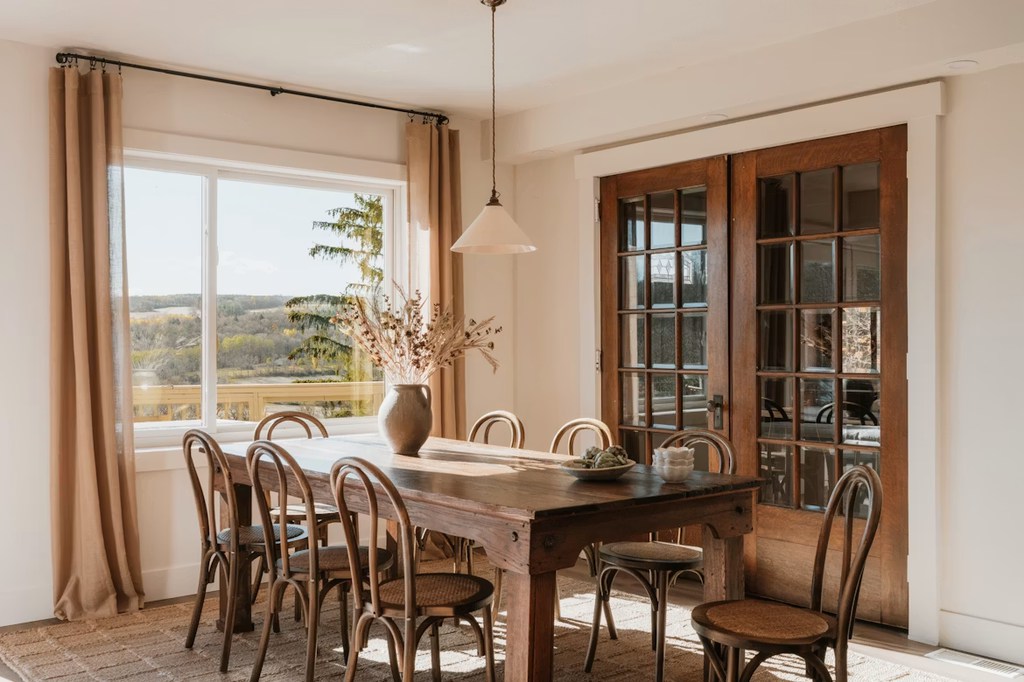
Introduction
If you are searching for traditional interior design, you probably want a home that feels warm, elegant, and timeless, but not heavy or old-fashioned. This guide helps you understand what still works in 2026, what to skip, and how to choose furniture by room. Instead of treating traditional style as a museum look, the goal is to make it livable: classic shapes, warm materials, practical storage, comfortable seating, and enough modern restraint to keep each room feeling fresh.
Table of Contents
What Is Traditional Interior Design in 2026?
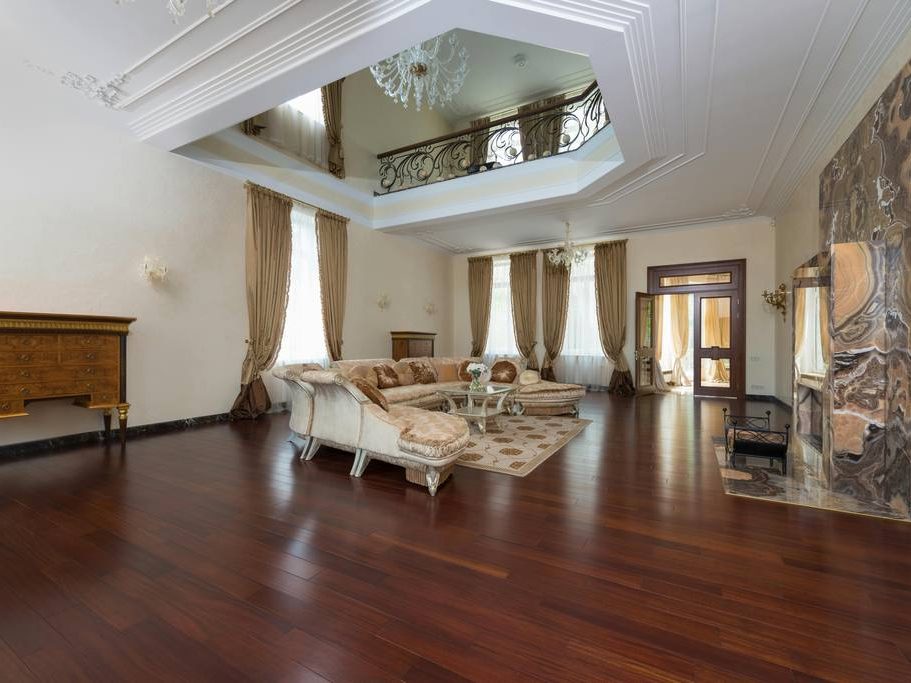
What is traditional interior design? In simple terms, it is a home style built around balance, comfort, classic furniture shapes, warm materials, and layered details. It often uses wood tones, soft upholstery, symmetry, framed artwork, rugs, lamps, and decorative accents that feel collected rather than random.
In 2026, the style is less about recreating an old formal room and more about building a comfortable home with a sense of history. A new traditional interior design approach may still use a wood dining table, a leather sofa, or a framed mirror, but it keeps the layout cleaner and the color palette lighter.
The reason this style still matters is practical. Many people want rooms that feel stable, personal, and long-lasting. A traditional room can do that well when the furniture supports daily life instead of simply looking formal.
Traditional, Modern Traditional, or Transitional: Which Direction Are You Choosing?
Before buying furniture, decide which version of the style you actually want. Many people say they like traditional rooms, but they may be drawn to modern traditional interior design or transitional style instead. The difference matters because it affects furniture shape, color, storage, and how much decoration the room can handle.
| Style Direction | What It Feels Like | Furniture Choice | Best For |
| Traditional | Formal, layered, classic | Curved arms, rich wood, framed panels, patterned fabrics | Larger rooms, formal living rooms, dining rooms |
| Modern Traditional | Classic but cleaner | Warm wood, simpler silhouettes, leather, closed storage, fewer patterns | Family homes, updated living rooms, open-plan spaces |
| Transitional | Balanced between classic and modern | Neutral fabrics, clean lines, subtle curves, mixed materials | Buyers who want flexibility without a strong period look |
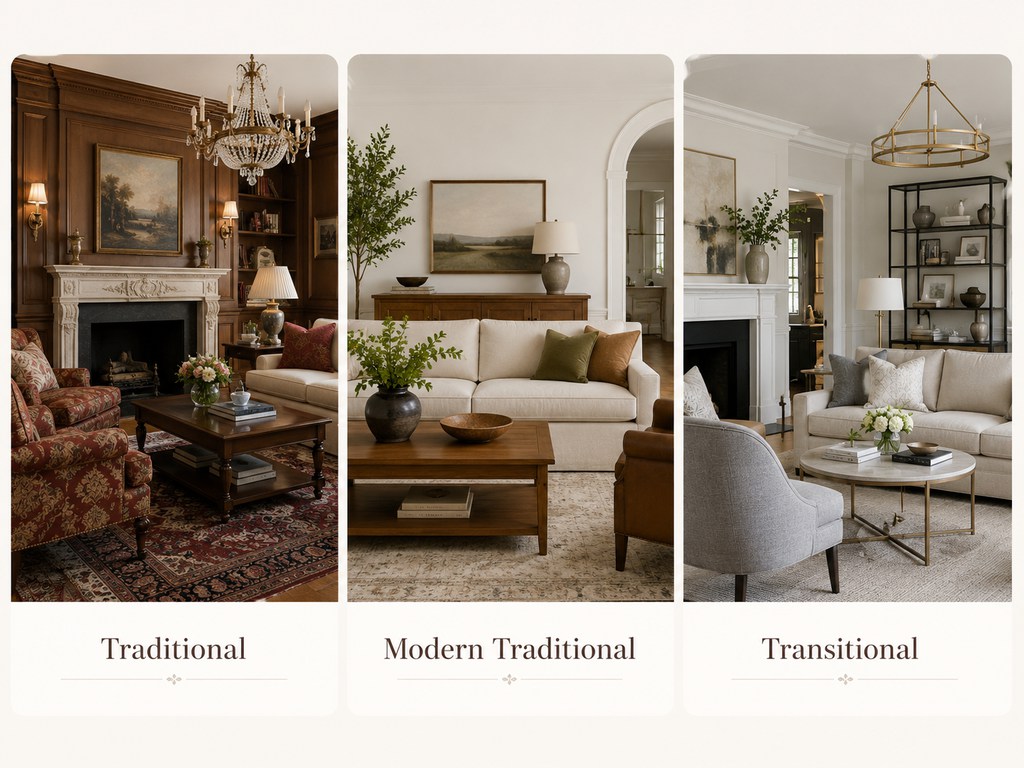
If you want a home that feels timeless but still relaxed, modern traditional is usually the easiest direction. It lets you keep the warmth of a traditional interior design style while avoiding furniture that feels too ornate, bulky, or difficult to live with.
How Should You Start Decorating a Room in Traditional Style?
Start with the room’s main function, not the decorative details. A traditional room can quickly become crowded if you begin with lamps, curtains, pillows, and accessories before choosing the main furniture. The better order is to decide what the room must do first, then use furniture and styling to support that purpose.
Step 1: Choose the room’s anchor piece.
For a living room, the anchor is usually the sofa, TV wall, fireplace, or coffee table. For a dining room, it is the table and chairs. For a bedroom, it is the bed and nightstands. The anchor should carry the main visual weight, so the rest of the room does not need to work as hard.
Step 2: Plan the layout before choosing accents.
A classic look still needs comfortable walkways, usable seating, and surfaces that are easy to reach. A good living room furniture layout can make traditional style feel intentional instead of crowded. For example, a sofa facing a fireplace may feel formal, but a sofa angled toward both the TV and conversation area may work better for daily family use.
Step 3: Decide where storage will go.
Traditional spaces often include more layers: lamps, books, framed art, textiles, and decorative objects. Without storage, those layers can turn into clutter. Before adding styling pieces, decide where remotes, cables, blankets, toys, dishes, or daily-use items will be hidden.
Step 4: Set two or three visual rules.
Maybe the room uses warm walnut, cream upholstery, and brass accents. Maybe it uses brown leather, a patterned rug, and soft white walls. These limits help the room feel layered without becoming busy.
After these steps, choose decor last. Lamps, pillows, curtains, and artwork should reinforce the furniture direction instead of trying to create the whole style by themselves. This is what keeps traditional style from looking forced.
Traditional Interior Design Ideas for Different Rooms
Room type matters because traditional style does not work the same way everywhere. A living room needs seating and storage. A dining room needs proportion and comfort. A bedroom needs softness and calm. The furniture should carry the style first, while smaller decor supports it later.
Living Room: Choose Seating, Storage, and One Clear Focal Point
Traditional living rooms often fail when every wall competes for attention. Pick one focal point first: a fireplace, TV wall, large window, or main seating area. Then choose furniture that supports that focus.
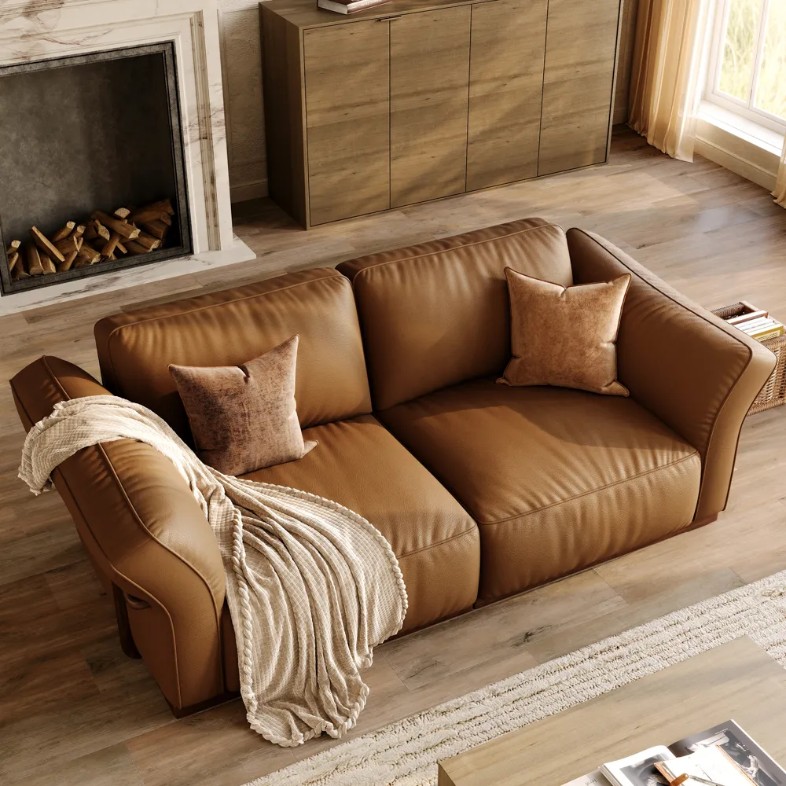
For seating, look for traditional living room furniture with comfort and structure. Rolled arms, brown leather, soft fabric, tufting, or curved silhouettes can all work, but avoid choosing a sofa only because it looks formal. If the room is used for movies, kids, pets, or guests, comfort and easy maintenance matter more than decorative detail.
Storage is just as important. A traditional room usually has more visual layers, so closed storage helps hide remotes, cables, blankets, and everyday clutter. Wood TV stands, side cabinets, and console tables can add warmth while keeping the room calm. If you are working with leather seating, leather sofa living room ideas can help you balance color, texture, and layout so the room feels warm rather than stiff.
Dining Room: Let the Table Set the Tone
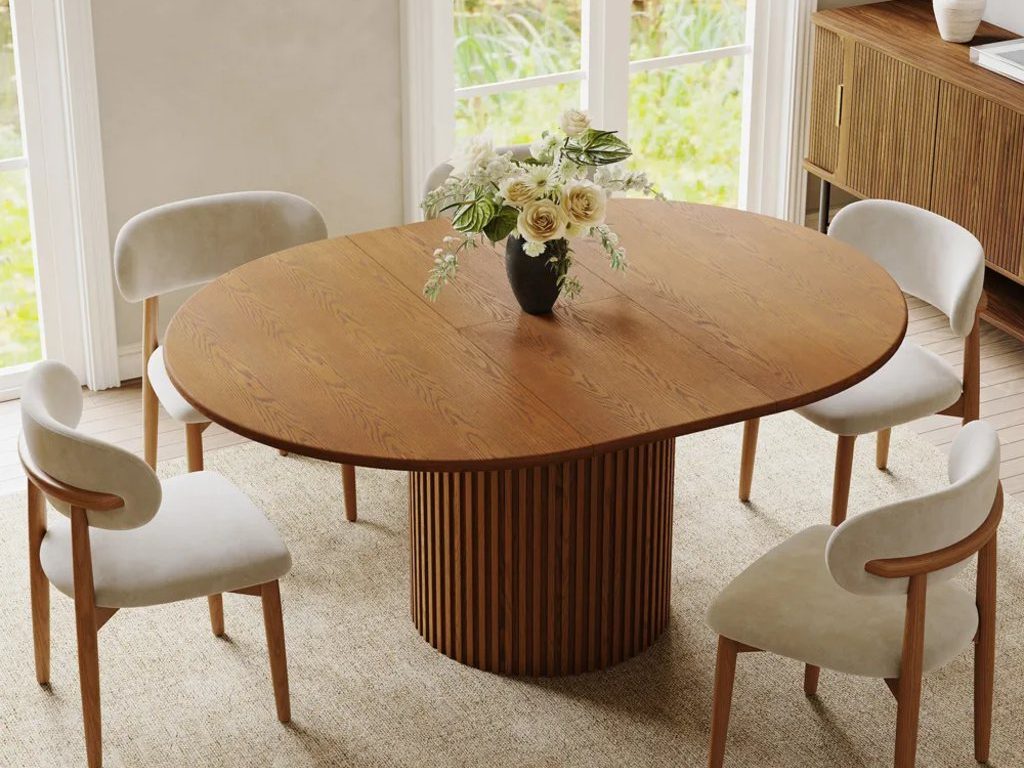
In a traditional dining room, the table is the anchor. A rectangular wood table feels formal and grounded, while a round table feels softer and more conversational. The best choice depends on room size, traffic flow, and how many people sit there most often.
Chairs can add the traditional furniture style more clearly than the table itself. Upholstered seats, curved backs, darker wood frames, or subtle nailhead trim can bring classic detail without overwhelming the room. If the table is heavy or dark, choose lighter chairs or a lighter rug to keep the dining area from feeling too dense.
A sideboard is useful if the dining room feels unfinished. It gives the wall purpose, stores serving pieces, and creates a surface for lamps, art, or a simple centerpiece. In an open living-dining space, match wood undertones rather than buying a full furniture set.
Bedroom: Use Symmetry, Softness, and Lower Visual Noise
Traditional bedrooms work best when they feel calm rather than overly decorated. Start with the bed, then build balance around it. Matching nightstands are common, but they do not have to be identical. They only need similar height, weight, or color so the bed wall feels settled.
Upholstered headboards, wood bed frames, warm lamps, layered bedding, and soft rugs all support traditional style. Avoid too many dark furniture pieces in a small bedroom. If the bed, dresser, and nightstands are all heavy and dark, the room can feel smaller than it is.
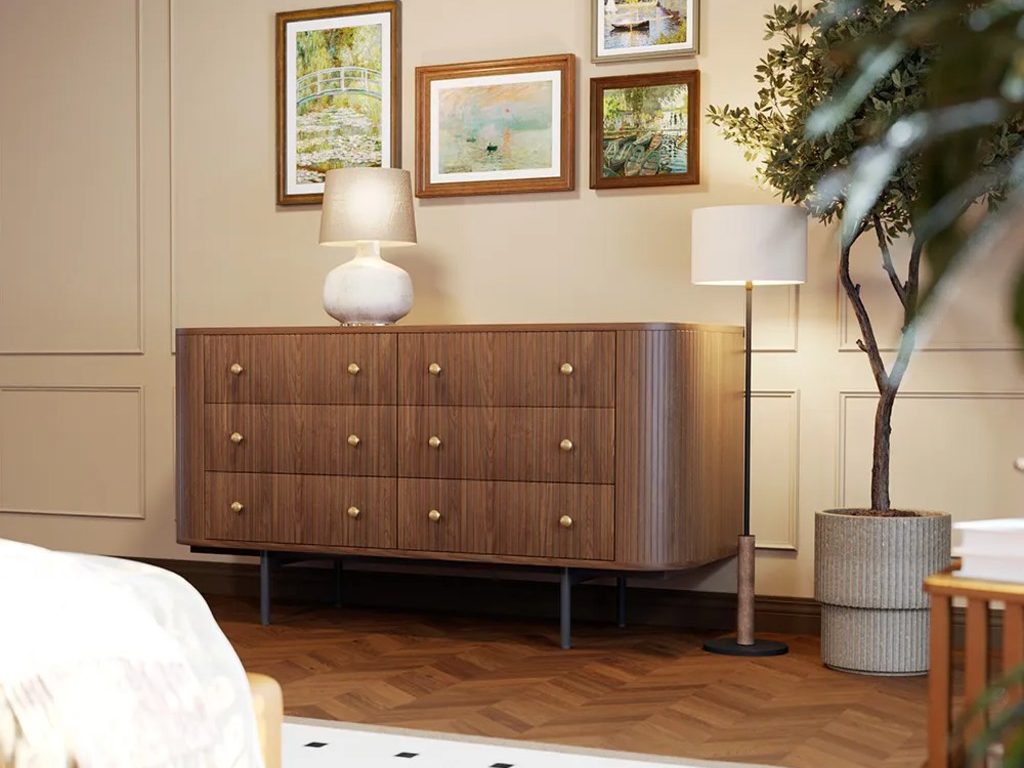
Storage should look quiet. A dresser with framed drawer fronts or warm wood can feel traditional without requiring ornate carving. Keep the top mostly clear: one lamp, one tray, and one personal item often looks better than a row of small decor.
Entryway or Hallway: Add Character Without Blocking Movement
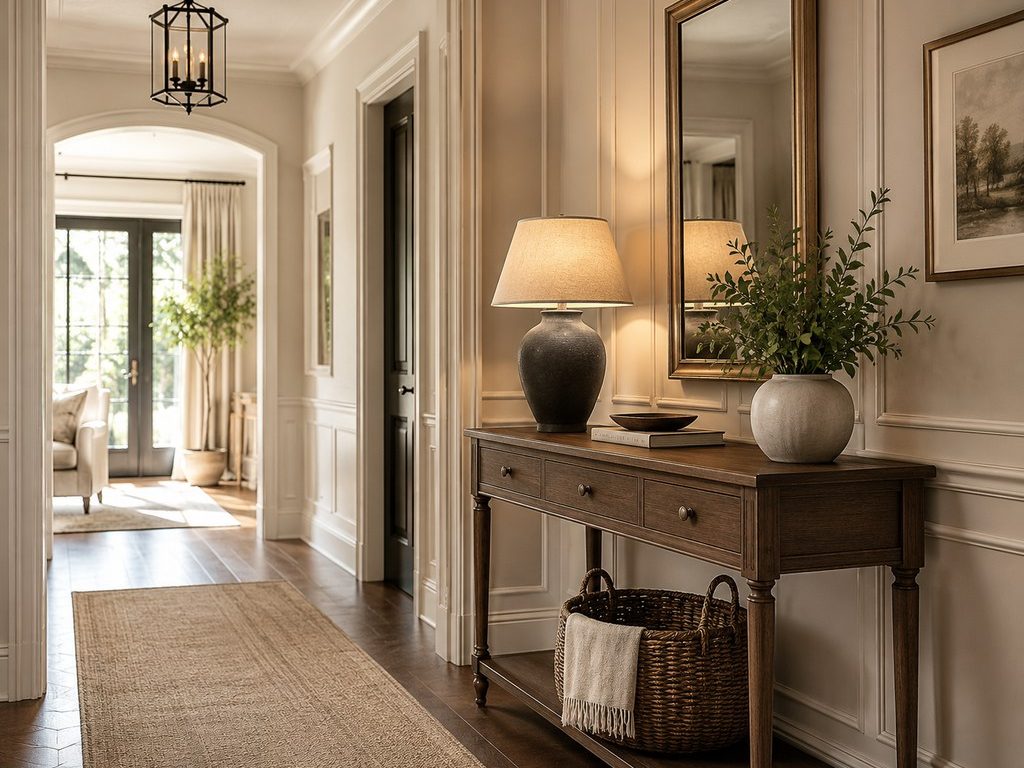
An entryway is a good place to use traditional details because it sets the tone quickly. A narrow console table, framed mirror, small lamp, and woven basket can make the home feel classic without taking up much space.
The key is depth. Choose furniture that does not block the walking path. A beautiful console that is too deep will become annoying every day. In a narrow hallway, wall art, sconces, or a slim bench may work better than a heavy cabinet.
Traditional style also benefits from small moments of repetition. If your living room uses walnut and cream, bring one of those tones into the entryway. This makes the home feel connected without forcing every room to match.
How to Make Traditional Interior Design Feel Fresh, Not Old
The easiest way to refresh traditional interior design is to keep the classic structure but edit the weight. Traditional rooms feel dated when they are too dark, too matched, too formal, or too full. They feel current when they combine classic shapes with practical comfort.
Dos:
- Use warm wood, but balance it with lighter walls or rugs.
- Choose one or two traditional details instead of using them everywhere.
- Mix soft upholstery, wood, metal, and fabric for depth.
- Keep storage closed when the room already has pattern or decoration.
- Let comfort guide the sofa, chair, and dining choices.
Don’ts
- Buy every piece from the same matching set.
- Fill every surface with candles, frames, and antiques.
- Use dark wood in every large furniture piece.
- Choose ornate furniture if the room is small or low-light.
- Make the room look formal but uncomfortable.
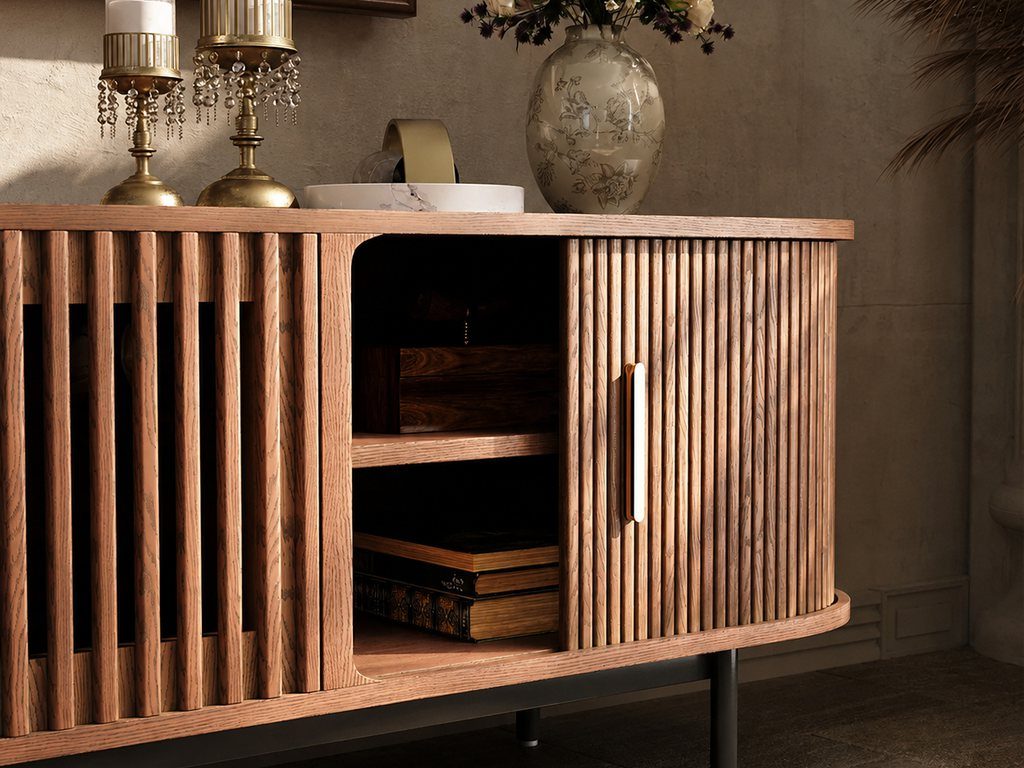
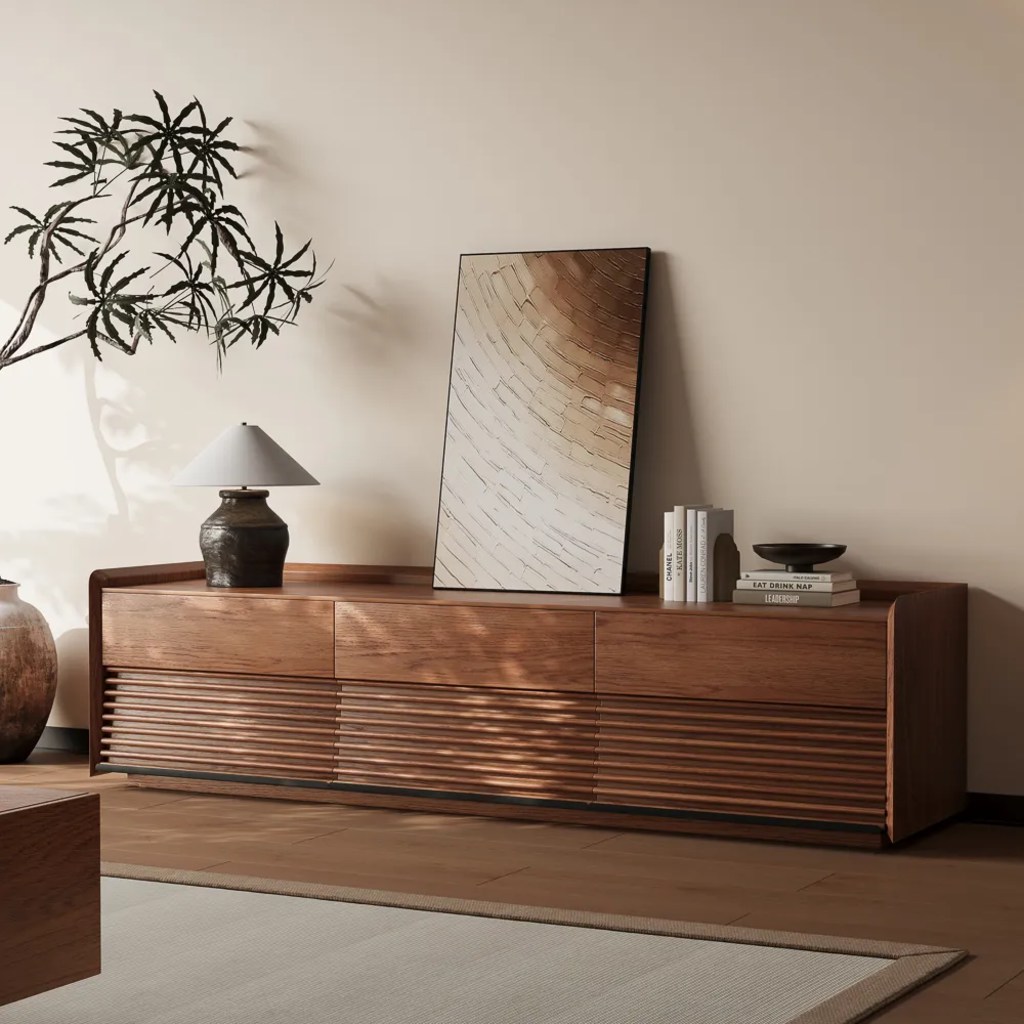
A cleaner media console can also help traditional rooms feel updated. The Ansel 70.87″ Mid-Century TV Stand brings walnut warmth, fluted drawer texture, six closed drawers, and adjustable lighting, making the TV wall feel organized without adding the heaviness of older-style storage furniture.
A good rule is to make one part of the room traditional, one part practical, and one part lighter. For example, a family room might use a brown sofa, a warm wood media console, and cream walls. That combination still feels classic, but it is easier to live with than a fully dark, heavily decorated room.
Conclusion
Traditional style does not need to feel old to feel timeless. The strongest version in 2026 uses classic furniture shapes, warm wood, comfortable seating, useful storage, and edited decor. Instead of copying a formal room from the past, build around how each room works now. When traditional interior design is planned by function, scale, and room type, it can feel warm, polished, and easy to live with.
FAQ
Can I mix traditional interior design with modern furniture?
Yes, but the mix needs one shared element, such as wood tone, color temperature, or soft curved shapes. A modern sofa can work in a traditional room if it is paired with a warm wood console, classic rug, table lamp, or framed artwork. Avoid mixing too many metal finishes or unrelated styles at once.
Can renters use traditional interior design without changing the room?
Yes, renters can use traditional interior design through movable pieces instead of permanent changes. A wood console table, framed mirror, classic table lamp, patterned rug, upholstered chair, or warm curtains can add traditional character. Avoid relying on wall molding, built-ins, or heavy installations if you may move soon.
How do I make traditional furniture look less old-fashioned?
Make traditional furniture look less old-fashioned by pairing it with lighter walls, simpler rugs, cleaner lamps, and fewer decorative objects. Keep one or two classic details, such as warm wood or curved arms, but avoid using every traditional element at once. The goal is contrast, not a full period-style room.
How do I choose between dark wood and medium wood furniture?
Choose dark wood if the room has strong natural light, high ceilings, or enough lighter surfaces to balance it. Choose medium wood if the room is small, shaded, or already has dark floors. Medium walnut, warm oak, or brown veneer can still feel traditional without making the space heavy.
What rug style works best with traditional furniture?
A traditional room usually works well with a rug that adds softness, pattern, or structure. Persian-inspired, muted floral, bordered, vintage-style, or low-contrast patterned rugs are safe options. If the furniture already has strong details, choose a quieter rug so the room does not feel overly busy.


