 By Jenny Smith
A good living room furniture layout is the difference between a space you pass through and a space you actually live in. The right furniture layout supports how you relax, host, work, and play, instead of fighting against it. In this guide, we’ll walk through how to layout furniture in a living room step-by-step, from defining the room’s “job” to spacing rules and real-life layout templates. We’ll also share small living room furniture layout tricks that make tight spaces feel open. At POVISON, we design Ready To Live In pieces that are easy to place, easy to live with, and help your layout feel finished from day one.
Step-by-Step: How to Layout Furniture in a Living Room (Big-Picture Process)
Step 1 – Decide what your living room needs to do
Before you drag a single sofa, decide what this room is really for. Common “jobs” include TV watching, conversation, reading, kids’ play, working from home, and entertaining. Today, most living rooms double as media rooms, with streaming now making up more than one-third of total TV usage in the U.S. (Nielsen, 2023). That’s a lot of hours staring at a wall—your layout should respect that.
Pick one main job (for example, movie nights) and one or two supporting jobs (maybe reading and kids’ play). A conversation-focused layout gathers seating around a coffee table with the TV off to the side. A TV-focused layout points most seats toward the screen, with side chairs that can swivel toward guests when you’re hosting. Once you’ve chosen the main job, decisions about where to put the sofa, chairs, and storage get much easier.
Step 2 – Find or create a focal point
Most successful living room layouts are built around a clear focal point. This could be a fireplace, TV wall, picture window, large artwork, or a bold feature wall. If your room has nothing obvious, create one: center your largest piece of furniture (usually the sofa or media unit), hang a substantial piece of art, or use a sculptural floor lamp to anchor attention. The key rule is simple: your main seating should “talk to” the focal point, not ignore it. That usually means the sofa faces or gently angles toward this spot, with chairs forming a loose U-shape around it so conversations feel natural.
Step 3 – Map traffic flow before you move a single piece
Imagine the invisible paths people take: from the doorway to the sofa, from sofa to balcony, to kitchen, to hallway. You want those routes to feel obvious and obstacle-free. Aim for at least 30–36 inches of clear space wherever people need to walk regularly; anything tighter quickly feels cramped in daily use. Think of paths flowing around seating groups, not cutting right through the middle of them.
- Do: Leave a clear path from every doorway to at least one major seat.
- Do: Shift rugs and coffee tables slightly off-center if it improves circulation.
- Don’t: Put a sofa so close to the door that guests have to sidestep to enter.
- Don’t: Park bulky storage pieces in front of balcony doors or windows you need to use often.
Measure First, Move Later – The Essential Furniture Layout Rules
How to measure your living room (and why it matters)
A tape measure and five minutes can save you weeks of frustration. Measure the room length and width, ceiling height, window and radiator positions, door swings, and any pillars or built-ins. Then sketch a simple floor plan to scale on paper or in a free app, dropping in rectangles for sofas and chairs using their real dimensions. Homeowners are investing heavily in renovations—56% tackled a remodeling project in 2023 with a median spend of $24,000 (Houzz U.S. Houzz & Home Study, 2024) (Houzz)—so it’s worth getting the layout right before you buy or move anything. For future use, create a printable “living room measurement worksheet” that lives in your home binder so you can reference it any time you shop.
Golden spacing rules for living room layouts
Certain distances just feel better to the human body. As a rule of thumb, keep 14–18 inches between sofa and coffee table so you can set down a drink without shin-bashing. Leave 30–36 inches for main walkways, and at least 3–4 inches between the back of your sofa and the wall so curtains and baseboards can breathe. For conversation, try to keep people no more than about 8 feet apart; beyond that, you’ll find yourselves leaning forward to hear each other.
For TV viewing, Samsung suggests an ideal distance around 1.2 × your TV’s diagonal size in inches, so a 65-inch TV feels best at roughly 6.5 feet away (Samsung, 2024). In a small room, under 10 inches between seat and coffee table feels too tight, 14–18 inches is the comfort sweet spot, and beyond 24 inches you’ll catch yourself stretching awkwardly to reach the remote. Use these numbers as a quick check while you’re fine-tuning your layout.
Classic Living Room Furniture Layout Templates (With Visual Examples)
The classic sofa + two chairs layout
This tried-and-true layout works in everything from rentals to family homes. Place the sofa facing your focal point, then add two matching or complementary chairs opposite or at an angle to form a U-shape. Center a coffee table between them and tuck a rug under at least the front legs of each seat to visually tie the group together. This setup is ideal if conversation and entertaining are your priorities, with the TV either on the focal-point wall or off to one side so you can still binge your favorite show comfortably.
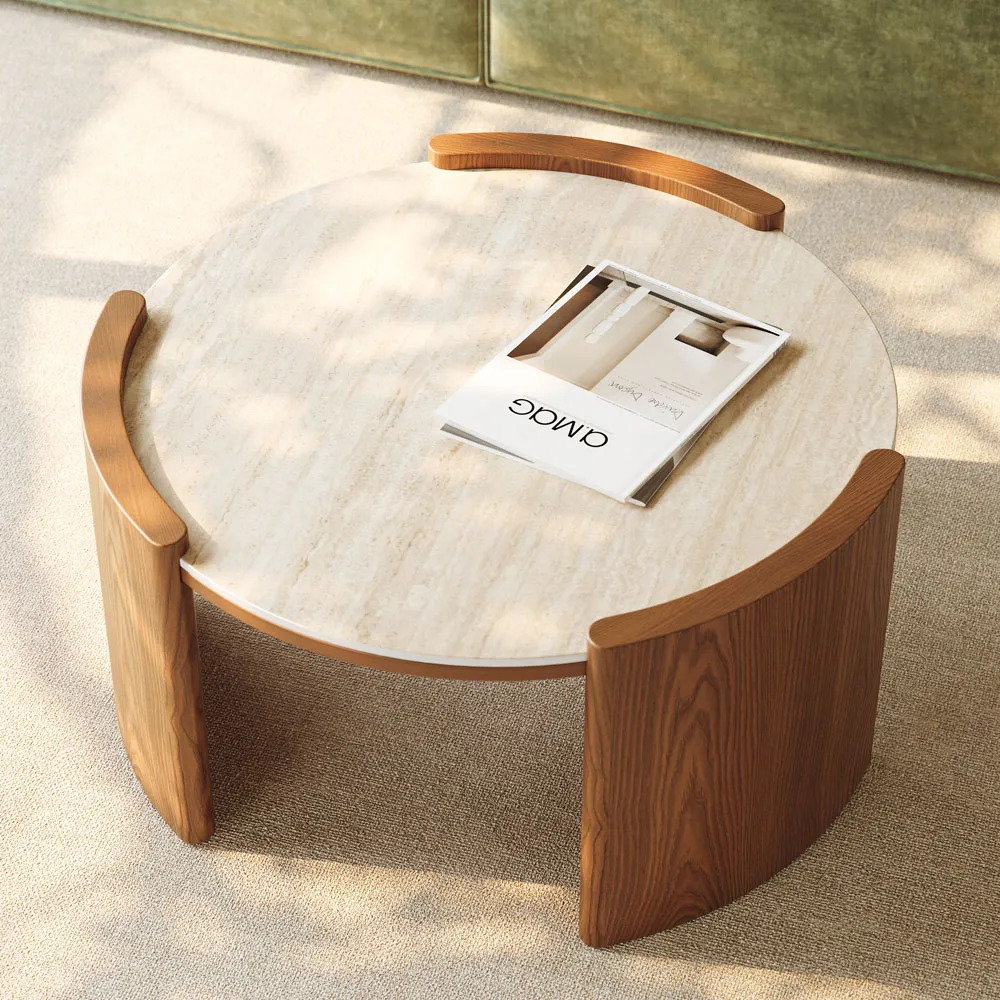
A compact, round coffee table like the POVISON Round Matte Travertine Stone Coffee Table makes this classic layout feel more fluid. Its travertine-look sintered stone top brings a quiet, modern texture, while the tripod base keeps the footprint light and legroom generous. FSC-certified wood supports a design-forward yet sustainable look, and the rounded shape softens the angles of sofas and chairs, which is especially helpful in smaller living rooms where you don’t want sharp corners in the traffic path. When I styled a tight sitting area, the curved edge meant guests could slide around the table without bumping knees, and the stone top wiped clean after a very enthusiastic red-wine toast.
L-shaped sectional layout for cozy gatherings
If your living room is where movie nights and Sunday naps happen, an L-shaped sectional can be your hero piece. Place the longer side of the L facing the focal point, with the shorter side defining one edge of the room or subtly separating it from another zone. Add a single accent chair opposite if space allows, or a slim bench that can slide under a window. The key is to leave enough breathing room on the open side of the L so the room still feels inviting rather than boxed in.
Layouts for long and narrow living rooms
Long, skinny rooms can feel like hallways unless you break them into zones. Start by aligning your main seating area at one end: sofa against the long wall, two chairs opposite, and a rug that clearly anchors this grouping. Midway down the room, create a second mini zone, such as a reading corner with a lounge chair and floor lamp, or a slim console table that doubles as a laptop perch. Keep walkways running along one side of the room instead of straight down the center; this way, people can move from end to end without walking through the middle of your seating.
Open-plan living room layout in a living/dining combo
In open-plan spaces, your furniture layout does the job walls used to do. Float your sofa so its back faces the dining area, instantly signaling “this side is for relaxing.” Place an area rug under the living room zone and another under the dining table to visually separate the two. Use consistent colors and materials across both zones so the space still feels cohesive rather than chopped up.
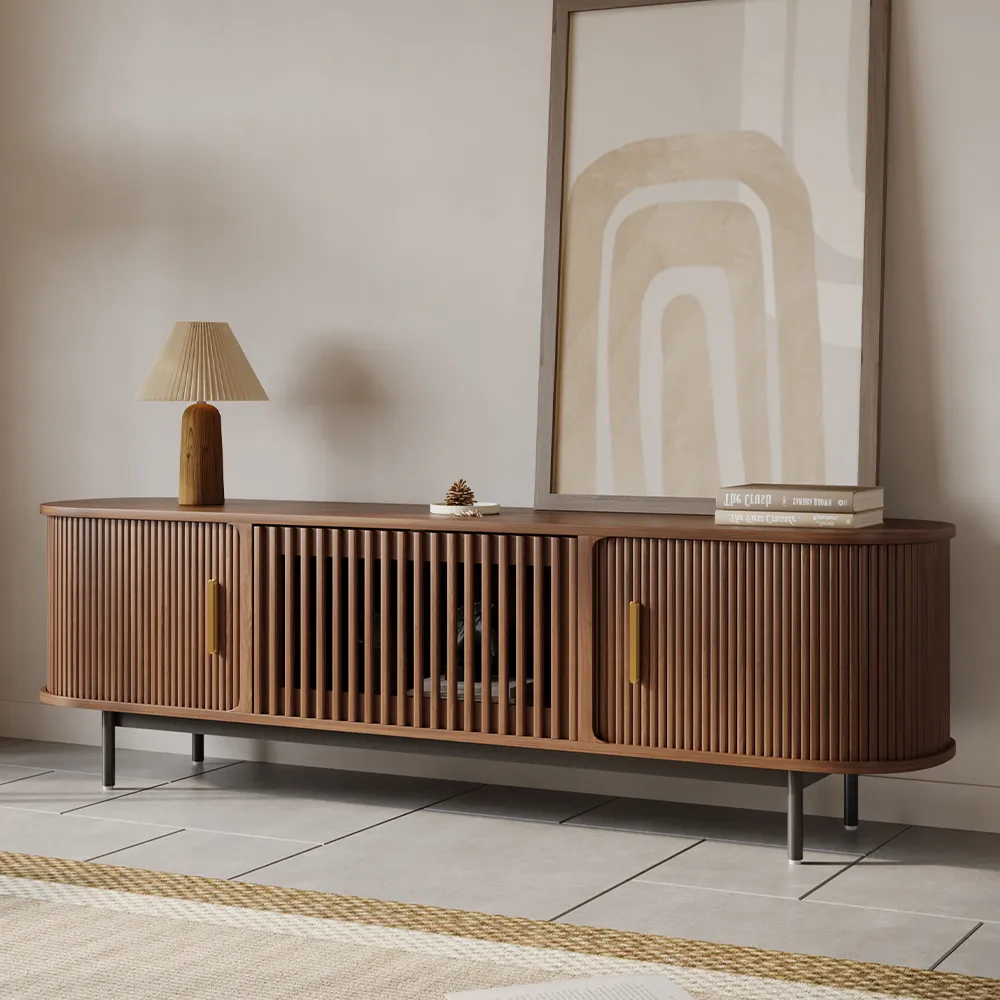
A media unit with real storage helps anchor the living side of an open plan. The POVISON 78.74″ Modern Minimalist Rolling Door TV Stand pairs a streamlined walnut profile with tambour rolling doors that hide consoles, cables, and board games when guests arrive. Inside, multi-layer solid wood construction is built for serious weight, and the open base leaves enough clearance for a robot vacuum to glide underneath—no more dragging a heavy unit on cleaning day. When I tested a similar setup in an open-plan apartment, being able to slide the doors shut and see only warm wood grain instantly made the whole room feel calmer and more “grown up” before friends came over.
Small Living Room Furniture Layout: Space-Smart Strategies
Choose slim, multi-tasking pieces that work harder
In a small living room furniture layout, every piece has to earn its footprint. Look for narrow-depth sofas, wall-mounted shelves instead of bulky bookcases, nesting side tables that stack away, and storage ottomans that hide blankets and toys. Fewer, better items almost always beat lots of tiny pieces; too many legs and surfaces make a compact room feel cluttered fast. Choose pieces with visible floor space underneath so the eye can travel further, which makes the room feel larger.
For a small space that still needs a comfortable main sofa, consider pairing a slim profile with raised legs and integrated storage around it. A compact mid-century style sofa from another modern brand—like Article’s Ceni, with its slender arms and lifted base—keeps sightlines open and works nicely with wall-mounted shelves and a petite coffee table. On a busy weeknight, it’s the kind of sofa where you can curl up with a laptop but still have enough floor left for kids’ blocks or a yoga mat, instead of the furniture swallowing the entire room.
Layout tricks that visually enlarge a small living room
Use your rug like a magic frame: choose one large enough so at least the front legs of every major seating piece sit on it. This pulls the room together and avoids the “floating rug island” feeling. Keep taller pieces (like bookcases) against the walls and lower pieces (like ottomans and coffee tables) toward the center to maintain sightlines. Mirror reflections across from windows, lean art vertically, and hang curtains just below the ceiling and wider than the window frame to stretch the perceived height and width of the room. Finally, limit yourself to one or two main accent colors to avoid visual noise.
Small living room furniture layout examples you can copy
Picture this: a small rectangular living room with the sofa against the longer wall, a single swivel chair opposite, and a round coffee table in between. A shallow console behind the chair holds a lamp and baskets but leaves the entry path clear. In another version, a loveseat faces the TV, with two poufs instead of chairs—these can tuck under a console when you don’t need them, freeing up floor space. In both, the key is one main seating group and smart, movable extras.
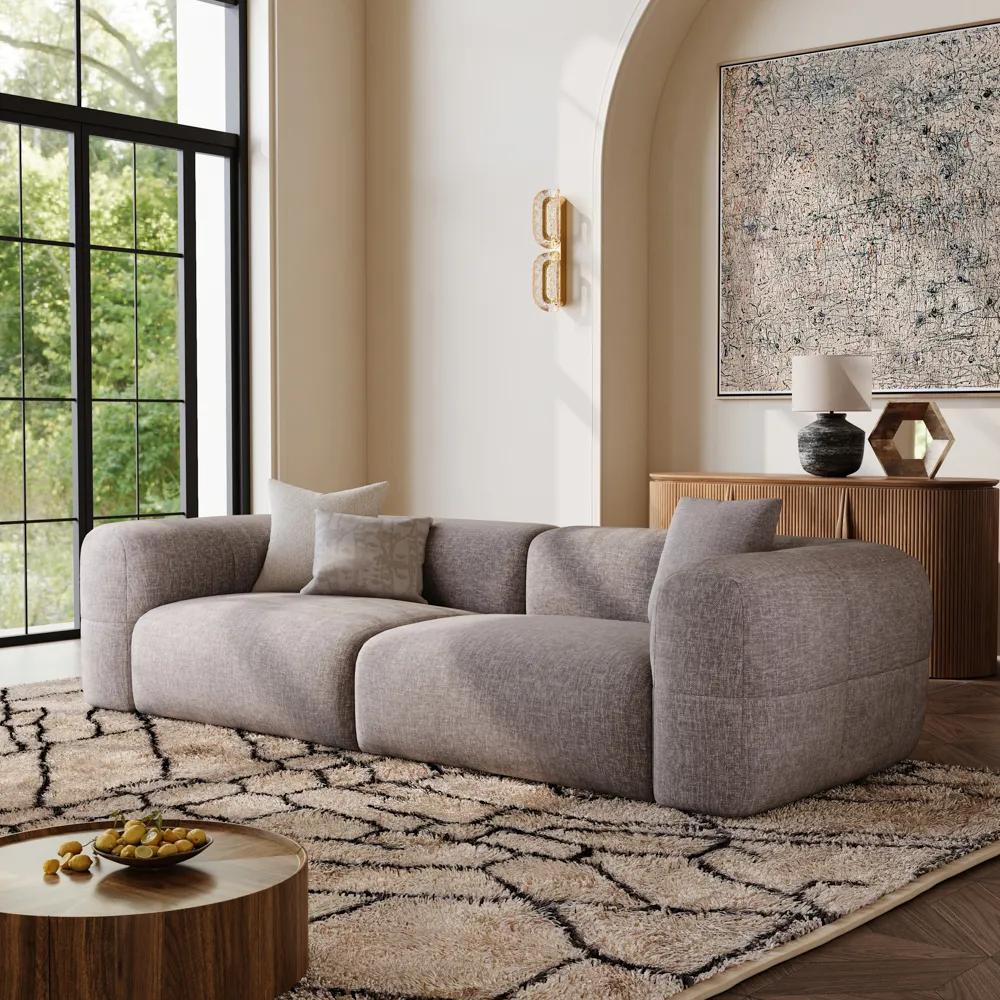
If you want a small living room to feel like a plush retreat, a compact but extra-deep sofa can work beautifully as your single hero piece. The POVISON Vintage Chenille Waterproof Loveseat Sofa wraps you in a cushioned “plush embrace,” with extra-deep seating that’s perfect for stretching out and a water-resistant fabric that quietly forgives spills. Pair it with slim nesting tables instead of bulky side tables to keep circulation easy. On a recent styling project, this kind of sofa turned a modest apartment living room into a cozy movie den; when a guest’s coffee tipped over during game night, the stain wiped up quickly instead of becoming a permanent reminder.
Styling, Scale & Final Checks – Making Your Layout Feel Finished
Once the big pieces are placed, lighting and small surfaces are what make the layout feel intentional. Use a mix of floor lamps and table lamps to reinforce zones: a floor lamp behind a reading chair, a table lamp on a console near the entry, and a soft-glow lamp near the TV wall so the screen isn’t the only light source at night. Aim for every seat to have a “landing spot” within easy reach—a side table, coffee table corner, or wide arm that can safely host a mug.
This is also the moment to check scale. Is your coffee table roughly half to two-thirds the width of your sofa? Are your side tables close to the height of the sofa arms so people don’t have to reach up or down? A sculptural piece like the POVISON Round Matte Travertine Stone Coffee Table works well here because its round top and curved legs soften a room full of rectangles and make traffic paths feel more organic, especially in design-forward spaces where you want the living room to double as a social backdrop for hosting. Before you call it done, walk the room as if you’re a guest: enter, sit in every seat, set something down, and see if anything feels awkward or out of reach.
Conclusion
A successful furniture layout isn’t about copying a magazine photo; it’s about making your living room do its main job beautifully, day after day. Start by deciding what the room is for, then build around a focal point, clear walkways, and a few simple spacing rules. From there, layer in a layout pattern that fits your room shape, choose multi-tasking pieces that work hard in small spaces, and finish with lighting and landing spots that make every seat feel considered. Whether you’re dealing with a long, narrow room or a compact city living room, these steps show you how to layout furniture in a living room in a way that feels both stylish and ready to live in the moment the last cushion is fluffed.
FAQs About Furniture Layout in a Living Room
Q1: What is the best furniture layout for a small living room with a TV?
Center one main seating piece (a sofa or loveseat) facing the TV, with a round coffee table and one compact chair or poufs instead of a second sofa. Keep the TV wall flat and simple, and push storage to the sides so you maintain a clear path from door to seating. This keeps the room balanced without feeling overfurnished.
Q2: Should the sofa face the TV or the window?
Decide based on your room’s “main job.” If TV time or streaming is how you unwind most days, let the sofa face the TV and angle a secondary chair toward the window. If you rarely watch, face the sofa toward the window or fireplace instead and keep the TV off to the side, still within comfortable viewing distance but not the visual boss of the room.
Q3: How do I layout furniture in a living room with no focal point?
Create a focal point with furniture and decor. Center your largest piece—usually a sofa—on one wall and hang a substantial piece of art or a large mirror above it. Add a floor lamp or tall plant beside it to reinforce the visual “anchor.” Then arrange chairs and tables to face this new focal point so the room feels intentional instead of random.
Q4: How much space should I leave between the sofa and coffee table?
Aim for 14–18 inches between the front of the sofa and the edge of the coffee table. That’s close enough to reach snacks and drinks without leaning uncomfortably, but far enough that knees and toes aren’t constantly bumping into the table. If you’re using an ottoman as a coffee table, err toward the wider end of the range to make walking around it easier.
Q5: Can I mix different furniture styles in one living room layout?
Yes—mixed styles often make a room feel more personal, as long as you keep some elements consistent. Choose two or three repeating details, such as wood tone, metal finish, or leg shape, and let those thread through your sofa, chairs, and tables. Stick to a simple color palette so a vintage piece, a modern sofa, and a contemporary media unit still feel like they belong in the same story.
Q6: How do I create a kid-friendly yet stylish furniture layout?
Start with durable, wipeable fabrics and rounded corners on major pieces, then keep pathways wide enough for running laps without hitting sharp edges. Use closed storage—like tambour-door TV stands and lidded ottomans—to hide toys quickly. Style the higher surfaces with beautiful objects for adults, and dedicate one lower shelf or basket per child so tidying up becomes part of the daily routine instead of a battle.
Q7: What’s the easiest way to rearrange a living room without buying new furniture?
Begin by rolling up the rug and moving it, not the sofa—shifting the rug a foot or two can change the feel of the whole room. Swap the positions of chairs, side tables, and lamps to test new conversation groupings. If possible, float the sofa away from the wall or pivot it to face a different focal point. A fresh layout, better lighting, and decluttered surfaces can make your existing pieces feel entirely new.
To make all of this even easier, POVISON’s fully assembled, design-forward pieces are built to drop straight into your layout—no hex keys, no weekend lost to instructions—so busy homeowners can go from delivery to Ready To Live In in a single afternoon.


[…] if its frame cannot clear a turn or doorway.For room placement after delivery, this guide to how to layout furniture in your living room can help you check circulation space and furniture […]