 By Jenny Smith
A family dining table has to do more than look pretty in photos. It’s where your kids spill juice, tackle homework, build LEGO castles, and blow out birthday candles. Research suggests that around 25–50% of families manage shared meals several days a week, showing how central this spot still is to everyday life (BMC Public Health, 2025). So the right table isn’t just decor; it’s long-term family infrastructure. Let’s walk through how to choose a big or small family dining table that can grow up with your kids.
What Makes a Dining Table Truly “Family-Friendly”?
A truly family-friendly dining table is one you don’t have to baby. It’s stable enough for a preschooler climbing onto a bench, tough enough for endless coloring sessions, and big enough for a family room with dining table setup that doubles as a craft or work zone. Think of it as a flexible workhorse: easy to wipe, hard to damage, and comfortable for everyone from toddlers to grandparents.
- Must-haves: rounded edges, sturdy base, easy-clean finish, enough legroom, kid-compatible seating, space for daily tasks and serving dishes.
- Nice-to-haves: extendable leaves, built-in storage, matching family dining table set, matching bench, and a design versatile enough to survive at least two decor phases.
Safety & Durability Essentials for Homes With Kids
Kid-Safe Design Details You Shouldn’t Ignore
With little ones, the safest family dining room table is the one that quietly prevents accidents. Rounded or chamfered corners reduce bruises when toddlers zoom past. Look for a solid, non-wobbly base, thicker legs, or pedestal designs that don’t become tripping mazes. Avoid top-heavy tables that could tip if kids lean or climb. Check height and legroom so high chairs and boosters slide in without banging into a bulky apron, and make sure chair legs don’t catch tiny toes when kids wriggle out.
Built to Last: Construction, Joinery & Daily Wear
A serious dining room table for a big family should feel sturdy when you press on it. Check for real hardwood or good engineered wood and look for the quality of joinery: mortise-and-tenon or metal bracket construction usually lasts much longer than cheap cam lock joints. This will mean fewer squeaks, less wobble after a few years, and a surface that doesn’t bubble the first time someone forgets a coaster. Run your hands along the underside of the table. If it feels rough or unfinished, it may not be built to last.

Choosing the Right Shape for Your Family & Space
Rectangle & Extendable Tables – Classic and Flexible
Rectangular family dining tables shine in long rooms and open-plan layouts where you might put a bench on one side and chairs on the other. They make it easy to line up several kids in a row, and there’s plenty of space down the center for platters or a laptop. Picture a weekday evening: math worksheets at one end, a laptop in the middle, and dinner plates sliding in at the other. For big holidays, an extendable dining table for large family with leaves lets you host without owning a second table.
Round & Oval Tables – Conversation and Safety Wins
Round or oval tables are all-stars with younger kids. No sharp corners, smoother traffic around the table, and everyone can see each other, which is great for family chats and “roses and thorns” of the day. A round family friendly dining table works beautifully in square rooms or small open-plan spaces. Choose an oval when your room is more narrow but you still want soft edges. Many parents love that a pedestal base on a round table also makes it easier to tuck in a high chair or slide in a booster without fighting table legs. For more layout ideas, see this round vs. rectangular dining table layout guide.
Stress-Free, Kid-Friendly Materials & Finishes
Tabletop Materials That Survive Real Family Life
For a big family dining table, materials matter as much as style. Solid wood feels warm and can often be sanded and refinished after years of markers and fork scratches. High-quality veneer over stable core boards can still be a smart, budget-friendly choice if edges are well sealed. Engineered stone or ceramic tops are great for heat and stains, while tempered glass is easy to wipe but shows fingerprints fast. Prioritize non-toxic, low-VOC finishes—indoor air pollutants can be significantly higher than outdoors and are linked to issues like headaches and worsened asthma in children (American Lung Association, 2021).(lung.org)
| Material | Best For | Pros | Watch-outs | Kid-Friendliness |
| Solid wood | Long-term family dining table | Warm, repairable, durable | Can dent; needs gentle cleaners | ★★★★☆ |
| Veneer | Style on a budget | Stable, less warping | Cheap veneer can chip/peel | ★★★☆☆ |
| Engineered stone | Messy eaters, hot dishes | Stain & heat resistant | Heavier, higher price | ★★★★☆ |
| Tempered glass | Older kids, modern look | Easy wipe; feels light in space | Smudges, visible crumbs | ★★☆☆☆ |
Easy-Clean Surfaces & Daily Maintenance Tips
Choose matte or satin finishes to hide fingerprints and micro-scratches better than high-gloss. Sealed surfaces or stain-resistant coatings make spaghetti night, slime experiments, and watercolor painting less stressful. In one busy home, parents keep a slim caddy with washable placemats, microfiber cloths, and heat-safe trivets right by their family dining table set, so clearing and resetting between homework and dinner takes under two minutes. Add a simple, low centerpiece that can be moved quickly whenever someone spreads out a project.
Getting Size, Seating & Layout Right from Day One
How Big Should Your Family Dining Table Be?
A large family dining table doesn’t have to overwhelm your room. Aim for about 24″ (60 cm) of width per person along the edge so everyone has elbow room, and try to keep at least 36″ (90 cm) of clearance between the table edge and walls or other furniture for chairs and kid traffic. For more sizing formulas, check this modern dining table guide.
Seating Choices: Chairs, Benches & High Chairs
Benches are fantastic for kids: they squeeze in extra friends, slide under the table, and make a large family dining table feel more casual. Chairs give clearer personal space and better back support for adults. Many families mix both, using a bench on one long side and chairs on the other. If you use high chairs or boosters, test how they clip or slide to the table and whether the legs create tip risks.
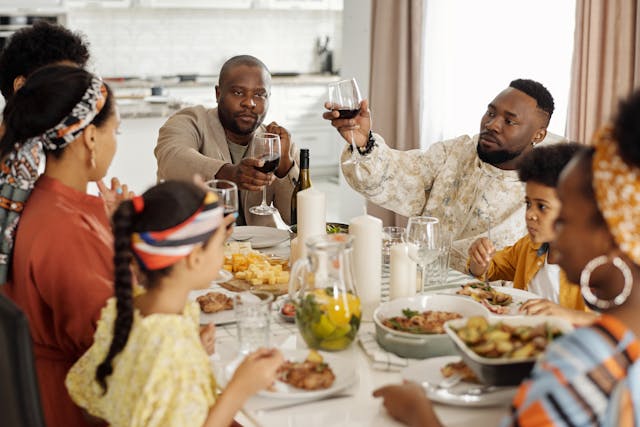
Style Without Stress – Making Your Dining Space Feel Grown-Up and Kid-Ready
Even with kids, your family dining table can still look elevated. Start with a neutral, timeless table—wood tones, black, or stone—then layer personality through chairs, cushions, art, and table linens. In open-concept homes, align the table with the sofa or kitchen island and anchor it using a pendant light or chandelier so the family dining table reads as its own zone, not a spillover from the kitchen. You can steal layout tricks from these minimalist dining room ideas to keep the room calm, even when life isn’t.
If you love rugs, choose a low-pile, washable style or a flat-weave that can handle crumbs and toy car races—or skip the rug entirely for easier sweeping. Add closed storage nearby for placemats, kids’ cutlery, games, and craft supplies so your family friendly dining table can switch from snack spot to family game night in minutes.
Conclusion
Choosing the best family dining table for a home with kids is really about designing for real life, not magazine perfection. Look for safe edges, stable construction, forgiving materials, and a size and shape that work with your room and routines. Build in flexibility with benches, extendable options, and easy storage so your table can morph from weekday workstation to “best dining table set for family gatherings 2025 and beyond.” When your table matches your actual lifestyle, you’ll use it for far more than 20 minutes at dinner.
FAQs About Family Dining Tables
Q1: What is the best dining table shape for families with young kids?
Round and oval tables are usually the safest for little ones because there are no sharp corners and it’s easier to move around them without bumps. A pedestal base also helps by reducing the number of table legs kids can trip over. If your room is narrow, an oval can give you that soft, kid-friendly shape while still fitting the space.
Q2: Which tabletop materials are the easiest to clean and maintain with children?
Sealed solid wood, high-quality veneer, and engineered stone are all excellent choices. They handle daily spills well and don’t require fussy cleaners. Look for matte or satin finishes that hide fingerprints better than high-gloss. If you pick tempered glass, be ready to wipe more often, but it can still work nicely for older kids or households that value a lighter visual look.
Q3: How can I tell if a dining table is sturdy and safe enough for my kids?
Gently rock the table in the showroom—if it wobbles when you press on a corner, it might not survive years of kids leaning and climbing. Check that the legs are either thick and well-braced or that a pedestal base is wide and heavy. Avoid designs that feel top-heavy, and make sure screws or hardware underneath are tight, smooth, and don’t snag small hands or clothing.
Q4: What size dining table do I need for a family of four or six?
For four people, a table around 47–55″ (120–140 cm) long usually works well; for six, think 63–71″ (160–180 cm). More important than exact length is giving about 24″ (60 cm) per person along the edge so no one feels cramped. Always measure your room, too—leave at least 36″ (90 cm) between the table and walls or furniture so chairs can slide out comfortably.
Q5: How do I keep my dining table looking good when it’s also a craft and homework station?
Protect your table with washable placemats, a large wipeable mat, or an inexpensive roll-out craft liner during messy projects. Establish a quick reset routine: clear supplies into a nearby basket or drawer and wipe the surface before meals. Choosing a durable, matte finish and forgiving material up front means you can say “yes” more often to paint, slime, and big cardboard projects without stressing about every mark.


