 By Jenny Smith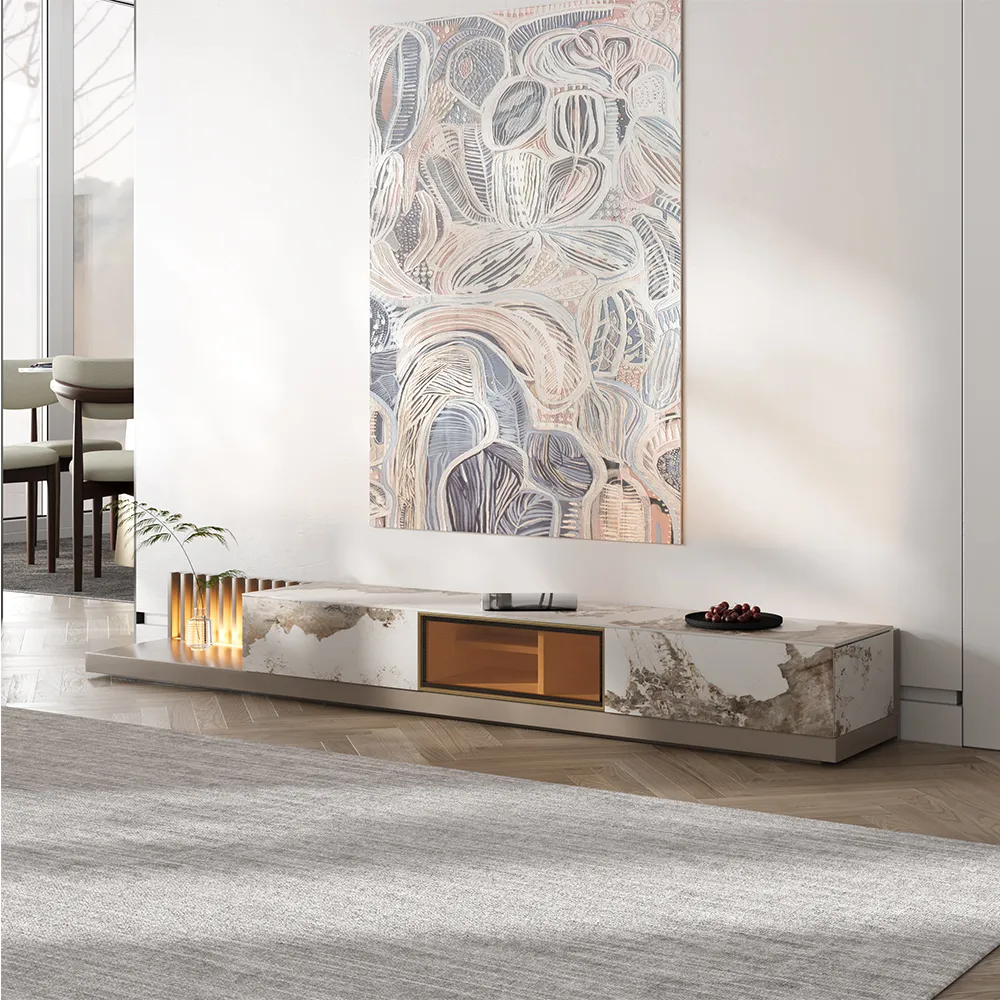
Search “stone TV stand” and you’ll see thousands of results, even though a true all-stone cabinet is rare in real homes. Most “stone” TV stands are clever hybrids: a wood or metal body with a natural marble or sintered stone top. The real choice you’re making is between classic natural stone and high-performance sintered stone. This guide keeps things practical—how each option performs, how it looks, how much care it needs, and which type of stone TV stand actually fits your living room and lifestyle.
Understanding “Stone TV Stand”: What People Really Buy
What Is a “Stone” TV Stand, Really?
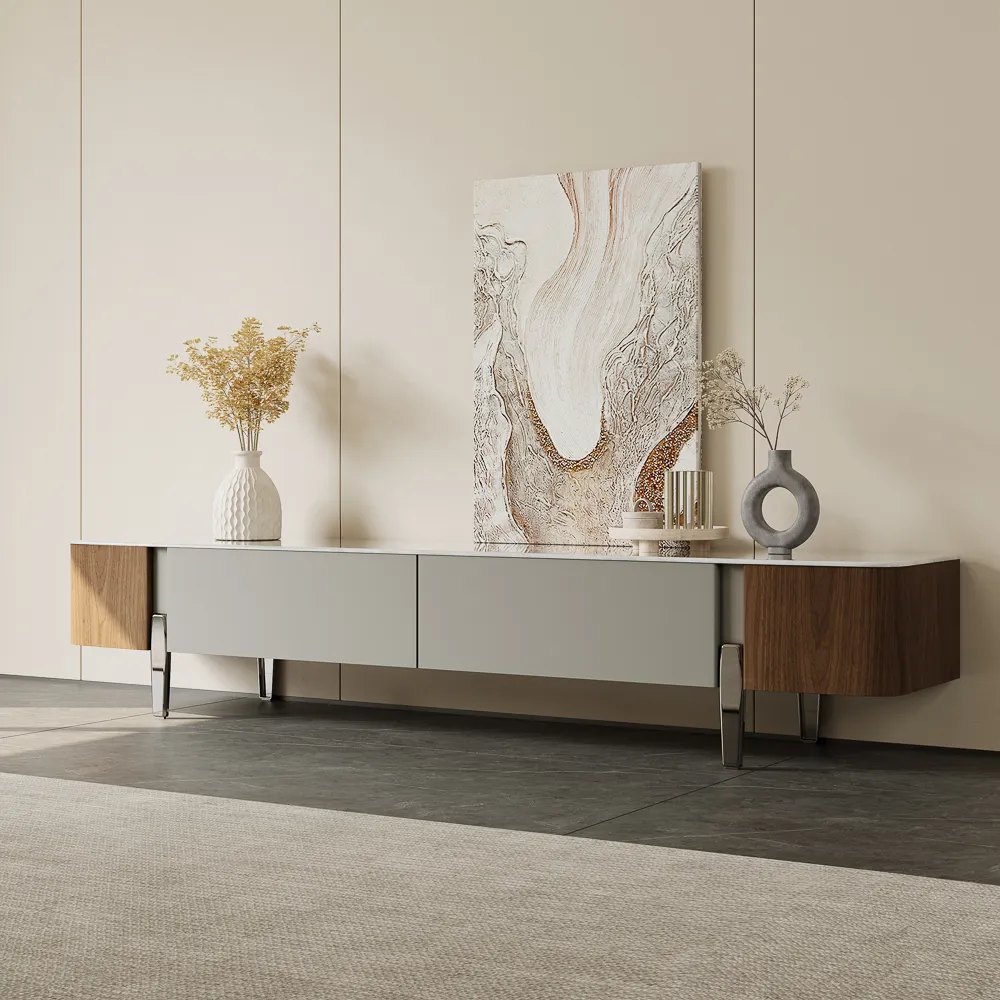
On product pages, “stone TV stand” is usually shorthand for a mixed-material design. The carcass is often wood, veneer, or MDF for storage, cable cut-outs, and lighter weight. On top sits either a slab of natural marble or a sintered stone (sometimes labeled porcelain) panel. Metal frames plus stone tops are also common for slimmer, open consoles. Full solid-stone TV stands do exist, but they’re heavy, expensive, hard to move, and overkill for most apartments and condos.
Common Misconceptions About Stone TV Stands
Many shoppers picture a giant block of marble under the TV, but real-world designs are usually more practical. Hybrid construction doesn’t mean “fake”: the top can be genuine marble or a premium sintered stone slab, while the base is engineered for structure and storage. One typical living-room scenario: the cabinet hides routers and consoles, while the stone top takes the spotlight for décor and durability. Strength comes from how the top is supported, not just from how “stone-y” the whole piece looks.
Meet the Materials: Natural Stone vs. Sintered Stone
Natural Marble & Other Stones: The Classic Choice
In TV stands, “natural stone” almost always means marble, with occasional granite or travertine. Every slab is unique, with veining that feels luxurious and instantly ups the room’s perceived value. Marble is porous and relatively soft, so acids and dark liquids can etch or stain if spills sit too long. It usually needs sealing and gentle, pH-neutral cleaners. As more people invest in long-lasting furniture—the U.S. furniture market alone topped about $172 billion in 2024 (Grand View Research, 2024)—marble’s heritage appeal keeps it firmly in the mix.
What Is Sintered Stone? (The Modern Game-Changer)
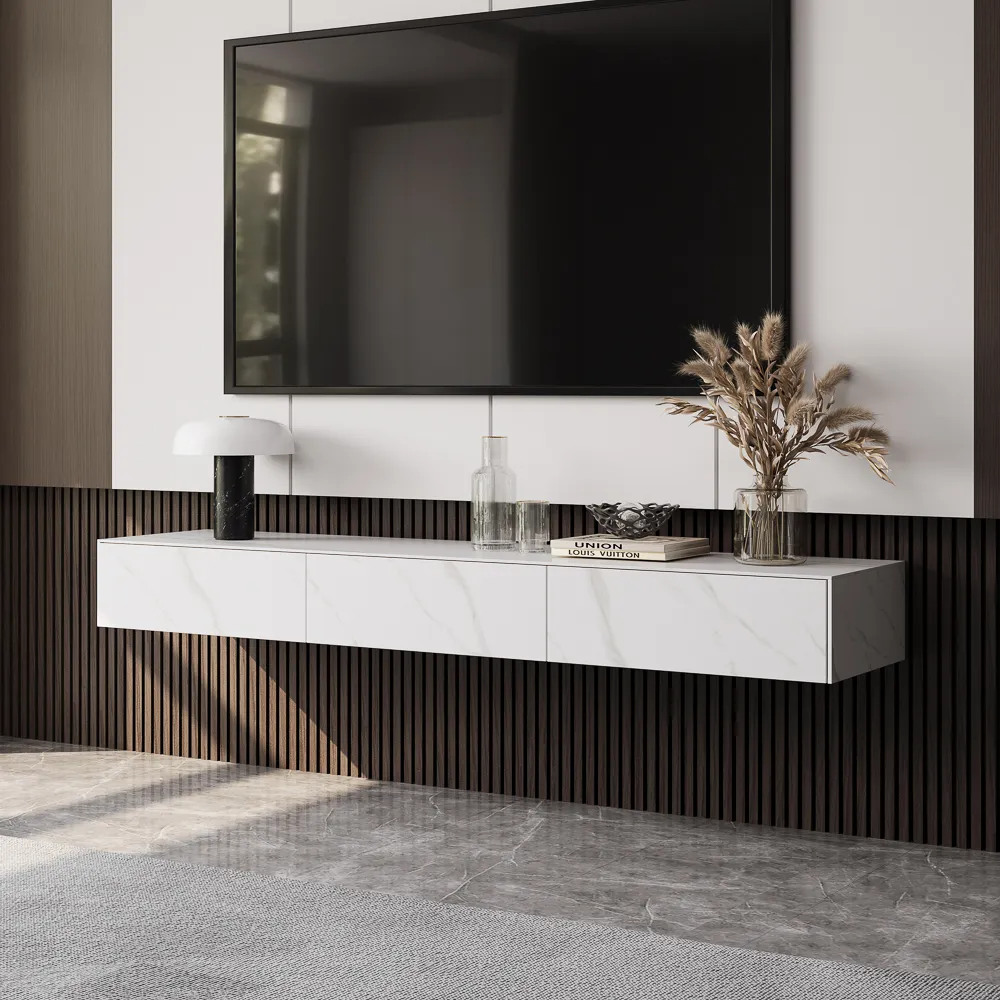
Sintered stone is a man-made surface created by compressing natural minerals under high pressure and then firing them at very high temperatures. The process mimics how stone forms in the earth, but in a controlled way, producing slabs that are dense, non-porous, and very hard. Finishes range from marble-look veining to concrete-style greys and ultra-matte solids. The global sintered stone countertops market is still smaller than marble but growing fast—from about $88.8 million in 2023 to a projected $152 million by 2030 (Valuates Reports, 2024).
For you as a homeowner, that process simply means a surface that feels like stone but behaves more predictably in daily life. Because it’s so dense and low-porous, it resists stains, scratches, and heat better than many natural stones, without needing regular sealing. That’s why you’ll see sintered stone used not only for kitchen counters but also for coffee tables and stone TV stands where drinks, remotes, and décor are constantly being moved around.
Performance Matters: Durability, Heat & Everyday Life
How Stone TV Stands Handle Daily Use
Across the home, people are clearly prioritizing surfaces that are both durable and easy to clean. In the NKBA 2026 Kitchen Trends Report, 78% of design pros still choose quartz—an engineered, low-maintenance surface—as their preferred countertop material over higher-care options like marble (reported by Real Simple, 2025). That same mindset is now moving into living rooms, where TV stands act as snack stations, décor shelves, and charging hubs rather than just a place to park the screen.
In that kind of everyday setting, both natural and sintered stone can easily support a TV and speakers when the stand is well-built, but they behave differently on the surface. Marble feels cool and luxurious, yet it can pick up fine scratches from decor bases and may etch where cola, wine, or citrus sit too long. Sintered stone is denser and far less porous, so it resists most everyday scratches and stains and doesn’t need regular sealing. In one client’s family room, a matte sintered stone TV stand survives weekly movie-night snack bowls and drink trays with nothing more than a quick wipe-down using mild soap and water.
Heat Resistance & Electronics
Most heat around a TV stand comes from the TV itself, game consoles, sound systems, and streaming boxes—plus maybe a space heater or nearby fireplace. Sintered stone is designed to handle high temperatures, so warm electronics, hot coffee mugs, and the occasional hot dish straight from the oven won’t scorch or discolor it under typical home use. Marble generally copes well with electronics too, but sudden thermal shock—like a very hot pan on a cold top—can stress the surface. Whatever material you choose, prioritize ventilation: without cable cut-outs, open shelves, or mesh doors, heat will still build up around your devices and shorten their lifespan.
Sintered Stone vs. Natural Stone: Side-by-Side Comparison
At-a-Glance Comparison Table
| Feature | Natural Marble Top | Sintered Stone Top |
| Scratch resistance | Medium; can mark with hard objects | High; very resistant in normal use |
| Porosity / stains | Porous; needs sealing and fast cleanup | Ultra-low porosity; excellent stain resistance |
| Heat resistance | Good but avoid thermal shock | Excellent for typical home heat |
| Weight | Heavy | Slightly lighter at similar thickness |
| Style range | Natural veins, limited colors | Marble-look, concrete-look, solids, textures |
| Maintenance | Seal, gentle cleaners, more babying | Wipe with mild soap and water |
| Price range (tops) | Mid–high, varies by stone | Mid–high, often similar to quality marble |
If you’re a “skim the chart and decide” type, this is your section: marble is the heritage classic, while sintered stone is engineered to optimize daily performance.
Pros & Cons: Which Trade-Offs Matter Most?
If you care about authentic, one-of-a-kind veining and like the idea of a surface developing character over time, a marble-topped stone TV stand will feel special every time you walk into the room. If you’d rather not think about coasters, sealing, or the occasional spill during game night, a sintered stone top gives you that “stone look” with far less day-to-day worry.
Who Is a Stone / Sintered Stone TV Stand Best For?
When Sintered Stone Is the Smarter Choice
Sintered stone is a great match for busy households with kids, pets, or frequent guests. If your TV stand doubles as a drink station during game nights or as a backdrop for video calls, a surface that forgives spills and ring marks is a relief. City homeowners who love clean lines and low-maintenance living tend to gravitate toward slim sintered tops on sleek wood or metal bases. Pair that with good cable management—Povison’s guide to minimal-cable TV stand setups is a nice next read—and the whole wall feels calmer.
When Natural Marble Still Makes Sense
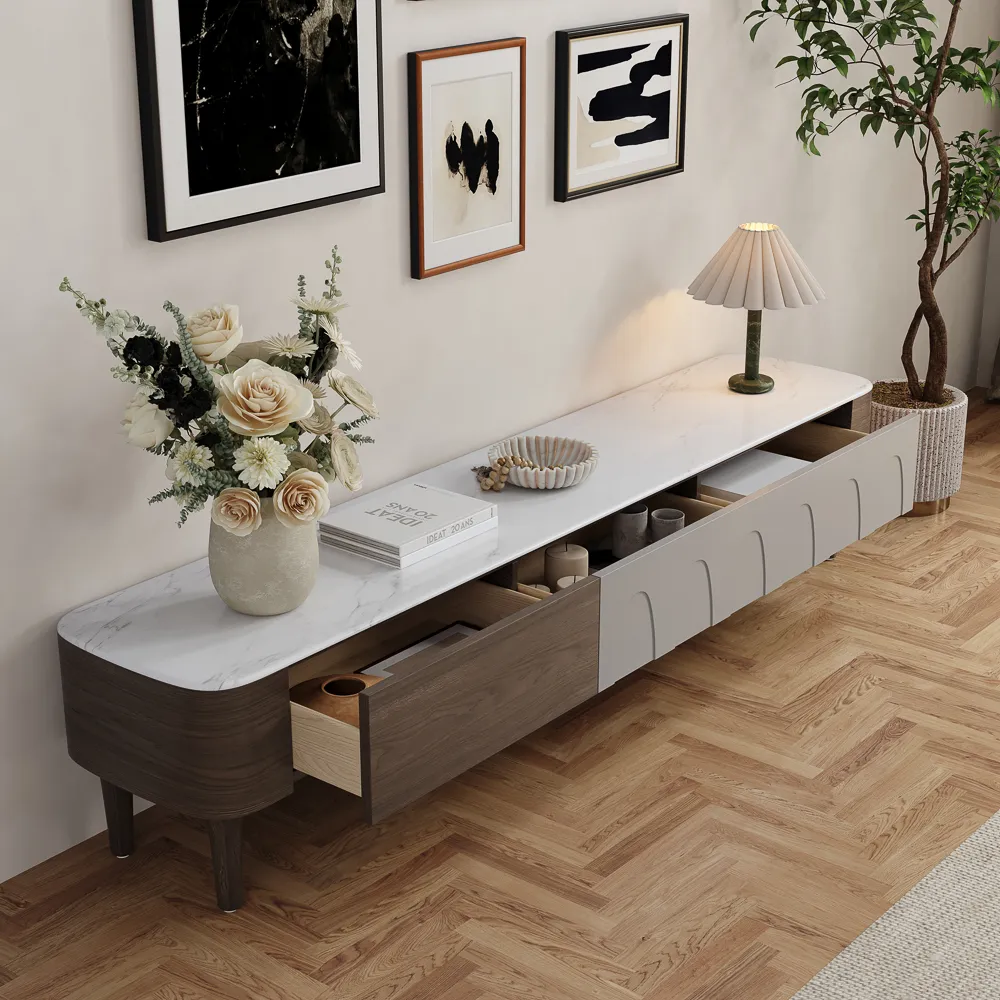
Natural marble still shines in formal living rooms or media spaces that aren’t used as the family’s daily snack zone. It suits people who enjoy the idea of materials aging with them; tiny scratches and soft etching can feel like character rather than flaws. If the fact that the top is genuine marble matters to you, that quiet sense of authenticity is part of the appeal. Just be realistic: keep coasters handy, wipe spills quickly, and plan on resealing. Choosing marble on a well-designed wood or metal base reduces weight, protects your floors, and makes moving the piece far less stressful.
How to Choose the Right Stone TV Stand (Step-by-Step)
Measure, Match & Plan Your Layout
Start with your TV size: many designers recommend a stone TV stand that’s 6–12 inches wider than the screen so it doesn’t look top-heavy. Check room depth so corners don’t jut into walkways, especially in small apartments. Think about storage: do you prefer closed cabinets to hide clutter, or open niches for consoles and speakers? Plan routes for cables and ventilation before you buy. For deeper sizing formulas and height tips, you can cross-check Povison’s TV stand size guide while you measure.
Your Stone TV Stand Buying Checklist
Use this quick self-assessment before you hit “add to cart”:
- How often will this surface see drinks, snacks, or candles?
- Are you okay with patina, or do you want it to look “new” for years?
- Do you prefer bold marble veining or a calmer, solid finish?
- How much maintenance are you realistically willing to do?
- What’s your budget for the entire piece, not just the top material?
- Do you rent or move often, making weight and easy delivery a concern?
If you live in a U.S. high-rise, remember that floor loading and elevator size can be limiting. A wood or metal base paired with a stone or sintered stone top is usually safer—and far easier to maneuver—than a full solid-stone monolith.
Conclusion
When you shop for a “stone TV stand,” you’re usually choosing a smart mix of materials: a functional wood or metal structure topped with either natural marble or high-performance sintered stone. Marble delivers classic, one-of-a-kind veining and a sense of high-touch luxury. Sintered stone leans modern and minimal, built to tolerate kids, pets, and late-night snacks with less worry. Use the comparison table and checklist above to match the material with how you actually live—not just how the photos look. If you want a design-forward, low-maintenance TV stand that feels future-proof, a sintered stone top on a well-built base is usually the safest bet.
FAQs: Stone & Sintered Stone TV Stands
Are stone TV stands safe for my floors?
Yes, as long as the weight is spread out and you add felt pads or protective glides under the feet. Hybrid designs with wood or metal bases are usually more floor-friendly than pure stone blocks because they reduce concentrated pressure points. Always check your building’s floor load recommendations if you’re considering a very long or extra-thick stone TV stand.
Is sintered stone really stain-proof?
No surface is truly indestructible, but sintered stone is extremely stain-resistant. Its ultra-low porosity means coffee, wine, and sauce sit on top rather than soaking in, especially if you wipe spills within a reasonable time. Avoid leaving strong dyes or harsh chemicals on the surface for hours and you’ll usually keep it looking like new with minimal effort.
Can I put a fireplace or heater near a stone or sintered stone TV stand?
You can, but follow the heater or fireplace manufacturer’s clearance guidelines. Sintered stone handles heat very well, while marble is generally fine with gentle radiant warmth. The bigger issue is your electronics: keep consoles and media boxes out of direct hot airflow, and make sure the cabinet has open backs or vents so hot air doesn’t get trapped around your devices.
How do I clean and care for each surface day-to-day?
For marble, stick to pH-neutral stone cleaner or a mild soap solution and a soft cloth—no vinegar, bleach, or abrasive powders. Blot spills rather than scrubbing, and reseal as your fabricator recommends. Sintered stone is simpler: wipe with mild soap and water, and avoid very rough pads on matte finishes to keep the sheen even.


