 By Charles
Picking modern dining chairs sounds like the easy part. The table is the big decision, right? Then you start shopping and realize the chairs are where most dining rooms quietly go wrong — too tall for the table, too wide to fit four around it, or so deep your knees hit the apron every time you sit down. I’ve been there. Last spring I had a new oval table sitting in my dining room for nine days with zero chairs, because every set I liked was off by an inch or two in some way I hadn’t thought to measure. This is the checklist I wish I’d had: how to match chairs to the table you already own, what actually feels good after a two-hour dinner, and what to verify before you hit buy.
How to Choose Modern Dining Chairs in 2026
Choosing modern dining chairs in 2026 comes down to four checks, in this order: seat height against your table height, chair width against your table edge, material against how you actually live, and assembly against how much of your weekend you want back. Style matters — it’s just the last gate, not the first.
These four checks are brand-agnostic. They work whether you’re looking at a flat-pack big-box set, a local maker, or a fully assembled brand. I’ll point to POVISON where its published specs make a useful example, but the method is the point — not the logo. Each section below gives you the exact number to check.
Match Chairs to Your Dining Table
A chair and a table are a pair, not two separate buys. Two numbers govern the match: seat height and seat width. You want a seat 18–19 inches high under a standard 28–30 inch table, and 24 inches of table edge for every person you plan to seat. Those two figures settle most “will it fit?” questions before style ever enters the picture. Here’s how each one works.

Seat Height and Table Clearance
For a standard dining table 28–30 inches tall, you want a chair seat 18–19 inches off the floor. That leaves 10–12 inches between the seat and the underside of the table — enough room for your thighs and a napkin without your knees jamming the apron. Go higher and you feel hunched; go lower and you eat with your chin near your plate.
That range isn’t arbitrary. The ergonomic seat-height range for dining and side chairs clusters at roughly 16.5–19 inches because it fits the proportions of most adults at a standard table. One thing the spec sheet won’t tell you: a cushioned seat compresses 1–2 inches once you actually sit, so an upholstered chair listed at 19 inches often behaves like a 17.5-inch seat in real life.
When I measured the four chairs I’d actually cycled through my own dining room, seat heights ran from 17 to 19.5 inches. The 19.5-inch one looked great and went unused — at my 29-inch table it left barely 9.5 inches of thigh room, and tall guests felt it first. The lesson stuck: measure the gap, don’t eyeball the chair.
Here’s my standard move before buying anything: tape it out. Mark the chair’s footprint on the floor with painter’s tape, set a real chair at the edge, and slide it under your table. If the seat front clears the apron and your knees have room, you’re good. If you’ve got armchairs, check that the arms clear the table edge by about 7 inches — otherwise they bang the apron and never tuck in. Ten minutes of tape saves a return.
Chair Width and Number of Seats
A comfortable dining chair runs 16–20 inches wide and 16–18 inches deep at the seat. Width is the number that decides how many you can seat: plan on 24 inches of table edge per person for elbow room. Do the division before you order.
That 24-inch figure isn’t a vendor rule of thumb — it’s the planning standard. The National Kitchen & Bath Association’s seating-clearance guideline allots each seated diner a 24-inch-wide by 18-inch-deep knee zone at a 30-inch table, and asks for at least 36 inches of clearance behind each chair so people can pull back and slide past — 44 inches if a real walkway runs behind the diners. So a 72-inch rectangular table fits six armless chairs, three per side at 24 inches each. Add armrests and that drops to four, because armchairs eat 28–30 inches apiece. A 48-inch round table seats four adults comfortably; push for six and everyone’s fighting for elbows.
The mistake I see most is buying a “six-seater” set of wide upholstered armchairs for a table that only has the edge for four of them. Measure your table’s perimeter, divide by 24, and trust that number over the product title.
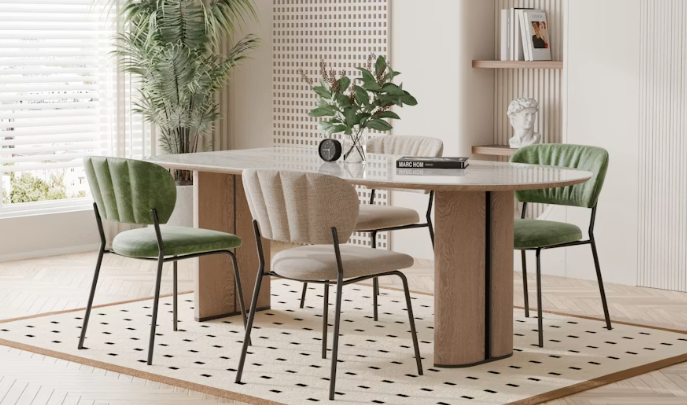
Upholstered vs Wood vs Metal Dining Chairs
There’s no single best material — there’s the one that matches how your household actually eats. Here’s the honest trade-off, side by side:
| Chair type | Comfort | Cleaning | Best for | Watch out for |
| Upholstered — PU / faux leather | Soft, contours to your back | 30-second wipe; stain-resistant | Kids, pets, long dinners | Cheap foam flattens within a year |
| Upholstered — fabric (linen, bouclé, velvet) | Softest, warmest feel | Spot-clean; some need care | Formal or low-traffic rooms | Absorbs spills fast |
| Wood — solid or ash | Firm, classic, stable | Quick wipe, no fuss | Heavy daily use, minimalist looks | Hard on the back without a cushion |
| Metal-leg (carbon or stainless steel) | Depends on the seat on top | Legs wipe clean instantly | Modern rooms wanting stability | Thin welds on budget pieces wobble |
If you’ve got a toddler who treats the table as a craft station, faux leather is the practical answer — a spill wipes off in seconds and there’s no fabric to stain. If your dining room is the grown-up zone you keep nice, fabric like bouclé or cotton linen rewards you with a softer, warmer sit.
For wood, sustainability is where the labels actually matter, and “eco-friendly” on its own means nothing. A real signal is FSC certification: the FSC Recycled label specifically means the wood is reclaimed rather than freshly logged. POVISON lists FSC Recycled material on its mid-century ash-wood chairs — the kind of named, checkable certification that beats a vague claim. As with any brand, if sustainability is your deciding factor, it’s fair to ask to see the chain-of-custody documentation behind the label.
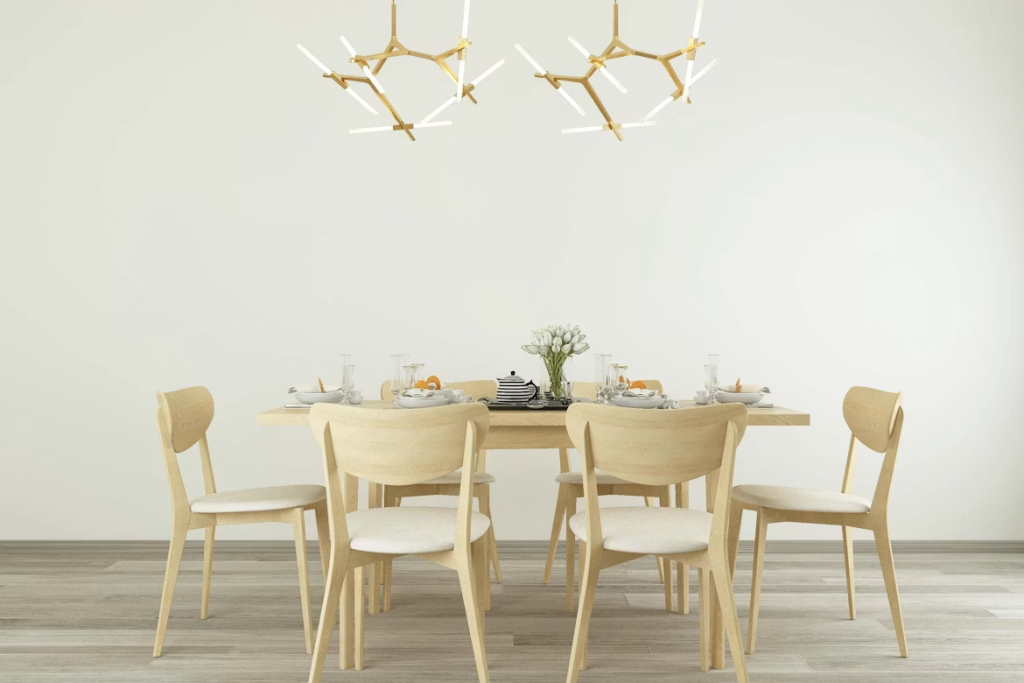
Comfort, Cleaning, and Daily Use Trade-Offs
Comfort isn’t just the cushion — backrest height and angle do most of the work. A back that supports your lumbar region, roughly 12–16 inches of support above the seat, lets you linger after the meal instead of drifting to the couch. Too straight and upright, and nobody sits longer than they have to.
Cleaning is where daily life either stays easy or becomes a chore, and I’d rather show you than tell you. I ran the same dried-marinara test on two seats I owned: a PU-leather seat wiped clean in under a minute; a woven-linen one needed two passes and still ghosted faintly. Neither result is wrong — it comes down to which chore you’d rather not have. Faux leather and PU take a damp cloth and you’re done; woven fabric and velvet need spot-cleaning and the occasional deeper care; solid wood and metal legs just wipe down.
This is also where assembly quietly decides durability. A flat-pack chair is only as sturdy as the joints you tightened yourself, and those joints loosen with every meal until the chair develops that telltale creak. A factory-assembled chair holds up better over years regardless of brand, and POVISON’s dining chairs ship fully built for exactly this reason — its mid-century ash-wood set, for instance, lists 22″W × 21″D × 31″H and a 330 lb capacity on its product page, and comes off the truck solid because the structure was finished before it shipped, not torqued together on your floor.
What to Check Before Buying Online
You can’t sit in a chair through a screen, so a handful of published facts have to do the work. Check each one before you order:
- Assembly status. Fully assembled or flat-pack? It changes everything — your weekend, and whether the chair stays tight long-term. POVISON ships its dining chairs built, with zero tools required, per its product listings.
- Published weight capacity — and what backs it. A real number means it was tested against something. Worth knowing the boundary: there’s no single mandatory U.S. strength standard written only for residential dining chairs. The closest recognized framework is the ANSI/BIFMA seating durability standards, which test general-purpose seating around a 275 lb design point (the 95th-percentile male) using repeated load cycles rather than a one-time crush. POVISON publishes 330 lbs for its dining chairs, which sits above that benchmark — but treat a published number plus a recognized framework as the practical proxy, not a guarantee. If durability is critical to you, ask which tests the figure reflects.
- Exact dimensions, with tolerance. Seat height, width, depth, overall height. Reputable listings note a measurement tolerance, often around ±0.79″. Vague sizing is a red flag.
- Return and warranty terms. A 30-day return window and a 2-year warranty, both of which POVISON lists, tell you the brand expects the chairs to survive. Read the oversize and damage-replacement terms specifically.
- Delivery method. For a set of four to six chairs, how it arrives matters as much as what arrives.
If a product page hides any of these, that absence is itself the answer.
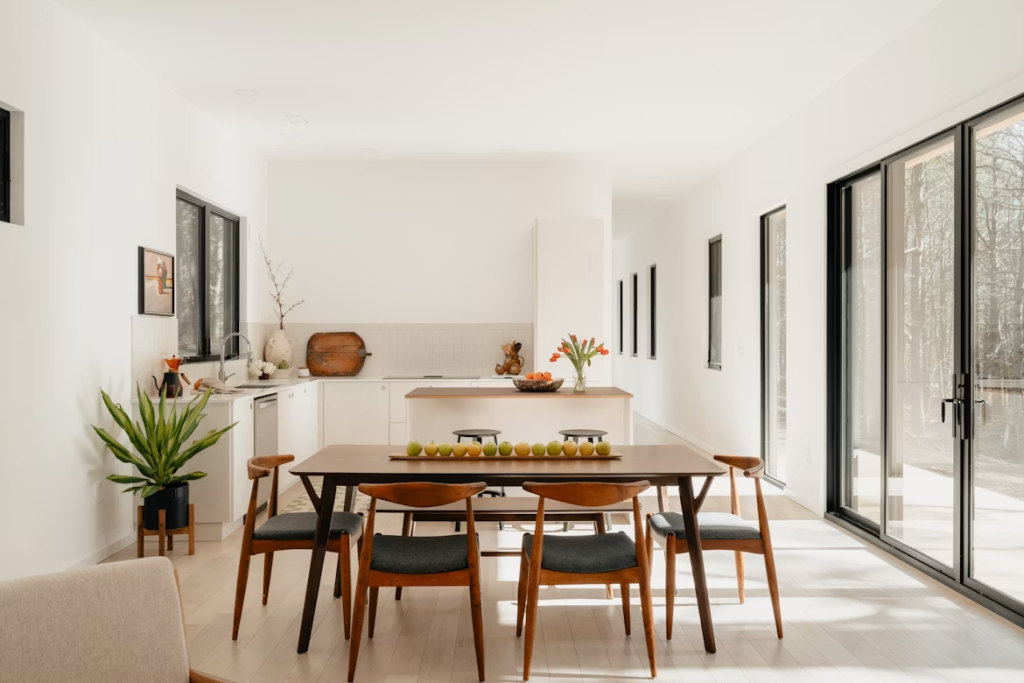
FAQ
How do I make sure new dining chairs will fit properly with my existing table?
The most important measurements are seat height (ideally 18–19 inches for a standard 28–30 inch table) and width (plan for 24 inches of table edge per person for comfortable elbow room). Always check arm height if buying armchairs — they should clear the table apron by about 7 inches. Tape out the chair footprint and test sliding it under your table before purchasing to avoid knee clearance issues or chairs that won’t tuck in neatly.
Should I choose upholstered, wood, or metal dining chairs for my lifestyle?
It depends on your daily routine. Faux leather or PU upholstered chairs are best for families with kids or pets because they wipe clean easily. Solid wood offers durability and a classic feel for heavy daily use. Metal-legged chairs with upholstered seats work well in modern spaces needing extra stability. Consider cleaning effort and comfort for longer meals when deciding.
How can I keep my modern dining chairs comfortable and looking good over time?
Add seat cushions if the chairs feel too firm during long dinners, and regularly check for loose joints, especially on flat-pack models. For upholstered chairs, address spills immediately — faux leather is easiest to maintain. Rotate chairs occasionally to even out wear, and vacuum or wipe them weekly to prevent dirt buildup in crevices.
What should I do if my dining chairs start to feel loose or wobbly after a few months?
Tighten all screws and joints as soon as you notice movement. This is more common with self-assembled chairs. For persistent issues, check the weight capacity rating and avoid exceeding it. Quality fully assembled chairs tend to hold up better long-term, but most brands offer support or replacement parts within the first 1–2 years.
How important is assembly type and weight capacity when buying dining chairs?
Fully assembled chairs usually feel more solid from day one and stay tighter over years compared to flat-pack versions. Look for a published weight capacity of at least 275–300 lbs per chair. These factors matter both when deciding (to avoid weekend frustration) and later (for long-term durability and safety with daily use or guests). with the table — measure first, verify the specs, and let the chairs show up ready to live in.
Related Reading:


