 By Jenny Smith
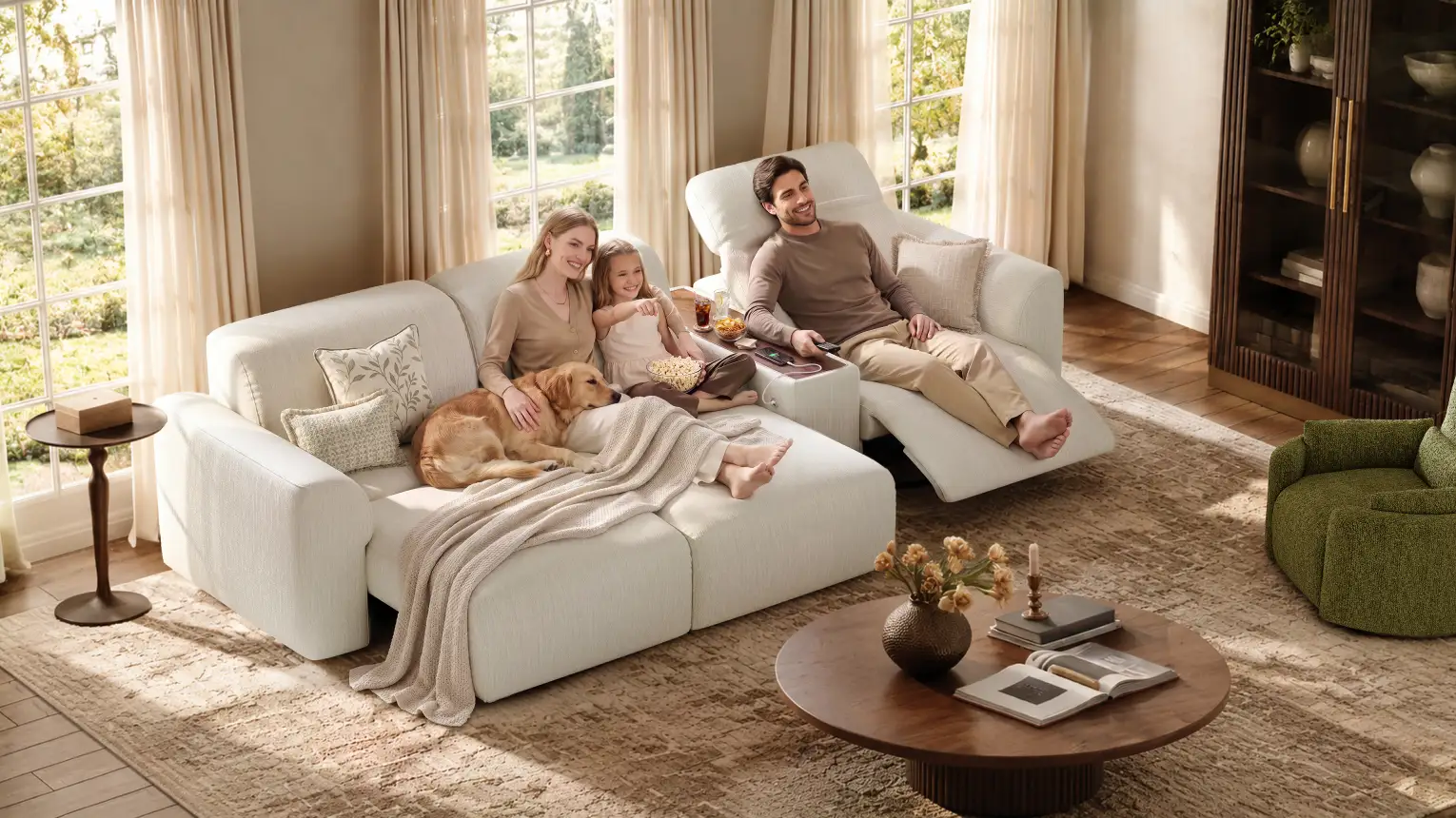
When one room has to handle everyday lounging, work, meals, and occasional overnight guests, the challenge is finding furniture that makes each activity possible without crowding the floor. The right space saving furniture can combine functions, change its footprint when needed, or keep everyday belongings organized in fewer places. This guide explains how to match these approaches to your room, compare the space they actually require, and choose pieces that work with your daily routine. The goal is a room that stays comfortable and functional, even when its purpose changes throughout the day.
Table of Contents
What Can Space-Saving Furniture Actually Help You Do?
Space-saving furniture, also called space-efficient or space-saver furniture, is designed to make limited floor space more useful. It can combine multiple functions, change its footprint when needed, or provide storage that reduces the need for additional furniture. The most suitable option depends on the activities a room needs to support, how often each function is used, and whether the furniture preserves comfortable movement.
Searches for space efficient furniture often reflect three different needs:
- Reduce the number of furniture pieces: Combine everyday seating with occasional sleeping or use a coffee table for both storage and casual work.
- Adjust the available footprint: Choose furniture that folds, nests, or expands when needed rather than occupying its largest configuration all day.
- Keep belongings contained: Store media equipment, office supplies, or household essentials inside furniture that already serves a purpose.
For example, a studio apartment may need one area for relaxing, eating, and working. Adding a separate desk, dining table, and guest bed could leave little room to move between them. Choosing furniture around those overlapping activities can make the existing layout more useful without requiring a larger apartment.
When exploring small living room layout ideas, start by identifying the biggest obstacle: insufficient walking space, too many single-purpose pieces, or a lack of a usable surface. Solving that problem first makes it easier to decide which furniture deserves the available floor space.
Which Space-Saving Approach Fits Your Room?
The most useful approach depends on how the room changes throughout the day. If two activities compete for the same area, combining functions may help. If an item is only needed occasionally, a design that changes its footprint may be more practical. If equipment and belongings are spreading across several surfaces, consolidating storage can reduce clutter without adding another separate unit.
Combine Seating and Occasional Sleeping
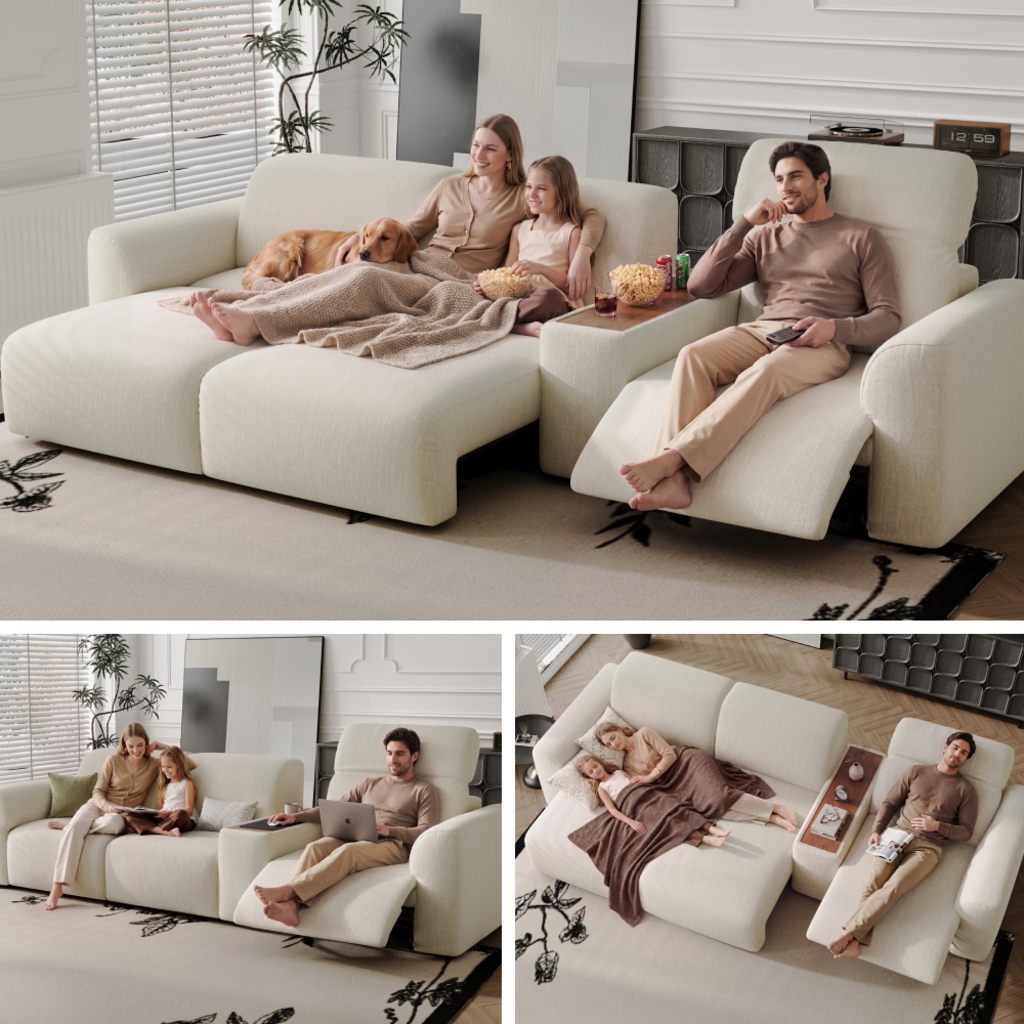
In a small living room that occasionally hosts overnight guests, the challenge is providing a sleeping option without permanently dedicating floor space to a separate bed. A sofa bed keeps the room ready for everyday lounging while giving it another purpose when friends or family stay over. This is especially useful in studio apartments or guest rooms that double as living spaces.
The advantage goes beyond having two functions in one piece of furniture. A well-chosen design can reduce the need to accommodate a separate bed year-round, leaving more room for walking, seating, or other daily activities. However, the extended configuration still matters. Before choosing a sofa bed, check whether it can open fully without blocking a doorway, restricting access to nearby furniture, or leaving too little room to move around.
Power Sofa Bed
Flexible seating adjusts for everyday lounging and occasional overnight guests.
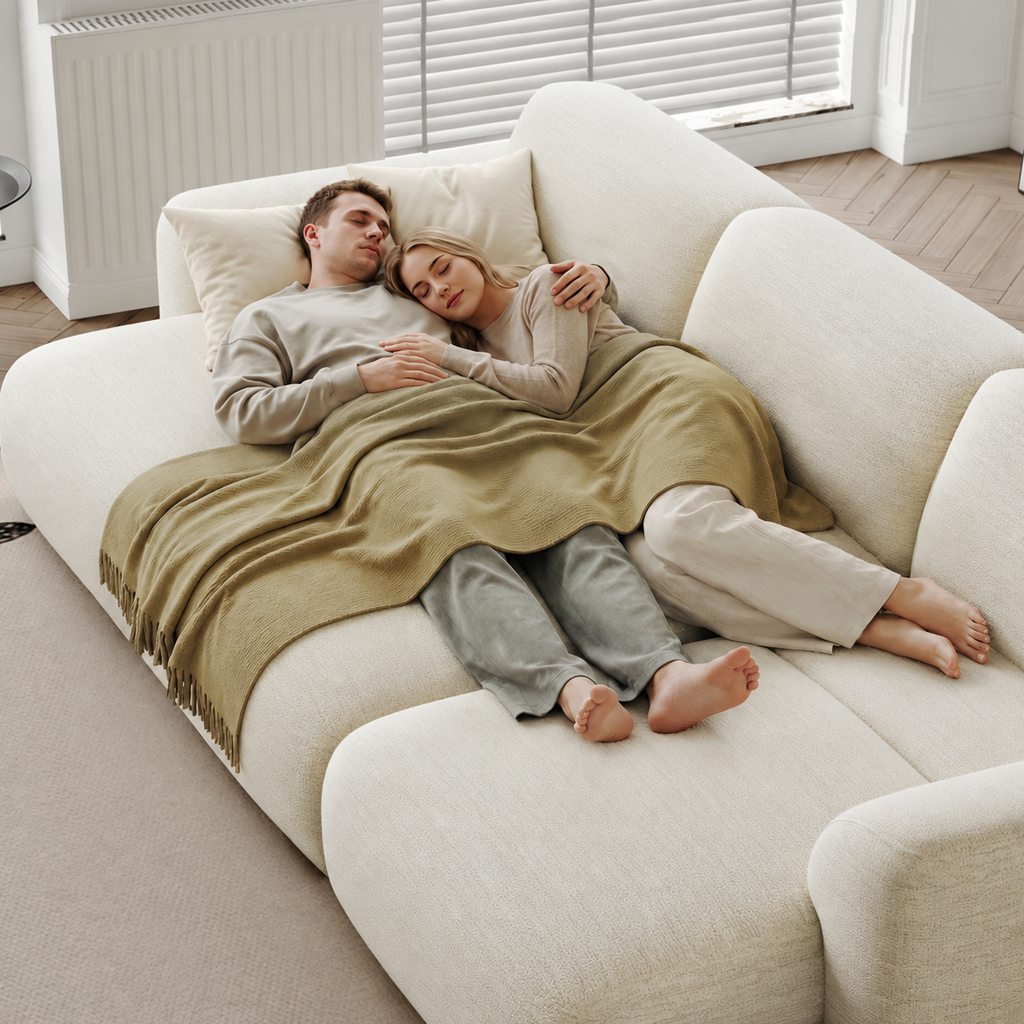
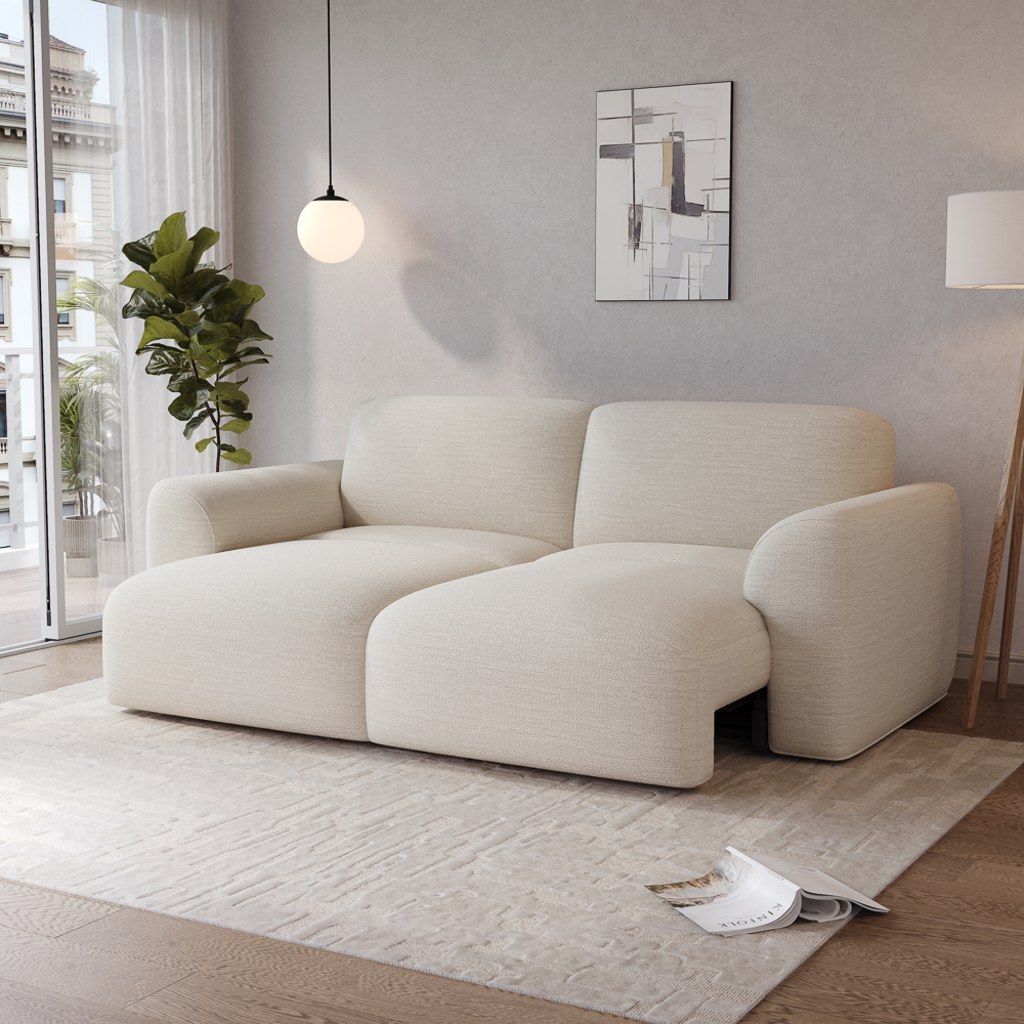
The Aurora Power Sofa Bed adjusts its seat depth from 27 to 45.5 inches with powered control, giving everyday seating more room to extend. For households comparing power sofa beds for more ways to live, the key consideration is whether the extended configuration supports overnight use without blocking essential walkways. Measure the available floor space before positioning it near a coffee table.
Aurora Power Sofa Bed
Powered seat extension supports daily lounging without a separate folding guest-bed frame.
👍 Best for: Small living rooms used for guests
✨ Stepless 27–45.5-inch seat adjustment
✨ 83-inch-wide frame
✨ Four included pillows
Give One Surface More Than One Job
In a compact living room, a coffee table can occupy valuable central floor space while offering only a low surface for drinks, remotes, and books. When the same room also serves as a casual workspace or a spot for quick meals, adding a separate desk or side table can make movement harder and leave fewer open areas.
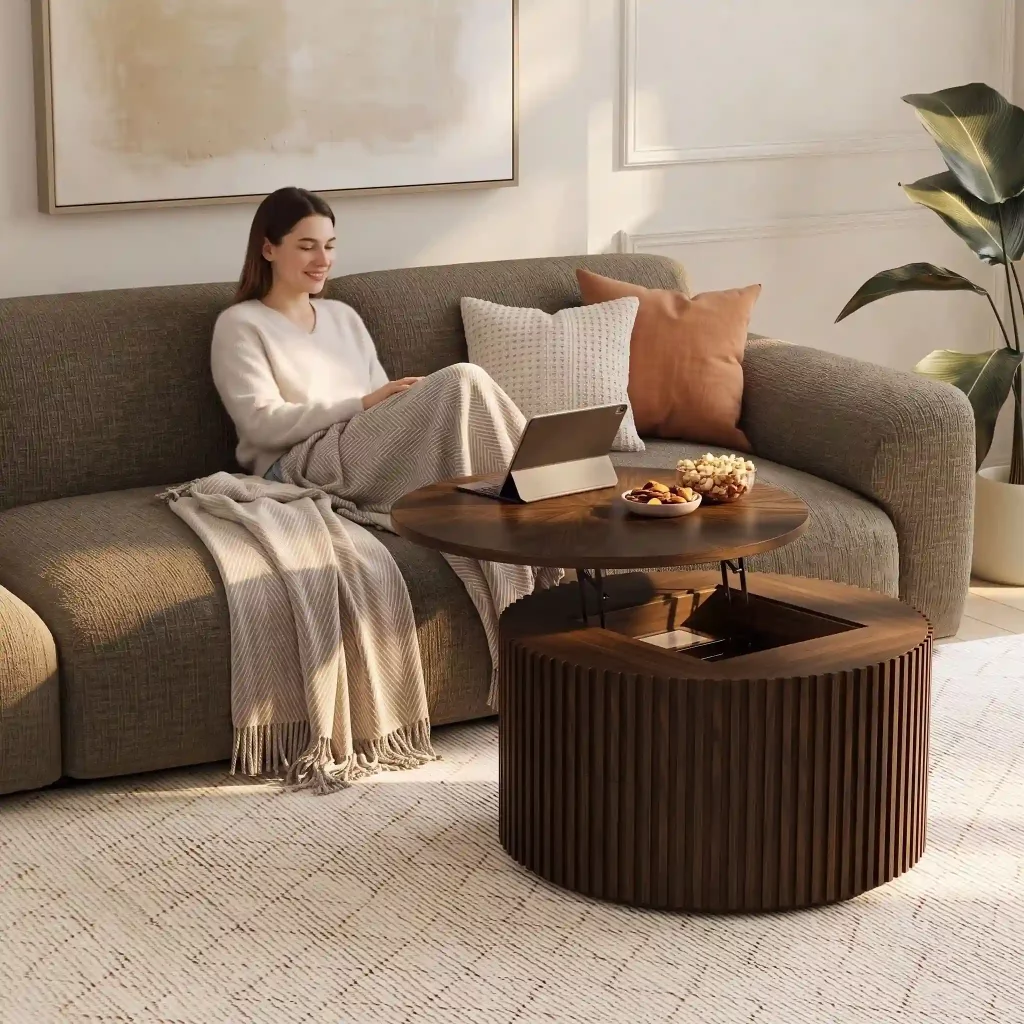
Coffee Table
Lift-top designs add a practical work or dining surface without another desk.
A lift-top coffee table makes better use of the existing footprint by bringing the tabletop closer to the seated user. It can provide a more convenient surface for a laptop, a notebook, or a quick meal without requiring another dedicated piece of furniture. Models with built-in drawers or concealed storage can also keep everyday essentials out of sight. This approach works best for occasional tasks rather than replacing a properly fitted desk for someone who works from home all day.
The Silva Lifting Top Round Coffee Table raises from 16.9 to 23.2 inches and includes two drawers plus hidden storage. It works for occasional laptop use or casual meals while keeping everyday items contained. However, it should not automatically replace a properly fitted desk for someone who works at home all day.
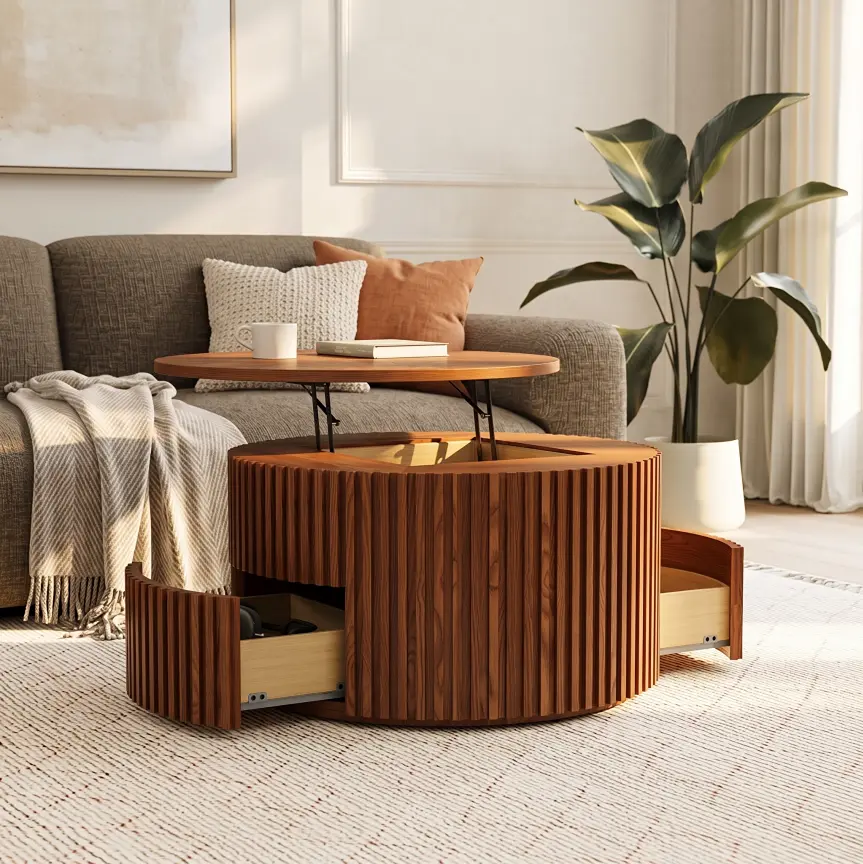
Silva Lifting Top Round Coffee Table
Raised tabletop supports casual work or meals without adding a separate desk.
👍 Best for: Living rooms doubling as work nooks
✨ Raises from 16.9 to 23.2 inches
✨ Two drawers plus hidden storage
✨ No assembly required
Change the Footprint When Use Changes
Some furniture is useful only at particular times. A dining table may need to accommodate several people on weekends but take up less room during the week. A folding desk may be necessary for scheduled work but unnecessary after the laptop is put away.
In these situations, look for furniture that changes size or can be stored neatly when not in use. Before buying, check both configurations rather than judging the item by its smallest dimensions.
Consider three details:
- Expanded footprint: Include the table, pulled-out chairs, and space needed to sit down and stand up.
- Storage between uses: Confirm that folded chairs, table extensions, or removable components have a designated place.
- Frequency of conversion: A mechanism used every day should be simple enough to operate without disrupting the rest of the room.
For instance, a household that hosts dinner guests once or twice a month may benefit from an expandable dining surface. If the table needs to change configuration several times a day, an arrangement with fewer conversion steps may be more practical.
Consolidate Storage Around a Fixed Zone
Media equipment, gaming consoles, speakers, remotes, and cables can spread across side tables and open shelves, creating clutter even when the main furniture fits. Adding another small storage unit may solve one problem but consume more floor space. A dedicated media console can bring these items together in one location, reducing the need for scattered storage and making the surrounding area easier to arrange.
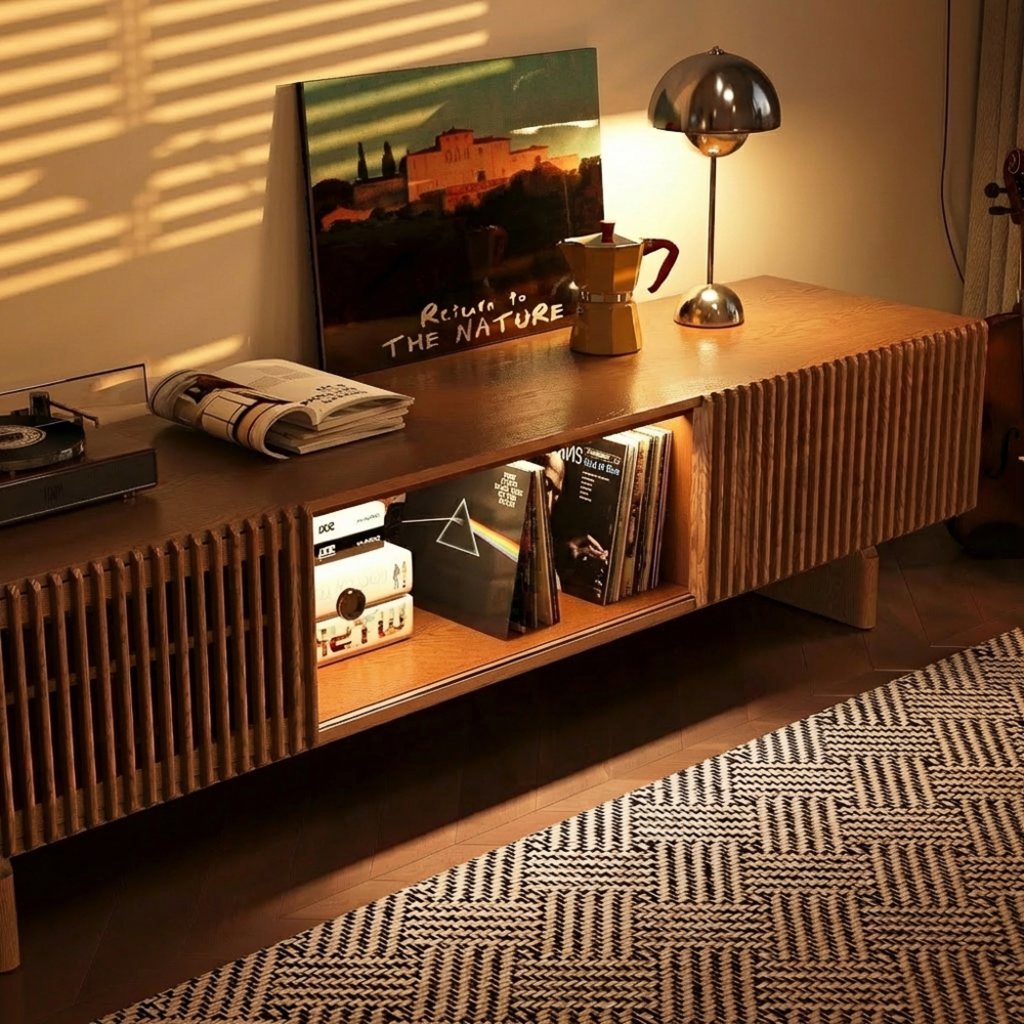
TV Stand & Media Console
Enclosed storage keeps media devices, accessories, and cables organized in one place.
The key is to choose a console that accommodates the equipment you already own. Check internal shelf space, cable openings, ventilation, and cabinet depth rather than looking at the overall width alone. This approach is most useful when one cabinet replaces several storage pieces or consolidates equipment that would otherwise occupy multiple surfaces.
The Delven Verse Mid-Century Modern TV Stand brings media equipment into one designated area through three enclosed compartments, removable interior shelves, and dedicated cable openings. It may help replace scattered storage pieces, but its 70.86-inch width and 21.85-inch depth make measuring essential. It is most useful when the cabinet consolidates existing equipment rather than becoming another piece of furniture.
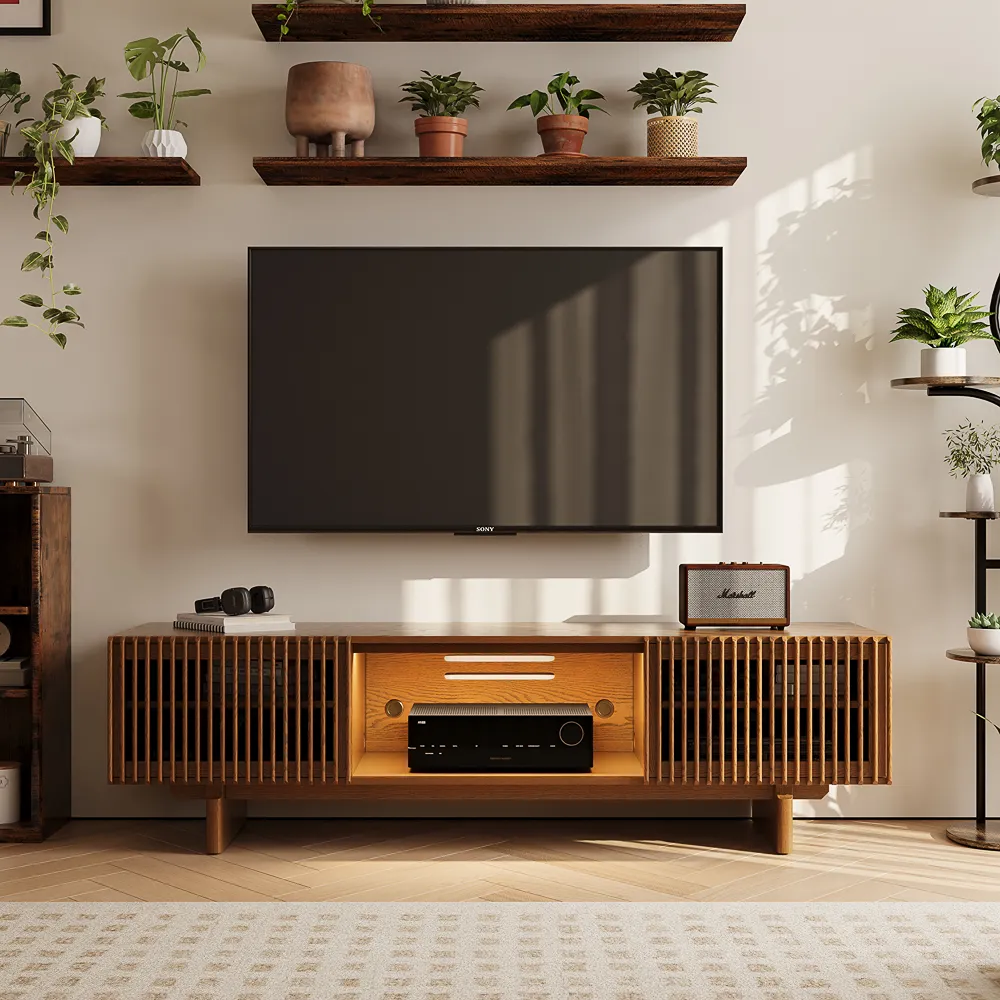
Delven Verse TV Stand
Enclosed media storage keeps equipment and cables contained in one designated zone.
👍 Best for: Living rooms with several media devices
✨ Three enclosed storage compartments
✨ Removable interior shelves
✨ Six internal, three rear cable openings
How Do You Choose Space-Saving Furniture for Everyday Use?
When deciding how to use multifunctional furniture in small rooms, start with the activities that compete for space most often. A room used for daily work and occasional overnight guests may need a different setup from one used mainly for relaxing and entertaining.
Start with the activities that happen most often, not the functions that sound most impressive in a product description. A guest bed used a few times a year has different requirements from a sofa used daily or a work surface needed for several hours at a time.
A practical selection process includes these checks:
- Measure the room and furniture. Record the available wall width, room depth, door swings, windows, and existing obstacles. Check the furniture’s closed and fully extended dimensions.
- Protect the main walkway. A clear path of approximately 24–30 inches can serve as an initial planning target in many compact living rooms, but household traffic, accessibility needs, and local requirements may call for more.
- Test the conversion process. Check whether a sofa extends into a coffee table, whether a folding desk can open without moving a chair, and whether stored components remain easy to reach.
- Match the furniture to the frequency of use. Prioritize comfort and convenient operation for daily activities. Occasional functions can tolerate more setup, provided the process remains manageable.
- Account for everything that comes with the furniture. Include chairs, bedding, power cords, accessories, and any additional storage needed to make the arrangement work.
A room can look spacious when every item is tucked away but become difficult to use once everything opens. For a living room furniture layout that keeps clear walkways, test the main furniture positions before adding secondary pieces. Painter’s tape can mark the proposed footprint on the floor, helping you spot conflicts before delivery.
The best space-saving furniture is not necessarily the piece with the most functions. It is the one that solves your room’s main space constraint without compromising everyday comfort, convenient movement, or the activities you use it for most often.
Conclusion
The most useful space saving furniture addresses a specific conflict in the way a room is used. Combining seating and sleeping, giving one surface multiple purposes, changing furniture dimensions when needed, or consolidating storage can all improve a compact layout—but each approach has different limitations. Measure the complete setup, account for daily routines, and prioritize comfort and clear movement over the number of features a piece offers. The right solution is the one that makes the room easier to use without introducing another space problem.
Find the Right Space-Saving Furniture
Explore flexible designs for compact rooms, shared spaces, and everyday needs.
FAQs
Is space-saving furniture suitable for renters?
Yes. Freestanding furniture, nesting tables, and storage pieces can improve a rental without permanent installation. Before choosing wall-mounted or fold-down furniture, check lease restrictions and confirm that any required anchoring is permitted. Avoid sacrificing stability simply to keep the installation temporary.
How can you tell whether a lift-top table is comfortable for laptop work?
Test the raised tabletop with the chair you intend to use. Your shoulders should remain relaxed, your elbows should sit comfortably near working height, and your knees should have enough clearance. A table that works for a quick email may not provide suitable ergonomics for a full workday.
Can a sofa bed replace a regular bed for nightly use?
Not every sofa bed is designed for the same sleeping routine. Consider the extended sleeping surface, support, cushioning, and ease of adjustment, then assess whether it meets the sleeper’s needs over repeated nights. Occasional guest use and nightly primary-bed use should be treated as different purchasing requirements.
What should you check before buying a media console for a small room?
Measure the television, cabinet, and internal equipment separately. Check device depth, cable connections, ventilation, and whether doors or removable shelves provide sufficient access. A console that fits the wall may still be unsuitable if equipment overheats or cables cannot be routed without pinching.
How can you keep space-saving furniture from blocking natural light?
Keep tall storage away from windows and avoid placing bulky furniture directly in front of the main source of daylight. Use enclosed storage along uninterrupted walls and lower-profile pieces near windows. Check curtain movement and window access as well as the furniture footprint before finalizing the layout.


