 By Kelvin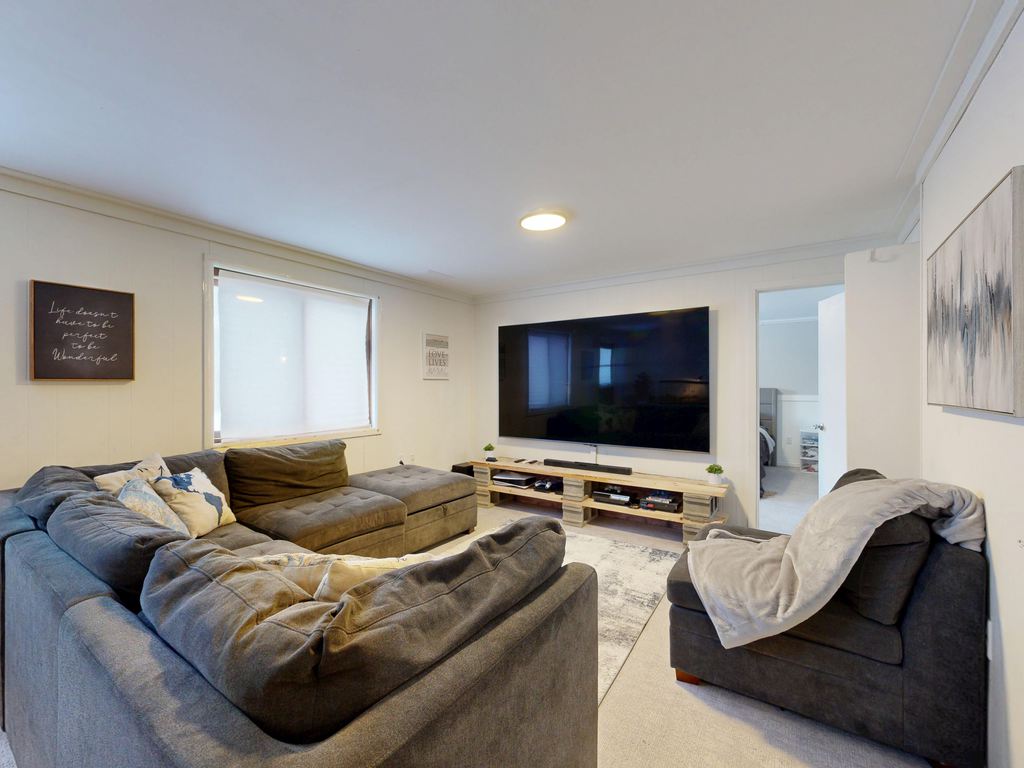
Introduction
An L-shaped sofa can organize a living room or make every doorway, screen, and table feel misplaced. People searching “how to arrange l shaped sofa in living room” usually need three answers: which side should face the focal point, where the chaise belongs, and how much space daily movement requires. This guide covers common room types. It also accounts for modular and power-reclining sectionals whose footprint changes during use.
Table of Contents
Start With the Long Side, Short Side, and Open Side
Assign each part one job. The long side should serve the main position. The short side or chaise should support lounging or define the seating zone. The open side should face the easiest route into the room.
| Room condition | Strong starting position | Main check |
| Small room | Long side on the longest wall | Chaise stays away from the entrance |
| Open plan | Sofa floats between zones | Back does not narrow the passage |
| TV-first room | Long side faces the screen | Main seats avoid sharp head turns |
| Narrow room | Sofa follows one wall or closes one end | Center walkway remains usable |
| TV and fireplace | Sofa favors the feature used most | Secondary seat addresses the other |
| Power sectional | Closed position fits | Full extension clears tables and paths |
A practical way to answer how to arrange l shaped sofa in living room layouts is to confirm the product diagram before ordering. Retailers may label configurations differently, so a right-facing versus left-facing sectional orientation check should include the doorway, window, outlet, and main walkway.
Six L-Shaped Sofa Layouts That Work
Room geometry and daily behavior matter more than styling rules. Each layout solves a different problem, so choose the one that protects your busiest route and gives the main seats a useful view.
Corner Layout for a Small Living Room
To decide how to arrange l-shaped sofa in small living room spaces, place the long side along the longest uninterrupted wall and point the chaise away from the entrance. This leaves the center open for a compact table. Avoid adding bulky chairs merely to fill the open side.
TV-First Layout
Position the television opposite the long side rather than the corner seat. The chaise can remain a secondary viewing position, but most viewers should not need to twist.
Floating Layout for an Open-Plan Room
Pull the sectional away from the wall and turn its back toward the dining area or kitchen. Keep the open side facing the natural entrance to the living zone. A shallow console can finish the exposed back without narrowing the passage.
Narrow Living Room Layout
Running the long side along the long wall preserves width but may exaggerate the room’s length. Turning the sectional across one end can create a TV zone and leave the other end for a desk or reading chair. Use nesting tables when a fixed table restricts the only path.
Fireplace and TV Layout
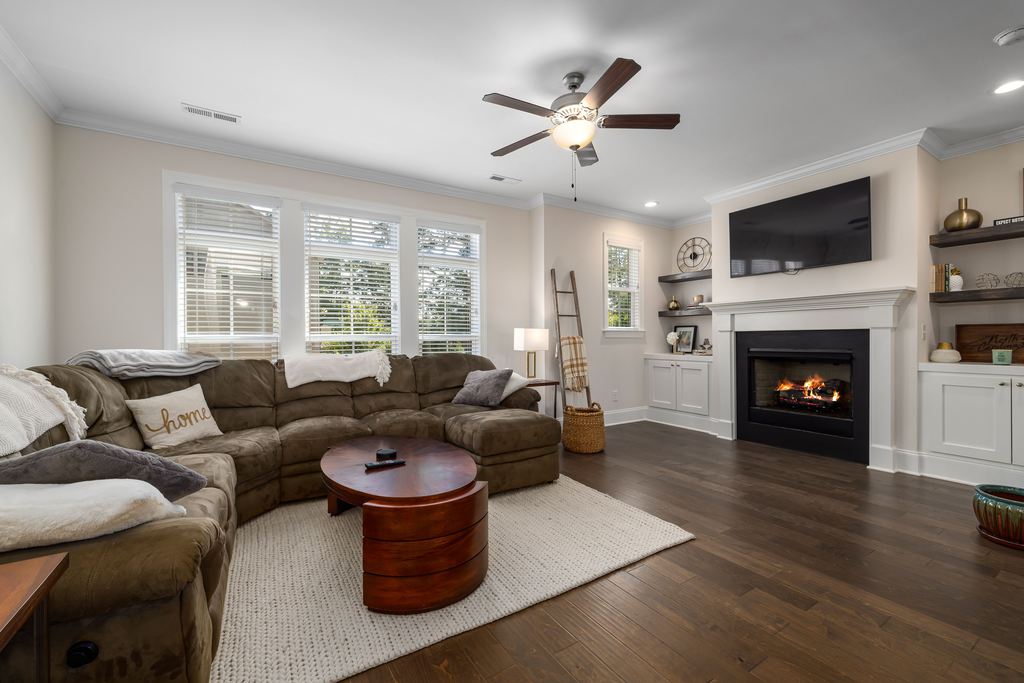
Choose one feature as the everyday focal point. With adjacent walls, let the long side favor the TV while a movable chair acknowledges the fireplace. A complete living room layout with fireplace and TV should also check heat clearance, glare, screen height, and recliner movement.
Large Conversation Layout
Float the L toward the center and place one or two movable chairs across the open side. This creates face-to-face seating without sealing the group into a U shape. Leave one clear entrance and use chairs that can rotate toward the TV or fireplace.
Adjust the Layout for the Sofa Type
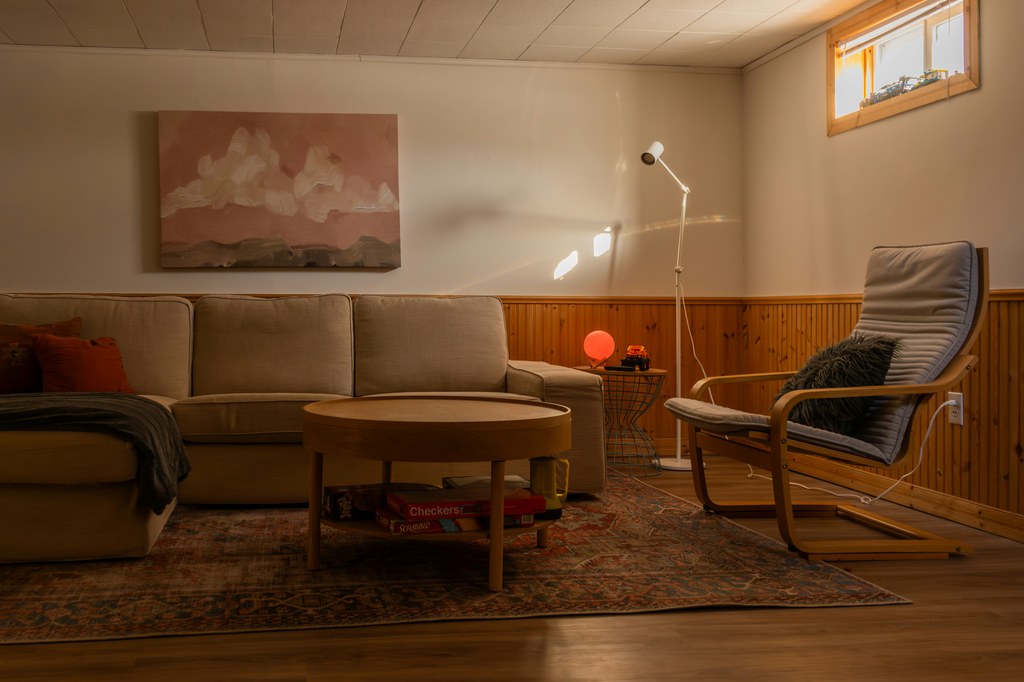
Not every L-shaped sofa behaves the same after delivery. A chaise controls traffic differently from a corner unit, while modular and power designs can move or extend. Identify the construction first, then plan for how the sofa connects, reclines, and supports normal use.
Sofa With a Chaise
Place the chaise on the less-traveled side. Because it usually serves one lounging position, the backed long side should handle the main viewing and conversation work.
True Corner Sectional
Supported seating on both sides works when the room has two useful directions. Check that the deep corner remains reachable from the table rather than becoming an isolated seat.
Modular L-Shaped Sofa
Begin with the fewest modules needed. Add pieces only when the open path stays clear, and use the supplied connectors so units do not drift on smooth floors.
Power-Reclining Sectional
Plan around the active footprint. Extend every footrest, then test the table, rug, outlet, and walkway. Keep cords away from moving hardware and paths used by children, pets, or guests.
Place the Rug, Coffee Table, and Extra Chairs
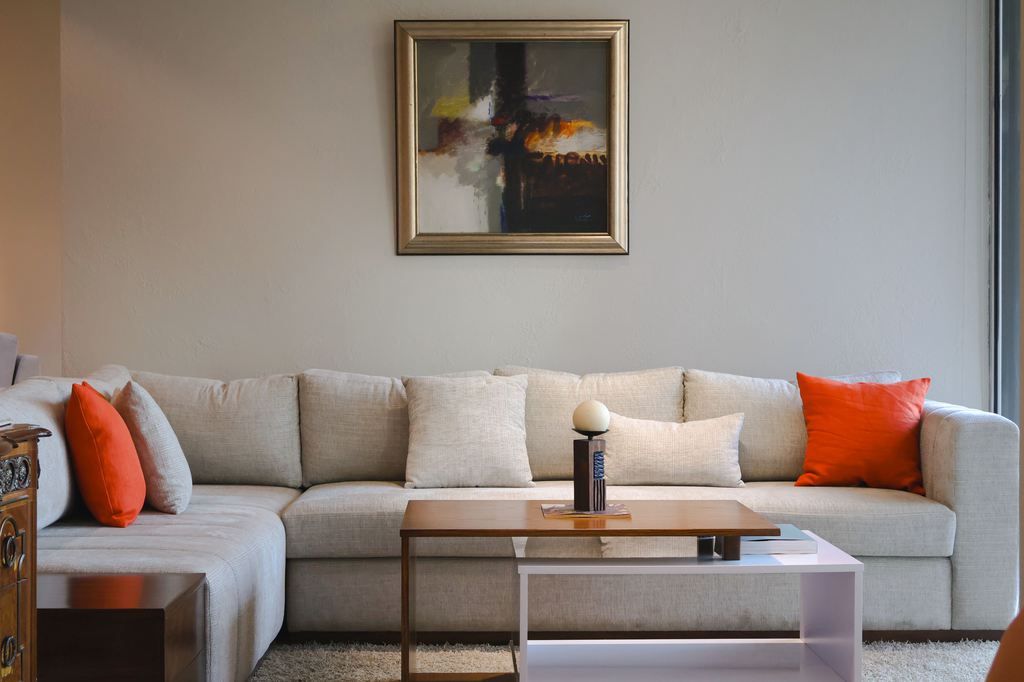
Center supporting furniture on the usable seats rather than the sectional’s outside dimensions. With a chaise, shift the table slightly toward it so both sides can reach the surface. Round or oval tables improve circulation in a tight center, while a larger square table can serve a deep corner.
The best coffee table shape for an L-shaped sectional depends on reach, walking space, and whether the short side acts as seating or a boundary. Place one chair near the open side and connect the major seats with the same rug.
Test the Active Footprint Before You Commit
Painter’s tape should show how the room functions, not only where the closed sofa sits:
- Mark the long side, chaise tip, and fully extended seats.
- Open nearby doors, drawers, and media-console cabinets.
- Use a box to represent the coffee table.
- Walk from the entrance to every adjoining room.
- Test the screen view and table reach.
- Confirm outlets and cords stay outside traffic paths.
Leave the outline through a normal evening. A laundry basket, pet route, snack tray, or open cabinet often reveals a conflict that a quick measurement misses.
Three POVISON L-Shaped Sofas for Different Layout Needs
The strongest match depends on the problem the room needs to solve. Moku favors frequent reconfiguration, Benjamin combines modular planning with powered seats, and Ergopals prioritizes deep reclining and easy-care upholstery. Prices may vary by region, selected configuration, and promotion.
🥇 Top 1: Moku Beige Modular Block Sofa
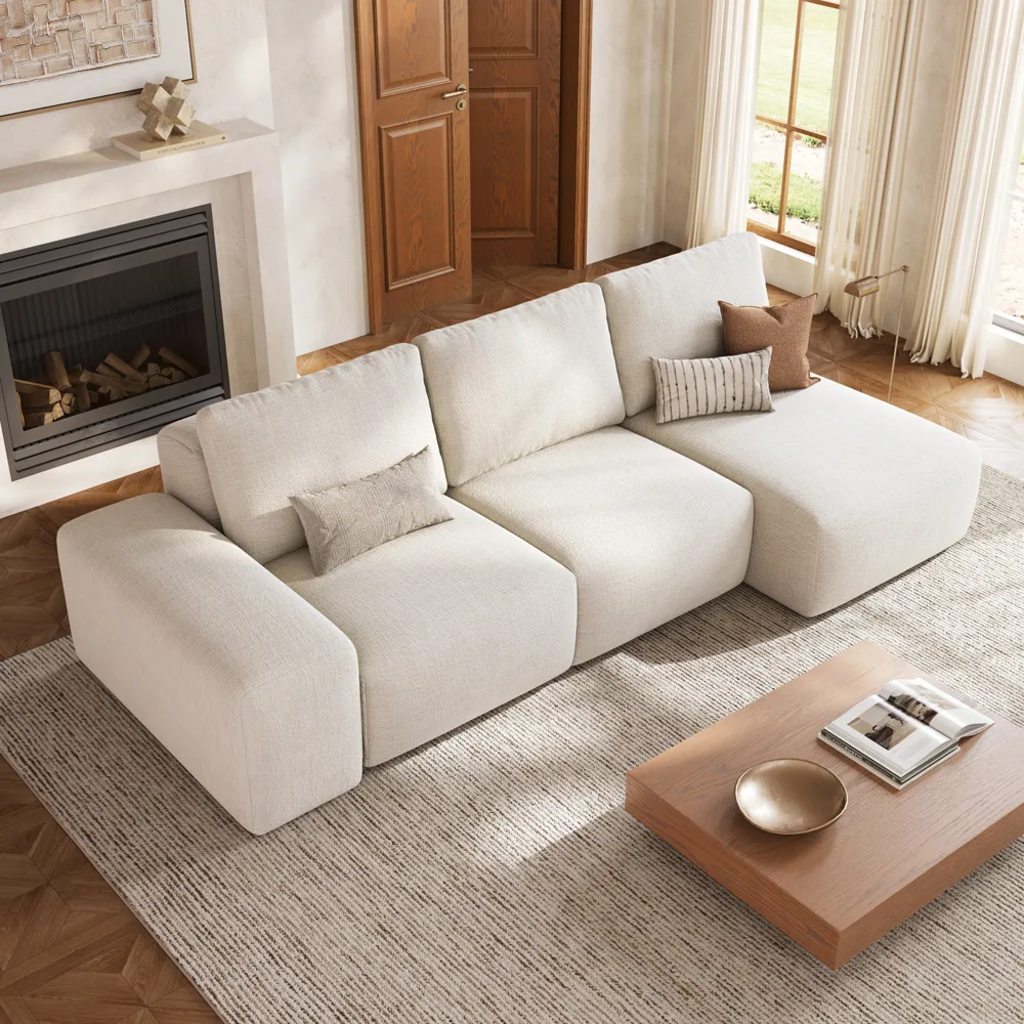
👍 Best for: Reconfigurable living rooms
💲 Price: $2,399–$3,599
✨ Highlights
- Detachable modules for changing the L shaped sofa layout
- Convertible armrest for seating, a footrest, or a side surface
- Water-resistant, scratch-resistant performance chenille
🎯 Features: Moku suits renters, open-plan homes, and rooms likely to change function. Its independent pieces move through narrow doors and can be rearranged without replacing the whole sofa. The convertible armrest also reduces the need for a separate side table where the open side must remain clear.
🗨️ Buyer review:“I’ve already rearranged it twice since it arrived.” — Aubrey
🥈 Top 2: Benjamin Power Reclining Modular Sofa
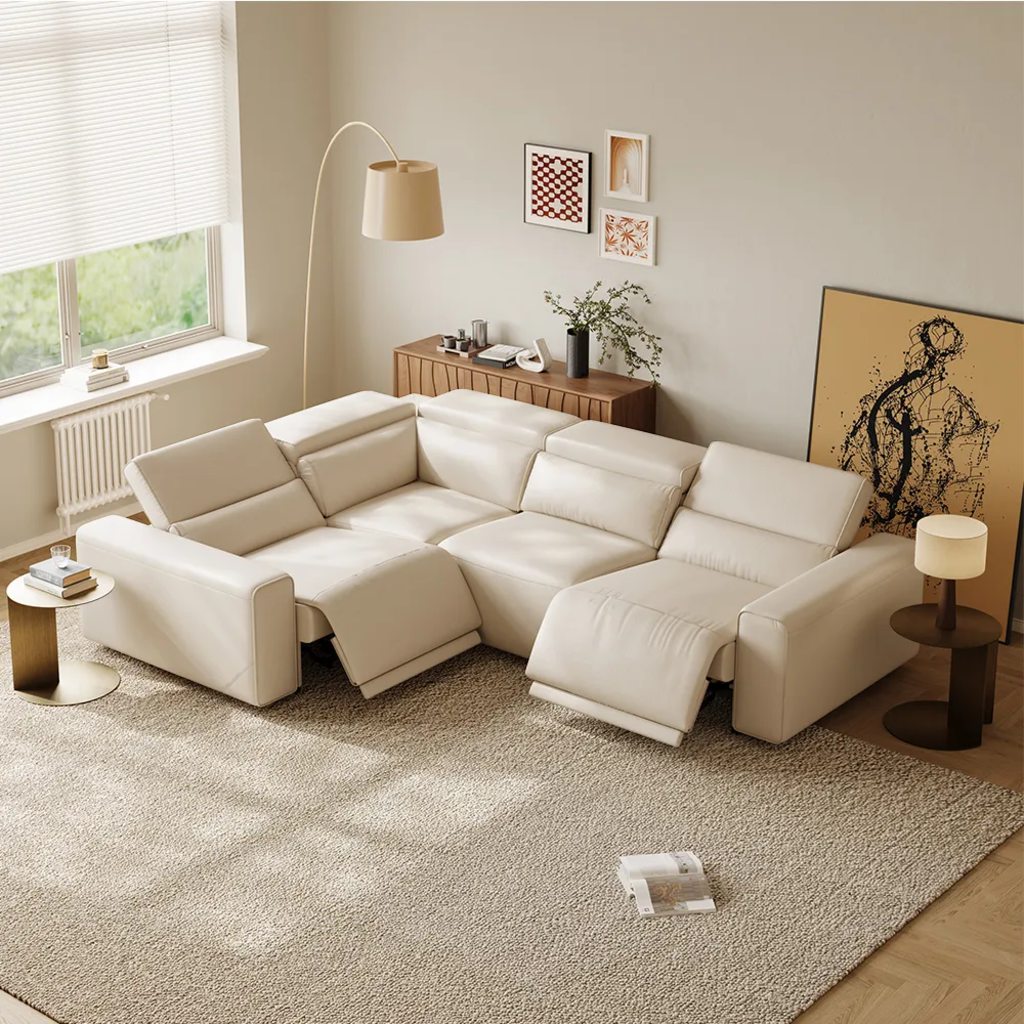
👍 Best for: Modular power layouts
💲 Price: $1,599–$5,129
✨ Highlights
- Two powered reclining seats
- Adjustable headrests with USB and Type-C charging
- Water-resistant sustainable leather
🎯 Features: Benjamin fits a larger TV room where users want defined seating and independent recline. Its sections establish the L, while the powered seats require a separate extension zone. Keep the coffee table outside that moving footprint and plan a nearby reliable outlet.
🗨️ Buyer review:“We each have our own recliner so no fighting!” — Suzanne
🥉 Top 3: Ergopals Power Reclining Sofa
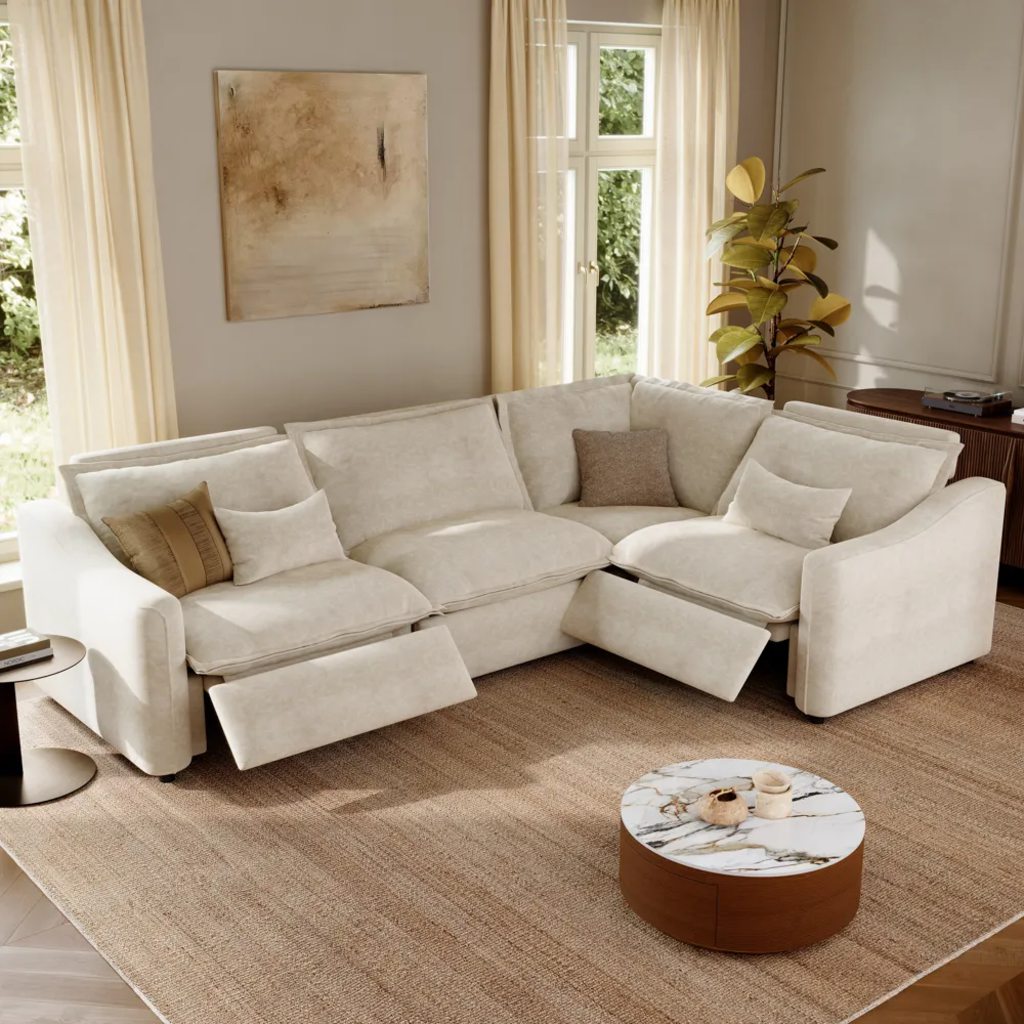
👍 Best for: Pet-friendly TV rooms
💲 Price: $1,599–$4,099
✨ Highlights
- 90°–145° power recline and adjustable headrests
- Seat depth expands from 24.5 to 37 inches
- Removable, washable, pet-friendly covers
🎯 Features: Ergopals suits a large media room where deep lounging and upholstery care matter more than a compact footprint. Its wall-hugging design reduces rear clearance, but the seats still change the usable center. A movable or nesting table prevents movie-night recline from becoming a furniture-moving task.
🗨️ Buyer review:“The recline is great for movie night!” — Crippin
Common Layout Problems and Quick Fixes
Most awkward arrangements do not require moving everything. Watch where people hesitate or detour, then change one variable: chaise direction, sofa angle, table size, or secondary seating. Test that single change through a normal evening before deciding whether the sectional itself is the problem.
The Chaise Blocks the Entrance
Swap the chaise when the sectional is reversible or modular. With a fixed model, test another wall. A smaller table cannot correct a chaise occupying the main route.
Only the Corner Seat Has a Good TV View
Move the TV toward the long side’s sightline or angle the sofa slightly. Do not keep it flat against a wall when every main seat must look sharply sideways.
The Sofa Looks Too Large
Remove unnecessary side tables and limit extra seating. If the main route remains blocked afterward, the sofa is functionally too large for that arrangement.
The Floating Back Looks Unfinished
Add a shallow console, floor lamp, or low storage piece behind the long back. Preserve the passage and important views across the room.
Conclusion
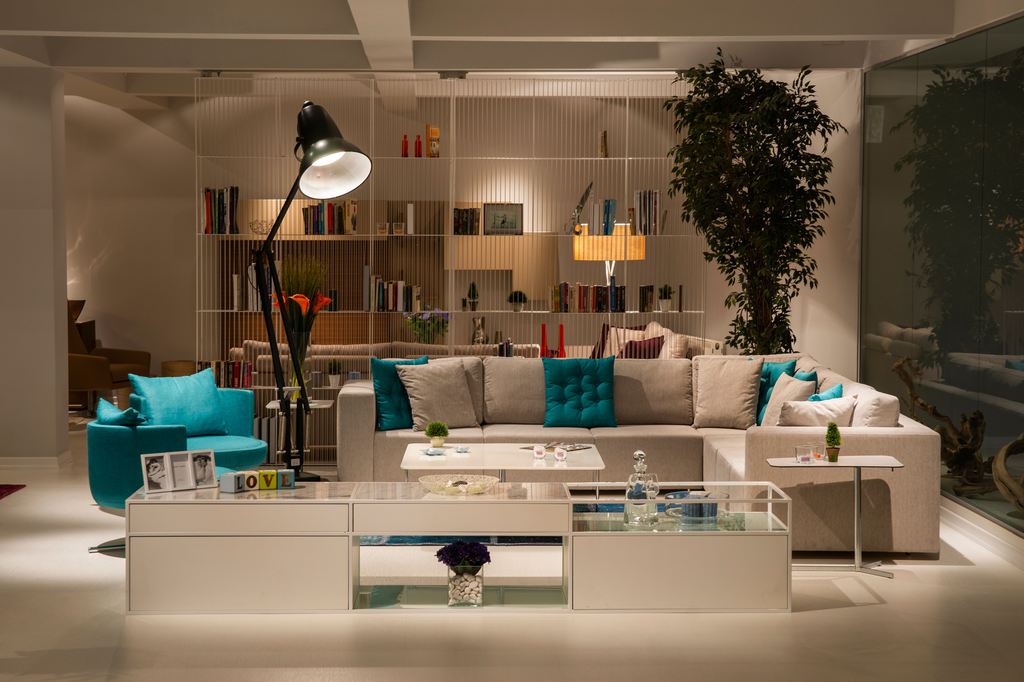
The answer to “how to arrange l shaped sofa in living room” starts with three jobs: the long side serves the focal point, the short side supports lounging or zoning, and the open side protects entry. Small rooms usually favor a corner arrangement, while open and large rooms can support a floating sectional. Test the active footprint, not only the closed shape, and let the rug, table, and chairs reinforce a layout that already works. Once circulation and sightlines are right, styling becomes much easier.
FAQ
Will an L-Shaped Sofa Fit Through My Doorway?
Check the packaged module or carton dimensions, not only the assembled sofa size. Measure the narrowest doorway, hallway turn, stair landing, and elevator opening along the delivery route. Removable legs may reduce height but will not reduce frame width. Confirm whether each section ships separately before placing the order.
What Should I Check Before Assembling a Fixed-Chaise Sectional?
Verify the SKU, orientation diagram, and carton labels before discarding any packaging. If the chaise arrives on the wrong side, photograph the labels and contact the seller before assembly. Some return policies may change after packaging is removed or installation begins, so avoid forcing the sections into an unsupported mirrored configuration.
Can an L-Shaped Sofa Sit in Front of a Window?
Yes, provided the back does not block the operable sash, radiator, floor vent, or cleaning access. Consider UV-resistant upholstery or window treatments where direct sunlight reaches the fabric daily. Open the window fully and check daytime screen glare from every main seat before making the placement permanent.
How Many Outlets Does a Power Sectional Need?
Check the product manual because some power sectionals use one main connection, while others have separate plugs for multiple reclining modules. Count the cords before choosing the location and confirm they reach without an extension cord. A floating arrangement may require a professionally installed floor outlet instead of a power strip across the walkway.
How Do I Protect Flooring Under a Heavy Sectional?
Place flooring-compatible pads beneath every fixed support point, not only the visible front legs. On smooth surfaces, choose pads that protect the finish while limiting unwanted module movement. Recheck them after rearranging because a displaced pad can trap debris, concentrate weight on one edge, or leave a support directly against the floor.


