 By Jenny Smith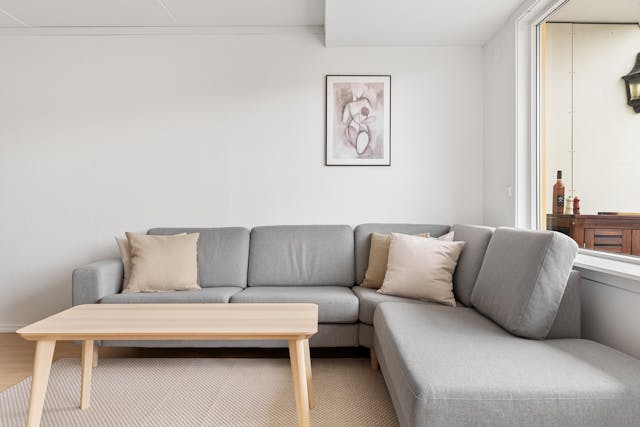
Choosing what shape coffee table for l shaped sectional layouts can feel harder than it should. One blog says round is best. Another says square. A third pushes rectangular. The truth is simpler: the best shape depends on how your sectional sits in the room, how people move around it, and how much surface space you really use. In most homes, round and square tables are the easiest starting points, while rectangular styles work better when one side of the sectional feels much longer than the other.
Table of Contents
What shape coffee table works best for an L shaped sectional?
The easiest way to narrow this down is to compare shape against how an L-shaped layout actually works. Some tables improve movement. Others serve more seats at once. And some simply look better with a long, open sectional. Use the chart below as a quick filter before you look at specific materials or finishes.
| Shape | Best for | Main advantage | Watch out for |
| Round | Small rooms, busy walkways, homes with kids | Softer flow, fewer sharp corners | Less usable surface |
| Square | Deep corner seating, balanced layouts | Easy reach from more seats | Can feel heavy in tight rooms |
| Rectangular | Long L-shape or sofa-chaise layout | More tabletop space | Can ignore the short side |
| Oval | In-between solution | Soft edges plus longer surface | Harder to size well |
The best shape depends on what your layout needs most: smoother traffic flow, better reach from every seat, or more usable surface area.
In most homes, round and square tables are the safest starting points because they fit the center of an L-shaped setup more naturally. A round or square coffee table for sectional seating usually feels more balanced, while a rectangular coffee table for l shaped sofa layouts often works better when one side of the sectional is clearly longer.
If you want a couch with a coffee table arrangement that looks intentional and feels easy to use every day, start with how the room moves before choosing the shape.
A quick way to choose:
- Choose round if your room feels tight, the walkway is busy, or you want a softer table for couch setup with fewer sharp corners.
- Choose square if your sectional creates a deep, balanced seating area and you want the table to feel centered between both sides.
- Choose rectangular if your layout looks more like a sofa with chaise and you need extra tabletop space along the longer side.
- Choose oval if you want the easy flow of a round table but need more length across the top.
For a deep, balanced L-shaped sectional, the 39″ Square Wood Coffee Table with Storage gives the center seating area a more substantial shared surface. The 39.37-inch square footprint helps keep the table accessible from both sides of the sectional, while a concealed drawer adds storage without changing the clean tabletop shape. Measure the center opening before ordering to preserve comfortable clearance.
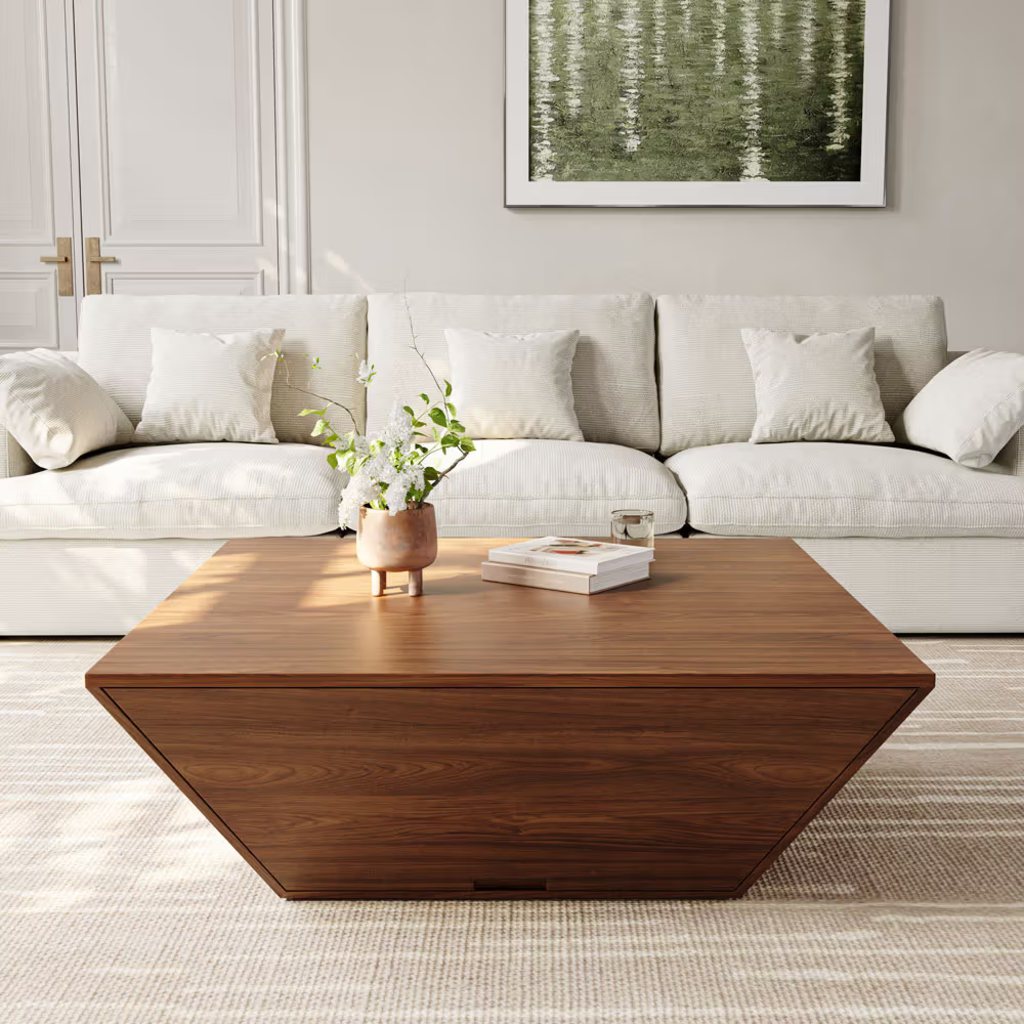
39″ Square Wood Coffee Table
Centered tabletop keeps both sides of a deep sectional easier to reach.
👍 Best for: Deep, balanced sectional layouts
✨ 39.37-inch square footprint
✨ Single concealed storage drawer
✨ No assembly required
What size coffee table should you use with an L shaped sectional?
Sizing is where most coffee table for sectional choices go wrong. The shape may be right, but if the table is too long, too tall, or too far from the seat, the whole room feels off. The easiest fix is to use a few simple measurements before buying, then check them against your layout and walking space. Povison’s current sizing guides are consistent on three main rules: length, clearance, and height.
Mini formula for a coffee table with an L-shaped sectional
Use this quick formula first:
- Table length = 1/2 to 2/3 of the main sofa side
- Distance from seat edge = 14–18 in
- Table height = seat height to 1–2 in lower
- Main walkway clearance = 24–30 in
For an L-shaped layout, measure the longest usable seating side, not the full corner-to-corner footprint. That gives you a coffee table for l shaped sofa layouts that feels centered on the people using it, instead of floating in the middle of the room. The same logic also makes a table for couch placement easier to judge when one side is a chaise.
Quick size chart
| Main sofa side length | Recommended coffee table length | Best starting shape |
| 72 in / 183 cm | 36–48 in | Round or square |
| 84 in / 213 cm | 42–56 in | Square or oval |
| 96 in / 244 cm | 48–64 in | Square or rectangular |
| 108 in / 274 cm | 54–72 in | Rectangular or oval |
This table is based on the common guideline that a coffee table should be about one-half to two-thirds of the main sofa length. It is a starting point, not a strict rule, but it makes comparison much faster when you are deciding between two sizes.
How to calculate it in 30 seconds
- Measure the main seating side of your sectional
- Multiply that number by 0.5 and 0.67
- Keep your coffee table length inside that range
- Leave 14–18 in from the sofa edge
- Leave 24–30 in for any main path around the table
Example: if your main sofa side is 90 inches, your target coffee table length is about 45–60 inches. If your seat height is 18 inches, look for a table around 16–18 inches high. That gives a couch with coffee table setup that is easy to reach and easy to move around.
A useful way to sanity-check your numbers is to compare them with a current coffee table size guide for your sofa, then tape the footprint on the rug before ordering. That one step usually tells you whether the table will feel balanced or oversized in real life.
How does your room layout affect the best coffee table shape?
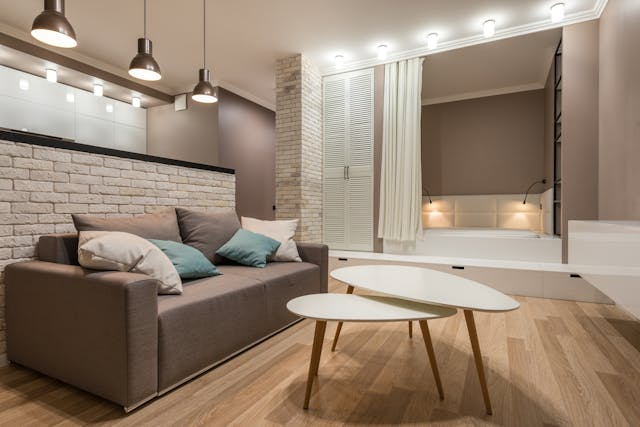
This is where most buying mistakes happen. Two people can own similar sectionals and still need totally different tables because their rooms work differently. Traffic flow, room width, and how the short side of the sectional is used all change what shape feels right once the furniture is actually in place.
Small rooms need softer edges
Round or oval usually wins in a small room. The softer edge makes the center of the room easier to move through, and the shape feels lighter visually. In many cases, that matters more than gaining a few extra inches of surface. This lines up with current guidance around round coffee table with storage for small spaces and compact-room layouts.
When circulation matters more than maximizing tabletop length, the Silva Lifting Top Round Coffee Table keeps the center of the sectional free from projecting corners. Available in 31.5- and 39.37-inch sizes, it can suit different seating openings, while the lift-top surface and hidden storage add function without requiring a longer rectangular footprint.
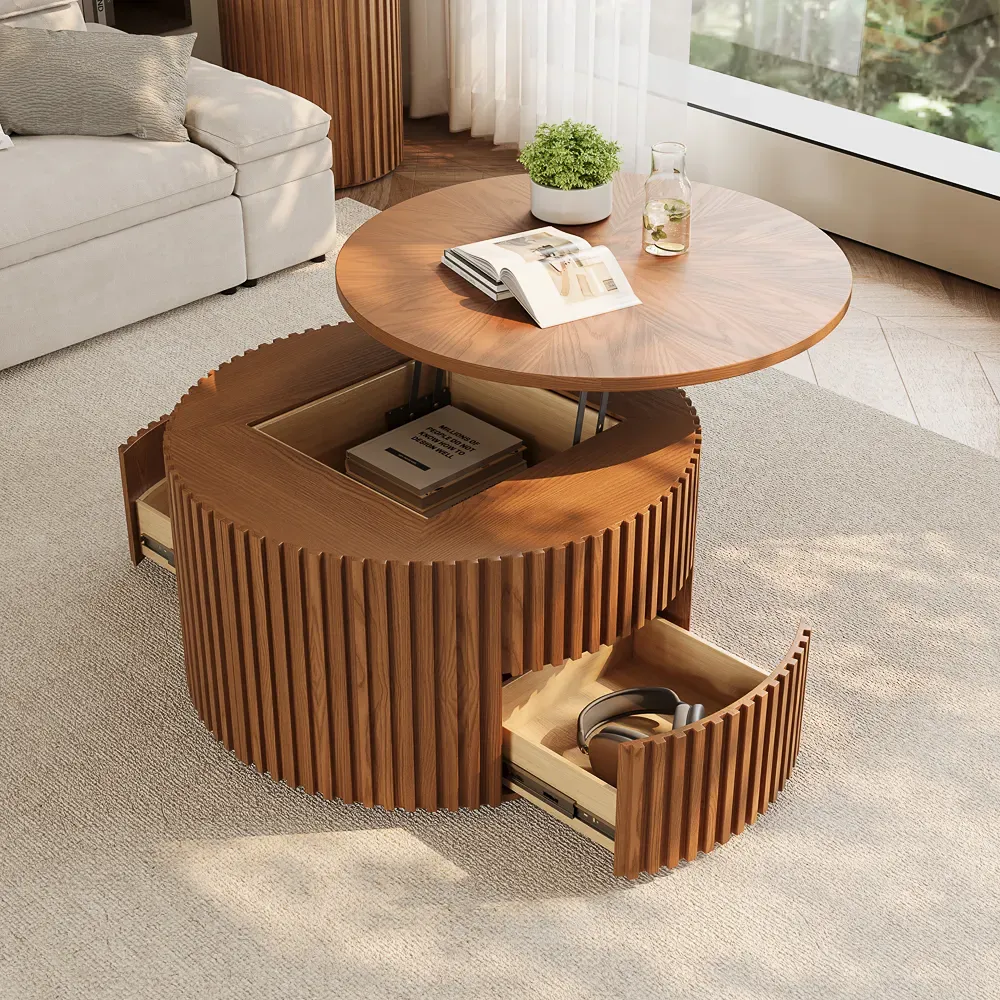
Silva Lifting Top Round Coffee Table
Rounded lift-top design adds function while keeping busy sectional walkways easier.
👍 Best for: Smaller sectional rooms and walkways
✨ 31.5- and 39.37-inch sizes
✨ Hidden storage plus two drawers
✨ No assembly required
Deep corner sectionals need better reach
Square is often the strongest fit. A deep center zone needs a table that serves more than one seat without making people lean forward awkwardly. Square also helps the whole arrangement feel intentional instead of like one long sofa plus an afterthought return.
Long open layouts can handle more length
Rectangular is usually better when the room is long or when the sectional behaves more like a sofa with chaise. It follows the dominant line of the space and gives you more practical surface area for entertaining. I once taped out both shapes on a rug before ordering, and the rectangle immediately looked calmer because it matched the long sightline from the entry to the windows.
For a sectional with one clearly longer seating run, the 51″ Rectangular Wood Coffee Table with Storage follows that horizontal line more naturally than a compact square table. The 51.18-inch length provides more shared surface along the main sofa side, while concealed drawers keep remotes and smaller living-room items off the tabletop. Leave enough clearance around the chaise before choosing the longer size.
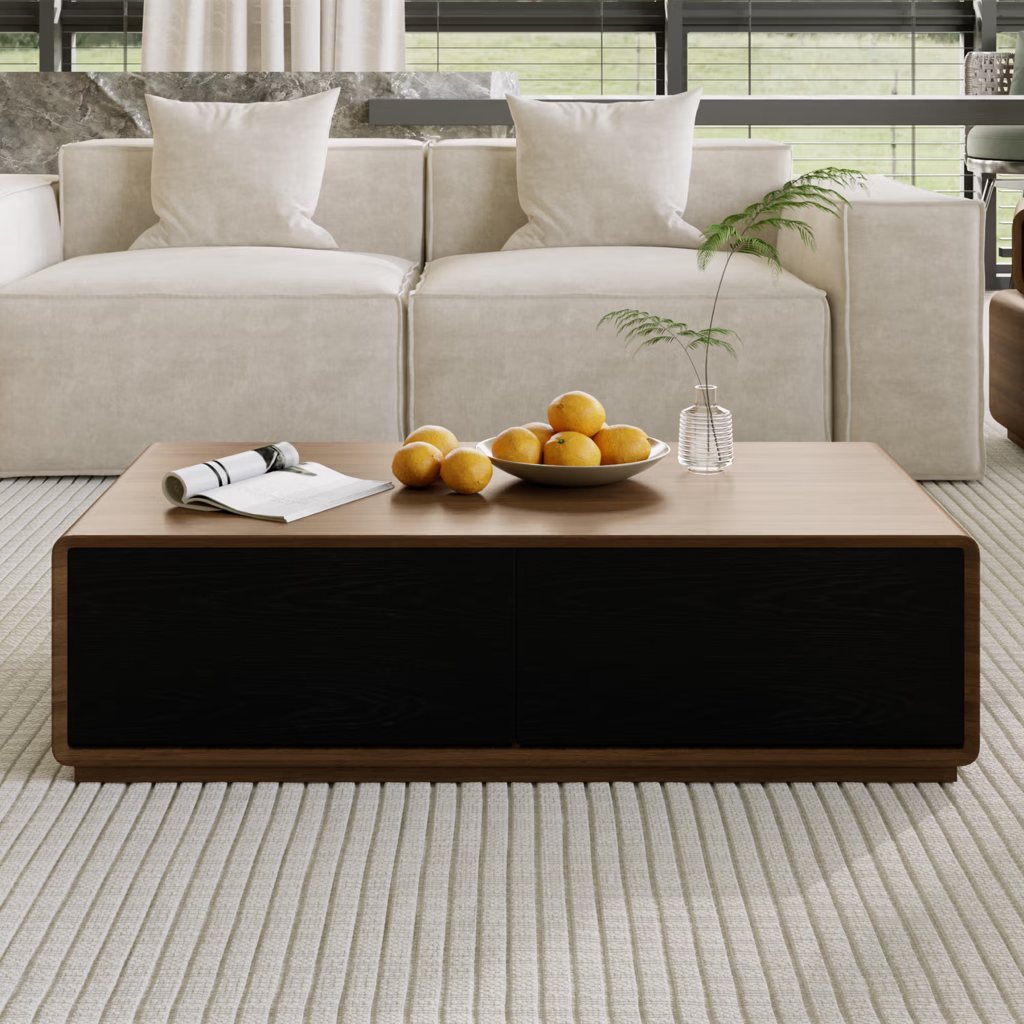
51″ Rectangular Wood Coffee Table
Longer surface follows extended sectional seating while adding closed storage for everyday clutter.
👍 Best for: Longer L-shaped sectional layouts
✨ 51.18-inch long footprint
✨ Four concealed storage drawers
✨ No assembly required
Busy family rooms benefit from safer shapes
Round and oval are safer choices when people are constantly passing through. That matters even more if you have kids, pets, or a room that doubles as the main path to another area. A soft-edged table can make a busy room feel noticeably easier to live with. Ideas for how far from couch should coffee table be become especially important in these layouts.
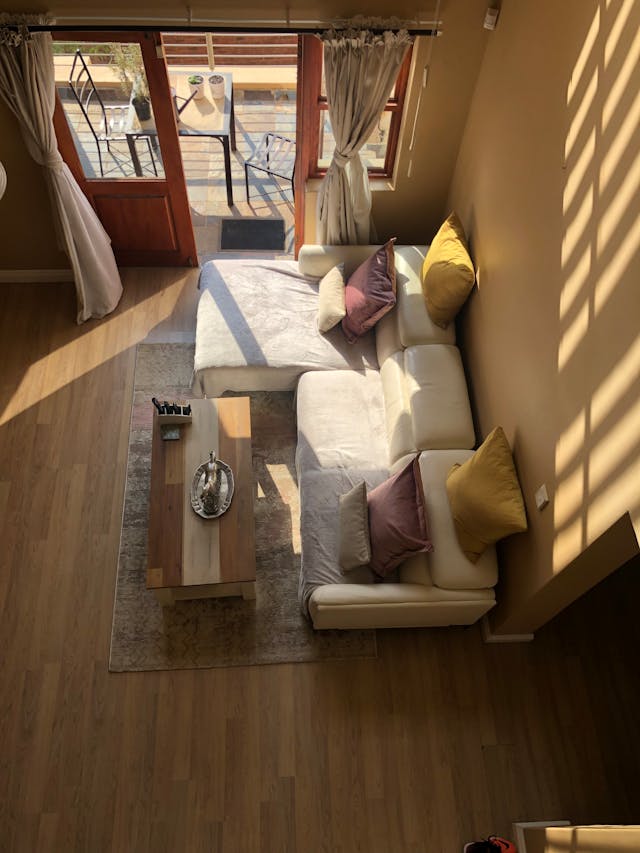
What mistakes should you avoid when pairing a coffee table with an L shaped sectional?
After shape and size, a few common mistakes separate a polished room from one that feels slightly off. Most of them are easy to avoid once you know what to look for, and they matter more than trendy styling. This is also where secondary choices, like trays or storage, can improve everyday use.
Common pairing mistakes
- Choosing a table based only on looks, not on reach from the main seats
- Letting the table extend visually beyond the sofa arms
- Ignoring the short side of the sectional when sizing a rectangular table
- Leaving too little walkway space in a tight room
- Using sharp corners where kids or pets cut through often
- Treating an ottoman coffee table with tray as a full replacement when you really need a firmer surface for drinks, laptops, or decor
If your room already has many strong straight lines, a softer coffee table shape can fix more than color ever will. And if your sectional is large and low, avoid a tiny table that looks lost in the middle. A coffee table should connect the seating, not disappear between it.
Conclusion
The best coffee table for an L-shaped sectional is not about following one universal rule. It is about matching the table to how your room actually moves and how your seating is used. Round tables help with flow, square tables balance deep corner seating, and rectangular tables suit longer layouts. Start with the main sofa side, keep 14 to 18 inches of clearance, and choose a height close to your seat. When those basics are right, the right shape usually becomes obvious.
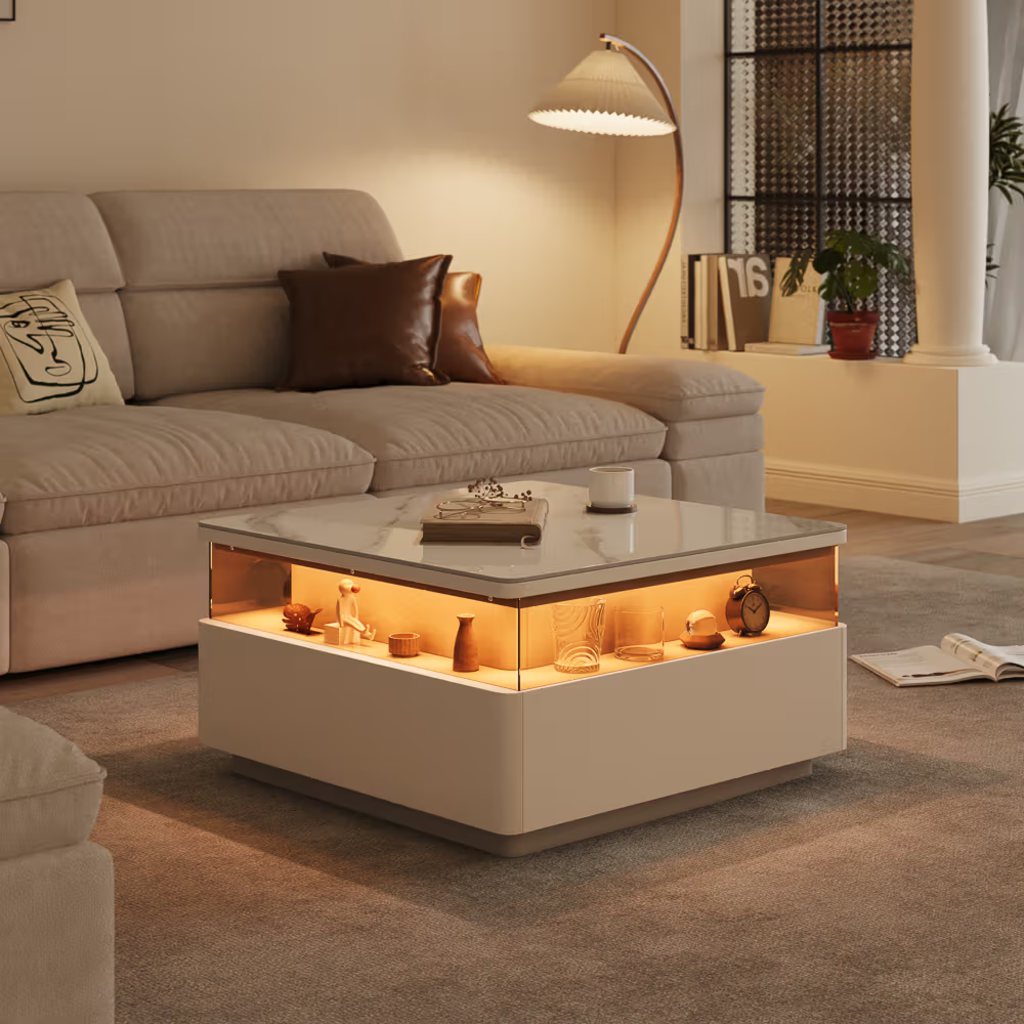
Find a Coffee Table That Fits Your Sectional
Compare round, square, rectangular, and storage coffee tables for your layout.
Q&A: What else should you know before buying?
These are the questions shoppers still ask after they understand shape and size. They tend to be more practical, and answering them briefly can help you make a final decision without rethinking the whole room from scratch.
Is nesting better than one large coffee table for a sectional?
Sometimes, yes. Nesting tables work well when you want flexible surface space without blocking movement all day. They are especially useful in small rooms or when the sectional is used for both lounging and hosting.
Can an ottoman work instead of a standard coffee table?
It can, especially if comfort matters more than a hard surface. But most people still need a tray for drinks, candles, or a laptop, so think honestly about daily use before swapping a standard table out.
What material is easiest to live with in a family room?
Durable, easy-clean tops usually win. Wood, sintered stone, and sealed finishes tend to be less stressful than delicate glass if the room handles snacks, homework, pets, or constant traffic.
Should the coffee table match the sectional exactly?
No. It should relate to the sectional in scale and style, but too much matching can flatten the room. Contrast in shape, material, or finish usually creates a more natural living space.


[…] with very long chaises, modular layouts, or seating zones used independently. Understanding what shape coffee table works with an L-shaped sectional can establish the main table, but it does not mean one surface must serve every […]