 By Jenny Smith
Choosing the right coffee table size can be surprisingly tricky. Too small and it feels like it’s floating in the room; too big and you’re bumping your knees every time you sit down. The good news is you don’t need perfect design instincts—just a tape measure and a few simple rules. In this guide, we’ll break down length, width, height, and spacing so you can pick a table that looks balanced, feels comfortable, and actually works for everyday living.
Before You Measure – Know Your Sofa & Layout
Identify Your Seating Type and Focal Point
Start by naming what you’re working with: a standard sofa, a compact loveseat, a chaise sofa, or a big L-shaped sectional. The main viewing direction—toward a TV, fireplace, or window—tells you where your coffee table should sit and which side of a sectional to align with.
If your sofa is long and your room is busy, two smaller tables or nesting tables can work better than one oversized piece. I once styled a family room where a single huge table made it impossible to reach the chaise; swapping to two light nesting tables instantly fixed the flow.
Key Measurements You Need (Grab the Tape!)
Use this mini coffee table size guide as a checklist before you shop:
- Sofa length from arm to arm
- Sofa seat height from floor to top of cushion
- Distance from sofa front edge to TV unit, fireplace, or feature wall
- Doorways and main traffic paths that pass near the table
- Extra depth needed for recliners or a chaise so nothing gets blocked
Take a quick photo of your sketch and measurements so you have them in-store or online.
Ideal Coffee Table Length & Width (Proportion Rules)
Length – The 2/3 Rule for a Balanced Look
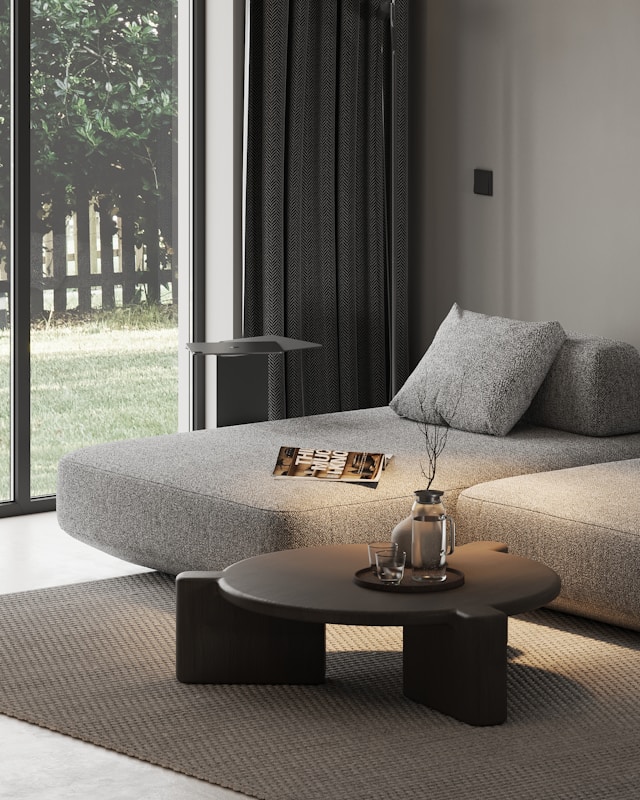
A simple rule: aim for a coffee table length that’s about ½–⅔ of your sofa length. For an 84″ sofa, that’s roughly 42″–56″. Closer to ½ works in small rooms where you need lighter visual weight; closer to ⅔ feels more luxurious in open spaces or when you have a long, straight sofa.
Think of this as your baseline for a standard coffee table size. In larger rooms, you can also use two slim tables side by side to reach that length without adding bulk.
Width/Depth – Enough Surface, Not a Tripping Hazard
Most rectangular coffee table sizes fall between 18″–30″ deep. Narrow rooms or tight walkways do best with the slimmer end of that range, while deeper sofas or “feet up” households can handle chunkier tables. For modular or extra-deep sectionals, check that people can still swing their legs through without clipping the corners.
In some L-shaped layouts, a square table fits the angle better than a long rectangle, letting everyone reach the surface equally. Round and oval tables are great in busy households because they soften sharp corners.
| Shape | Typical dimensions (L × W) | Best for… |
| Rectangle | 40″–60″ × 18″–28″ | Standard sofas, linear layouts |
| Square | 30″–40″ each side | Sectionals, L-shaped seating |
| Round | 30″–40″ diameter | Small rooms, kids & pets, smoother traffic flow |
| Oval | 40″–60″ length, 20″–28″ depth | Narrow rooms needing softer edges |
Height Rules Explained: The Golden Range
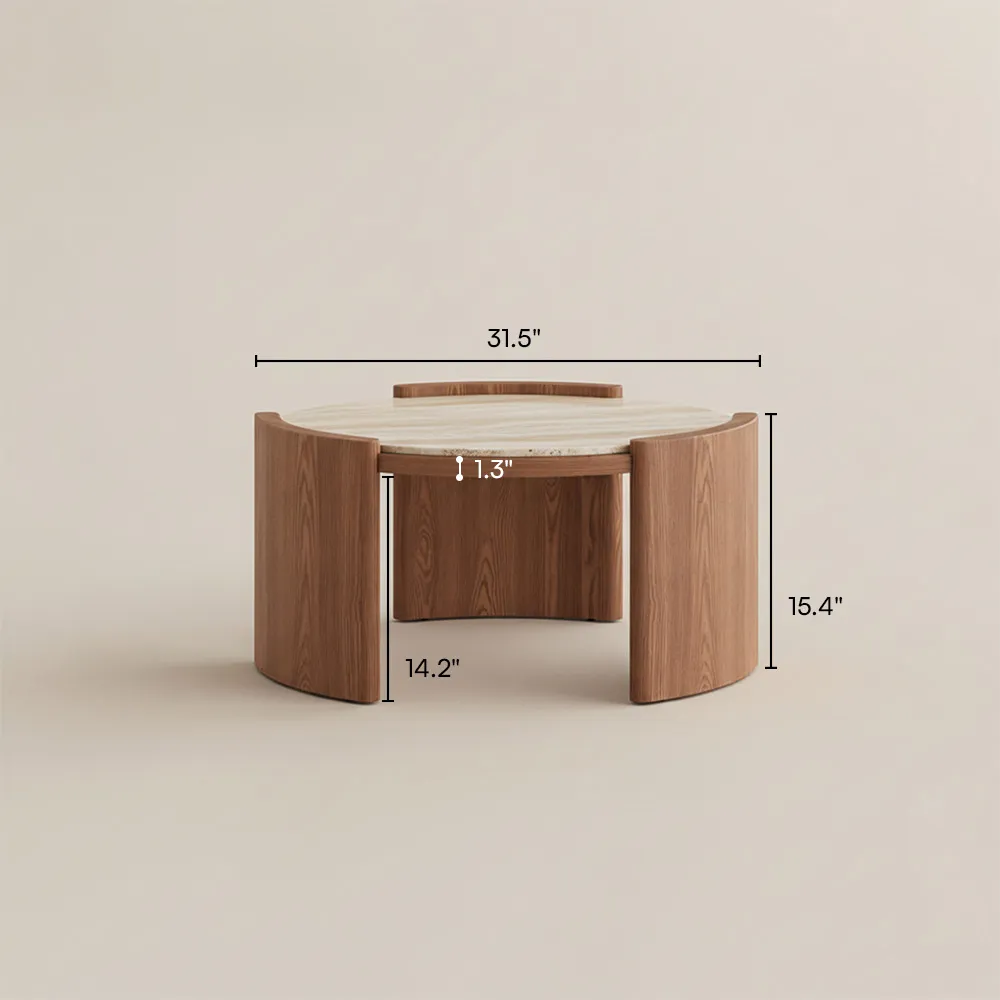
For height, the sweet spot is simple: choose a coffee table height within about 2 inches of your sofa’s seat height. Most sofas have a seat height of roughly 17″–19″, so many tables land around 16″–20″. (According to Livingetc, 2024.)
Go slightly lower if you want a relaxed, loungey feel or have a low-profile modern sofa. Go slightly higher if you often work on a laptop, serve snacks, or play board games at the table—your wrists and back will thank you. I love a table an inch or two above the cushions in my own living room because it doubles as a casual work spot.
Spacing & Clearance Guidelines (Walkways That Feel Comfortable)
Distance Between Sofa and Coffee Table
Once you know the size of coffee table, place it about 18″ from the sofa edge. That distance keeps drinks and remotes within easy reach without banging your knees as you walk through. Many designers treat 18″ as the “golden distance” for sofa–table spacing. (See Livingetc, 2022.)
If you have small kids or pets, you can push closer to 18″ so they’re not squeezing through a tiny gap. In very compact rooms, 12″–14″ is workable, but test it with painter’s tape on the floor first so you know exactly how it will feel.
Walkways Around the Table
Beyond the sofa gap, try to keep 30″–36″ of clear space for main walkways between your coffee table and TV unit or other large furniture. Interior designers often recommend this range to prevent awkward sideways shuffles while still maximizing usable seating. ( Business Insider, 2025. )
Use the wider end of that range in open-plan rooms or U-shaped seating, and accept closer to 24″ in tighter apartments. For a single sofa and TV unit, center the table on the sofa; with a sofa plus two armchairs, align the table with the main sofa and let the chairs “borrow” the corners.
Matching Coffee Table Size to Common Sofa Types
Standard Sofa, Loveseat & Apartment-Size Couches
Most three-seat sofas in real homes fall somewhere around 72″–90″ long. For those, an average coffee table size of about 36″–60″ works well, depending on room width. Under 36″ starts to feel too small and floaty; over 60″ can overwhelm smaller living rooms.
For a loveseat or apartment-size couch, aim for a compact table around 30″–40″ long, and keep depth modest so you still have comfortable circulation. When pairing a sofa with a matching chair or loveseat, let the sofa dictate the table length and use side tables to support extra seats.
Sectionals, Chaise Sofas & Oversized Seating
For a sectional, size the table to the longest, most-used side, not the corner. This is where “coffee table size for sectional” searches often go wrong—people center the table in the corner and no one can reach it comfortably.
Large square tables (for example, 36″–48″) suit generous L-shaped layouts where people sit on two sides. Round tables help traffic flow in tighter rooms, especially with a chaise blocking part of the path. If your sectional is huge, consider two smaller movable tables rather than one giant block, so you don’t eat into walkways.
Practical Tips, Mistakes to Avoid & Easy Size Tweaks
A common mistake is choosing by style first and standard size coffee table dimensions second. Always start from your measurements, then filter by material and look. If the perfect design is slightly too long or deep, see whether a smaller size is available in the same line, or pair a slim bench-style table with a tiny pull-up side table for laptops.
For more styling ideas once you’ve nailed the dimensions, you can check out POVISON’s guide on How to Choose a Coffee Table: Ultimate Guide for tips on shapes, materials, and decor that work with your room size and layout. When styling, make sure your tray, candles and coffee table book size stacks don’t take up every inch—leave open space for actual use.
Conclusion
Choosing the right coffee table size is really about matching three things: your sofa, your room, and your daily habits. Start by measuring, then lean on a few simple rules: table length around ½–⅔ of the sofa, height within about 2 inches of the seat, and roughly 18″ to the sofa with about 30″ for main walkways. Once those basics are in place, you can play with shapes, materials, and styling, knowing the proportions will feel calm, balanced, and easy to live with.
Q&A
How can I quickly check if my current coffee table size works with my sofa?
Sit in your usual spot and see if you can place a drink on the table without leaning forward or twisting. Check that there’s roughly a hand-span between your knees and the table, and that you can walk past without turning sideways. If all three feel easy, your size and placement are probably fine.
What should I prioritize if my living room is very small?
In a small room, prioritize circulation and visual lightness over a big surface. Choose a compact table with slim legs or glass, keep the shape simple, and avoid filling the full length of the sofa. A round or oval design, or a nesting table you can tuck away, often feels much less heavy in tight spaces.
How do I size a coffee table for a sectional with a chaise?
Focus on the main everyday seating side, not the short side of the L. The table should sit in front of that longer section, close enough that everyone can reach the center. If the chaise makes access tricky, consider a square or round table pulled slightly toward the open side, or add a small pull-up table just for the chaise.
What can I do if my coffee table is noticeably lower or higher than the sofa seat?
If your table is too low, use sturdy trays or stacked books to lift the working surface a little and keep smaller items corralled. If it’s too high, clear the top so it feels lighter and move it a bit farther away from the sofa. Long term, aim for something closer to your seat height for everyday comfort.
How do I choose coffee table size if I use it for work, dining or board games a lot?
Think of it as a mini dining or task table. Go a bit larger than a purely decorative table and choose a height that doesn’t make you hunch—often at or slightly above seat height. Make sure there’s enough depth for plates or a laptop plus elbow room, and leave space for people to pull their legs under comfortably.
Any sizing tips if I’m layering a rug under the coffee table?
First size the rug to your seating area, then let the coffee table sit comfortably inside it. A good rule is for the rug to extend beyond the table on all sides so it doesn’t look like a coaster. Make sure the table still sits centered relative to the sofa, even if the rug is offset slightly in the room.


[…] planning a living room around entertainment activities, understanding coffee table dimensions for your space can help avoid choosing a table that looks attractive but feels cramped during daily […]
[…] fit standards you would use for conventional furniture. If you still need to establish proportions, how to choose the right coffee table size for your sofa covers sofa length, seat height, table dimensions, and circulation in more detail. Then add the […]
[…] serves while still leaving space to stand, walk, and reach the surface comfortably. A more detailed coffee table size guide for your sofa can help with exact measurements before […]