 By Stephanie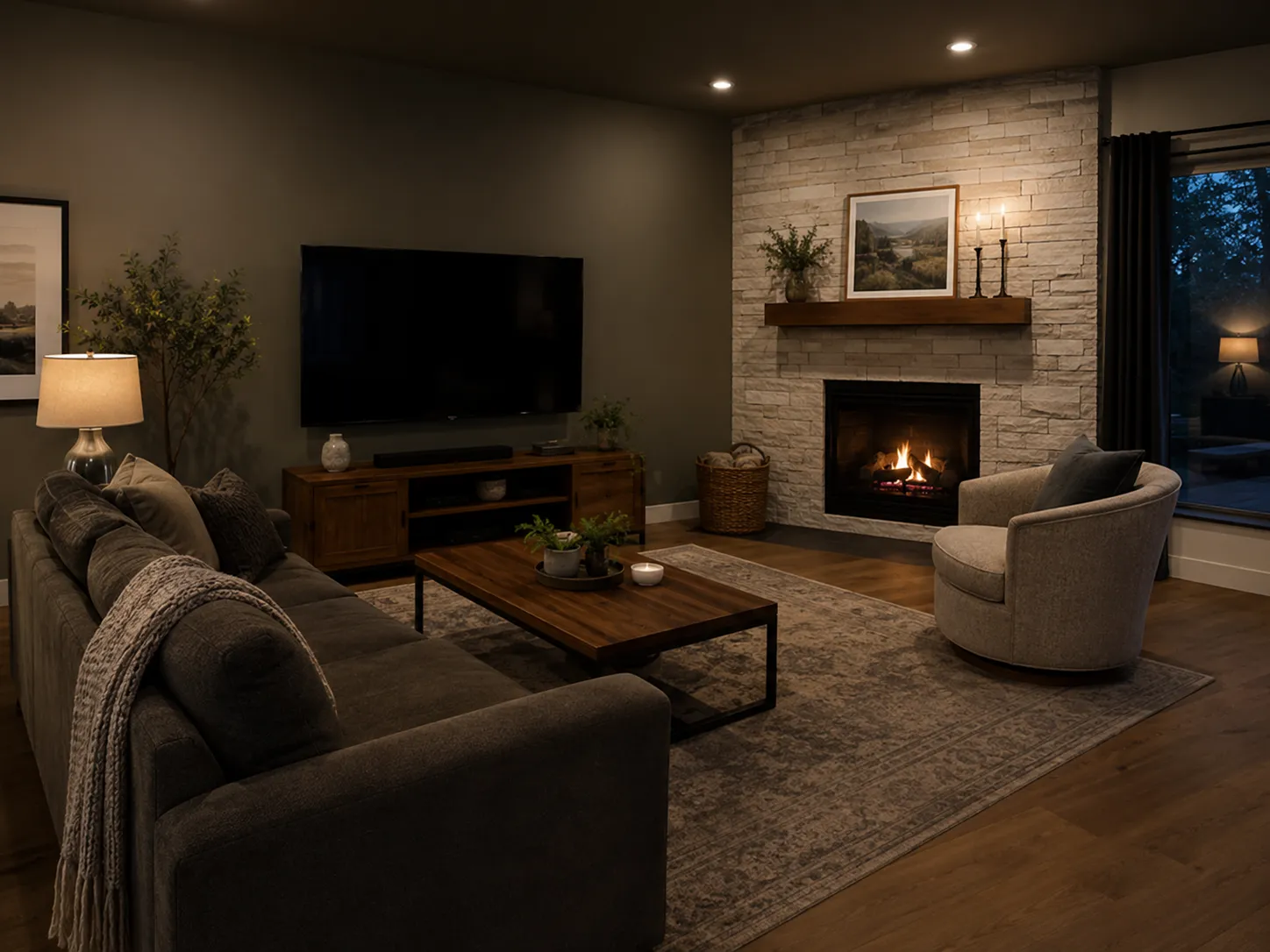
A living room with fireplace and TV can feel difficult to arrange because both features pull attention in different directions. This guide helps you decide which one should lead the room, choose a layout based on their wall positions, and place seating without creating strained views or blocked walkways. You will also learn when a TV can work above the fireplace, when a separate media wall is more practical, and which flexible furniture choices support TV nights, fireside reading, and casual hosting in one room.
Table of Contents
What Should Be the Main Focal Point?
A living room with fireplace and TV does not need both features to carry equal weight. The TV is often the functional focal point because it determines everyday sightlines. The fireplace may remain the architectural focal point because it gives the room character even when it is not in use.
Answer three questions before moving furniture:
- Which feature does the household use most often?
- Which wall gives the main sofa the most comfortable TV view?
- Which arrangement protects fireplace clearance and the main walkway?
For frequent TV viewing, let the sofa favor the screen and use a movable chair to acknowledge the fireplace. For conversation and occasional TV, the fireplace can lead. A clear plan for where to put the TV in the living room prevents symmetry from overriding comfort.
Find the Right Fireplace and TV Layout
A living room layout with fireplace and TV should start with fixed elements: usable walls, windows, doors, outlets, and the fireplace opening. Match the room to a workable starting plan before choosing a sectional, recliner, or media console.
| Room condition | Strong starting layout | Main seating direction | Main risk |
| Only one usable focal wall | TV above fireplace | Sofa faces the shared wall | Heat or an overly high screen |
| One wide, uninterrupted wall | TV beside fireplace | Sofa favors the TV side | Uneven visual weight |
| Square or nearly square room | Adjacent walls | Sofa faces TV; chair pivots | Side viewing from fixed seats |
| Deep living room | Opposite walls | Floating sofa and flexible chairs | Walkway behind the sofa |
| Corner fireplace | Separate straight TV wall | Sofa faces TV; side seat faces fire | Too much diagonal furniture |
Use the table as a starting point. A doorway, window glare, tall mantel, or narrow path can rule out an otherwise attractive arrangement.
5 Living Room Layouts with Fireplace and TV
When deciding how to arrange living room furniture with fireplace and TV, judge each option by seated TV comfort, fireplace clearance, traffic flow, and whether secondary seats can change direction. The following layouts solve different room conditions; none is automatically right for every home.
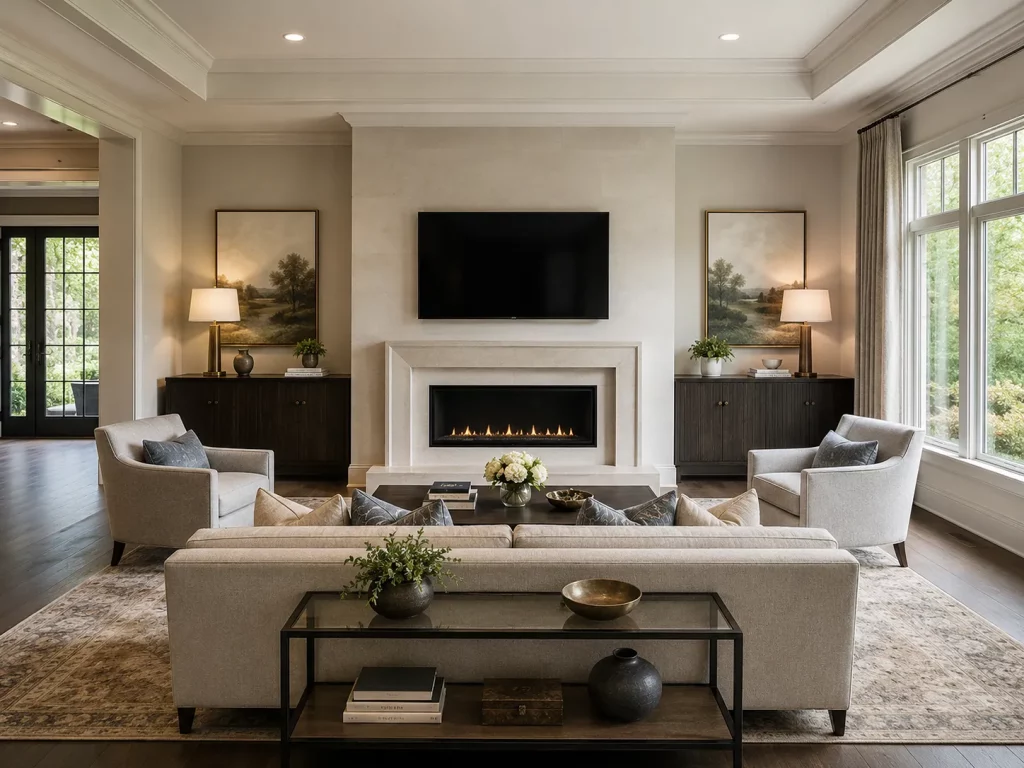
TV Above the Fireplace
This arrangement works when the room has only one usable focal wall and the fireplace is low enough to keep the screen comfortable from the sofa. Check the installation and clearance instructions for both the fireplace and TV, then test the proposed screen center from a seated position. The room may look symmetrical but still feel tiring if viewers must tilt their heads upward.
Avoid this layout when a tall mantel pushes the TV too high, the wall becomes hot, or wiring cannot be routed safely. A side wall or freestanding media console usually creates a better viewing position.
TV Beside the Fireplace
Side-by-side placement keeps the TV lower while allowing the fireplace to remain visible on the same feature wall. It works best on a wide wall with breathing room around both elements. Center the sofa on the primary viewing zone rather than automatically centering it on the entire wall. Repeating a wood tone or low horizontal line can connect the two features without making them identical.
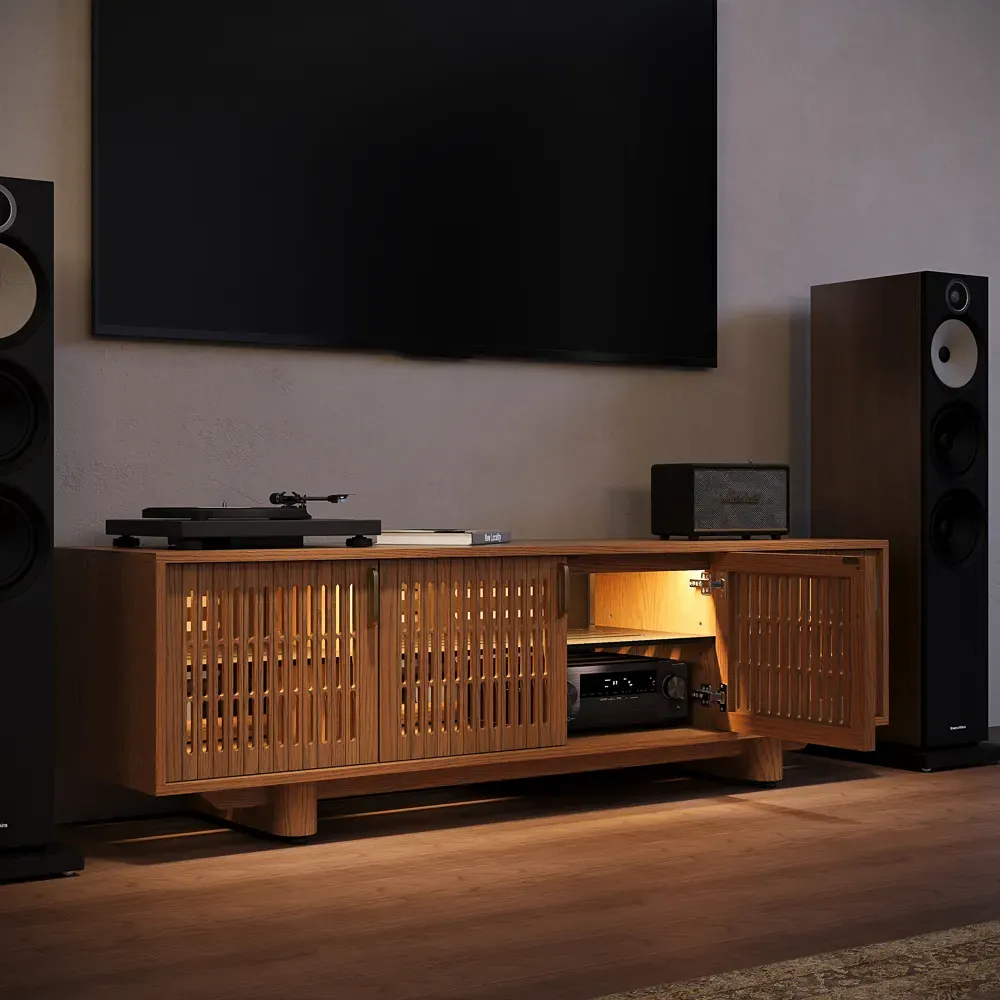
When the TV sits beside the fireplace, the media console needs to support the equipment without crowding the firebox or making the feature wall feel packed. The Arboren Deep Vented Rolling Media Console provides 17.7 inches of interior depth, ventilated metal shelving, IR-friendly slatted doors, and hidden wheels that make rear cable access easier. Keep the console outside the fireplace manufacturer’s required clearance.
TV and Fireplace on Adjacent Walls
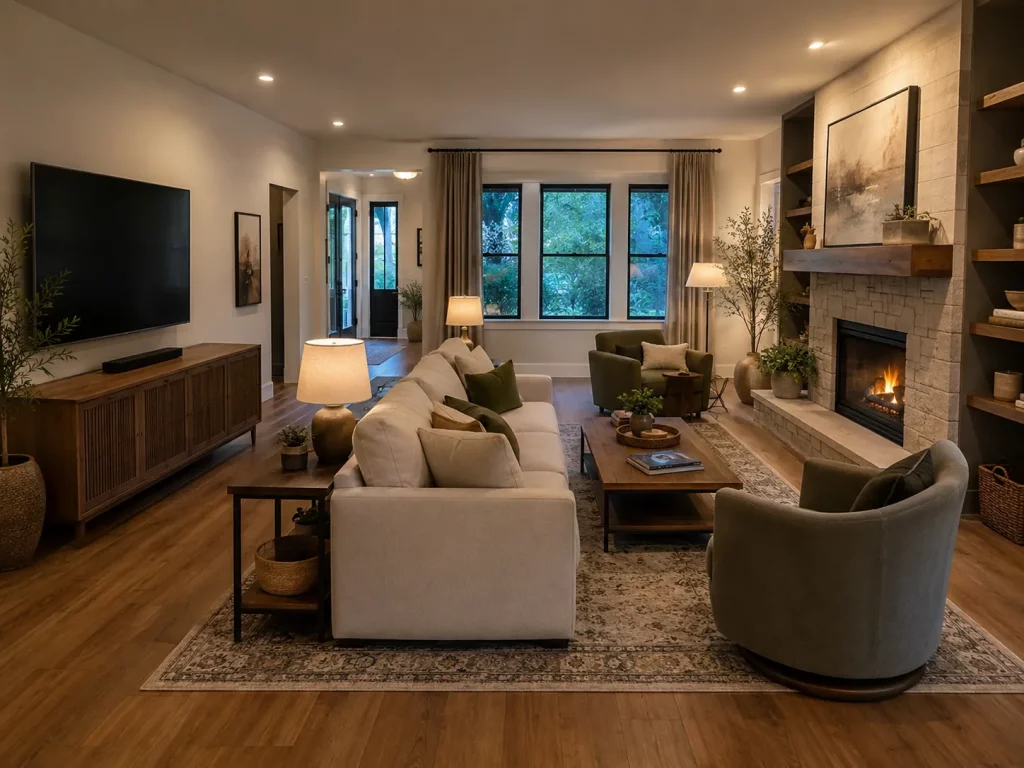
Adjacent walls often provide the most practical compromise. Place the main sofa where it gets a direct or nearly direct TV view, then use one flexible seat near the open corner. Do not angle every piece toward the point where the walls meet; that creates a crowded diagonal layout and weakens the central seating area.
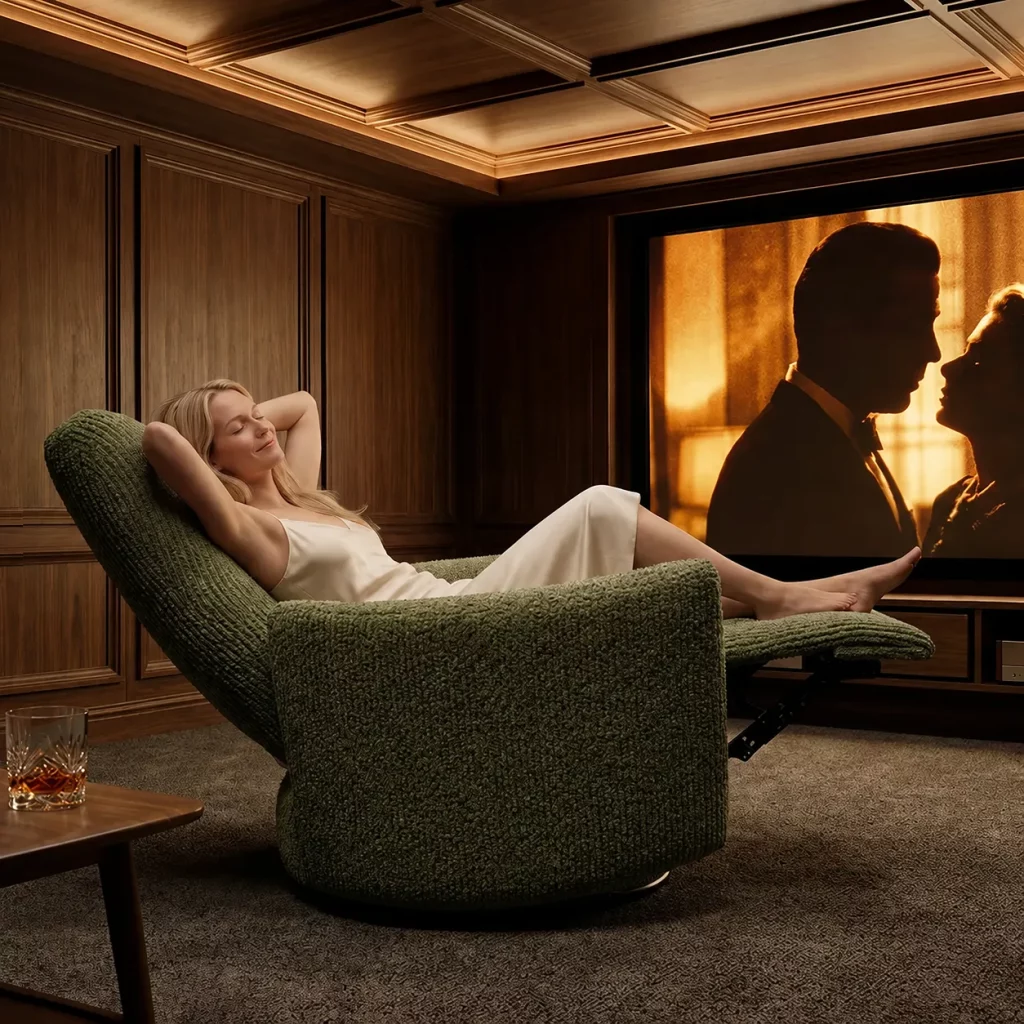
A fixed chair may face the wrong direction whenever the room shifts from TV viewing to fireside conversation. The Oliver Swivel Power Barrel Recliner rotates 270 degrees and power reclines from 90 to 145 degrees, allowing one person to turn between the TV, fireplace, and conversation area without moving the chair. Leave enough room for both rotation and full recline, and keep the chenille upholstery away from direct heat.
TV and Fireplace on Opposite Walls
Opposite walls can work in a deep room, but avoid using one sofa as a hard divider with no supporting seats. Let the main sofa face the feature used most often. Add chairs that can rotate or shift toward the other wall, and keep a clear route behind or beside the sofa.
This layout suits a household whose weekday routine centers on TV but whose fireplace becomes more important during winter gatherings. Movie-night seats can favor the screen; when guests arrive, the chairs can turn inward and bring the fireplace into the conversation setting.
Corner Fireplace with a Separate TV Wall
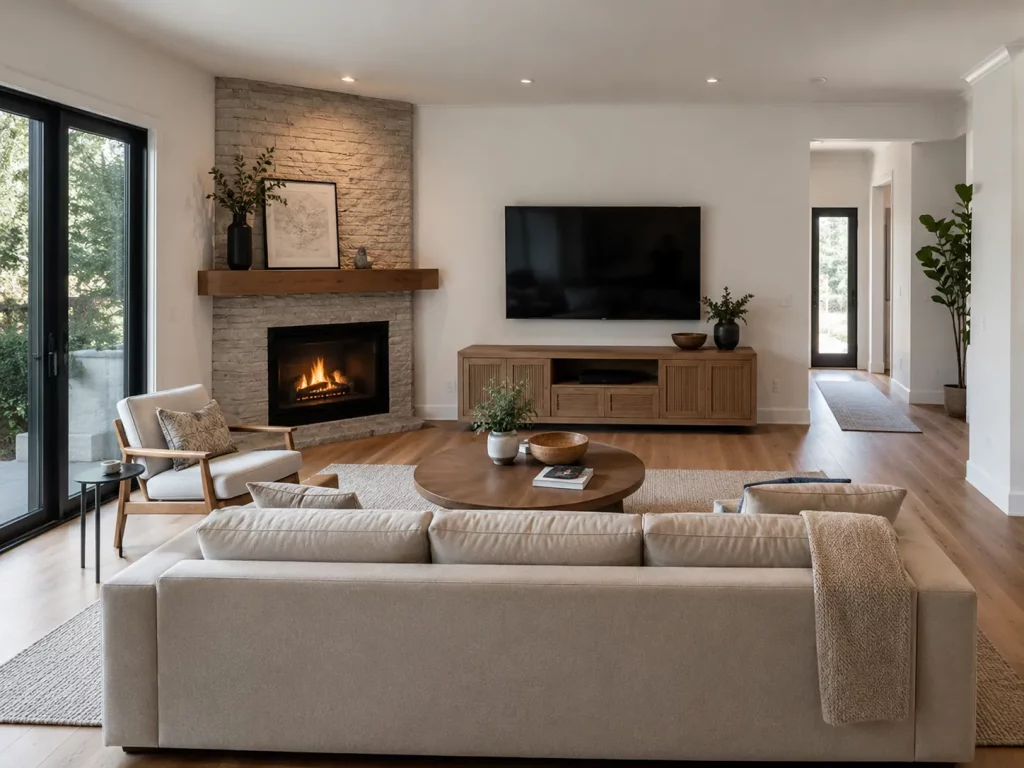
A corner fireplace does not require every sofa and chair to sit diagonally. Keep the TV and main sofa on a straightforward axis, then position one side chair or the open end of a sectional toward the fireplace. This makes the corner feature visible without sacrificing the strongest TV sightline.
Protect the path across the room. A round or oval center table is often easier around angled chairs than a long rectangular table, but confirm reach from every seat. Avoid placing a chaise where people must walk around its full length to reach the fireplace or doorway.
What Should You Measure Before Moving Furniture?
Measure furniture in use, not only in its closed dimensions. Mark proposed pieces with painter’s tape, sit in every planned seat, and walk the routes used between the entry, kitchen, stairs, and patio. As a general fire-safety baseline, the U.S. Fire Administration recommends keeping combustible furniture and fabrics at least 3 feet from fireplaces and other heat sources, unless the appliance instructions require more space.
Check these items before ordering or moving heavy furniture:
- Fireplace manufacturer clearance and the wall temperature above the opening
- TV position from seated eye level and from secondary seats
- Window reflections when the TV is usually watched
- The main walkway with cabinet doors, drawers, and footrests open
- The full reclined footprint of power seating
- The chaise direction and its effect on room entry
- Cable access, equipment ventilation, and a nearby wall outlet
- Reach from each seat to a table without narrowing the only path
Test the Layout for TV Nights and Hosting
A layout may look balanced on paper but still feel inconvenient once several people begin using the room. Test it in two realistic situations before buying new furniture.
For weekday TV use, sit in the seats your household normally chooses. Check whether anyone has to turn sharply, look past another person, or walk across the screen to enter the room.
For fireside conversation or casual hosting, rotate the flexible chairs toward the center and make sure the fireplace remains accessible. Then open the media console doors, extend the recliner, and walk between the entry, kitchen, and seating area.
The layout works when these activities can happen without moving the main sofa or blocking the primary walkway. If one oversized piece prevents the room from working in both modes, reconsider that piece before adding smaller furniture.
Conclusion
A living room with fireplace and TV works best when daily behavior—not forced symmetry—sets the layout. Choose the main functional focal point, match the plan to the actual wall relationship, and test heat, sightlines, glare, and full furniture movement before committing. The main sofa can favor the TV while a swivel seat, low media console, or flexible secondary chair keeps the fireplace connected to the room. A layout that supports both weekday viewing and social use will remain practical after the initial styling is finished.
FAQs
Can renters arrange a living room with fireplace and TV without mounting?
Yes. Place the TV on a stable, appropriately sized media console and use freestanding seating that can pivot or move. Keep cords along the wall rather than across a walkway. Renters should confirm lease rules before attaching cable covers, anti-tip devices, or other hardware to the wall.
Should the area rug align with the TV or fireplace?
Align the rug with the seating group, not automatically with either wall. The front legs of the main sofa and chairs should relate to one shared rug area. A slightly off-center rug is acceptable when it keeps the seats connected and leaves the main traffic route unobstructed.
What if the fireplace is rarely used?
If the fireplace is mainly decorative or used only a few times each year, let the TV determine the main sofa position. Keep the hearth visible and maintain any required clearance, but do not force every seat to face it. Recheck the furniture arrangement before returning the fireplace to regular use.
Can two sofas work with both a TV and fireplace?
Two sofas can work in a wide or deep room when they form a usable conversational living room layout and at least one has a comfortable TV view. Avoid positions that force sharp head turns, and confirm that the second sofa does not close the route behind the primary seating group.


[…] check is particularly useful in living room with fireplace and TV layouts, where the screen position may already be fixed. Adjustable upper-body support gives viewers […]