 By Kelvin
Industrial living room ideas work best when raw surfaces are balanced with furniture and finishes that make the room comfortable to live in. Exposed brick, concrete, black metal, and wood can establish the style, but combining too many hard or dark materials may make a space feel visually heavy. The key is to create contrast through texture, color, and furniture shape. These six material combinations show how to build an industrial-inspired living room, from choosing a sofa and coffee table to layering lighting and adapting the look to a smaller home.
Table of Contents
What Defines an Industrial Living Room?
An industrial living room draws inspiration from warehouses, workshops, and urban lofts. Its defining features include visible structural details, raw-looking materials, functional furniture, and simple forms. Common elements include brick walls, concrete finishes, black metal, natural wood, and leather upholstery.
However, industrial style does not require a converted warehouse or exposed pipes. A contemporary living room can achieve a similar look through a few deliberate choices, such as a dark metal lamp, a wood coffee table, and a sofa with clean lines. The goal is to create a cohesive mix of materials rather than fill the room with industrial-themed accessories.
How Do You Make Industrial Style Feel Warm and Comfortable?
Industrial interiors can feel cold when too many hard surfaces, dark finishes, and strong lines dominate the room. The key is to balance these elements with contrasting textures and warmer materials. Pair brick or concrete with a sofa in textured fabric or leather, and introduce warm wood to soften the look of black metal. A woven rug and a few textured cushions can make the seating area feel more inviting, while layered lighting creates a comfortable atmosphere for reading or relaxing. Keep the overall palette cohesive so the room feels balanced rather than cluttered.
Industrial Living Room Ideas to Try
The most effective industrial living room ideas rely on a few well-chosen combinations rather than matching every item to one theme. Start with a dominant surface or finish, then introduce materials that contrast with it in color, texture, or shape. The following six approaches show how walls, furniture, lighting, and textiles can work together without making the room feel overly industrial.
1. Let One Raw Surface Lead the Design
A brick wall, concrete finish, or exposed structural beam can establish the room’s character. Instead of repeating the same rough texture everywhere, let one surface become the focal point and keep nearby furniture relatively simple. This creates a clearer visual hierarchy and leaves room for softer materials.
If your living room has a brick feature wall, consider the different furniture styles that pair well with exposed brick walls. Dark brown leather, warm wood, and restrained metal accents can complement the brick without competing with its natural texture.
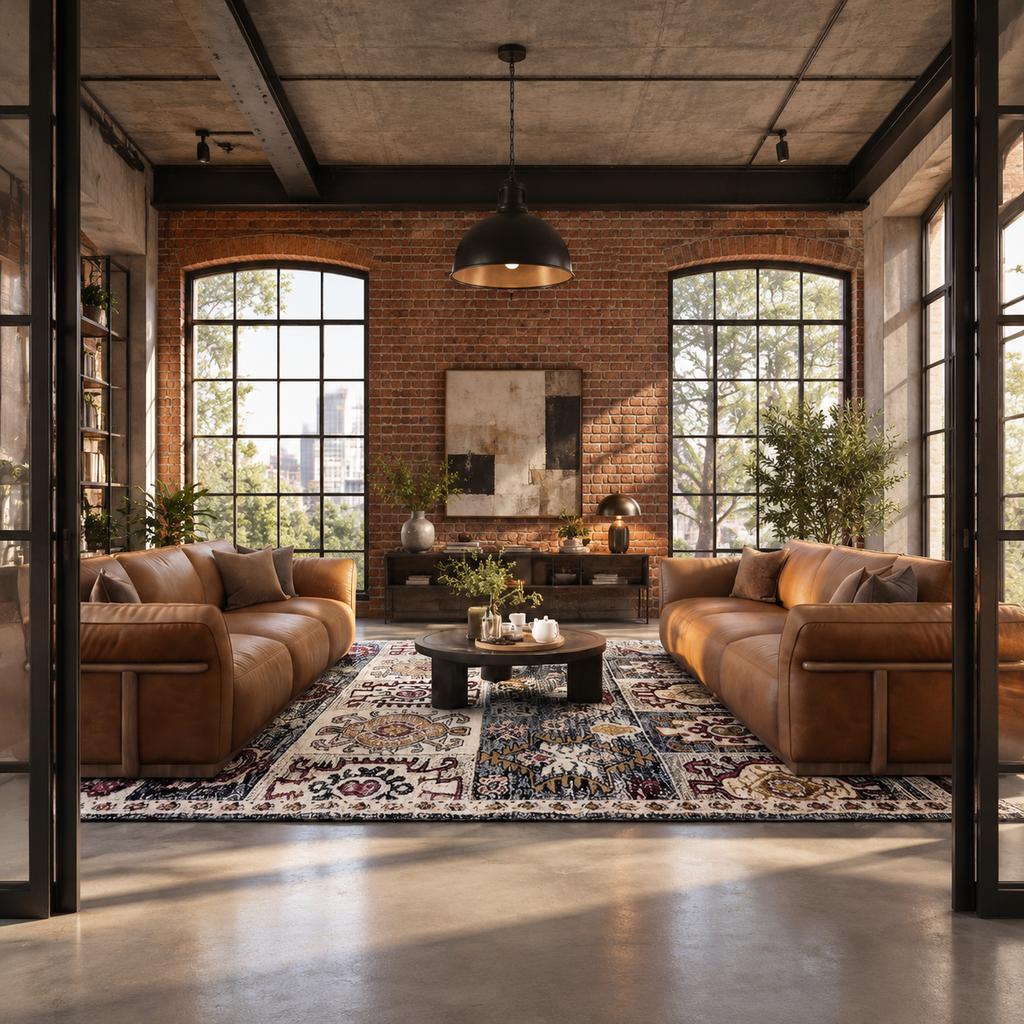
A leather sofa is especially useful when the room needs a substantial furniture anchor. The Cronus Genuine Leather Modular Sofa combines top-grain leather with a solid wood frame, connecting the warmth of natural materials with the structured look of industrial interiors. Its modular configuration also allows the seating arrangement to be considered alongside the room’s wall length and circulation space.
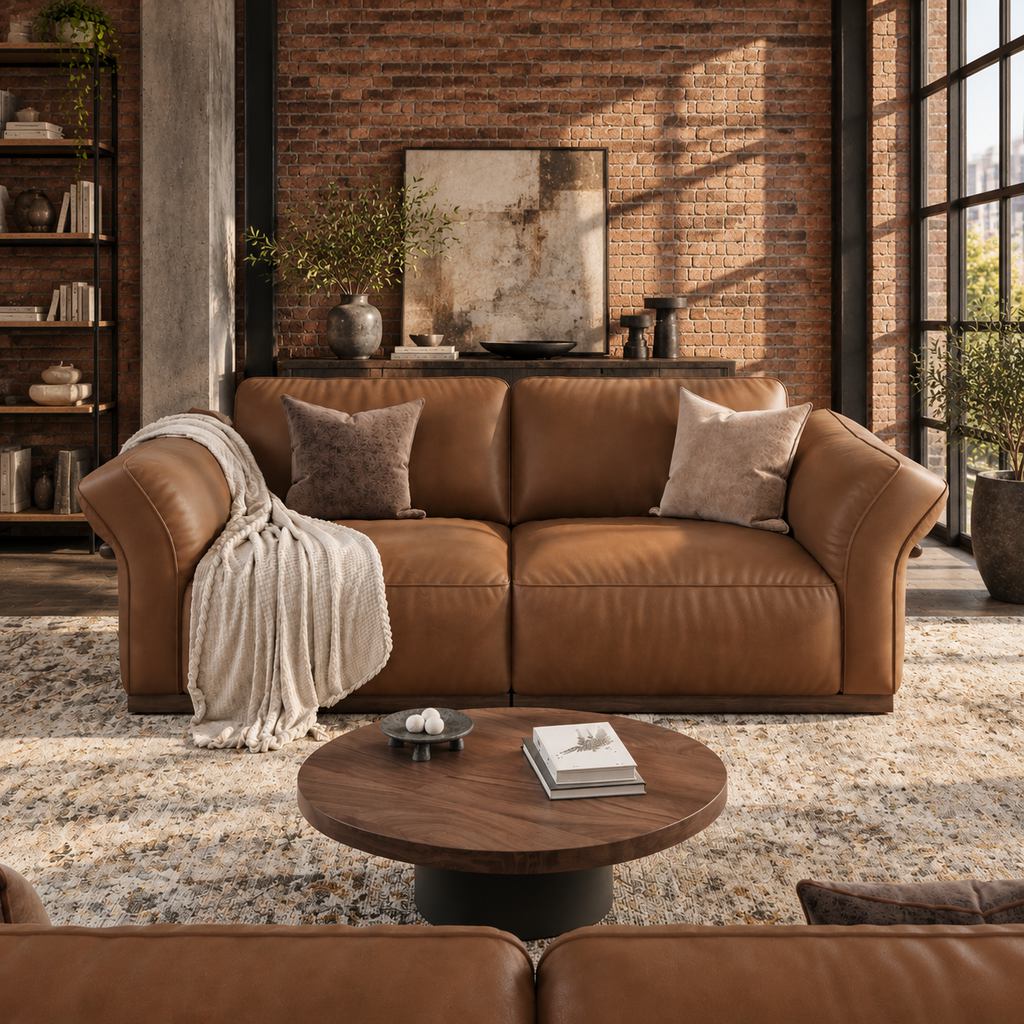
Cronus Genuine Leather Modular Sofa
Grounds brick-and-metal rooms with textured leather, solid wood framing, and modular seating.
👍 Best for: Brick walls and dark metal accents
✨ Genuine top-grain leather
✨ Solid wood frame
✨ Modular seating configuration
2. Pair Black Metal With Warm Wood
Black metal provides definition, while wood introduces a more natural visual texture. This combination works well in coffee tables, shelving, media consoles, and lamp frames. Walnut and medium brown finishes are particularly useful when the room already contains gray concrete, red brick, or black window frames.
A round coffee table can soften the straight lines of a sofa and a rectangular media console. In a smaller seating area, it can also make movement around the furniture feel less constrained, provided the tabletop leaves enough clearance for people to pass comfortably.
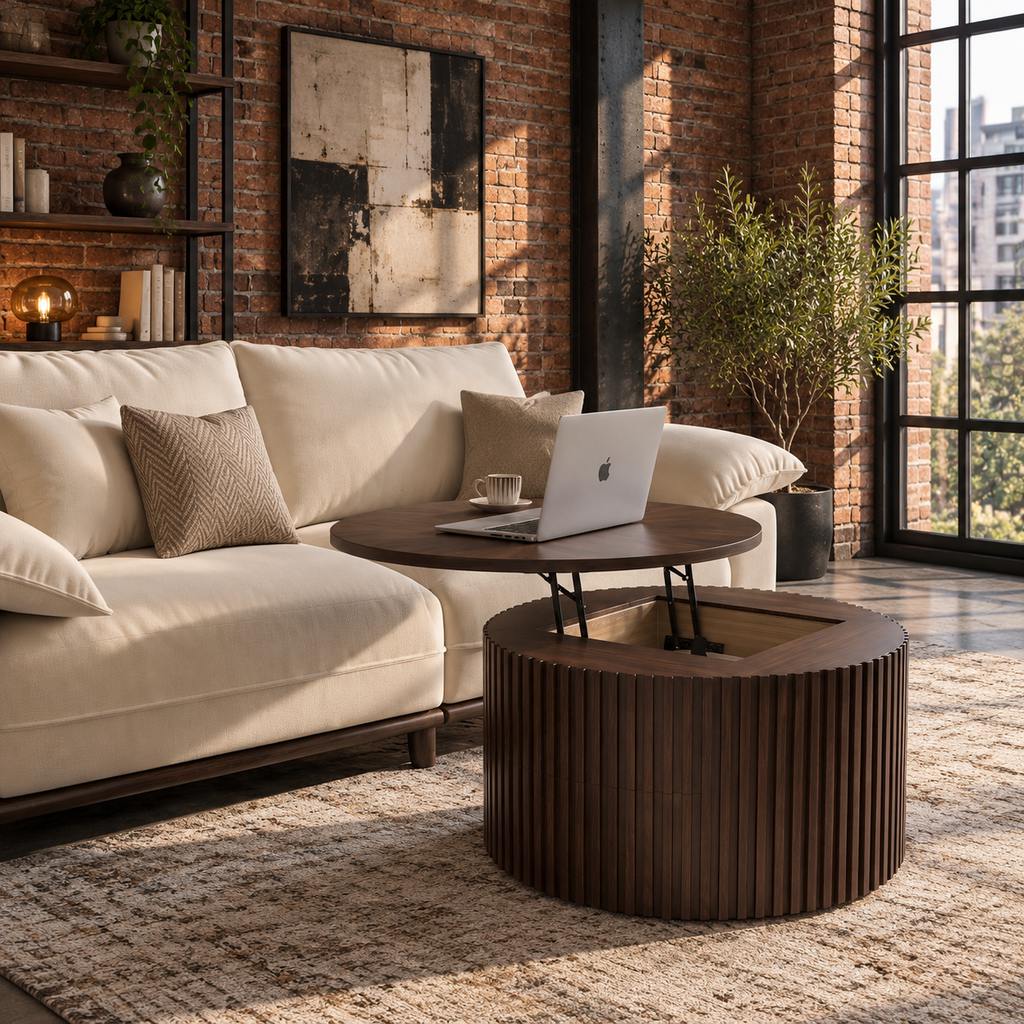
The Silva Lifting Top Round Coffee Table introduces walnut tones and a practical lift-top surface to a room dominated by harder finishes. Two drawers help keep remotes and small accessories out of sight, while the raised top provides a convenient surface for a laptop or casual meal. Its 31.5-inch round size is worth considering for compact seating zones.
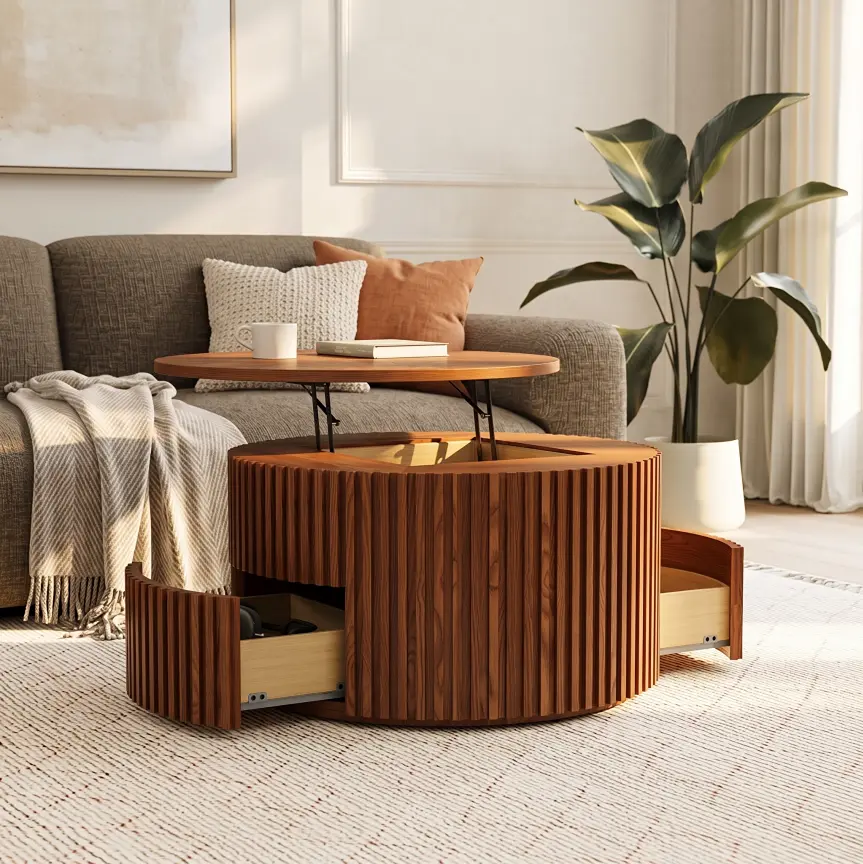
Silva Lifting Top Round Coffee Table
Warm walnut tones offset industrial metal while lift-top storage supports everyday routines.
👍 Best for: Compact, multifunctional seating areas
✨ 31.5-inch round tabletop
✨ Lift-top surface with storage
✨ No assembly required
3. Choose Seating That Softens Industrial Lines
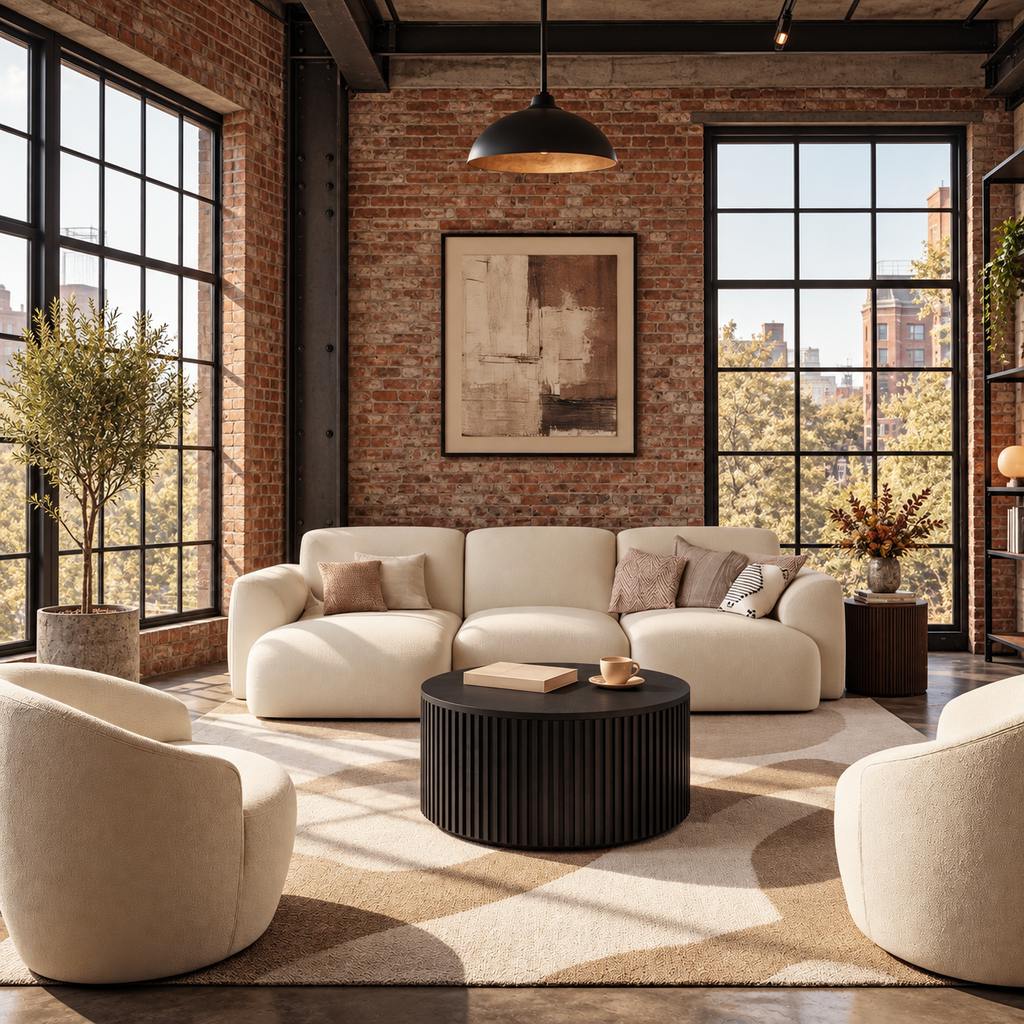
Sofas occupy a large visual area, so their color, upholstery, and silhouette strongly influence how an industrial living room feels. Dark leather can reinforce a traditional loft-inspired look, while cream, light gray, or textured chenille creates contrast against brick and concrete.
The right choice depends on the room’s existing finishes. A dark sofa may suit a bright room with pale floors, while a lighter sofa can help balance a space with dark walls or substantial black furniture. Comfort matters too: consider seat depth, back support, and how people actually use the living room before settling on a silhouette.
The Aurora Power Sofa Bed offers a softer alternative through textured chenille upholstery and a relaxed, French-inspired shape. Its adjustable seat depth, from 27 to 45.5 inches, accommodates different lounging preferences. For an industrial-inspired room that doubles as an everyday family space, the combination of light upholstery and flexible seating helps balance the harder materials without requiring a change to the room’s architectural finishes.
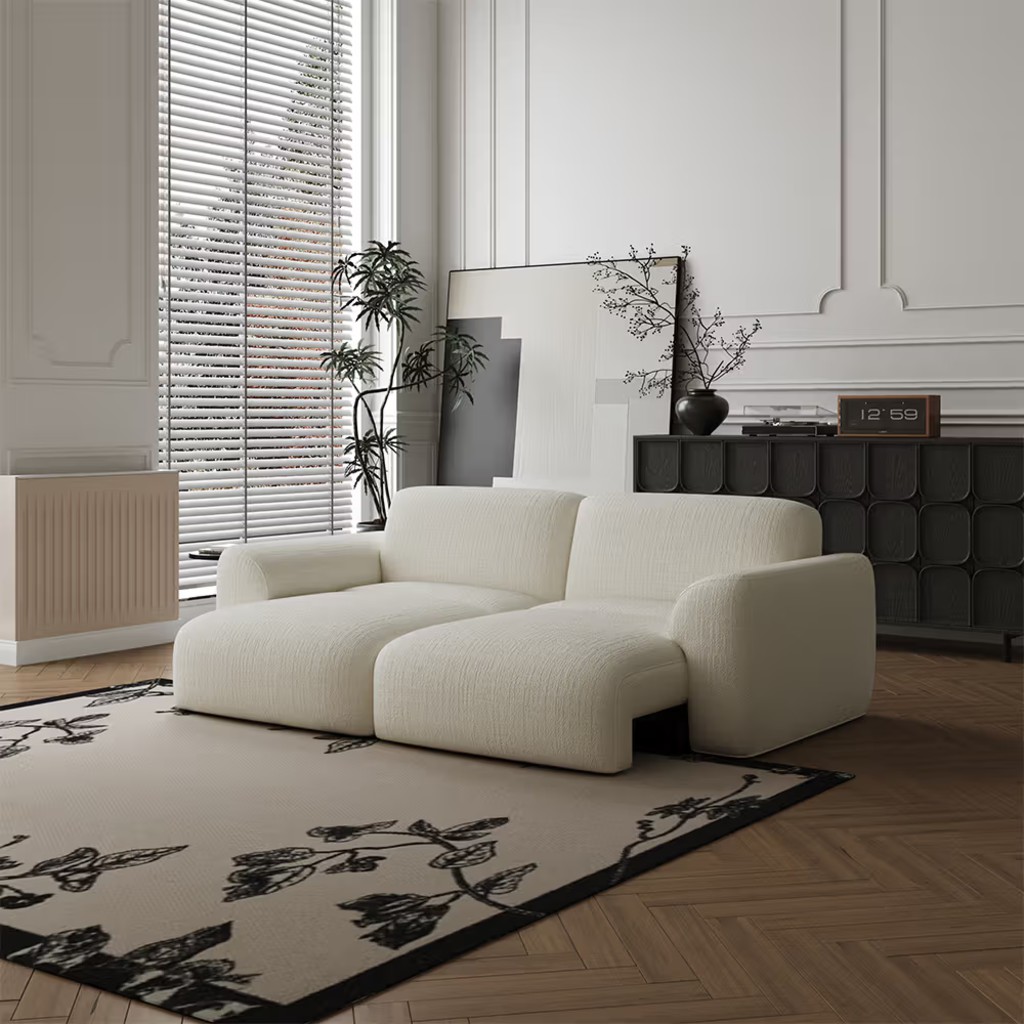
Aurora Power Sofa Bed
Soft chenille and adjustable depth bring flexible lounging to rooms with hard finishes.
👍 Best for: Softening brick and concrete interiors
✨ Adjustable 27–45.5-inch seat depth
✨ Textured chenille upholstery
✨ One-touch power extension
4. Layer Industrial Lighting for a Softer Mood
Industrial lighting often features black metal, exposed bulbs, or simple geometric forms. These fixtures reinforce the style, but a single overhead light can leave a living room feeling flat or harsh.
Use different light sources for different tasks. A pendant can define the main seating area, a floor lamp can support reading, and a table lamp can provide a softer glow in the evening. Choose warm-white bulbs when you want wood, leather, and brick to retain their warmth.
In a rental with ordinary white walls, a black floor lamp beside a sofa and a metal pendant over the main seating zone can establish an industrial look without permanent renovation. Keep the fixtures visually related through their finish or shape, but avoid making every light identical.
5. Build a Balanced Industrial Color Palette
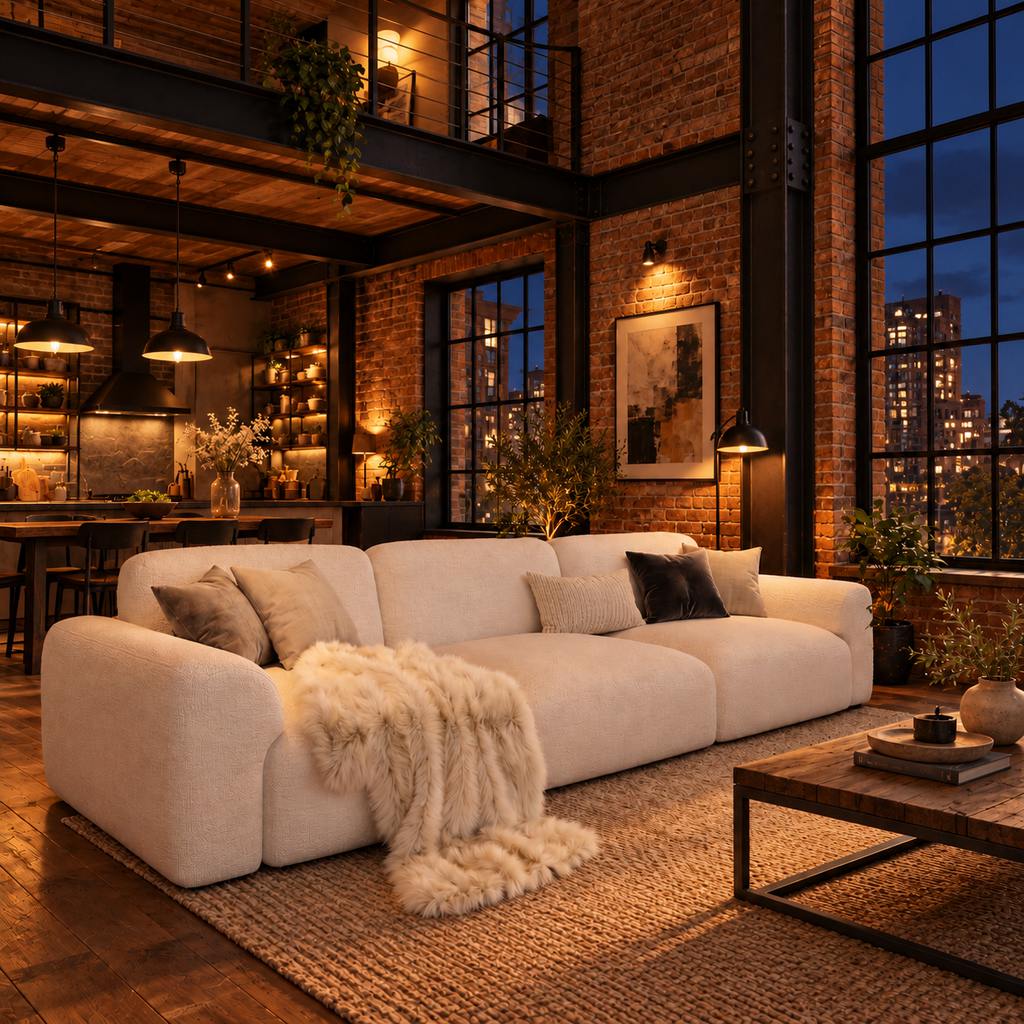
A successful industrial palette usually combines a neutral base with a few darker accents and one or two warmer tones. Charcoal, black, and concrete gray provide structure; walnut, cognac, rust, and warm white prevent the overall look from becoming monotonous.
Use colors according to their visual weight rather than distributing them equally. For example:
- Main surfaces: Warm white, soft gray, or existing brick.
- Large furniture: Brown leather, charcoal fabric, or a muted neutral.
- Structural accents: Black metal in lamps, table legs, or shelving.
- Warm details: Walnut wood, rust-colored cushions, or natural textiles.
If the room already has dark flooring and a black television, count those as part of the dark palette before adding more. This helps prevent the seating area from becoming a collection of heavy-looking furniture pieces.
6. Finish With Textiles, Greenery, and Personal Objects
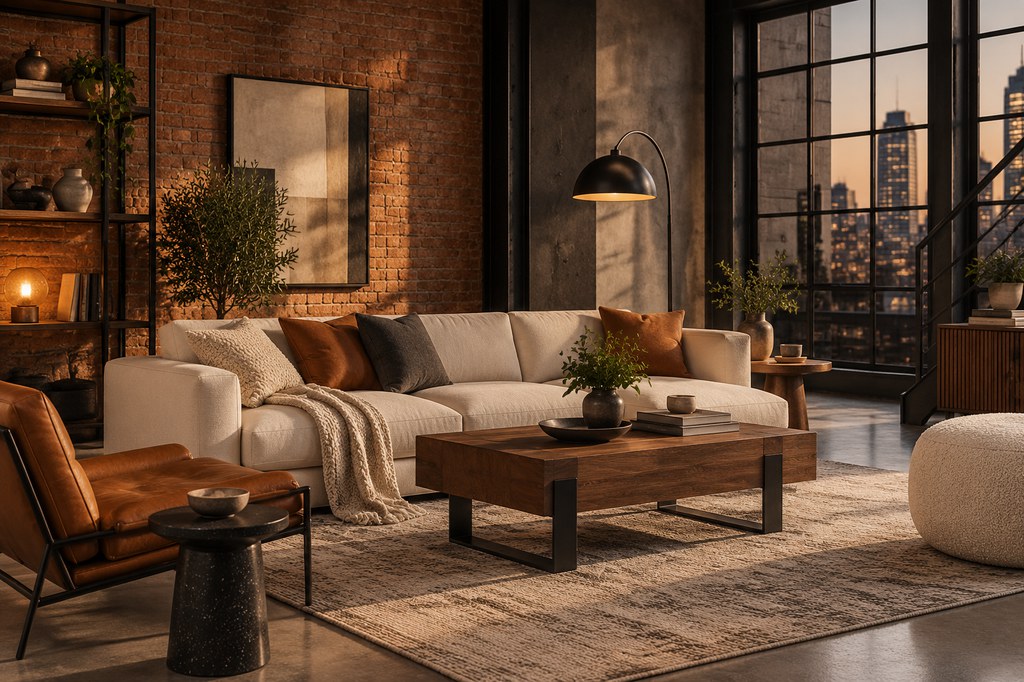
Rugs, curtains, cushions, plants, and artwork add the softer layers that make industrial interiors feel lived-in. Choose textiles with visible texture, such as woven wool, linen, or natural-fiber rugs, rather than relying entirely on smooth surfaces.
Keep the accessories selective. A large artwork, a plant, and a few books can provide personality without competing with the room’s brick or metal details. Repeating a wood tone or black finish in two or three places helps connect the different elements.
For a family living room, this balance is particularly useful: the room can retain its industrial character while still accommodating reading, relaxing, and everyday gatherings. The aim is not to remove the raw materials, but to surround them with details that make the space feel usable.
How Can You Adapt Industrial Style to Your Space?
Industrial design can work in apartments and conventional homes, even without exposed brick, high ceilings, or large windows. The best approach depends on the room’s natural light, floor color, and available space. If you’re working with a compact room, these tips on using dark furniture in a small room without making it feel heavy can help you balance visual weight and open floor space.
| Room condition | Recommended approach | What to avoid |
| No exposed brick | Combine wood, metal, and textured furniture | Adding too many artificial industrial finishes |
| Small living room | Use a lighter sofa and a few dark accents | Oversized furniture with bulky silhouettes |
| Limited natural light | Keep larger surfaces lighter and layer lamps | Making every major surface charcoal or black |
| Open-plan living area | Use a rug and sofa to define the seating zone | Furniture that looks too small for the space |
Before buying furniture, measure the room and account for doors, walkways, and the space needed to use each piece. Industrial style should support the way the room functions, not force you into a layout that looks good only in photographs.
What Should You Check Before Choosing Industrial Living Room Furniture?
Once you have a material palette, select furniture according to proportion, storage, and everyday use. A cohesive room does not require every item to look industrial. One textured sofa, a warm wood coffee table, and a well-chosen media console can establish the style without overwhelming the room.
Check these details before purchasing:
- Sofa: Compare seat depth, upholstery, silhouette, and the available floor space.
- Coffee table: Consider its shape, surface material, storage, and clearance around the sofa.
- Media console: Match the finish to the room and verify that its storage fits your devices.
- Rug: Make sure it defines the seating area rather than sitting only beneath the coffee table.
- Lighting: Confirm fixture placement, outlet access, and the light needed for reading or relaxing.
The media console deserves particular attention because the television and its equipment can create a large visual block. A wood-finish unit can connect the screen to the rest of the room while keeping cables and accessories organized.
The Delven Verse Mid-Century Modern TV Stand brings a walnut finish and enclosed storage to the media wall. Its three cabinets, removable interior shelves, and cable openings help organize electronics without adding more open shelving to an already textured room. The 70.86-inch width makes it important to measure the wall and television before choosing this configuration.
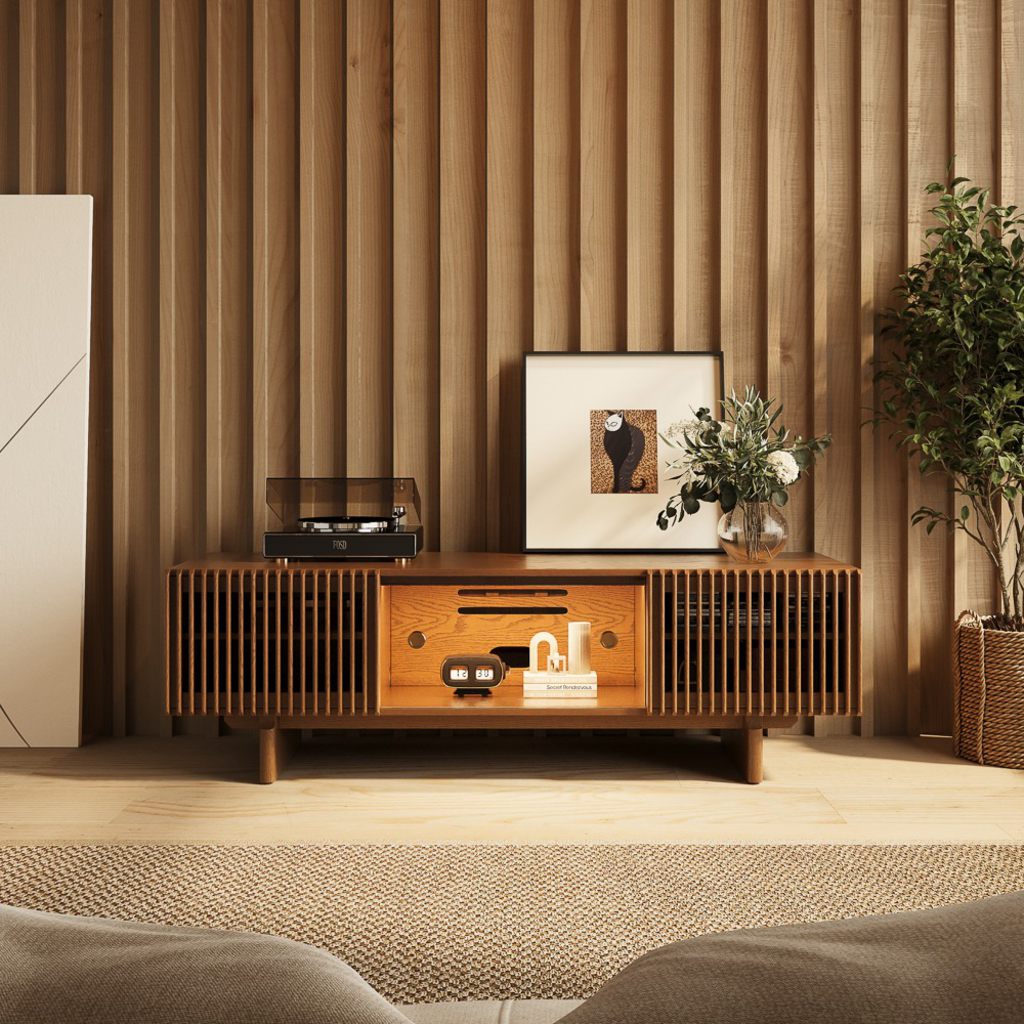
Delven Verse TV Stand
Walnut finish and concealed storage ground the media wall without overpowering textures.
👍 Best for: Organized media walls with warm wood
✨ Three storage cabinets
✨ Removable interior shelves
✨ Rear cable openings
Conclusion
The strongest industrial living room ideas combine raw materials with furniture and finishes that make the space comfortable for everyday use. Start with one focal surface, then balance it with warm wood, considered metal accents, suitable seating, and layered lighting. Adjust the palette to your room’s natural light and available floor space rather than copying a loft interior exactly. With a clear material plan and furniture that fits your routine, industrial style can feel distinctive without becoming visually heavy.
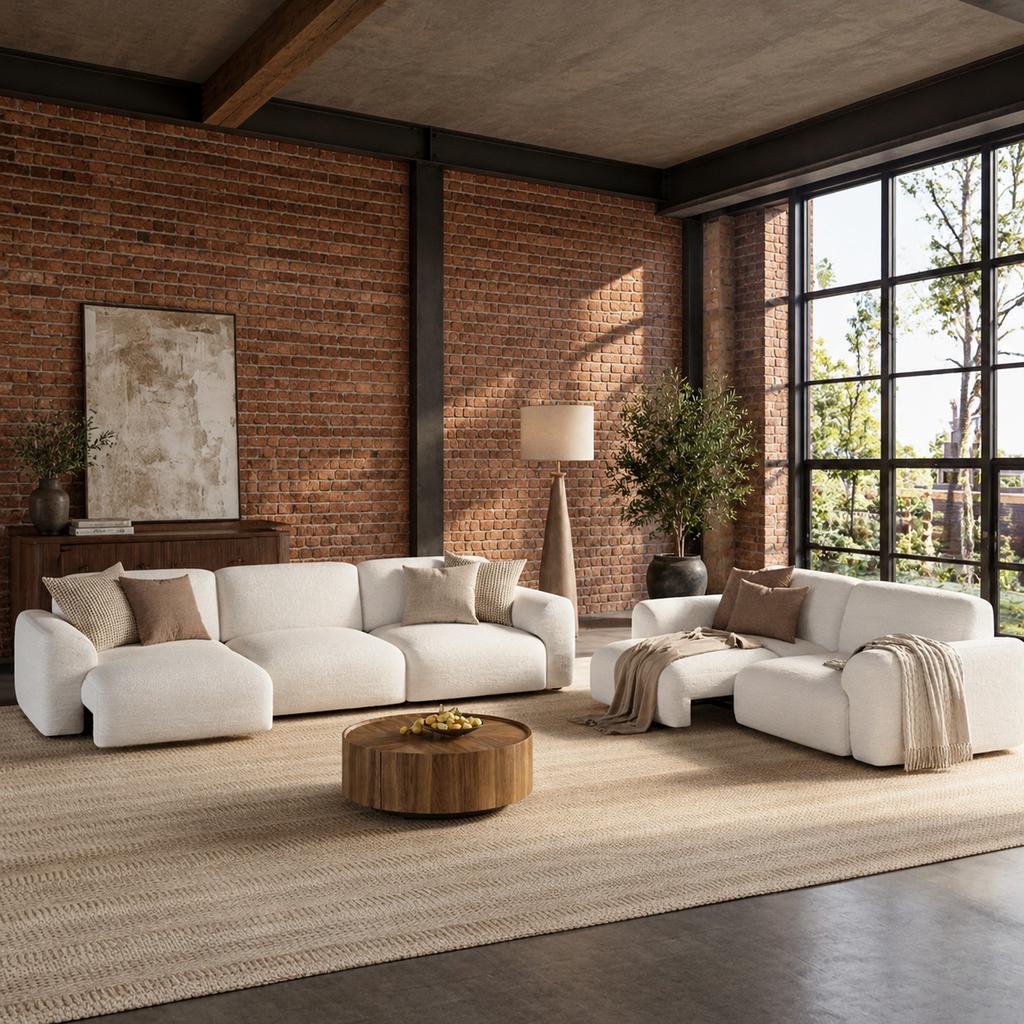
Find the Right Living Room Furniture
Explore seating, coffee tables, and media consoles for different room sizes, layouts, and everyday needs.
Q&A
How many metal finishes should an industrial living room use?
Start with one dominant finish, such as matte black, and introduce a second metal only when it serves a clear purpose. Two coordinated finishes are often easier to manage than several competing metallic tones. Repeat the primary finish in lamps, table legs, or frames to make the room feel intentional.
Which wood tone works best with red brick or gray concrete?
Medium or dark walnut can complement red brick by adding depth without repeating its red undertones. With gray concrete, lighter oak or warm walnut can create a clearer contrast. Consider the floor color and existing wood furniture before adding another finish, so the room does not become visually fragmented.
Can industrial style work in a rental without renovations?
Yes. Freestanding metal shelving, wood furniture, plug-in lamps, framed artwork, and removable wall treatments can introduce industrial character without changing the building. Renters should prioritize pieces that can move with them and avoid permanent changes to brickwork, walls, electrical fixtures, or structural details without permission.
How should I choose a rug for an industrial seating area?
Choose a rug large enough to connect the main seating pieces visually. In many arrangements, placing the front legs of the sofa and adjacent chairs on the rug creates a more unified zone. A textured neutral rug can soften concrete or dark wood floors without competing with brick or patterned artwork.
How can I mix vintage and modern furniture without losing the industrial look?
Use one or two vintage-inspired pieces as accents and keep the larger furniture shapes relatively consistent. For example, pair a contemporary sofa with a weathered wood side table or a metal floor lamp. Repeating a shared finish, color, or material helps the combination look deliberate rather than mismatched.


[…] industrial details with softer materials. Many industrial loft living room ideas feature exposed brick, concrete, and metal. Pairing those surfaces with chenille upholstery, wood […]