 By Kelvin
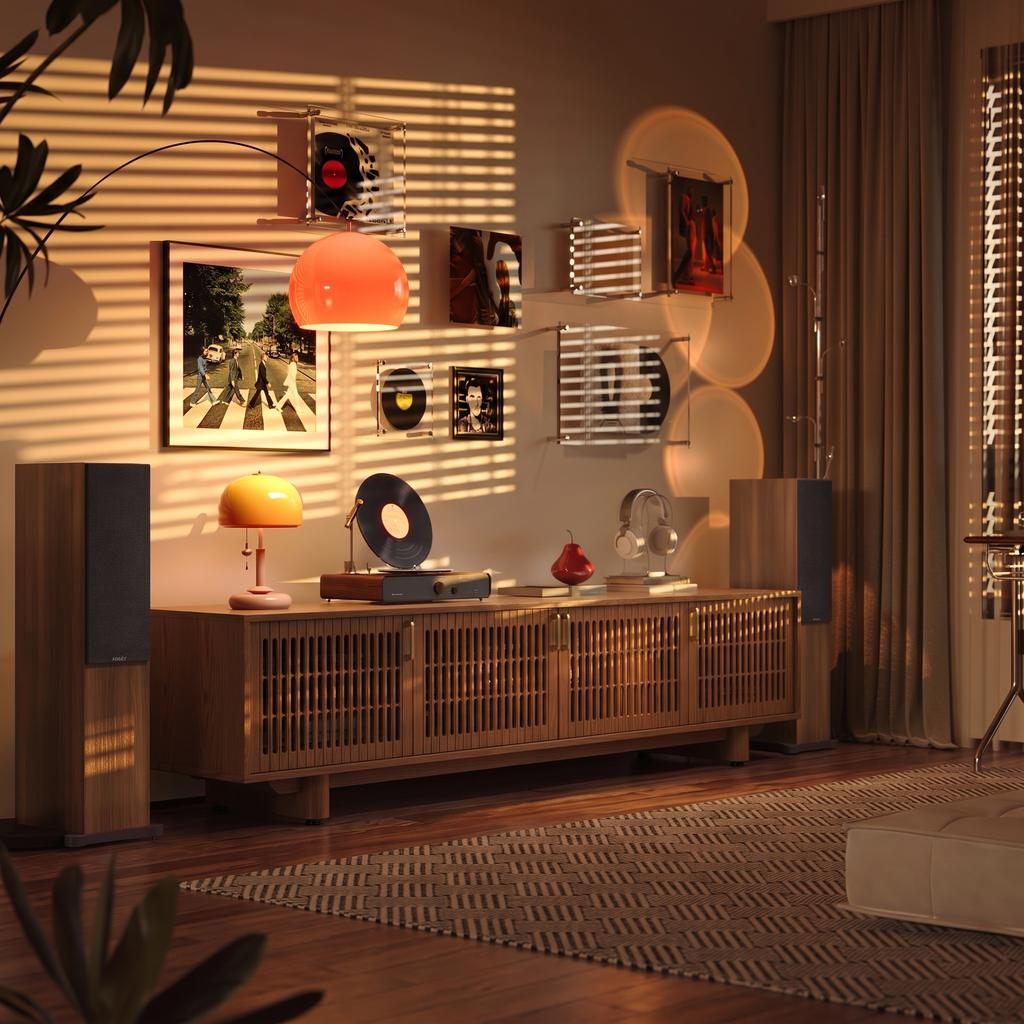
A home music room should fit the way you actually enjoy music, whether that means practicing an instrument, playing vinyl records, or relaxing with your favorite albums. These music room ideas show how to arrange seating, equipment, storage, and decor without sacrificing everyday living space. You don’t need a dedicated studio or an oversized room to make it work. From a comfortable listening corner to a shared music lounge, you’ll find practical layouts for different spaces, along with furniture tips to help you create a room that’s enjoyable to use.
Table of Contents
How to Plan a Music Room Around Your Main Activity
Before choosing furniture or decor, decide what you’ll do most often in the room. The right setup depends on whether you’re playing music, listening to it, or doing both.
- Playing music: Prioritize instrument access, adequate lighting, and enough open floor space to move comfortably while practicing.
- Listening to music: Focus on a comfortable seat, speaker placement, and convenient access to audio equipment.
- Doing both: Separate the playing and listening areas so instruments and furniture don’t interfere with each other.
If you’re exploring home music room ideas for a shared living space, start with the activity you do daily. Supporting an occasional second use is usually easier than constantly rearranging furniture around competing activities.
10 Music Room Ideas for Different Spaces and Styles
The most useful music room design ideas balance how a space looks with how you use it. A dedicated piano room needs different furniture from a vinyl listening lounge, and a small apartment corner calls for a different approach than a spare bedroom.
These ten setups cover different activities, room sizes, and decorating styles, with practical ways to arrange furniture and equipment.
1. Create a Cozy Listening Nook With a Recliner
For solo listening, start with one supportive chair rather than filling the corner with extra furniture. Place a recliner near a small side table for your phone, headphones, or drink, with speakers positioned for comfortable listening.
A swivel recliner is especially useful when the same corner serves multiple purposes.
The POVISON Oliver Swivel Power Barrel Recliner suits a cozy listening room where you alternate between enjoying music, reading, and relaxing. Its 270-degree swivel lets you change direction without moving the chair, while power reclining adjusts your sitting position. The soft chenille upholstery adds comfort for longer listening sessions. It’s a practical choice for a dedicated listening seat within a shared room.
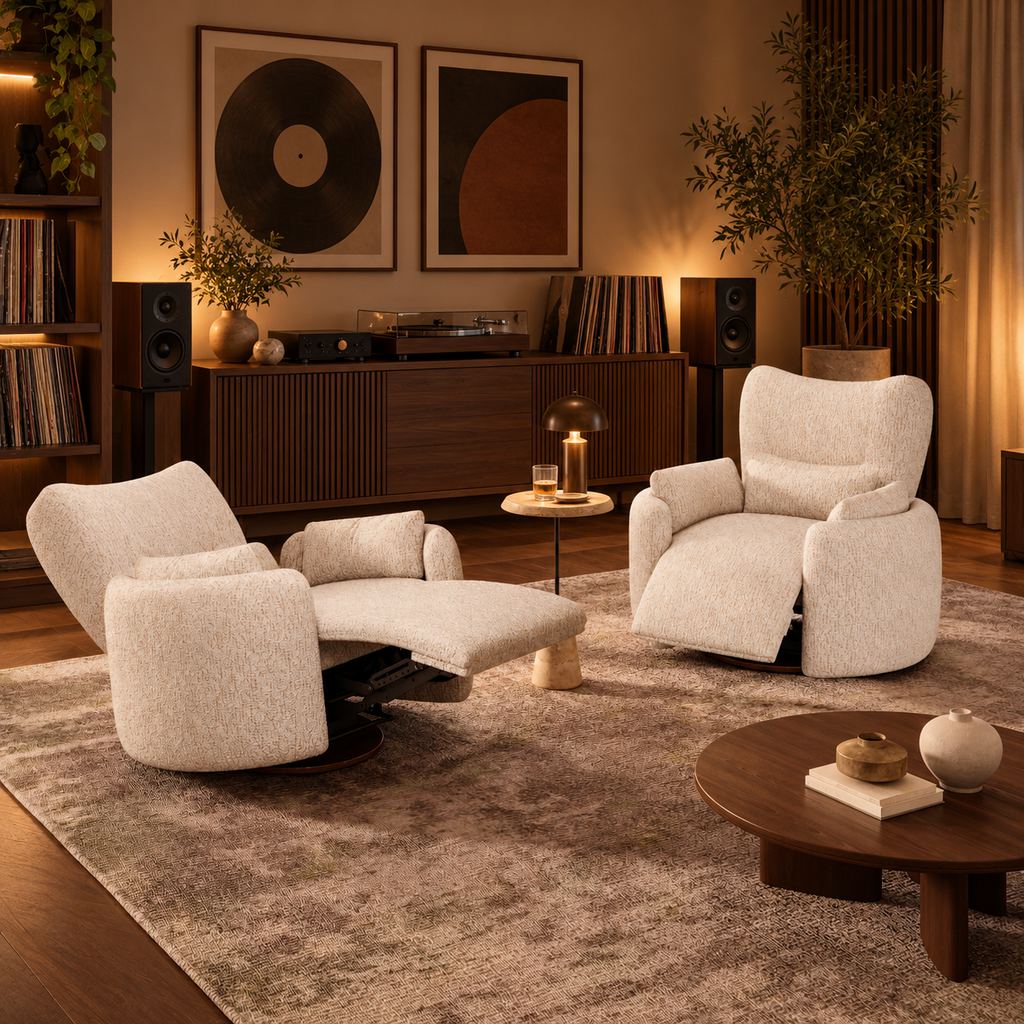
Oliver Swivel Power Barrel Recliner
A lounge-worthy seat for unwinding between records and everyday activities.
👍 Best for: Solo music listening corners
✨ 270° swivel for flexible positioning
✨ Ready to use without assembly
✨ 90°–145° adjustable power recline
2. Design a Sofa Lounge for Shared Listening
For couples or friends who regularly enjoy music together, arrange a sofa opposite the main audio setup. An accent chair angled toward the sofa creates a relaxed conversation area without forcing everyone into a straight row.
This works particularly well in a living room without a television, where music becomes the main activity.
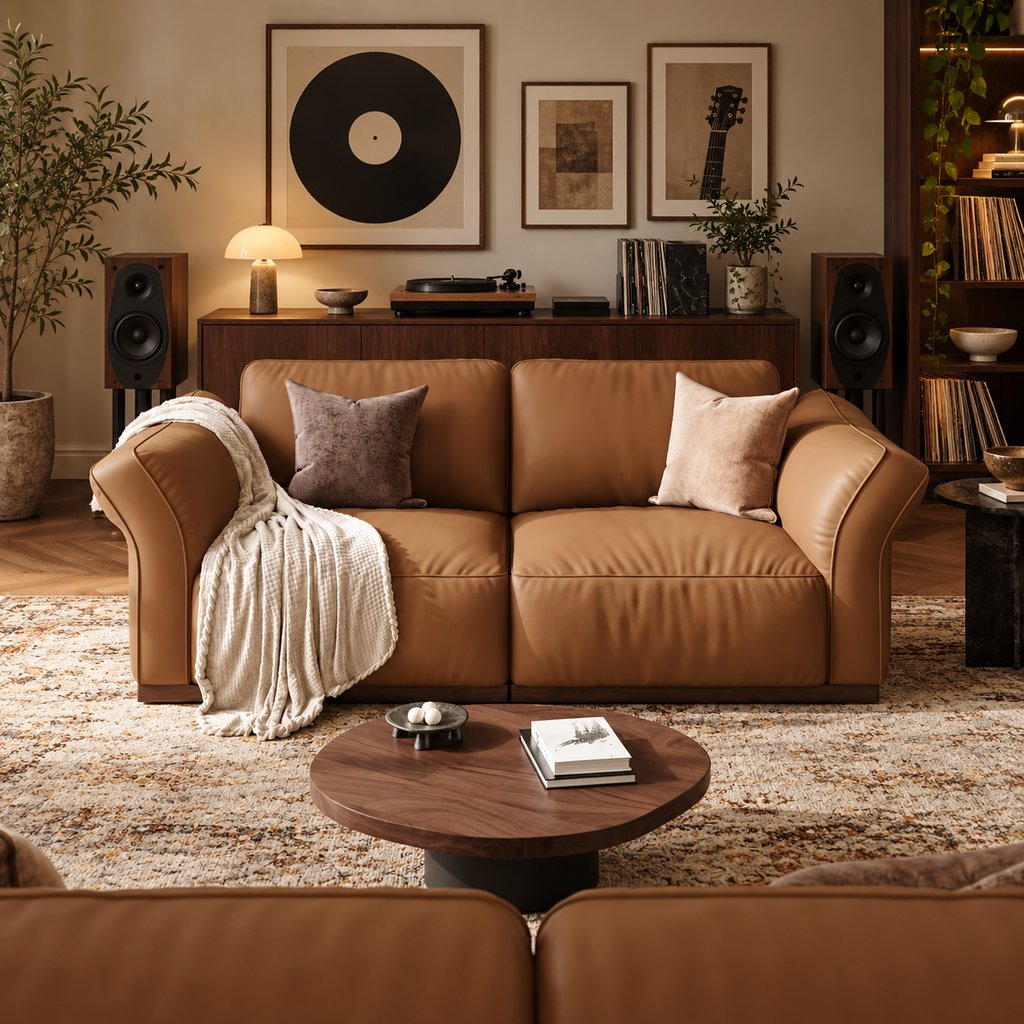
The POVISON Cronus Genuine Leather Modular Sofa works well for shared music lounges that need comfortable seating without a conventional theater-style arrangement. Its modular construction allows different seating configurations, while top-grain leather and a solid wood frame complement a warm, vintage-inspired room. The modular design makes it worth considering when planning a music-focused seating area that also hosts everyday conversation.
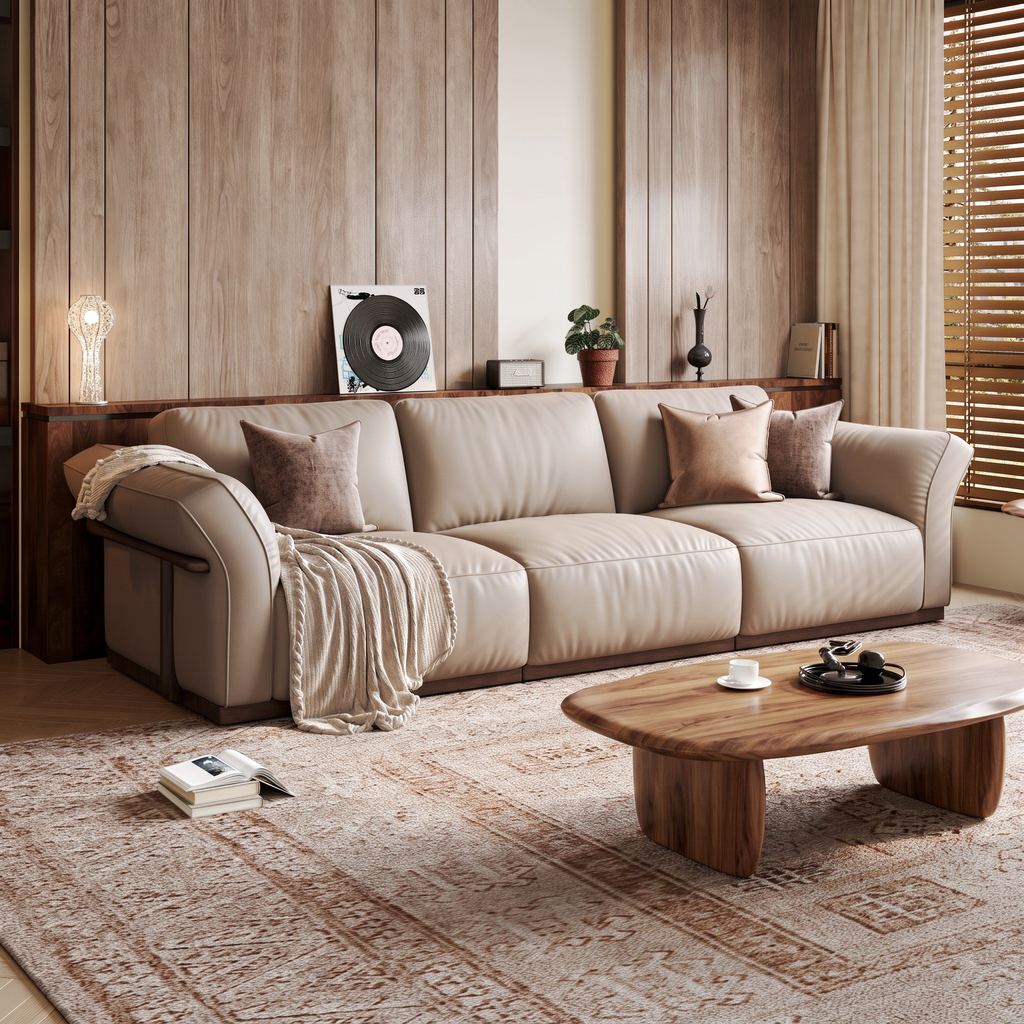
Cronus Genuine Leather Modular Sofa
Thoughtful group seating for vinyl nights and conversations with friends.
👍 Best for: Shared music lounges and conversation
✨ Top-grain leather upholstery
✨ Solid wood frame construction
✨ Modular seating configuration
3. Build a Vinyl Listening Space
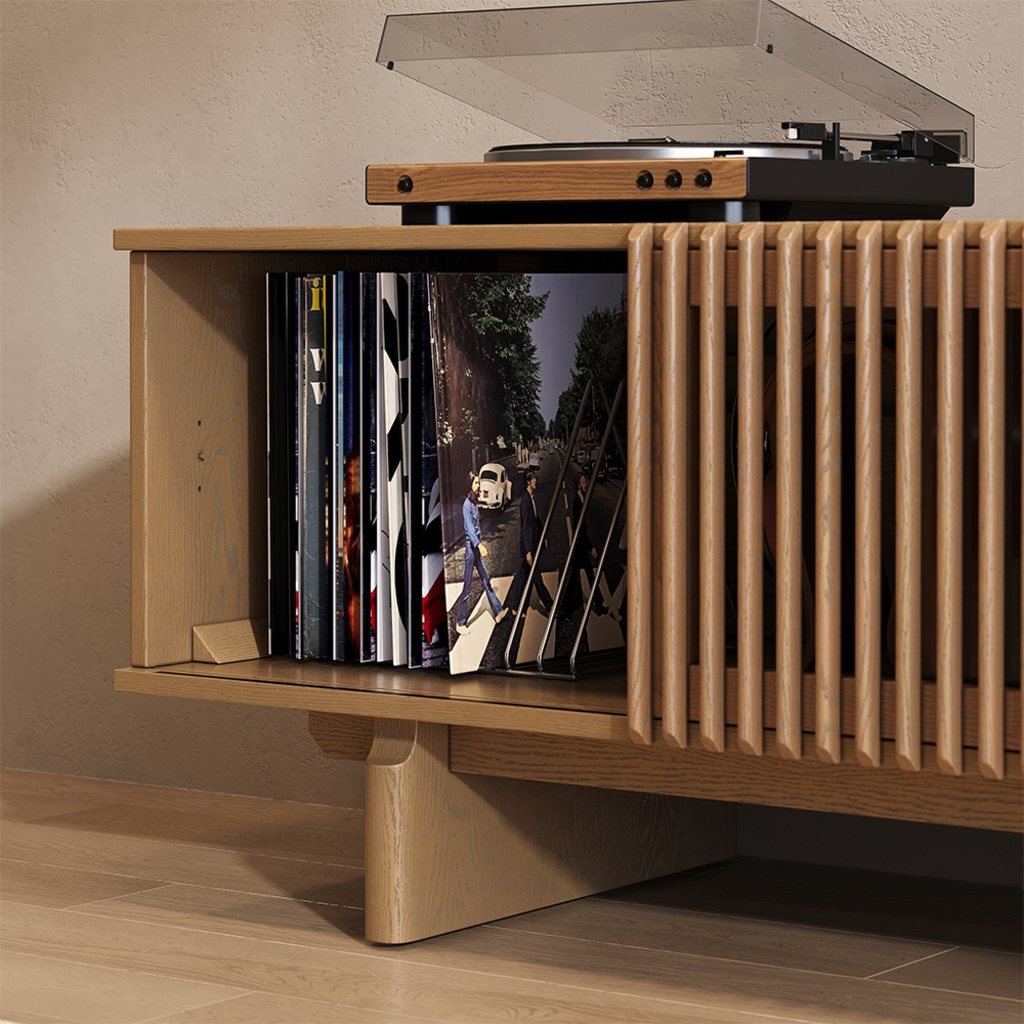
Among vinyl listening room ideas, one of the simplest is to organize the space around your turntable and record collection.
Place the turntable on a stable, accessible cabinet and keep frequently played records upright nearby. A record player stand with storage can combine these functions without adding separate shelving.
Make sure the turntable’s dust cover opens fully and cables remain accessible. Position a comfortable chair where you can enjoy an album without blocking access to the records.
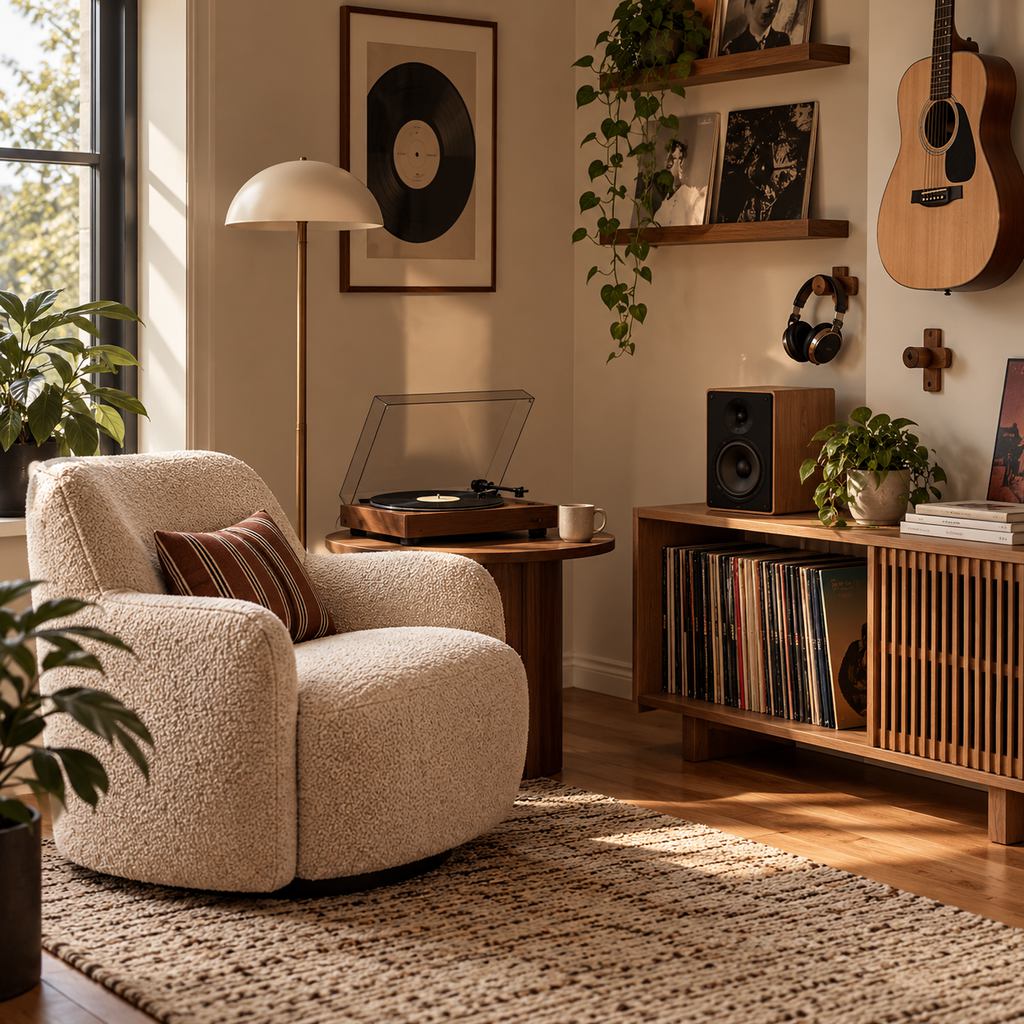
4. Turn an Unused Corner Into a Small Music Room
Some of the most practical small music room ideas begin with an underused corner rather than an entire spare room.
Choose a compact accent chair, a narrow cabinet, and wall-mounted storage for headphones or smaller instruments. A floor lamp can distinguish the area from the rest of the room.
Avoid oversized furniture that blocks doors or frequently used walkways. In a small apartment, keeping the setup visually simple makes it easier to maintain the room’s original function.
5. Give Your Piano or Keyboard a Dedicated Zone
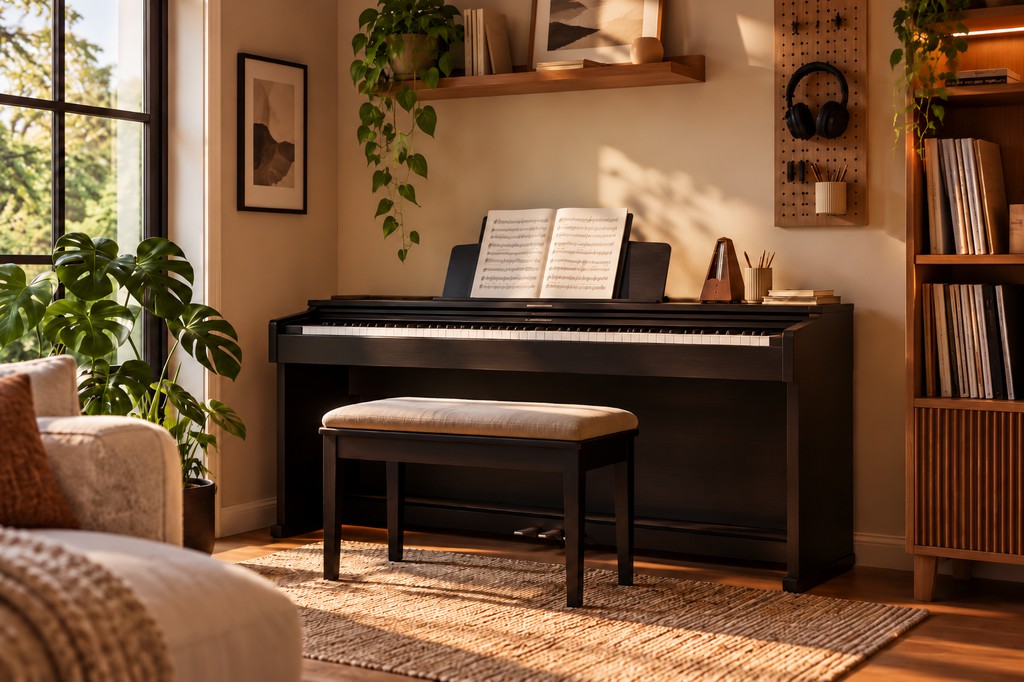
A piano or keyboard needs space for both the instrument and the person playing it.
Position a digital piano near an outlet, preferably away from busy pathways. Add a height-appropriate piano bench, focused lighting, and a nearby shelf for sheet music.
If family members often listen to practice sessions, place an accent chair to one side rather than directly behind the player. This allows someone to enjoy the music without interfering with the pianist’s movement.
6. Turn Musical Instruments Into Wall Decor
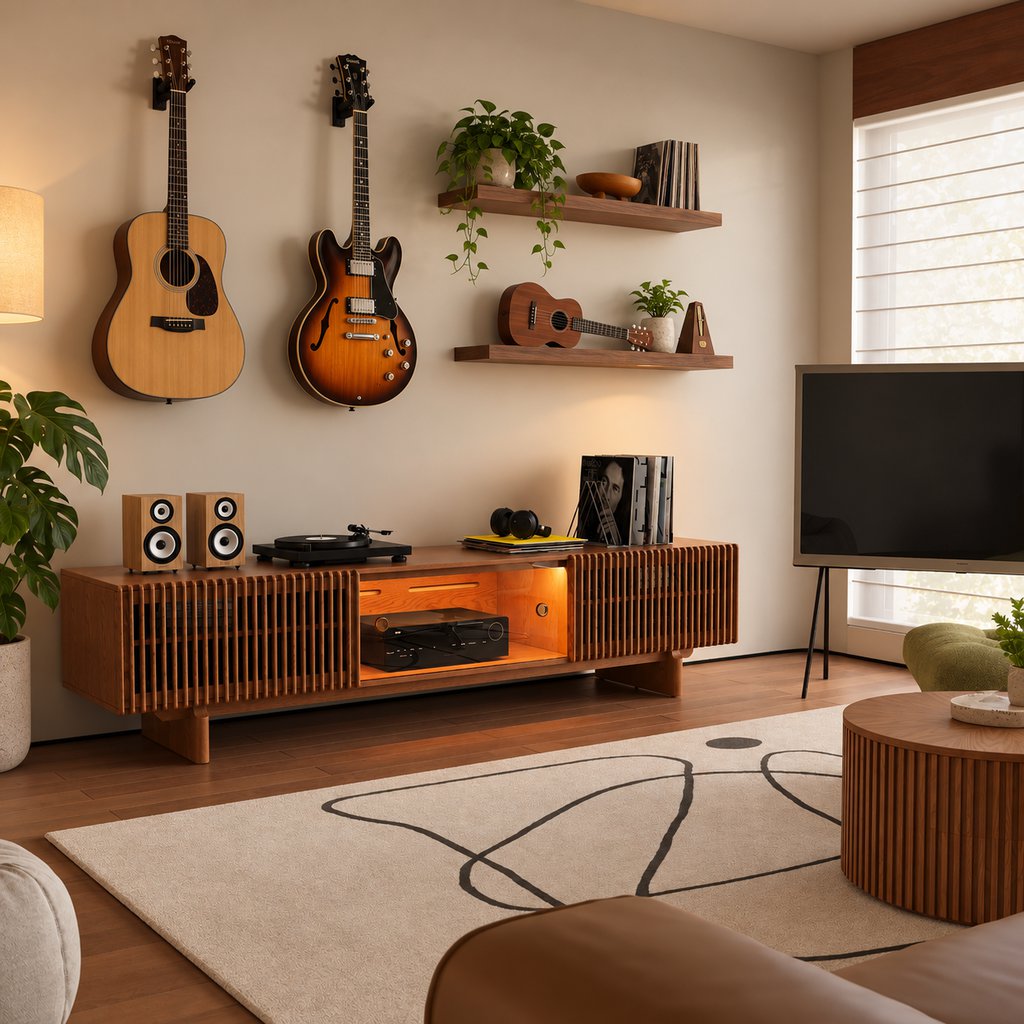
Musical instruments can provide much of the room’s visual character without requiring additional decorative accessories.
Mount guitars on a suitable wall using instrument-specific hangers, or display smaller instruments on secure shelves. Grouping related pieces creates a more organized appearance than spreading them across several walls.
Keep frequently used instruments within comfortable reach. Reserve higher display positions for items you rarely handle, and make sure all mounting hardware is suitable for the wall and instrument weight.
7. Add Warm Lighting, Rugs, and Soft Textures
Music room decor ideas don’t need elaborate themes to feel inviting.
Use adjustable task lighting near instruments and warmer ambient lighting around listening chairs. A textured rug, curtains, and upholstered seating can make the space feel more comfortable while reducing some hard-surface sound reflections.
For a modern look, combine warm wood finishes with neutral fabrics and a few music-related accessories. Keep equipment controls visible and avoid covering speakers with decorative objects.
8. Try a Mid-Century Music Room Style
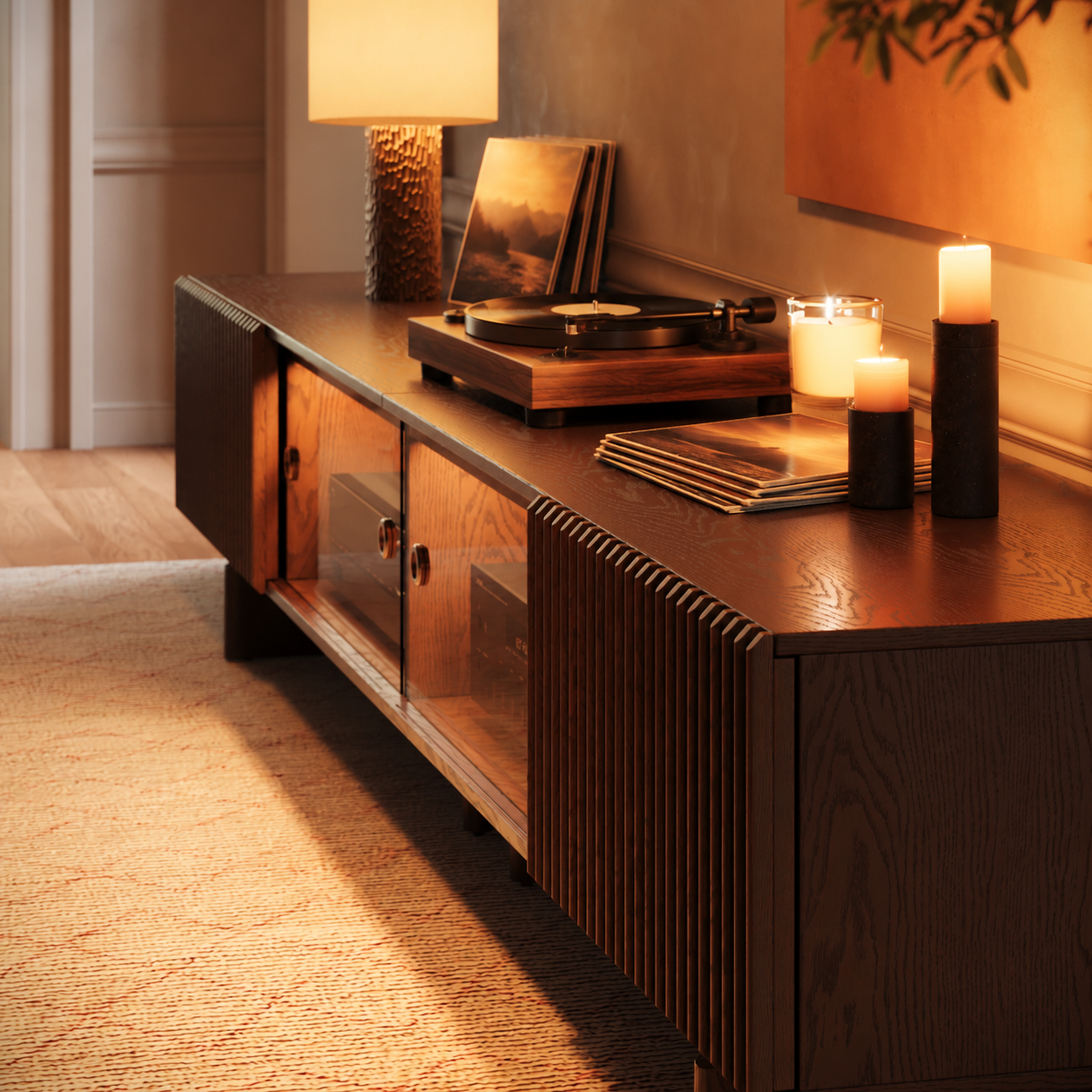
Mid-century furniture pairs naturally with turntables, record collections, and vintage-inspired audio equipment.
Start with a low wooden media console, a leather accent chair, and a simple floor lamp. Walnut tones, warm brown upholstery, and restrained artwork create a cohesive look without requiring matching furniture sets.
These music room decor choices also work in an ordinary living room, particularly when you want the audio equipment to feel like part of the furniture arrangement rather than a separate installation.
A walnut media console can anchor a mid-century music room while keeping audio equipment organized. The POVISON Delven Verse Mid-Century Modern TV Stand combines slatted doors, adjustable interior shelves, and cable openings for a cleaner setup. Its warm wood finish pairs naturally with leather seating and vintage-inspired decor, making it a practical foundation for a vinyl listening area.
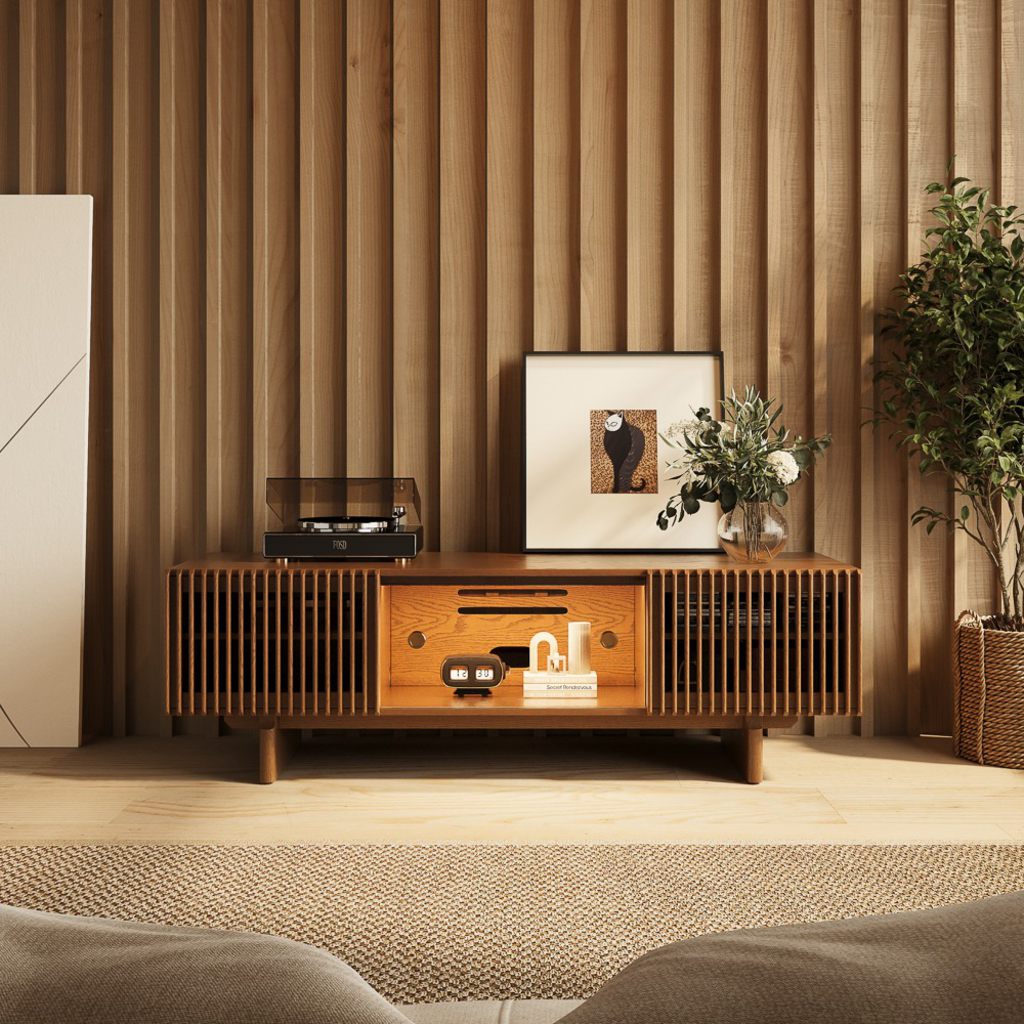
Delven Verse Mid-Century Modern TV Stand
Walnut styling and concealed storage keep audio gear organized in a vintage-inspired room.
👍 Best for: Mid-century vinyl listening room setups
✨ Sound- and IR-friendly slatted doors
✨ Adjustable shelves for audio components
✨ Remote-controlled gear display lighting
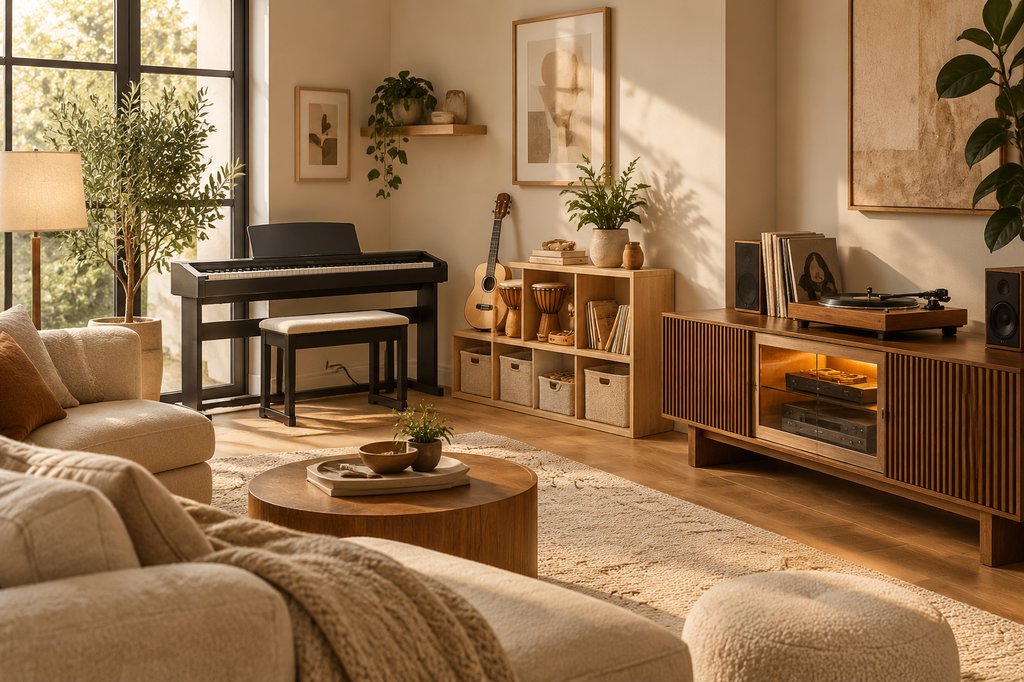
9. Make a Family-Friendly Music Corner
A shared family music area needs accessible storage and furniture that can handle different activities.
Use lower shelves for children’s instruments, closed cabinets for small accessories, and durable seating for listening together. Keep cables secured and heavier equipment away from areas where children play.
For example, a family might use the space for keyboard practice after school and play records together on weekends. A flexible layout lets both activities happen without moving large pieces of furniture.
10. Combine a Music Room With a Reading or Home Office Space
Not every household can dedicate a room entirely to music. A home office or reading room can accommodate audio equipment with a little planning.
Keep the desk and instruments along separate walls, and use comfortable seating for breaks. If the room occasionally hosts overnight guests, furniture with a convertible seating surface can add another function.
The POVISON Aurora Power Sofa Bed suits a multifunctional music room that also serves as a guest space. Its remote-controlled seat extension adjusts the lounging depth without rearranging separate cushions or bringing in another bed. The chenille upholstery keeps it suitable for everyday seating. Consider it when the room needs both a regular listening area and occasional sleeping space, provided there’s enough clearance for extension.
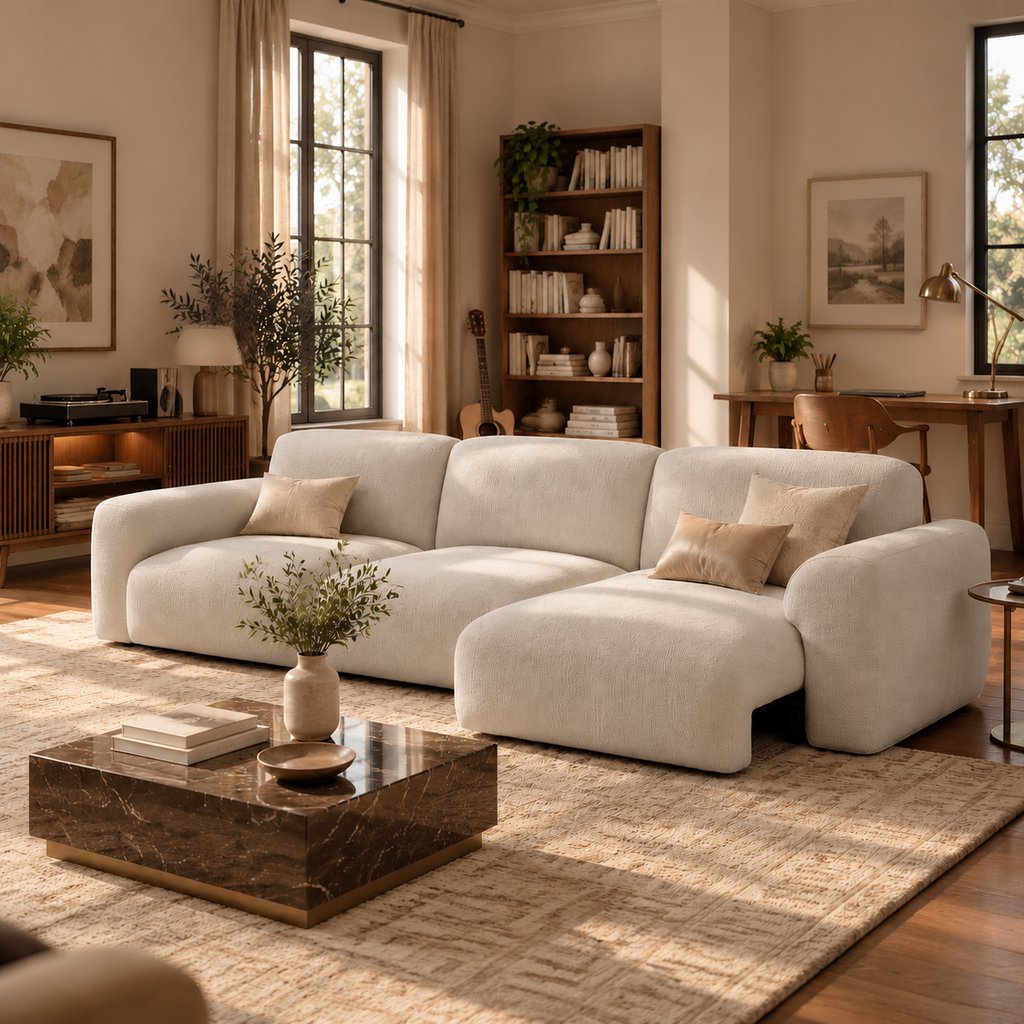
Aurora Power Sofa Bed
An adaptable lounge area for music sessions, work breaks, and guests.
👍 Best for: Music rooms hosting overnight guests
✨ Remote-controlled seat extension
✨ Adjustable 27″–45.5″ seat depth
✨ Soft textured chenille upholstery
How to Arrange Music Room Seating and Speakers
A comfortable listening room design depends on where people sit in relation to the speakers, not just how the furniture looks.
For a traditional two-speaker stereo setup, start by arranging the speakers and primary listening position in an approximate equilateral triangle. This layout helps create a balanced stereo image, allowing you to hear a more consistent sense of space and direction between the speakers.
In a shared room, place the main chair or sofa near that listening position, then arrange additional seating around the available space.
Keep these layout principles in mind:
- Solo listening: Give the primary chair a clear relationship to both speakers.
- Shared listening: Arrange additional seats for conversation without blocking speaker output.
- Adjustable seating: Leave sufficient clearance for reclining, swiveling, and footrest movement.
- Everyday access: Keep routes to doors, equipment controls, and storage unobstructed.
For stereo systems, follow the speaker manufacturer’s placement recommendations and adjust the arrangement after listening in the actual room.
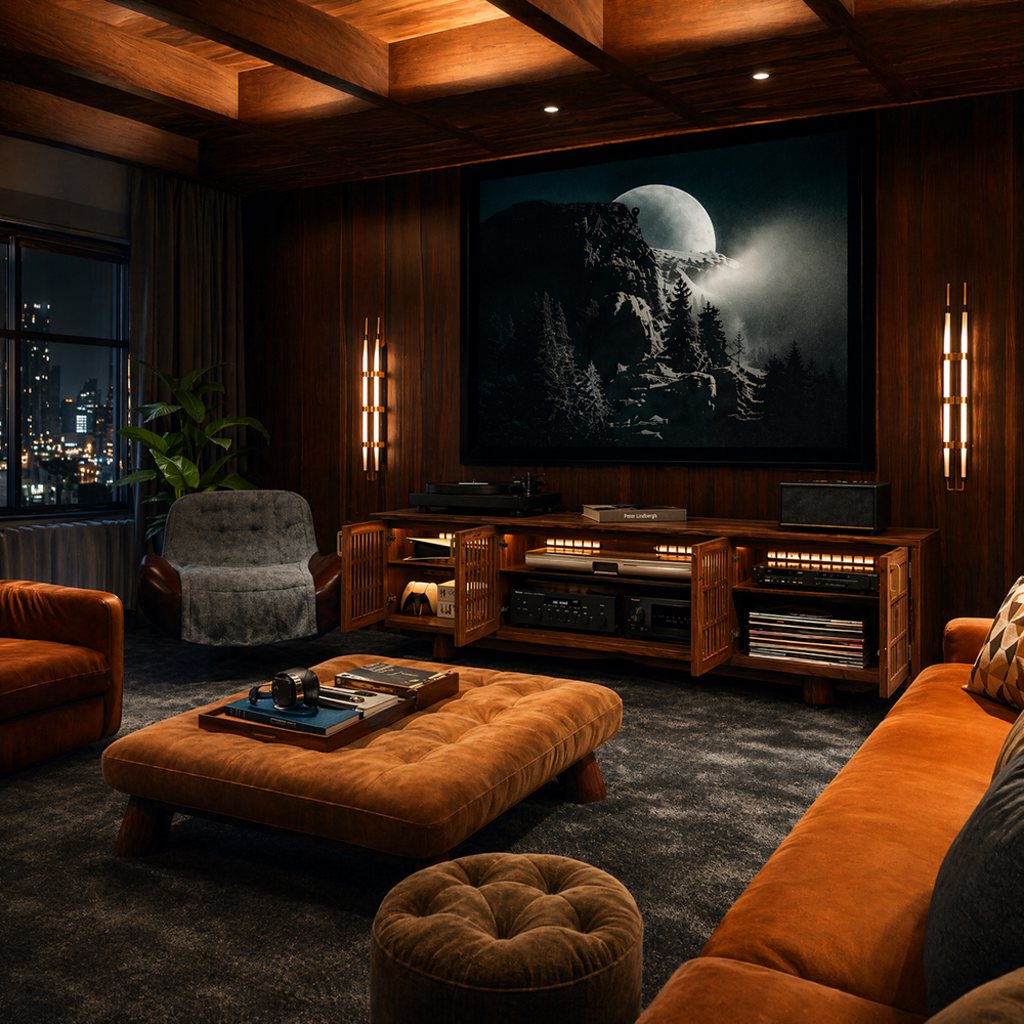
Music Room Furniture Checklist Before You Buy
Furniture for a music room should match the available space and the activities you plan to do there. A chair that looks compact when upright may occupy considerably more room when fully reclined.
Use this comparison to narrow down your options:
| Furniture | Best For | What to Check |
| Accent Chair | Small listening corners | Seat comfort, overall width, back support |
| Recliner | Relaxed solo listening | Full extension, swivel clearance, power access |
| Sofa / Loveseat | Shared music lounges | Seating capacity, depth, speaker orientation |
| Media Console | Turntables and audio equipment | Stability, ventilation, accessible storage |
| Sofa Bed | Multipurpose music rooms | Full extension, guest use, remaining floor space |
Before ordering larger seating, take accurate measurements for a new sofa, including doorways and the delivery route.
For a frequently used walkway, roughly 30–36 inches of clear space is a useful planning target where the room allows. Use painter’s tape to mark furniture footprints, including their fully extended positions.
Don’t forget equipment access: you should be able to change records, reach controls, and retrieve instruments without moving heavy seating.
Conclusion
The most useful music room ideas start with how you want to spend time in the space. A listening corner benefits from a comfortable chair and thoughtful speaker placement, while a shared lounge needs seating that accommodates both music and conversation. Instrument storage, lighting, and clear pathways make the room easier to use every day. Whether you’re working with a dedicated room or a small corner, choose furniture that fits your activities and available space. The result should feel welcoming when you’re listening, playing, or simply taking a break.
Make Room for Music and Everyday Living
Explore comfortable, versatile furniture for listening, relaxing, and enjoying every moment at home.
FAQs
Can a music room double as a guest room?
Yes. Keep instruments and audio equipment in designated areas, protect loose cables, and ensure guests can access the sleeping space without moving heavy furniture. For occasional hosting, power sofa beds that support flexible everyday living can provide seating and a guest sleeping surface within the same room.
Can I put speakers on the same cabinet as a record player?
It’s generally better to separate them because speaker vibrations can interfere with turntable playback. If space requires a shared cabinet, use a sturdy surface, consider appropriate vibration isolation, and check for audible feedback. Avoid placing large speakers directly beside the turntable, especially when playing records at higher volumes.
Will rugs and upholstered furniture soundproof a music room?
No. Rugs, curtains, and upholstered furniture can reduce some sound reflections inside a room, but they won’t prevent loud music from reaching neighboring spaces. Soundproofing requires controlling sound transmission through the building. If noise complaints are a concern, assess the room’s construction and listening volume before investing in acoustic treatments.
Is it safe to hang a guitar above a sofa or listening chair?
It depends on the wall, mounting hardware, and instrument weight. Use a guitar-specific hanger installed according to its instructions, with appropriate structural support. Avoid positioning valuable or frequently handled instruments directly over someone’s head. A nearby side wall usually makes instruments easier to access and reduces accidental contact.
How can I protect instruments from sunlight and humidity?
Keep instruments away from direct sunlight, heating vents, and areas with rapid temperature changes. Use a hygrometer to monitor indoor humidity and follow the instrument manufacturer’s recommended conditions. Wooden instruments are especially sensitive to environmental changes, so protective cases may be useful when they’re not being played.


[…] open audio rack makes more sense when equipment access takes priority. It is often better suited to a dedicated listening room, frequently changed components, or specialist gear that benefits from fewer physical barriers […]