 By Stephanie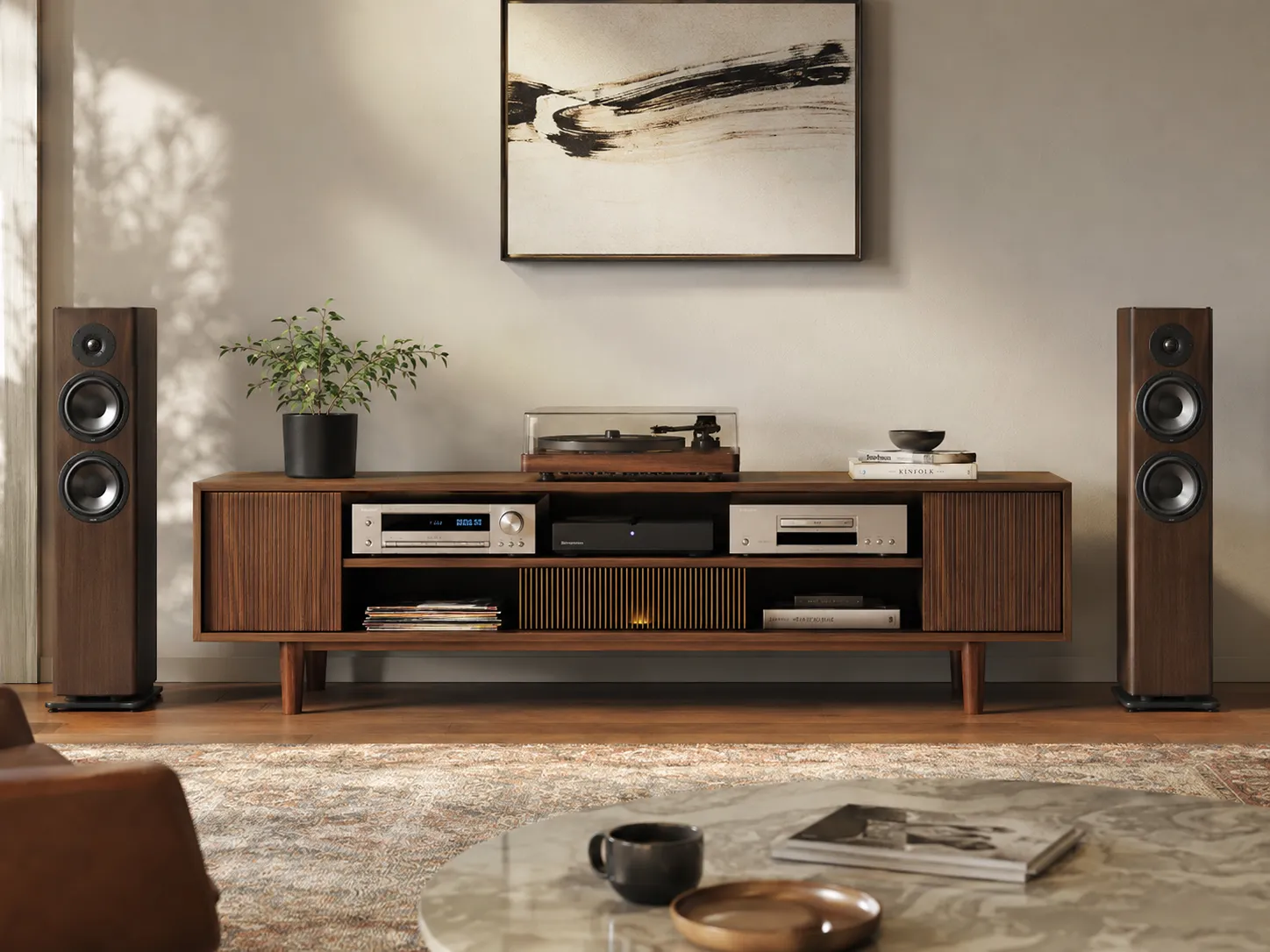
If you are shopping for a stereo console cabinet, start with the audio equipment you already own—not the furniture style. A cabinet that looks spacious can still fail when an amplifier, streamer, CD player, cables, and daily access all compete for the same space. This guide focuses on modern component-based stereo systems rather than vintage all-in-one consoles. You will learn how to match your equipment list to cabinet requirements and create a layout that works naturally in a living room.
Table of Contents
What Does Your Stereo Cabinet Need to Hold?
Before comparing cabinets, list every component that will stay connected. A stereo cabinet for components works better when you organize the system by what each device does, not simply by how much shelf space is available. That makes it easier to see which gear needs frequent access, which gear produces heat, and where most connections will converge.
| System Role | Typical Components | What the Cabinet Needs to Solve |
| Sources | Streamer, CD player, turntable | Easy access and practical placement |
| Conversion & control | DAC, preamp | Compact shelf space and clean connections |
| Amplification | Integrated amp, stereo receiver | Space, airflow, and connection access |
| Power & accessories | Power equipment, switches, small accessories | Organized routing without crowding active gear |
A living-room system may combine all four roles even when it contains only a few boxes. Treating them as separate functions keeps a large amplifier from dictating every shelf and prevents smaller components from being placed wherever leftover space happens to remain.
How Do You Match a Cabinet to Your Stereo System?
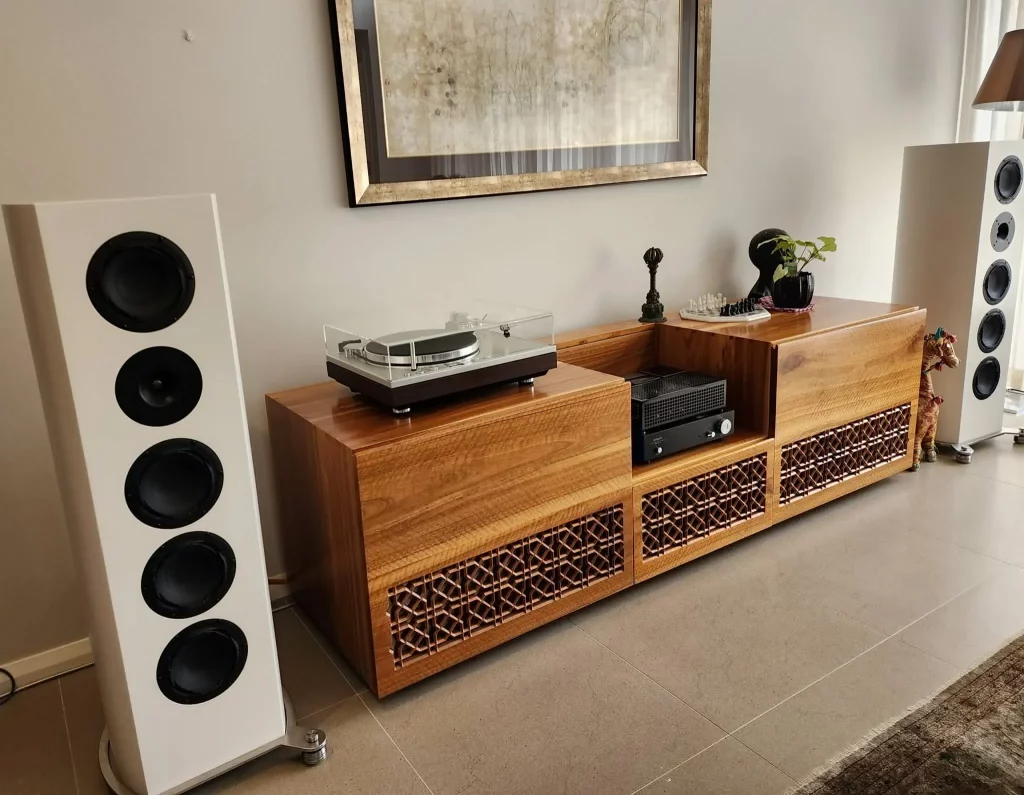
A complete stereo system usually has more than one limiting component. Start with the deepest piece to establish minimum usable depth, then check the hottest component for ventilation and the most-connected component for cable access. Finally, identify the source you handle most often. A CD player or headphone amp may deserve easier front access than a streamer controlled entirely from a phone.
When a stereo console cabinet holds several components, the goal is not to give every device the same amount of space. A tall integrated amplifier can use the bay that offers the right clearance, while slimmer sources can occupy smaller zones without being stacked simply to save room.
If your setup changes over time, a flexible interior layout can make future upgrades easier. The POVISON Delven Verse 71″ Media Console combines an 18.3-inch interior depth with two adjustable, removable shelves, letting one bay open up for a taller amplifier while neighboring sections remain useful for slimmer source components. The benefit is not only the added depth, but the ability to adjust the interior as your stereo system grows or changes.
If a full-size receiver sets the depth limit, the same media console clearance checks for an AV receiver apply to rear plugs, cable bends, and manufacturer-required operating space.
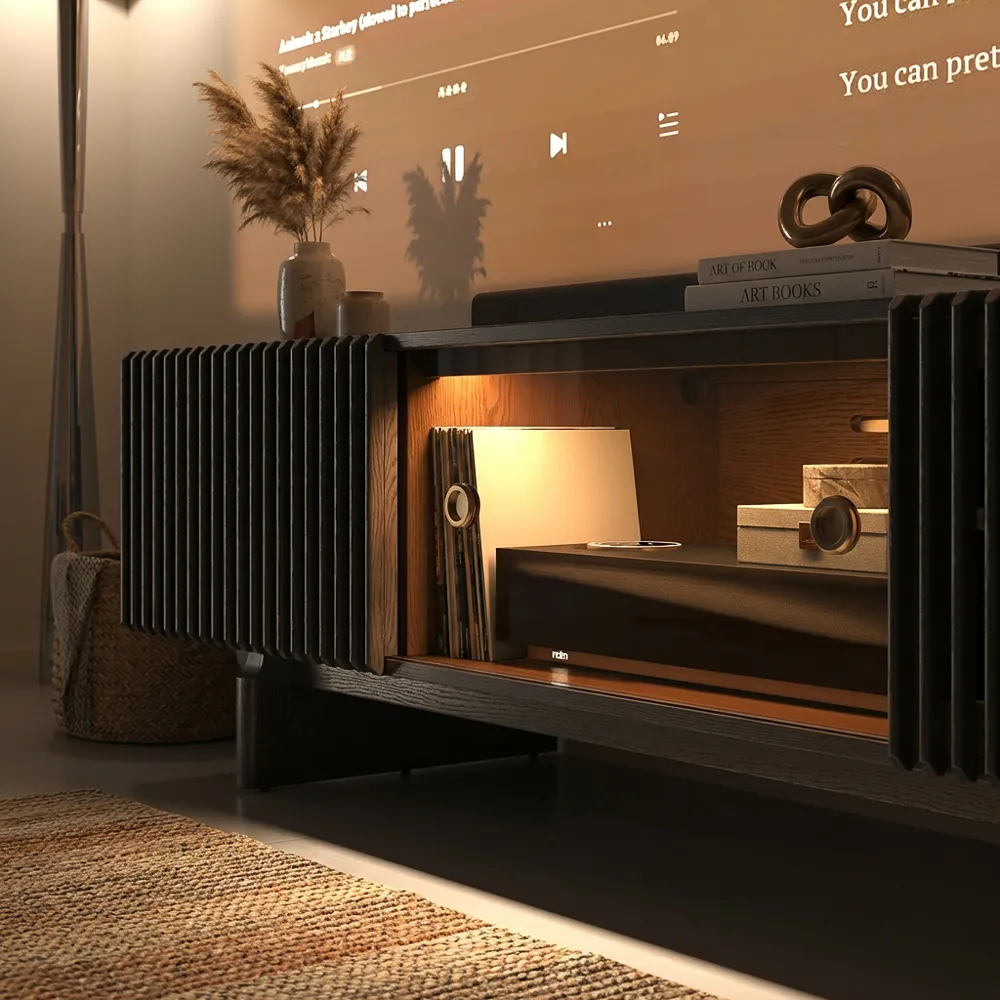
POVISON Delven Verse Media Console
A flexible cabinet layout makes it easier to adapt when your stereo system grows or changes.
How Should You Organize Stereo Components Inside a Cabinet?
A stereo component cabinet becomes easier to use when each device has a clear path for operation and connection. Instead of treating every compartment as identical storage, consider which components need daily access, which connections need more routing space, and which equipment should stay easier to reach.
Keep Source Components Easy to Use
Not every component needs the same level of access. Devices with physical controls, such as CD players, headphone amplifiers, or disc-based sources, are easier to use when they remain within reach. A streamer controlled mostly through a phone can usually sit in a less prominent position, leaving the most accessible space for equipment you interact with more often.
Plan Cable Paths Around the Connection Hub
Most stereo systems have one component where cables converge—often the amplifier, receiver, or preamp. Give that device the clearest route toward the rear instead of routing every source through the same crowded opening.
The POVISON Ravenna Slatted Media Console is particularly useful for stereo setups with multiple sources because seven internal cable openings and four rear openings are distributed across three cabinet sections. A streamer, disc player, amplifier, and other connected devices can use separate cable paths instead of routing every connection through one crowded opening. This makes it easier to add, replace, or troubleshoot components later without having to redo the entire setup.
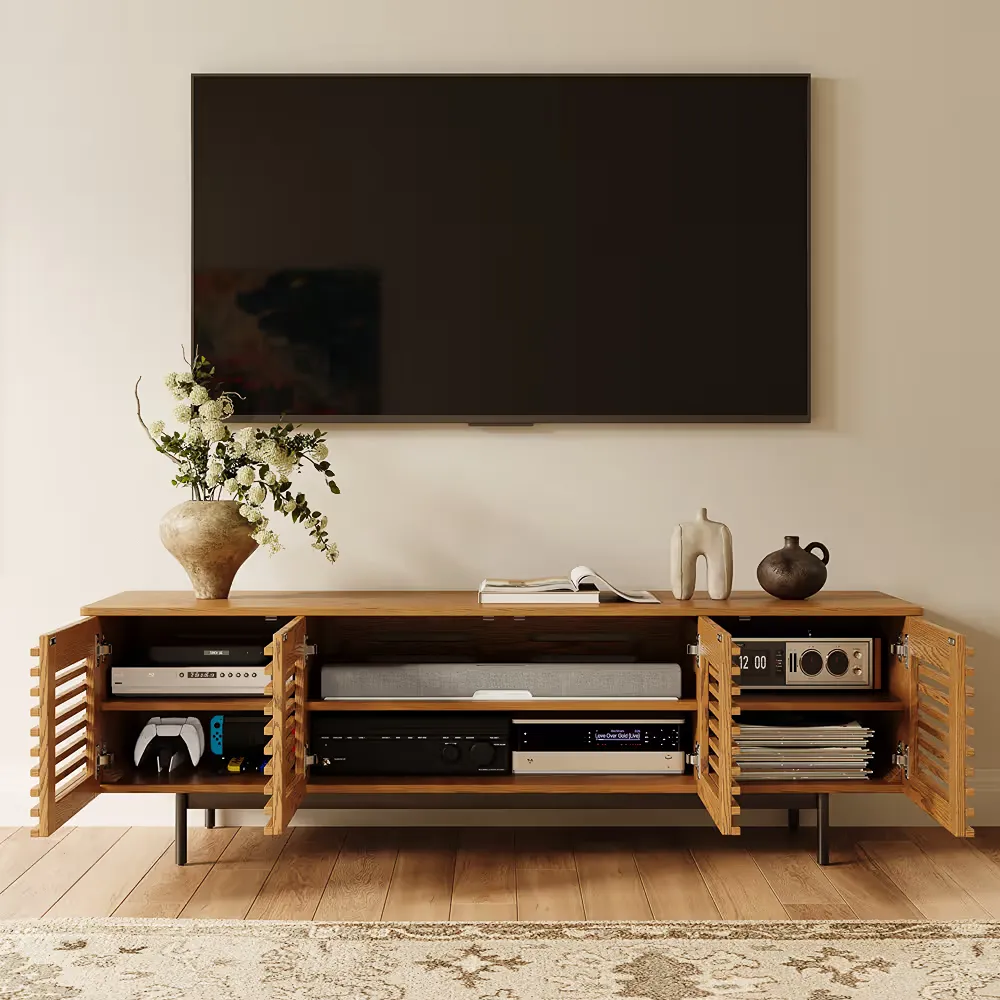
POVISON Ravenna Slatted Media Console
A cleaner way to connect multiple audio sources while keeping the setup organized and easier to manage.
When Should You Choose a Cabinet Instead of an Audio Rack?
Choose a cabinet when the stereo system shares a living room and needs to work as part of the furniture. Closed storage can keep several components visually contained, but the cabinet still needs appropriate airflow, cable routes, and access for the equipment inside.
An open audio rack makes more sense when equipment access takes priority. It is often better suited to a dedicated listening room, frequently changed components, or specialist gear that benefits from fewer physical barriers around it.
A useful rule is:
- Main living room + stable system: favor a cabinet.
- Dedicated listening room + frequent equipment changes: consider an open rack.
- Large components that still need to stay concealed: look for deeper storage with easier rear servicing.
Large amplifiers and receivers create another problem once they are in place: reaching their connections later. The POVISON Delven Axis Deep Media Console combines an 18.7-inch interior depth with removable rear panels and concealed casters, so larger components can stay concealed behind a furniture-style front while speaker and source connections remain easier to reach. This makes future upgrades, cable changes, and system adjustments less disruptive.
For electronics that will operate behind closed doors, what electronics can go inside a TV stand with doors depends on more than physical fit; airflow and signal access still need to work with the equipment in use.
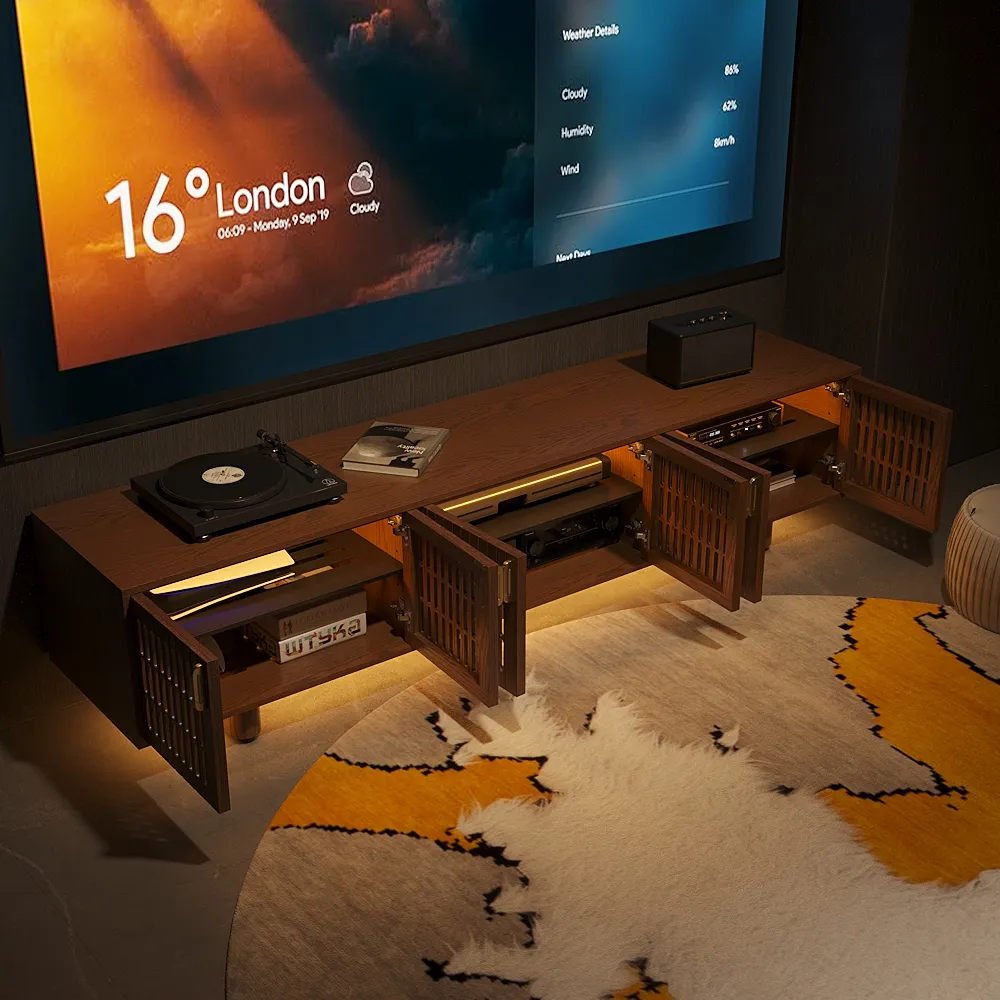
POVISON Delven Axis Deep Media Console
Deep audio components stay concealed in the room while remaining easier to access for future upgrades.
What Changes When Your Stereo Shares a Living-Room Wall?
A stereo cabinet in the main living room has to solve more than equipment storage. Decide first what the top surface is. A wall-mounted TV leaves room for a turntable or frequently handled audio gear, while a TV sitting on the console may claim most of that usable space.
Keep the cabinet layout separate from the listening setup. The console should support the room arrangement rather than forcing speakers or equipment into positions that look balanced but work poorly in daily use.
Power and cable paths also become part of the furniture decision. Check where the wall outlets, TV connections, speaker cables, and network connections actually enter the setup. A clean-looking console is less useful if power cords have to cross a walkway or source cables must loop around the outside of the cabinet.
For most shared living rooms, the goal is not to hide every piece of technology. It is to keep the stereo easy to use while preventing the equipment layout from dictating the entire room.
Conclusion
The right stereo console cabinet starts with the audio system rather than the furniture finish. Identify the role of each component, let the most demanding gear set the physical limits, and then create practical zones for sources, amplification, and connections. A closed console usually fits a shared living room better, while an open rack favors equipment-first setups. Once those decisions are settled, features such as flexible shelving, distributed cable routes, or rear servicing become useful solutions to specific problems rather than a generic feature checklist.
Build a Better Entertainment Setup
Explore media consoles designed for organized storage, ventilation, and modern entertainment equipment.
FAQs
Can a stereo console cabinet work without a TV?
Yes. A low console can work entirely as audio furniture, leaving the top free for a turntable or frequently handled equipment. Without a TV, choose the cabinet width around your component layout, speaker positions, and available wall space rather than screen size.
Should a heavy amplifier go on the lowest shelf?
Often, but not automatically. A lower shelf can provide a practical position for heavier equipment, but ventilation, cable access, and the shelf’s rated capacity still come first. Follow the amplifier manufacturer’s placement requirements before choosing its final bay.
Should a stereo cabinet match the speaker width?
Not necessarily. The cabinet width should first support the components, TV or display setup, and available wall space. Speakers usually work better when positioned for sound rather than chosen to match the console width exactly.
What should go in drawers instead of equipment bays?
Use drawers for items that do not need ventilation or permanent connections, such as remotes, manuals, cleaning accessories, spare adapters, and disconnected cables. Keep powered audio components in equipment bays where their ventilation, controls, and connections remain accessible.
Can a turntable share the console with a TV?
Yes, if both fit without interfering with normal use. Leave enough room to open the turntable’s dust cover and cue records comfortably, and make sure the TV base does not enter that working area. A wall-mounted TV generally leaves more usable console surface for audio equipment.


