 By Kelvin
Introduction
Choosing wood furniture gets confusing fast when every product sounds durable, natural, or premium. This guide explains the types of wood for furniture that matter most for real homes, so you can compare durability, color, grain, cost, and daily-use fit before buying. Instead of listing every tree species, we will focus on the woods and wood-based materials most often used in dining tables, coffee tables, TV stands, cabinets, and bedroom furniture. The goal is simple: choose wood that fits how you live, not just how it looks online.
Table of Contents
What Are the Main Types of Wood for Furniture?
Most furniture wood falls into three practical groups: hardwood, softwood, and engineered wood or veneer. You do not need to memorize every material term before shopping, but you should understand the basic difference because it affects price, weight, durability, and maintenance.
| Wood Type | Common Examples | Best For | Main Limitation |
| Hardwood | Oak, walnut, maple, cherry, ash | Dining tables, desks, cabinets, long-term pieces | Usually heavier and more expensive |
| Softwood | Pine, cedar, fir | Rustic furniture, shelves, casual bedroom pieces | Dents and scratches more easily |
| Engineered wood / veneer | Plywood, MDF, particle board, wood veneer | TV stands, cabinets, large panels, modern designs | Quality depends on core, finish, and edge treatment |
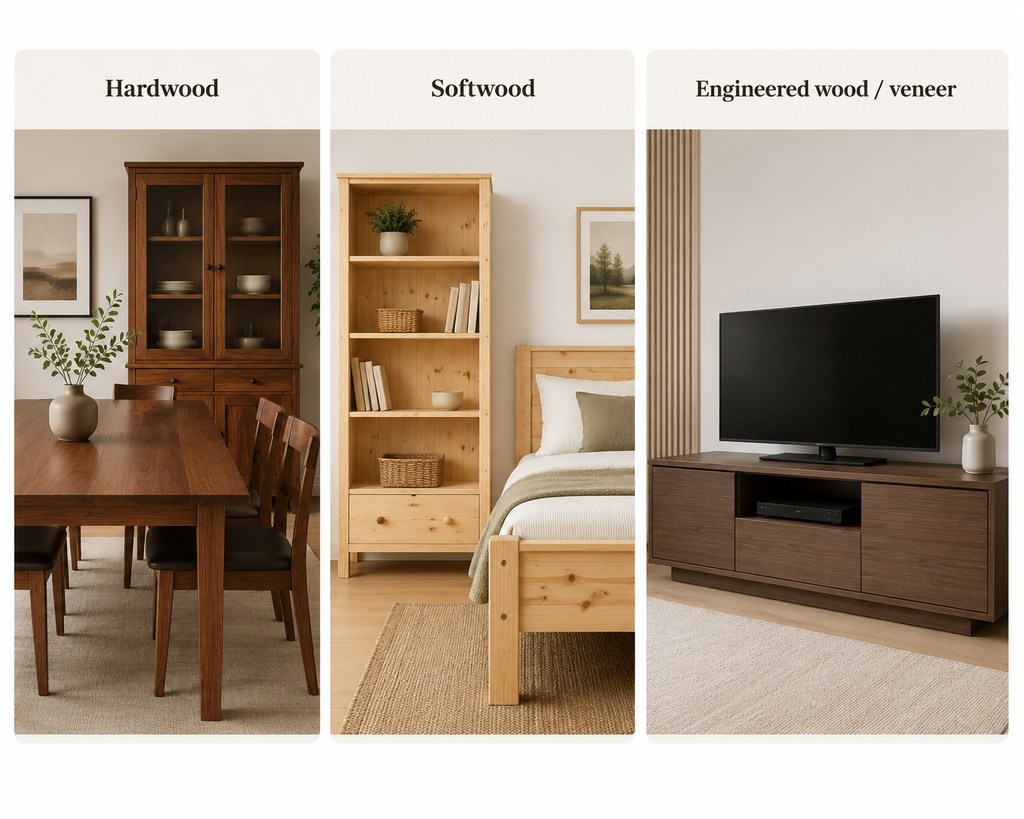
When comparing different types of wood for furniture, the better question is not “Which wood is best?” but “Which wood fits this piece and this room?” A dining table used every night needs a stronger surface than a bedroom dresser. A large media console needs stable panels, cable access, and weight support. If you are still comparing stores and material labels, a wood furniture buying guide can help you read product details more carefully before choosing.
Which Wood Species Are Common in Furniture?
The most useful way to compare wood species is by looking at color, grain, hardness, and room style. The following woods appear often in home furniture because they balance appearance, availability, and function.
Oak
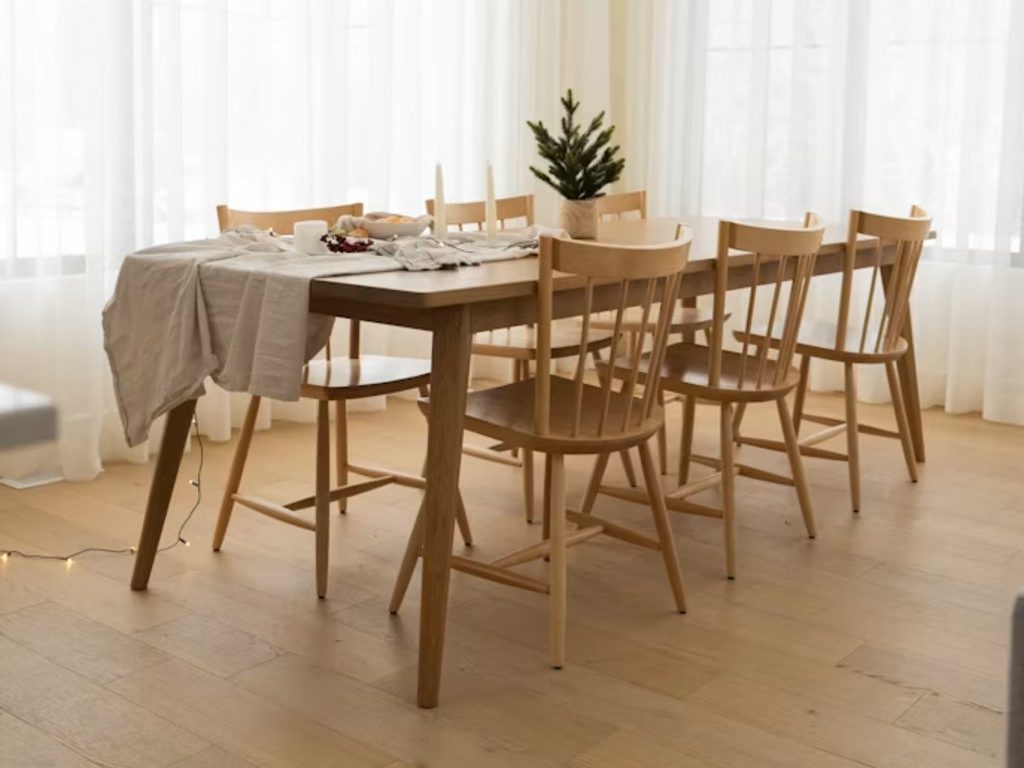
Oak is one of the most reliable furniture woods. It has a visible grain, strong structure, and a classic look that can feel traditional, modern, rustic, or transitional depending on the finish. White oak often feels cleaner and softer, while red oak has a warmer tone and more noticeable grain.
Oak is especially useful for dining tables, coffee tables, chairs, desks, and storage furniture. It is a strong option for homes where furniture sees daily meals, homework, board games, and frequent cleaning.
Walnut
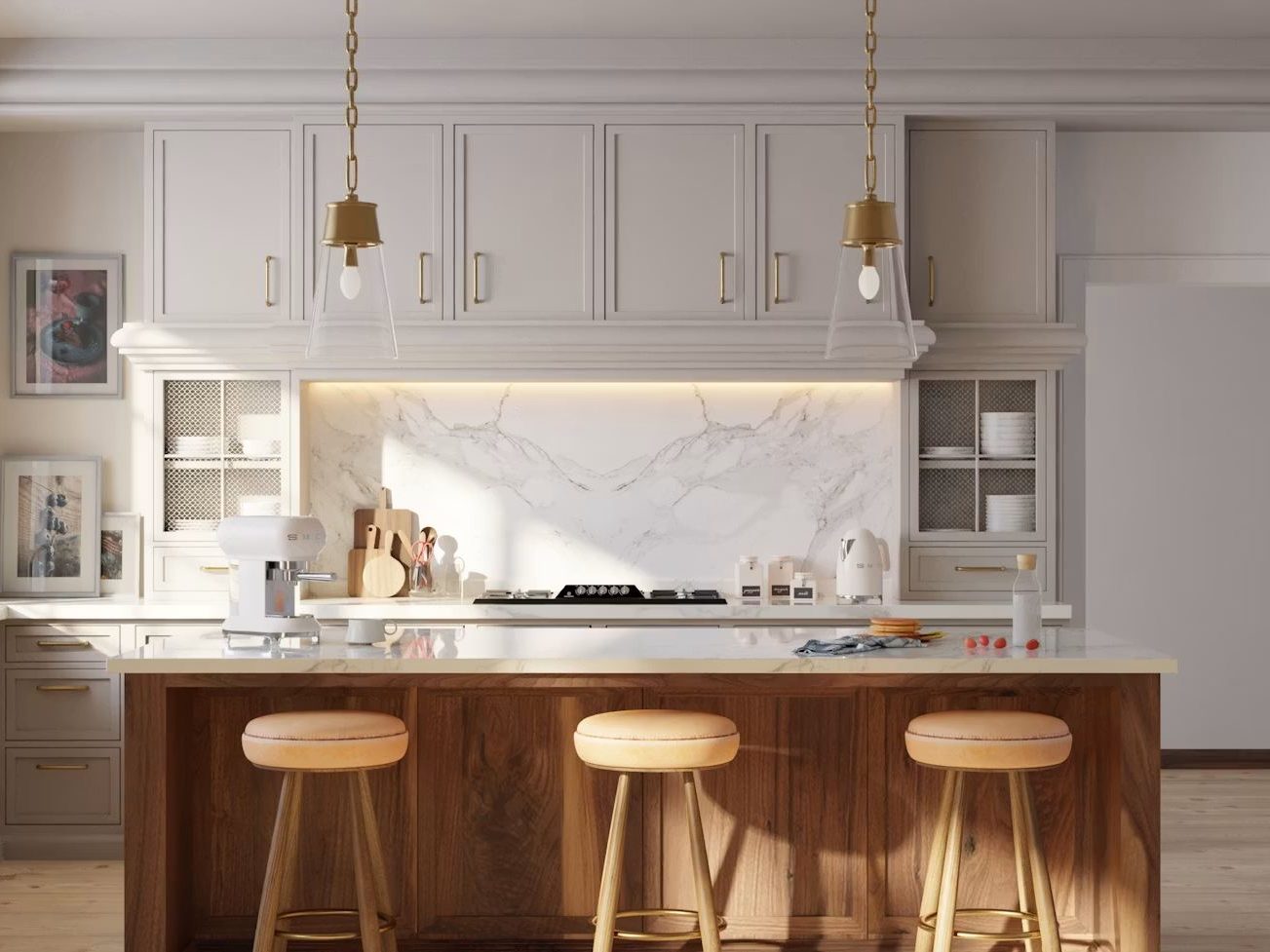
Walnut is known for its rich brown color and smooth, elegant grain. It is often used for statement pieces such as dining tables, coffee tables, headboards, desks, and media consoles. Walnut feels warm and expensive without needing heavy carving or decoration.
It works especially well in mid-century modern, transitional, and warm modern rooms. The tradeoff is that walnut can show marks more easily than harder woods like maple, so finish quality and daily care matter.
Maple
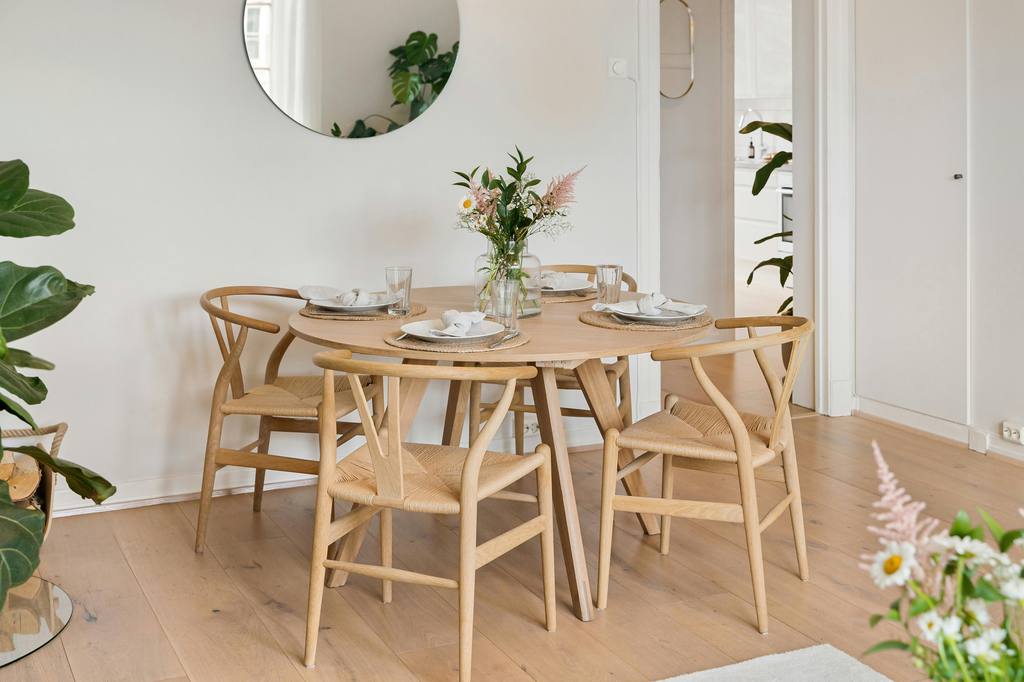
Maple is a hard, dense wood with a clean and usually lighter appearance. Its grain is less dramatic than oak or walnut, which makes it useful in modern, minimal, and family-friendly spaces. It takes stain well, but its natural look also works in bright interiors.
Maple is a smart choice for desks, dining tables, kitchen furniture, and pieces that need to handle regular use. In a home where kids use the dining table for meals and school projects, maple is often easier to live with than a softer or more delicate wood.
Cherry
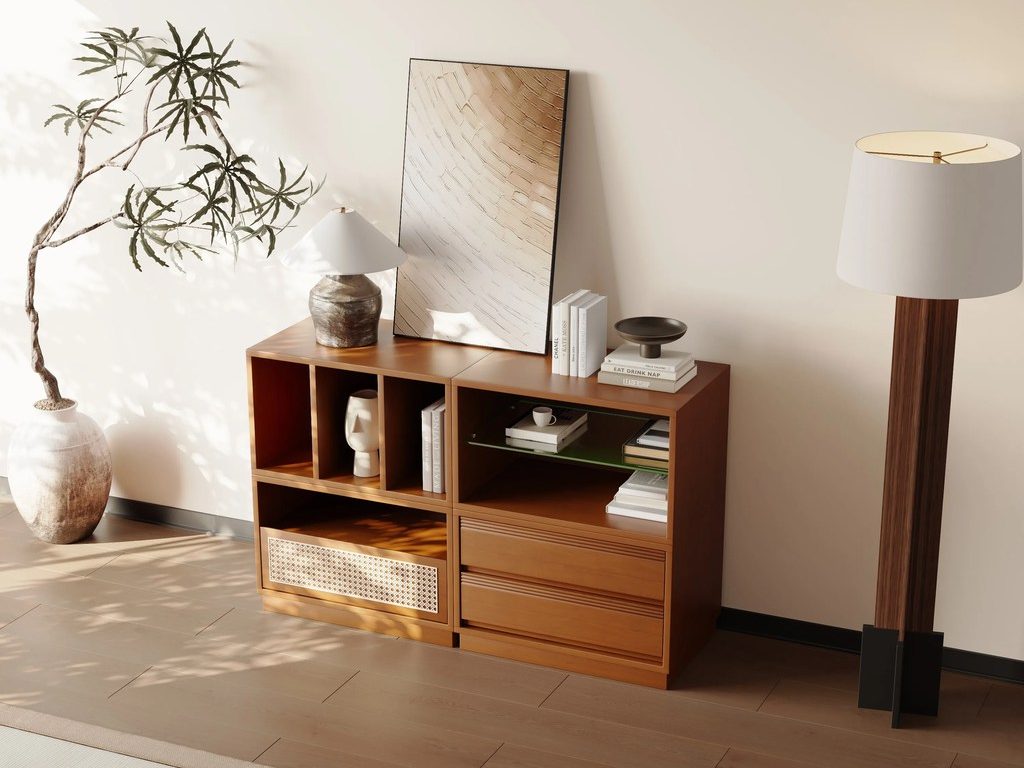
Cherry has a warm reddish-brown tone that becomes deeper over time. It often appears in more classic, traditional, farmhouse, or formal furniture. Its smooth grain gives dressers, beds, cabinets, and dining pieces a refined look.
Cherry is beautiful, but buyers should understand that its color change is part of the material. If you want furniture that keeps the exact same tone for years, cherry may not be the easiest choice.
Ash and Birch
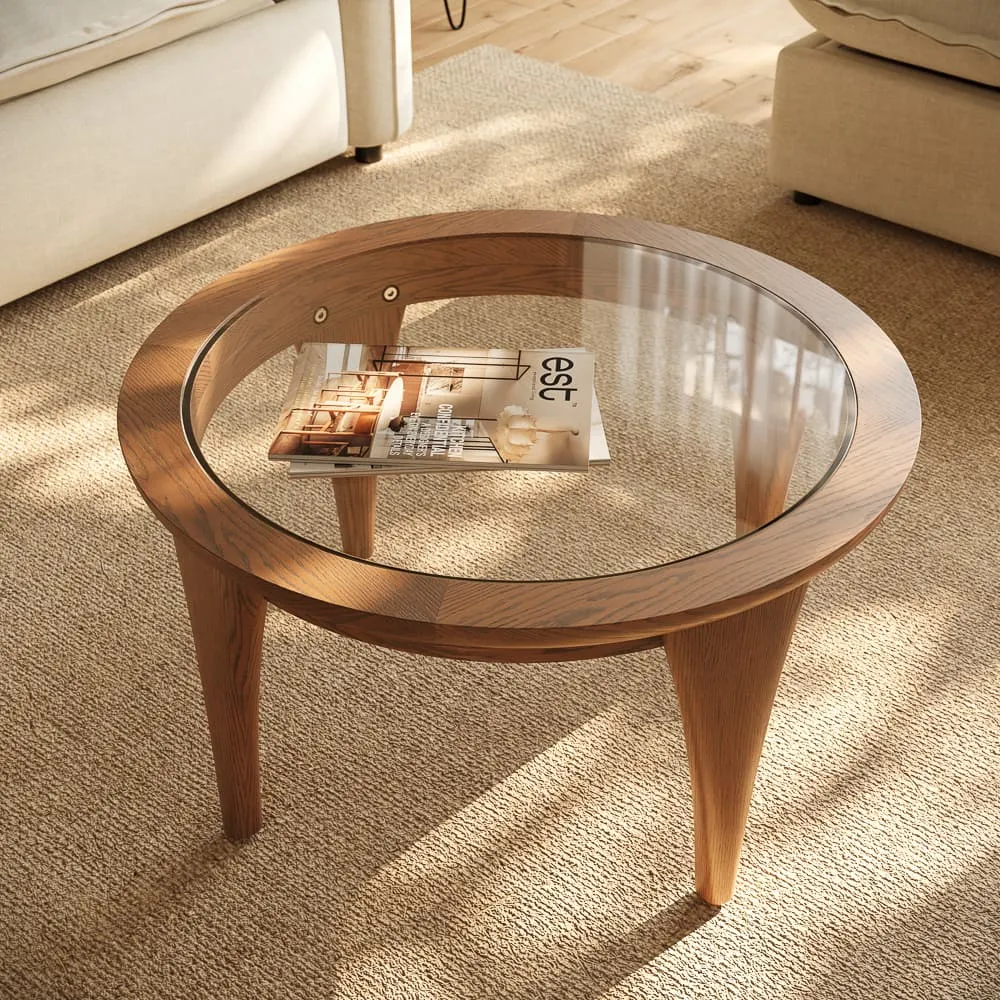
Ash and birch are lighter woods that can support clean, airy interiors. Ash has visible grain and good strength, while birch often has a smoother, more even appearance. These woods can work well in chairs, cabinets, tables, and modern storage furniture.
They are useful when you want natural wood warmth without making the room feel dark or heavy. If you are drawn to brighter spaces, light colored wood furniture can make small rooms, open dining areas, and apartments feel easier to style.
Pine
Pine is a softwood with a casual, rustic look. It is lighter and often more affordable than many hardwoods. Pine can be charming for bookshelves, bedroom furniture, farmhouse-style tables, or relaxed cottage spaces.
The main limitation is durability. Pine dents more easily, so it may not be the best surface for a busy family dining table unless you like a lived-in look or use protective mats.
Which Wood Type Works Best for Each Furniture Piece?
A smart wood choice depends on where the furniture sits and how often it is used. The tabletop, cabinet door, frame, and legs do not always need the same material. Focus on the parts that take the most pressure, contact, heat, weight, or movement.
| Furniture Piece | Better Wood Choices | Why It Works | What to Avoid |
| Dining table | Oak, maple, ash, walnut | Strong surfaces for meals, work, and cleaning | Very soft wood without a protective finish |
| Coffee table | Oak, walnut, ash, quality veneer | Handles daily touch, decor, books, and drinks | High-gloss dark surfaces if scratches bother you |
| TV stand / media console | Oak veneer, walnut tone, engineered wood with stable frame | Large panels stay visually clean and easier to manage | Weak core materials with poor weight support |
| Sideboard / cabinet | Oak, birch, ash, plywood core with veneer | Stable doors, storage function, attractive grain | Thin edges, loose hardware, unclear material labels |
| Bedroom furniture | Cherry, walnut, pine, engineered wood | Lower surface stress than dining furniture | Heavy pieces that are hard to move in small rooms |
| Family or pet homes | Oak, maple, ash, durable finish | Better resistance to dents and daily wear | Softwood surfaces in high-traffic spots |
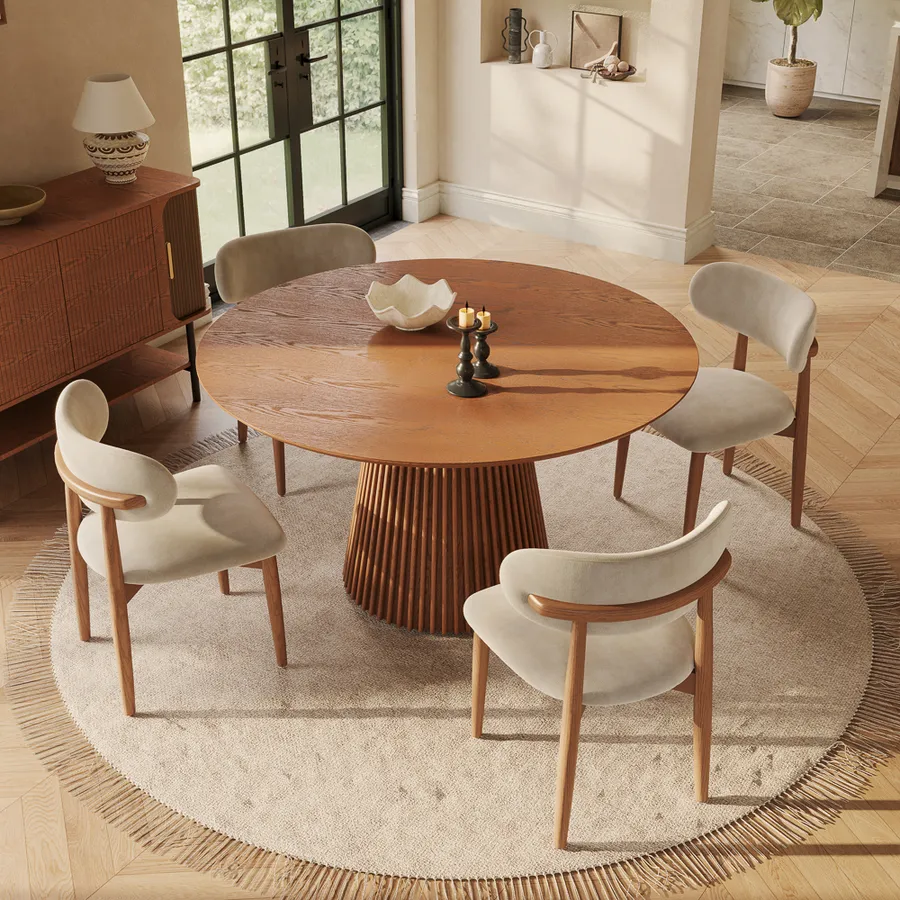
For dining areas, durability and cleaning matter more than rare wood species. A table that handles dinner, laptops, serving dishes, and quick wipe-downs is usually more useful than one that only looks impressive in photos. Readers comparing wood dining tables for daily use should think about surface hardness, finish, base stability, and room size together.
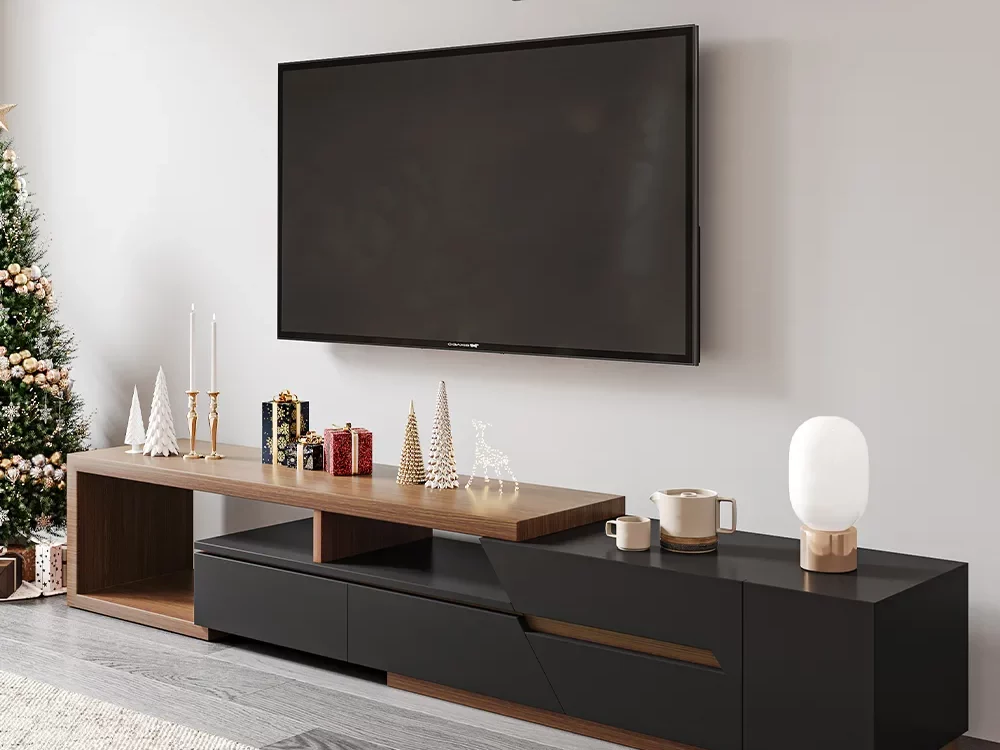
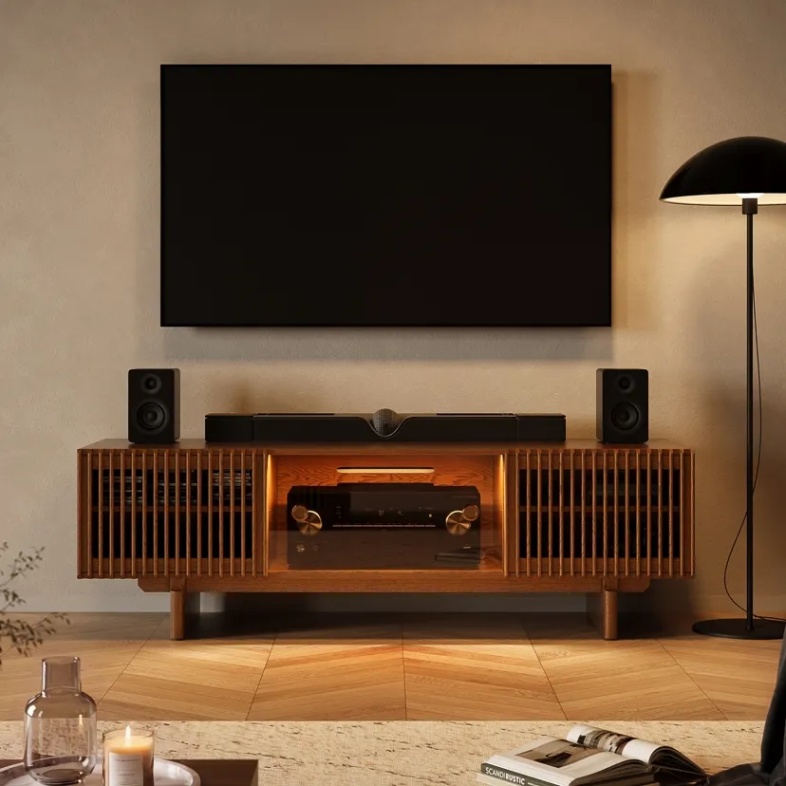
For media furniture, the logic changes. A TV stand may need broad, flat panels, cable openings, closed storage, and enough support for electronics. In that case, a wood TV stand with stable construction and practical storage can matter more than choosing the most expensive solid wood species.
What Should You Check Before Buying Wood Furniture?
Before buying, read the product details the same way you would check dimensions. Wood type matters, but it is only one part of the decision.
Check these points first:
- Material description: Look for clear terms like solid oak, walnut veneer, MDF, plywood, or engineered wood.
- Surface finish: A protective finish helps with spills, stains, cleaning, and light scratching.
- Weight capacity: This is especially important for TV stands, shelves, and storage cabinets.
- Edges and corners: Poor veneer edges may peel faster in high-use areas.
- Hardware: Drawers, hinges, and door tracks affect daily experience as much as the wood.
- Room conditions: Strong sunlight, humidity, kids, pets, and food use all change the right choice.
- Assembly needs: Fully assembled or mostly assembled furniture can reduce setup mistakes and alignment problems.
A real-life example: a walnut-tone media console may look better than pale oak against a large black TV, but a light oak dining table may be easier to style in the same open-plan room. The choice depends on where the piece sits, how visible it is, and how much daily contact it gets.
Common Mistakes When Choosing Wood Furniture
Many buying mistakes happen because shoppers focus on color first and material second. Color matters, but it should not be the only reason to choose a piece.
Avoid these common mistakes:
- Choosing a wood only because it matches the floor exactly.
- Assuming all hardwoods have the same scratch resistance.
- Thinking veneer always means low quality.
- Ignoring the finish on dining tables and coffee tables.
- Buying softwood for a heavy-use surface without accepting dents.
- Mixing too many unrelated wood tones in one room.
- Forgetting that sunlight can change wood color over time.
- Choosing a large solid wood piece without checking delivery path or room scale.
You do not need every piece in a room to be the same species. A better approach is to repeat undertones. Warm walnut can work with warm oak. Light ash can pair with cream, beige, stone, black metal, or soft gray. The room looks more intentional when one wood tone repeats at least twice.
Conclusion
The best way to compare types of wood for furniture is to start with how the piece will be used. Dining tables need durable surfaces. TV stands need stable construction and storage. Cabinets need strong doors, edges, and hardware. Bedrooms can allow softer or more decorative choices. Oak, maple, ash, walnut, cherry, pine, veneer, and engineered wood can all make sense when matched to the right room and function. Instead of asking which wood is best overall, choose the wood that fits your daily routine, design style, and maintenance expectations.
Q&A
Is solid wood always better than veneer or engineered wood?
Solid wood is not always better than veneer or engineered wood. Solid hardwood is valuable for high-touch surfaces, repair potential, and natural grain, but veneer over a stable core can work well for large panels, TV stands, and cabinets. Judge the material by use case, core quality, edge treatment, finish, and weight support.
What matters more, wood species or finish?
Finish often matters as much as wood species for daily use. A durable finish helps protect against spills, stains, light scratches, and cleaning damage. A strong wood with a weak finish can still be frustrating on a dining table or coffee table. Always judge wood species, finish, structure, and use case together.
Is wood furniture hard to clean?
Wood furniture is not hard to clean if the finish is protected and you avoid soaking the surface. For daily care, dust with a soft cloth and wipe spills quickly instead of using too much water. For deeper care, this how to clean wood furniture guide explains safer methods for different surfaces.
What type of wood furniture works better in humid rooms?
Wood furniture with a stable construction and sealed finish works better in humid rooms than unfinished or very soft wood. For bathrooms, kitchens, or coastal homes, avoid raw wood surfaces and check whether the piece uses a moisture-resistant finish, sealed edges, and stable panels. Solid wood can still move with humidity, so placement matters.
Does wood furniture scratch easily if you have pets?
Wood furniture can scratch if pets jump, chew, or drag claws across the surface, but the risk depends on the wood, finish, and furniture location. Oak, maple, and ash usually handle daily wear better than pine. For pet homes, avoid softwood coffee tables, use pads under decor, and choose finishes that can tolerate light surface marks.
Is wood furniture a good choice if I move often?
Wood furniture can work if you move often, but weight and construction matter. Very heavy solid wood pieces may be difficult to carry through stairs, elevators, or narrow hallways. For renters or frequent movers, consider smaller wood pieces, stable engineered panels, removable legs, and fully assembled furniture that does not loosen after repeated setup.


