 By Kelvin
Introduction
Wood furniture can handle daily life, but the wrong cleaner can dull the finish, leave sticky residue, or push moisture into seams. If you searched for how to clean wood furniture, you probably want a safe method that works without turning a simple wipe-down into a repair project. This guide starts with the safest basic steps, then shows how to adjust your method for veneer, sealed wood, old furniture, sticky spots, water rings, and carved details. The goal is simple: clean the surface well while protecting the finish underneath.
Table of Contents
Quick Answer: How to Clean Wood Furniture Safely
The safest way to clean wood furniture is to dust first, use a barely damp microfiber cloth with mild soap when needed, wipe with the grain, and dry the surface immediately. Avoid soaking the wood, spraying cleaner directly on the surface, or using harsh products.
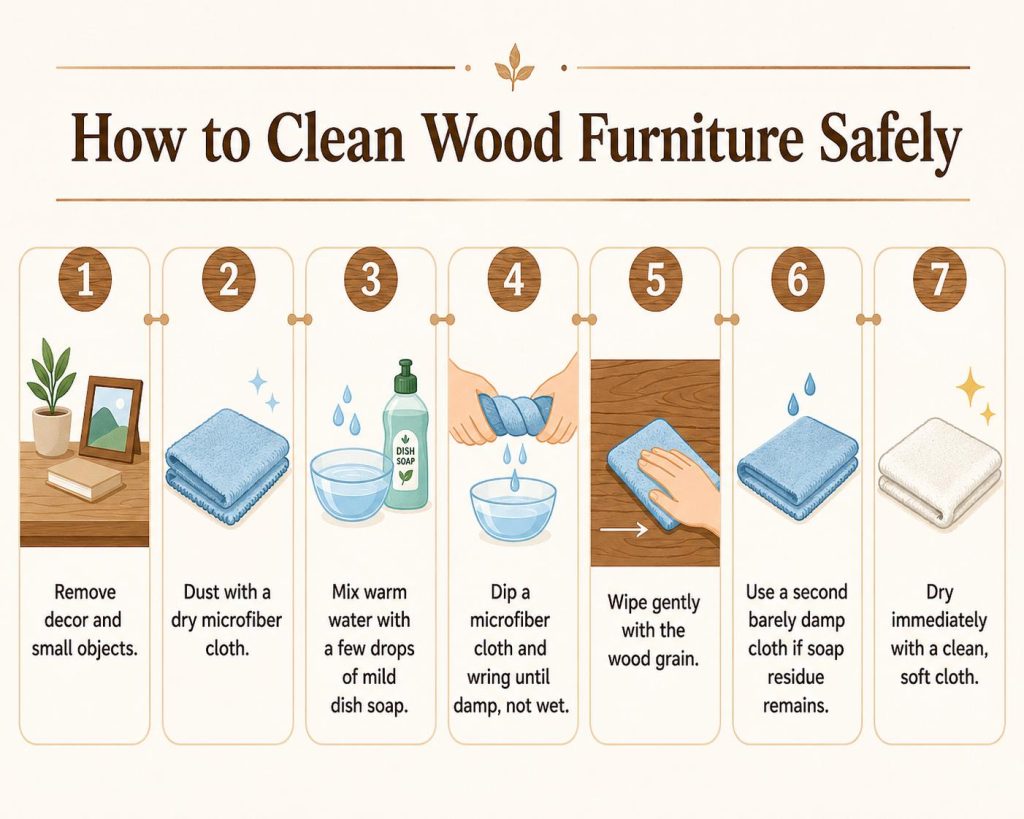
For most sealed wood furniture, follow these steps:
- Remove decor, dishes, remotes, or small objects from the surface.
- Dust with a dry microfiber cloth to lift grit before adding moisture.
- Mix warm water with a few drops of mild dish soap.
- Dip a microfiber cloth into the solution, then wring it until damp, not wet.
- Wipe gently with the wood grain.
- Use a second barely damp cloth if soap residue remains.
- Dry immediately with a clean, soft cloth.
This is also the safest starting point for anyone learning how to clean wood furniture properly. Stronger methods should only come after you know the finish can handle them.
What Should You Check Before Cleaning Wood Furniture?
Before choosing a cleaner, check the surface, not just the wood species. Walnut, oak, ash, and acacia may look different, but the finish is what usually decides whether a cleaner is safe. If you are still trying to identify whether a piece is hardwood, softwood, veneer, or engineered wood, this guide to types of wood for furniture can help you understand the material before choosing a care method. A sealed tabletop can handle a little mild soap. Unfinished, waxed, antique, or damaged wood needs much more caution.
Check these points first:
- Care instructions: Look at the product page, label, or manufacturer’s care notes.
- Finish condition: Avoid wet cleaning if the finish is cracked, peeling, cloudy, or sticky.
- Hidden spot test: Test any cleaner under the tabletop, inside a leg, or behind a panel.
- Moisture exposure: If the surface has open seams or veneer edges, use less water.
- Age and value: Antique or inherited furniture should be treated more conservatively.
If you are unsure whether a piece is sealed, start with dry dusting only. Then test a barely damp cloth in a hidden area. If the cloth picks up color, the surface feels tacky, or the finish becomes cloudy, stop.
Which Cleaner Is Safe for Each Wood Finish?
Not every wood surface should be cleaned the same way. A dining table with a modern protective finish, a slatted media console, and an antique cabinet may all be “wood furniture,” but they respond differently to moisture, oils, acids, and friction. Use the table below as a practical starting point.
| Wood Surface or Finish | Safest Cleaning Method | Avoid | Extra Note |
| Sealed or varnished wood | Mild dish soap, warm water, damp microfiber cloth | Soaking, harsh sprays, abrasive pads | Best for most modern tables, cabinets, and storage pieces |
| Wood veneer | Dry or barely damp microfiber cloth | Wet edges, hard scrubbing, steam | Be gentle around corners and seams |
| Unfinished or raw wood | Dry cloth or soft brush | Vinegar, soap soaking, oily DIY cleaners | Moisture can absorb unevenly |
| Painted wood | Mild soap on a damp cloth | Magic erasers, ammonia, rough pads | Test first, especially on matte paint |
| High-gloss or lacquer-like finish | Soft microfiber cloth, minimal moisture | Alcohol, glass cleaner, strong acids | These finishes can show haze and streaks easily |
| Antique wood | Dry dusting, professional advice for stains | DIY vinegar, baking soda paste, heavy polishing | Finish may be fragile or historically important |
| Slatted or carved wood | Soft brush, vacuum brush, dry cloth | Water sitting in grooves | Dry details carefully after spot cleaning |
If you are wondering how to clean antique wood furniture, start with dry dusting instead of liquid cleaner. Use a soft cloth, soft brush, or vacuum brush attachment, and avoid vinegar, alcohol, baking soda paste, disinfecting wipes, or heavy polish. If the finish looks cloudy, sticky, peeling, or transfers color to the cloth, stop cleaning and consider professional restoration.
For dining surfaces that deal with meals, drinks, and daily wiping, finish durability matters as much as style. A comparison of wood dining tables for daily use can help readers understand how protective finishes, scratch resistance, and everyday upkeep affect long-term maintenance.
How to Clean Everyday Messes on Wood Furniture
Most cleaning questions start with a specific mess: fingerprints on a TV stand, grease on a dining table, a sticky spot on an old cabinet, or a water ring from a glass. The safest method is to match the cleaning strength to the problem, then stop as soon as the surface is clean.
Dust and Fingerprints
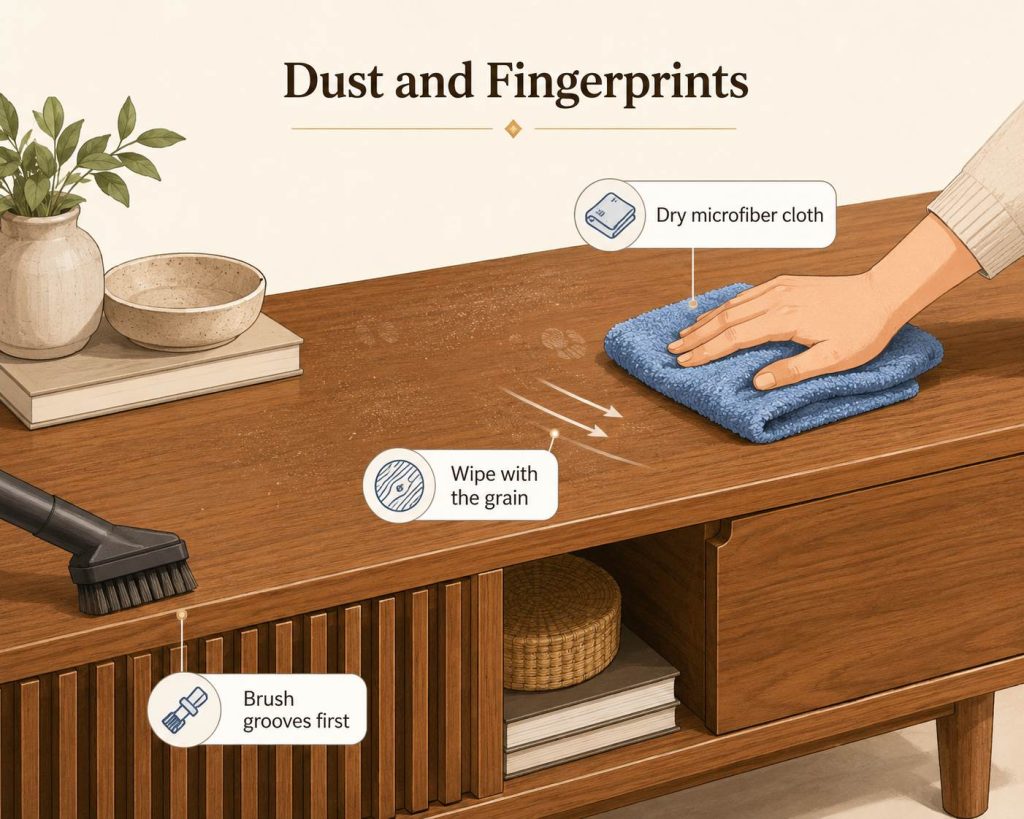
For regular dust and fingerprints, use a dry microfiber cloth first. If marks remain, lightly dampen the cloth with water and wipe with the grain. Dry right away. This works well for coffee tables, nightstands, dressers, and media consoles.
On slatted doors or textured wood fronts, remove dust from grooves with a soft brush or vacuum brush attachment before using moisture. For detailed media consoles, care habits from how to care for a mid century modern TV stand are especially useful because slats, veneer, and matte finishes can trap dust in small lines.
For living rooms where dust collects around electronics, the Povison Merrin-63″ Black Floating TV Stand keeps the media area easier to maintain. Its floating design leaves the floor open for cleaning, while three cabinet doors help hide remotes, cables, and small devices. The walnut veneer look also suits modern rooms that need warm wood texture without heavy visual weight.

Grease and Food Residue
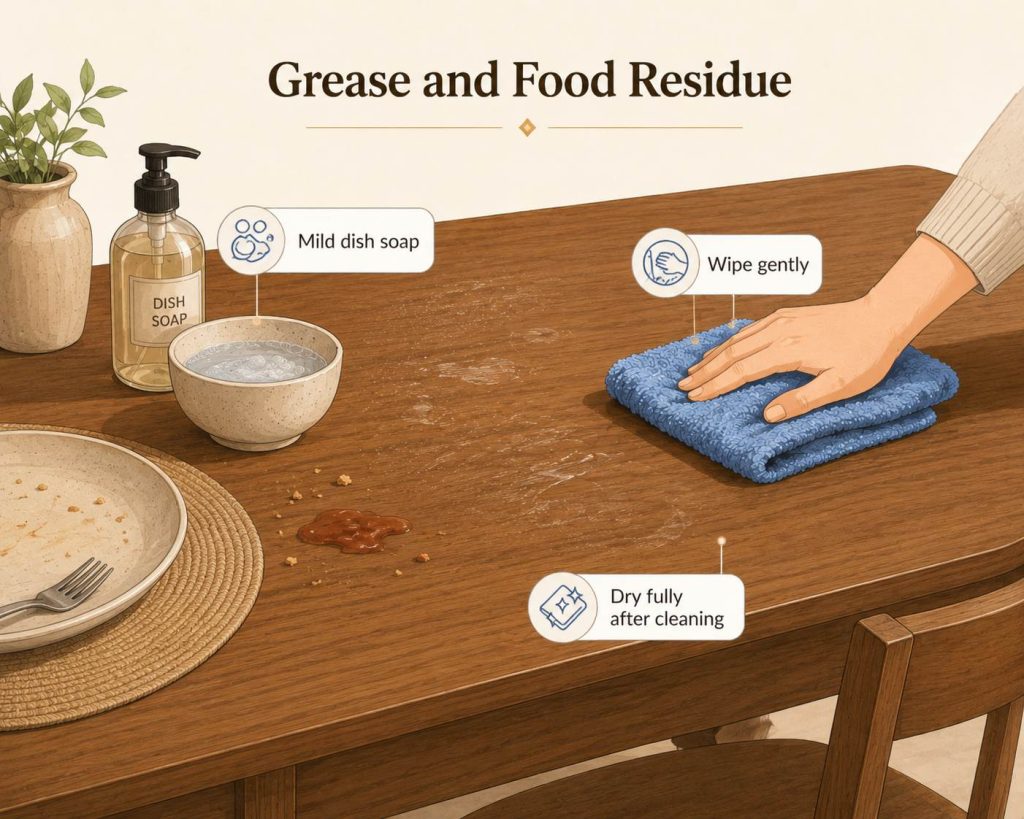
Dining tables and sideboards often collect a thin layer of grease, especially near kitchens or open-plan dining areas. Use warm water with a few drops of mild dish soap. Wipe the affected area gently, then dry fully.
Do not leave a wet cloth sitting on the table while clearing dishes. A weeknight dinner may leave sauce, oil, and cup rings on the same surface, but quick wiping is usually safer than a heavy deep clean later. If the issue is mostly food spills, how to clean dining table properly gives more specific care advice by tabletop material.
Sticky Spots
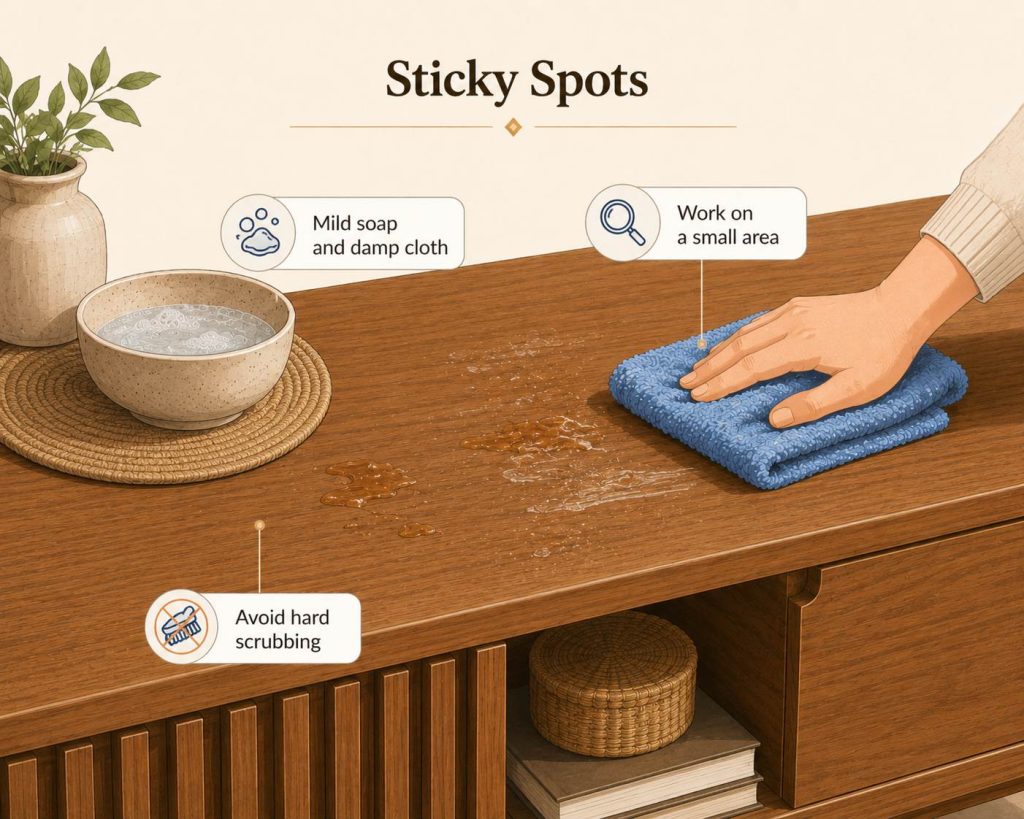
Sticky wood can come from food residue, old polish buildup, humidity, or a finish that is starting to break down. Start with mild soap and a damp cloth. Work on a small area, dry it, and check the surface.
If the sticky feeling remains, avoid scrubbing harder. A stronger cleaner may remove the finish along with the grime. For old wood, sticky residue can mean the original coating has softened, so repeated wet cleaning may make the problem worse.
Water Rings or White Marks
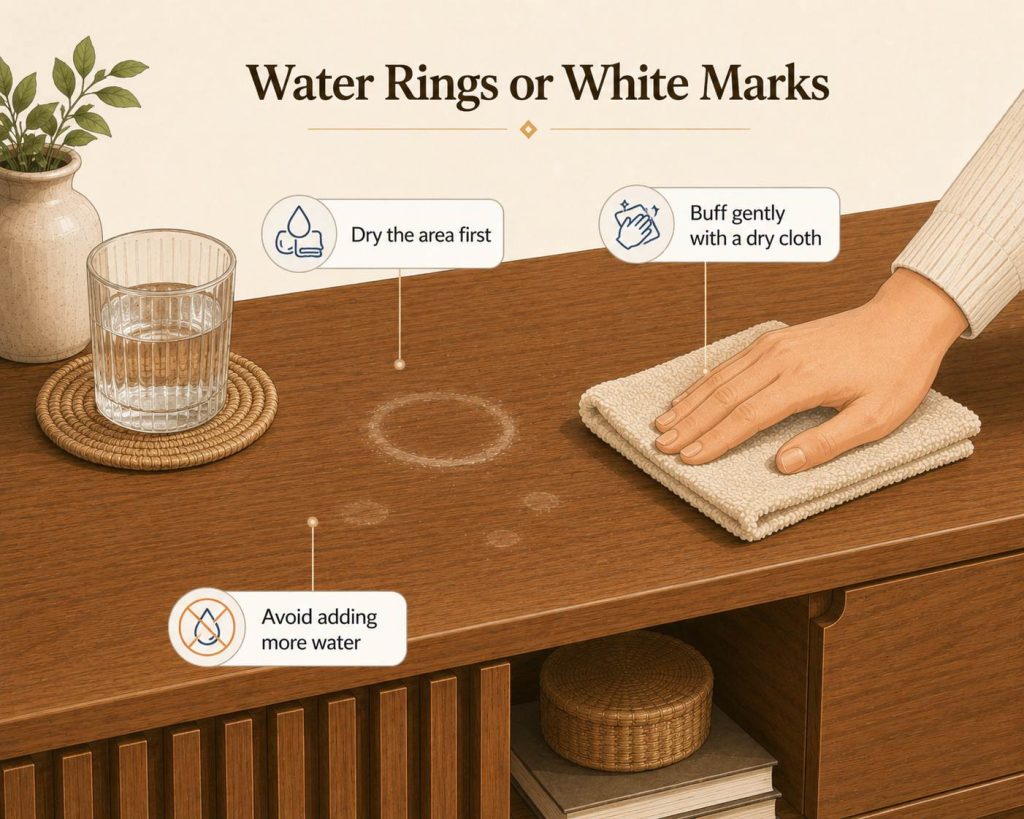
A white ring usually means moisture is trapped in or near the finish. First, dry the area completely and wait. If the mark is fresh, gentle buffing with a dry microfiber cloth may help. Avoid adding more water, baking soda paste, or abrasive powder right away.
Dark stains are different. They may mean moisture has reached deeper into the wood. At that point, cleaning alone may not fix the mark.
Mold on Wood Furniture
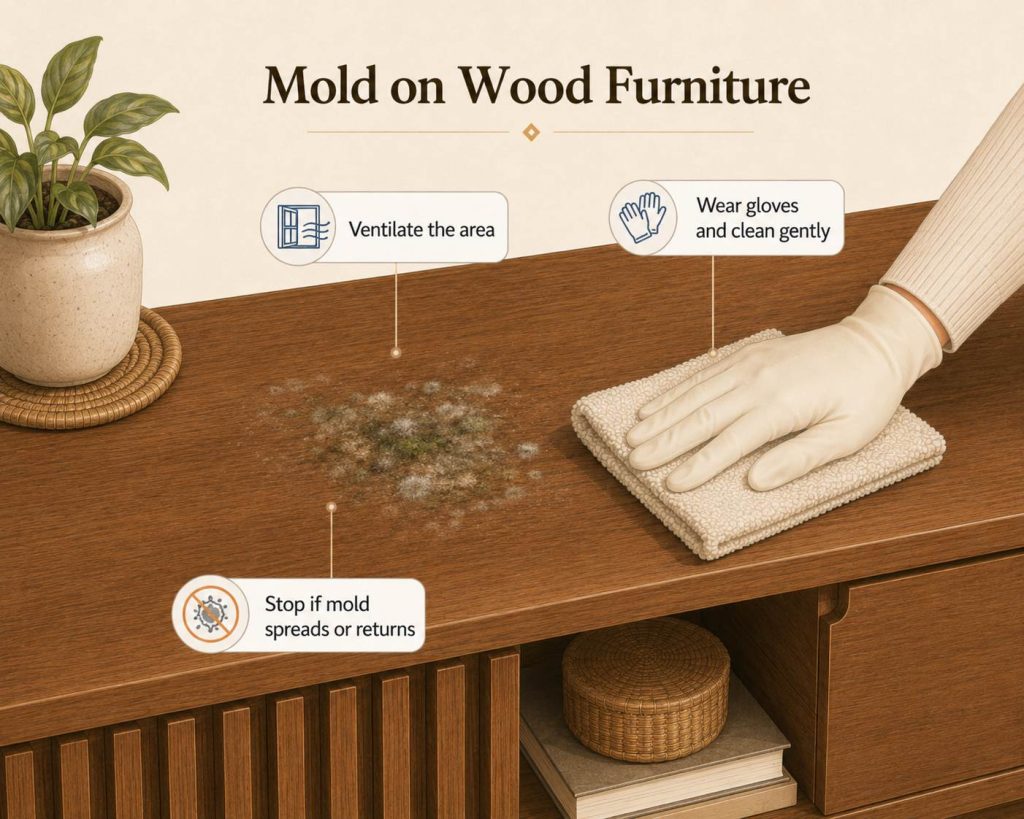
If you need to know how to clean mold off wood furniture, first move the piece away from other furniture and improve ventilation. Wear gloves and a mask, then remove loose surface mold with a soft brush or dry cloth. Do this carefully so spores do not spread through the room.
For sealed wood, wipe a small hidden area with a barely damp cloth and mild soap first. Dry the surface completely afterward. If the mold returns, spreads into seams, leaves a dark stain, or appears on unfinished, antique, or water-damaged wood, stop DIY cleaning. Mold that has penetrated the wood may require professional treatment, not repeated surface wiping.
What Not to Use on Wood Furniture
Many wood furniture problems come from using a cleaner that is too strong for the finish. “Natural” does not always mean safe, and “multi-surface” does not always mean wood-safe.
Avoid these common mistakes:
- Too much water: It can cause swelling, warping, cloudy marks, or veneer lifting.
- Steam cleaners: Heat and moisture can damage seams and finishes.
- Magic erasers or melamine sponges: They act like fine sandpaper.
- Steel wool or rough pads: They can scratch or dull the surface.
- Alcohol-based cleaners: They may strip or haze some finishes.
- Ammonia and glass cleaner: These can damage protective coatings.
- Undiluted vinegar: Acid can dull finishes over time.
- Baking soda paste on delicate finishes: It can be mildly abrasive.
- Lemon juice and oil as a universal cleaner: It may leave residue or affect the finish.
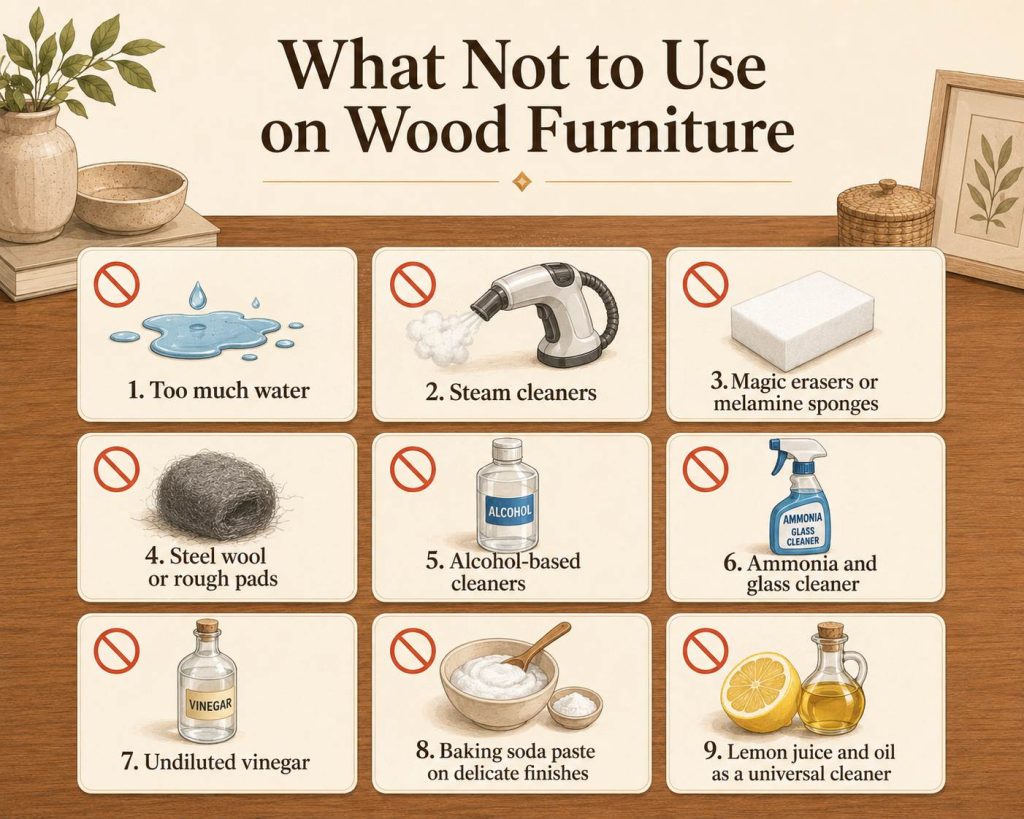
If you want to know how to clean wooden furniture safely, the best rule is to start mild and avoid shortcuts that promise shine, stain removal, and disinfection all at once.
Cleaning, Polishing, or Repairing: What Do You Need?
Cleaning is not the same as polishing or repairing. If a surface still looks dull after it is clean, the issue may be finish wear, not dirt. If a stain has gone dark or a scratch catches your fingernail, cleaning will not fully solve it.
| Need | Best For | What It Does | What It Cannot Fix |
| Cleaning | Dust, fingerprints, light grease, mild residue | Removes surface dirt | Deep stains, peeling finish, scratches |
| Polishing | Dull sealed wood, light shine loss | Adds temporary shine or protection | Sticky buildup from overuse |
| Waxing or oiling | Specific finishes that require it | Helps protect or condition certain surfaces | Not suitable for every modern finish |
| Repair or refinishing | Deep stains, cracks, lifted veneer, peeling finish | Restores damaged surfaces | Not a basic cleaning task |
This distinction matters most when learning how to clean old wood furniture. Older pieces may have wax, shellac, lacquer, oil, or a worn finish that reacts differently from modern sealed furniture.
How to Keep Wood Furniture Clean Longer
The easiest way to protect wood furniture is to prevent residue from building up. Dust weekly with a soft cloth. Wipe spills when they happen. Use coasters under drinks, placemats under meals, and trivets under hot dishes. Keep plant pots on trays so moisture does not sit directly on wood.
For TV stands and storage cabinets, dust around vents, cable openings, and slatted doors. For dining tables, clean light food residue after meals instead of waiting for sticky buildup. Avoid placing wood furniture in direct sunlight or next to heat vents when possible, since heat and dryness can stress some finishes over time.
Conclusion
Knowing how to clean wood furniture is mostly about restraint: dust first, use mild soap only when needed, keep the cloth damp instead of wet, and dry the surface right away. The finish should guide every decision, especially with veneer, antiques, high-gloss surfaces, and old wood that already feels sticky or fragile. For everyday use, small habits matter more than aggressive deep cleaning. Coasters, quick spill cleanup, weekly dusting, and careful product choices help wood furniture stay clean without wearing down the surface.
FAQ
What wood furniture is easiest to keep clean in a busy home?
Wood furniture with a smooth sealed surface is usually easiest to keep clean in a busy home. Look for tabletops, cabinet doors, and shelves with a protective finish rather than raw or heavily textured wood. Large flat surfaces are simpler to wipe after meals, drinks, kids’ activities, or daily clutter.
Should I choose solid wood or wood veneer if cleaning is a priority?
Both can work, but they need different expectations. Solid wood is usually more forgiving over time, while wood veneer can offer a clean look at a lighter weight or lower cost. If cleaning is a priority, check edge sealing, surface finish, and whether the product care instructions allow damp wiping.
What care information should I check before buying wood furniture online?
Before buying wood furniture online, check the material description, finish type, care instructions, product photos, edge details, and customer reviews mentioning scratches, stains, or cleaning. If the page does not explain how to maintain the surface, be cautious with raw wood, antique finishes, veneer edges, or glossy coatings.
Can cleaning remove scratches from wood furniture?
Cleaning can remove dirt around scratches, but it cannot repair deep scratches. If a mark disappears when the surface is clean, it was likely residue or a light scuff. If the scratch catches your fingernail, it may need polish, a touch-up product, or professional repair.
Are slatted or fluted wood designs harder to maintain?
Slatted or fluted wood designs are not hard to maintain, but they do collect more dust than flat panels. They work well for media consoles, cabinets, and accent pieces if you are comfortable dusting grooves regularly. For very dusty rooms or low-maintenance homes, smoother doors may be easier.
When should I avoid choosing wood furniture?
Avoid delicate wood furniture in rooms with constant moisture, direct heat, heavy sunlight, or frequent spills unless the piece has a suitable protective finish. Bathrooms, sunrooms, and busy kitchen-adjacent areas may need extra caution. In those spaces, finish quality and maintenance requirements matter more than style alone.


