 By Kate
Introduction
Home makeover shows are easy to binge, but the best ones do more than create dramatic before-and-after moments. They can help you notice layout problems, storage gaps, color balance, furniture scale, and the small details that make a room feel finished. This home makeover shows list is built for viewers who want inspiration they can actually use, not just a fantasy renovation timeline. Use it to find the right show for your space, then translate the best ideas into practical updates at home.
Table of Contents
What Makes a Home Makeover Show Worth Watching?
Before choosing what to watch, it helps to know what separates useful design inspiration from pure entertainment. The strongest home makeover shows on TV usually give you a clear design problem, a visible transformation, and enough room details to understand why the final space works.
A worthwhile makeover show should offer:
- Clear before-and-after scenes that reveal layout, storage, and lighting changes.
- Real home problems, such as small rooms, clutter, pets, kids, awkward TV walls, or outdated finishes.
- Furniture and traffic-flow lessons, not only paint colors and decor.
- Ideas ordinary homeowners can adapt, even without a full construction crew.
- Easy viewing access through major platforms, networks, or streaming libraries.
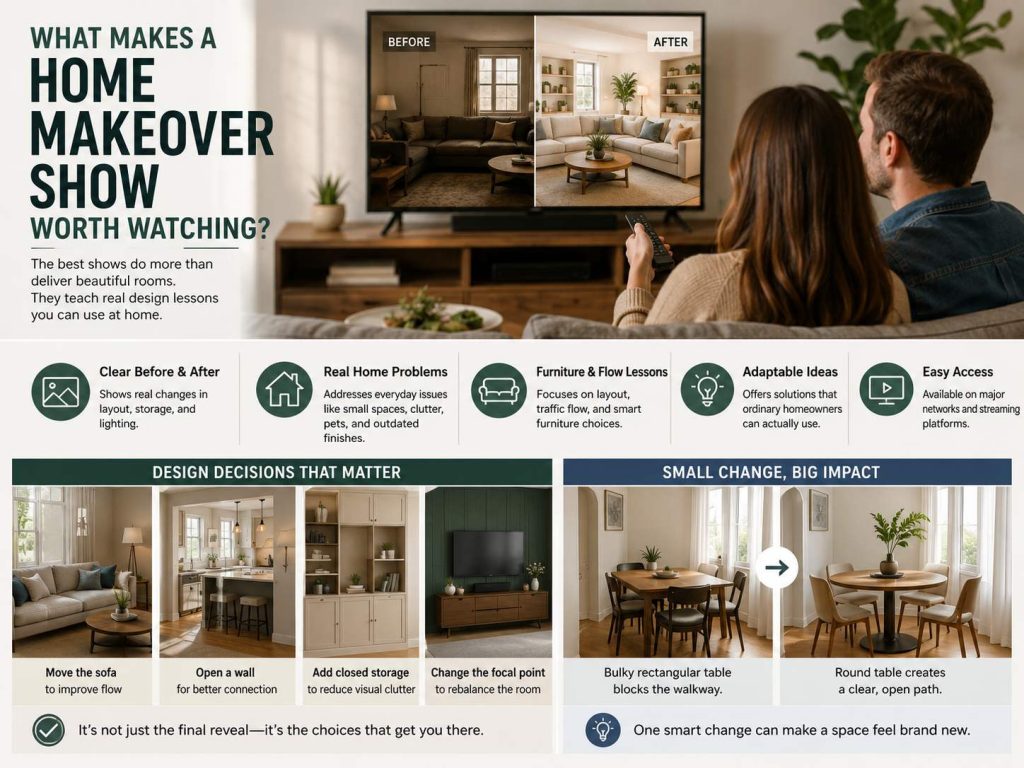
The best remodeling TV shows also show decision-making. A designer may move a sofa, open a wall, add closed storage, or change the focal point. Those choices are more useful than the final reveal alone because they teach you how to look at your own space with sharper eyes.
In a small apartment, one useful scene can be more valuable than an entire season. Watching a designer replace a bulky rectangular table with a round one, then suddenly seeing a clear walking path, makes the layout lesson feel immediate and memorable.
What Are the Best Home Makeover Shows to Watch?
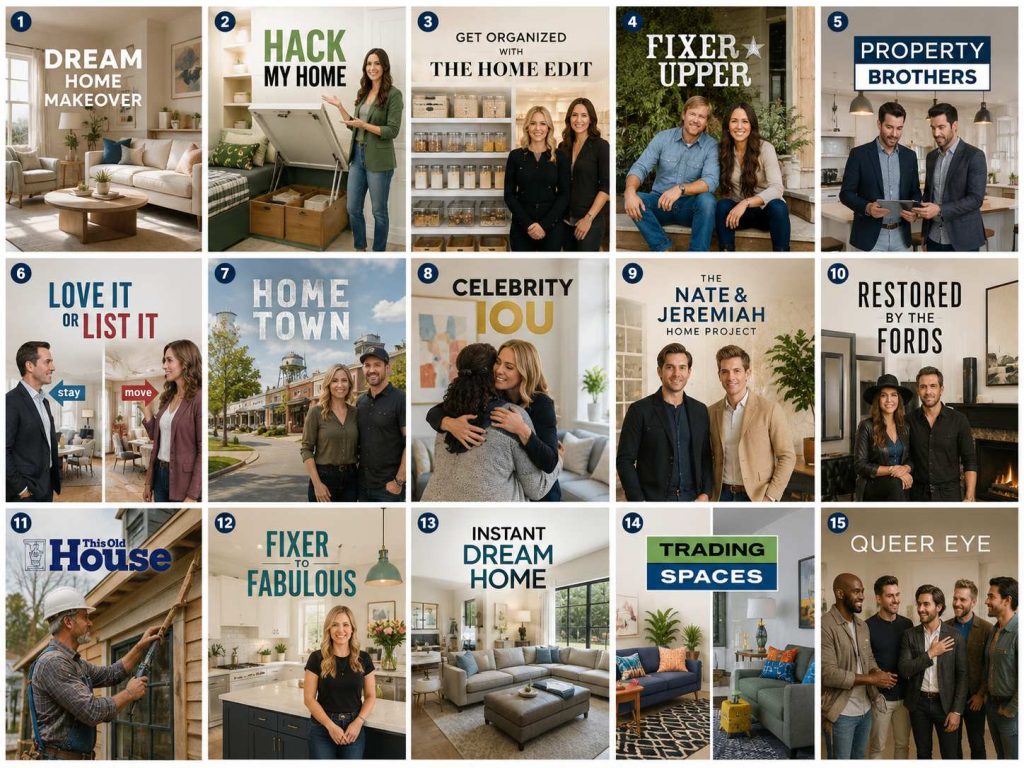
This home makeover shows list mixes polished interiors, practical renovation, organization, small-space ideas, and emotional room refreshes. Some shows are closer to professional remodeling, while others feel more like a diy tv series with approachable ideas for renters, families, or first-time decorators.
1. Dream Home Makeover
Dream Home Makeover is ideal if you like calm, polished interiors that still feel livable. The show focuses on family-friendly homes, soft palettes, layered textures, and comfortable rooms that look designed without feeling cold. It is especially useful for learning how sofas, accent chairs, rugs, and lighting work together to create a complete living space.
2. Hack My Home
Hack My Home is one of the strongest picks for small homes, apartments, and rooms that need more function. Instead of only changing surface style, the show often solves storage, sleeping, working, and family-life problems through clever built-ins and multipurpose layouts. It is useful when your main issue is not taste, but lack of usable space.
3. Get Organized with The Home Edit
This show is less about construction and more about systems. It is helpful if your home looks unfinished because everyday items have nowhere to go. The biggest lesson is visual order: grouped categories, clear containers, closed zones, and storage that supports routines. It pairs especially well with living rooms, entryways, kitchens, closets, and family spaces.
4. Fixer Upper
Fixer Upper remains popular because it blends renovation, comfort, and recognizable style. The show is useful for viewers who like warm wood, neutral colors, open living areas, and relaxed farmhouse details. Beyond the signature look, it teaches how structural changes, furniture scale, and focal points can shift the way a home feels.
5. Property Brothers
Property Brothers is helpful for anyone comparing renovation potential with home-buying decisions. The show often explains what a dated space could become, then weighs budget, layout, and resale value. It is not just about pretty rooms. It helps viewers think about whether a home’s bones, room flow, and main living areas are worth improving.
6. Love It or List It
Love It or List It works well for homeowners who feel stuck. The core question is simple: should a family renovate the current home or move? The show is useful because it reveals competing needs, such as storage, bedrooms, open living space, and better entertaining areas. It can help you define what your current home is failing to provide.
7. Home Town
Home Town is a strong choice for viewers who love older homes, wood details, porches, vintage character, and personal storytelling. The show often keeps charm instead of stripping everything away. It is useful if you want a home to feel updated but not generic, especially when working with original floors, built-ins, brick, trim, or local architectural details.
8. Celebrity IOU
Celebrity IOU is built around emotional makeovers, but it still offers useful design lessons. The best parts are the personalized details: a better kitchen for someone who cooks, a calmer bedroom for someone who needs rest, or a refreshed living area for family gatherings. It teaches that a makeover should support the person, not just the camera.
9. The Nate & Jeremiah Home Project
This show is especially useful for people who want a home that feels layered, meaningful, and family-centered. Nate and Jeremiah often work with sentimental objects, memory, and personal style instead of creating a showroom look. The design takeaway is balance: keep what matters, remove what distracts, and choose furniture that supports daily life.
10. Restored by the Fords
Restored by the Fords is more design-forward than many traditional remodeling tv shows. It often uses contrast, unusual materials, white space, sculptural furniture, and architectural character. It is a good fit if you want creative inspiration and do not mind bolder choices. Watch it for mood, proportion, and texture rather than exact step-by-step replication.
11. This Old House
This Old House is one of the most practical shows for understanding construction, restoration, repair, and long-term home value. It is less about fast glamour and more about how homes actually work. Viewers can learn about structure, materials, systems, and craftsmanship, which makes it a useful counterbalance to faster makeover shows.
12. Fixer to Fabulous
Fixer to Fabulous is a strong family-home show because many renovations focus on comfort, function, and everyday use. The designs often include open gathering spaces, updated kitchens, improved storage, and warmer finishes. It is worth watching when you want a renovation to feel fresh but still relaxed enough for kids, pets, and hosting.
13. Instant Dream Home
Instant Dream Home is built around dramatic, fast transformations. It is entertaining and visually exciting, but it should be watched as inspiration rather than a realistic project schedule. The useful part is seeing how a strong concept can guide many choices at once: layout, color, lighting, furniture, and emotional impact.
14. Trading Spaces
Trading Spaces is a classic room-refresh show with a more playful spirit. It can be useful for budget-minded viewers because it focuses on changing a room’s mood without always rebuilding the entire house. Some ideas may feel dated now, but the show still teaches creativity, risk-taking, and the power of paint, fabric, and furniture arrangement.
15. Queer Eye
Queer Eye is not only a home makeover show, but its interior-focused episodes can be surprisingly useful. The rooms often reflect lifestyle, confidence, routines, and emotional reset. Watch it when you want to understand how a home can support a person’s next chapter through comfort, organization, better function, and a more intentional atmosphere.
| Show | Best For | Main Inspiration | Where to Watch |
|---|---|---|---|
| Dream Home Makeover | Family interiors | Soft, polished rooms | Netflix |
| Hack My Home | Small spaces | Hidden function | Netflix |
| Get Organized with The Home Edit | Storage | Decluttering systems | Netflix |
| Fixer Upper | Whole-home renovation | Warm farmhouse style | Magnolia / Max |
| Property Brothers | Buying + remodeling | Value-based decisions | HGTV / Max |
| Love It or List It | Stay-or-move decisions | Layout tradeoffs | HGTV / Max |
| Home Town | Older homes | Local charm | HGTV / Max |
| Celebrity IOU | Emotional makeovers | Personalized spaces | HGTV / Max |
| The Nate & Jeremiah Home Project | Family homes | Meaningful design | HGTV / Max |
| Restored by the Fords | Creative homes | Character and contrast | HGTV / Max |
| This Old House | Construction detail | Practical restoration | PBS / Streaming |
| Fixer to Fabulous | Family living | Functional updates | HGTV / Max |
| Instant Dream Home | Fast reveals | Dramatic transformation | Netflix |
| Trading Spaces | Room refreshes | Budget creativity | Streaming / Network reruns |
| Queer Eye | Lifestyle refresh | Emotional home change | Netflix |
How Should You Choose a Show by Your Home Goal?
A long list is only helpful if you know where to start. Instead of watching randomly, match the show to the problem you actually want to solve. Some homes need storage. Some need better seating. Others need character, warmth, or a more realistic plan for an old layout.
For Small Spaces and Storage Problems
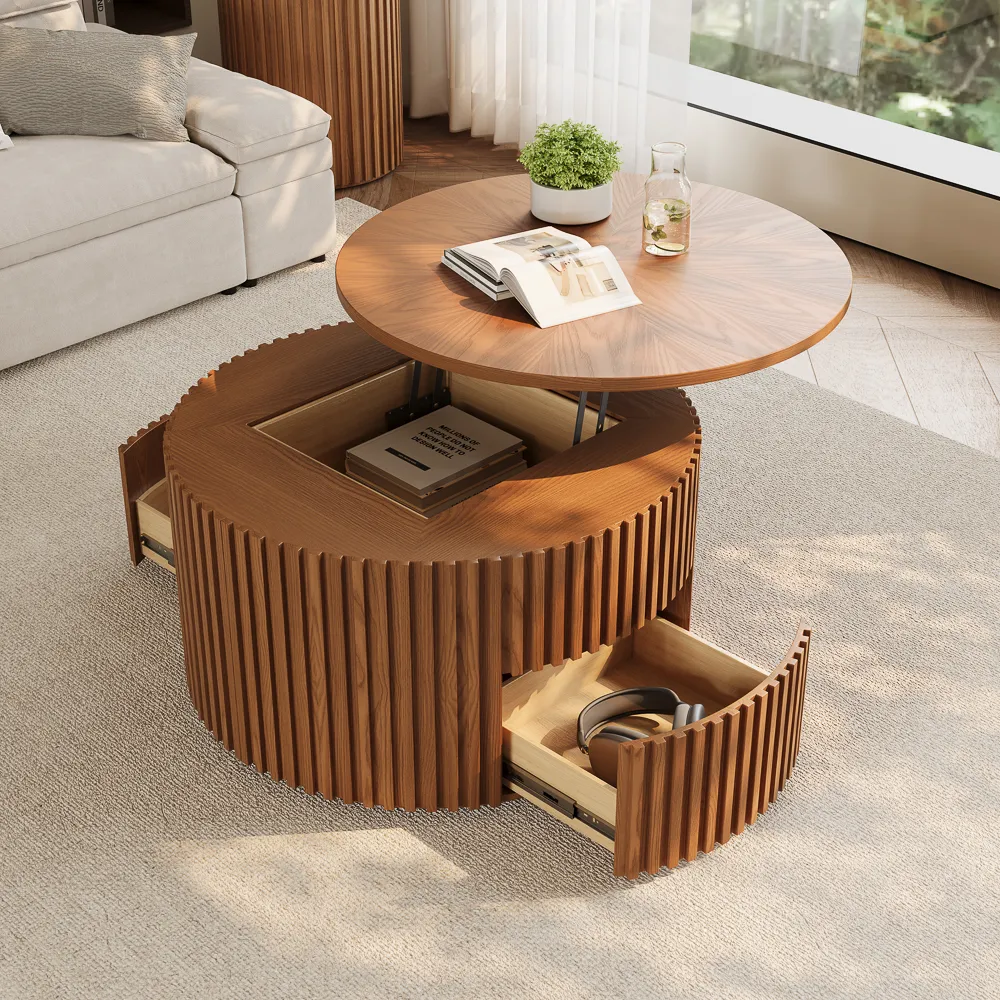
Start with Hack My Home and Get Organized with The Home Edit if your space feels crowded even after cleaning. These shows highlight hidden storage, multi-use zones, and smarter room functions. When thinking about small living room ideas, pay close attention to the pieces that do double duty: storage coffee tables, compact sofas, media cabinets, and shelves that reduce visual clutter.
A small living room feels calmer when the coffee table works beyond its surface. The Silva lifting top coffee table supports this idea with hidden storage, drawers, and a round shape that keeps movement softer around the sofa.
For Family-Friendly Living Rooms
Dream Home Makeover, Fixer to Fabulous, and The Nate & Jeremiah Home Project are better for family-focused spaces. Watch how designers build comfort around seating, durable fabrics, soft rugs, and open conversation zones. A good family living room should handle movie nights, pets, snacks, kids, guests, and quiet evenings without feeling messy five minutes after use.
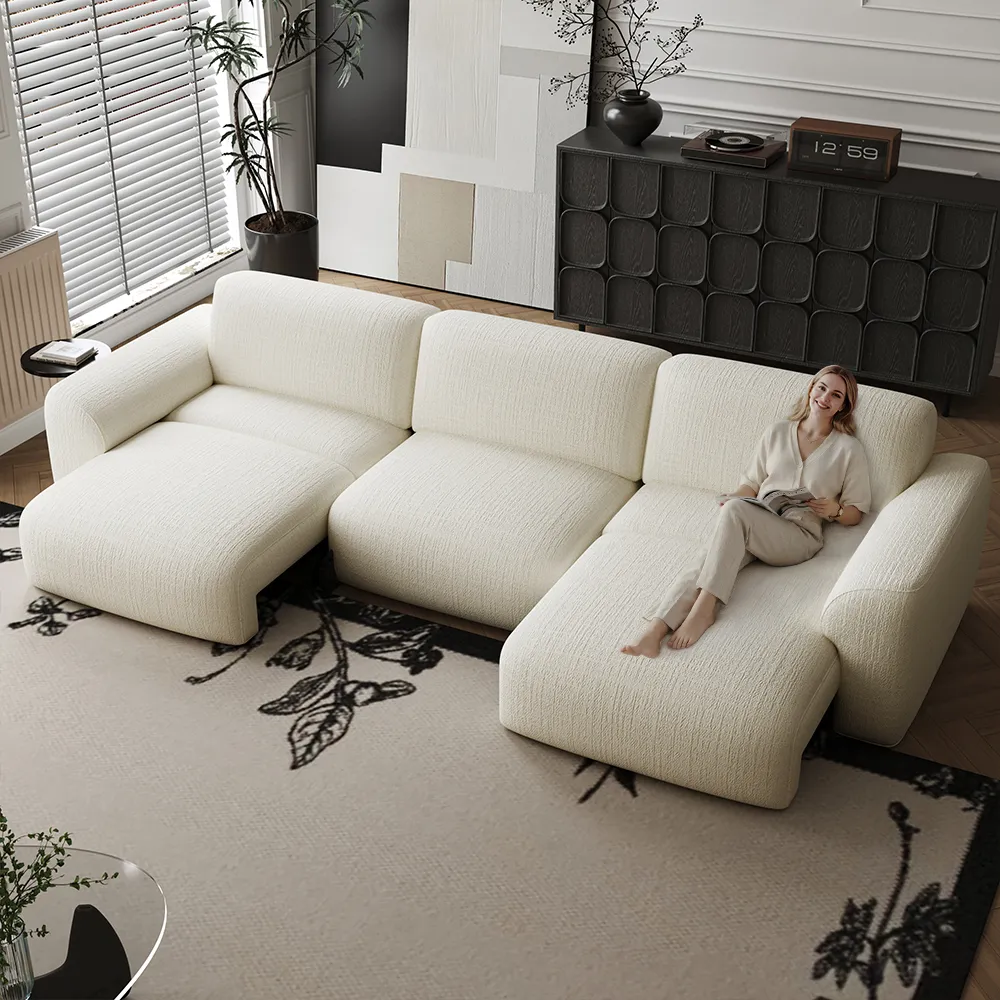
Flexible seating matters when one room handles lounging, guests, and casual sleep. The Aurora power sofa bed fits the lesson many makeover shows repeat: comfort improves when furniture can shift with real routines, not just look good in a reveal shot.
For Older Homes With Character
This Old House, Home Town, and Restored by the Fords are better choices if your home has original details. Watch for what designers keep: wood floors, trim, brick, built-ins, windows, and proportions. The goal is not to erase age. It is to make older features feel intentional with better lighting, cleaner furniture lines, updated storage, and a more edited color palette.
For Big Before-and-After Inspiration
Property Brothers, Love It or List It, Celebrity IOU, and Instant Dream Home are the best choices when you want a dramatic transformation. These shows are useful for understanding major layout changes, but they can also create unrealistic expectations. Look for the decision behind the reveal: what wall changed, what focal point moved, what storage was added, and what problem disappeared.
What Design Ideas Can You Actually Use at Home?
The most useful part of this home makeover shows list is not copying a designer’s exact room. It is learning how to notice the design moves behind the reveal. Once you understand the move, you can adapt it through furniture, layout, lighting, and storage at a realistic scale.
Useful ideas to borrow include:
- Start with layout before color. A beautiful palette will not fix blocked walkways or oversized furniture.
- Use closed storage to calm busy rooms. Open shelves look great on camera, but closed cabinets often work better for daily life.
- Treat the TV wall as part of the design. Media furniture affects balance, clutter, and viewing comfort.
- Layer lighting. Floor lamps, table lamps, sconces, and warm bulbs make rooms feel finished.
- Break a makeover into phases. Start with seating, then storage, then lighting, then decor.
When watching home makeover shows on tv, pause during the wide room shots. Notice where the sofa sits, how far the coffee table is from the seating, where the TV wall anchors the room, and whether the rug connects the main furniture. These choices usually matter more than the dramatic decor pieces.
If your living room is the main project, living room makeover ideas often become easier to evaluate after you separate visual style from function. A room can look updated because of color, but it becomes easier to live in because seating, storage, and pathways finally make sense.
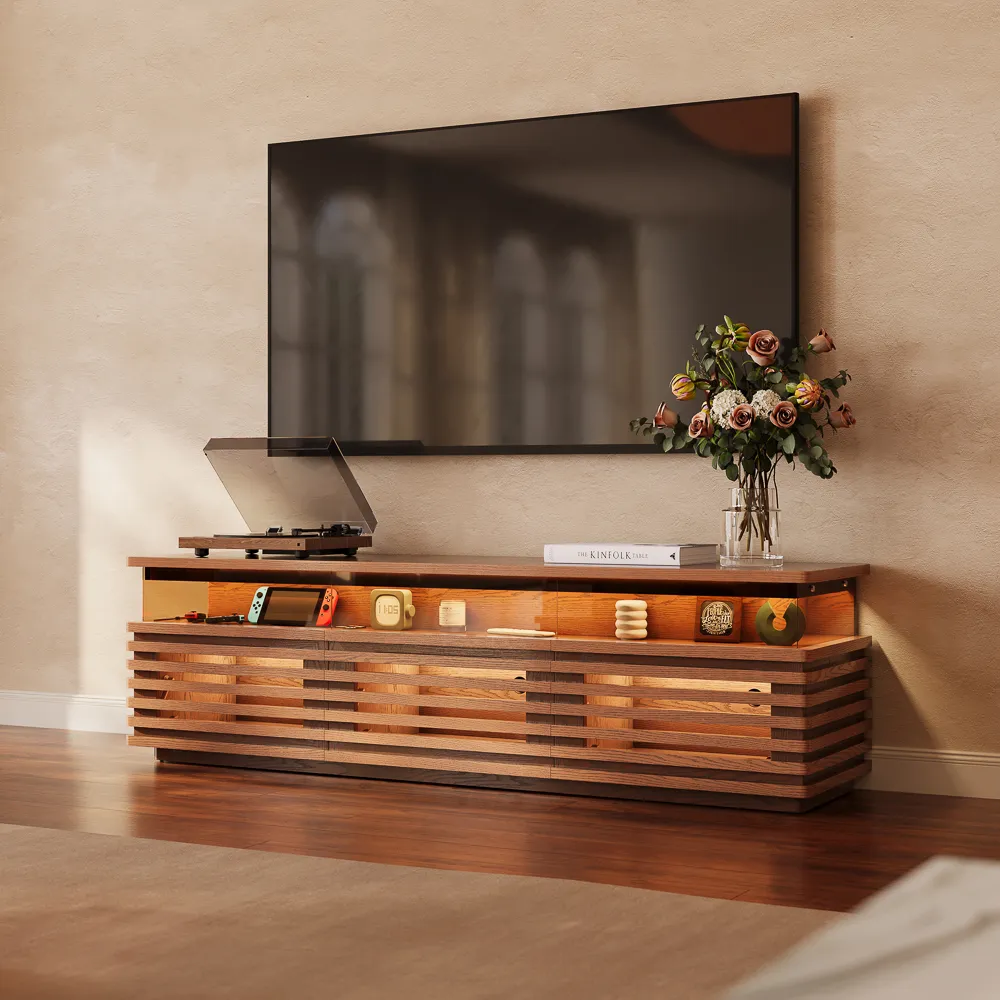
A TV wall often decides whether the room feels calm or cluttered. The Selene slatted TV stand supports a makeover-style media zone with ventilated storage, adjustable lighting, and a warm walnut finish that keeps electronics visually contained.
Why Shouldn’t You Copy Makeover Shows Exactly?
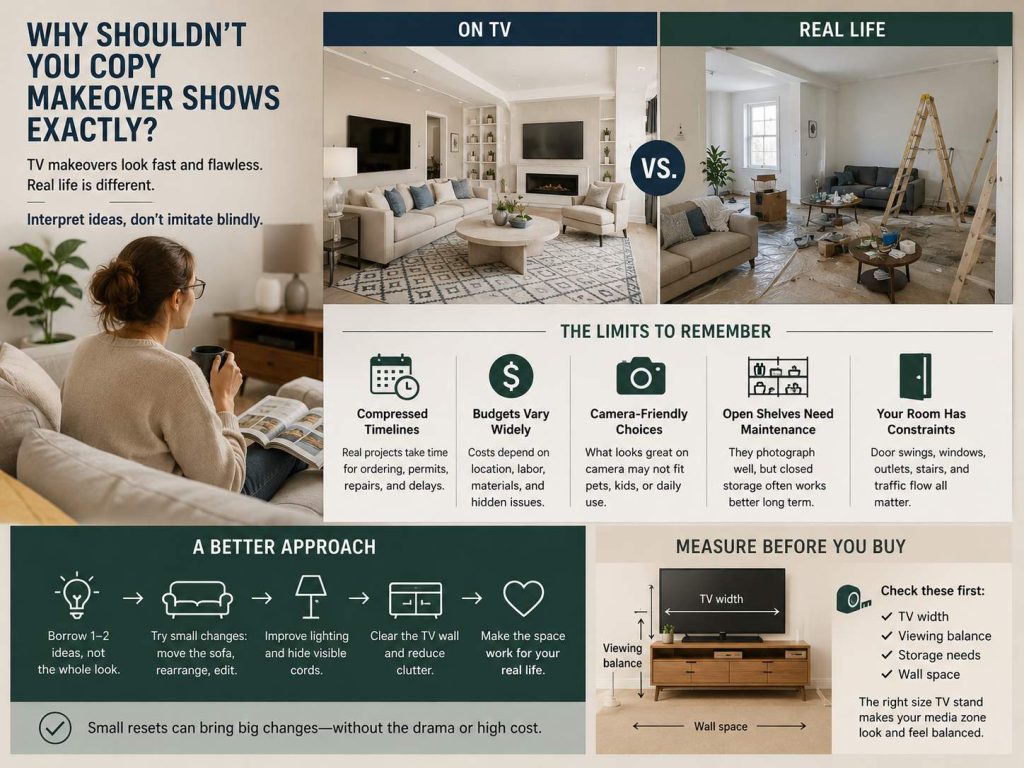
Makeover shows are inspiring because they compress change into a clear story. Real homes are slower, messier, and more personal. A smart viewer can still learn a lot, but the goal should be interpretation, not imitation. Copying the full reveal can lead to budget stress, impractical choices, or a room that looks stylish but does not fit your life.
The main limits to remember:
- Timelines are compressed. Real projects may require ordering, delivery, permits, repairs, and scheduling.
- Budgets vary widely. Labor, materials, location, and hidden issues change the final cost.
- Some choices are camera-friendly. A dramatic chair or pale rug may not suit pets, kids, or daily meals.
- Open shelves need maintenance. They look clean in a reveal, but closed storage may work better long term.
- Your room has its own constraints. Door swings, windows, outlets, stairs, and traffic flow matter.
A better approach is to borrow one or two ideas from each show. One weekend might be enough to test a new sofa layout, move a lamp, hide visible cords, and clear the TV wall. That kind of small reset can make the room feel new without pretending life works on a television schedule.
For media zones, measuring before buying is especially important because how big should your TV stand be depends on the TV width, viewing balance, storage needs, and wall space. That practical step is less glamorous than a reveal, but it prevents many common living room mistakes.
Conclusion
A strong home makeover shows list should help you decide what to watch and what to take from it. The best shows offer more than dramatic reveals; they train you to notice layout, storage, seating, lighting, and personal routines. Start with the show that matches your real home goal, whether that is small-space function, family comfort, old-home character, or big before-and-after inspiration. Then turn the best idea into one practical change you can actually live with.
FAQ
How many home makeover shows should I watch before planning a room?
Watch two or three episodes that match the same room problem before making decisions. If every episode points to the same issue, such as poor storage or oversized seating, that is a stronger signal than copying one dramatic reveal.
What home makeover shows are best for renters?
Renters may get the most value from shows focused on organization, furniture placement, color, and room refreshes rather than major demolition. Look for ideas involving removable decor, freestanding storage, lighting changes, rugs, curtains, and furniture that can move to the next home.
Are home makeover show budgets realistic?
Not always. Some shows include sponsored products, discounted labor, compressed timelines, or costs that vary by location. Treat the budget as a general reference, then price your own project based on local labor, delivery, materials, room size, and whether construction is involved.
Should I choose a show based on style or room problem?
Start with the room problem first. A beautiful style will not help much if your real issue is lack of seating, poor storage, bad lighting, or an awkward walkway. Once the function is clearer, style choices become easier and less risky.
Can home makeover shows help with small updates, not full remodels?
Yes. Many useful ideas do not require a full renovation. A better rug size, warmer lighting, a cleaner TV wall, new storage, or a different furniture layout can change how a room feels without construction, permits, or a large remodel budget.


