 By Kelvin
Introduction
If your living room is small, the TV can quickly become the thing every other piece of furniture has to work around. The right plan helps you fit the screen, sofa, storage, coffee table, and walking space without making the room feel packed. These small living room ideas TV owners can actually use start with layout first, then move into furniture and styling. The goal is not to hide the TV completely. It is to make the TV area feel intentional, comfortable, and easy to live with.
Table of Contents
What Should You Plan First in a Small TV Living Room?
Before choosing a TV stand, wall mount, or sofa, decide how the room will actually be used. A small living room usually fails when the TV is treated as a single object instead of part of a system. The screen, seating, storage, outlets, windows, and walking path all affect one another.
Start with three questions:
- Where will people sit most often?
- Which wall gives the clearest viewing angle?
- What furniture has to stay in the room every day?
For a small apartment living room, the TV may need to share space with a dining table, entryway, pet bed, or work corner. In that case, the best TV wall is not always the largest wall. It is the wall that lets people walk through the room without turning sideways around the coffee table.
A good rule is to plan the viewing zone first, then place storage around it. If the sofa, TV, and coffee table already feel tight on paper, adding open shelves, side tables, and extra chairs will only make the room harder to use.
How Do TV Size and Placement Work Together in a Small Living Room?
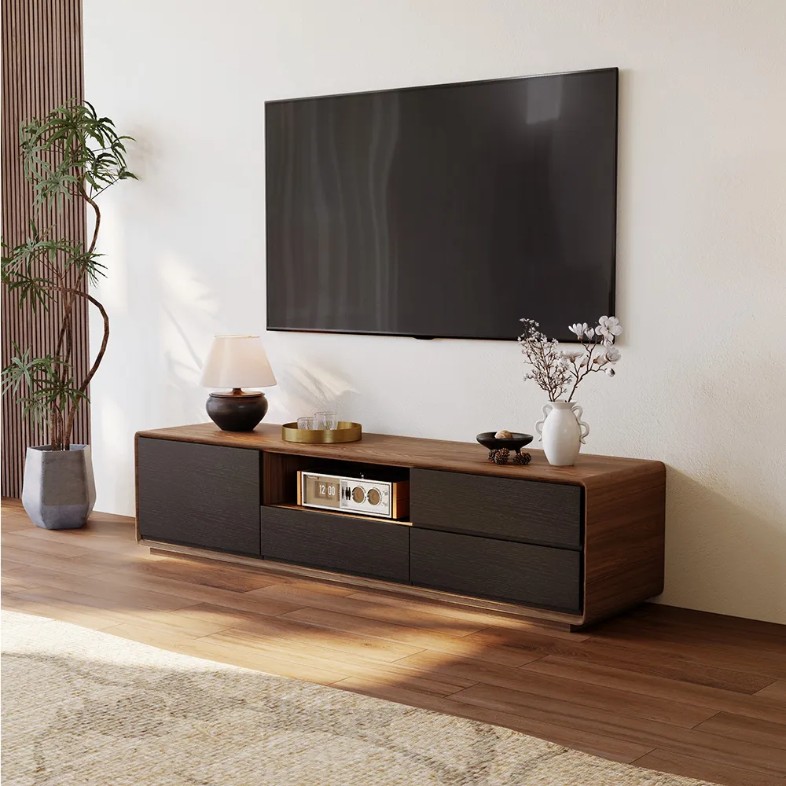
In a small living room, TV size and placement should be decided together. A 43-inch TV, a 55-inch TV, and a 65-inch TV can all work, but each one needs a different wall, viewing distance, and furniture setup. The most useful small living room ideas TV owners can follow start with this question: how large can the screen be before it makes the room feel controlled by the TV?
A simple way to estimate TV size is to compare screen size with viewing distance. RTINGS suggests dividing viewing distance in inches by 1.6 for a mixed-use TV setup. This is only a starting point, but it helps prevent choosing a screen that feels too large for the seating distance.
| TV Size | Best Placement | Works Best For | Watch Out For |
| 40–43 inches | Main wall, corner, or small console setup | Studios, apartments, short viewing distance | May feel small for movie nights |
| 50–55 inches | Main wall or wall-mounted setup with low console | Most small to medium living rooms | Needs enough wall width and balanced storage |
| 60–65 inches | Main wall or clean wall-mounted setup | Longer narrow rooms or open-plan spaces | Can feel overwhelming if sofa is too close |
| 70 inches and above | Larger open-plan living rooms | Bigger viewing distance and minimal TV wall decor | Usually too dominant for tight small rooms |
Use the table as a placement filter, not a strict rule. Smaller TVs give you more layout flexibility, while larger TVs need a cleaner wall, fewer surrounding decorations, and better viewing distance. If you are choosing a TV stand at the same time, check width, height, storage, and proportion before buying. A guide on how to choose a TV stand for a small living room can help you avoid a console that looks heavier than the TV itself.
TV Stand, Wall Mount, or Floating Console?
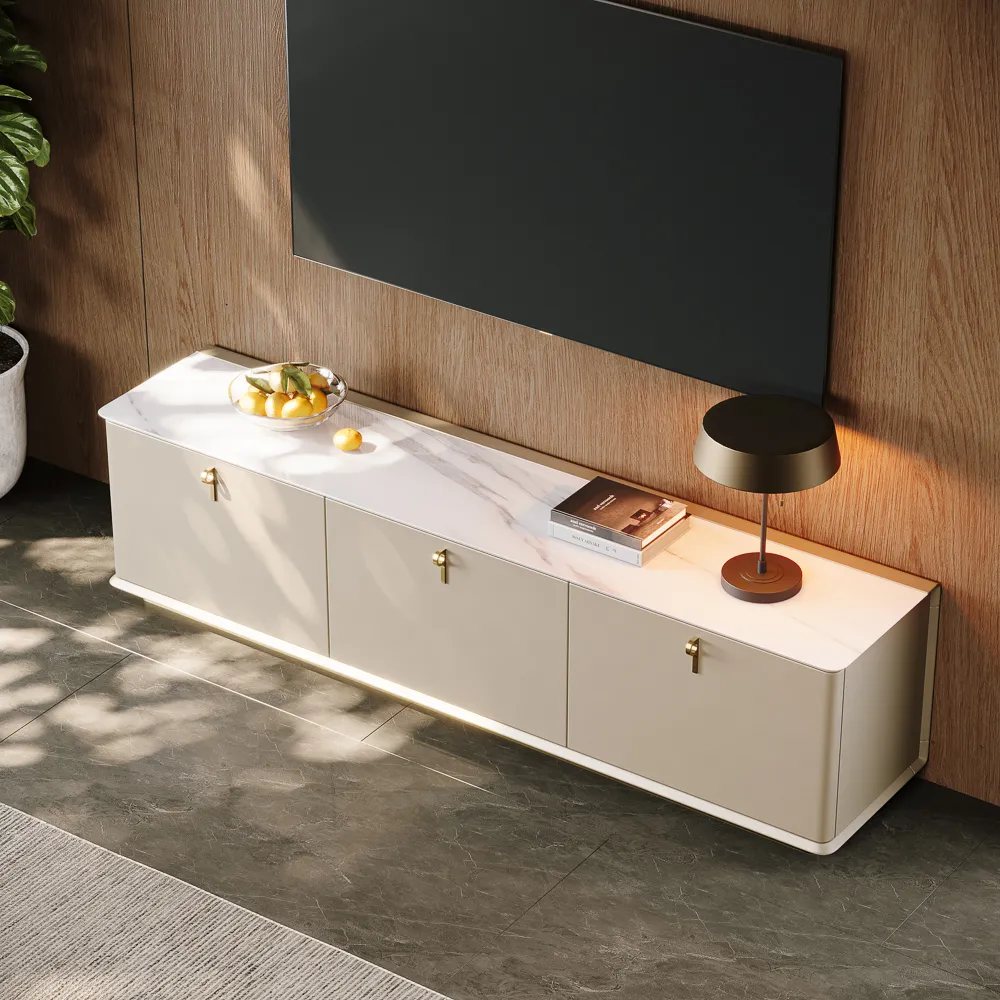
This is one of the most important decisions in a small TV living room. Wall mounting saves floor space, but it does not solve storage. A TV stand adds function, but the wrong one can make the room feel smaller. A floating console sits between the two by keeping storage off the floor.
| Option | Best For | Main Benefit | Check Before Choosing |
| Wall-mounted TV | Very tight rooms, clean modern layouts | Frees floor space | Wall type, rental rules, cable plan |
| Slim media console | Renters and storage-heavy homes | Hides devices and clutter | Depth, width, door clearance |
| Floating console | Modern small rooms | Keeps visible floor space open | Stud location and wall strength |
| Built-in storage | Long-term homes | Custom look and maximum storage | Cost, permanence, room width |
If you rent or cannot drill into the wall, a slim media console may be the safer choice because it adds storage without requiring installation. If the room feels tight at floor level, a floating console can make the TV wall look lighter while still hiding remotes, routers, and cables. When deciding between a floating console and a shelf-style setup, compare storage needs, wall support, cable management, and daily use. A guide on floating TV console vs wall shelf can help you choose the option that fits your room better.
For rooms where floor space already feels tight, the Merrin 63″ Black Floating TV Stand works well under a wall-mounted TV or along a narrow media wall. Its floating design keeps the floor visually open, while the 14.57-inch depth, three cabinet doors, and adjustable mounting height help keep small-room storage cleaner without adding a bulky base cabinet.
Dos and Don’ts for a Less Crowded TV Area
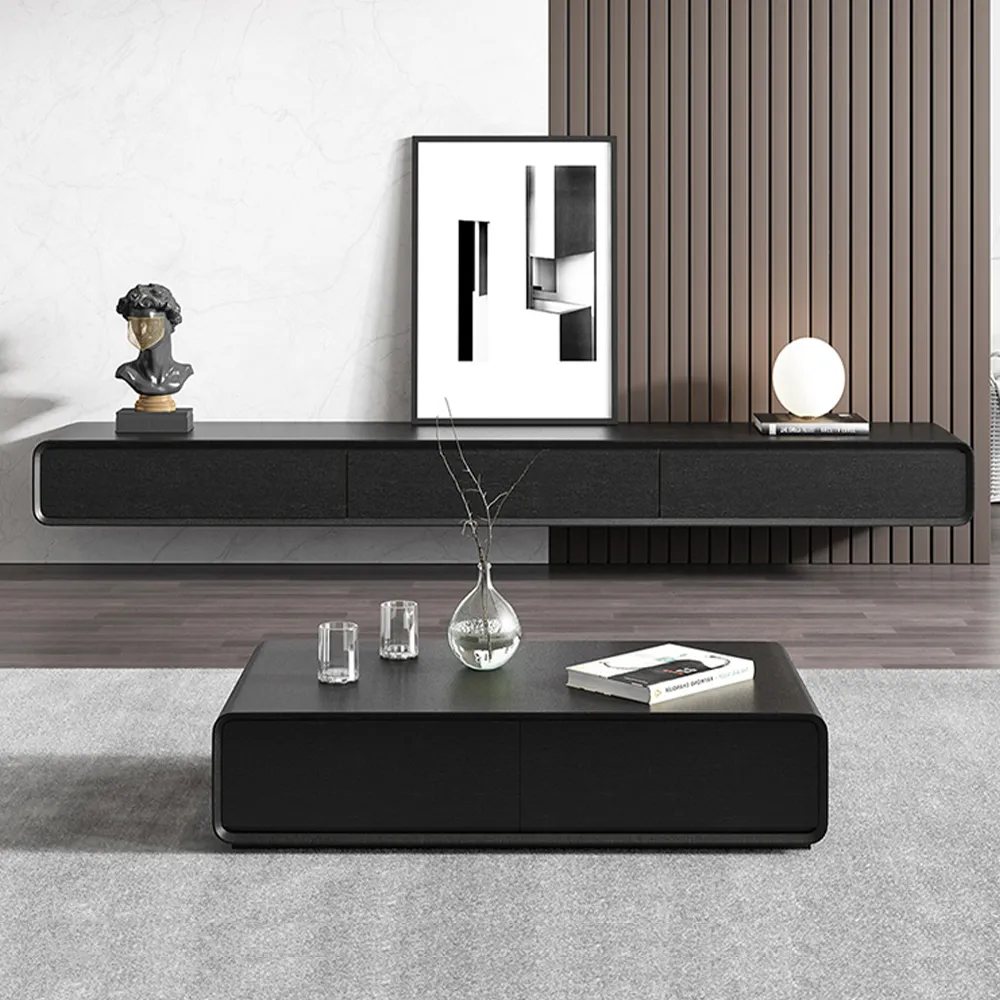
A small TV living room often feels crowded because the screen, furniture, storage, cables, and decor are all competing for attention. Instead of adding more styling, use these small tv living room ideas to make the TV area feel cleaner, lighter, and easier to use.
Do’s
- Choose a slim or low-profile TV stand to keep the media wall from feeling heavy.
- Use closed storage for remotes, routers, chargers, game controllers, and visible cables.
- Protect the main walking path between the sofa, coffee table, doorway, and TV wall.
- Match sofa depth to viewing distance so the seating does not make the TV feel too close.
- Consider round, oval, lift-top, or storage coffee tables when a rectangular table blocks movement.
- Consider wall-mounted or floating storage if the floor already feels crowded.
- Keep storage visually light so the TV wall does not feel heavier than the screen itself.
Don’ts
- Blame the TV first before checking whether the sofa, coffee table, or TV stand is too large.
- Use open shelves as everyday storage if they will collect cables, devices, and small clutter.
- Choose a TV stand that is too deep for the wall or walkway.
- Mount the TV too high, especially in a small room where the sofa sits close to the screen.
- Crowd the media wall with too many small decorations.
- Let visible cords and devices sit on the floor.
- Add bulky shelving around the TV if the wall already feels visually heavy.
- Use several tiny accessories under the screen when one or two larger pieces would look cleaner.
- Add extra furniture just to fill the room if the TV area already feels tight.
This is where simple small living room ideas with TV are often more useful than extra decor. A slimmer console, cleaner cable setup, better sofa depth, hidden storage, and fewer wall accents can make the TV area feel more open without changing the screen itself.
Conclusion
The best small living room ideas TV layouts start with the way you live, not with the screen size alone. Choose the clearest TV wall, confirm viewing distance, keep the sofa and coffee table from blocking movement, and use storage that hides daily clutter. A wall mount, slim media console, or floating console can all work when they match the room’s limits. In a small living room, the TV does not need to disappear. It just needs the right furniture and enough breathing room around it.
FAQ
What should I measure before buying furniture for a small TV living room?
Measure the TV wall width, sofa-to-TV distance, main walking path, and the depth of any TV stand or coffee table. These numbers matter more than the room’s total square footage. A piece that fits on paper can still feel wrong if it blocks the doorway, narrows the path, or pushes seating too close to the screen.
How deep should a TV stand be for a small living room?
A small living room usually works better with a slim TV stand that is deep enough for devices but not so deep that it narrows the walkway. Check your soundbar, router, and game console before buying. Closed storage and cable holes matter more than extra display shelves.
How much walking space should I leave around the TV area?
Leave enough space for people to pass through the room without turning sideways. As a practical rule, keep the main walkway clearer than the decorative zones around the TV. If the coffee table, sofa, or console forces awkward movement, reduce furniture depth before adding more storage or decor.
How do I hide TV cords without built-in cabinets?
Use a wall-colored cord cover, cable box, rear cable holes, or closed console storage to hide TV cords. Keep power strips and routers off the visible floor whenever possible. In rental homes, removable cord covers are often easier than in-wall wiring and still make the TV area cleaner.
What if my small living room has windows on every wall?
Choose the wall with the least direct glare, even if it is not the largest wall. A corner TV setup, swivel mount, or lower TV stand can help in window-heavy rooms. Add curtains or shades if daytime viewing matters. Do not place the TV directly opposite strong sunlight.
What material or finish works best for TV furniture in a small room?
Matte wood, walnut tones, soft neutrals, and simple textured finishes usually work well because they add warmth without reflecting too much light. High-gloss surfaces can show fingerprints and glare more easily. In a small TV living room, the finish should support the screen instead of competing with it.
Can one small living room work for TV watching, guests, and storage?
Yes, but each piece should do more than one job. A storage coffee table, compact sofa bed, closed media console, or wall-mounted storage can help the room handle daily use and occasional guests. The key is to avoid adding separate furniture for every need, which quickly makes the room feel crowded.


[…] compact rooms, small living room TV ideas work best when screen size and placement are treated as one decision instead of choosing the TV […]
[…] design can also show more floor, which helps the wall feel lighter. For tighter TV-focused rooms, small living room ideas with TV can help connect screen size, wall choice, storage, and viewing […]
[…] the TV base or feet and that the top is rated for the screen weight. If the room is compact, plan a small living room TV layout before choosing furniture depth so the console does not narrow the main […]
[…] rooms where screen placement is the larger challenge, small living room TV layout ideas address viewing positions, storage arrangements, and […]
[…] same problem appears in small living room TV ideas: a media console may fit against the wall while still leaving insufficient room between the screen […]