 By Kelvin
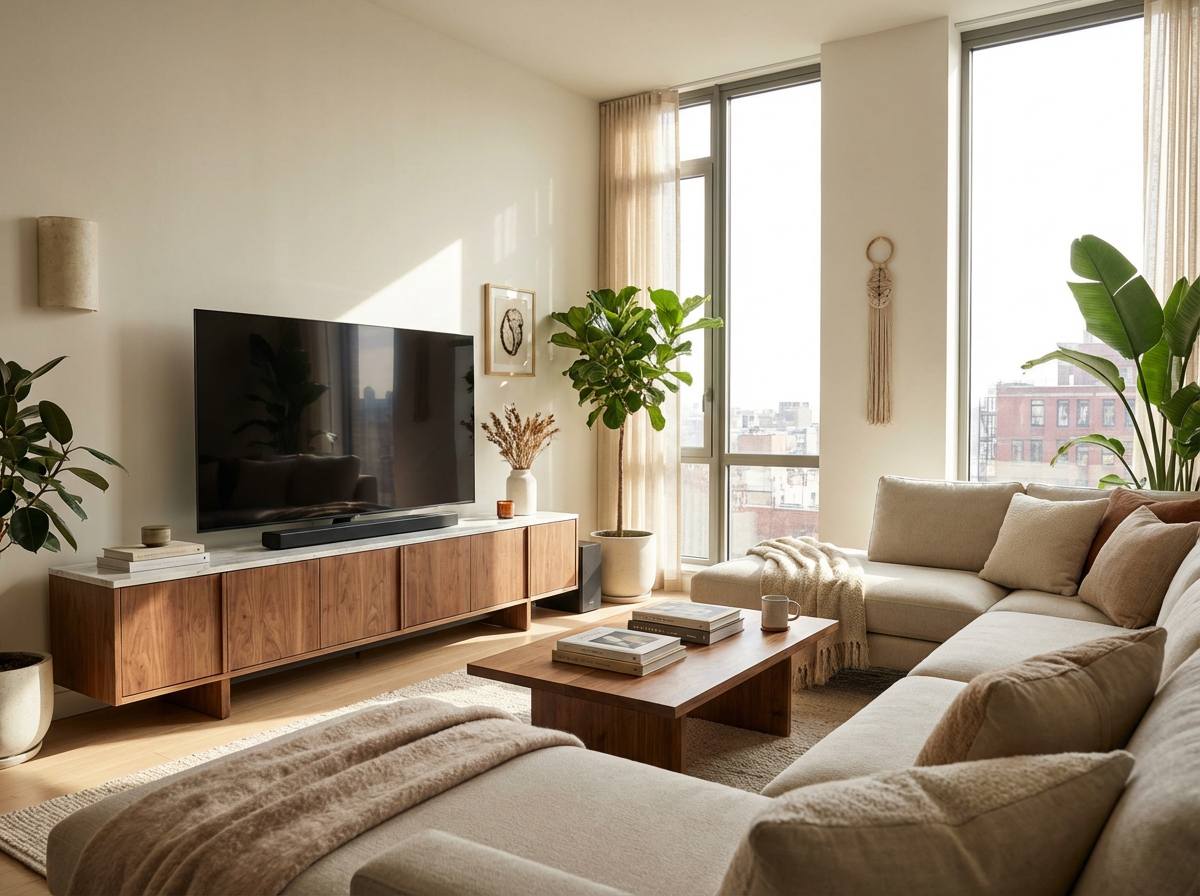
A small living room needs more than a well-placed TV to feel comfortable. The sofa, media console, coffee table, and walking paths all compete for limited floor space. If the room also needs to accommodate overnight guests, choosing furniture that serves more than one purpose becomes even more important.
These small living room TV ideas show how to arrange the screen, seating, and storage around different room shapes and daily routines. From a TV wall with a power sofa bed to a corner-screen setup with compact furniture, each layout offers a practical way to make the room easier to use without filling it with extra pieces.
Table of Contents
How Do You Plan a Small Living Room TV Layout?
Before choosing furniture, measure the room and decide how the TV area needs to function. A layout that works for a dedicated viewing space may not suit a living room that also serves as a guest area, reading corner, or everyday gathering spot.
Start with four measurements:
- TV wall width: Check how much space remains for a console, shelving, or other furniture.
- Viewing distance: Measure from the usual seating position to the screen before deciding on TV size.
- Furniture footprint: Record the full width and depth of the sofa, coffee table, and media console.
- Clearance: Account for door swings, windows, outlets, and the space needed to walk through the room.
If guests occasionally stay overnight, measure the room with the sofa bed in its extended position, too. A piece that fits in its everyday seating configuration may require a different arrangement when opened.
Match the TV Size to the Seating Distance
A larger screen is not automatically better for a small living room. The right size depends on viewing distance, wall width, and how the screen fits into the rest of the furniture arrangement.
| TV size | Potential placement | What to check |
| 40–43 inches | Main wall or corner | Whether the screen is comfortable to view from the sofa |
| 50–55 inches | Main wall or wall-mounted setup | Wall width, console proportions, and viewing distance |
| 60–65 inches | A longer room with sufficient viewing distance | Whether the screen dominates the room or sits too close to the seating |
Treat these sizes as starting points rather than fixed rules. Before buying a TV or console, check the manufacturer’s viewing-distance guidance and the dimensions of your actual room.
What Small Living Room TV Layouts Work Best?
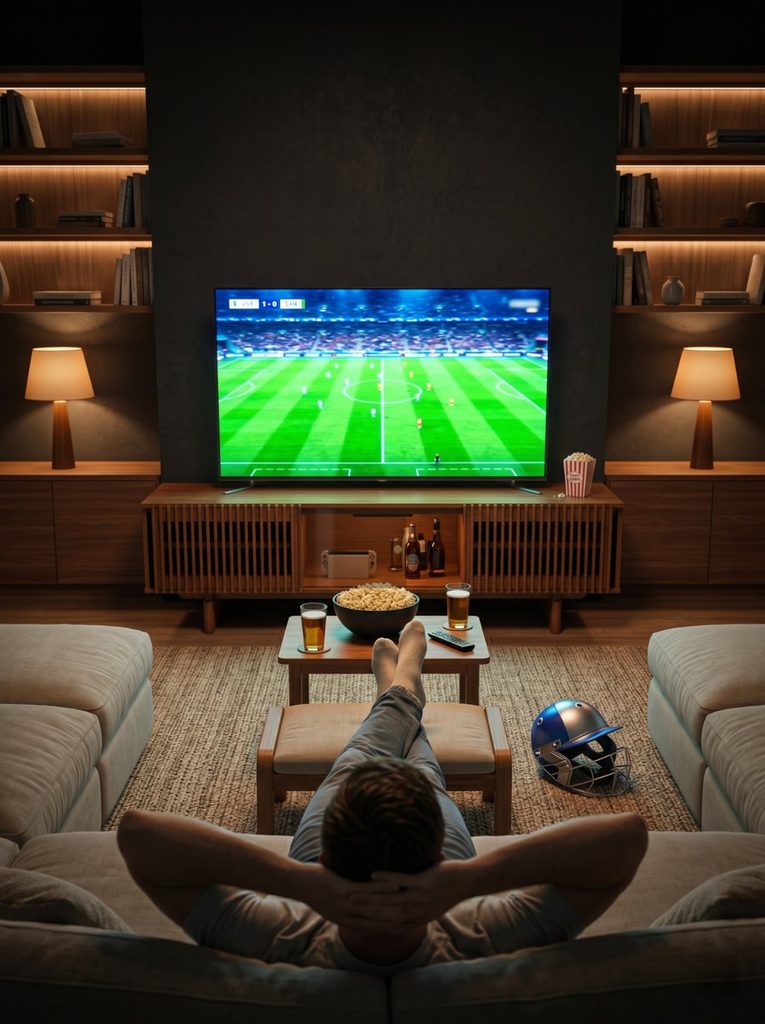
The best arrangement depends on whether you need more seating, a clearer walkway, additional storage, or room for occasional guests. These four layouts address different priorities rather than applying the same furniture arrangement to every small living room.
1. Create a TV Wall with a Sofa Bed
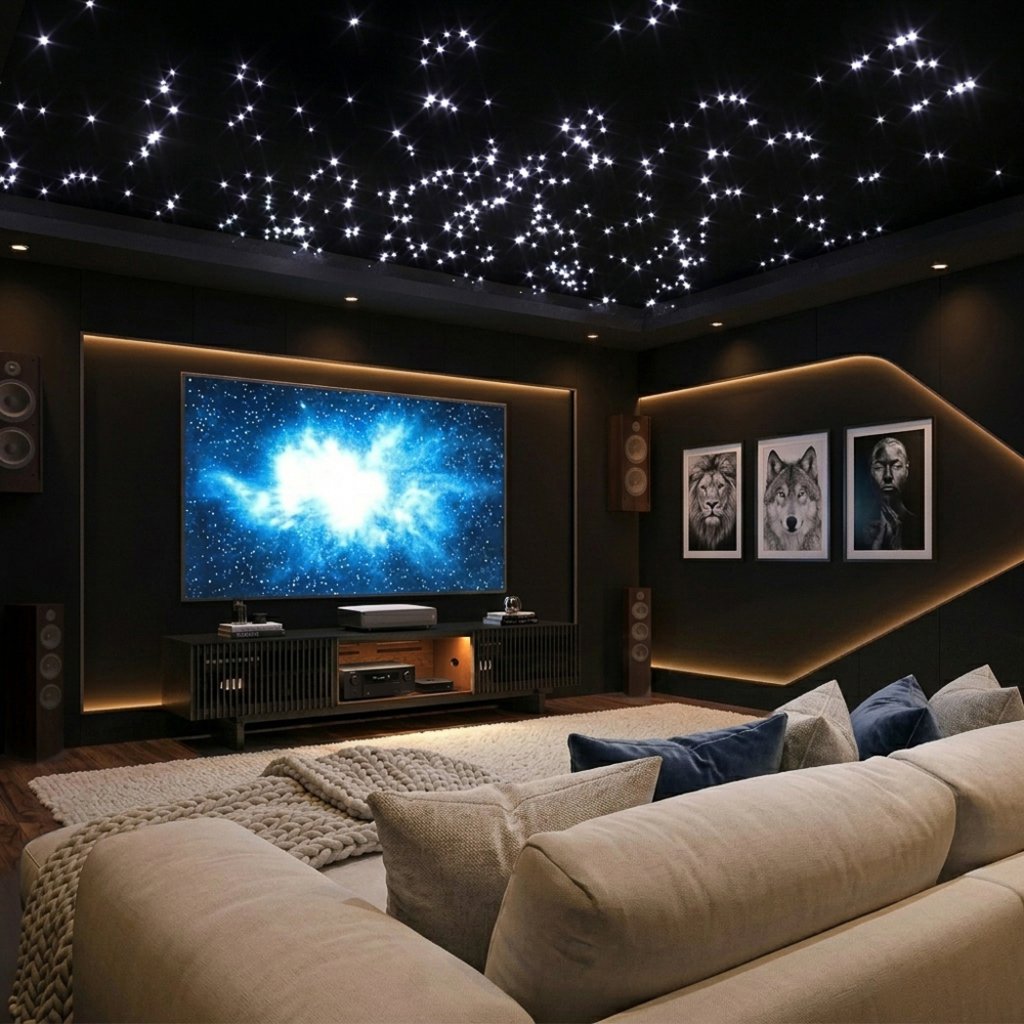
A TV wall paired with a sofa bed works well when the living room needs to function as both an everyday viewing area and an occasional guest space.
Place the TV and media console against the main wall, then position the sofa bed opposite the screen. A compact coffee table can sit between them, provided there is enough room to move around it. Keep the primary walkway clear instead of filling the remaining corners with extra chairs or side tables.
The main advantage is functional flexibility. Instead of dedicating additional floor space to a separate guest bed, you can use the seating area for everyday activities and adapt it when overnight accommodation is needed.
Before choosing a model, check its width, extended depth, and the clearance between the sofa bed and coffee table. If the room only works when the seating is closed, reconsider the furniture arrangement before committing to this layout.
2. Arrange a Narrow Living Room Around One Clear Walkway
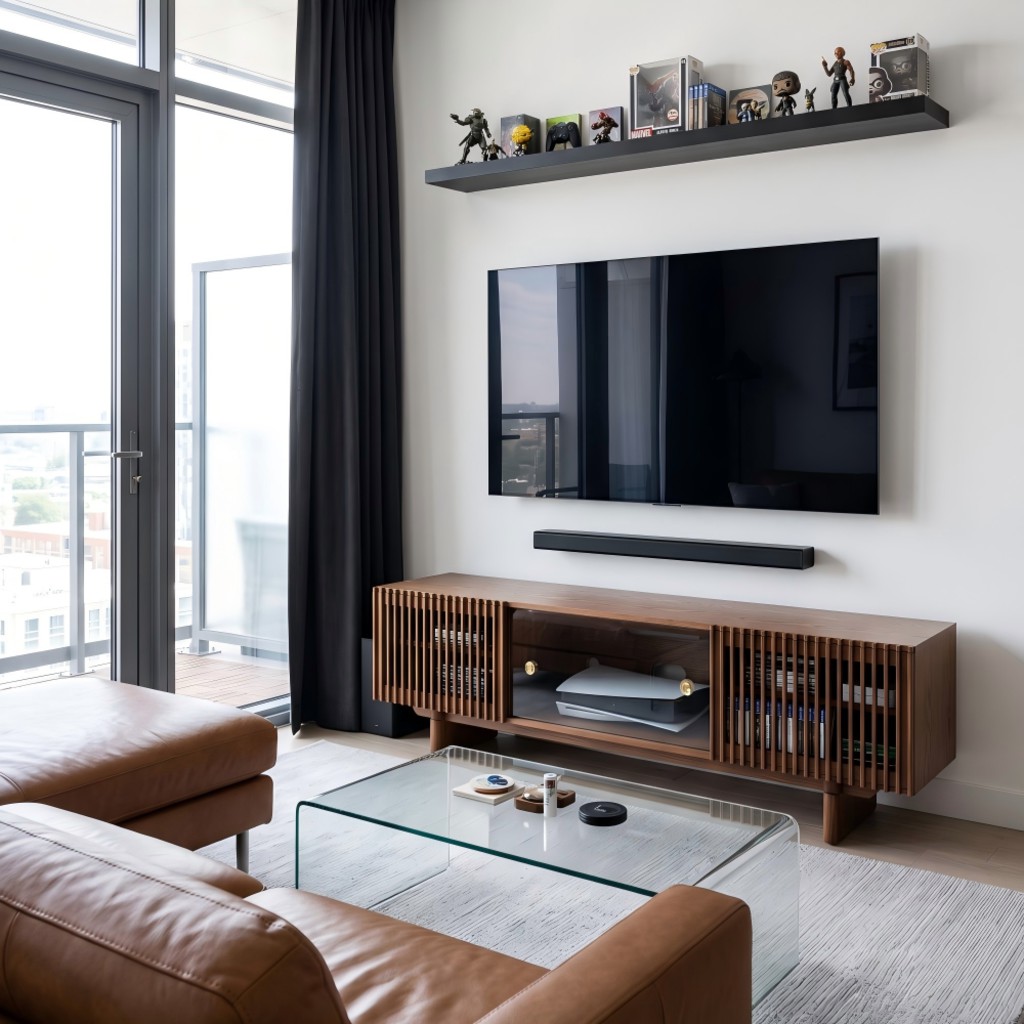
In a long, narrow living room, place the sofa along the longer wall and position the TV on the opposite wall or at one end of the room. A low-profile console can keep the viewing area organized without introducing unnecessary visual bulk.
If you choose a sofa bed, make sure its extended configuration does not block the main route between the entrance and the rest of the home. You may need to reduce the coffee table’s size or move it aside when the sleeping surface is extended.
Avoid placing deep furniture on both sides of a narrow passage. A balanced arrangement with one main seating zone and a clearly defined walkway is usually easier to use than several small furniture groupings competing for space.
3. Use a Corner TV Setup When the Main Wall Is Unavailable
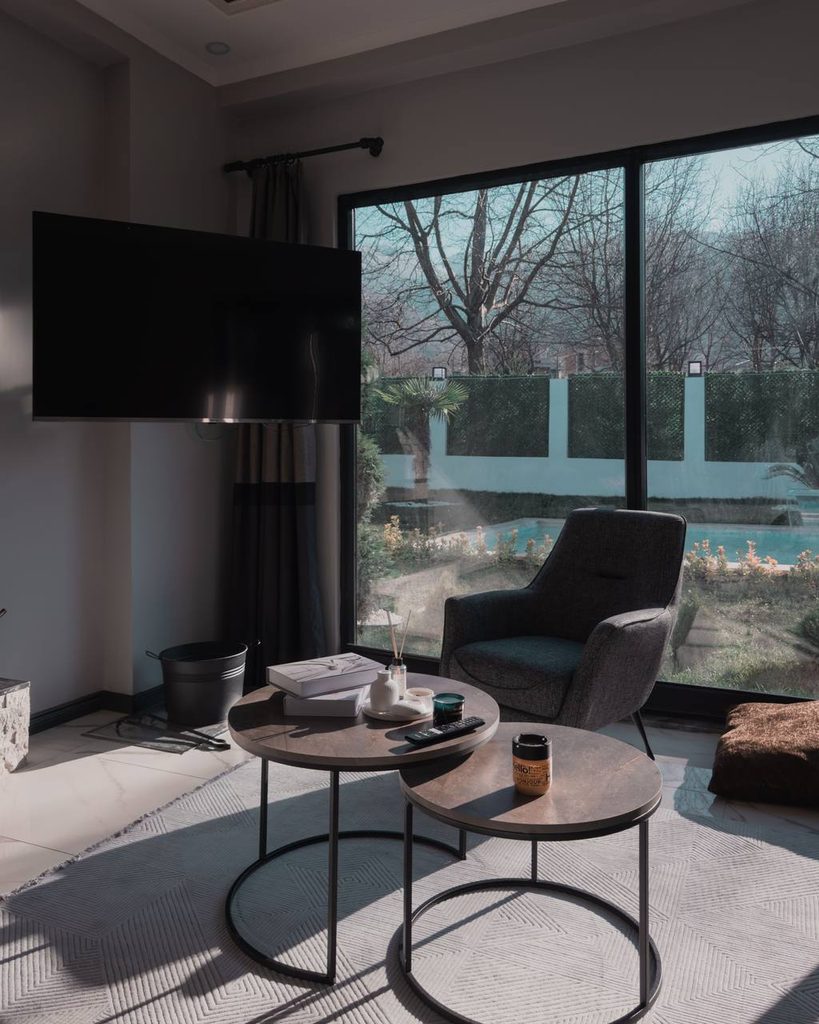
A corner TV setup can help when windows, doors, or other fixed features limit the available wall space. Angle the screen toward the main seating position and arrange the sofa so people can watch without turning awkwardly.
This layout can work particularly well in rooms with an off-center entrance or an open connection to the dining area. However, placing the TV in a corner does not automatically save space. Check the screen’s viewing angle, glare from nearby windows, and the amount of room left for the sofa.
Choose a compact console or an appropriate wall-mounted solution rather than adding a large cabinet simply to fill the corner. If the arrangement makes the main walkway narrower, a TV on the primary wall may be the better choice.
4. Combine the TV Area with Everyday Storage
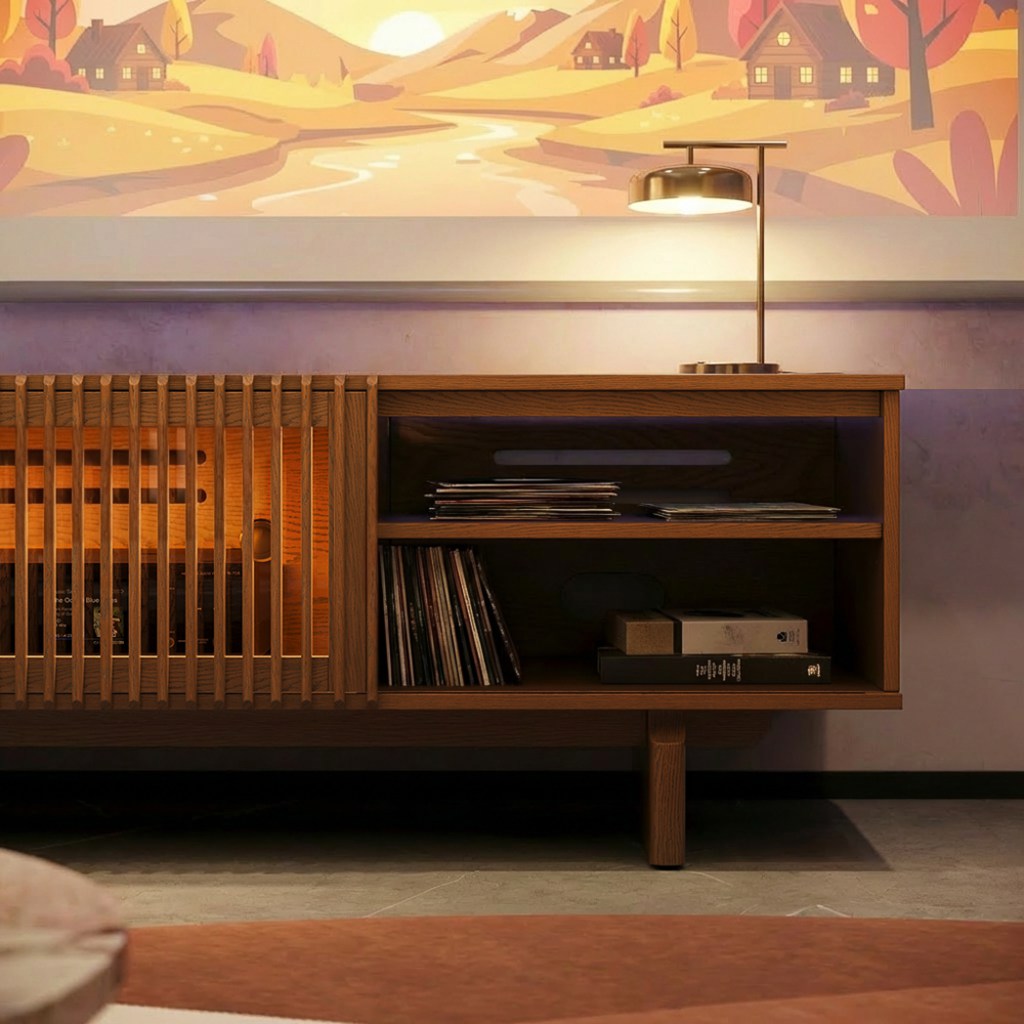
If the living room also needs to accommodate games, books, remotes, chargers, and other daily essentials, prioritize furniture that keeps these items organized.
Place a media console beneath the TV, use closed storage for smaller equipment, and choose a coffee table that supports your routine without obstructing movement. If the room already contains several storage pieces, consider whether one multifunctional table can replace a separate side table or storage unit.
This arrangement is particularly useful for households that want a tidy TV area without built-in cabinetry. The key is to assign each piece a clear role and avoid adding furniture simply because there is an empty corner.
What Furniture Makes a Small TV Living Room More Functional?
Once you choose the layout, select furniture according to its footprint and practical role. A smaller room rarely benefits from choosing every piece independently; the sofa, media console, and coffee table need to work together.
Choose a Media Console That Fits the Wall and Equipment
A media console can provide storage for streaming devices, controllers, remotes, and cables. However, a console that is too deep or too wide may take space away from seating and walking paths.
For a very tight room, prioritize a shallow console or consider a floating design. If you have several AV components and a wider TV wall, a larger cabinet may be worthwhile, provided its dimensions fit the room.
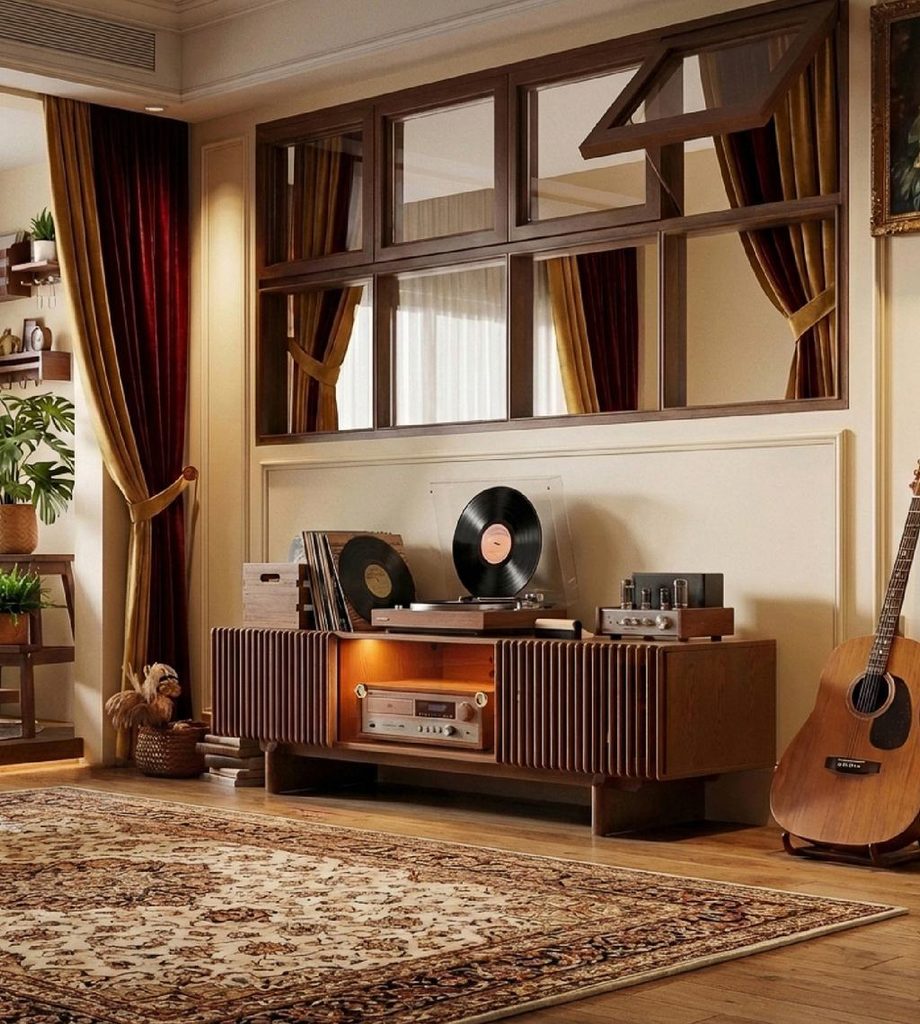
For more sizing guidance, see how to choose a TV stand for a small living room.
The Delven Verse Mid-Century Modern TV Stand offers substantial storage for a TV wall that needs room for multiple devices. Its 70.86-inch width and 21.85-inch depth make it better suited to a room with adequate wall space and floor clearance than to the tightest layouts. Measure the full footprint before choosing it for a small living room.
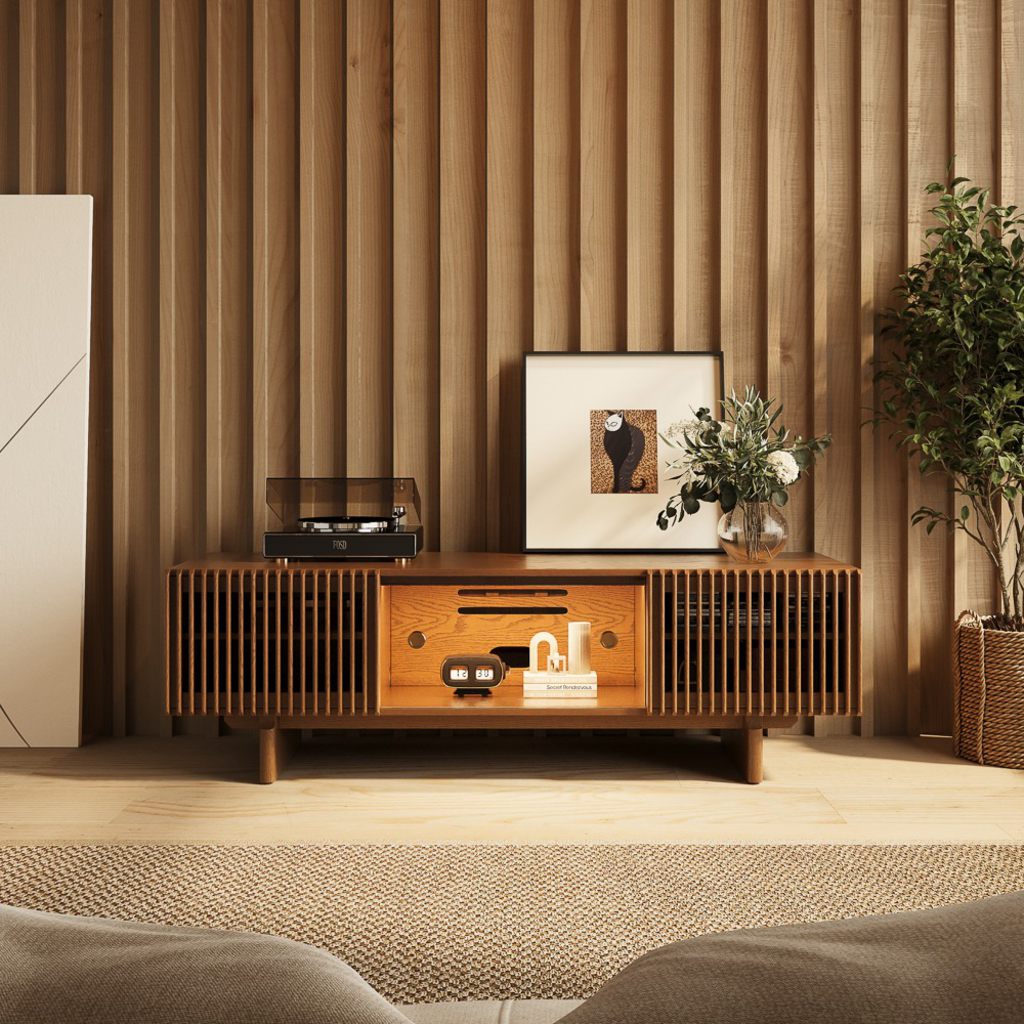
Delven Verse TV Stand
A walnut console anchors AV equipment and can replace extra storage pieces.
👍 Best for: TV walls with ample AV clearance
✨ Three enclosed cabinets
✨ Two interior shelves
✨ Six internal cable holes
Choose a Coffee Table That Supports Movement
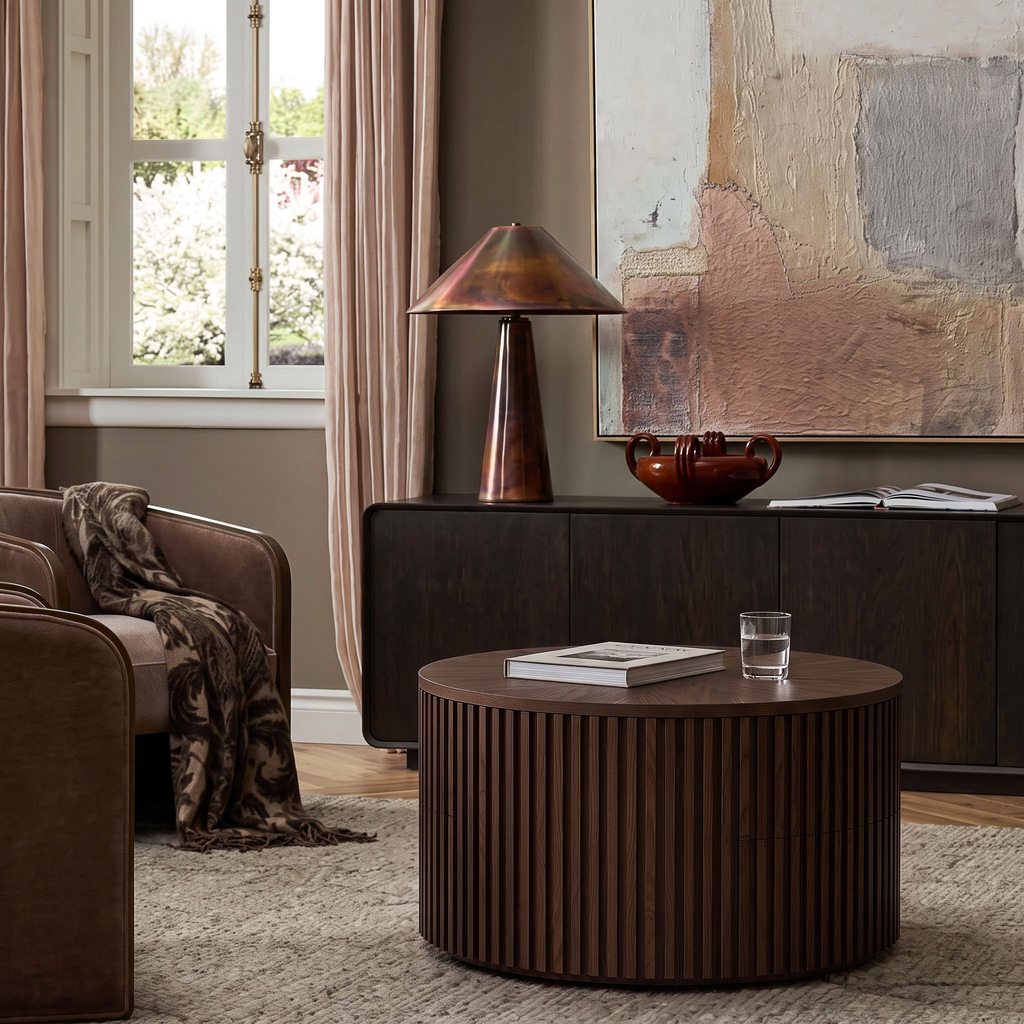
The coffee table should be proportionate to the sofa and leave enough space for people to pass through the room. A round table can soften the arrangement and avoid sharp corners along a busy route, while a lift-top design can provide a raised surface for working, eating, or other everyday tasks.
Storage can also reduce the need for additional furniture. However, a lift-top table still needs enough room for people to approach it comfortably, so consider how the raised surface will work with the sofa and the main walkway.
The Silva Lifting Top Round Coffee Table combines a round footprint with a lifting tabletop and built-in drawers. Its 31.5-inch diameter may suit a compact seating arrangement, but it still needs enough surrounding clearance to avoid interrupting the walkway. Check the table’s raised position against the sofa before finalizing the layout.
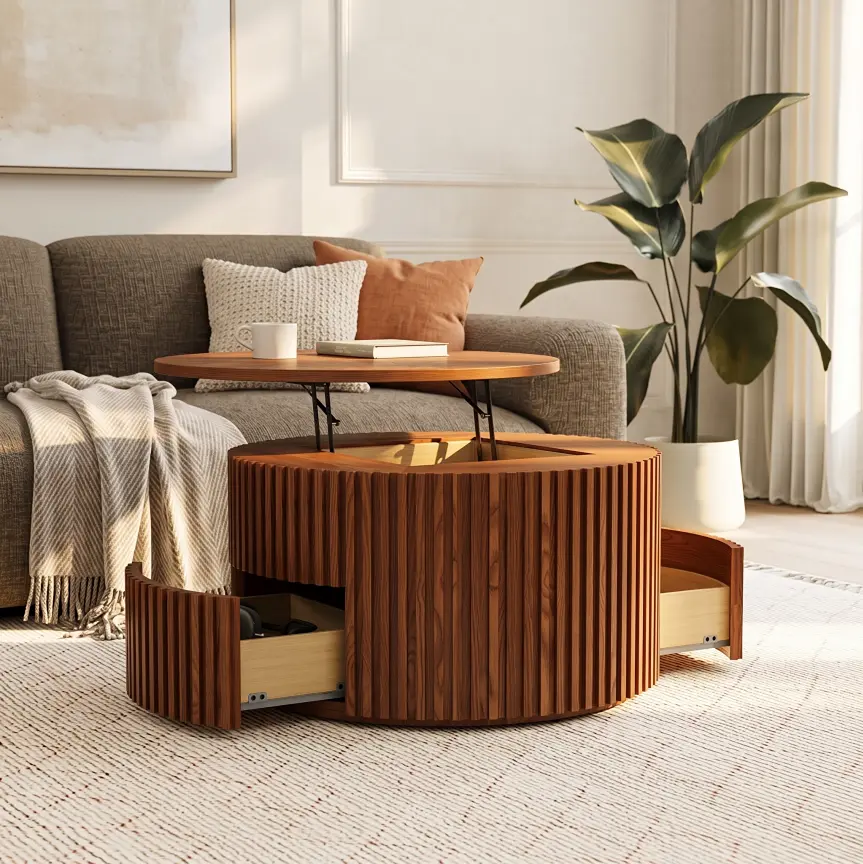
Silva Lifting Top Round Coffee Table
Round lift-top design adds a flexible surface for small-room TV routines.
👍 Best for: Small TV rooms needing table flexibility
✨ Two built-in drawers
✨ 260-lb closed-top capacity
✨ Arrives fully assembled
Power Sofa Beds: A Flexible Option for Small TV Rooms
Power sofa beds use a motorized mechanism to extend the seating area for deeper lounging or sleeping. In a small TV room that occasionally hosts overnight guests, this design can reduce the need for a separate guest bed while keeping the room focused on everyday seating.
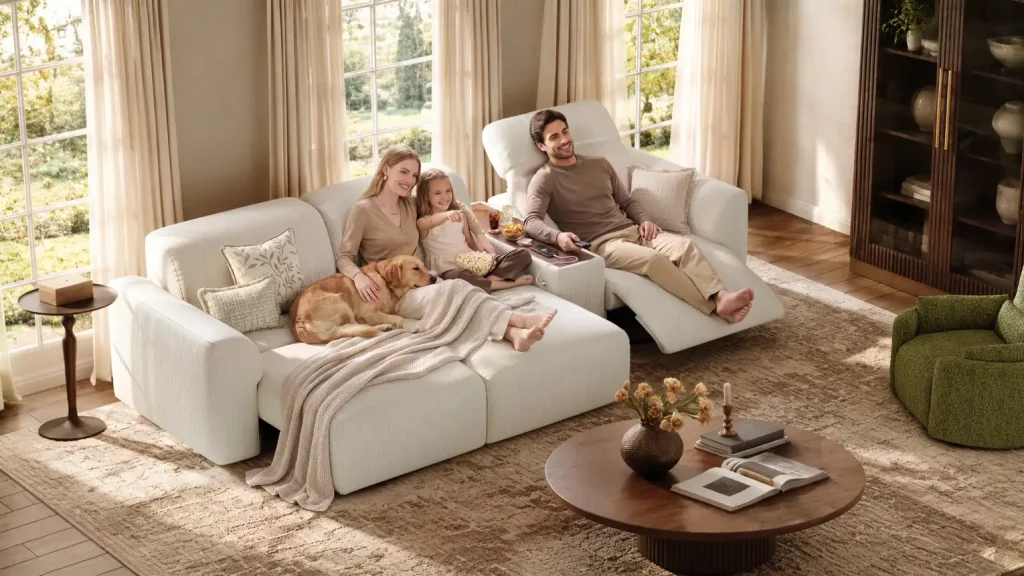
Unlike a traditional pull-out design with a separate folding mattress, the Aurora Power Sofa Bed adjusts its seat depth from 27 to 45.5 inches. This makes it worth considering when you want to change the seating configuration without storing a separate mattress or rearranging multiple cushions.
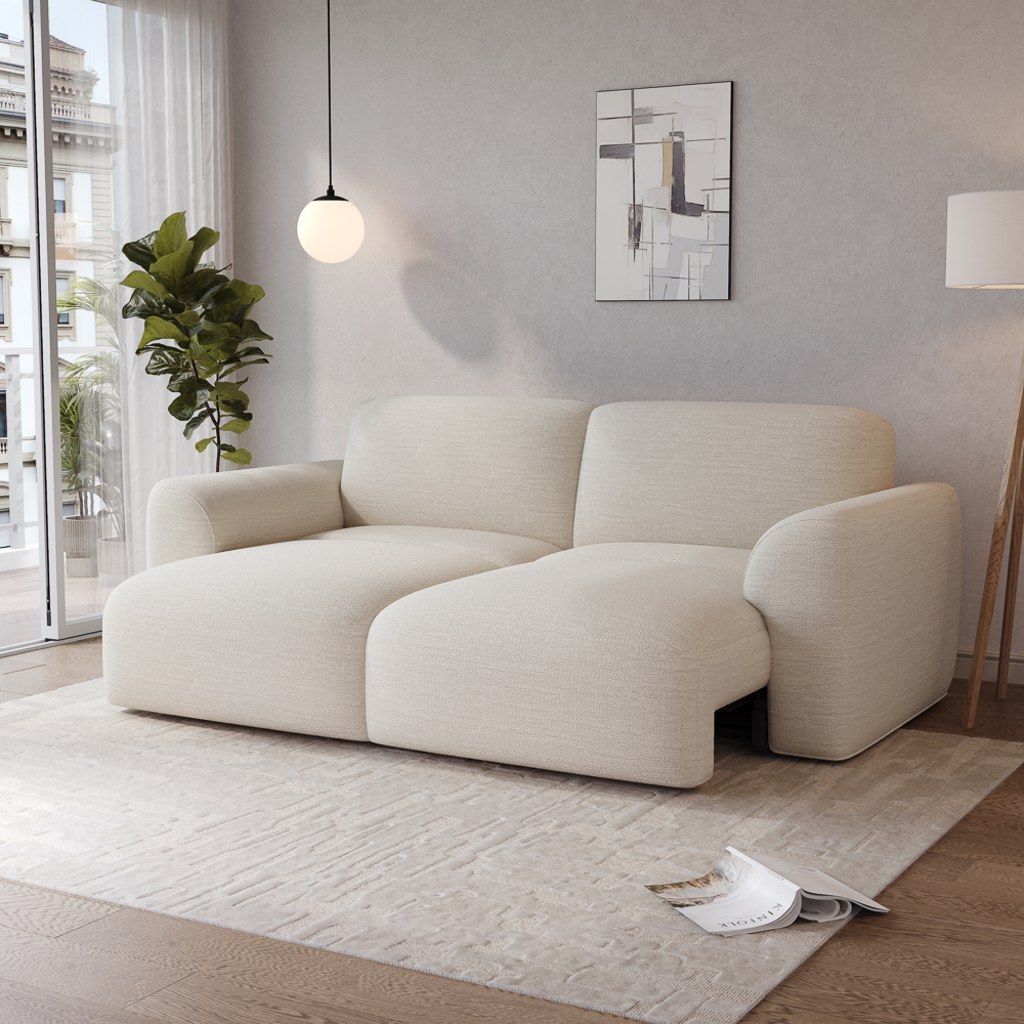
Aurora Power Sofa Bed
Flexible seating keeps a compact TV room guest-ready without a separate bed.
👍 Best for: Small TV rooms hosting overnight guests
✨ Adjustable seat depth: 27–45.5 inches
✨ Water- and scratch-resistant chenille
✨ 83-inch width; 18-inch seat height
The Aurora suits households that want a TV-facing sofa for daily use and a more extended surface when relaxing or accommodating overnight guests. Its cream chenille upholstery can also work with neutral TV walls and warm wood furniture.
Keep the TV Area Flexible for Everyday Use
Once the main furniture is in place, use a few practical checks to refine the arrangement.
- Keep the TV wall simple. Limit decorative objects around the screen and use closed storage for everyday equipment.
- Protect the main walkway. Make sure the sofa, coffee table, and console do not create a narrow passage.
- Check furniture in every configuration. If the sofa bed extends or the coffee table lifts, confirm that nearby furniture remains accessible.
- Plan around outlets and cables. Position the console where equipment can connect without loose cords crossing walking paths.
- Leave room for everyday activities. If the space also serves as a reading corner or work area, account for those needs before adding another chair or cabinet.
The goal is not to fit the greatest number of furniture pieces into the room. It is to choose a combination that supports the activities you use the space for most often.
Conclusion
The most useful small living room TV ideas start with how the room needs to function. A corner TV setup can work around difficult wall placement, a narrow layout can preserve a clear walkway, and a storage-focused arrangement can keep everyday equipment organized.
If the room also needs to accommodate overnight guests, a power sofa bed can be part of the solution without requiring a separate guest bed. Pair it with a suitably sized media console and coffee table, measure each piece in its intended configuration, and prioritize the furniture combination that fits your daily routine.
Find Furniture for Your Everyday Space
Explore fully assembled furniture for different room sizes, layouts, and everyday needs.
FAQ
What should I measure before buying furniture for a small TV living room?
Measure the TV wall, viewing distance, sofa footprint, coffee table, and main walkway. Also note the position of doors, outlets, windows, and any fixed furniture. If you are considering a sofa bed, mark its extended footprint on the floor with painter’s tape. Walking through the marked area can help reveal clearance problems before you purchase furniture.
How much space should I leave around a sofa bed?
The required space depends on the sofa bed’s dimensions and how it extends. Check the manufacturer’s measurements for both the everyday seating configuration and the fully extended position. Include room to approach the sleeping surface and move around nearby furniture. Do not rely only on the sofa’s closed dimensions when deciding whether it will fit.
Is a round coffee table better for a small TV room?
A round coffee table can make it easier to move around a compact seating area because it has no corners projecting into the walkway. Whether it is the better choice depends on the table’s diameter, the sofa’s position, and how much surface space you need. Compare the actual footprint with a rectangular or oval alternative before deciding.
Can a TV room work as a guest space?
Yes, if the room has enough clearance for the sleeping configuration and everyday furniture remains usable. A power sofa bed can help reduce the need for a separate guest bed, but it does not eliminate the need to measure. Check the extended dimensions, access around the sleeping surface, and whether the TV area can still function comfortably when the bed is in use.


[…] compact rooms, small living room TV ideas work best when screen size and placement are treated as one decision instead of choosing the TV […]
[…] design can also show more floor, which helps the wall feel lighter. For tighter TV-focused rooms, small living room ideas with TV can help connect screen size, wall choice, storage, and viewing […]
[…] the TV base or feet and that the top is rated for the screen weight. If the room is compact, plan a small living room TV layout before choosing furniture depth so the console does not narrow the main […]
[…] rooms where screen placement is the larger challenge, small living room TV layout ideas address viewing positions, storage arrangements, and […]
[…] same problem appears in small living room TV ideas: a media console may fit against the wall while still leaving insufficient room between the screen […]