 By Stephanie
A wabi sabi living room should feel calm and grounded without looking staged, unfinished, or simply beige. The challenge is knowing what to keep, what to change, and which furniture actually supports the style in daily life. Instead of treating Wabi Sabi as a shopping list of linen, pottery, and low furniture, this guide uses imperfection, material variation, asymmetry, and restraint as practical decisions. You can apply those ideas while keeping modern comfort, storage, a TV, and furniture that fits the way your household really lives.
Table of Contents
What Makes Wabi Sabi Feel Authentic in a Living Room?
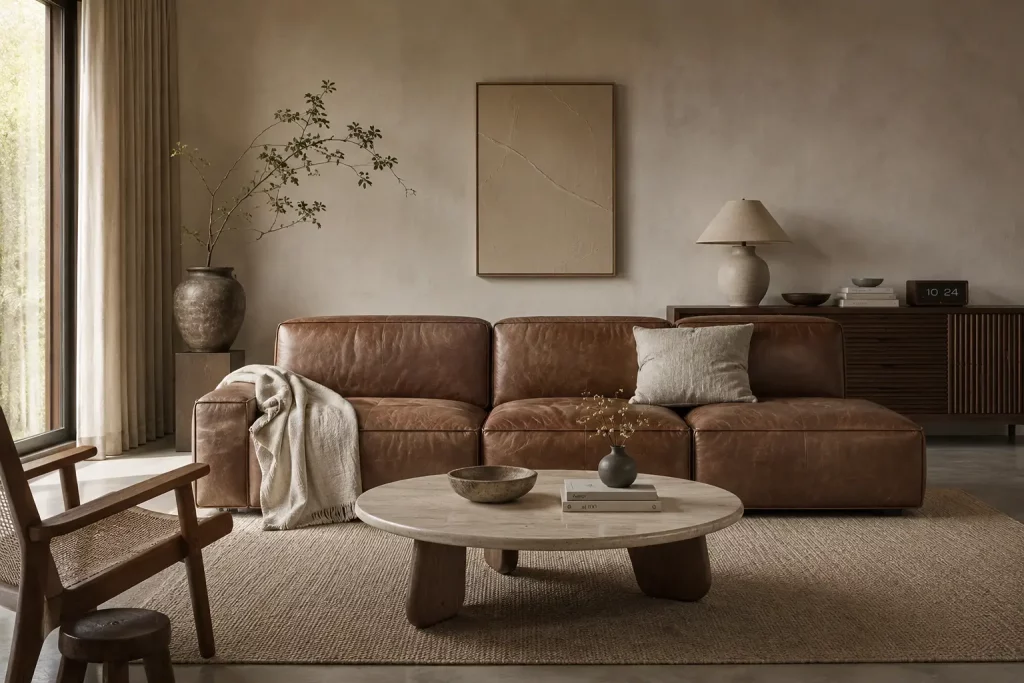
A room does not become Wabi Sabi simply because it has beige walls, low furniture, or rustic finishes. What gives the style its character is the way materials, objects, and surfaces are allowed to show natural variation and change over time. The space should feel considered, but not overly controlled.
Look for a few clear signals:
- Natural variation: Visible wood grain, woven fibers, matte stone, softly creased leather, and irregular ceramics add depth without relying on busy patterns.
- Signs of use: A surface that develops patina, softens, or changes slightly with age can feel more appropriate than one designed to stay visually flawless.
- Balanced asymmetry: Furniture and decor do not need to appear in matching pairs. One chair can balance a floor lamp, or a vessel can sit off-center on a coffee table, as long as the overall composition still feels stable.
- Restraint without emptiness: A few useful or meaningful objects usually work better than multiple decorative pieces competing for attention.
Imperfection should feel intentional rather than careless. The condition of older or worn furniture is a separate practical question: what matters is whether age has added character or begun to affect how the piece works.
Wabi Sabi is often confused with Japandi because both favor natural materials and quiet interiors. However, Japandi interior design that feels warm and livable generally relies on cleaner lines, greater visual order, and more controlled finishes, while Wabi Sabi allows more room for age, irregularity, and asymmetry.
| Style | Main Priority | Typical Finish | Arrangement |
| Wabi Sabi | Imperfection, time, material character | Varied, tactile, matte | Asymmetric but balanced |
| Japandi | Calm, restraint, function | Refined and low-sheen | Ordered and balanced |
| Minimalism | Reduction and clarity | Clean and consistent | Highly edited |
How Do You Bring Wabi Sabi Into a Room Without Starting Over?
Many wabi sabi living room ideas become generic when they start with a shopping list. A more useful approach is to work with what already has character, then make a few deliberate changes to symmetry, surface relationships, and lighting. Each step should change how the room feels without requiring you to replace everything you own.
Step 1: Start With One Piece You Intend to Keep
Choose one existing piece with a reason to stay: a comfortable leather chair, a wood table with visible grain, a ceramic object you have owned for years, or a sofa that already fits the room well.
Use that piece as a reference instead of shopping for an entirely new “Wabi Sabi set.” The room will feel more collected when at least one anchor has a history that was not manufactured for the look.
Step 2: Break One Matching Pair
You do not need to make the whole room asymmetric. Start with one obvious pair.
Replace two identical table lamps with one lamp and one ceramic object, or let an accent chair balance a side table instead of buying a second matching chair. This creates controlled irregularity while keeping the room easy to read.
Step 3: Pair Clean Furniture With Irregular Surfaces
Wabi Sabi does not require every piece to look aged or handmade. In fact, too many distressed finishes can make the room feel themed.
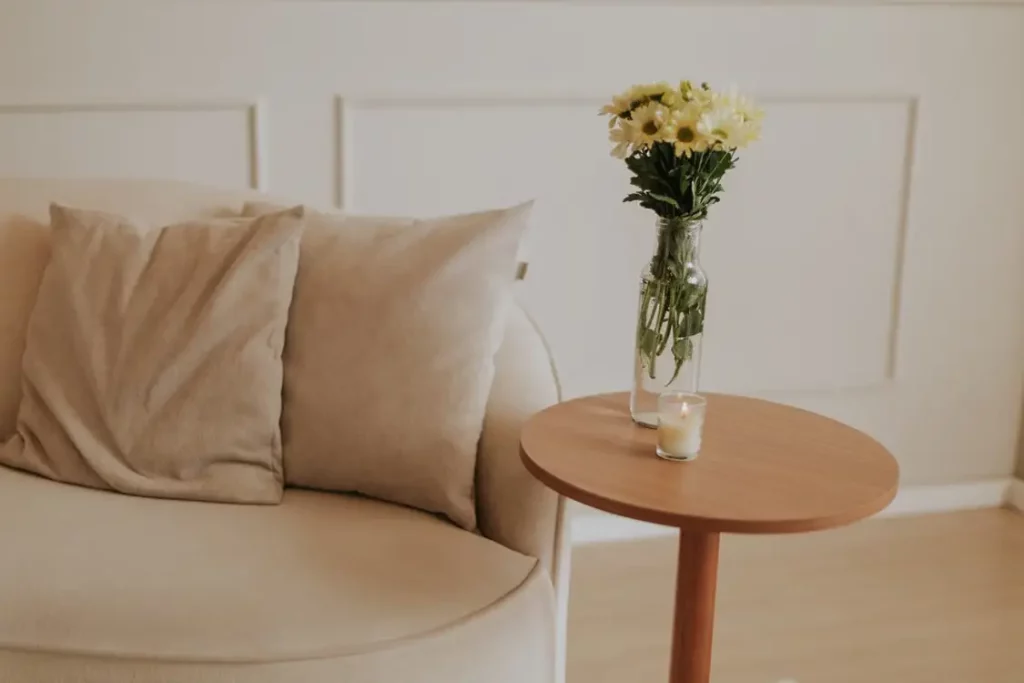
Let one refined piece sit beside a surface with visible variation, such as wood grain, softly creased leather, woven fiber, or irregular ceramic. The contrast between controlled and imperfect finishes usually feels more natural than making every object look rustic.
Step 4: Add One Object With Real Meaning or Variation
A handmade bowl, an older book, a naturally irregular ceramic piece, or an object collected over time can carry more visual weight than a group of coordinated accessories.
Give it enough room to register instead of surrounding it with filler. The same principle behind negative space interior design for a balanced, functional room applies here: open space should support focus without sacrificing circulation or useful tabletop space.
Step 5: Use Light to Reveal Texture
Lighting should help you notice material rather than become another decorative theme. During the day, filtered light can show leather grain, stone pattern, and subtle surface variation. At night, place a floor or table lamp where its light falls across a textured wall, cabinet, or seating area instead of relying only on a bright overhead fixture.
Which Furniture Works in a Modern Wabi Sabi Living Room?
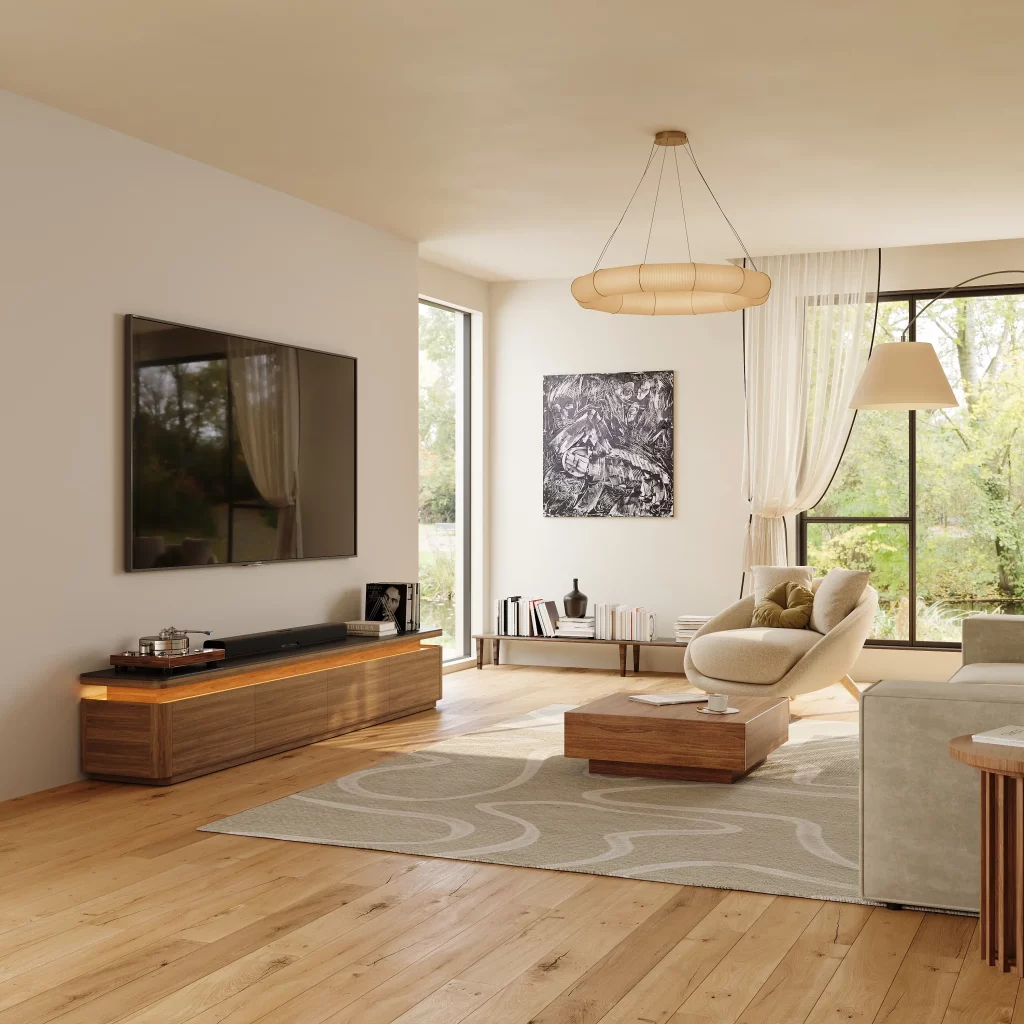
For a modern wabi sabi living room, new furniture should earn its place by solving a practical need as well as supporting the room visually. Focus on three working anchors: comfortable seating, a useful central surface, and storage for the parts of everyday life you do not want on display. Each plays a different role, so they do not need to match.
Start With Seating That Can Change With Use
A sofa occupies too much of the room to choose for style alone. Prioritize a comfortable sitting position and upholstery that suits your household, then consider whether the material can develop character naturally over time. Low seating can feel grounded, but it is not a Wabi Sabi requirement.
The Genuine Leather Modular Sofa suits a room where material character matters as much as comfort. Its top-grain leather has a matte pebble grain with natural variation, and the surface softens and develops more luster with use. That gradual change gives the sofa character without relying on artificial distressing or an intentionally weathered finish.
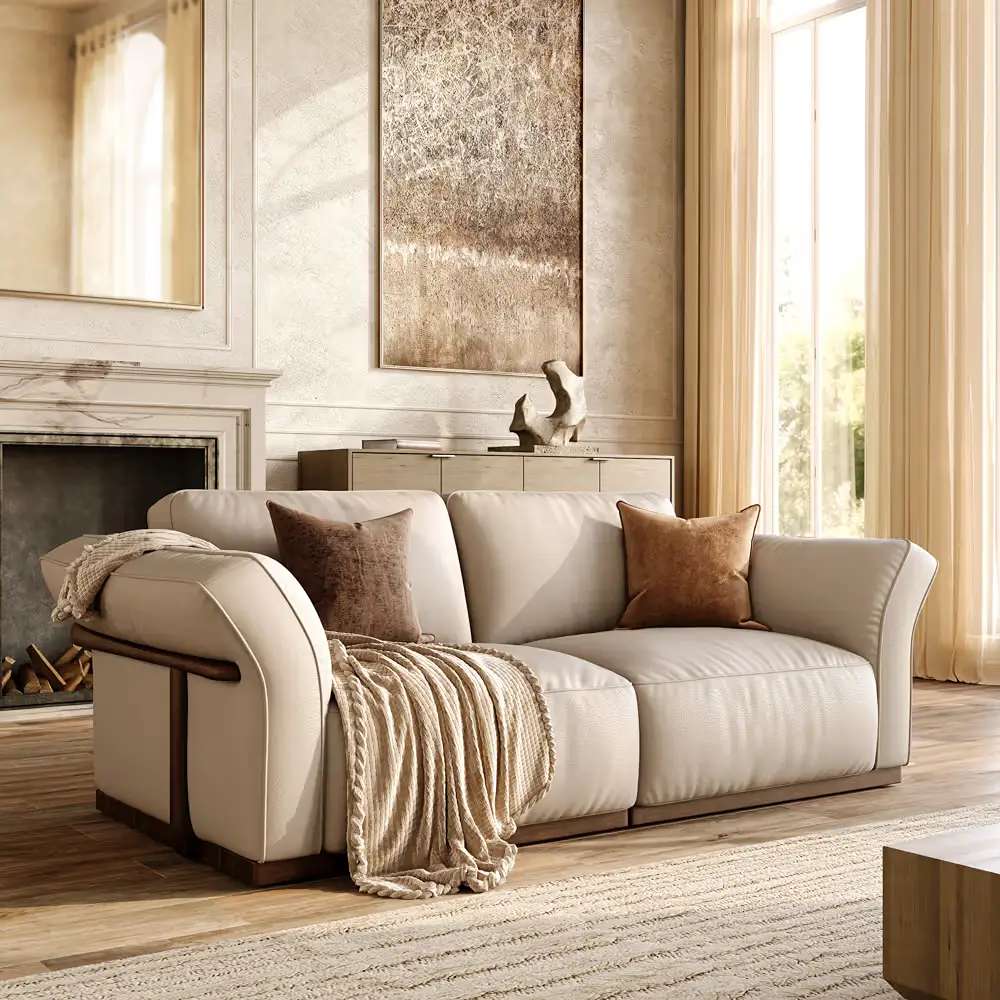
POVISON Cronus Genuine Leather Modular Sofa
Top-grain leather develops more softness and character with everyday use.
Make the Coffee Table a Material Anchor
A central table does not need elaborate styling when its surface already adds enough visual interest. Look for a matte finish, a shape that works with circulation, and sufficient surface area for the way you use the room.
The Round Matte Sintered Stone Coffee Table adds surface variation without making the seating area feel heavily decorated. Its matte, travertine-look sintered-stone top brings a mineral-like pattern into the room, while ash-wood-veneer legs warm the composition. At 15.4 inches high, its rounded form also keeps the center of the seating group visually grounded.
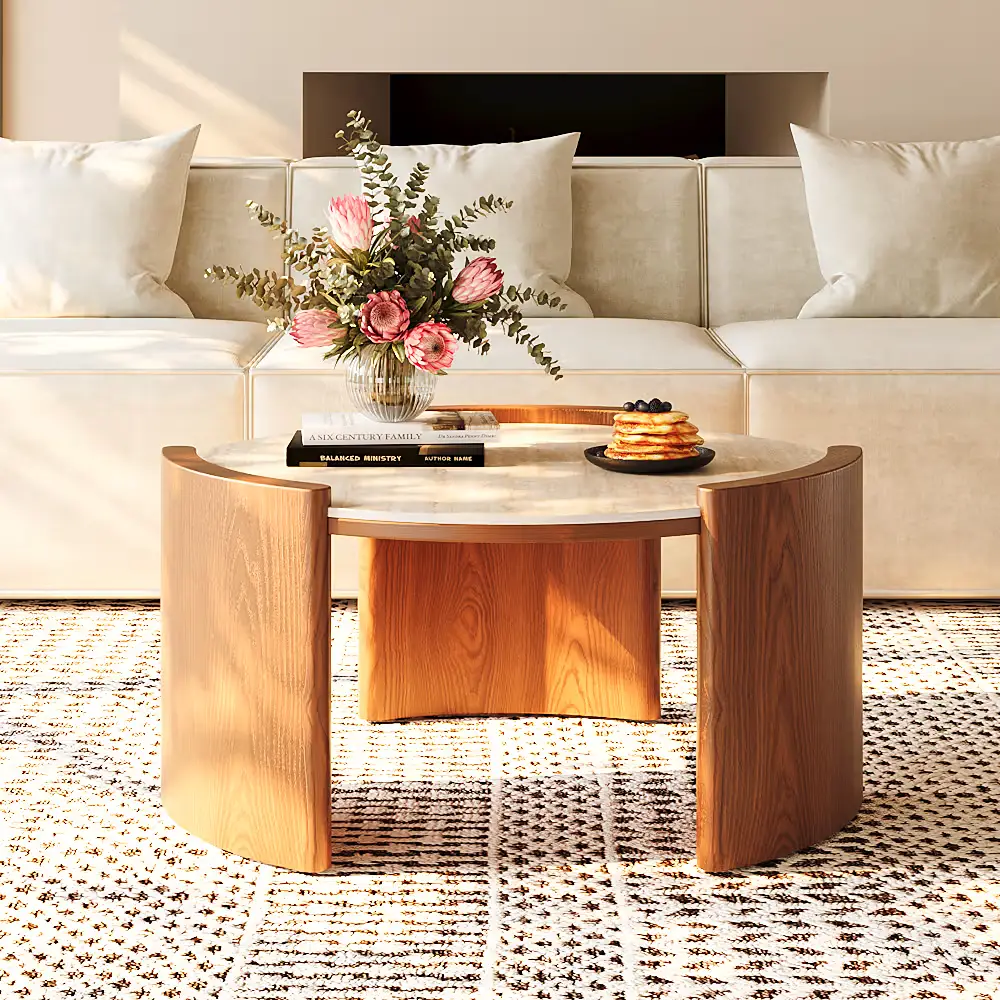
POVISON Round Matte Sintered Stone Coffee Table
A low, matte surface that adds material variation without adding more decor.
Let Storage Quiet the Media Wall
Real living rooms contain televisions, remotes, controllers, chargers, and other objects that rarely appear in styled Wabi Sabi photography. The goal is not to hide modern life completely, but to give the smaller items around the screen a defined place so technology does not become the room’s dominant visual layer.
The Mid-Century TV Stand gives a TV-centered room a sturdy, substantial base without feeling visually heavy. Its desktop supports up to 200 pounds, providing dependable support for a large TV and media gear. Six drawers keep smaller items contained, while the low 19.29-inch profile feels grounded. It also arrives fully assembled, reducing the chance of loose joints or alignment issues caused by at-home assembly.
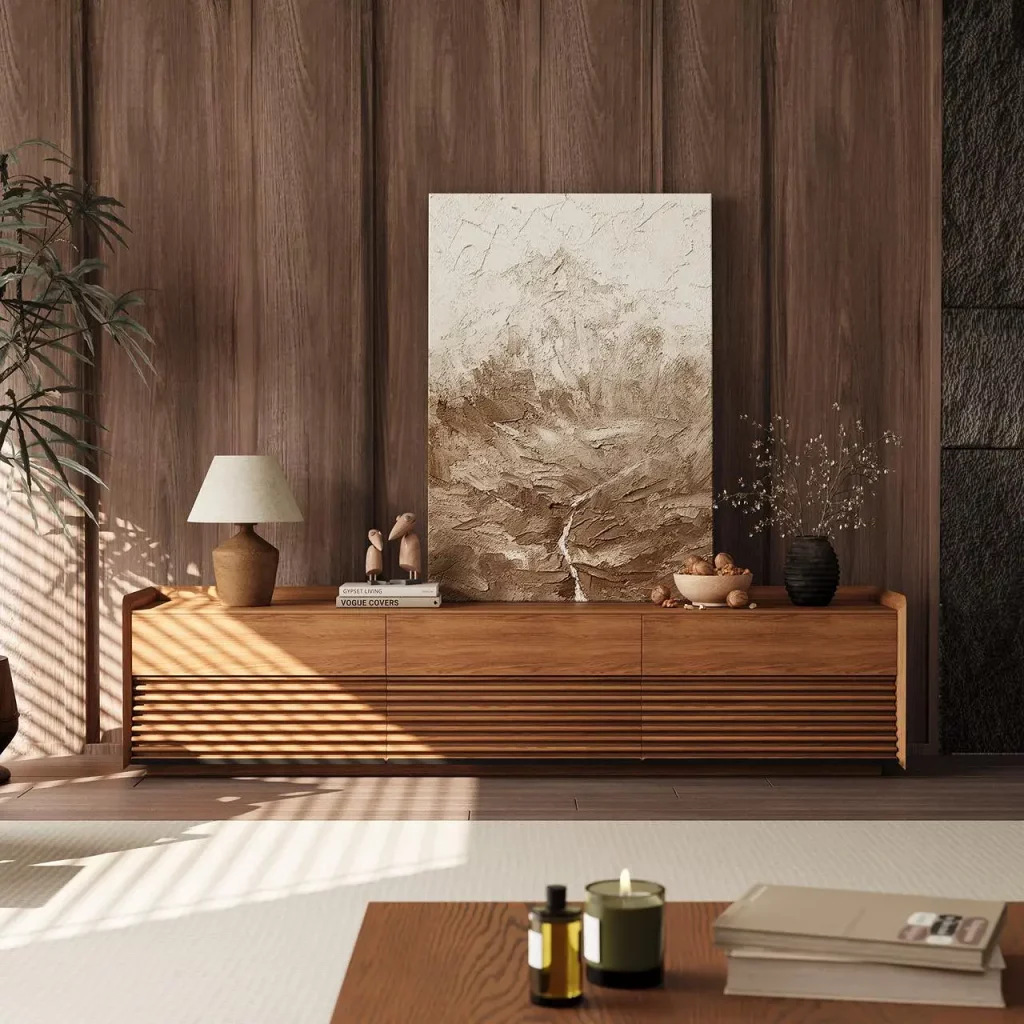
POVISON Ansel Mid-Century Sturdy TV Stand
A 200-lb-rated top gives a large TV a sturdy, low-profile base.
When Should You Break the Wabi Sabi “Rules”?
Wabi Sabi is a philosophy, not an ergonomic standard. If a visual rule conflicts with safe movement, easy maintenance, durability, or the way you comfortably sit, choose the practical option. The style can still come through in material variation, restraint, and objects that develop character naturally.
| Real-Life Situation | Don’t Force | Better Decision |
| Small living room | Extra-deep, very low seating just for the look | Choose dimensions that preserve your normal walkway |
| Kids or pets | Delicate upholstery purely for authenticity | Use durable, tactile materials that fit your cleaning routine |
| Mobility needs | Very low seating | Choose a seat height that makes standing comfortable |
| Frequent entertaining | Removing useful seating just to keep the room sparse | Keep enough comfortable seats and surfaces for the way guests actually use the room |
| TV-centered room | Removing useful technology | Use sturdy media furniture and contain the smaller items around the screen |
Modern materials are not automatically incompatible either. Wood veneer, sintered stone, and durable upholstery can support visual principles when their finish, texture, scale, and function fits the room. Just describe them accurately rather than treating engineered materials as raw wood or natural stone.
If you prefer cleaner forms and less visible aging, organic modern interior design for a warm, natural home may actually describe your goal more accurately.
Should You Keep, Repair, or Replace Existing Furniture?
Wabi Sabi makes one furniture decision especially important: knowing the difference between character and damage. Age alone is not a reason to keep something, and visible wear is not automatically a reason to replace it. Judge the piece by whether the change is cosmetic, repairable, or affecting normal use.
| What You Notice | Best Response | Why |
| Natural grain, patina, slight color variation | Keep | The material is changing without losing function |
| Light surface scratches or leather that needs conditioning | Maintain or repair | Cosmetic wear can often be addressed without replacing the piece |
| A finish looks older but the furniture remains stable and useful | Keep if you still like it | Wabi Sabi does not require furniture to look new |
| Loose legs, unstable joints, sagging support, or cracked structural parts | Repair professionally or replace | Structural deterioration is not desirable imperfection |
| A piece blocks circulation or no longer supports how the room is used | Replace when needed | Function takes priority over preserving an object for style |
This distinction prevents one of the easiest Wabi Sabi mistakes: treating neglect as authenticity. A surface can show time; the furniture should still work safely and comfortably.
Conclusion
A wabi sabi living room works when the space can age, adapt, and support ordinary life without needing to look untouched. Start by editing what you already own, then use furniture to add real comfort, material variation, useful surfaces, and storage where needed. Keep asymmetry intentional, let texture carry more visual weight than decoration, and ignore style rules that conflict with accessibility or maintenance. The room does not need to be finished in one purchase; it becomes more convincing as useful pieces and genuine signs of use accumulate naturally.
FAQs
Can dark colors work with Wabi Sabi?
Yes. Wabi Sabi does not require an all-beige palette. Deep brown, charcoal, muted green, and other subdued tones can add depth beside wood, leather, stone-like surfaces, and softer textiles. Limit large glossy dark finishes if their reflection or contrast begins to dominate the room.
What rug works in a Wabi Sabi living room?
Choose a rug with visible texture and relatively quiet patterning, such as wool, jute, or a low-contrast woven design. Size matters more than rustic appearance: the rug should connect the main seating pieces rather than float beneath the coffee table alone. Avoid artificial distressing simply to make a new rug look aged.
Can Wabi Sabi work with cool gray floors?
Yes. You do not need to replace existing flooring. Add warmth through walnut, brown leather, taupe textiles, clay tones, or warm lighting, then let the gray act as a quieter stone-like base. Avoid adding several more cool gray surfaces if the room already feels flat or cold.
How much space should you leave around Wabi Sabi furniture?
Leave enough room for the space to feel open without sacrificing everyday movement. As a practical guide, keep about 14–18 inches between a sofa and coffee table and roughly 30–36 inches for main walkways. Wabi Sabi values breathing room, but empty space should still support comfortable circulation and furniture use.


